1953 Quarter Error List with Pictures

Monticello still shows faintly beneath Washington on one unusual 1953-S quarter. The coin began as a Jefferson nickel, then received the quarter design; it sold for $2,760 in April 2006.
Other 1953 quarter errors include clipped blanks, thin metal, doubled details, and coins struck more than once. Estimated prices run from $15–$5,000, with the mistake and the coin’s condition considered together.
Read on to see the physical clues that separate these examples from ordinary damage.
1. 1953 Washington Quarter Peeling Metal
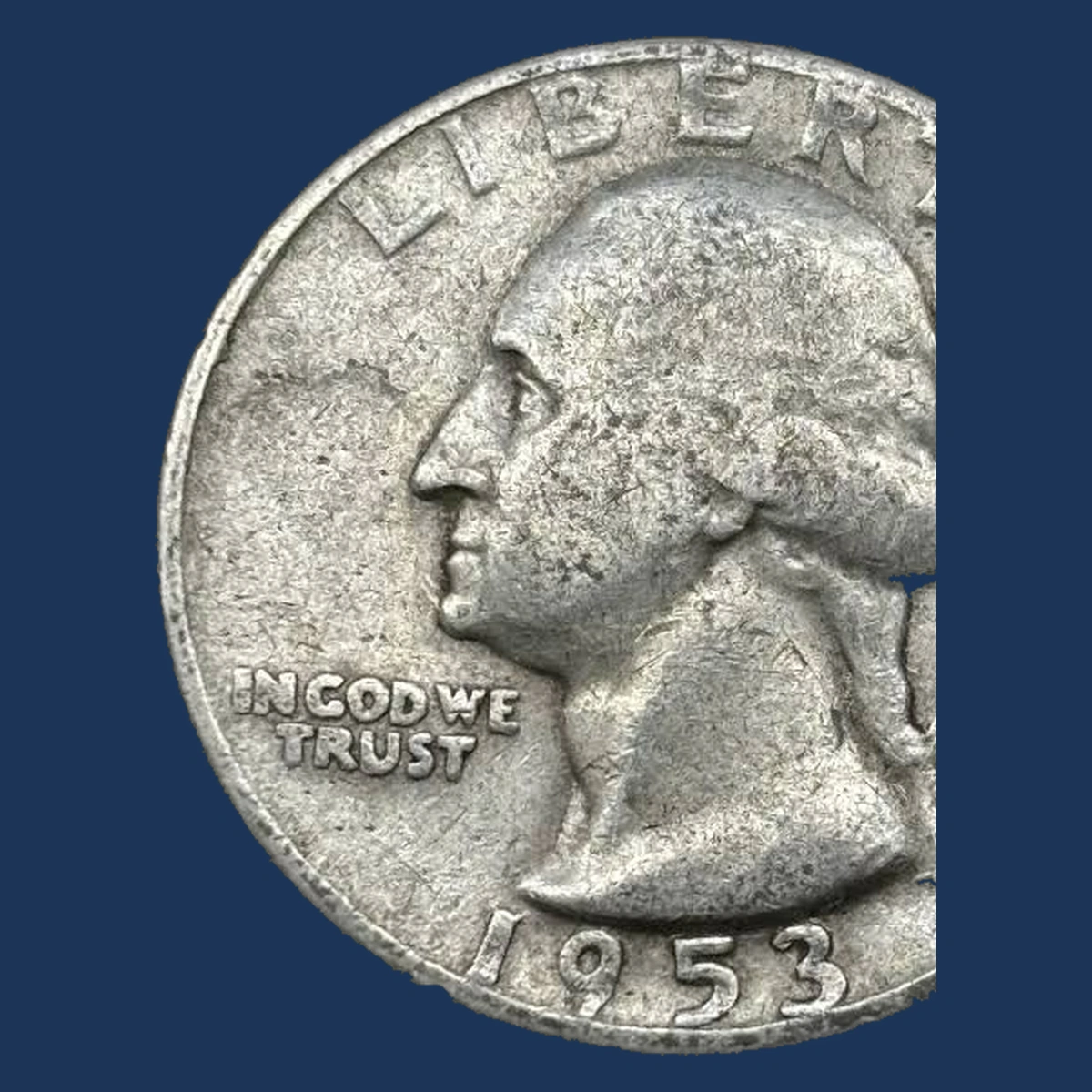
A thin surface layer can lift or break away from a silver quarter when weakness exists within the metal. Collectors call this a lamination error.
A seller has reported such a flaw on a 1953-D coin, without independent grading of that example. The visible boundary therefore needs examination rather than accepting every rough patch as the same defect.
Normal 1953 quarters are silver alloy throughout, not modern bonded-layer coins. A shallow separation within that alloy is different from an entire copper-nickel outer sheet falling away from a later quarter.
Estimated Value
Estimate $15–$150 for a genuine modest 1953 lamination, including the value of the underlying silver coin. A larger attached flap can attract more interest than a barely visible rough area.
A different 1911 Liberty Head nickel with front peeling sold for $51 in January 2023. That confirmed sale provides a small-error comparison, while the reported 1953-D seller example needs its own surface assessment before being priced as a genuine metal separation.
How to Identify
Inspect the edge of the peeling area under a 10× magnifier and leave any attached flap in place. Lifting it can remove the connection that explains how the metal separated.
Look for a thin layer returning into sound metal, with original design still present nearby or on the flap. Corrosion can also create rough patches, but often pits the exposed surface rather than opening one coherent layer.
Check for sharp gouges or pushed-up lips from a later tool. A loose fragment may lower the weight from the normal 6.25 g, while an attached flap can leave most of the metal present.
Identify the natural separation boundary first, rather than treating low weight, brown color, or the seller’s label as proof of lamination.
2. 1953 Washington Quarter Curved Clip
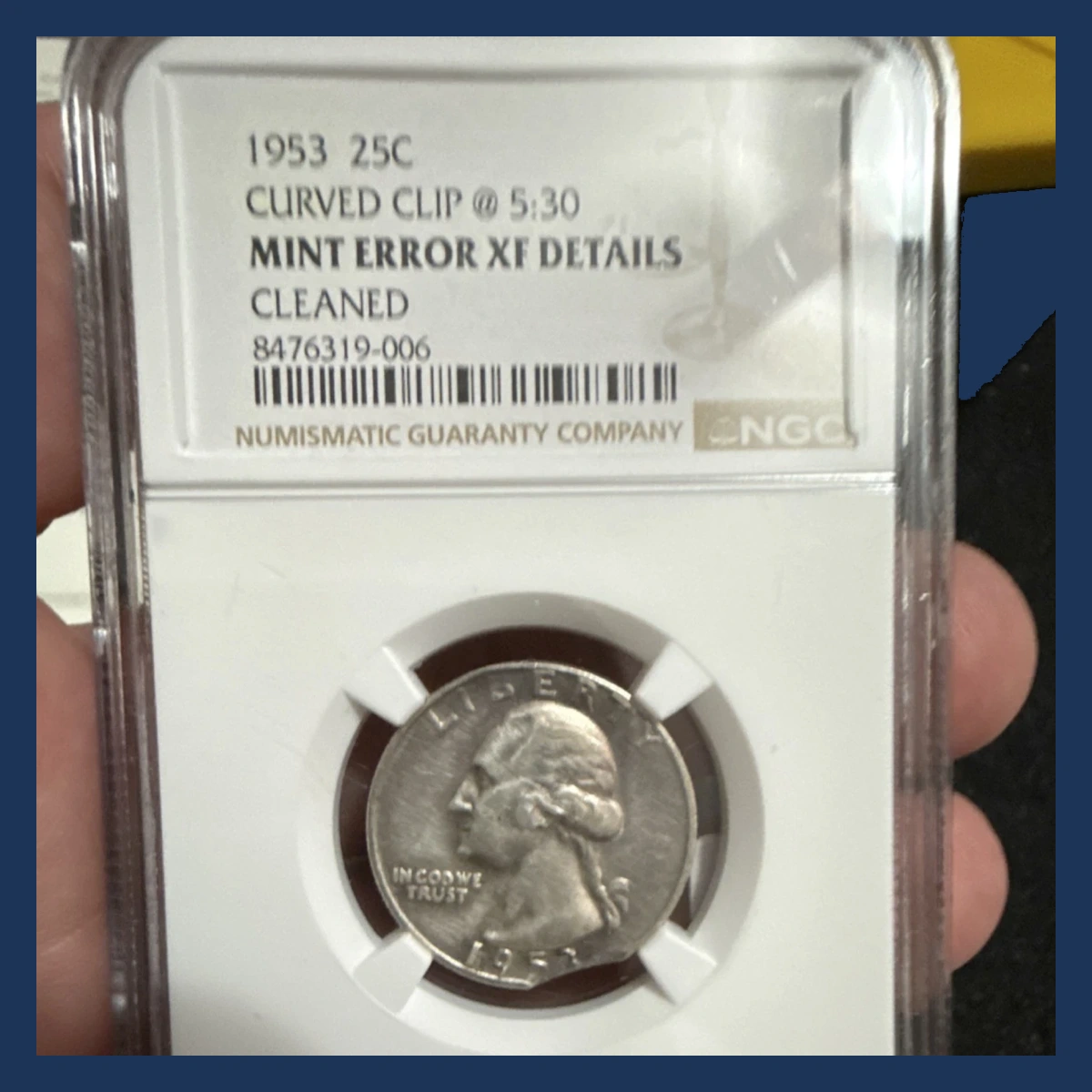
A curved gap interrupts the outline of the recorded 1953 example. ANACS graded this quarter MS64, and the catalog gives its weight as 5.89 g.
The missing section began before the design was struck, when a blank was cut across an earlier hole in the metal strip. The remaining blank then received Washington and the eagle around that incomplete boundary.
This differs from trimming a finished quarter or breaking off part of its rim. The lost weight supports missing metal, but the way the design meets the curved gap explains when that loss occurred.
Estimated Value
The ANACS MS64 curved-clip example sold for $79 in June 2026. An estimated $30–$250 covers comparable genuine 1953 clips, with size, preservation, and surviving date affecting collector interest.
That recent result concerns one specific 5.89 g coin rather than a price per gram of missing silver. A larger gap can be more noticeable, but clean surfaces and a natural, easily understood boundary may matter more than the amount of metal absent.
How to Identify
Compare the 5.89 g recorded weight with the normal silver-quarter standard of about 6.25 g. Use a scale for the candidate’s actual reading rather than assuming every curved clip loses the same amount.
Calipers across the surviving full diameter should give a comparison near 24.3 mm. Then use a 10× magnifier where the curved gap joins the rim and lettering.
Look for natural rounding or softened design near the gap, and inspect for fresh filing or a cut through finished details. The surviving edge normally has grooves.
A weak rim opposite the gap can support the identification but is not required. The important check is a missing section around which the design formed naturally during the original strike.
3. 1953 Washington Quarter Broadstrike
The metal can spread beyond normal quarter size if the surrounding steel ring does not contain it during striking. This produces a broadstrike rather than a neatly bounded circular coin.
The design may remain complete even when it sits unevenly inside the expanded outline. Edge grooves can be missing or incomplete where the collar failed to control the metal.
Broadstrikes are reported for 1953, without one fixed amount of spreading applying to every example. A later flattened quarter can also become wider, so the remaining design must be checked for original striking rather than crushing.
Estimated Value
A confirmed 1953 broadstrike has an estimated value of $50–$400, depending on how clearly the outward spread shows and the condition of the coin. Slight widening generally offers less visual appeal than a bold expanded edge.
A later 1965 Type One blank broadstrike graded PCGS MS61 sold for $192 in June 2024. That different-metal example provides context for the mechanism, while it does not establish that a reported 1953 coin also began on a Type One blank.
How to Identify
Start with the outer lettering, tracing it around both faces to see whether the complete design remains on the metal. An unevenly positioned but complete design can be broadstruck, while lettering lost beyond one edge suggests an off-center strike.
Measure the outline with calipers against about 24.3 mm and compare weight with 6.25 g. The blank usually retains its metal while spreading, unlike a clipped or cut-down piece.
Inspect Washington’s portrait and the eagle under a 10× magnifier for later flattening or crushing. A naturally struck design inside expanded metal, with the edge showing incomplete collar control, supports a broadstrike more strongly than width alone.
4. 1953 Washington Quarter Thin Quarter-Sized Blank
The recorded 1953-S example was cut from metal of dime thickness but received the quarter design on a quarter-sized blank. It is thin rather than simply a quarter squeezed onto a small dime disk.
NGC graded the coin MS66 and recorded its weight as 5.0 g. That is below the usual 6.25 g silver-quarter standard, but well above the 2.5 g standard of a silver dime blank.
The distinction matters when looking at the outline. A thin quarter-sized coin should not be described as a wrong-denomination dime blank solely because its metal is lighter than normal.
Estimated Value
Estimate $150–$700 for a confirmed 1953 thin-stock quarter, allowing for grade and the quality of the original surfaces. An attractive unworn example offers a stronger comparison than a worn or scratched low-weight coin.
For context, a 1969-D quarter cut from dime-thickness stock was reported sold for $91 in December 2012 in AU58. That later clad coin has different metal and wear, so the 1953-S MS66 should be evaluated on its own merits.
How to Identify
Use calipers to check the diameter before identifying a light coin as a dime-blank error. This type should remain near the normal quarter width of about 24.3 mm.
Record its weight on a scale. The documented 1953-S example is 5.0 g, while a normal quarter begins near 6.25 g.
Examine the surfaces under a 10× magnifier for grinding lines or flattened details. Removing metal after striking can make a coin thin without creating a Mint error.
Compare edge thickness around the circumference and inspect the remaining grooves. One damaged thin spot does not establish that the whole blank came from thinner stock.
Look for a full-sized quarter struck on naturally thin metal, with original surfaces explaining the low weight rather than later removal.
5. 1953 Washington Quarter Doubled Front or Back Design
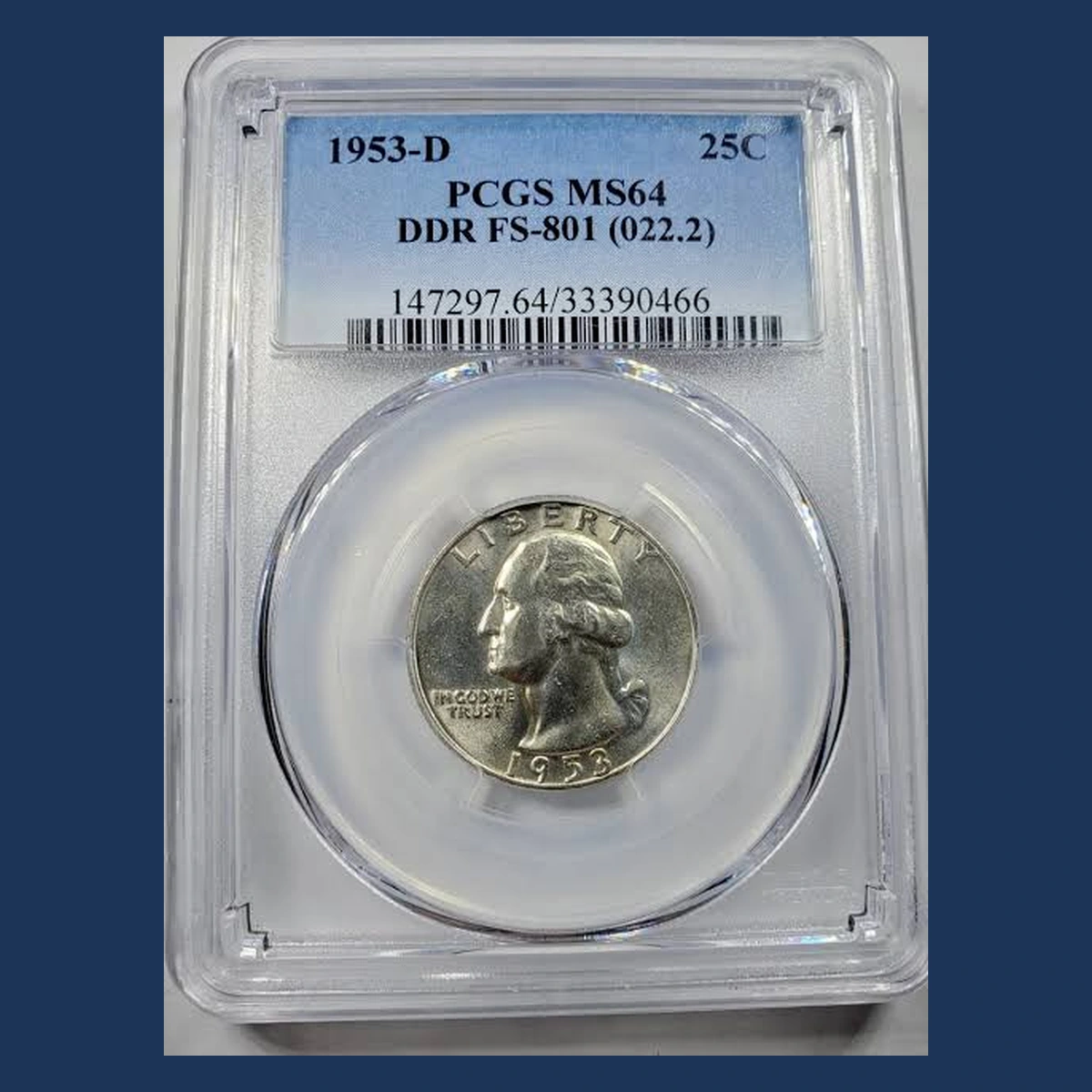
A stamping tool can carry extra design outlines before it makes any coins. A coin struck by that doubled die then receives the repeated details as part of the normal impression.
For 1953, the front-doubling report applies to Proofs, the specially made collector coins. A Denver back doubled-die variety is also recognized in the grading-service catalog.
These belong to different coins and different faces. They should not be presented as one required pattern, and a small flat shelf beside a letter can instead result from movement during striking rather than doubling in the tool.
Estimated Value
Estimate $40–$800 for confirmed 1953 doubled-die quarters, depending on the exact variety, separation, and condition. A clearly matched Proof or strong Denver back variety offers more than an unidentified thick letter.
A different-year 1969-S FS-101 Proof graded PR67 was reported sold for $312 in March 2018. That known variety provides a comparison for collector interest in doubled details, while the 1953 coin still needs its own matching pattern and grade assessment.
How to Identify
Sort the coin by finish and mint before choosing photographs. The front report concerns a Proof, while the documented Denver back variety belongs to a coin with D below the eagle.
Inspect repeated outlines under a 10× magnifier, comparing several neighboring details rather than one wide letter. Change the light to check whether the apparent extra shape is raised metal or a moving reflection.
A flat shelf may come from movement during the strike. Rounded separation or split corners that repeat in the same places are more useful for matching a doubled-tool variety.
Compare each face only with its own documented 1953 pattern. Do not borrow a Proof’s front details to identify the Denver back or assume that both features must occur together.
6. 1953 Washington Quarter D over S or an Inverted D
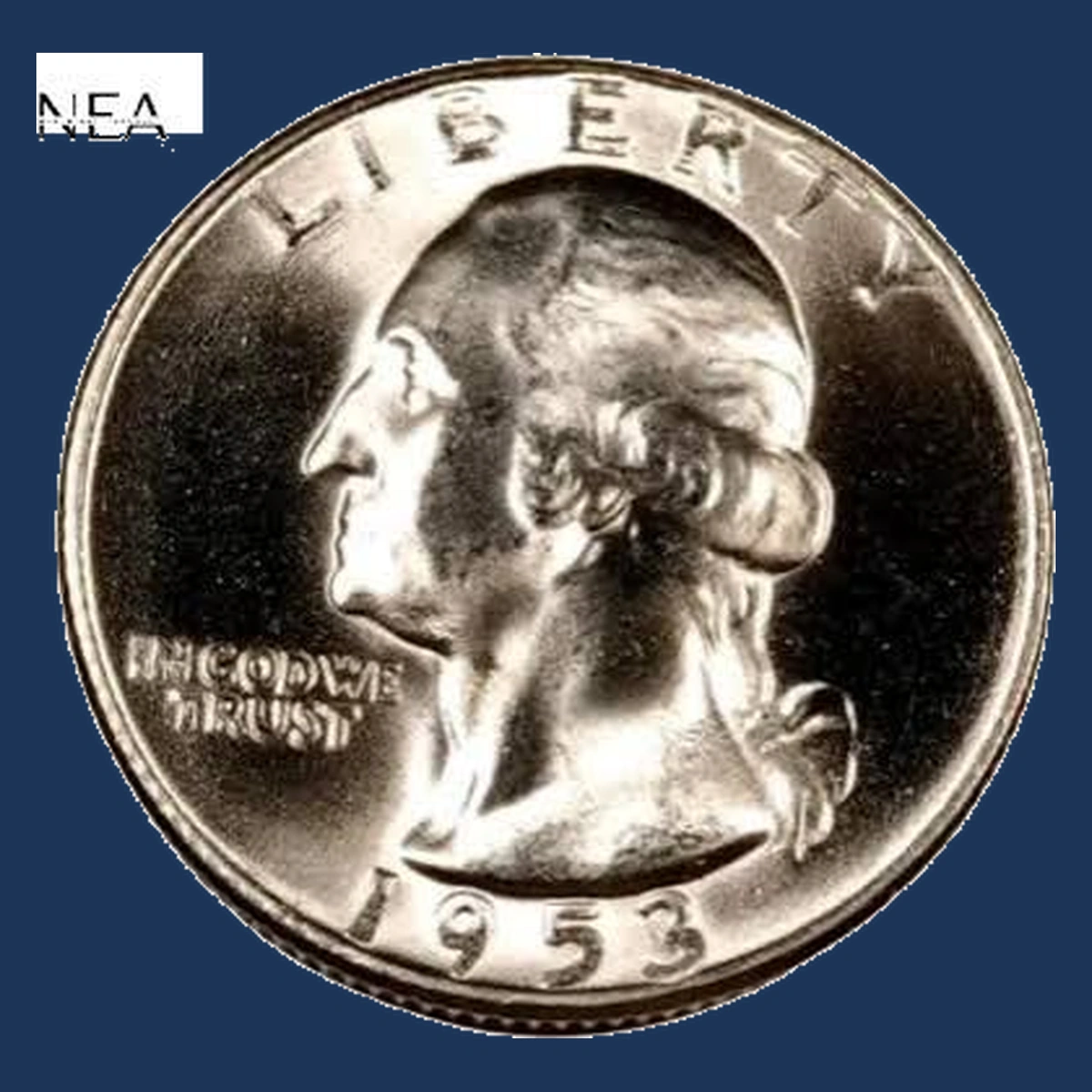
An earlier mint-letter impression can remain beneath a later D on the back of the quarter. PCGS recognizes both a D over S and a D over an inverted D for 1953.
The first has traces of a different letter below the final D. The second records an earlier D punched upside down before the corrected letter was added.
These are changes made to the stamping tool, not two separate coins pressed together. A small curve beside the final D needs comparison with the correct variety rather than an assumption that every extra line is an S.
Estimated Value
Use an estimated $40–$1,000 across recognized 1953 mint-letter varieties, with exact identification and preservation driving the price. Worn traces usually offer less appeal than a clear pattern on an unworn coin.
PCGS records an MS64 inverted-D example sold on eBay for $650 in October 2022. That recorded result belongs to the inverted-D variety; it should not become an automatic price for the different D-over-S coin or for an unexplained mark beside a normal D.
How to Identify
Find the final D below the eagle, then inspect the surrounding curved strokes under a 10× magnifier. Decide whether the claim concerns an S or an upside-down D before comparing reference photographs.
The underlying letter may survive only in parts. Follow their positions around the final D rather than trying to read one isolated bump as a complete letter.
Compare with the exact recognized variety and keep the coin’s back upright. An inverted earlier D is defined relative to that orientation, not by turning the whole photograph around.
Check for cuts or displaced metal from later damage. Match the surviving lower-letter shapes to one specific pattern before using the D/S or inverted-D name.
7. 1953 Washington Quarter Re-engraved Tail Feathers on a Proof
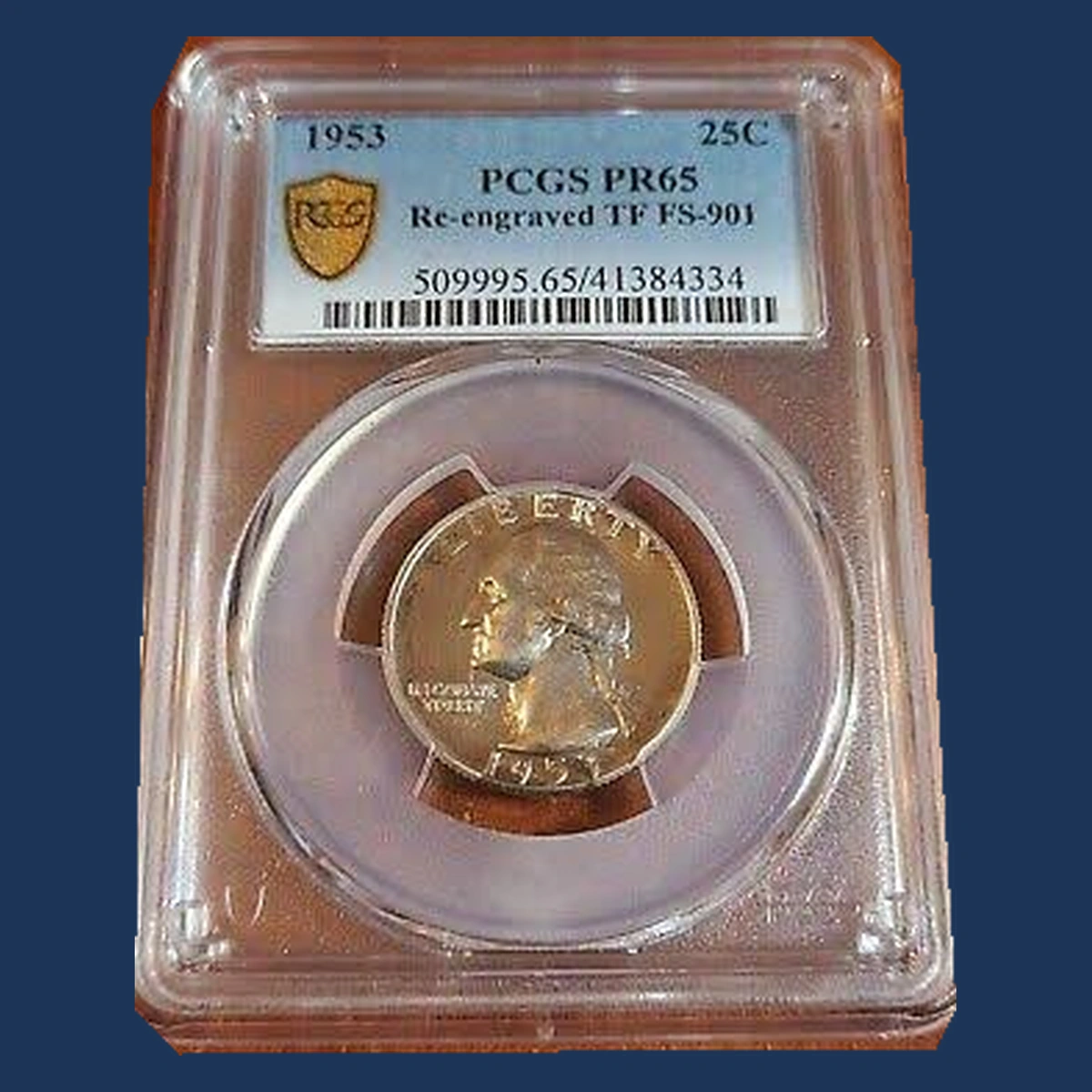
Extra tail-feather lines can reflect work done to the stamping tool before it made the coin. A recorded 1953 Proof graded PCGS PR65 carries the re-engraved tail-feather variety.
Re-engraving means that details were recut on the tool, allowing later coins to show the altered pattern. It does not mean someone scratched extra feathers into the finished quarter.
The feature belongs in the eagle’s tail on the back. Its actual lines need comparison with the 1953 variety, rather than borrowing a nickname or a feather pattern from a different year’s Proof.
Estimated Value
Estimate $50–$1,200 for a confirmed 1953 Proof re-engraved-tail variety, depending on preservation and how clearly its changed details can be shown. Haze or scratches can make a Proof’s small features harder to assess.
For a different-year comparison, PCGS records a 1957-D re-engraved-tail MS64 sold on eBay for $2,200 in October 2021. That ordinary Denver coin is a separate variety, so its stronger result provides context rather than the price of the 1953 Proof.
How to Identify
Keep the Proof under soft light and compare its tail with a normal 1953 Proof back. A 10× magnifier helps show where the extra lines differ from normal feather detail.
Follow the altered pattern through the tail area while keeping adjacent artwork in view. A line scratched into the finished coin may cut sharply across details rather than match a repeated tool-made pattern.
Inspect the surrounding reflective surface for fresh scraping or polishing that might explain the unusual appearance. A correct 1953 reference should show the same changed lines, not merely a sharp-looking eagle.
Compare the full tail rather than an isolated enlarged line that could resemble several varieties. Match the changed feather pattern on the correct 1953 Proof before comparing collector prices.
8. 1953 Washington Quarter Off-Center Strike
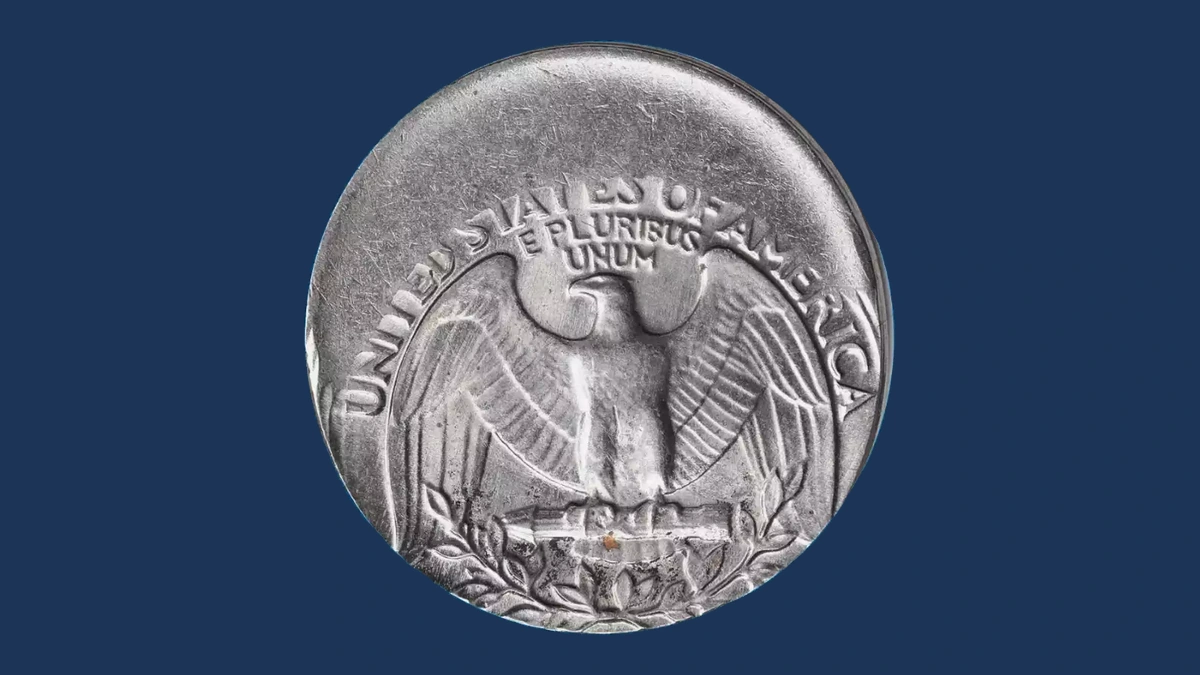
The quarter design can miss part of its blank when the metal enters the press out of position. The empty metal on one side corresponds to design lost beyond the opposite edge.
This single off-center strike is reported for 1953 quarters. The percentage and direction need to be judged on the individual piece rather than assigned from a general range in a year guide.
It differs from the recorded 1953-S double strike, which preserves evidence of two design positions. A lone shifted impression can have a dramatic shape without having received an extra blow.
Estimated Value
Estimate $100–$1,500 for genuine 1953 off-center quarters, with readable identity and original surfaces supporting stronger values. Small shifts on worn coins generally belong lower than large, clear displacements.
A later 1965 quarter struck 25% off center sold for $180 in December 2025. That different-metal example provides a comparison for a single misplaced strike, while a 1953 silver coin’s condition and actual displacement must be considered separately from any double-strike sale.
How to Identify
Check both faces before counting strikes. A single off-center coin should show one displaced design on each face, not two overlapping positions within the struck area.
Read the year and inspect the back mint-mark area. If the relevant area falls off the blank, do not invent the missing mint from another coin’s photograph.
Under a 10× magnifier, follow the design to the natural edge and compare it with the opposite blank crescent. Hammered or cut-down surfaces can imitate missing design but often leave damaged borders.
The blank normally retains roughly its full 6.25 g of silver. Use that weight only as supporting evidence; the essential check is a single original strike whose missing design and unstruck metal account for one another.
9. 1953 Washington Quarter Wrong Denomination Blank
A blank meant for a smaller coin can receive Washington’s quarter design. Its limited size leaves less room for the portrait, date, and outer lettering.
A Philadelphia nickel-blank example was graded PCGS MS63, while a different NGC MS62 nickel-blank coin is recorded at 5.0 g. A silver-dime-blank example also appears in the specialist material.
These are blank errors, without an earlier coin design necessarily present. They differ from the separate 1953-S quarter struck over a finished Jefferson nickel, where traces of Monticello reveal a previous completed coin.
Estimated Value
The PCGS MS63 nickel-blank example sold for $720 in September 2024. Estimate $300–$2,500 across comparable confirmed 1953 nickel- and silver-dime-blank quarters, with metal, preservation, and readable design influencing the result.
A separate 1957 quarter on a silver dime blank sold for $1,920 in December 2023 in NGC MS64. That different-year comparison shows why a smaller silver blank can occupy a different price level from the recorded 1953 nickel-blank coin.
How to Identify
Measure a candidate before assuming that every small quarter used a dime blank. Nickel blanks normally begin around 5.0 g and 21.2 mm, while silver-dime blanks are about 2.5 g and 17.9 mm.
The ordinary 1953 quarter standard is 6.25 g and about 24.3 mm. Use a scale and calipers to record the coin itself, allowing for metal spreading during striking.
Inspect the edge under a 10× magnifier for filing or added plating, then check how the outer quarter design runs beyond the smaller blank. Natural missing design is different from a cut through completed lettering.
Look also for recognizable earlier coin details. Their presence may identify a two-denomination overstrike rather than an unused wrong blank.
10. 1953 Washington Quarter Second Strike 75% Off Center
A 1953-S quarter remained in the press long enough to receive another blow after moving. Its second strike landed about 75% off center, leaving two positions of the design on one coin.
The recorded example was graded PCGS MS63, an unworn grade. The overlap explains which details belonged to the first strike and where the later impression cut across them.
This is a larger movement than the small repeated outlines of a doubled die. It also differs from a coin with only one off-center strike, which has no earlier full impression underneath.
Estimated Value
The PCGS MS63 double strike sold for $1,057.50 in January 2013. Estimate $400–$3,000 for comparable authenticated 1953 double strikes, depending on separation, remaining date, and condition.
The percentage describes the second blow, not how much metal is missing from the coin. A clear first impression and an easy-to-follow second design often make the error more appealing than a confusing overlap, while scratches or heavy wear can lower the price substantially.
How to Identify
Find the strongest parts of the first design before tracing the later impression. Keep the whole outline visible so the second strike’s displaced position remains clear.
Use a 10× magnifier at the overlap to see where the later blow flattened earlier detail. Several related letters or portrait fragments should fit one coherent second position.
Turn the coin over and compare the sequence on the other face. Random scratches or a rim flattened after striking do not create a connected second design.
The 75% description belongs to the later strike on this recorded coin. Identify both impressions rather than estimating the error from an empty-looking area alone, and preserve the surviving 1953-S identity when comparing photographs.
11. 1953 Washington Quarter Blank Back with a Partial Collar
Two overlapping blanks can prevent one face of a coin from receiving the normal design. The recorded 1953 quarter has a blank back, described as uniface, together with a partial-collar edge.
The blank face came from another blank blocking the back stamping tool. The uneven edge arose because the collar, the surrounding steel ring, did not fully contain the coin.
These are two features on one specimen, graded PCGS AU58 for slight wear. The collar problem alone does not explain a blank back, so both the contact surface and the edge need to be understood.
Estimated Value
The PCGS AU58 partial-collar and blank-back coin sold for $2,040 in May 2024. An estimated $1,000–$3,500 suits comparable authenticated examples with a clear blocked face and preserved edge structure.
That is the price of the whole combined-error coin, not separate values for the blank back and the partial collar. Original surfaces help explain the event, while polishing, damage, or a poorly preserved contact area can make another example less desirable.
How to Identify
View the back first and inspect whether it resembles an original blocked strike rather than a finished design ground away. A 10× magnifier can reveal parallel scratches, unnaturally smooth metal, or remaining design shaved down after striking.
Next examine the edge from the side, rotating the coin to follow its partial-collar step. This edge feature should remain distinct from the explanation for the blank face.
Compare the front’s surviving quarter design with the blocked back and the metal spreading at the edge. The pieces must make sense together as one struck coin; the missing back alone cannot prove the collar error, and an uneven rim cannot prove overlapping blanks.
12. 1953 Washington Quarter Struck over a Finished Nickel
A finished Jefferson nickel entered the quarter press and received a second denomination’s design. The recorded 1953-S piece still shows faint Monticello beneath Washington, with the nickel’s S visible to the right on the quarter’s front.
Those older details make this different from a quarter struck on an unused nickel blank. The metal had already been made into a five-cent coin before the quarter tools struck it.
ANACS graded the piece AU58, indicating slight wear. Both designs survive on one coin rather than on two pieces stuck together.
Estimated Value
The 1953-S quarter over a Jefferson nickel sold for $2,760 in April 2006. Estimate $1,500–$5,000 for a comparable authenticated example with recognizable older design and original surfaces.
The value belongs to the whole two-denomination error. A quarter-sized image on nickel-colored metal is not enough to command that premium; surviving details of the earlier nickel are central to identifying and displaying this particular kind of mistake.
How to Identify
Search the quarter’s front for Monticello before concentrating on its outer size. On the recorded example, the old nickel’s S appears in the area to Washington’s right.
A 10× magnifier and low-angle light can help follow the faint building beneath the stronger quarter design. The earlier details should fit a Jefferson nickel rather than a few unrelated scratches.
A normal nickel begins near 5.0 g and 21.2 mm, but these are reference standards, not a recorded measurement of this specimen. Do not substitute the ordinary silver-quarter weight for the actual overstruck coin.
Inspect the edge for seams, filing, or added coatings. Identify continuous metal carrying the surviving nickel details and the later quarter impression as one naturally struck object.
Conclusion
Estimated 1953 quarter error values range from $15–$5,000, from small metal flaws to a quarter struck over a finished nickel. A clear date and original surfaces help make the error understandable and collectible.
Keep measurements tied to individual coins, and distinguish a blank from an already struck piece. For small design varieties, a matching letter or feather pattern matters more than an impressive name or a price borrowed from another coin.