1949 Quarter Error List with Pictures

The extra outline around a tiny D can matter more than an obvious scratch on a 1949 quarter. A recognized D/D variety sold for $384 at auction in March 2018; PCGS also records $529 for a different mint-mark variety sold on eBay in January 2023.
This guide to 1949 quarter errors covers estimated whole-coin values of $30–$3,000. Read on to compare the exact mint-letter patterns, doubled back design, and larger blank or striking errors.
1. 1949 Washington Quarter Clipped Blank
A gap can already be present when the Mint strikes a quarter. During blank cutting, the machine may overlap a previous hole or the edge of the metal strip, leaving part of the disk missing.
The design then forms around the incomplete outline. Softened lettering or a weak rim near the gap can help explain that sequence.
Clipped examples are reported for both Philadelphia and Denver in 1949. A later cut can remove similar amounts of silver, but its boundary may slice through finished design rather than showing metal shaped beside an original gap.
Estimated Value
A confirmed 1949 clip has an estimated whole-coin value of $30–$300. A small gap on a worn quarter generally adds less interest than a clear clip with original surfaces and a readable year.
A 1953 curved-clip quarter graded ANACS MS64 sold for $79 in June 2026. That nearby-year silver coin provides a useful comparison, while the size, shape, and condition of the particular 1949 example still determine its individual appeal.
How to Identify
Study where the missing section meets the struck rim before checking its weight. Under a 10× magnifier, look for natural softening or metal flow beside the gap instead of sharp saw teeth or file marks.
Compare the opposite rim for weakness, but do not require that clue on every genuine clip. The remaining edge normally has grooves.
A scale should show less than the normal silver-quarter standard of about 6.25 g if metal is absent. Use calipers across the surviving full diameter to compare with about 24.3 mm.
Later cutting lowers weight too. The important match is a gap that existed while the surrounding design formed, rather than a lightweight quarter whose completed lettering was cut afterward.
2. 1949 Washington Quarter Broadstrike
The quarter can spread beyond its usual size when the surrounding steel ring fails to hold the blank during striking. This is called a broadstrike.
The normal design can remain complete while excess metal forms a wide or uneven border. The edge may lack the grooves normally formed by that confining ring, also called the collar.
Look beyond a wide rim. The original design, expanded outline, and edge should show that metal spread during striking, since flattening a finished quarter can also make it wider without creating a Mint error.
Estimated Value
Estimate $75–$600 for a confirmed 1949 broadstrike, depending on the amount of spread, condition, and how clearly the complete design survives. A subtle rim expansion may add less than a dramatic, cleanly struck outline.
A 1965 Type One blank broadstrike graded PCGS MS61 sold for $192 in June 2024. That later clad coin offers a mechanism comparison, but its unprepared blank rim should not be assumed on an unrelated 1949 silver quarter.
How to Identify
Trace the entire outer design first, keeping both faces visible. A complete design inside spread metal supports a broadstrike even if it sits unevenly, while lettering lost over one edge suggests an off-center strike.
Use calipers to compare the outline with a normal quarter’s roughly 24.3 mm diameter, and weigh it against the 6.25 g silver standard. The metal usually spreads without being removed.
Under a 10× magnifier, inspect the edge for incomplete grooves and the faces for flattening caused after striking. A widened coin with crushed portrait and eagle details is different from an original strong strike made without normal collar restraint; the surviving surface must explain the expansion.
3. 1949 Washington Quarter Doubled Back Lettering
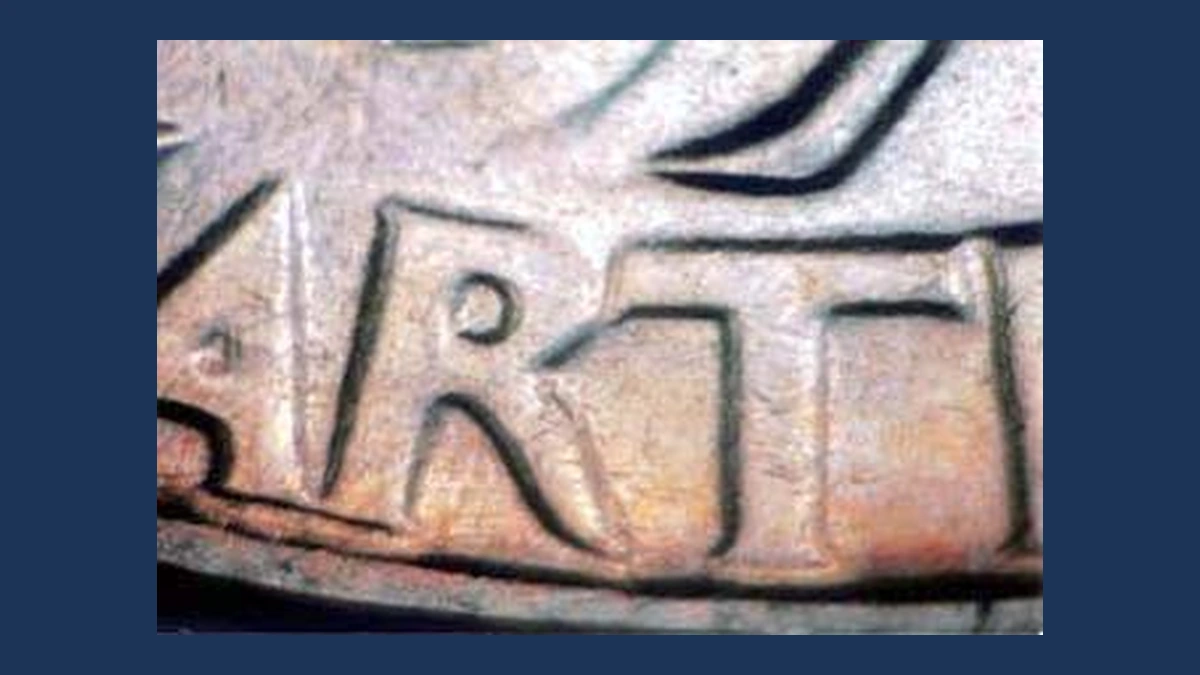
An extra outline on the back lettering can identify the 1949-D variety called WDDR-001. Its doubled design turns counterclockwise around a point near four o’clock.
The repeated details appear in UNITED STATES OF AMERICA, E PLURIBUS UNUM, and QUARTER. They were already present in the steel stamping tool before it struck the coin.
Common front doubling on 1949 quarters comes from an earlier master tool used to create working tools. That shared feature carries no separate doubling premium, so it should not be confused with this particular doubled back.
Estimated Value
Use an estimated $50–$800 for a correctly matched 1949-D WDDR-001, allowing for wear, separation, and the quality of the original surfaces. The normal shared front doubling does not justify that range by itself.
For a different-year comparison, a 1965 front doubled-die FS-101 graded PCGS MS64 sold for $1,518.75 at GreatCollections. That stronger priced variety provides context, while the 1949 back pattern and condition need their own assessment rather than borrowing its value.
How to Identify
Choose the back, not the familiar front lettering, as the starting point. Under a 10× magnifier, compare the repeated outlines in UNITED STATES OF AMERICA, E PLURIBUS UNUM, and QUARTER.
The pattern should turn counterclockwise about the lower-right area near four o’clock. This describes rotation within the doubled design, not a coin whose back is turned relative to its front.
Wexler’s WDDR-001 photographs provide a matching pattern; a short vertical tool mark above AMERICA’s M can support the comparison.
Look for rounded extra outlines rather than a flat ledge from movement during the strike. Match the repeated back lettering itself before giving a common front feature the value of this variety.
4. 1949 Washington Quarter Extra Mint-Letter Outlines
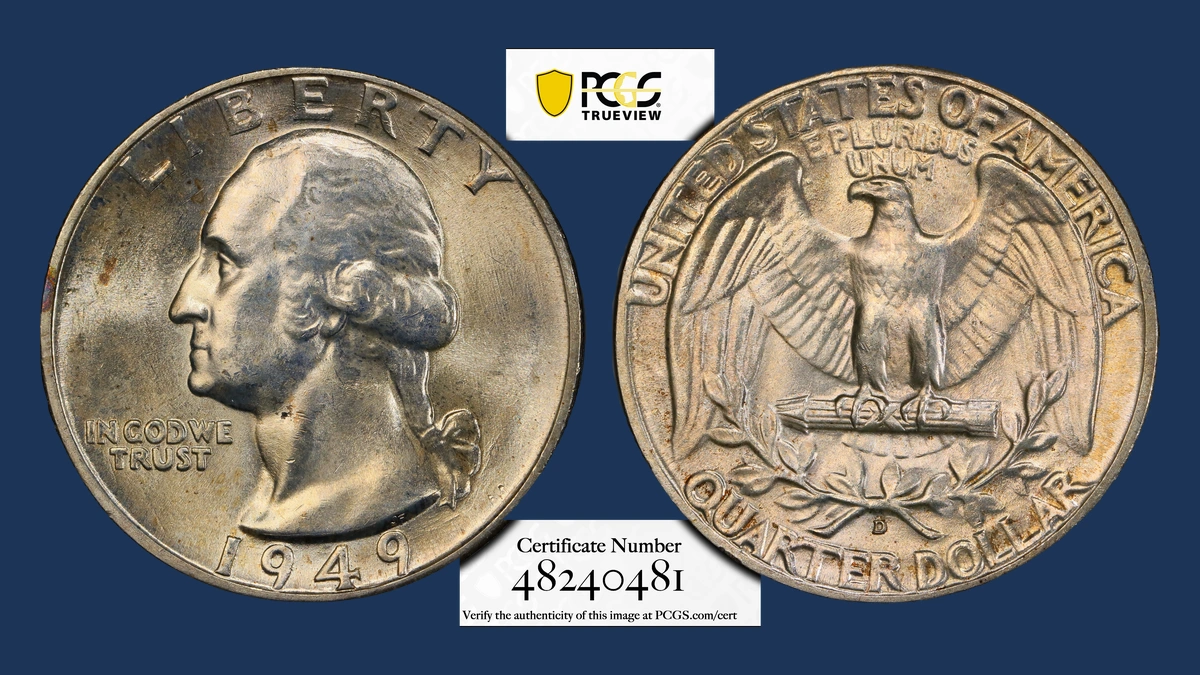
An extra curved outline inside or beside the D can identify one of two recognized mint-letter varieties. The mint mark sits on the back below the eagle.
FS-501 is listed as D/D, meaning another impression of D remains from work on the stamping tool. FS-601 retains the traditional over-mint-mark name, often described as D over S.
The FS-601 interpretation is disputed, with damaged D/D offered as another explanation. Its cataloged shape can still be matched, but an internal curve should not automatically be called a visible S or combined with the separate FS-501 pattern.
Estimated Value
Estimate $30–$1,000 for confirmed 1949-D mint-mark varieties, with clear shapes and high preservation supporting the stronger values. Small worn traces generally belong toward the lower end.
An MS65 D/D FS-501 sold for $384 in March 2018. PCGS records an MS65 FS-601 eBay result of $529 in January 2023.
Each price belongs to that specific variety and condition. An unexplained extra line beside a D does not carry the same value.
How to Identify
Locate the D below the eagle and keep it upright in your photograph. Start by comparing the whole letter with one confirmed catalog example, rather than trying to name a fragment in isolation.
A 10× magnifier can show where the extra curve joins or separates from the main D. Move the light to distinguish raised metal from a shadow or scratch.
For FS-501, match the repeated D outline. For FS-601, match its own listed shape without treating the debated lower-letter identity as settled.
The PCGS FS-601 listing keeps that traditional name in use.
Choose the catalog match from the actual shape and position of the surviving metal, not from a seller calling every doubled mint letter D/S.
5. 1949 Washington Quarter Off-Center Strike
The quarter design can run off one side of its blank if the metal is misplaced when struck. The opposite side retains a crescent of unstruck metal.
This error is reported for both Philadelphia and Denver 1949 quarters. The specific percentage, direction, and surviving mint mark must come from the individual coin being examined.
It is not enough to find a wide rim on one face. A true misplaced blank changes how the designs on both faces fit within the same outline, while a single uneven rim can have a different cause.
Estimated Value
Estimate $100–$1,500 for genuine 1949 off-center quarters with readable identity and original surfaces. Clear displacement can add interest, but heavy wear or a missing date can reduce it.
For a later-year comparison, a 1965 quarter struck 25% off center sold for $180 in December 2025. That copper-nickel coin offers a visible-strike comparison, while a 1949 silver example should still be priced for its own condition, degree of shift, and remaining design.
How to Identify
Turn the coin over before estimating a percentage. The two displaced designs should make sense on one misplaced blank, with a natural empty crescent corresponding to lost lettering or portrait detail.
Inspect the date and the back mint-mark area next. An absent D cannot identify Philadelphia if that part of the design never reached the metal.
Under a 10× magnifier, follow the border between blank and struck areas for later hammering or filing. The original silver blank should retain roughly its full 6.25 g unless another problem removed metal.
Describe only the displacement visible on the coin. A single original design ending naturally at the edge, with matching unstruck metal opposite it, is the useful physical test.
6. 1949 Washington Quarter Wrong Blank
A quarter design can be too large for a blank intended for another denomination. The finished piece may be smaller, lighter, or made from metal different from the normal silver quarter alloy.
Wrong-blank errors are reported for 1949, although a specific dime or nickel blank needs confirmation on the individual coin. Its actual metal and outline must decide the identification.
A small quarter created by cutting or grinding a finished coin does not become a wrong-blank error because it resembles a smaller denomination. The original design should end naturally at the undersized boundary.
Estimated Value
For an authenticated 1949 wrong-blank quarter, estimate $300–$3,000, depending on the identified blank, condition, and remaining date. This range applies after the metal and original striking are established.
A 1953 nickel-blank quarter graded PCGS MS63 sold for $720 in September 2024, while a 1957 silver-dime-blank MS64 sold for $1,920 in December 2023. Those separate later-year sales show how blank type and preservation can produce different prices within the wider category.
How to Identify
Record the coin’s actual weight and diameter before deciding which blank it used. A normal 1949 quarter is about 6.25 g and 24.3 mm, with 90% silver metal and a grooved edge.
For comparison, a silver dime blank starts near 2.5 g and 17.9 mm. A nickel blank starts around 5.0 g and 21.2 mm, using copper-nickel alloy instead.
Striking can spread a small blank, so caliper readings need to be considered with metal and design. Inspect the edge under a 10× magnifier for filing or a coating that changes its appearance.
Look for the larger quarter design ending naturally beyond the small blank. Identify that original construction before assigning a denomination name from a merely similar size.
Conclusion
Estimated 1949 quarter error values range from $30–$3,000, with the specific mistake and the coin’s preservation considered together. A small, correctly matched mint-mark variety can be more convincing than an unexplained dramatic-looking surface.
Keep the ordinary front doubling separate from the cataloged doubled back. For missing metal or an unusual blank, inspect the actual edge, size, and weight before comparing the coin with a reported sale from another year.