1936 Quarter Error List with Pictures

A second outline in the motto can matter more than a large scratch on a 1936 quarter. A well-preserved doubled-design example sold for $6,600 in September 2018.
This 1936 quarter error list also examines repeated mint letters, incomplete blanks, and misplaced strikes. Estimated values range from $25–$8,000, with each type needing its own physical checks.
Read on to compare extra letter outlines, missing metal, and displaced pictures with the right examples.
1. 1936 Washington Quarter Peeling Metal and a Possible Edge Lamination
A thin piece of metal can lift or fall away if the blank contains a weak layer. This peel is called a lamination.
Year guides report this type for 1936, including Denver examples. They do not establish that every rough patch or open edge has the same cause.
One collector described an opening near four o’clock on the front as a possible small lamination. A certified coin shown for comparison in that discussion was a different specimen.
Inspect the opening from both faces and the edge. A peel, deeper split, and later damage can look similar from the front.
Estimated Value
Estimate $25–$750 for authenticated 1936 laminations, from small local peels through conspicuous separations on attractive quarters. A loose flap can make the fault easier to display if it remains naturally attached.
The four-o’clock opening fits that range only if examination confirms an original metal flaw. A later cut or damaged edge would need a different price comparison.
Wear, scratches, and cleaning still affect the complete quarter. Buyers also consider whether the original silver surface remains attractive around the peel.
How to Identify
Keep Washington upright and locate the reported opening near four o’clock, at the lower-right front edge. Compare the same spot from the side and back to see whether it is a thin surface peel or a deeper split.
Leave any attached metal in place while following its boundary with a magnifier. Repeated parallel scratches or metal pushed up beside a cut can indicate later damage instead of a weak layer in the blank.
Then compare nearby letters and picture details with the affected surface. Photographs of the coin’s own front, back, and edge provide the evidence needed to distinguish a lamination from an opening caused after minting.
2. 1936 Washington Quarter Clash Traces from the Opposite Design
A faint part of the opposite design can appear where it does not belong. The stamping tools met without a blank between them and picked up marks from one another.
Later coins copied those marks along with their normal pictures. Collectors call this a die clash, with die meaning the steel stamping tool.
A year guide reports clashes for 1936 without giving a particular mint, finish, or location. Each candidate therefore needs its extra outlines compared with the opposite design.
The actual outline should explain which design fragment transferred. Straight scratches alone do not establish a clash.
Estimated Value
An authenticated 1936 clash has an estimated range of $25–$1,000. Faint traces on worn coins usually make a less striking display than clear recognizable outlines with attractive original surfaces.
Use the actual outline and its visibility when comparing prices. A short faint trace should not receive the same premium as a large, clearly recognizable design fragment.
A bright background with many tool-polishing lines is not automatically a strong clash. Identify the transferred design before considering a large premium.
How to Identify
Photograph the front and back in matching orientations before concentrating on a tiny line. Seeing the full pictures helps you find the opposite-side shape that may have left the trace.
Now use a magnifier and a lamp held low beside the coin. Follow the unexpected outline to see whether it resembles a recognizable letter, feather, or other design fragment.
A scratch may cross unrelated parts of the picture without copying any of them. Fine lines from polishing a stamping tool can also appear in the background.
Do not name a transferred eagle feature from a single straight mark. Several connected curves or edges usually provide a stronger comparison.
An identified clash on the same issue offers the useful final check: the extra shapes should agree with the opposite design.
3. 1936 Washington Quarter Curved and Straight Clips
A curved gap can form before the coin is struck if the blank cutter overlaps an existing hole in the strip. The disc receives its picture only after that piece is already missing.
A straight gap may instead reflect the end of the strip. It belongs to the same broad blank-cutting family, despite its different outline.
Year guides list both shapes for 1936 without identifying specimens. Read the mint and gap position from the coin itself.
The design beside the gap should record striking around an incomplete blank. A finished quarter cut afterward has a different history.
Estimated Value
Genuine 1936 clips have an estimated value of $50–$1,500. Small, subtle gaps tend to be more affordable than large clear openings on well-preserved coins.
A double clip still belongs to one complete quarter. Its two gaps may affect different parts of the design and need to be assessed together.
Date visibility and original surfaces help a buyer judge the error. A smoothly filed edge may look tidy, but removed metal alone does not earn the same premium.
How to Identify
For either a curved or straight gap, inspect the two places where the remaining rim meets the missing section. Under a magnifier, original weakness or stretched detail beside those junctions can show that the blank was incomplete when struck.
Check the exposed boundary without scraping it. Parallel saw marks, file strokes, or a sharp cut through finished letters suggest that someone removed metal from a complete coin later.
Next, turn to the rim opposite the gap and look for a weak area. That clue can support a genuine clip, but it is not always clear, so judge it together with the struck design at both endpoints.
4. 1936 Washington Quarter Cracked or Broken Stamping Tool
A crack in a stamping tool can leave a raised thread on a quarter. A small piece breaking from the tool can instead produce a raised lump.
When a larger break reaches the tool’s edge, the coin can show a mass attached to its outer rim. That particular form is called a cud.
The 1936 reports use these terms without establishing one tool or location. A fine crack is different from a large rim break.
Silver entered the damaged tool and formed the raised feature. A later hit can also push metal upward, so inspect the surrounding surface.
Estimated Value
Allow an estimated $25–$300 for genuine fine cracks or small tool chips and $100–$2,000 for substantial confirmed cuds. A clear rim connection and missing normal design support the larger category.
Several small bumps do not automatically equal one dramatic break. Compare the amount of raised metal, its connection to the rim, and the condition of the surrounding design.
A dent can raise edge metal after minting. Separate that damage from original tool failure before applying either range.
How to Identify
Separate the three shapes before choosing a name. A thin raised line, an isolated lump, and a broad mass joined to the rim can reflect different stages of tool failure.
Move a light across a suspected crack and view it through a magnifier. It should stand above the silver rather than cut down into it.
For a lump inside the design, inspect its boundary and the nearby picture. A dent may have a hollow beside metal pushed upward by the impact.
A larger break at the rim can replace part of the normal design with raised metal. Inspect the opposite face for supporting weakness where metal flowed into the opening.
Keep the full raised shape visible in photographs. Its relationship with the design and rim is more useful than a generic year-guide label.
5. 1936 Washington Quarter Repeated San Francisco and Denver Mint Letters
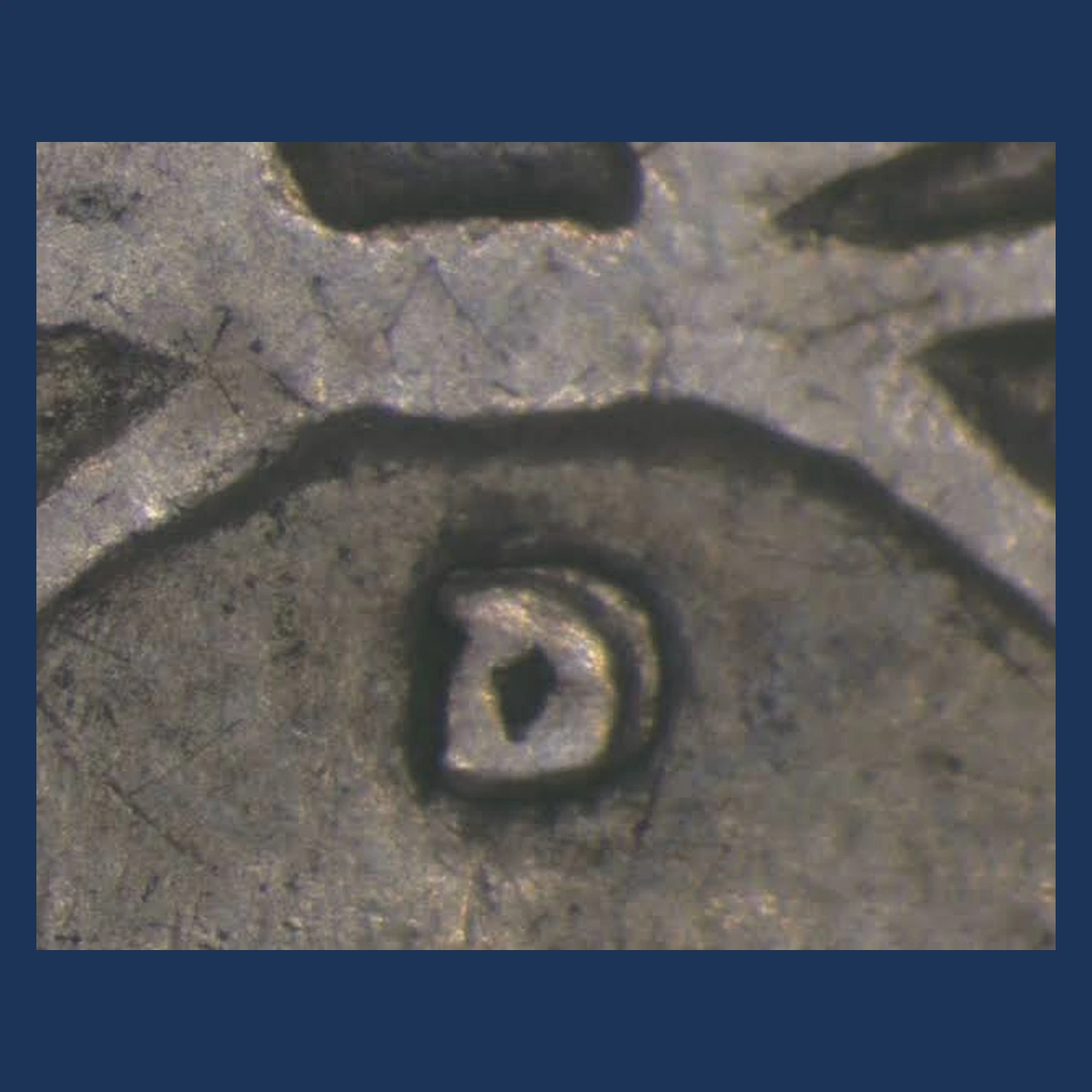
The small mint letter below the wreath can show part of an earlier punch position. A worker added that letter more than once while preparing the stamping tool.
The listed San Francisco variety has an extra S toward the east, or right with the coin upright. Denver’s listed variety has another D toward the southwest, or lower left.
These are different patterns on different mint issues. Neither requires the coin to have received two strikes.
The extra outline must retain the shape of the correct letter. Wear, a tool chip, or a flat striking shelf can imitate part of it.
Estimated Value
For authenticated 1936 mintmark varieties, estimate $25–$2,000. Clear repeated outlines and attractive unworn surfaces can place a coin well above a faint, heavily worn example.
This is a comparable-variety estimate, not a specific recorded auction price for the Denver or San Francisco pattern. The two mint issues also differ in ordinary collector demand.
An extra S does not turn a San Francisco quarter into a Denver rarity. Confirm the mint and its matching punch pattern before choosing the price comparison.
How to Identify
Find the D or S beneath the wreath on the back, then orient the lettering upright. Philadelphia quarters normally lack a mint letter and are not missing-mintmark errors.
On an S, inspect the right edge for parts of the earlier S curve. Compare with the 1936 entry in Wexler’s mintmark catalog.
On the Denver example, look toward the lower left of the D instead. Do not transfer the San Francisco direction to the other mint.
Change the lighting while keeping the coin still. A true second punch should retain a recognizable letter shape, while a reflection moves and a flat shelf may simply narrow the original stroke.
6. 1936 Washington Quarter Broadstrike with an Expanded Border
A blank can spread beyond its usual width when the surrounding metal ring fails to contain it during striking. That ring, called a collar, normally controls size and forms the edge grooves.
The result is a broadstrike if the complete intended design remains on the coin. The surrounding border can be uneven without losing part of the artwork.
Year guides report this type for 1936, including Denver examples. Genuine expansion happens during striking rather than through later blows to the edge.
Measure the diameter and photograph the design. An off-center strike loses part of the picture instead.
Estimated Value
For an authenticated 1936 broadstrike, estimate $100–$2,500. Clear expansion with complete lettering and attractive surfaces generally makes a stronger display than a slight change in width.
The estimate applies to complete quarter designs on expanded blanks. A small increase in diameter should not be priced like a broad, easily recognized border around the whole picture.
Mint and condition still affect the whole coin’s value. Later hammering can widen a quarter, but that damage does not earn an original-striking premium.
How to Identify
Start by reading every outer word on both faces, since a broadstrike retains the complete intended picture. Missing letters opposite an untouched crescent may instead indicate an off-center strike.
Measure a loose candidate in several directions with calipers and compare it with the normal 24.3-millimeter width. Then examine the edge grooves under a magnifier for signs that the surrounding ring failed to contain the metal during striking.
Check the enlarged border and portrait for repeated dents, crushing, or hammer marks. An uneven outline can be genuine, but original struck surfaces should explain the expansion without the damage expected from someone flattening a finished quarter.
7. 1936 Washington Quarter Off-Center Strike, Sometimes Reported with Doubling
When the blank sits partly outside the tools, an untouched crescent remains beside an incomplete design. The date and mint may survive, depending on which part received the strike.
Year guides report off-center 1936 quarters, including Denver coins. They also describe a combination of off-center striking and a doubled front.
That combination needs two separate checks. A displaced second strike can produce repeated details without proving the original stamping tool was doubled.
The reported combination is not automatically the Philadelphia FS-101 variety. Its visible extra outlines must match a known pattern before receiving that name.
Estimated Value
An authenticated 1936 off-center quarter has an estimated range of $100–$5,000. Larger clean crescents, clear identity, and original surfaces can support stronger interest.
A combined doubled-tool and off-center coin must be valued as one specimen. Do not add two full price ranges merely because two mechanisms are claimed.
The displacement, readable date, and visible repeated design all affect the comparison. Examine each feature before applying a premium for an unusual combination on the same quarter.
How to Identify
Turn the coin so the blank crescent is easy to see. The missing portion of the picture should fit that crescent on both faces.
Find the surviving date and mint area before estimating how far the design moved. Clear identity makes comparisons with other off-center coins more useful.
If letters also look doubled, inspect them separately under a magnifier. A doubled stamping tool leaves its own repeated outlines within one struck picture.
A second strike may instead leave another date, border, or portrait in a new position. Such movement does not establish the FS-101 doubled-tool pattern.
Compare the claimed doubling with an identified example only after checking the blank crescent and strike boundary. Each feature must have its own visible support on this same coin.
8. 1936 Washington Quarter Design on a Dime or Cent Blank
A smaller blank intended for another denomination can receive the quarter’s picture if it enters the press. The outer design may not fit, leaving letters cut off at the edge.
Year reports list silver dime blanks and copper-alloy cent blanks for 1936 quarters. These are possibilities with different metals and normal weights.
Normal blanks provide starting weights: 2.5 grams for a silver dime and 3.11 grams for a period copper-alloy cent. A candidate still needs its own measurements.
The surviving year and original metal must establish the combination. A trimmed or plated quarter can also look small or oddly colored.
Estimated Value
After authentication, estimate $500–$5,000 for a silver dime blank and $750–$7,500 for a cent blank bearing the 1936 quarter design. The surviving identity and condition affect the comparison.
For different-year context, a 1960 quarter on a dime blank sold for $552 in October 2021. A 1956 quarter on a cent blank brought $1,265 in December 2009.
Those older sales illustrate the mechanisms. Neither establishes a certified 1936 discovery or supplies its actual weight.
How to Identify
First record the readable 1936 date and all surviving quarter details in full-coin photographs. Outer letters that could not fit on the smaller blank should end naturally at its original struck boundary.
Weigh a loose candidate on a scale and measure it with calipers, comparing it with the normal quarter’s 6.25 grams and 24.3 mm. Check the edge for cutting or filing that could make an ordinary quarter smaller and lighter.
A professional alloy test can then distinguish silver dime metal from the period cent’s copper alloy without scratching the coin. The surviving design, measurements, and metal must agree before the smaller disc can be identified as a wrong blank.
9. 1936 Washington Quarter Doubled Front and Back Designs
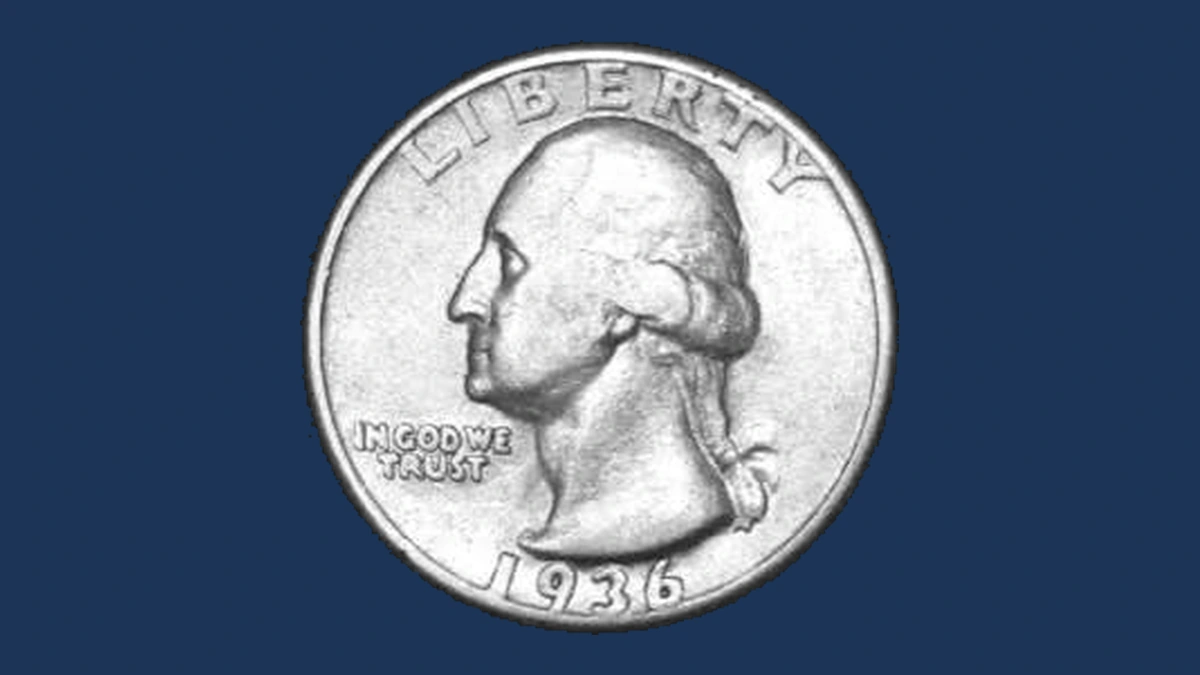
The best-known Philadelphia FS-101 shows repeated detail in IN GOD WE TRUST, LIBERTY, the date, and Washington’s eyelid. The stamping tool carried the doubled picture before any quarter received it.
Other Philadelphia patterns concentrate on the date or hair-ribbon ends. Back varieties involve lettering, branches, or the eagle’s beak, while San Francisco has its own back pattern.
One FS-101 graded PCGS MS63 also has a small original blank flaw on the forehead. That mark belongs to the particular coin, not every example of the variety.
Some repeated outlines are close together. Match them before comparing prices with a stronger variety.
Estimated Value
A Philadelphia FS-101 graded MS66 brought $6,600 in September 2018, recorded by PCGS. Estimate $50–$8,000 for identified varieties across worn and highly desirable unworn grades.
The separate MS63 with the forehead flaw sold for $1,116.25 in February 2017. Its flaw and doubling belong to that one whole-coin result.
Other subtle patterns need their own comparisons. An extra line or thick date without a matching pattern does not inherit the FS-101 premium.
How to Identify
For Philadelphia FS-101, enlarge the motto first and match the repeated letter edges to an identified photograph. Then compare LIBERTY, the date, and eyelid as supporting parts of the same pattern.
Use a different reference for a date-only or ribbon-end variety. Combining details from several photographs can create a pattern no actual tool carried.
On the back, match the specified lettering, branches, or beak details and confirm whether the coin is Philadelphia or San Francisco.
Do not use a small forehead hollow as a required FS-101 marker; it was an individual blank flaw on one auction coin.
Rounded repeated outlines that remain visible as the light changes are more useful than flat shelves or glare.
Conclusion
The doubled motto provides one specific starting point, but it does not explain every unusual 1936 quarter. Peeling silver, missing edge sections, and displaced designs come from different stages of manufacture.
Estimated values across these categories span $25–$8,000. A clear date, original surface, and matching identification make the comparison useful.
Keep attached metal in place and compare each feature with a clear example. An old label or blurry photograph cannot replace a close look at the coin.