1928 Quarter Error List with Pictures

One 1928 quarter feature hides beside a tiny S; another reportedly puts Liberty on brown cent metal. The repeated-S variety has sold for $848.25 at GreatCollections, while the cent-blank rarity needs a separate estimate.
This 1928 quarter error guide covers estimated values from $25 to $75,000. It also explains why the old “inverted S” name should be treated differently from a confirmed repunched letter.
Work through the visible clues below before attaching a price to an unusual coin.
1. 1928 Standing Liberty Quarter Clashed E
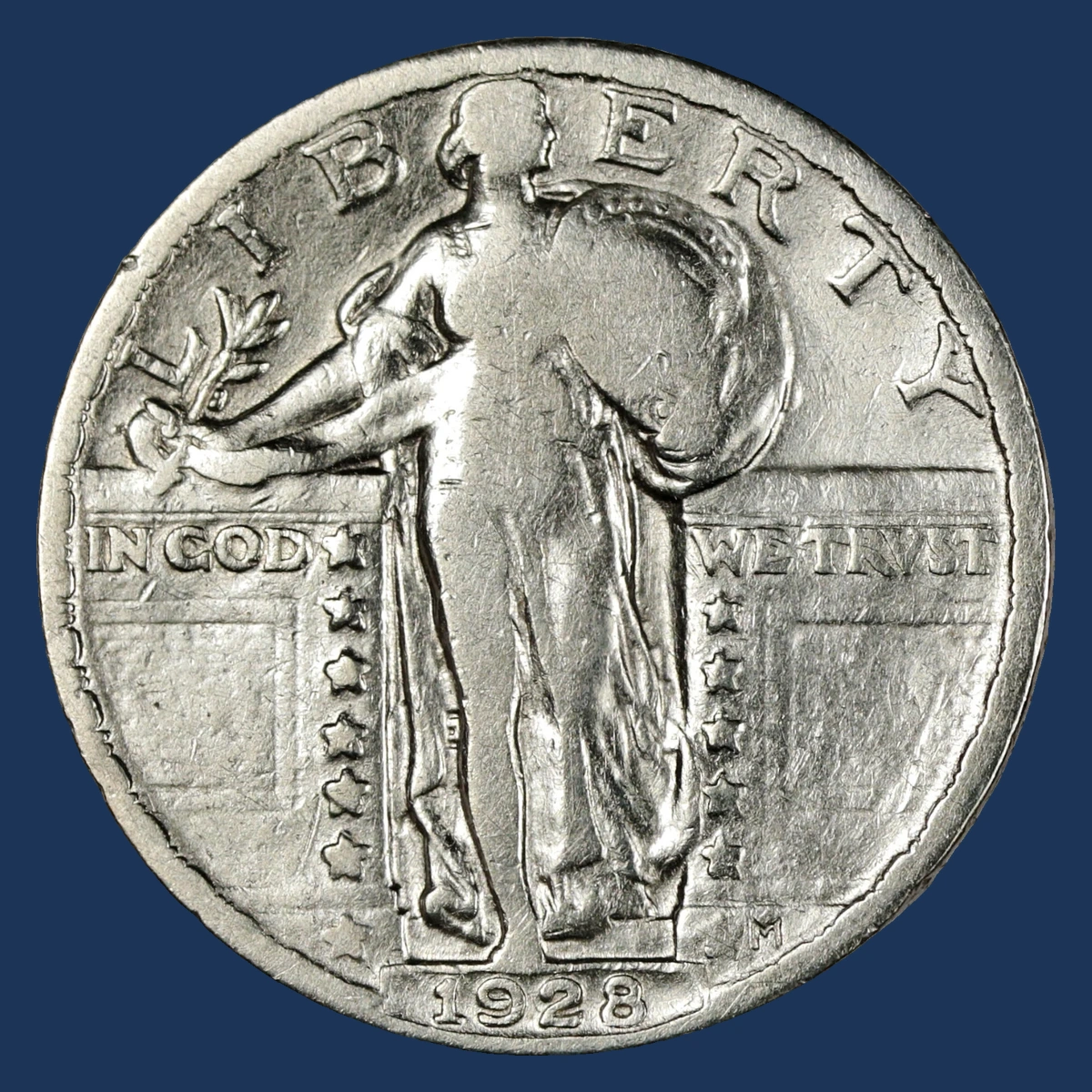
An extra E outline is reported on the front of some 1928 quarters. The proposed source is the E in E PLURIBUS UNUM on the back.
The two dies, or steel striking tools, can touch when no blank lies between them. Parts of their designs then mark the opposing tool.
A later coin can carry those transferred traces. This is a die clash, not a second complete strike on the coin.
The reported E needs to fit the opposite inscription. A random group of scratches that happens to resemble a letter is not enough.
Estimated Value
Estimate $50 to $300 for an ordinary circulated to modest-grade 1928 quarter with a convincing clashed E. The clearness of the transferred shape matters more than simply finding an extra line.
Worn examples with a faint outline belong near the lower end. A cleaner coin showing a recognizable letter and related design traces can attract stronger interest.
Exceptional condition or sharply formed head detail can add separate coin value, so compare the entire piece before judging the clash premium.
How to Identify
Look at the E in the back inscription before trying to name an unexplained mark on the front. Use full photographs to check where that part of the opposing design would meet the front with the coin normally aligned.
Keep that alignment fixed while comparing the reported extra outline, and look for related traces that fit the same image. Freely rotating a picture until one isolated corner matches can turn a random scratch into an apparent letter.
Examine the mark with angled light to distinguish an original design trace from a cut groove with displaced metal. Photograph the surrounding area as well, so an expert can evaluate its relationship to Liberty instead of seeing only a cropped E-like shape.
2. 1928 Standing Liberty Quarter Teardrop Die Chip
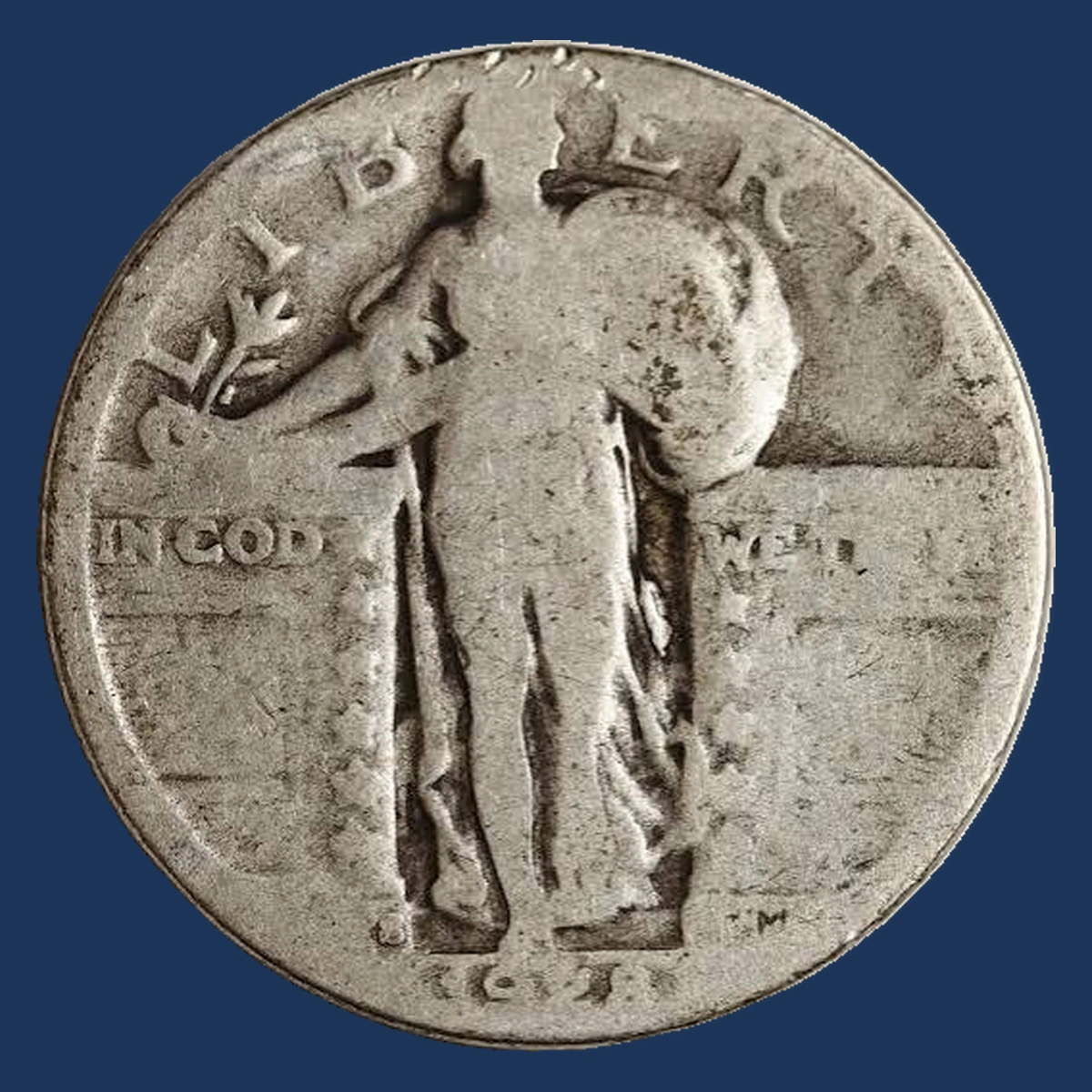
A small lump resembling a teardrop gives this reported 1928-S feature its name. It is described as a die chip, a place where a little piece broke from the striking tool.
Silver can enter that small opening when the coin is struck. The missing steel therefore produces extra raised metal on the finished quarter.
The year guide describes the feature without a clear location. Its nickname should not be used to label every rounded bump near Liberty.
A small chip is also different from a large cud. A cud connects a broader broken-die area to the rim.
Estimated Value
An estimated $25 to $400 fits ordinary worn through modestly unworn examples with this small chip. Published retail references include $25 and $39 offerings, which are asking prices rather than auction results.
The premium for a tiny raised drop is usually modest. Much of an attractive coin’s price can come from its underlying condition.
A bold, easily photographed shape is more appealing than an indistinct spot, but added metal or corrosion should not receive a die-chip premium.
How to Identify
Before naming the feature, establish that the bump is part of the struck silver. Side lighting can reveal a smooth raised shape, while adhesive or corrosion may have a different surface texture.
Examine how the surrounding design meets the raised area. A chip in the die leaves a feature formed during the strike, rather than a separate substance spread over finished detail.
Next request photographs of an identified teardrop example to match the actual position and outline. The nickname supplies a shape description, not a dependable location by itself.
Leave the bump untouched and photograph the whole face as well as the close-up. If the feature reaches the rim, its size and boundary need further examination before calling it this small internal chip.
3. 1928 Standing Liberty Quarter Historical Inverted S
Some 1928-S quarters were cataloged as having an upside-down mint letter. That historical variety is often called the inverted S.
The name remains useful when reading older labels, but it does not establish an accepted minting mistake today. PCGS states that it no longer recognizes this variety after the interpretation changed.
This differs from the repunched S, which PCGS continues to recognize. A repeated letter and an allegedly inverted letter are different claims.
Normal large and small S punches also exist for the year. Their shapes must be considered before interpreting an odd-looking letter.
Estimated Value
For ordinary worn to modestly unworn coins carrying the historical inverted-S description, estimate $40 to $500. This is a condition-based coin range, without assuming a separate premium for a proven upside-down punch.
Older retail references include $50 for a Fine example and $125 for a VG08 example, both asking prices. Those different sellers and grades are not a consistent auction scale.
Exceptional head detail or unusually high condition requires a separate comparison.
How to Identify
If a holder uses the old inverted-S name, photograph the label alongside the letter rather than treating the wording as current agreement about its cause. Compare the actual S with normal large and small punches used on this date.
Keep each coin upright and at similar magnification. Study the ends of the letter and the relative shapes of its upper and lower curves.
Wear can flatten those small differences. A photograph with heavy shadows may also exaggerate the appearance of a reversed shape.
For a purchase, compare the coin’s grade and surface with ordinary 1928-S examples before paying for the old name. Ask whether a separately recognizable repunched S is present; that claim needs its own additional raised outline.
4. 1928 Standing Liberty Quarter Doubled Die Reverse
Light doubling is reported on the bottom three stars and the last four letters of DOLLAR. This back-side variety belongs to the Denver issue.
The repeated image formed while the die was being made. Coins struck by that tool can repeat the same small extra outlines.
Collectors call it a doubled die reverse, with reverse meaning the back. The D mint letter remains on the front, so both faces help identify the coin.
The effect is modest rather than a second complete eagle. Worn stars or thick lettering alone should not be mistaken for the reported repeated design.
Estimated Value
Estimate $75 to $1,500 for an identified 1928-D back-doubled quarter across ordinary worn and unworn grades. The year guide reports dealer offerings around $700 to $750 for MS65 examples, meaning attractive unworn coins.
Those figures are retail offers, not confirmed auction payments. Strong original surfaces can account for much of that price.
A worn example with barely visible extra outlines belongs lower. Exceptional Full Head detail, describing a sharply formed head, needs its own condition comparison.
How to Identify
Confirm the D on the front, left of Liberty, before comparing the back with the reported Denver variety. A similar star on a Philadelphia or San Francisco coin requires a separate identification rather than the same variety name.
Enlarge the three bottom stars and the LLAR letters in DOLLAR together, keeping both sets of features in one photograph. Compare their repeated points and corners with an identified example, not just with a general picture of a doubled coin.
Look at the height of the extra outlines under changing light, watching for flat shelves caused by movement during striking. Rounded points from wear should not be mistaken for matching doubled star points across the whole group.
5. 1928 Standing Liberty Quarter Repunched Mint Marks
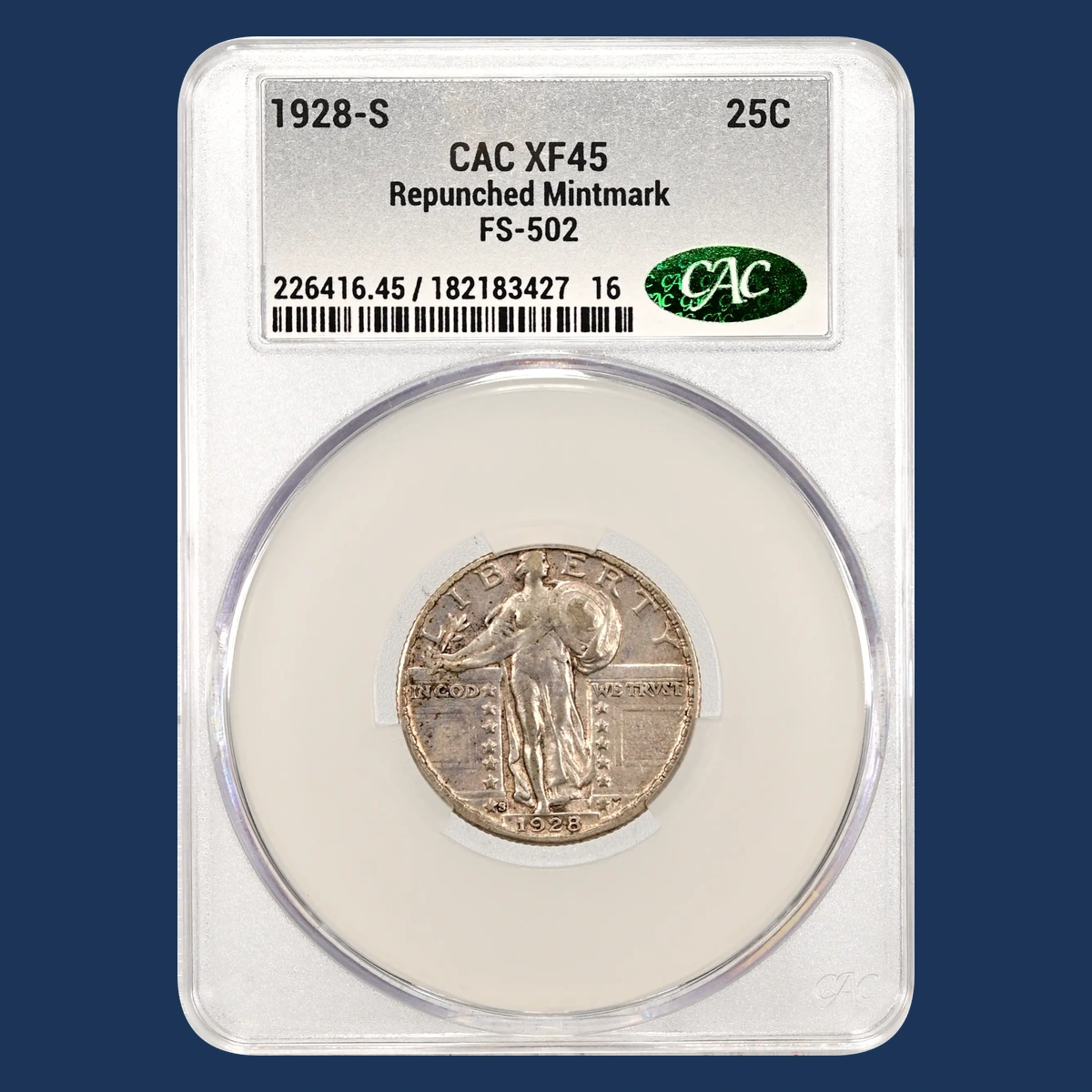
A second S can peek out to the lower right of the main S on the known San Francisco variety. That direction is southeast when the front of the coin is upright.
The feature occurs with the Large S punch. A large letter by itself is normal; the extra impression is what makes it a repunched mint mark.
The year guide also reports repeated D mint letters on Denver coins. Each mint needs its own letter comparison.
Workers added these letters to dies by hand. A second punch placed slightly away from the first could leave pieces of both impressions.
Estimated Value
GreatCollections records a $848.25 sale for a repunched-S quarter graded MS63+, an unworn coin with some marks. Its archive also includes lower-grade examples at much lower prices.
Estimate $60 to $2,000 for identified repunched examples across ordinary grades. The reported Denver variety needs its own assessment rather than automatically taking the San Francisco result.
Clear separation of the letter outlines and attractive surfaces support stronger prices. A sharply detailed Full Head example deserves a separate comparison.
How to Identify
Find the small mint letter on the front, left of Liberty. Do not look below the eagle as you would on a Washington quarter.
For the Large S repunch, inspect the lower-right side of the main letter. The earlier S should leave raised portions that fit another impression of that letter.
Keep normal Large S and Small S photographs nearby. Size alone is not a repunch.
For a Denver coin, compare the extra strokes with an identified D-over-D example instead of borrowing the S variety’s direction. A nick or die chip beside the D cannot identify a second D by itself.
Take close photographs with different lighting to check that the apparent second outline remains visible as raised metal rather than a moving shadow.
6. 1928 Standing Liberty Quarter Struck on a Cent Blank
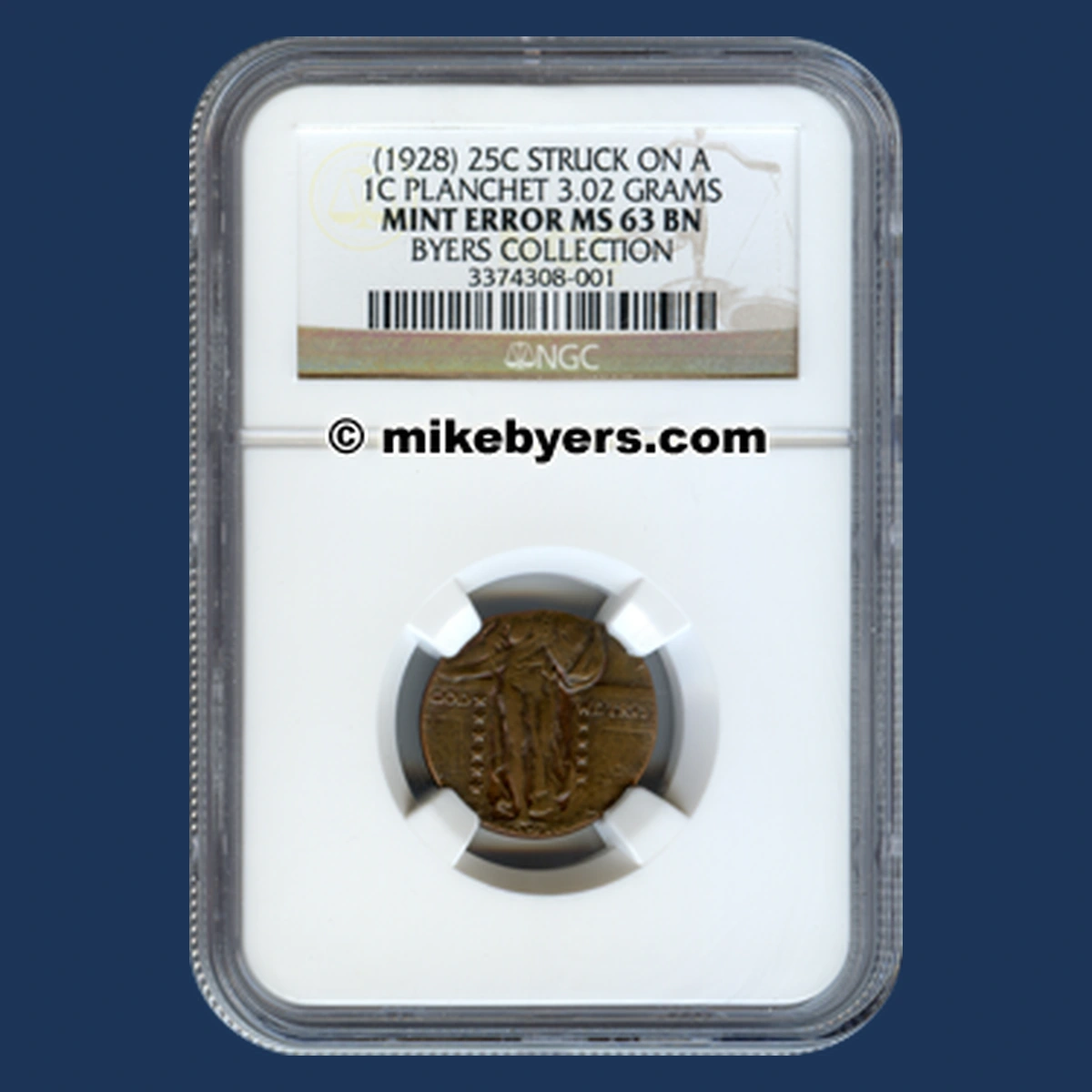
Liberty appears in brown metal on a coin cataloged as a quarter struck on a bronze cent blank. The smaller disk leaves parts of the design cropped.
The Byers example weighs 3.02 grams and was graded MS63 Brown by NGC, meaning unworn with noticeable marks. Its parenthesized date, (1928), is an assigned year.
Researcher Saul Teichman questioned this same coin, citing raised lines absent from known silver examples and unusual front-to-back alignment. These concerns deserve expert review; neither the NGC label nor that criticism alone settles the coin’s origin.
Estimated Value
For an authenticated example of this rare Standing Liberty wrong-blank type, estimate $15,000 to $75,000. The Byers page marks its coin sold without disclosing the amount.
A different Standing Liberty wrong-blank coin, a 1920 quarter on a Peruvian 20-centavo blank, sold for $16,100 in March 2011. Its material and intended denomination differ from a U.S. cent blank.
That comparison shows the price level of major errors in this series, not a sale price for the (1928) coin.
How to Identify
The 3.02-gram recorded weight is far below a normal silver quarter’s 6.25 grams. A bronze cent blank normally weighed about 3.11 grams, so the scale reading belongs with a comparison of the actual metal and design.
Check the smaller outline and the quarter details running beyond its edge. Merely coloring or plating a normal-sized silver quarter does not reproduce a quarter struck on a cent disk.
Keep the assigned year in parentheses when describing this example. Do not invent a fully visible date or mint letter where the smaller disk has lost that part of the design.
Use the original certification photographs for a sealed coin and seek a specialist’s opinion on Teichman’s concerns. Metal testing alone cannot resolve whether the striking tools were genuine.
Conclusion
From a small raised chip to a reported strike on cent metal, these features span an estimated $25 to $75,000. The highest estimate concerns a major wrong-blank rarity, not an ordinary quarter with a strange color.
Keep the mint letter and original surface central to your comparison. A repeated S, a historical inverted-S label, and a normal large S describe different things and should not share the same explanation or price.