1913 Quarter Error List with Pictures

A 1913-S quarter with a visible die crack sold for $172,500 in January 2005. Its rare date and exceptional preservation drove that whole-coin price; the crack alone was not worth that sum.
The 1913 quarter errors below span estimated values of $200–$175,000, with mint and condition making an enormous difference.
Begin with the date and mintmark, then use the checks below to distinguish a shifted strike from the known San Francisco crack.
1913 Barber Quarter Possible Off-Center Strike
A crescent of blank metal beside an incomplete portrait can indicate an off-center strike. The metal disc was misplaced when the stamping tools came together.
The picture then ran beyond one edge instead of landing entirely on the blank. Both faces should reflect that same misplaced disc.
This remains an unconfirmed possibility for a 1913 Barber quarter. The source catalog does not establish a specific silver-quarter example, mint, or finish.
An uneven rim alone is insufficient. A shifted tool or a widened coin with all its design present can look similar without being an off-center strike.
Estimated Value
For an authenticated ordinary Philadelphia or Denver candidate, estimate $200–$5,000. A genuine San Francisco example would require a separate whole-coin estimate of $5,000–$50,000, reflecting that rare date.
Together these conditional estimates span $200–$50,000. They are not reported sales of confirmed 1913 off-center quarters.
Displacement, preservation, and a readable date would be central to pricing. The mintmark must be established before applying the much higher San Francisco range.
How to Identify
Check QUARTER DOLLAR on the eagle side and the Liberty-head portrait on the front. This prevents confusing the silver quarter with a gold quarter eagle, a different denomination.
Find the blank crescent and trace the picture to the opposite edge. Some of the intended design should extend beyond the original metal.
Compare the two faces in straight-on photographs. A centered eagle paired with a shifted portrait may indicate a misplaced tool instead.
Use a magnifier to look for erased letters, grinding lines, or a compressed surface in the empty area. Those can reveal later alteration.
Read the date and surviving mintmark directly on that coin before assigning it to a 1913 issue.
1913 Barber Quarter San Francisco Crack from the 3 to Liberty’s Bust
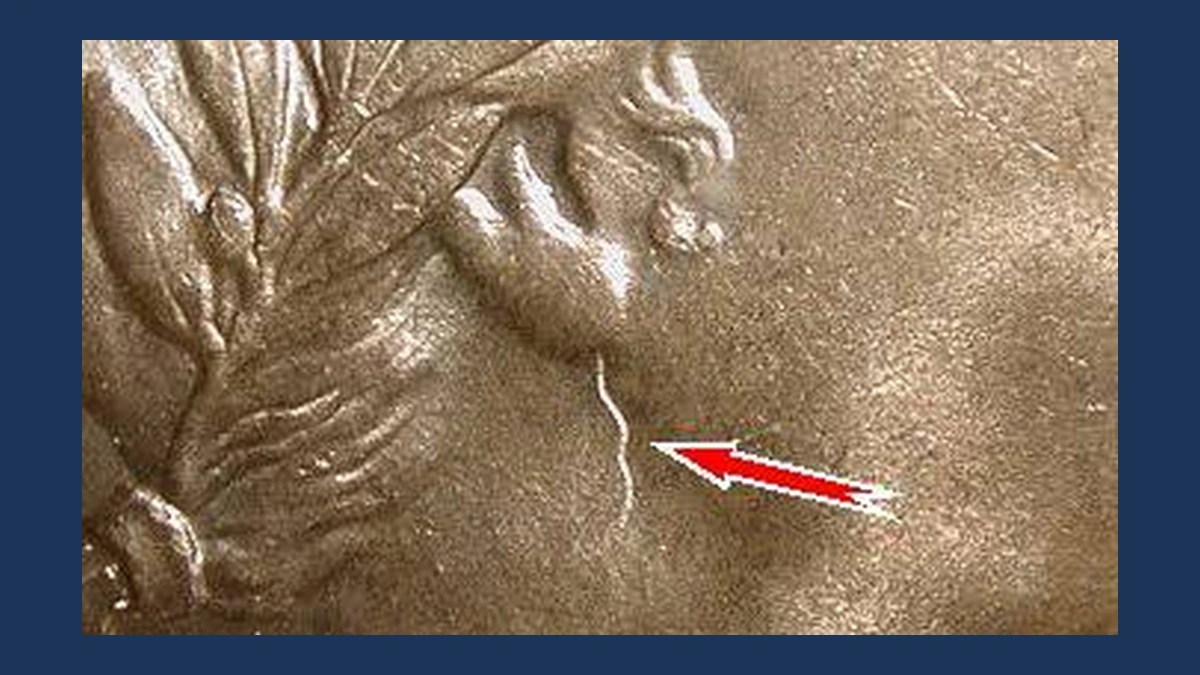
A fine raised line connects the lower-right loop of the 3 to the base of Liberty’s portrait. On some 1913-S quarters, it continues downward from the digit toward the rim.
The line formed because the die, the stamping tool, cracked. Coin metal entered that narrow opening and produced a raised trace during the strike.
PCGS describes this San Francisco feature, which also appears in auction descriptions. It does not make every genuine 1913-S look identical.
The crack can be faint or worn away. Its absence alone does not establish that a quarter is false.
Estimated Value
Estimated whole-coin values run from $2,000–$175,000, covering worn examples through exceptional high-grade survivors. Most of this value belongs to the scarce 1913-S issue and its condition.
The PCGS MS68 example sold for $172,500 on January 12, 2005. MS68 means an exceptionally preserved coin with no circulation wear and very few imperfections.
The visible crack identifies a feature on that coin, not a separately measured premium. Cleaning, heavy wear, or damage can substantially reduce comparable prices.
How to Identify
Follow the lower-right loop of the date’s 3 toward the lower edge of Liberty’s portrait with a magnifier. The expected feature rises above the surface instead of cutting into it like a scratch.
If the line extends below the digit, trace it downward and left until it reaches the rim. Keep the date in view while changing the light angle, since glare can hide a very fine raised ridge.
Confirm the S below the eagle on the back and compare the entire coin with a genuine certified example. This crack is one useful feature; the mintmark, lettering, and surfaces still need examination for signs of alteration.
Conclusion
The estimated $200–$175,000 range reflects very different coins, especially the scarce San Francisco issue. A thin crack on an exceptional 1913-S does not mean an ordinary scratched quarter has the same value.
Look for a raised line from the 3 to the portrait, or for an incomplete design opposite untouched blank metal. Keep the date, mintmark, and condition together when choosing a price comparison.