1892 Quarter Error List with Pictures

A closer look at TRUST can reveal several closely spaced outlines on an 1892 quarter. One unworn coin with repeated design details and a repunched date brought $528 in March 2024.
That was one coin with two features, not two separate values. Other 1892 quarter errors include raised cracks, transferred design marks, and a coin that spread beyond its usual border.
Estimated whole-coin values below run from $25 to $3,500. Start with the feature you can see, then follow its checks before attaching a variety name.
1. 1892 Barber Quarter Die Cracks
Thin raised lines can join letters that should stand apart. On an 1892-O quarter, recorded examples connect the upper ED of UNITED, TE of STATES, and RICA of AMERICA.
These lines came from cracks in the die, the steel tool that stamps coins. Silver pressed into the openings and formed raised traces on the finished coin.
The coin itself need not be split. The damage was in the tool.
The illustrated tool pair also produced other features, including repeated design outlines. A crack can help match that pair without making each short line a separate error.
Estimated Value
For circulated 1892-O examples with visible cracks, estimate $25 to $500. Thin lines often add little to the normal value of the coin.
Collectors can more easily appreciate a continuous raised line than a faint mark lost in wear. Clear surrounding letters help show that the line belongs to the original strike.
A coin with accompanying doubled design details should be valued as a whole. Do not add separate crack and doubling estimates to arrive at its price.
How to Identify
Follow the lettering around the back rather than searching the entire coin at random. Begin above ED in UNITED, move to TE in STATES, then check RICA in AMERICA.
Use a small light from the side to see whether each line rises above the silver. A scratch is usually cut into it, sometimes with a pushed-up lip beside the groove.
At a letter, inspect how the line meets the raised design. A natural crack from the stamping tool can connect several letters along one irregular path.
Photograph each connection at the same angle and include one view of the whole back. Compare the path with the matching 1892-O example, since an unrelated scratch need not follow the same route.
2. 1892 Barber Quarter Clashed Designs
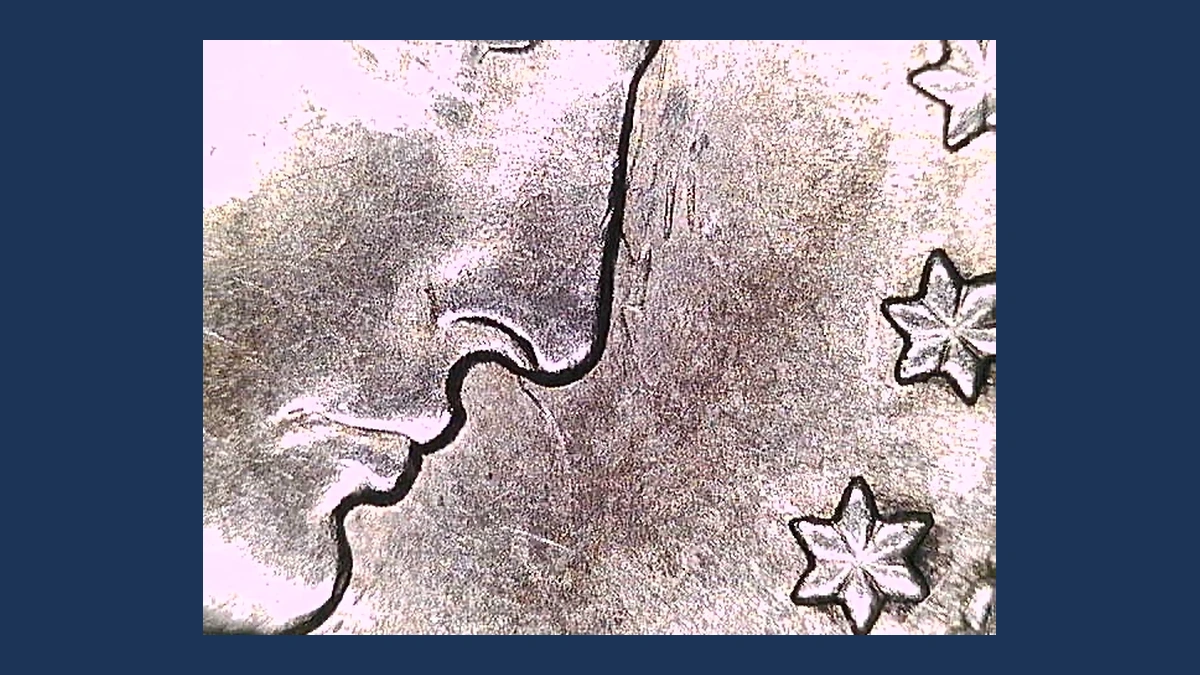
A faint O appears in an unexpected place: below the E of WE on the front. It is a transferred trace of the New Orleans mint letter from the opposite tool.
The front and back dies had struck each other without a coin blank between them. This contact is called a die clash.
Later strikes carried traces of that collision. The same recorded 1892-O tool pair has another clash mark passing through 92 in the date.
The front trace is not an extra mintmark punched onto the coin. The real O remains below the eagle on the back.
Estimated Value
Estimate $50 to $750 for worn through lightly worn examples showing the described clash marks. The ordinary value of an 1892-O quarter forms part of that total.
The small transferred O is more interesting when it can be seen without heavy image editing. Cleaning scratches or worn lettering can make the match harder to demonstrate.
This tool pair also has doubled design details and cracks. Those features support its identity, but their separate guide ranges should not be added together.
How to Identify
Find WE above Liberty first, then enlarge the space immediately below its E. The reported clash resembles the opposite side’s O mintmark rather than a second E.
Turn the coin over and locate the actual mint letter beneath the eagle. Compare the two shapes while remembering that contact between the tools transfers a reversed image.
The trace through 92 offers another check on the recorded pair. It need not look like a complete letter, so compare the whole line with a clear variety photograph.
A random ring-shaped dent or a scratch near the date is not enough. Photograph the front marks together and ask a variety specialist to match their positions before assigning this clash.
3. 1892 Barber Quarter Repunched and Reported Misplaced Dates
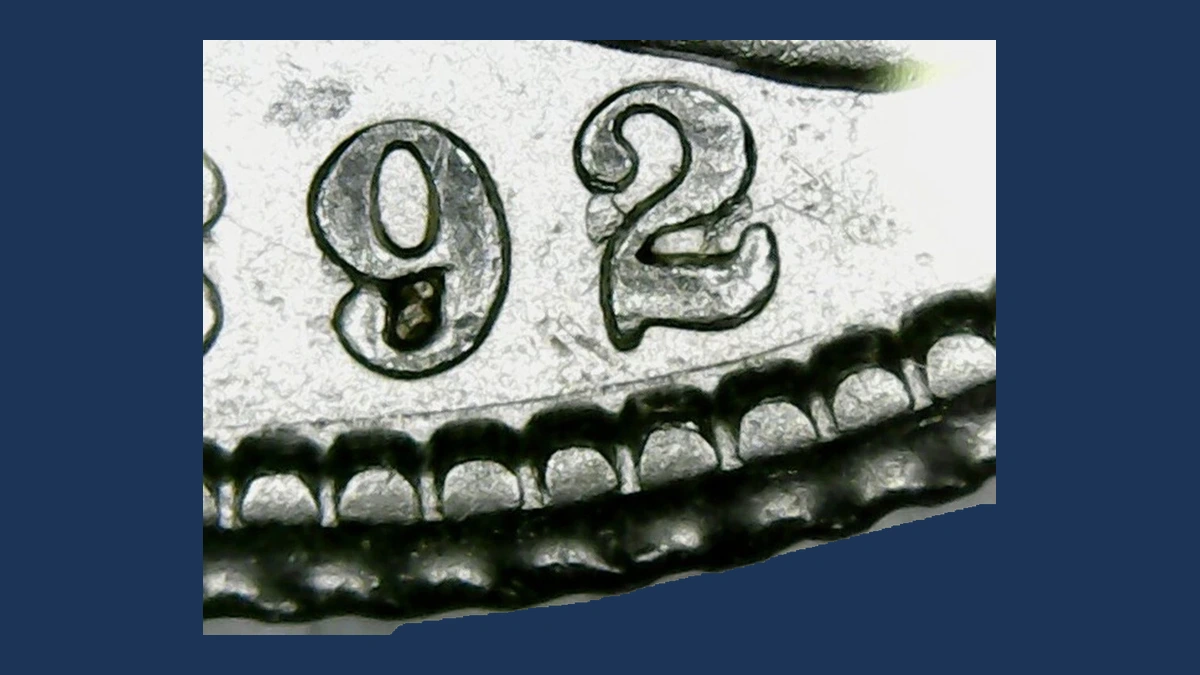
Extra strokes above 1, 8, and 9 identify one Philadelphia repunched date. Another example has repeated 1 and 8 strokes running opposite the repeated stroke beside 2.
These are separate patterns. Both resulted from repeated impressions of a date punch in the stamping tool.
A misplaced date instead leaves digit fragments farther from the normal date. An overdate leaves parts of a different year underneath.
Those last two names have also been suggested for 1892, but no matching example is established here. The confirmed repunched dates should not be renamed as overdates merely because their digits have extra lines.
Estimated Value
Estimate $40 to $1,500 for identified Philadelphia date-punch varieties in circulated through ordinary unworn condition. A repunched-date coin with accompanying repeated design details sold for $528 in March 2024.
That was the same whole coin discussed under doubled dies below. The two features do not create separate sale amounts.
A claimed misplaced date or overdate needs its own authentication before receiving a variety premium. The range is a provisional guide for confirmed date-punch features, not evidence of either claimed variety.
How to Identify
Keep all four date digits in view. On one recorded pattern, the repeated strokes sit above 189 and the 2 has no repunching.
On the other pattern, the repeated strokes beside 1 and 8 run opposite the one beside 2. Do not combine parts from photographs of those different coins into a single expected pattern.
A 10× magnifier and light from two directions help separate raised remnants from scratches. Compare the extra curves with the normal shape of the nearby digit.
For a claimed misplaced date, require a recognizable digit fragment away from the normal date, not just an irregular border mark. An overdate claim requires an underlying digit that belongs to a different year.
If the extra stroke repeats the same digit, describe it as repunching rather than guessing an earlier year.
4. 1892 Barber Quarter Doubled and Tripled Dies
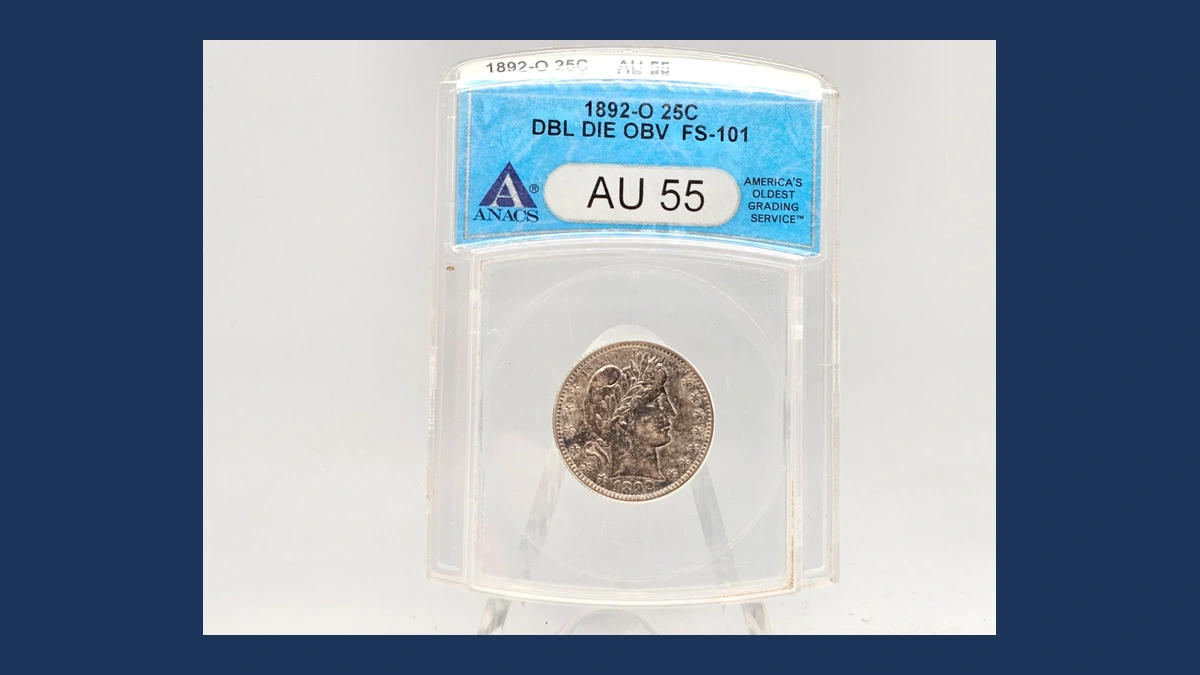
On some Philadelphia quarters, TRUST and nearby stars have several close outlines. The repeated design was already present in the stamping tool before any coin was struck.
This is a doubled die, even when the tool shows three or four impressions. It does not mean the finished coin received four blows.
Philadelphia examples include fourfold detail on the motto, stars, and outer ribbon. New Orleans examples show close tripling, and some have repeated lettering on the back as well.
On those backs, examine the country name and QUARTER DOLLAR. The precise pattern depends on the tool pair.
Estimated Value
A Philadelphia example brought $528 on March 4, 2024. Its PCGS MS63 grade means unworn, with noticeable marks.
The coin combined close fourfold design detail with a repunched date. That price does not apply automatically to New Orleans examples or every minor repeated outline.
Estimate $50 to $2,000 across identified circulated and ordinary unworn examples. Clear separation, attractive surfaces, and an exact variety match support higher prices within that range.
How to Identify
Start by deciding which face carries the repeated design. Then check the mint: Philadelphia has no letter below the eagle, while New Orleans has an O.
For the Philadelphia fourfold example, enlarge the upper S of TRUST. Several close outlines also occur on other motto letters, stars, and the ribbon.
For New Orleans coins, compare both faces with the corresponding Wexler variety photographs. Front tripling and back tripling can occur together, but the small details differ between pairs.
Look for repeated raised shapes rather than a single flat shelf beside a letter. Tool movement during striking can leave that shelf without creating a doubled die.
Take focused photographs of two or three matching areas; one blurry letter is a poor basis for identification.
5. 1892 Barber Quarter Broadstrike
A broadstruck quarter spreads farther outward than a normal coin. Its metal escaped the usual restraint of the collar, the ring surrounding the blank during striking.
The design can remain complete while the outer area becomes wider. The edge also lacks the normal fully confined shape.
A 1978 error catalog pictured an 1892-O example described as struck outside the collar. It was graded XF, meaning worn but still showing substantial detail.
This is a whole-coin shape error. A small offset in one border or ordinary wear around the rim does not by itself make a broadstrike.
Estimated Value
The 1978 catalog offered its worn 1892-O broadstrike for $175. That was a historical asking price, not a confirmed auction result or a current valuation.
For an authenticated example today, use an estimated $350 to $3,500. A clear expanded shape and well-preserved design would support the upper part of the range.
Heavy cleaning, dents, or an indistinct border reduce the appeal. A stronger grade can add normal coin value as well as making the striking error easier to see.
How to Identify
Compare the coin’s outline with a normal Barber quarter at the same scale. A broadstrike should show genuine outward spread, not merely a thick rim in one photograph.
For a loose coin, calipers can compare its width with the normal 24.3 millimeters. A scale also helps: outward spreading redistributes the usual 6.25 grams rather than requiring extra metal.
Examine the complete edge and check whether the design remains on the blank. A broadstrike can be uneven, but missing design and a large untouched crescent suggest an off-center strike instead.
Look closely at the letters near the expanded area. Later hammering can flatten them and leave impact marks; a genuine broadstrike needs to show how the silver spread while the design was being formed.
Conclusion
The useful clues are specific: linked letters, an O below WE, repeated date strokes, or a border that spread outward. Estimated whole-coin values range from $25 to $3,500.
The $528 Philadelphia sale combined a repunched date with repeated design details. Compare such coins as complete objects, and keep claimed overdates or misplaced dates separate from features that have actually been identified.