1877 Quarter Error List with Pictures

A sideways S survived beneath the corrected mintmark on some 1877 quarters. One exceptionally preserved example sold for $25,850 in June 2016.
This 1877 quarter error list also covers a repeated date, a slightly shifted strike, and a coin with extremely faint designs. Estimated whole-coin values range from $80–$30,000.
Follow the close-up checks below to separate a small tool correction from an error affecting the whole coin.
1. 1877 Liberty Seated Quarter Repunched Date
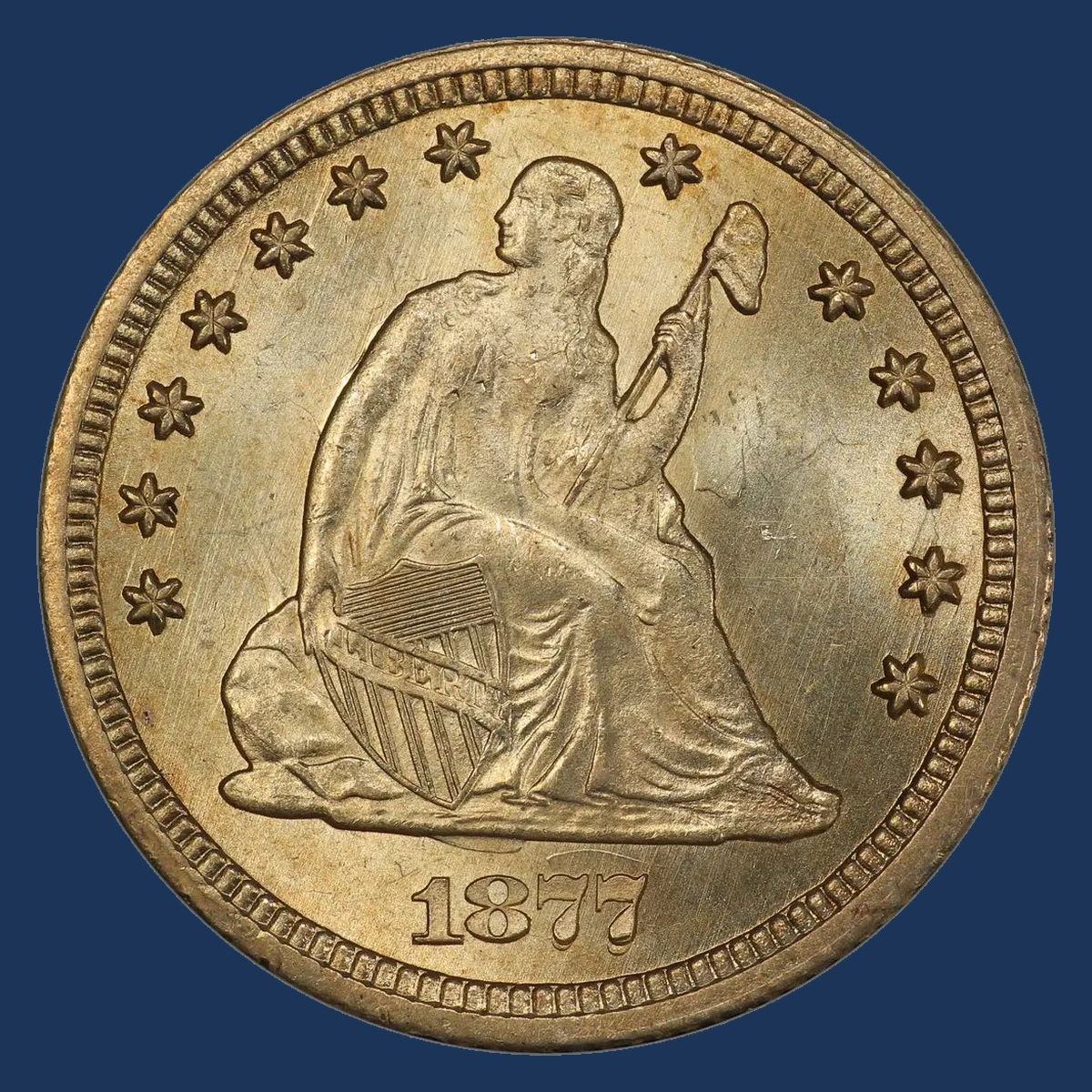
The two 7s can show extra outlines below their final positions on an 1877-CC quarter. These came from entering the same digits more than once in the die, the tool that stamps the coin.
Collectors often write the variety as 1877/77. That notation does not mean an earlier year hides underneath.
The recognized example is called FS-301 or Briggs 2-B. Both names refer to the same repunched-date pattern.
A correct match combines those raised date remnants with the Carson City mintmark. Two sharp C letters appear below the eagle on the back.
Estimated Value
Estimate $80–$3,000 for confirmed examples, from heavily worn coins to attractive pieces with no circulation wear. Clear date remnants make identification easier, but they do not erase cleaning or other damage.
GreatCollections’ archive for this variety reports seven sales ranging from $82–$2,084 across grades 1 through 65. Those are whole-coin results across different conditions.
A fresh-looking surface and a well-preserved design support stronger prices than the date correction alone.
How to Identify
Read the mintmark before enlarging the date. The FS-301 comparison here belongs to a Carson City quarter, identified by CC below the eagle.
Now use a 10× magnifier to examine both 7s. Follow the extra raised outlines beneath the final digits and compare them with a certified FS-301 photograph.
A cut beside a numeral is a different kind of mark. Turn the light so you can distinguish a raised remnant from a groove, and avoid scraping at dirt near the date.
Check that the shapes repeat in the expected positions under both digits. Matching the pair of 7s is more useful than calling any odd-looking date an overdate.
2. 1877 Liberty Seated Quarter Slightly Off-Center Strike
A well-preserved 1877-S quarter was cataloged as struck five percent off center. The description places the shift toward seven o’clock and notes distorted outer lettering.
It also says the inscriptions remain complete. This matters because a true off-center strike usually leaves part of the design beyond the blank.
A coin that spreads unevenly while retaining its full design can instead involve missing collar support. The collar is the ring surrounding the blank during striking.
The auctioned coin remains a useful reported example, but its complete design calls for close examination of the borders.
Estimated Value
For an authenticated 1877-S quarter with a comparable striking error, estimate $1,000–$8,000. The upper portion assumes strong preservation and a clearly visible abnormal strike.
Heritage offered the PCGS MS64 example in August 2004, but it did not sell. MS64 describes a coin without circulation wear that still has some surface marks.
The estimate therefore reflects the coin’s condition and unusual borders, not a winning bid from that auction.
How to Identify
Lay out photographs of both complete faces before studying a close-up. Compare the border near seven o’clock with the opposite side and note where the lettering stretches.
Identify any genuinely missing design separately from distorted but complete letters. A wide blank margin alone cannot settle whether the coin is off center or spread outside its collar.
If the coin is loose, calipers can compare its outline with the normal 24.3-millimeter diameter. Look along the edge for uneven expansion without pressing or bending the coin.
A shift visible on only one face suggests another possibility: one stamping tool was out of position.
The decisive comparison is how both complete designs fit inside the actual outline, especially around the lower-left border.
3. 1877 Liberty Seated Quarter Very Weak Strike
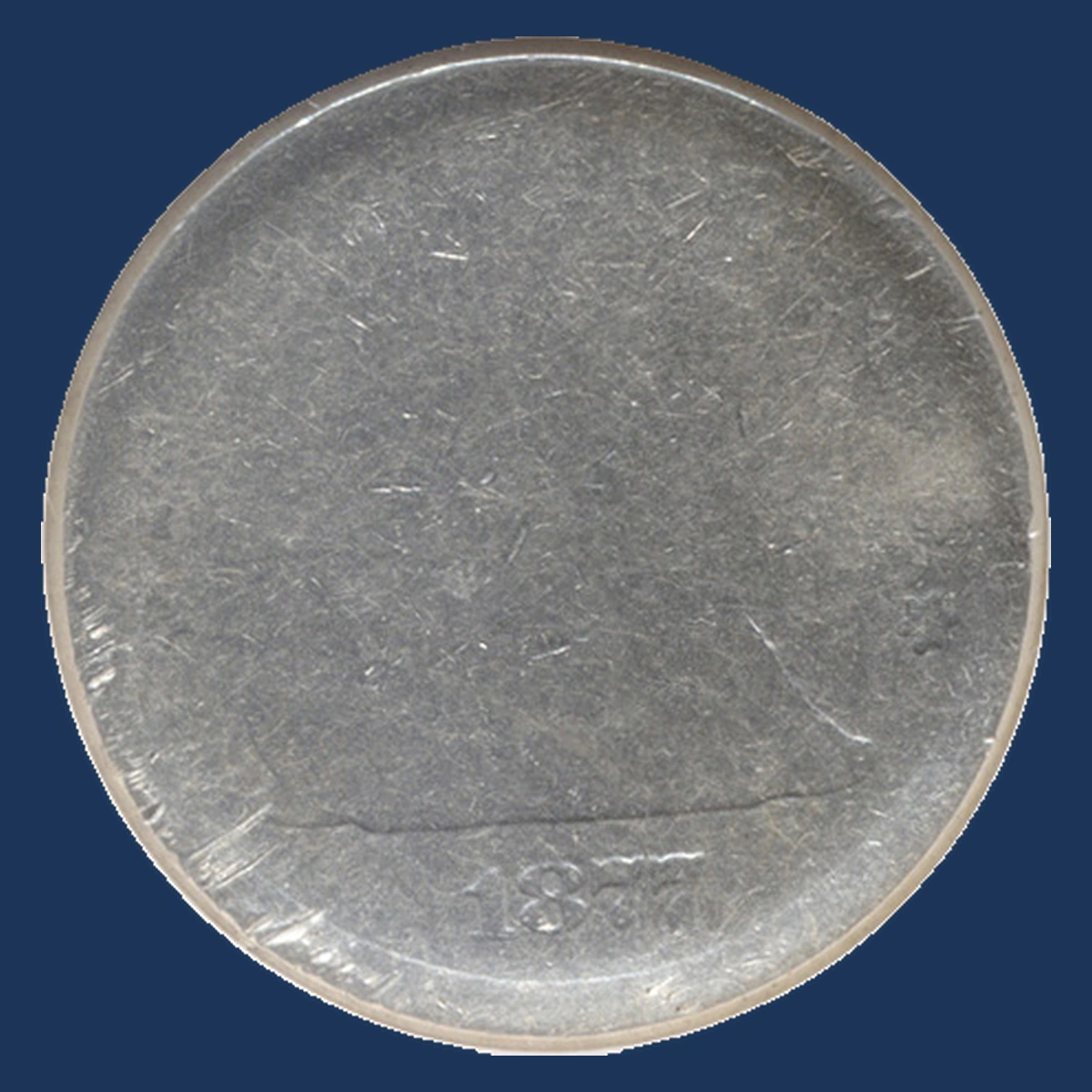
The date can remain readable even when most of a coin’s design barely appears. A documented 1877 quarter shows this contrast on both faces.
Mint Error News presented the NGC-certified piece as a die adjustment strike. That term suggests a coin struck with low pressure while equipment was being adjusted.
The shallow design is visible evidence; the worker’s exact purpose is harder to establish. A weak coin alone does not prove a deliberate test.
This example should also be distinguished from a quarter worn nearly smooth through years of handling.
Estimated Value
A specialist-confirmed example comparable to the documented weak-strike coin has an estimated whole-coin range of $2,500–$15,000. This estimate is for an exceptional, authenticated early striking error.
Broad weakness on both faces, a readable date, and intact original surfaces would support that comparison. Ordinary wear or a few softly struck stars would not.
The estimate is not a reported sale of the Mint Error News example. Its unusual appearance requires more than simply grading the faint design as worn.
How to Identify
Compare shallow areas with the parts that still formed, beginning with the date. Low striking pressure can leave incomplete detail across broad areas while some outlines remain clear.
Look for wear on the surviving raised parts under a magnifier. A coin worn smooth has lost previously formed detail, rather than merely receiving a shallow picture.
For a loose candidate, use a scale and calipers to check against the normal 6.25 grams and 24.3 millimeters. Heavy abrasion or chemical removal may leave reduced metal and disturbed surfaces.
The published 1877 example shows both faces for comparison. Keep a certified coin sealed, and compare the readable date with the faint surrounding designs on both sides.
4. 1877 Liberty Seated Quarter S over Horizontal S
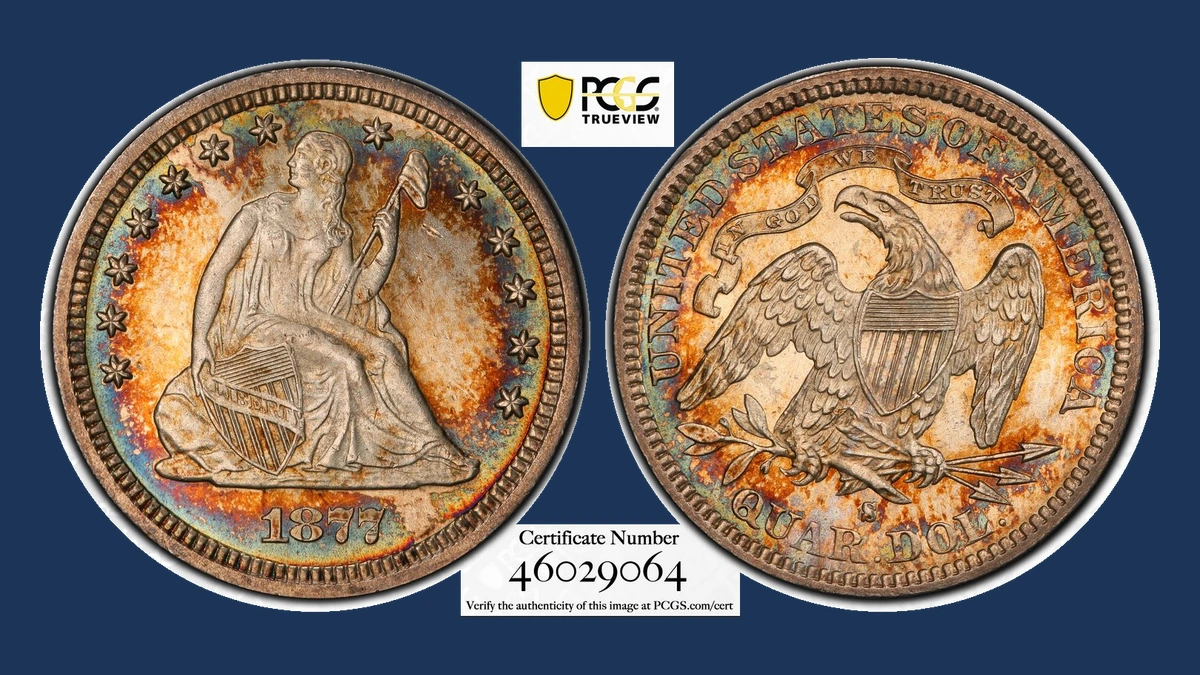
An extra curve beside the S mintmark is the surviving end of a letter placed sideways. The worker first entered an S horizontally into the stamping tool, then corrected it with an upright S.
Part of the earlier letter remained to the left of the final mintmark. Every coin struck from that tool could carry the same unusual shape.
This is called a repunched mintmark because the letter was entered again. The variety is known as S over Horizontal S, or FS-501.
It concerns the mintmark below the eagle, not the date on the front.
Estimated Value
PCGS records a PCGS MS67 example at $25,850 in June 2016. That very high grade means exceptional preservation without circulation wear.
For the variety overall, estimate $100–$30,000. Worn examples sit far below the finest surviving pieces.
PCGS also records an MS65 example at $3,760 in April 2017. The gap illustrates how strongly condition affects value, even when the sideways mintmark pattern is the same.
How to Identify
Keep the reverse upright and locate the S under the eagle. With a magnifier, concentrate on the left side of its lower portion rather than searching the surrounding letters.
The earlier sideways S leaves a distinct curved remnant there. Compare that curve’s attachment and position with a close-up of the recognized variety, not merely another coin with a thick mintmark.
Rock the coin gently under a lamp to separate raised metal from shadows. A dent beside the S can create a misleading bright edge.
Photograph the mintmark together with some surrounding design so its orientation stays clear. The sideways curve should remain in the same position to the left of the upright S as the light changes.
Conclusion
An extra date outline and a sideways mintmark tell different stories from a shifted or very weak strike. The four types discussed here have estimated whole-coin values of $80–$30,000.
Start with the actual feature: repeated 7s, a sideways S, uneven borders, or faint designs on both faces. Preservation still matters greatly, and an auction’s historic wording does not replace careful examination of the coin.