1855 Quarter Error List with Pictures

Heavy raised metal around the eagle makes some 1855-S quarters look unusually rough. Other 1855 quarter errors include repeated front outlines and a thin crack on the back.
A recorded 1855-O example reached $30,475 in November 2004, reflecting the value of a scarce, well-preserved coin. Estimated whole-coin ranges below run from $75–$35,000.
Check the mint first, then read the matching section: the Philadelphia, New Orleans, and San Francisco features are different.
1. 1855 Liberty Seated Quarter Doubled Front Design
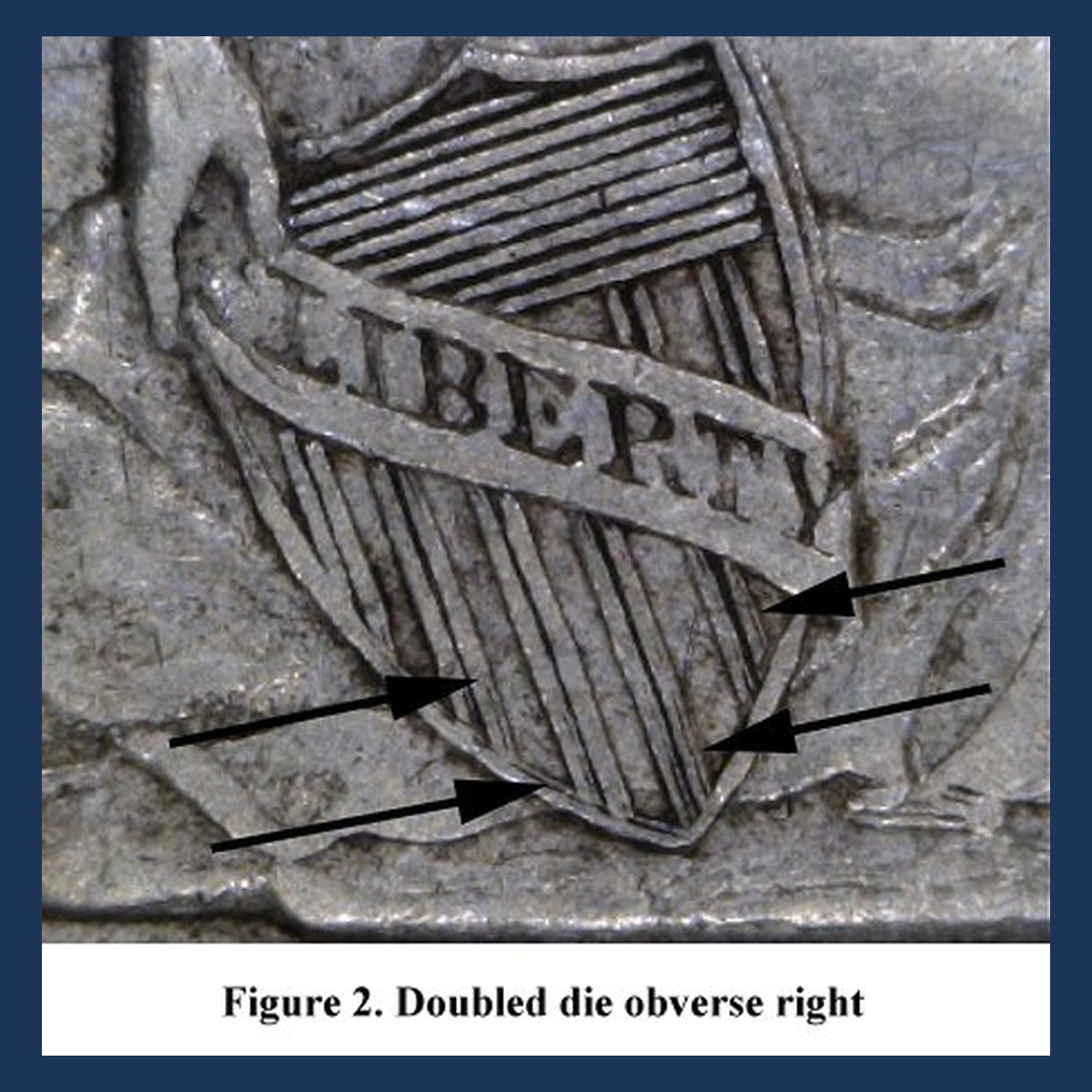
Extra raised outlines appear beside parts of the front design on two reported Philadelphia varieties. One pattern shifts to the right, while the other shifts to the left.
These are doubled dies: the steel stamping tools already carried repeated details before they struck the coins. The error does not require each finished coin to receive two separate blows.
Greg Johnson describes both patterns with separate photographs. Match the appropriate image rather than combining the leftward and rightward shapes into a single coin.
Estimated Value
Estimate $75–$3,000 for an identified Philadelphia doubled-front quarter, depending on wear, surfaces, and the clarity of the repeated design. The range is for the complete coin.
A later-design comparison is a 1945 Philadelphia doubled-die quarter graded MS65 that sold for $552 in March 2018. That Washington quarter is a different year and design, not an auction result for either 1855 pattern.
Clear matching outlines support identification; cleaning and damage can reduce appeal.
How to Identify
Begin with a photograph of the right-shifted or left-shifted variety in Johnson’s report. Keep your coin and the comparison image upright, with the date in the same position.
Use a magnifier to compare the outlines shown in that particular image. Check several matching places rather than accepting one thick edge as the whole pattern.
Tilt the coin under a small light to separate raised extra contours from a flat shelf beside a flattened detail.
Then check the back for a mint letter. The reported doubled fronts are Philadelphia examples, so do not transfer their identity to an O or S coin.
Wear may hide some separation; never scrape the surface to make an outline clearer.
2. 1855-S Liberty Seated Quarter Crumbling Back Tool
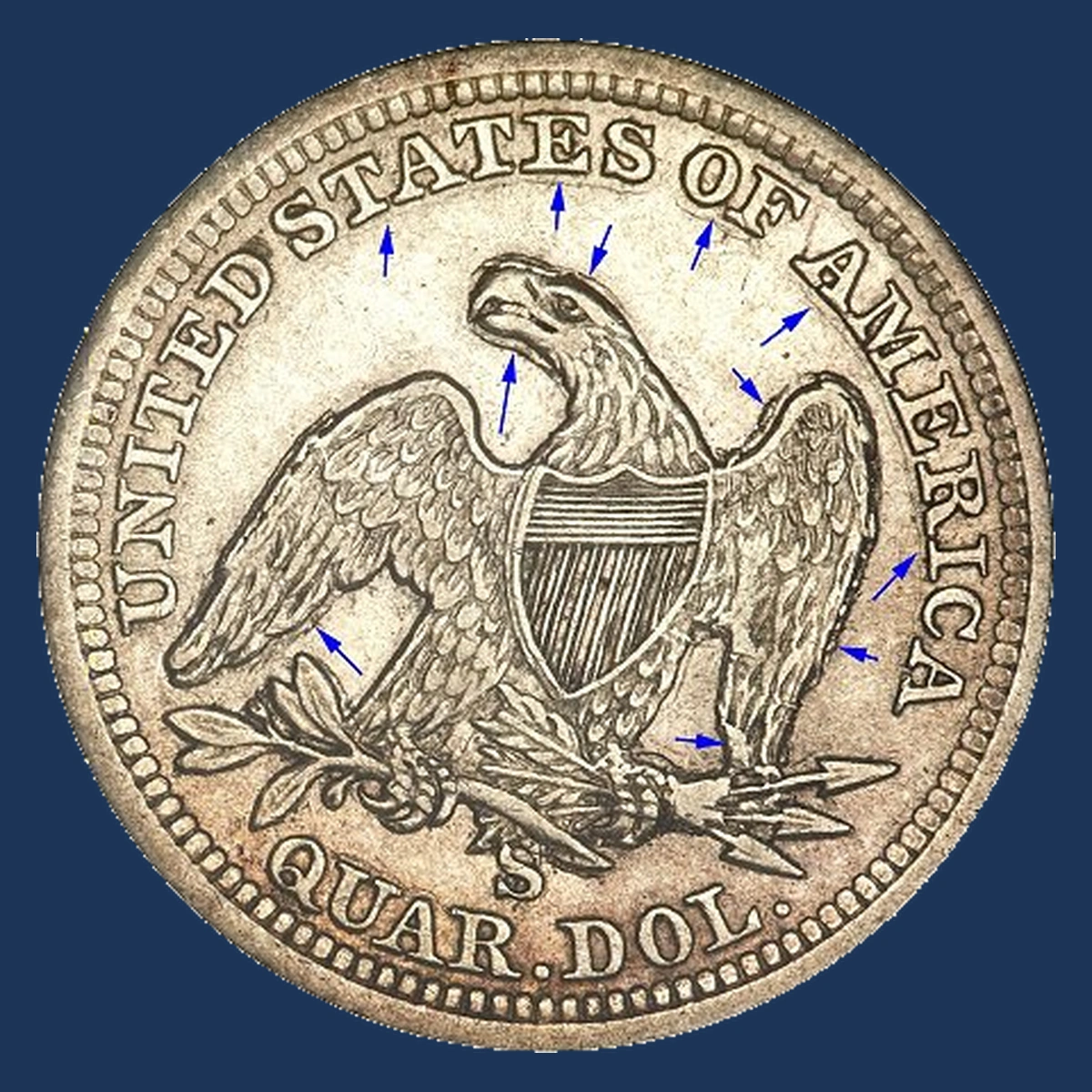
A rough raised band can gather around the eagle and the words STATES OF AMERICA. It reflects a stamping tool that broke down badly as it continued to make coins.
The damaged areas allowed extra metal to rise where a smoother background should have formed. Early coins from this tool need not show the same heavy buildup.
Johnson illustrates an intermediate stage and describes more severe examples with a striking raised halo around the eagle. The changing appearance records how the same tool worsened through continued use.
Estimated Value
A genuine 1855-S quarter with this tool damage has an estimated whole-coin range of $300–$25,000. The date’s scarcity and preservation remain important alongside the dramatic back.
For same-year condition context, an 1855-S graded PCGS MS64 sold for $22,800 in May 2025. That sale does not by itself identify the illustrated deteriorated-tool stage.
A clear original raised pattern can interest variety collectors. Corrosion or added deposits are different problems and do not earn the same treatment.
How to Identify
Compare the overall back with Johnson’s photograph before concentrating on a single rough patch. Look around both the eagle and STATES OF AMERICA for the pattern of raised buildup.
Examine the surface under angled light to separate extra struck metal from pits, deposits, or material stuck onto the coin. Do not pick at a suspected deposit while deciding what it is.
Confirm the S mintmark and compare coins showing a similar degree of tool damage. An early example may lack the heavy halo, so a cleaner back does not automatically mean it is false.
Have an error specialist examine roughness that cannot be matched confidently. Artificially damaged silver can imitate a badly worn stamping tool at first glance.
3. 1855-O Liberty Seated Quarter Crack through the Back Lettering
A thin raised line crosses the lower back of a recorded New Orleans quarter. It runs from the tooth-shaped border marks through the tail of Q and the left base of U toward the second eagle claw.
The line formed when metal entered a crack in the steel stamping tool. It is not a cut through the coin’s silver.
The example is cataloged as Briggs 1-A and graded PCGS MS64. That grade describes an unworn coin with some marks, while the crack provides an additional way to compare its back.
Estimated Value
Estimate $100–$35,000 for genuine 1855-O quarters with this original crack across a wide span of conditions. Most of the upper value belongs to scarce, well-preserved coins rather than the thin line alone.
The PCGS MS64 example brought $21,000 in May 2025. The same record lists an earlier auction appearance at $30,475 in November 2004.
Those are whole-coin results, not independent prices for a crack. Wear and cleaning make lower-grade comparisons very different.
How to Identify
Locate the Q in the lower back denomination and distinguish its normal tail from the extra line. Follow the line toward the left base of U and onward toward the eagle’s claw.
Next trace it back to the tooth-shaped border to check the complete path against a Briggs 1-A photograph. A short scratch touching Q alone does not supply the same chain of matching positions.
Change the light to check that the line rises from the original surface rather than cutting into it. Read the O mintmark as well, and compare the coin’s remaining detail before assuming that a similar-looking mark belongs to this New Orleans example.
Conclusion
Estimated values for these 1855 quarters extend from $75–$35,000 for complete coins. A doubled Philadelphia front, a crumbling San Francisco back, and a New Orleans crack need different comparisons.
Read the mintmark area and follow the actual design changes. Preserve the surface, and keep the value of a scarce, high-grade quarter separate from any extra appeal its tool marks may add.