1831 Quarter Error List with Pictures

A cracked stamping tool did not stop an exceptional 1831 Proof quarter from selling for $144,000 in October 2021. Proofs were specially prepared coins, and that rare status explains far more of the price than the crack.
This 1831 Capped Bust Quarter error guide also covers peeling metal and small date digits beneath larger ones. Estimated whole-coin ranges span $75–$250,000, including scarce Proofs.
Read on to match the visible feature and the coin’s finish before using a price comparison.
1. 1831 Capped Bust Quarter Peeling Metal on the Front
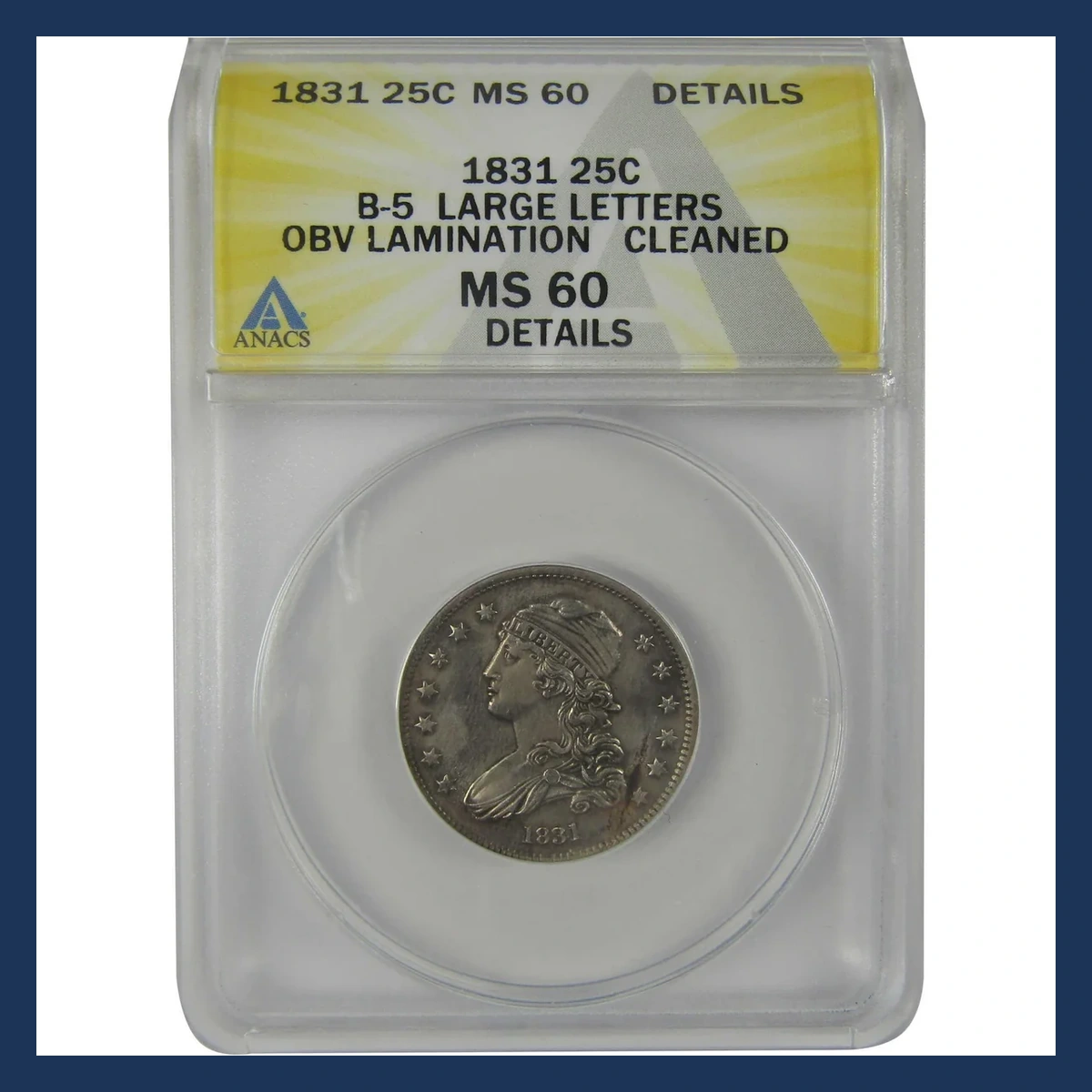
A thin surface layer can separate from the silver beneath it, leaving a flap or an irregular shallow patch. This is called lamination.
Weakness within the original metal disc allows the layer to split. It can become visible during striking or as the coin is handled later.
A dealer offers an 1831 Large Letters B-5 example described as ANACS MS60 Details with front lamination and cleaning. MS60 Details indicates unworn detail accompanied by a condition problem.
The peeling metal and cleaning are different issues. Fine cleaning scratches alone do not establish a layer separation.
Estimated Value
The dealer listing asks $2,509.99 for the cleaned ANACS MS60 Details example. That is an asking price, not a completed auction result.
Estimate $200–$3,500 for comparable circulated through lower-grade unworn examples. The location and size of the peel matter alongside the amount of wear.
A layer that hides an important date feature can reduce appeal. Any repunched-date detail on this B-5 coin is part of the same whole-coin value.
How to Identify
Do not lift a loose flap or brush away rough metal. The thin boundary between the damaged surface and the layer beneath is the feature you need to preserve.
Examine the front under angled light, looking for a broken layer edge rather than just a discolored patch. Check how the portrait or lettering meets that boundary.
A scrape may cut across the design and leave parallel tool marks; corrosion commonly pits the surface. Neither appearance alone proves that the original silver separated into layers.
Compare the coin and its label with the dealer’s actual-item photographs. Keep any cleaning lines separate from the larger layer flaw.
A clear peeling edge or shallow separation within the silver is the useful identification point.
2. 1831 Capped Bust Quarter Cracks through the Back Design
Raised lines can link the olive leaves, eagle’s wing, and back lettering. They form when a crack opens in the steel stamping tool and silver enters the gap.
Different Small Letters tools developed different paths. One pattern also runs from the denomination area toward the arrows.
A specially prepared B-1 Proof graded NGC PR66 has a long crack from the lower leaves through the wing and UNITED STATES. Ordinary coins can show tool cracks too.
The crack is not what makes a coin a Proof. That identity depends on how the complete coin was made.
Estimated Value
Ordinary circulated through attractive unworn examples are estimated at $75–$7,000. A modest line usually adds little to the quarter’s normal value.
The rare NGC PR66 B-1 Proof sold for $144,000 on October 7, 2021 at Heritage. For comparable identified Proofs, estimate $80,000–$160,000.
Those Proof prices reflect rarity and exceptional preservation, not a six-figure crack premium. Never apply them to an ordinary worn quarter simply because its raised line follows a similar path.
How to Identify
A mirrored surface alone does not establish a Proof, so settle the coin’s finish separately from any crack identification. Compare its Small Letters back with a photograph of the same tool pair before following an extra line.
On the documented Proof, the raised path runs from the lower olive leaves through the eagle’s wing toward UNITED STATES. Another recorded pattern leads from the denomination toward the arrows, but it belongs to its own matching example.
Move a lamp across the line to see whether it rises above the silver instead of cutting into it. Trace the whole ridge against the matching photograph; do not join separate coins’ crack paths into one pattern.
3. 1831 Capped Bust Quarter Larger Date Digits over Smaller Ones
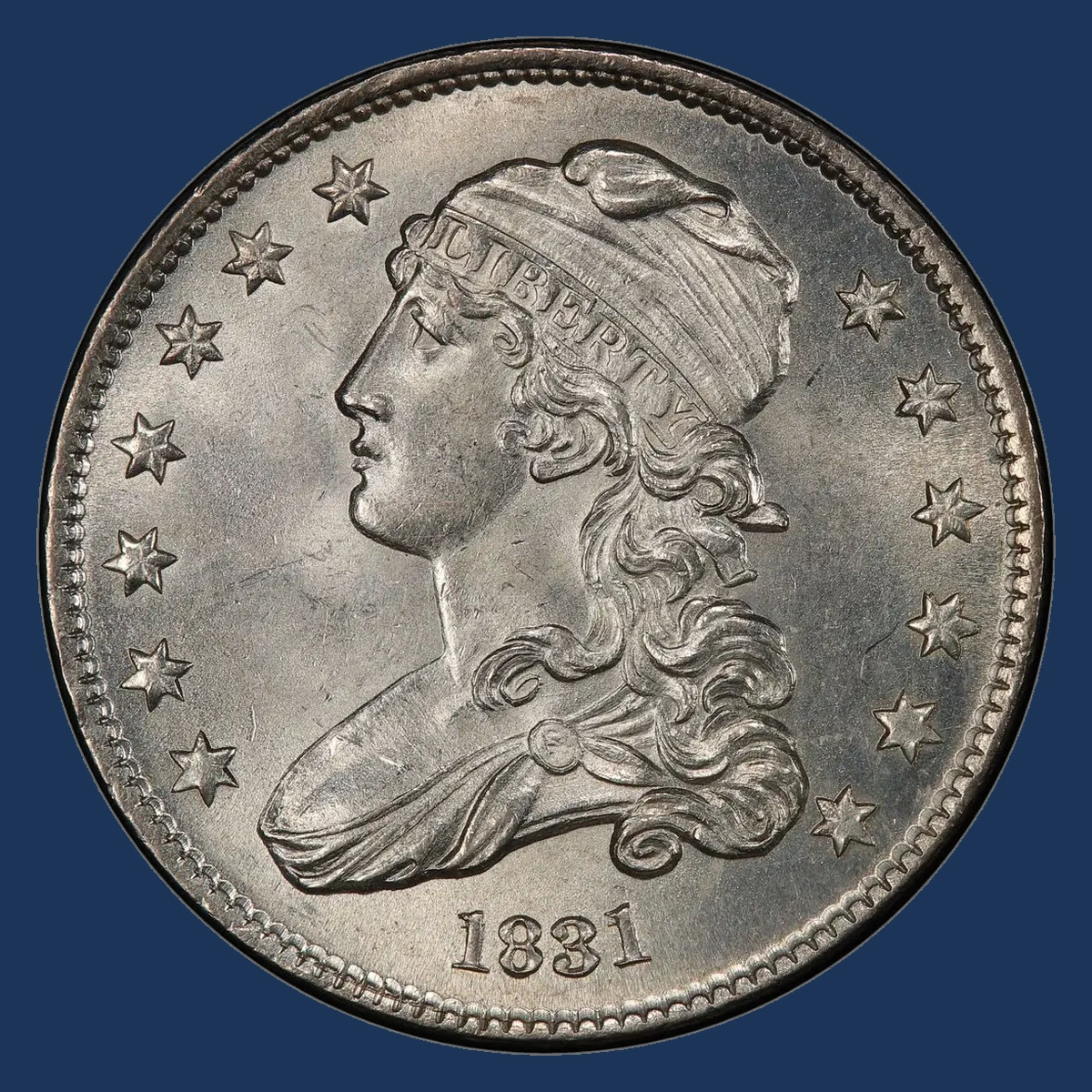
Tiny earlier tips stick out to the left of the main upright strokes of both 1s. Larger digits were punched over smaller ones in the date.
The repeated detail belongs to the steel stamping tool, called a die. Each coin struck from that tool copied the same remnants.
The 8 and 3 also show weaker repeated detail on the Large Letters variety known as B-5 or FS-301. These are two catalog names for the same variety.
Ordinary coins and specially prepared Proof examples exist, but an extra date stroke alone does not establish the finish.
Estimated Value
Estimate $150–$15,000 for ordinary examples and $30,000–$250,000 for identified Proofs. Each range values the complete coin, with preservation and rarity outweighing any fixed bonus for doubled digits.
An ordinary NGC MS64 sold for $3,995 in February 2016. PCGS’s archive also records $10,200 for an MS64+ example.
Those were attractive unworn coins. A worn specimen needs a lower comparison even when its earlier numeral tips remain easy to see.
How to Identify
Examine both 1s together instead of judging one odd-looking digit. The small tips should project to the left of their larger upright strokes in the known B-5 pattern.
A magnifier helps you compare those tips with the normal tops of the final digits. Change the lighting to separate raised silver from a scratch or displaced metal beside a dent.
Check 8 and 3 next for the weaker repeated details, which may fade with wear. Turn to the back and confirm the Large Letters design using an identified B-5 example.
Keep ordinary and Proof photographs clearly labeled when comparing surfaces. The matching small tips beside both 1s provide the easiest place to recognize this repunched date.
Conclusion
The 1831 checks involve three separate features: a peeling metal layer, raised cracks, and smaller date digits beneath larger ones. A B-5 quarter can combine date repetition with a metal flaw, so its prices should not be added together.
Estimated whole-coin values span $75–$250,000, including rare Proofs. The $144,000 cracked Proof illustrates why the coin’s manufacture and preservation matter more than the defect alone.