1825 Quarter Error List with Pictures

The final 5 on an 1825 quarter can contain traces of earlier numbers. Reusing a dated stamping tool left a permanent record that collectors now call an overdate.
An outstanding MS66+ example brought $70,500 in October 2014. More modest coins, light clash marks, and a small back crack make the broader subject worth exploring.
This 1825 quarter error list gives estimated whole-coin values of $200–$80,000. Start with the visible features below, then compare coins of similar variety and condition.
1. 1825 Capped Bust Quarter Die Crack
A short raised line can be easy to overlook beside a letter. The recorded B-2 quarter has one reaching from the back rim to the left tip of UNITED’s I.
That little projection on the letter is called a serif. It provides a precise landmark for finding the line.
The line formed when silver entered a crack in the steel stamping tool. It is raised on the coin, unlike an ordinary scratch.
The example was graded PCGS VF25, showing substantial circulation wear. A large network of cracks is not needed to identify this small feature.
Estimated Value
The pictured type of crack occurs on a B-2 quarter that sold for $546.25 at Heritage on February 5, 2010. That is the price of the entire VF25 coin.
For worn through lightly worn B-2 examples with this feature, an estimated range is $200–$3,000. Remaining detail and original surfaces carry more weight than the mere presence of the line.
Damage or harsh cleaning can reduce the appeal considerably.
How to Identify
Turn to UNITED on the eagle side and locate the I between N and T. Inspect its small left projection, then follow any line outward toward the rim.
Use a magnifier to distinguish the line from the normal letter edge. Side lighting helps show whether the connecting metal rises above the surrounding surface.
A cut can leave small raised edges, so inspect the center of the mark too. Do not clean away dirt to make the line easier to see.
Compare a close photograph of the recorded B-2 example with your coin. The specific rim-to-I connection is the useful match, not the general appearance of a scratched or cracked surface.
2. 1825 Capped Bust Quarter Clashed Dies
A faint piece of the opposite design may appear where it does not belong. Such ghostlike marks can result when the two stamping tools hit each other without a coin between them.
The contact damages their surfaces. Coins struck afterward can carry traces copied from the opposing tool.
A collector’s B-1 quarter record describes light clashing on an AU58 example. The exact transferred shapes need comparison with that coin’s photographs.
The long raised line behind its lowest arrowhead identifies the back tool, but is not itself proof of a clash.
Estimated Value
An estimated whole-coin range of $500–$15,000 covers circulated to lightly worn B-1 quarters with identifiable light clashing. This scarce variety can command strong prices without a dramatic clash.
The $546.25 B-2 sale discussed above represents a different, more available variety and a lower preservation level. It should not be copied directly onto the AU58 B-1 example.
For an offered coin, compare its variety and wear first, then consider how clearly the transferred design can be seen.
How to Identify
Photograph both faces in the same scale so you can compare any unusual shape with the opposite design. A believable clash should resemble part of that design, rather than just an unexplained line.
Rotate or mirror the comparison image as needed to place the matching features opposite one another. Several agreeing outlines offer stronger evidence than one short mark.
Look at the surface under changing light. Weak transferred details can disappear in a flat photograph.
Keep the arrowhead’s long tool line separate from this test. A raised line can come from a scratch in a die without copying any opposing design.
Match the ghostlike feature to an actual shape on the opposite face before calling it a clash.
3. 1825 Capped Bust Quarter Overdate
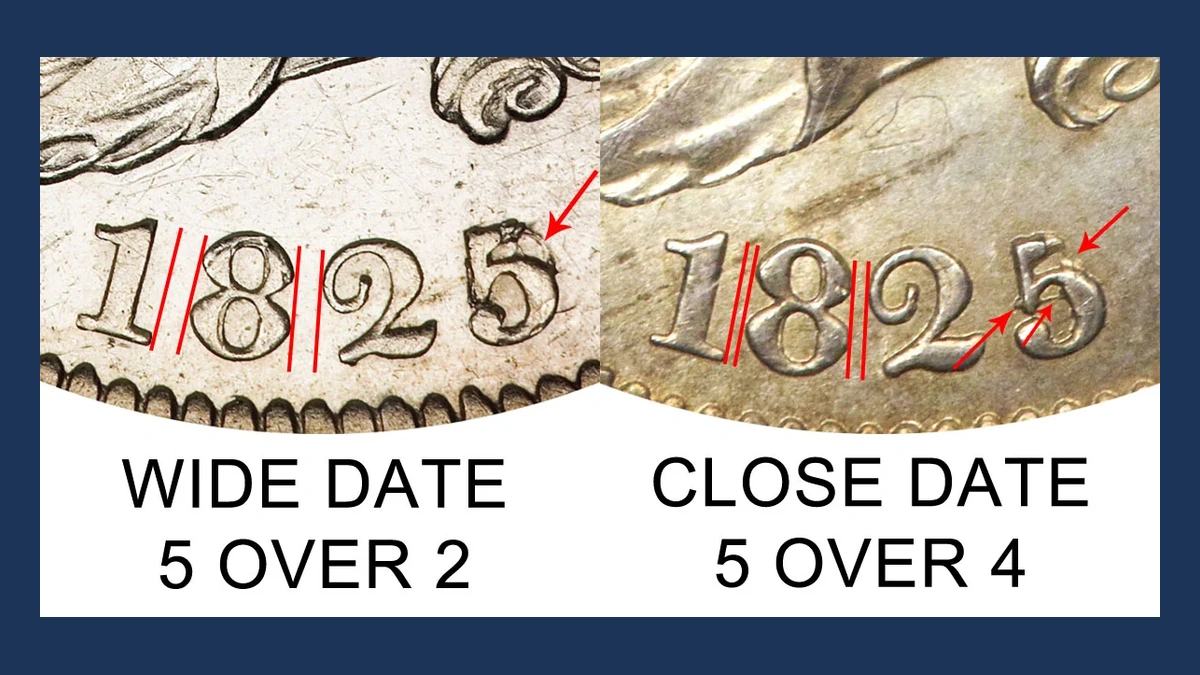
The last digit can look crowded, with extra curves or strokes around the 5. These are remnants of earlier numbers in a reused stamping tool.
Workers changed the date by pressing a new digit into the tool. Old features that were not fully removed remained visible on coins struck from it.
The current 1825/4/2 name reflects that history. Older labels may use 1825/2, 1825/3, or 1825/4, so the coin’s actual features matter more than an abbreviated label.
The surviving strokes vary in clarity and should be checked against the matching variety.
Estimated Value
PCGS records a $70,500 Heritage sale in October 2014 for an outstanding MS66+ overdate. Its exceptional preservation places it far above ordinary circulated pieces.
Estimated whole-coin values extend from $200–$80,000 across the different varieties and condition levels. The relatively available B-2 offers a more affordable starting point than scarce B-1 examples.
A bold underlying stroke helps identification, but it does not cancel heavy wear, damage, or differences in variety rarity.
How to Identify
Enlarge the date with a 10× magnifier and examine the inside and edges of the final 5. Look for raised remnants that connect naturally with the numeral, rather than fresh cuts or lumps of dirt.
Compare the shapes with an identified coin of the same variety. Do not force every remnant into the outline of a complete earlier digit, especially where wear has blended the details.
Then examine the neighboring date figures and the rest of the coin for consistency.
If the old and current labels differ, ask a specialist to check the full variety. Match the raised remnants to that variety rather than reading them as a different final year.
Conclusion
The reused date tool explains the overdate, while contact between tools and a small tool crack explain different marks elsewhere. Keep those causes separate even when more than one appears on a single coin.
Estimated whole-coin prices range from $200–$80,000. Match the variety, inspect the surfaces, and compare preservation before deciding how much an unusual numeral or faint line adds to a particular quarter.