2010 Penny Error List with Pictures

The shield made its first appearance on the penny in 2010, giving collectors new places to inspect for extra lines and doubled initials. The familiar Lincoln portrait can carry clues too.
This 2010 penny error list spans estimated values of $2–$1,000. A different-year comparison shows the appeal of a more dramatic mistake: a 2000 cent formed into a die cap sold for $312 in June 2025.
Read on to compare the reported features, from small lettering changes to a cup-shaped coin.
1. 2010 Lincoln Penny Unusual Color and Annealing Reports (Estimated Up to $150)
A dark penny may simply show normal changes in its copper surface. The 2010 Philadelphia report instead links an unusual color to improper annealing.
Annealing means heating metal during preparation. That explanation needs evidence about the actual coin; it cannot be read from color alone.
A 2010 cent is zinc with a thin copper coat. Processes involving other coin metals should not automatically be used to explain its appearance.
Later heating, chemicals, and surface coatings can change the color too. The original surface must remain available for examination before the manufacturing cause can be assigned.
Estimated Value
If a specific mint-made surface problem is confirmed, estimate $5–$150 for modest examples of this general type. The range compares modern-cent color and coating defects.
It does not assign a sale price to the reported 2010 Philadelphia coin. Its reported MS65 grade concerns preservation, meaning unworn with relatively few marks, rather than proving the color’s cause.
Normal browning and later treatment do not receive this error premium. The identified production defect must support the comparison.
How to Identify
Compare the penny with a normal one under neutral light. A warm lamp can make an ordinary surface look more coppery or dark than it is.
Use a 10× magnifier to examine the background, high points, and smooth edge. Look for rough chemical attack, corrosion, or an added layer.
A scale and calipers can check an accessible coin against 2.50 grams and 19.05 mm. Normal measurements do not tell you when its color changed.
Avoid polishing or heating it to test the theory. A specialist can assess the surface without destroying the original evidence.
A demonstrated production-related surface change is the useful finding, rather than an unusual color by itself.
2. 2010 Lincoln Penny Doubled Designs (Estimated Up to $200)
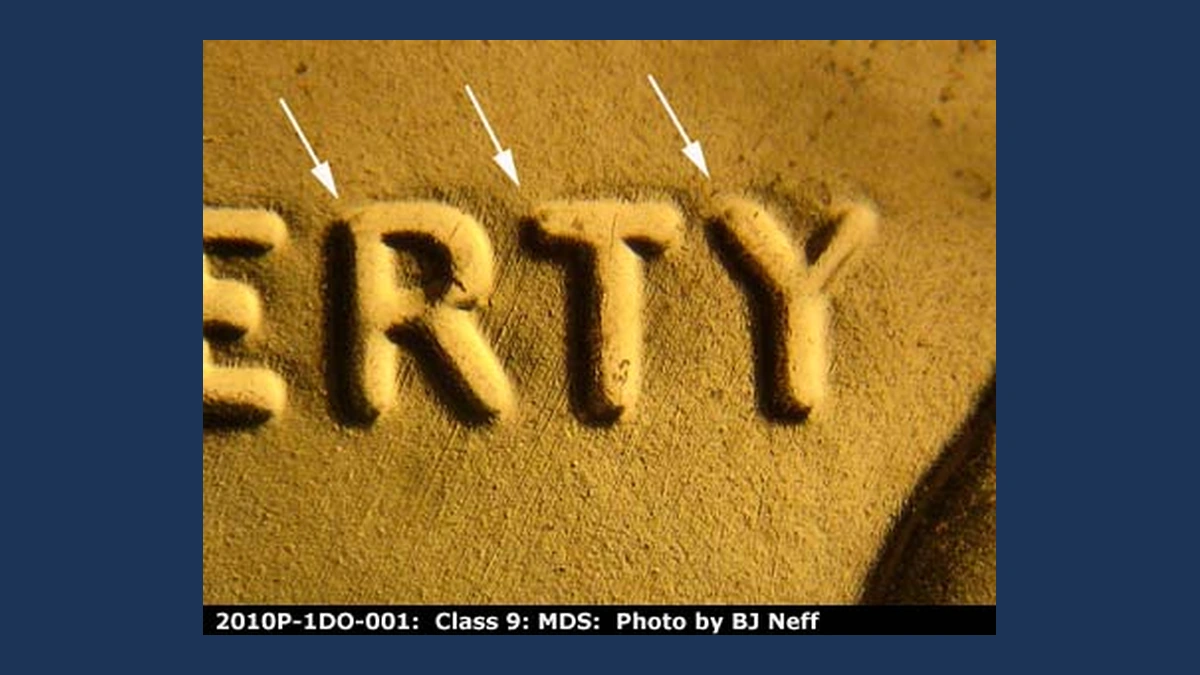
The upper-left corners of ERTY in LIBERTY can show small splits and extra thickness. A cataloged Philadelphia 2010 variety provides that specific front-side comparison.
A doubled die is a steel stamping tool with repeated detail. It can place the same extra shape onto multiple coins.
Separate shield-side varieties affect the small designer initials LB or JFM. A notch at the lower right of L is one reported clue in the LB group.
These positions do not all belong to one penny. A Denver report also needs its own match rather than borrowing Philadelphia’s exact letter corners.
Estimated Value
Minor matched varieties can fit an estimated $5–$40. Clearer repeated shapes on attractive unworn pennies can support approximately $40–$200.
These ranges compare modern Shield-cent doubled dies. They are not a shared auction result for every front and back variety from 2010.
The small initials need sharp photographs to make the feature understandable. Thick lettering caused by a worn tool or a bright reflection should not receive the same variety premium merely because it looks doubled at first.
How to Identify
Begin with the mint and the face carrying the suspected feature. A normal Philadelphia 2010 penny has no mint letter below the date.
Use a 10× magnifier on ERTY for the front example. For the shield side, inspect LB and JFM separately against the 2010 variety photographs.
A flat shelf from strike movement can imitate an extra edge. A copper split may instead expose gray zinc along an otherwise ordinary letter.
The normal penny weighs 2.50 grams and measures 19.05 mm with a smooth edge. Use a scale and calipers where accessible.
A matching split corner or repeated initial in the same position is the practical check, not general thickness across the design.
3. 2010 Lincoln Penny Broadstrike (Estimated Up to $350)
A wide penny with all its lettering still present can be a broadstrike. The surrounding collar did not hold the blank within its normal width.
The collar is a metal ring used during striking. Without its usual restraint, pressure can move the blank outward.
The reported Philadelphia 2010 example is described as MS62, meaning unworn with noticeable marks. Its expanded border must be judged together with the complete portrait and shield.
The edge is normally smooth even on an ordinary penny. Missing grooves therefore prove nothing, and later flattening can also produce a coin wider than normal.
Estimated Value
Allow an estimated $20–$350 for identified broadstrikes, from modest expansion through stronger examples with clean original detail. Visibility and condition both influence the range.
The reported MS62 description does not provide a verified transaction used here. These amounts compare modern-cent striking errors with similar outward spread.
A larger diameter is only part of the appeal. If lettering was flattened by later pressure, the coin should not be priced as an original broadstrike simply because it is wide.
How to Identify
Follow the outer words on each face to check that the intended design remains on the coin. Missing design beside a plain crescent suggests an off-center strike instead.
Record several widths with calipers on an accessible example. Compare with the normal 19.05 mm, then weigh it against 2.50 grams using a scale.
Under a 10× magnifier, look for original letters within the expanded border. Crushed high points and squeezed metal can reveal later flattening.
Inspect the smooth edge and avoid forcing a measuring tool against projecting areas. A broadstrike may be uneven rather than perfectly circular.
Complete struck designs within natural outward spread provide the most useful first distinction.
4. 2010 Lincoln Penny Die Cracks, BIE, and Cuds (Estimated Up to $400)
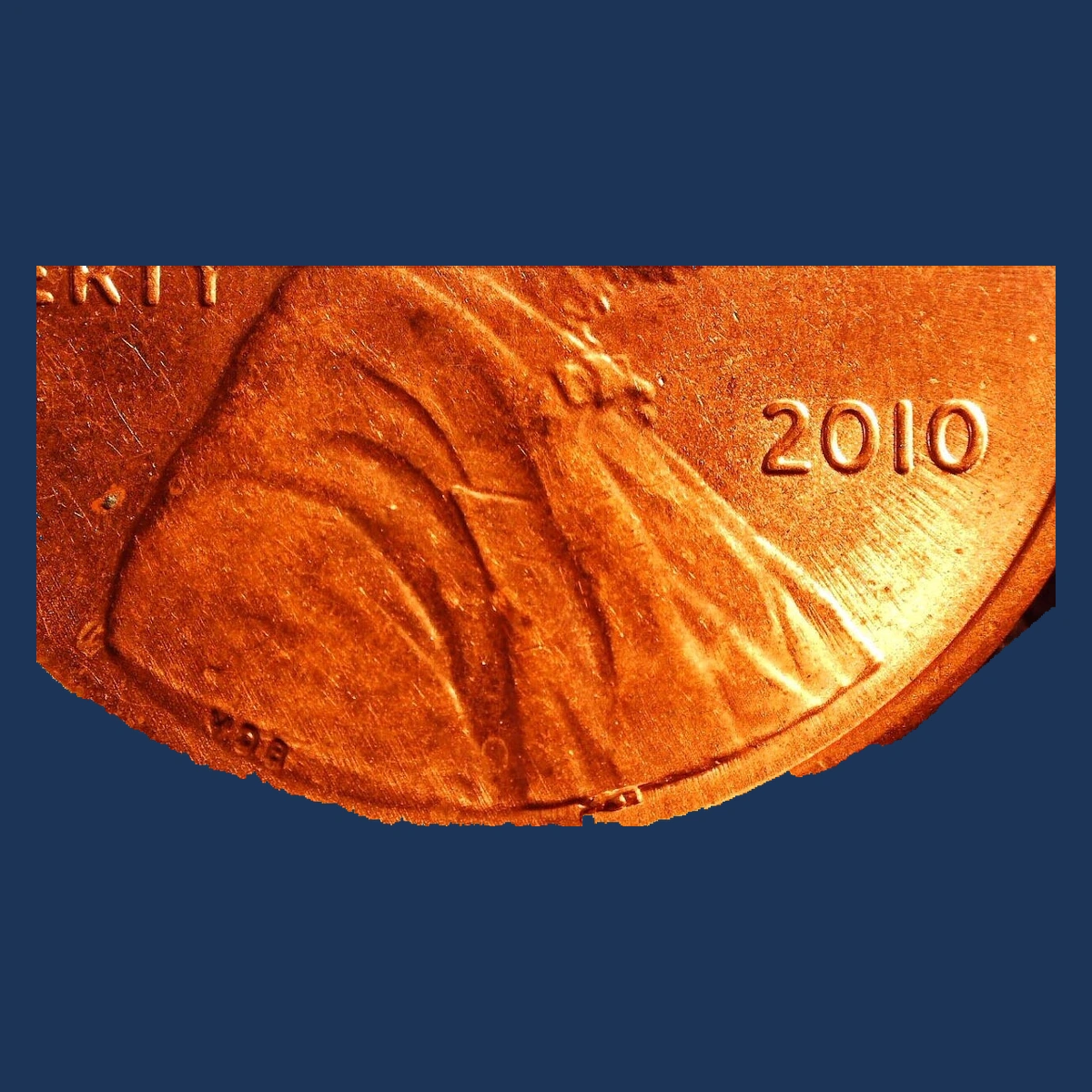
A raised line can cross Lincoln’s head or run near the shield’s border. The coin copied a crack in the stamping tool rather than splitting itself.
A small missing tool piece can instead leave a bump. Between B and E in LIBERTY, a bar-shaped bump produces the familiar BIE appearance.
A larger break at the tool’s edge can create a rim-connected patch called a cud. A Denver 2010 example is reported in that category.
These shapes need separate comparisons within the same tool-damage group. A fine line reaching the border is not automatically the larger missing-tool area of a cud.
Estimated Value
Fine cracks and small BIE bars can be estimated at $2–$50. Larger, clearly formed cuds can fit roughly $50–$400.
A 2021-D penny with a retained cud brought $186 in September 2025. In that related error, the broken tool piece stayed partly in place, so it differs from a completely missing section.
The later sale offers context rather than a price for the 2010 reports. Value the whole penny’s appearance and condition, not each small ridge as a separate full-priced error.
How to Identify
Use a 10× magnifier with side lighting to see whether a line rises from the surface. A scratch usually cuts into finished metal.
Follow a head or shield crack along its actual path instead of connecting unrelated marks. For BIE, examine the gap between B and E.
A larger cud must connect to the rim. Check a raised patch for copper bubbling or added material, and inspect the opposite face for related weak detail.
The ordinary cent is 2.50 grams and 19.05 mm with a smooth edge. A scale and calipers can check an accessible example.
Identify the raised shape and its boundary first: a line, a letter-gap bar, or a solid rim-connected patch.
5. 2010-D Lincoln Penny Struck-Through Error (Estimated Up to $400)
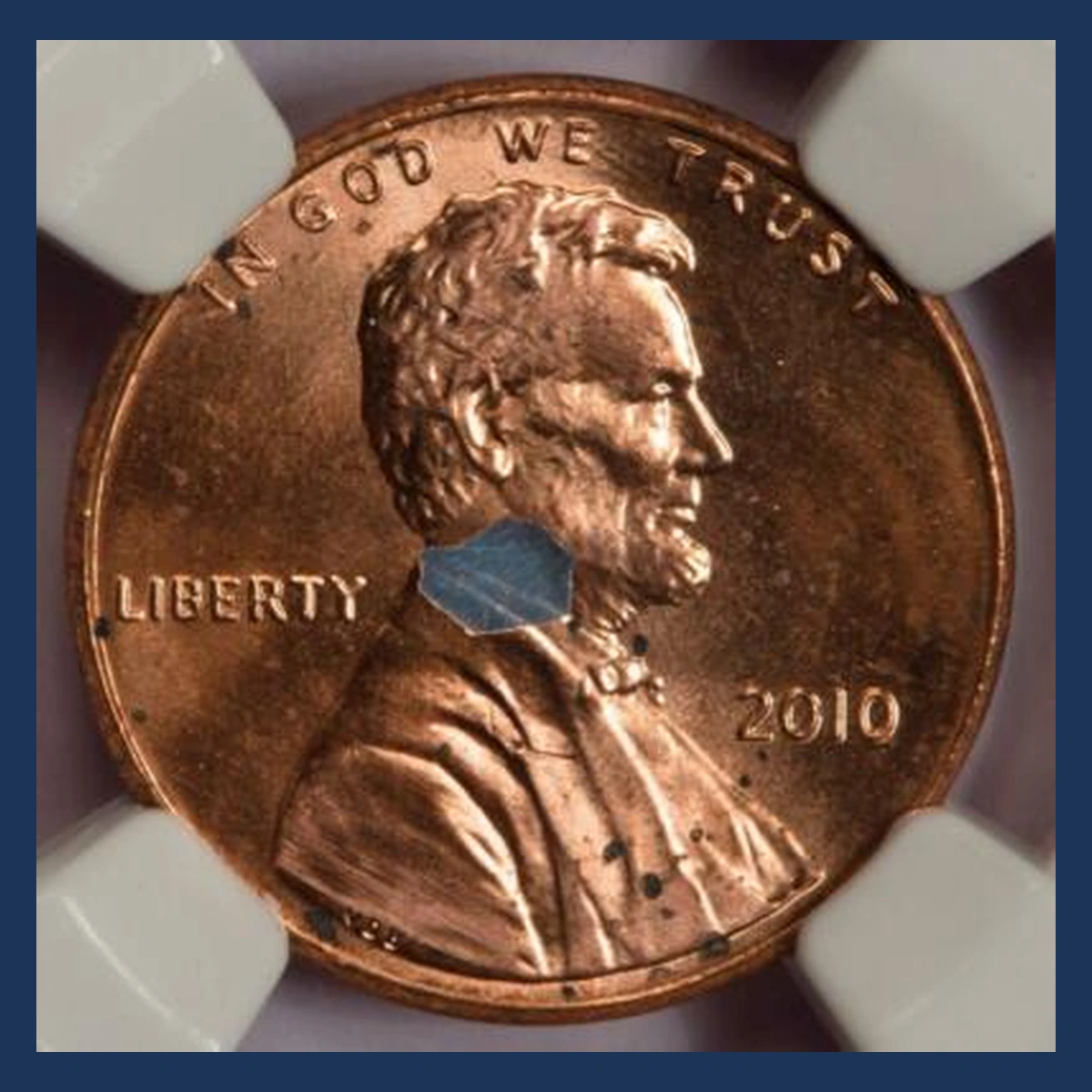
Foreign material can interrupt the design while a penny is struck. The affected area may become weak or take the shape of the obstruction.
The Denver 2010 report includes a claim that some material remains with the coin. Its exact substance and position are not established here.
An attached fragment needs to fit the original strike. Glue, dirt, and other material added afterward can also cling to a penny.
The surrounding design helps distinguish those possibilities. A naturally embedded object and a loose object resting on a finished face do not tell the same story.
Estimated Value
Estimate $10–$100 for smaller confirmed impressions and about $100–$400 for stronger examples or genuine retained material. The feature must be identified before using the upper range.
A 2017-D front-side struck-through cent sold for $228 in March 2025, graded MS65 Red. That unworn, copper-red coin is a different-year comparison, not evidence of retained material in 2010.
An attached object alone earns no automatic premium. Its relationship to the original design and the coin’s preservation determine the useful comparison.
How to Identify
Leave any attached material in place. Pulling it away can destroy the boundary that shows whether it was present during striking.
A 10× magnifier helps trace the design into the affected area. Look for a natural interruption rather than an object covering an already complete letter.
Check for glue, corrosion, or a later gouge around the attachment. Photograph the opposite face and keep the D and date connected with the same example.
Use a scale and calipers where accessible, comparing with 2.50 grams and 19.05 mm. The edge is normally smooth; retained material may affect weight.
The key check is an obstruction that fits the original strike, with any remaining material genuinely connected to that event.
6. 2010 Lincoln Penny Missing Copper Coating (Estimated Up to $500)
Gray metal can appear where the copper coat is missing. The 2010 Philadelphia report describes copper loss without establishing that the blank was never plated.
That timing matters. Missing coating before striking is different from a thin layer separating later, even when both reveal the same zinc center.
The coin is copper-plated zinc, not a sandwich of thick copper-nickel layers like a dime. The exposed surface needs the correct metal comparison.
Chemicals and abrasion can remove copper after minting too. A gray patch cannot establish either its original cause or a different denomination’s blank.
Estimated Value
For a confirmed original coating defect, estimate $25–$500, depending on extent and preservation. A larger undamaged area can be easier to display than a tiny bare patch.
This compares similar copper-plated cents rather than assigning a sale to the reported 2010 Philadelphia example. Its reported MS63 grade means unworn with noticeable marks.
The estimate does not assume absence of plating before striking. A chemical treatment or later scrape falls outside the production-error range regardless of how much copper is gone.
How to Identify
Follow the boundary between copper and gray zinc with a 10× magnifier. Look at whether the original design stays sharp across it.
Check for loose flaps, chemical roughness, or rubbing on the high points. Those features help establish how the copper disappeared, instead of merely confirming that zinc is visible.
The normal specifications are 2.50 grams and 19.05 mm with a smooth edge. A scale and calipers provide basic checks for an accessible penny.
Thin coating loss may barely affect weight. Do not scrape the edge or clean the gray surface to make a metal test.
Look for an original copper-to-zinc boundary and evidence that the coating changed during manufacture, rather than relying on silver color alone.
7. 2010 Lincoln Penny Off-Center Strike (Estimated Up to $500)
A plain crescent can remain on a penny when the blank misses its intended position. The tools strike only the part of the metal between them.
The design is incomplete on both faces. That differs from a shifted tool affecting only one side’s centering.
The 2010 report does not establish one mint, percentage, or direction for all examples. Each coin needs a full view with its surviving date.
The plain area is still part of the original blank. Cutting a piece off a finished penny removes metal instead, while grinding off design changes the surface after striking.
Estimated Value
Date-visible examples can be estimated at $15–$100 for modest shifts and approximately $100–$500 for stronger, well-preserved offsets. These ranges compare modern Lincoln cents.
A 2006 four-percent off-center penny sold for $39 in March 2025. Its different year and Memorial back make it a price comparison, not a photograph to identify a 2010 Shield coin.
The readable date and original surface matter alongside the amount of shift. An undated or badly damaged piece may attract less interest.
How to Identify
Find the surviving 2010 date, then compare the complete front and back. Both incomplete designs should meet the same original plain area.
Use a 10× magnifier at the boundary between design and blank metal. Grinding, scraping, or polishing can imitate missing details but leave a worked surface.
Weigh an accessible piece against the normal 2.50 grams. Calipers can record changes from the usual 19.05-mm outline, which may have spread during striking.
Inspect the smooth edge for cuts. A coin with its whole design present inside a wider border needs the broadstrike comparison instead.
An intact plain crescent beside matching design loss on both faces is the direct off-center clue.
8. 2010-D Lincoln Penny Die Cap (Estimated Up to $1,000)
A penny can form a cup when it sticks to a stamping tool instead of leaving the press. Repeated blows spread it around the tool and raise its outer wall.
The stuck coin is a die cap. Coins made beneath it are separate objects and can show blocked or distorted designs without the same cup shape.
A Denver 2010 cap is reported in MS63 condition, meaning unworn with noticeable marks. Its exact depth and number of strikes are not established here.
A penny bent afterward can also curve. The wall and surviving design must fit the minting process.
Estimated Value
A 2000 front die cap graded PCGS MS64 Red sold for $312 in June 2025. Its earlier Memorial design provides a different-year comparison.
Estimate $100–$1,000 for genuine 2010 caps, depending on wall height, recognizable design, and surface condition. The recent sale does not identify which tool held the reported Denver cap.
A deeper appearance can be attractive, but it must be original. Later bending cannot create the same relationship between stretched design and repeated mint strikes.
How to Identify
View the wall from the side before concentrating on the date. Do not press the coin flat or try to reshape it.
A 10× magnifier helps inspect the change from the center into the raised wall. Look for stretched original detail rather than sharp folds or marks from pliers.
Compare a loose piece with 2.50 grams on a scale. Calipers can record its width and height gently, using 19.05 mm as the normal flat-coin diameter.
Inspect the smooth edge and leave certified examples sealed. A merely broad or softly struck penny is not automatically a cap.
The useful combination is an upturned original wall and design stretched by attachment to the tool, not curvature alone.
Conclusion
For this first shield year, tiny designer initials can be as useful as a large change in shape. Match a repeated letter corner carefully, and inspect both faces when the strike is misplaced.
Estimated values range from $2–$1,000. The wider ranges belong to very different errors, so a dark surface should not be priced like a cap.
Keep copper boundaries and trapped material untouched until their origin can be examined.