1997 Penny Error List with Pictures

A 1997 penny struck over a finished dime brought $1,207.50 in March 2009. Both denominations left details on the same coin.
Other discoveries in this 1997 penny error list require a closer look, including Lincoln’s doubled ear and extra Memorial columns. Estimated values range from $5–$3,000, depending on the type, condition, and strength of the visible feature.
Follow the examples below to see what each mark means and which checks help separate it from damage.
1. 1997 Lincoln Penny High Finned Rim (Estimated Up to $75)
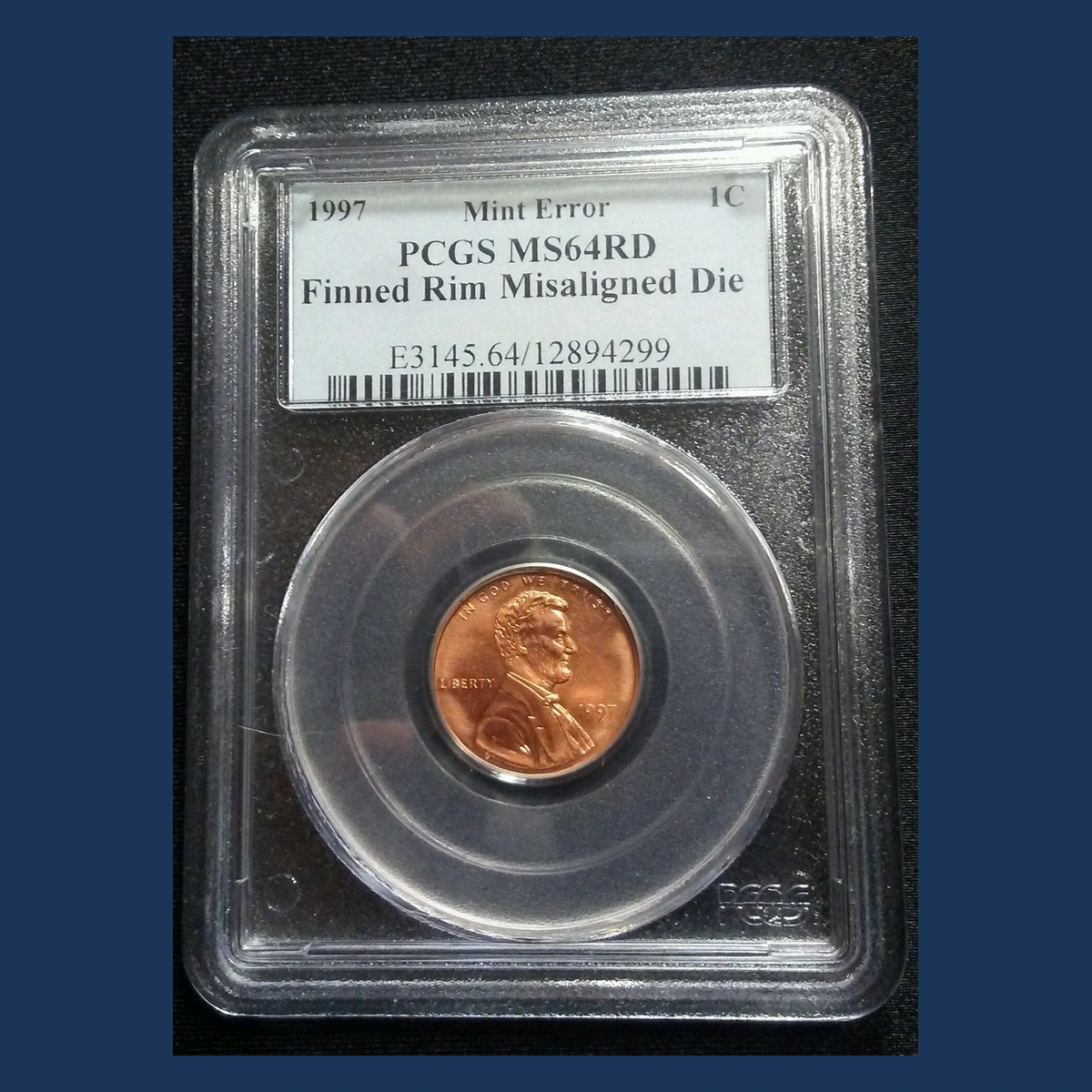
A thin wall of metal can rise sharply above the normal rim. This fin formed where metal escaped upward into a narrow space beside the stamping tool.
Fred Weinberg described 1997 examples with a high fin running roughly from nine to three o’clock. His list linked the feature to slight front-tool misalignment and excessive striking pressure.
The edge appeared nearly twice as thick. That does not mean the coin contains twice the normal amount of metal.
A rolled or battered rim can also look tall. The shape and surrounding struck surface must support a fin produced during minting.
Estimated Value
Weinberg’s historical inventory asked $15 for one choice brilliant uncirculated example, or $25 for two. Those were offers to sell unworn coins, not recorded auction results.
Use an estimated $15–$75 for identified examples with a clear surviving fin. A delicate edge that has been bent or flattened is less appealing.
The height and continuity of the fin help collectors judge the feature. An ordinary raised rim should not receive the same price just because it looks thick in a photograph.
How to Identify
View the front at a shallow angle, then inspect the edge from the side through a 10× magnifier. A fin rises as a thin wall above the surrounding rim.
For the listed examples, compare the upper half from about nine to three o’clock. Do not touch the sharp edge or try to straighten it.
A scale should read near the normal 2.50 g, while calipers compare the main coin with its usual 19.05-mm width. Measure gently without pressing against the fin.
Inspect for rolled-over or hammered metal from later damage. A thin upright wall continuing from original struck metal is the most useful first clue.
2. 1997 Lincoln Penny Extra Memorial Columns (Estimated Up to $125)
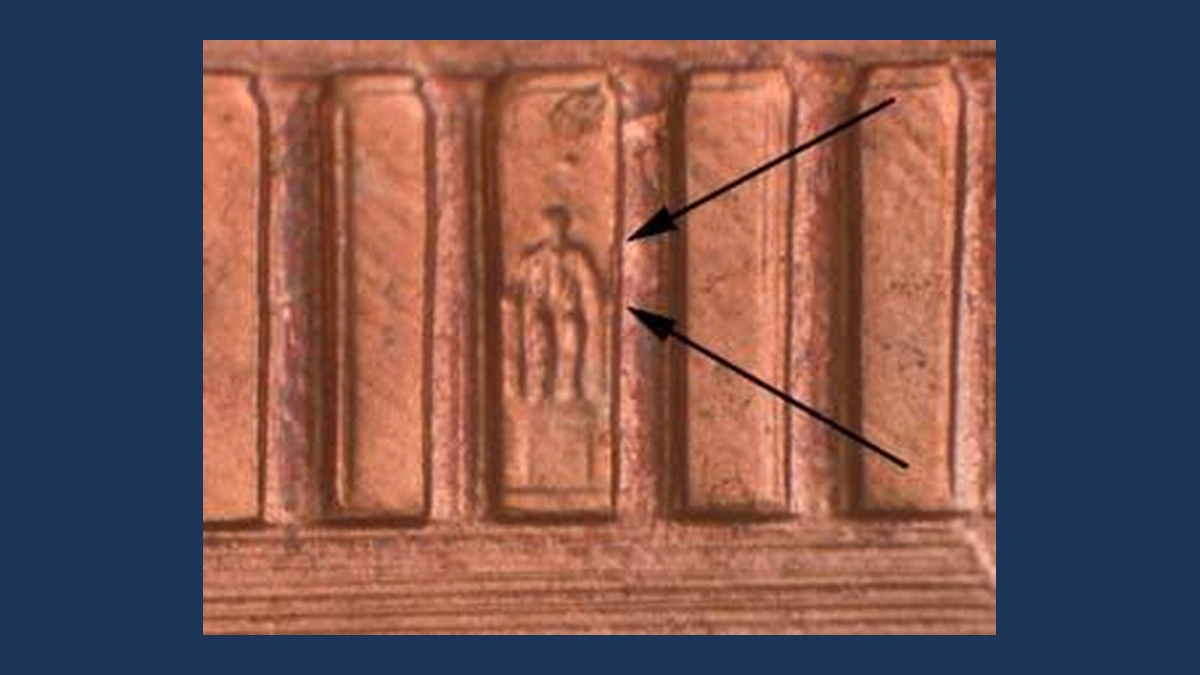
Extra slivers can appear inside the spaces between Memorial columns. A die, the steel stamping tool, carried a doubled part of the back design.
Coppercoins illustrates a Denver example with repeated column details in openings one through four and nine through eleven. Count these spaces from the left while facing the Memorial.
This is separate from the Philadelphia doubled-ear variety. One affects the back architecture, while the other repeats part of Lincoln’s front portrait.
Plating bubbles and other ridges can look similar. Match the extra outlines to known positions and shapes instead of simply finding metal in an empty space.
Estimated Value
An estimated $10–$125 is a working range for identified minor back varieties. Distinct extra columns on a clean unworn coin support more interest than weak shapes on a worn surface.
The catalog establishes the Denver variety, but it does not provide a realized sale used for this range. It should not inherit the better-known doubled ear’s strongest auction price.
Compare the repeated column edges and condition. Several vague vertical marks do not automatically make a stronger example.
How to Identify
Confirm D below the date and compare the Memorial with the Coppercoins example, keeping the whole building visible. Count the openings from the left, then use a 10× magnifier to inspect spaces one through four and nine through eleven.
Trace an extra sliver beside its normal column, looking for the same outline in the catalog rather than a copper bubble. Flat shelves produced during striking need a different explanation if they fail to match.
A scale and calipers should show near the normal 2.50 g and 19.05 mm, though these checks do not prove doubling. Matching column slivers in the listed openings give the quickest useful answer.
3. 1997 Lincoln Penny Letter-Space Chips and Rim Cuds (Estimated Up to $400)
Broken areas in a stamping tool can leave raised metal in different parts of a penny. A small bar between B and E in LIBERTY is known as a BIE chip.
A larger break at the tool’s edge can create a raised patch connected to the rim. Collectors call that patch a cud.
The 1997 guide reports BIE examples, while the rim-break catalog lists Philadelphia specimens. Their shared cause does not make the two shapes interchangeable.
A cud replaces design where the tool broke away. A BIE bar sits within the lettering, and neither is an intentionally added letter.
Estimated Value
Estimate $5–$30 for identified BIE chips and $40–$400 for rim-connected cuds. A thin letter-space bar normally has less visual impact than a large patch replacing part of the design.
These are working ranges rather than completed sales assigned to the cataloged 1997 examples. Condition and the size of the visible break affect the comparison.
Added metal and squeezed edge damage should not receive either premium. Establish the raised feature’s relationship to the struck design before considering its price.
How to Identify
Use a 10× magnifier at LIBERTY and inspect whether a solid raised bar occupies the B–E gap. Compare with normal lettering to exclude dirt, a copper blister, or metal attached after minting.
For a rim cud, follow the broad patch outward and check where it replaces design at the coin’s edge. Weakness on the opposite face can support the broken-tool explanation, but it need not be strong on every example.
Check 2.50 g and 19.05 mm with a scale and calipers while leaving the plain edge untouched. The first distinction is location: inside LIBERTY for BIE, or a design-replacing patch joined to the rim for a cud.
4. 1997 Lincoln Penny Off-Center Strike (Estimated Up to $450)
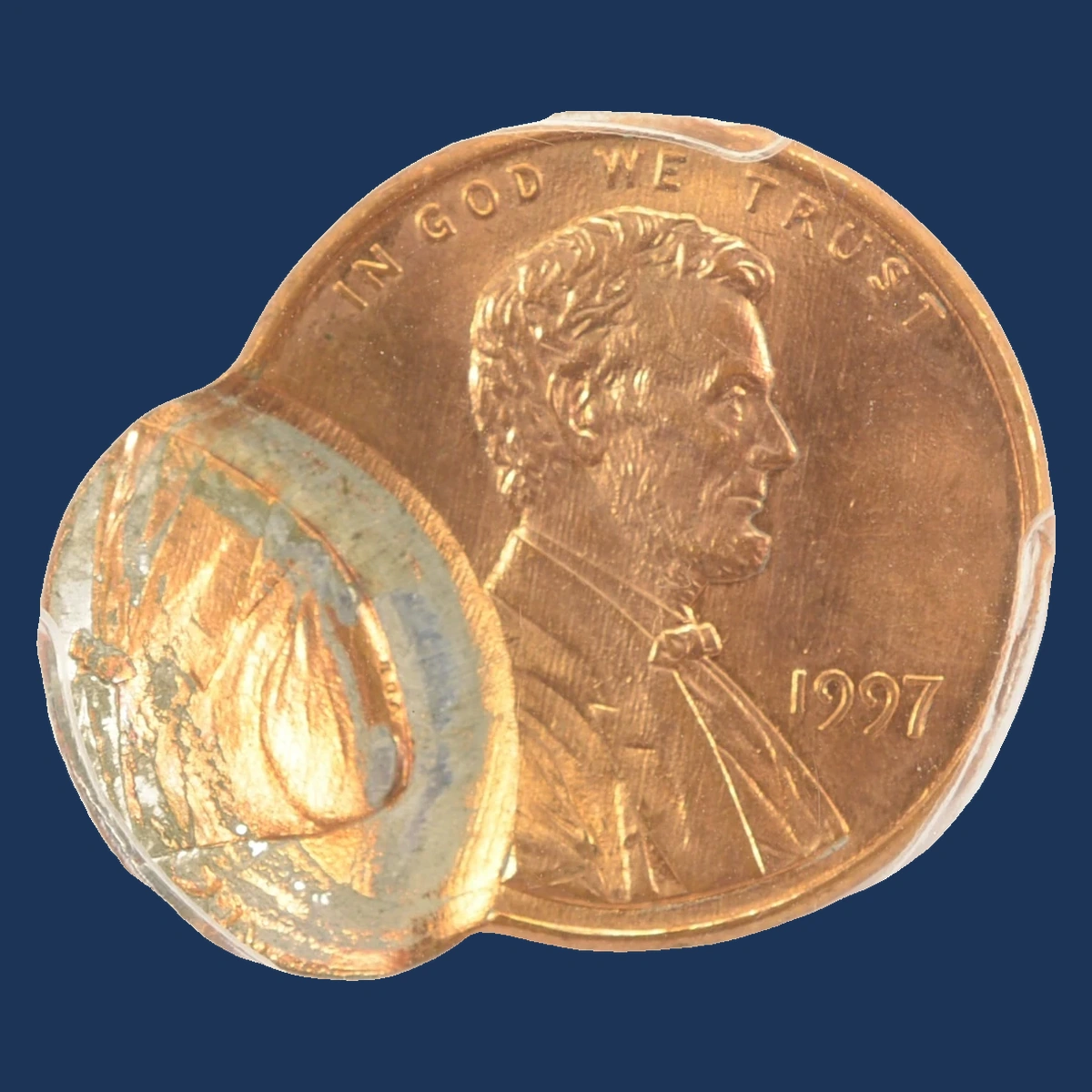
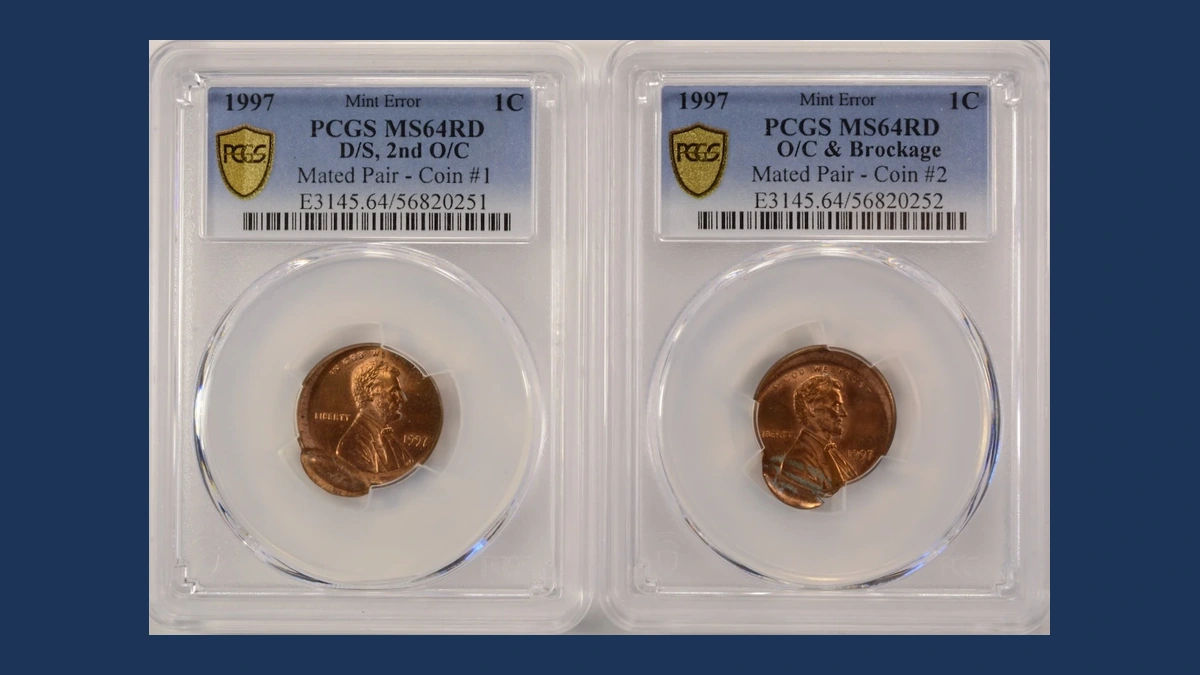
An incomplete portrait beside untouched blank metal shows that part of the coin missed the striking area. The 1997 example described in a matching pair began about 20% off center.
It was later struck again after rotating. The first shifted impression still helps explain the off-center mechanism, while the second belongs to the same coin’s double-strike history.
This is one specimen with several effects, not a separate coin for each stage. Other off-center cents need their own measurements.
The surviving date is useful for identification. A wide border around a complete design could instead be an uncentered broadstrike.
Estimated Value
For an identified single off-center strike, estimate $20–$450, depending on displacement, condition, and a readable date. A modest shift usually falls below a dramatic but well-preserved example.
The matching-pair catalog supports the 1997 strike description but does not supply a completed sale used here. Its later double strike should not be ignored when comparing the whole piece.
Price the complete coin, not each visible stage separately. Missing the date or adding heavy damage can reduce collector interest.
How to Identify
For the pair’s described coin, trace the first impression about 20% off center toward two o’clock. A 10× magnifier helps separate it from the later strike toward four o’clock.
On another example, find the actual boundary between design and unstruck metal instead of copying those directions. Compare both faces for a matching displaced position.
Use calipers to record the outline against 19.05 mm and a scale against 2.50 g.
The blank crescent is remaining metal, not a clipped-away piece.
Check for grinding that may have erased a normal design. A genuine unstruck area beside an incomplete impression is the quickest first distinction.
5. 1997 Lincoln Penny Partial Brockage with Broadstrike (Estimated Up to $600)
A struck cent can intrude into the press and cover part of a fresh blank. Its raised design then presses a backward, sunken impression into the new coin.
That impression is a brockage. In the discussed 1997 example, the coin also spread beyond normal size without full support from the collar ring.
Mike Diamond identified a partial brockage and broadstrike. An intruding coin caused the impression, without requiring a coin stuck as a cap on the tool.
The illustrated piece also has tears exposing zinc. Those belong to the same complicated strike and do not establish a separate specimen.
Estimated Value
An estimated $50–$600 covers identified partial brockages with spreading, depending on how clearly the transferred design can be read. The collector discussion provides a specimen, not a realized price used here.
A 2001 partial-front brockage in MS64 Red sold for $79 in March 2025. That is a different-year comparison, not a sale of the 1997 combination.
Readable mirrored detail supports collector interest. The expanded outline and any tears should be judged together rather than assigned separate premiums.
How to Identify
Look for backward design details below the surface with a 10× magnifier. Their direction and depth distinguish a brockage from ordinary raised doubling.
Follow the boundary where the intruding coin contacted the blank. Compare the remaining normal design and the metal that spread beyond it.
A scale checks its weight against a normal 2.50-g cent, while calipers compare its enlarged outline with 19.05 mm. Exposed zinc at tears is part of the observed damage to the metal during this strike.
Do not pull on the torn areas. The first useful combination is a recessed mirrored impression on a coin with original strike-related spreading.
6. 1997 Lincoln Penny Indent with Broadstrike (Estimated Up to $650)
A blank pressing against another blank can leave a smooth depression without readable backward letters. The covered area did not receive the normal tool design.
The Calkins collection lists a 1997 broadstruck and indented cent. Its width increased while the overlapping blank shaped part of its surface.
This differs from a brockage made by an already struck coin. A brockage may carry recognizable reversed design, while an indent can be largely featureless.
The collection description does not fix the affected face or percentage. Those details should be judged from the actual example rather than borrowed from a different indented coin.
Estimated Value
The collection identifies its coin as PCI MS64 Red, an unworn piece with fairly few marks and retained red color. That label does not establish a selling price.
Use an estimated $40–$650 for an identified indent-and-broadstrike combination. The size and shape of the depression, together with preservation of the surrounding design, affect the comparison.
A simple dent made after minting has a different cause. The coin’s complete strike pattern must support the error before the upper range becomes relevant.
How to Identify
Study the depression’s boundary through a 10× magnifier and compare it with the design formed around the covered area. A featureless indent should not be assigned backward letters that are not actually visible.
Calipers can record expansion beyond a normal 19.05-mm cent, while a scale compares the usual 2.50-g starting weight. Keep the coin level and avoid pressing against thin or distorted edges while taking either measurement.
Inspect for crushed existing detail and impact marks that would suggest a hammer blow after the coin was finished. A smooth shaped interruption that formed with the surrounding struck design is the clearest first clue.
7. 1997 Lincoln Penny Double Strike and Flip-Over (Estimated Up to $750)
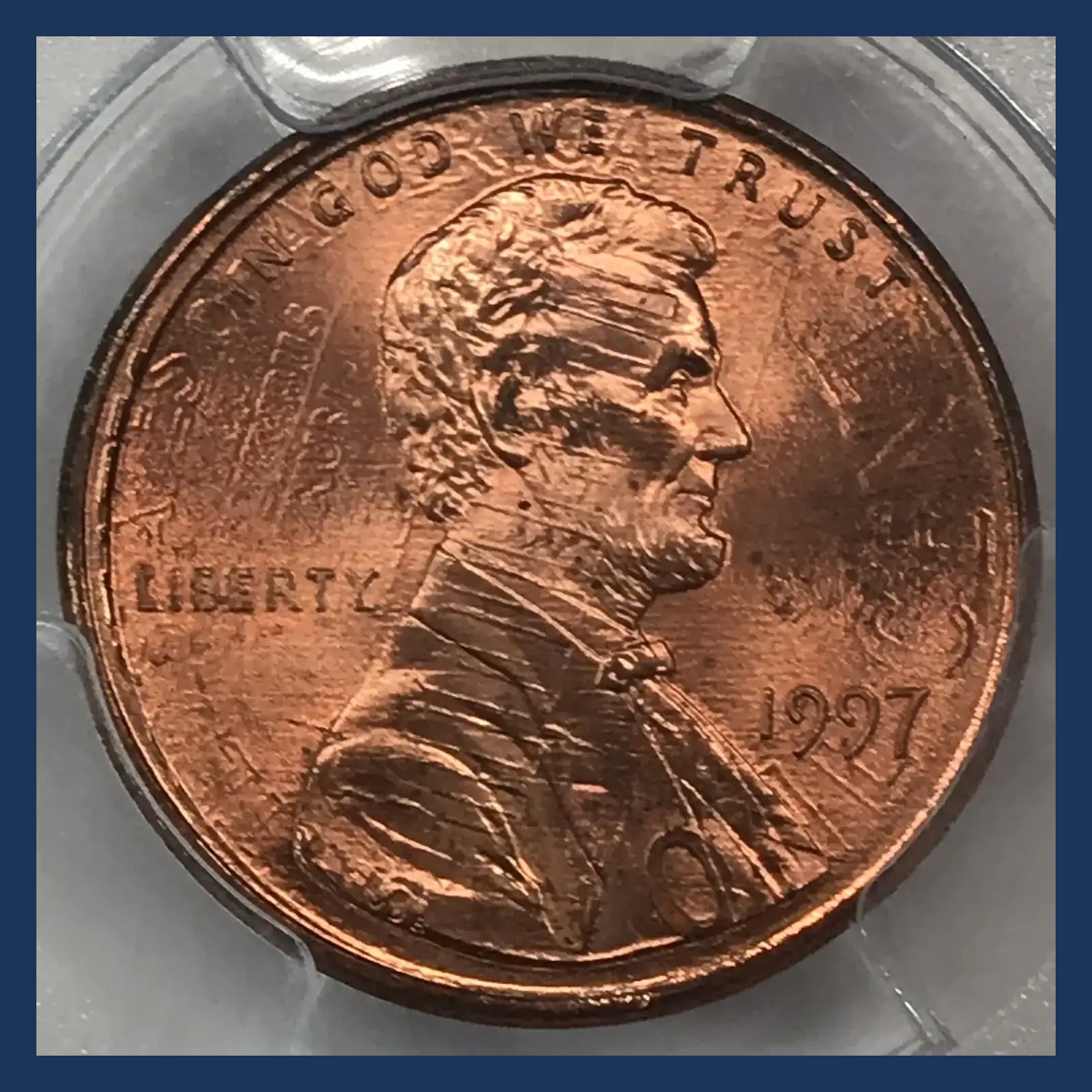
Lincoln and Memorial details can overlap when a cent returns for another strike. If it turns over between blows, parts of the front and back can end up on the same face.
Heritage sold a 1997 flip-over example in March 2026. Its brief description does not establish an exact angle or displacement.
A different cataloged 1997 coin in a matching pair received two off-center strikes after rotating about 150 degrees counterclockwise. That rotation should not be assigned to the flip-over example.
Both demonstrate repeated striking. Their different sequences matter more than a generic doubled-looking appearance.
Estimated Value
The 1997 flip-over cent sold for $144 in March 2026 in an ANACS MS63 Red holder. It was unworn, with noticeable marks and retained red color.
An estimated $75–$750 accommodates different identified double strikes, from modest overlaps to dramatic readable impressions. The actual recent sale gives a useful comparison below the upper end.
The separate matching pair was not reported sold in its listing. Do not turn its starting bid or a displayed zero into a realized price.
How to Identify
Trace the clearest surviving letters from the first strike, then find the second set with a 10× magnifier. A flip-over event should leave front and back remnants in a relationship consistent with turning the coin over.
Compare the opposite face before deciding the sequence. Two impressions at different angles can also result from rotation without a flip.
Use a scale to check the usual 2.50 g and calipers to document changes from the normal 19.05-mm shape.
Repeated striking can spread the same metal rather than add another blank.
Keep each example’s directions separate. Overlapping genuine impressions that explain the movement between blows provide the fastest meaningful check.
8. 1997 Lincoln Penny Front and Back Die Caps (Estimated Up to $1,500)
A cent can stick to a stamping tool and gradually wrap around it. As new blanks arrive, repeated blows spread and thin the trapped coin into a cap.
A documented 1997 reverse cap stayed against the Memorial tool. Contact with incoming blanks expanded and distorted its Lincoln side while its walls rose around the tool.
Other reported 1997 examples include front and back caps preserved as a pair. They should not be mistaken for one coin capped on both sides.
The cupped coin became the cap. A coin struck through it can instead have a flatter, distorted surface.
Estimated Value
The reverse-cap specimen brought $460 in May 2007, graded NGC MS66 Red. That means an unworn coin with few marks and retained red color.
For identified individual 1997 caps, use an estimated $200–$1,500. The depth, surviving design, and condition of the thin walls affect the comparison.
A matching front-and-back pair must be valued as a specific set rather than by automatically doubling this range. Bent or broken walls may reduce the visual appeal and obscure the original striking shape.
How to Identify
Begin with a side view showing how the metal curves around the tool-shaped interior. A 10× magnifier helps reveal whether the walls and base form one continuous struck piece.
For the reverse cap, compare the retained Memorial side with the expanded Lincoln design. On a front cap, the corresponding design relationship is reversed.
Use recorded scale and caliper measurements for a fragile or certified example. The starting blank was a normal 2.50-g cent near 19.05 mm, but its final shape can be much taller and wider.
Do not flatten the walls to measure them. A continuous cup with thinning and distorted design is the most direct initial evidence.
9. 1997 Lincoln Penny Doubled Ear FS-101 (Estimated Up to $1,500)
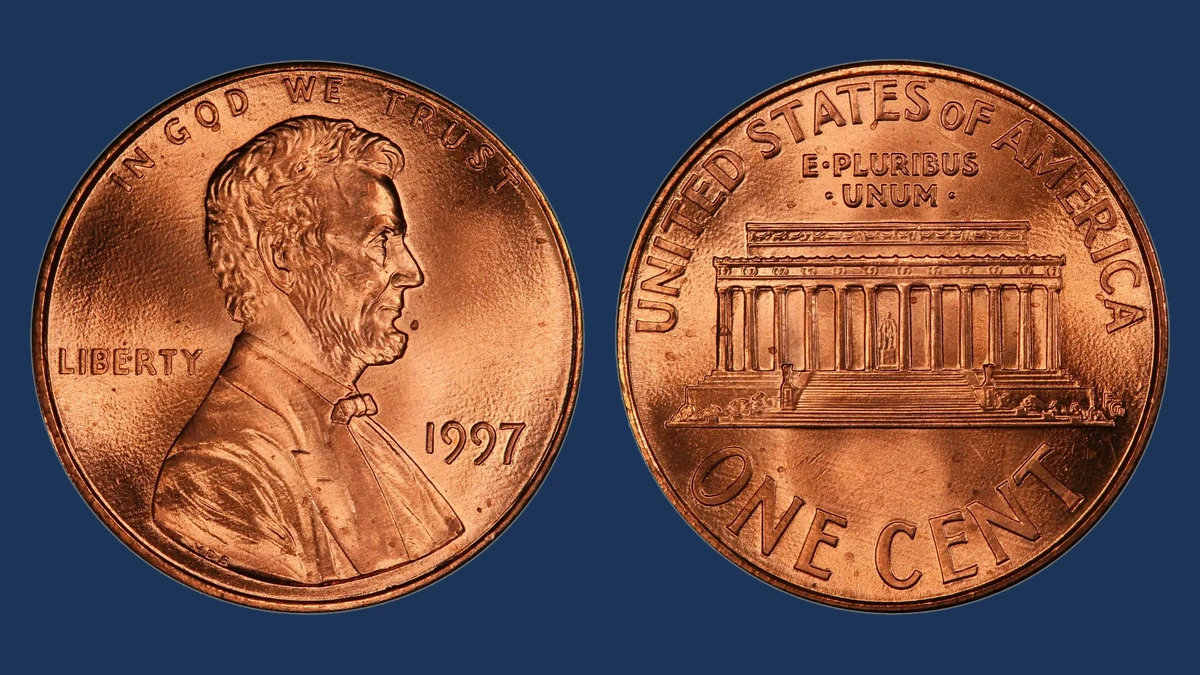
The lower part of Lincoln’s ear appears to have another rounded edge beneath it. This is the recognizable feature of the 1997 Philadelphia doubled-ear variety.
The stamping tool already carried that extra portrait detail. The Lincoln Cent Resource also describes lighter doubling in the hair and beard.
FS-101 and WDDO-001 are two names for the same variety, not two different errors. The familiar doubled-ear name points to its easiest feature.
This Philadelphia variety has no mint letter. A Denver ear lump or smooth copper blister is not automatically the same doubled design.
Estimated Value
PCGS records $1,020 for an MS67 Red example in August 2021. That grade means unworn with very few marks and retained copper-red color.
A separate MS64 Red and Brown example brought $114 in May 2026, showing how preservation and color affect comparisons. An estimated $25–$1,500 spans worn examples through strong, high-grade coins.
Look at the ear before the grade. An attractive ordinary cent, or one with a plating bubble, does not receive the doubled-ear premium.
How to Identify
Place Lincoln’s ear under a 10× magnifier and trace the lower rounded contour. Compare the second earlobe with the Lincoln Cent Resource photographs.
Lighter hair and beard doubling can help support the match. The date should read 1997 with no mint letter beneath it.
A scale and calipers check the normal 2.50-g weight and about 19.05-mm diameter.
Do not treat a correct weight as proof that a bump belongs to the design.
Inspect for a copper blister or a flat strike shelf instead of a rounded duplicate. The clear second earlobe in the cataloged position is the fastest useful starting point.
10. 1997 Lincoln Penny Partial Copper Plating (Estimated Up to $2,500)
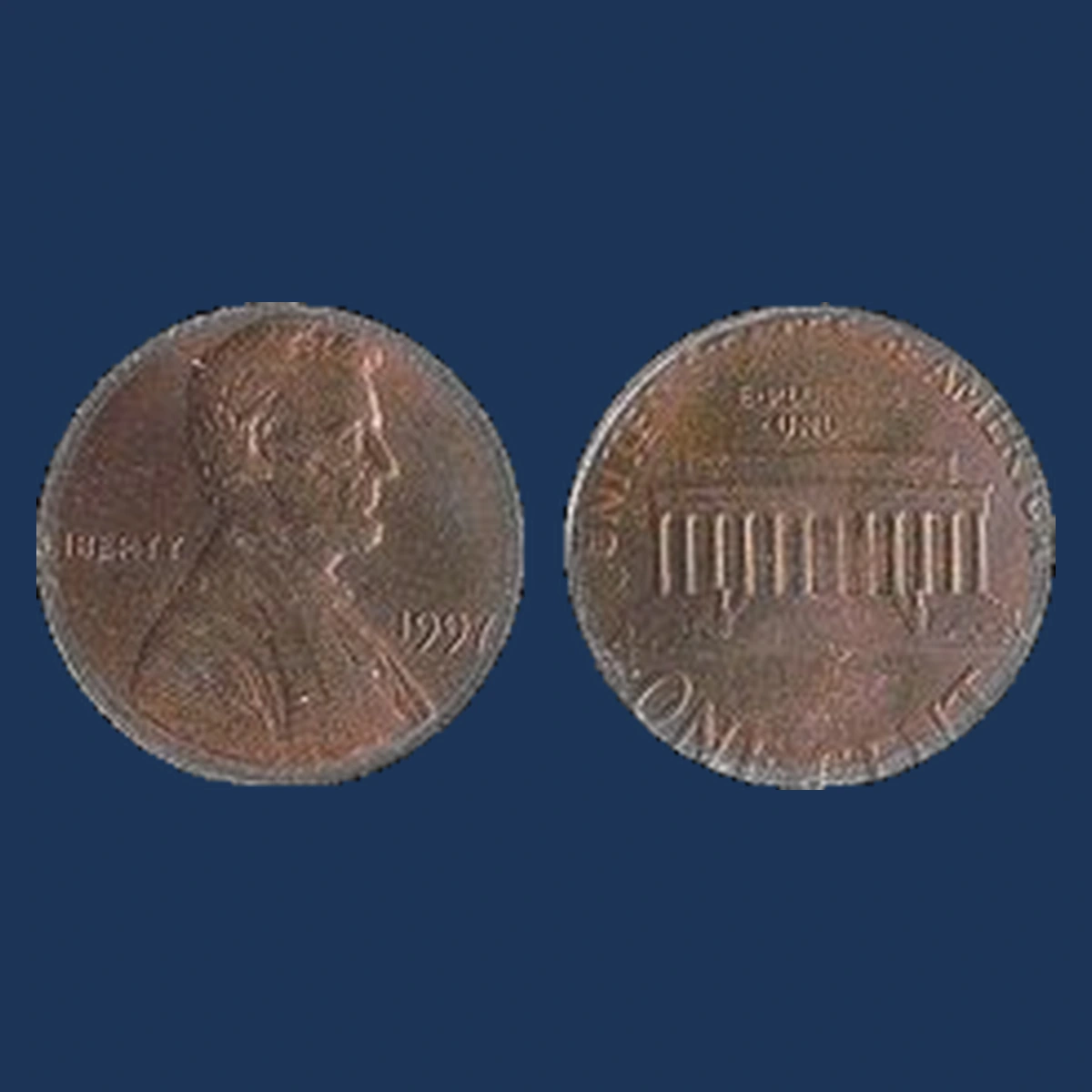
A narrow gray ring can surround copper-colored metal on both faces. Mike Diamond illustrated that pattern on a 1997 cent struck on a small foreign zinc blank.
This specimen weighs 1.5 g and belongs to the wrong-blank category below. The plating feature and unusual blank are two features of the same coin.
The thin copper may originally have covered more of the blank. Zinc could have spread beyond that covering during the strike, so the bare ring does not prove it was never plated.
The example does not establish a fully unplated, normal-size 1997 cent. Its metal and outline matter.
Estimated Value
Estimate $300–$2,500 for the complete combined-error coin, depending on condition and identification of its unusual blank. This is not a separate plating premium to add to the wrong-blank estimate.
The illustrated 1.5-g specimen has no completed sale used here. Its smaller zinc blank makes an ordinary missing-plating cent an imperfect comparison.
Clean original surfaces help show how the copper and exposed zinc meet. Later chemical removal can change that boundary and would require a different explanation.
How to Identify
Compare the documented 1.5-g specimen with a normal 2.50-g cent, using a precise scale and the coin’s existing records. Calipers can also establish how its smaller outline differs from the normal 19.05-mm diameter.
Under a 10× magnifier, follow the narrow gray ring around the copper-colored center on each face without cleaning either metal. Photograph the boundary and the struck details that cross it before deciding how the copper coverage changed.
Chemical stripping, corrosion, and later coatings can imitate some color differences, so a gray surface alone is insufficient. The first useful match combines diffuse copper, a narrow zinc ring, and the documented undersized blank.
11. 1997 Lincoln Penny Dime and Foreign Zinc Blanks (Estimated Up to $2,500)
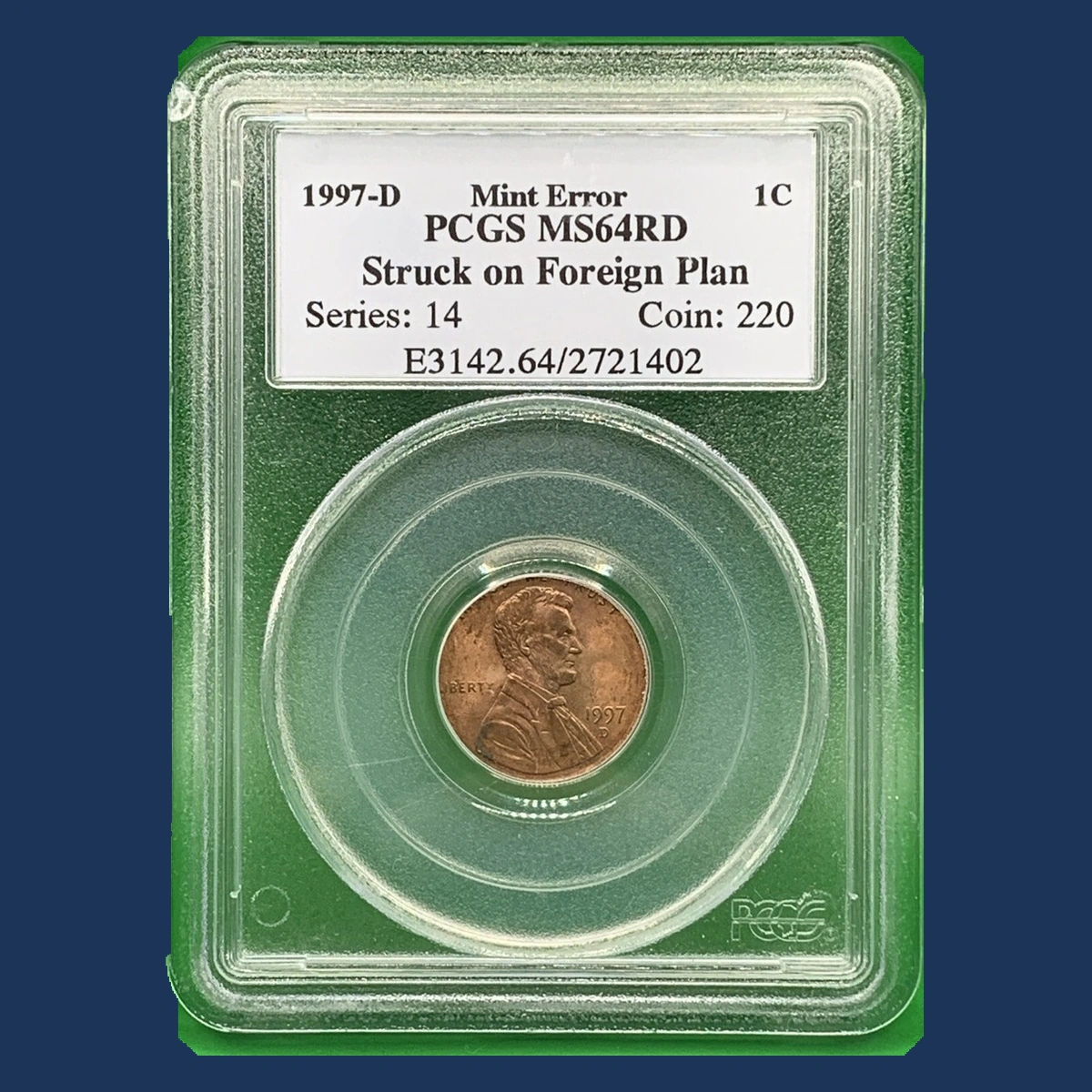
A cent design can reach the edges too soon when struck on a smaller blank. A planchet is the prepared metal disk that receives the design.
A Stack’s Bowers catalog lists a 1997 cent on a dime blank. Diamond’s separate study describes a much lighter zinc blank weighing 1.5 g.
The zinc example has partial copper coverage as discussed above. Its intended country is not established, so a specific foreign coin name should not be attached to it.
A further Denver foreign-blank report concerns another example. Compare the metal, weight, and surviving design of each coin separately.
Estimated Value
An estimated $300–$2,500 covers identified wrong-blank examples of these kinds. The particular metal, retained date, and overall condition determine the comparison.
The cataloged dime-blank piece was graded NGC MS65, meaning unworn with relatively few marks. Its catalog appearance is not a realized sale used for this range.
The 1.5-g zinc coin already includes its plating defect in this whole-coin estimate. Do not add the plating section’s range again or apply a dime-blank price automatically to an unidentified foreign blank.
How to Identify
Use a precise scale to compare the suspect coin with a normal 2.50-g cent. A clad dime blank is nominally 2.268 g, while the illustrated small zinc example is recorded as 1.5 g.
Calipers document size against the cent’s normal 19.05 mm and a dime blank’s usual 17.9 mm. Striking can change the final outline.
A 10× magnifier helps inspect the metal and search for an earlier dime design. Surviving Roosevelt details would mean an already struck dime rather than an empty blank.
Do not file the edge to expose the metal. Begin with measurements and composition that consistently identify the smaller blank, not color alone.
12. 1997 Lincoln Penny Cent Over a Struck Dime (Estimated Up to $3,000)
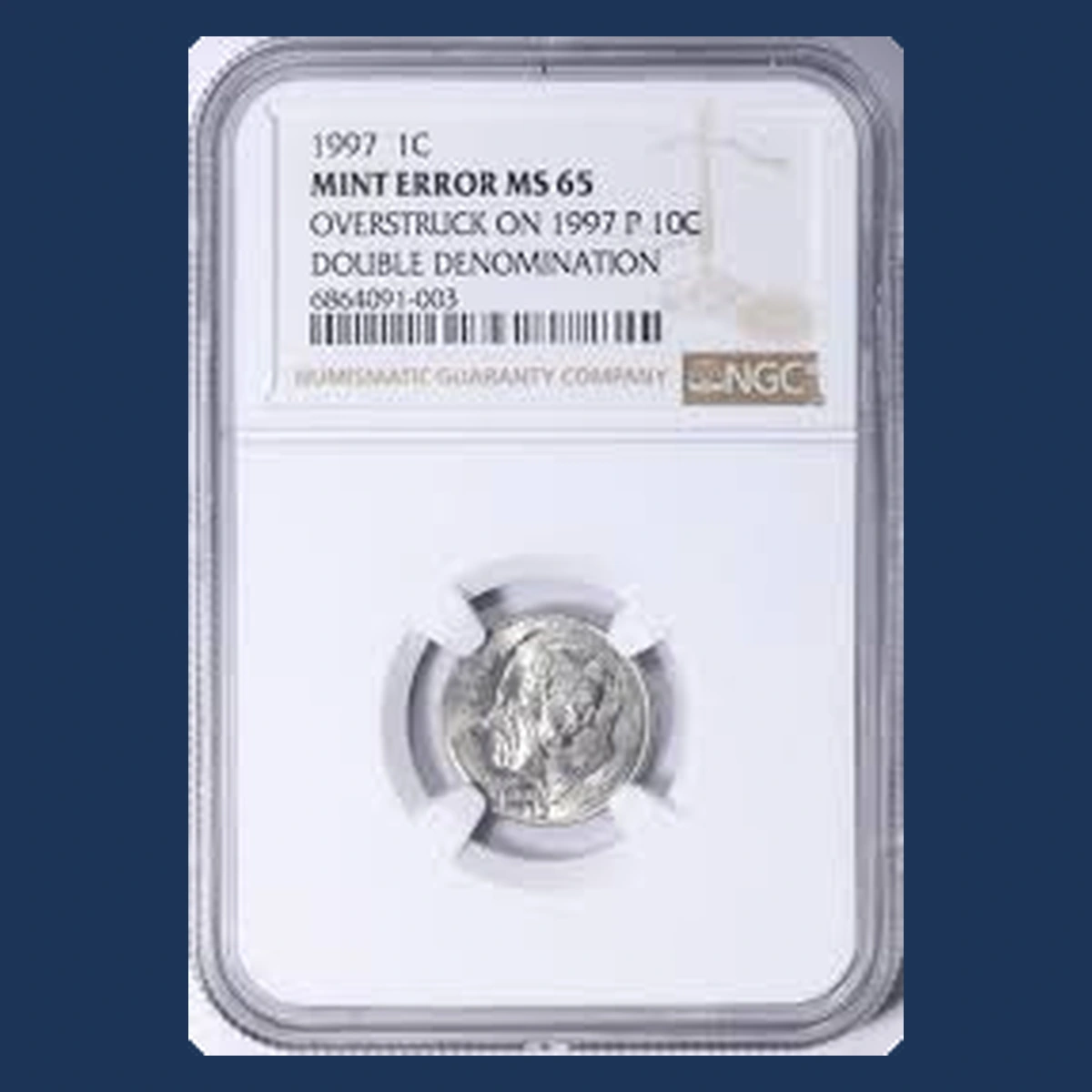
The Lincoln side can show traces of the dime’s torch-and-branches design underneath. On the other face, Roosevelt’s portrait survives beneath the Memorial.
The auctioned example began as a finished 1997-P dime before receiving a 1997 cent impression. Its two sets of designs establish the sequence.
Collectors call this a double-denomination error because two denominations share the same piece of metal. It is not simply a cent on an empty dime blank.
The two designs need not be equally strong. The later blow can cover much of the first while leaving enough detail to identify the earlier coin.
Estimated Value
The NGC MS66 example sold for $1,207.50 in March 2009. MS66 means unworn with few marks, but the readable two-design combination is the central attraction.
Use an estimated $800–$3,000 for comparable identified examples, with condition and surviving detail affecting value. The older sale provides a concrete comparison rather than a guaranteed present price.
A coin on an unstruck dime blank lacks this overlapping design history. Keep that distinction when comparing auction photographs and descriptions.
How to Identify
On the Lincoln face, use a 10× magnifier to find parts of the dime’s torch and branches beneath the cent impression. Turn the coin over and trace Roosevelt’s surviving outline under the Memorial, keeping the two original sides separate.
A scale should read near the underlying dime’s usual 2.268 g, not the cent’s 2.50 g. Calipers record expansion from the dime’s original size, while measurements already on file can protect a sealed example.
Check the dates and surviving dime mint letter wherever they remain visible, without filling gaps from a similar-looking specimen. Recognizable dime details beneath the later cent strike provide the quickest direct check.
Conclusion
The doubled ear is a useful place to begin, but shape and metal can reveal other 1997 errors. Check the entire coin so a single feature does not lead to the wrong explanation.
Estimated values span $5–$3,000. Keep a finished dime distinct from an empty dime blank, and remember that two errors on one specimen do not mean two separate prices to add together.