1976 Penny Error List with Pictures

A heavy 1976 penny does not always contain extra copper. One Denver cent used an unusual copper-nickel blank and sold for $1,265 in August 2009.
That coin differs from a thick copper-rich cent weighing almost the same amount. This 1976 penny error list explains those differences alongside extra lettering, missing metal, and misplaced strikes.
Estimated values run from $2–$3,000, including a conditional estimate for the reported nickel-blank type. Start with the visible feature below, then compare the weight and surface.
1. 1976 Lincoln Penny Filled-Tool Weakness on Both Faces (Estimated Up to $150)
Some letters or design areas can fail to appear while nearby details remain clear. Material inside a die, the steel tool that stamps coins, can block the design.
A recorded 1976 Philadelphia cent shows filled-tool effects on both faces. The object can therefore have more than one weak area without being generally worn flat.
The exact filling material is not identified. Grease and dirt can cause this kind of obstruction, but a weak patch alone does not reveal its contents.
Compare each affected area with the remaining sharp design. Polishing, corrosion, and normal wear can remove detail after striking.
Estimated Value
An estimated $2–$150 covers minor blocked details through larger, clearly original weak areas. Strong contrast between sharp and missing design makes the problem easier to see.
A 2021-D grease-struck cent brought $84 in September 2025. Its later Shield design and zinc-centered metal differ from the copper-rich 1976 cent.
The comparison concerns a blocked impression, not identical blanks or condition. Two affected faces do not automatically double the price, especially when the missing details are small.
How to Identify
Place a normal 1976 cent beside the suspected coin. Find areas that should be sharp, then compare them under a 10× magnifier.
If Lincoln’s high points and the building are equally worn, ordinary circulation may explain the weakness. Blocked areas can instead lie beside well-preserved details.
A normal cent weighs 3.11 grams and measures 19.05 mm, with a smooth edge. Use a scale and calipers when safely accessible.
Check the weak patches for scratches, rough corrosion, or polished surfaces. Do not assume the same material blocked every missing letter.
Local weakness surrounded by intact original design is more useful than overall softness when identifying a filled-tool strike.
2. 1976-D Lincoln Penny Repunched Mintmark (Estimated Up to $200)
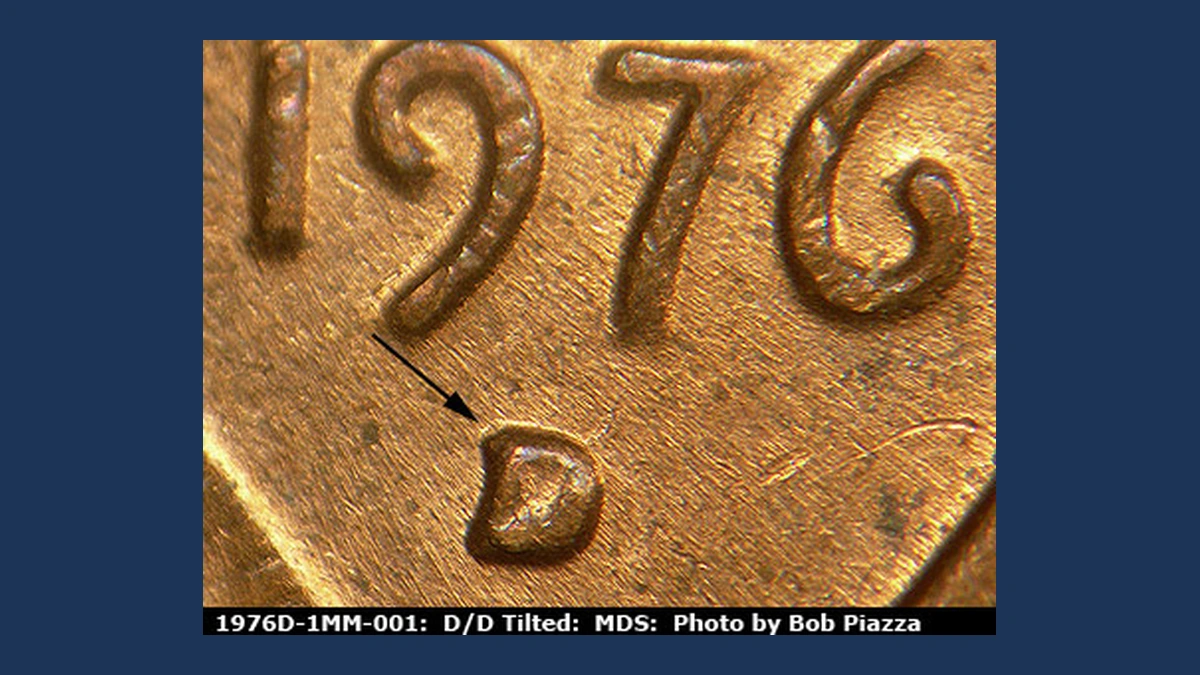
The Denver letter was punched into the stamping tool separately from the main design. A second placement could leave part of the earlier D beside the final one.
One documented 1976-D pattern has a tilted repeat of the letter. Other cataloged examples show added strokes near the small ends of the D.
Those features need careful comparison. A damaged letter punch can also create a split-looking end without another placement of the D.
The rest of the penny helps match the pattern. Small tool marks near LIBERTY and TRUST can support an identification when they agree with the same example.
Estimated Value
For an identified repunched D, estimate $5–$200. Better-separated letter strokes and unworn surfaces generally provide the clearest examples for collectors.
This is an estimate based on similar minor Memorial-cent repunches. No realized sale is assigned here to one of the 1976 catalog numbers.
A split-looking end on the D is not enough to justify the upper range. Confirm the complete letter pattern and its accompanying features before treating a tiny projection as a collectible repunch.
How to Identify
Focus first on the D under a 10× magnifier. Trace its upright stroke, curved side, and the short ends of the letter.
Extra metal should make sense as part of another placement. A small fork alone may come from damage to the punch used to make the letter.
Compare the surrounding marks with photographs of the same variety. Do not combine a D from one example with lines near LIBERTY from another.
The coin should retain the normal smooth edge. A scale and calipers provide the 3.11-gram and 19.05-mm checks without disturbing a sealed holder.
A recognizable second D outline matching the correct surrounding details supports a repunched mintmark.
3. 1976 Lincoln Penny Doubled Front or Back Design (Estimated Up to $300)
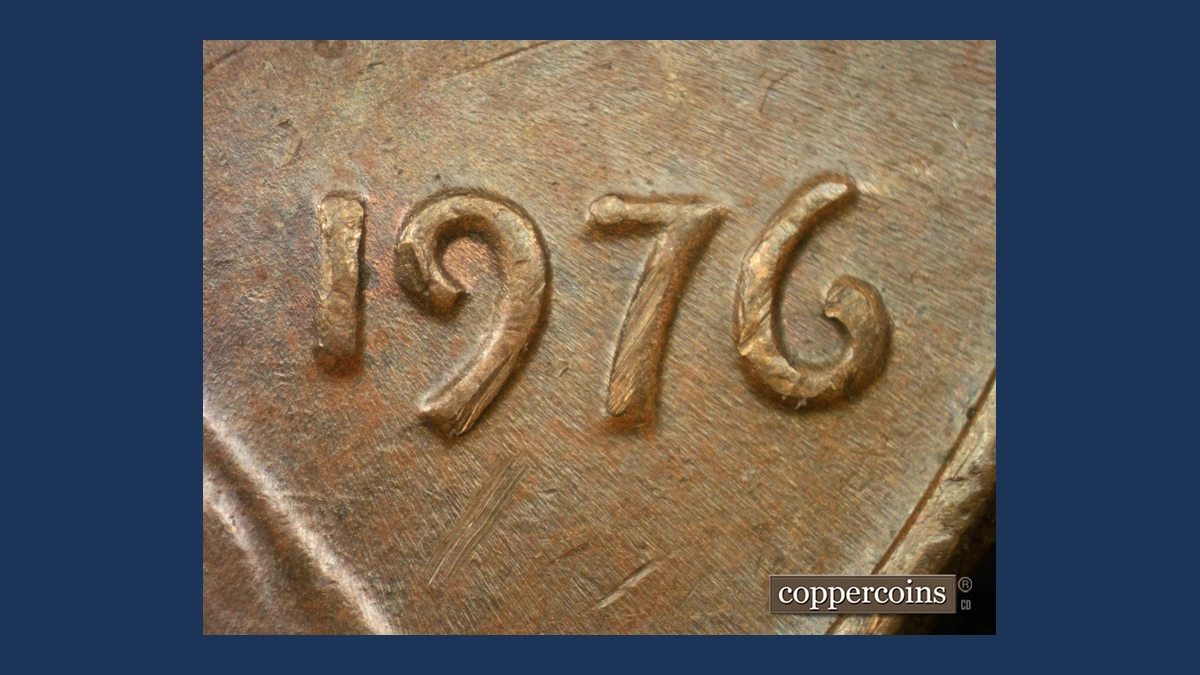
The extra design on these pennies appears as thick letters rather than two separated outlines. The repeated shape was already present on the stamping tool.
Philadelphia front varieties affect the date, LIBERTY, or motto. A Denver front variety also shows extra detail around the motto and part of TRUST.
Back-side varieties affect ONE CENT, parts of the country name, and the small FG initials. Small notches can help separate the repeated design from ordinary thick lettering.
Each pattern needs its own match. These coins do not all show the same doubling, and one normal strike can transfer the extra detail.
Estimated Value
Allow an estimated $5–$300 for correctly matched doubled-design varieties. Strong visible thickness and small split corners can be more useful than a long catalog name.
This range compares minor doubled-tool varieties on Memorial cents. It is not a claimed 1976 auction result or the value of every thick letter.
Wear can blur the small features needed for a match. A clean, unworn example with clear repeatable details belongs toward the stronger end of the comparison.
How to Identify
An ordinary 1976 cent supplies the best first comparison for letter thickness. Use a 10× magnifier under the same light for both coins.
On the front, compare LIBERTY, the motto, and the date. On the back, examine ONE CENT and the country lettering for small notches as well as thick strokes.
Check D and no-letter coins against the correct photographs. Do not require a large second outline where the variety mainly shows thickness.
Normal weight is 3.11 grams and diameter is 19.05 mm. A scale, calipers, and inspection of the smooth edge help exclude altered pieces.
The persuasive match is the same thickness and corner shape repeated in the same letters.
4. 1976 Lincoln Penny Clipped Blank with Optional Off-Center Strike (Estimated Up to $400)
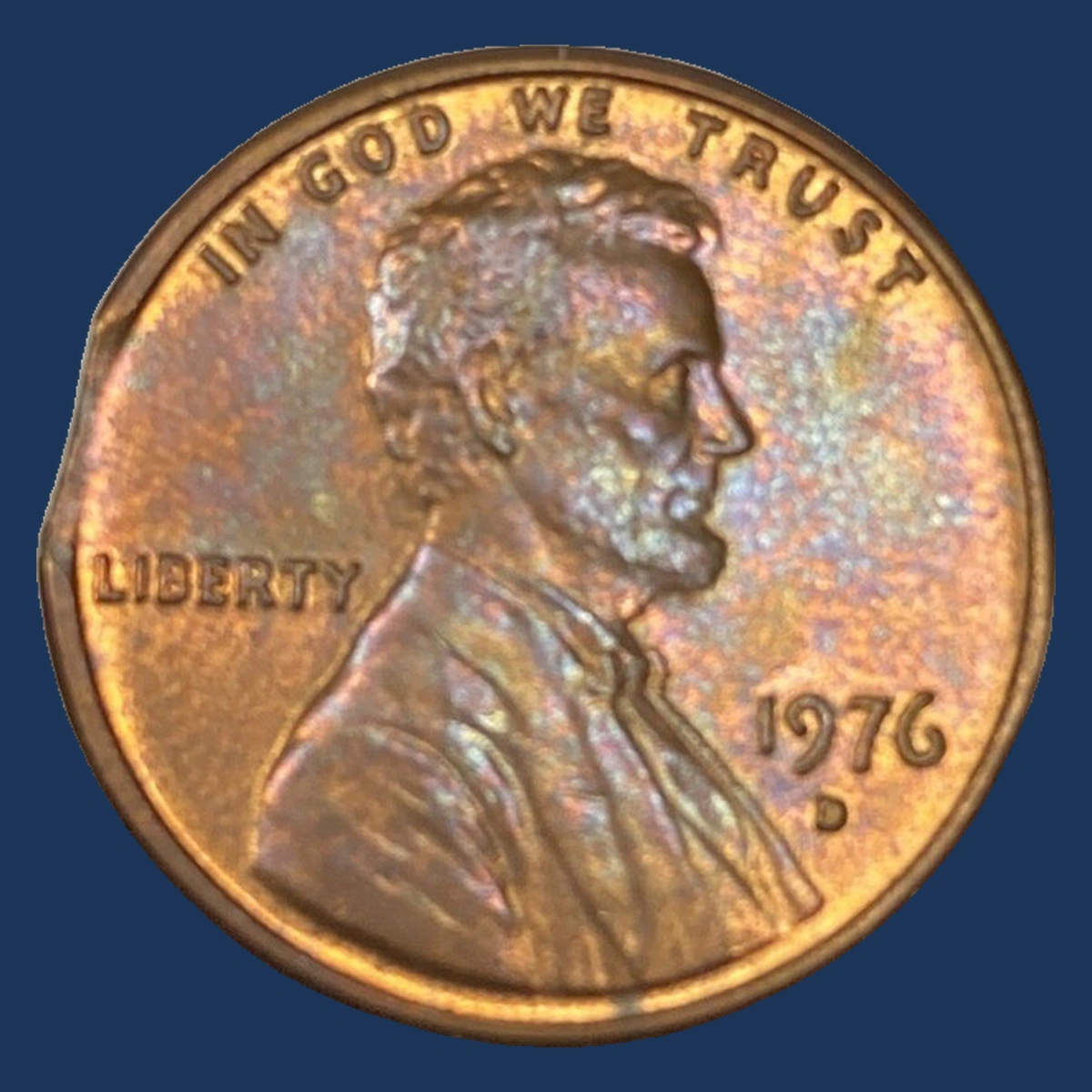
A clip is a gap that existed before the coin received its design. The blank was cut incompletely from the metal strip.
General 1976 reports include clipped cents. A particular Denver coin combines a fifteen-percent clip with a strike about twenty percent off center.
That combination leaves two different boundaries. The clip removes metal, while the off-center portion still contains metal that the stamping tools did not reach.
The Denver example was graded as unworn but cleaned. Cleaning affects its preservation; it does not explain away an original missing section or create the displaced strike.
Estimated Value
Plain original clips can fit approximately $10–$150. A clear clip combined with an off-center design can fit an estimated $40–$400.
A 1980-D cent with a five-percent clip and eight-percent shifted strike sold for $84 in December 2024. That copper-rich cent is a related, smaller combination.
The cleaned 1976-D example needs its own condition adjustment. The two errors share one total value; separate full prices should not be added for the gap and the displaced design.
How to Identify
Hold the whole outline in view before judging the blank area. A true gap removes part of the disc; an unstruck area remains within it.
Use a 10× magnifier at the gap to inspect how the rim and nearby design formed. Fresh file marks or sawing indicate later cutting.
The opposite rim may be weak on a genuine clip, but that feature is only supporting evidence. A coin need not show it strongly.
Compare weight with 3.11 grams on a scale and surviving widths with 19.05 mm using calipers. The remaining normal edge is smooth.
Original struck detail meeting an incomplete blank boundary establishes the clip separately from any shifted strike.
5. 1976 Lincoln Penny Cuds, Cracks, and BIE Chips (Estimated Up to $500)
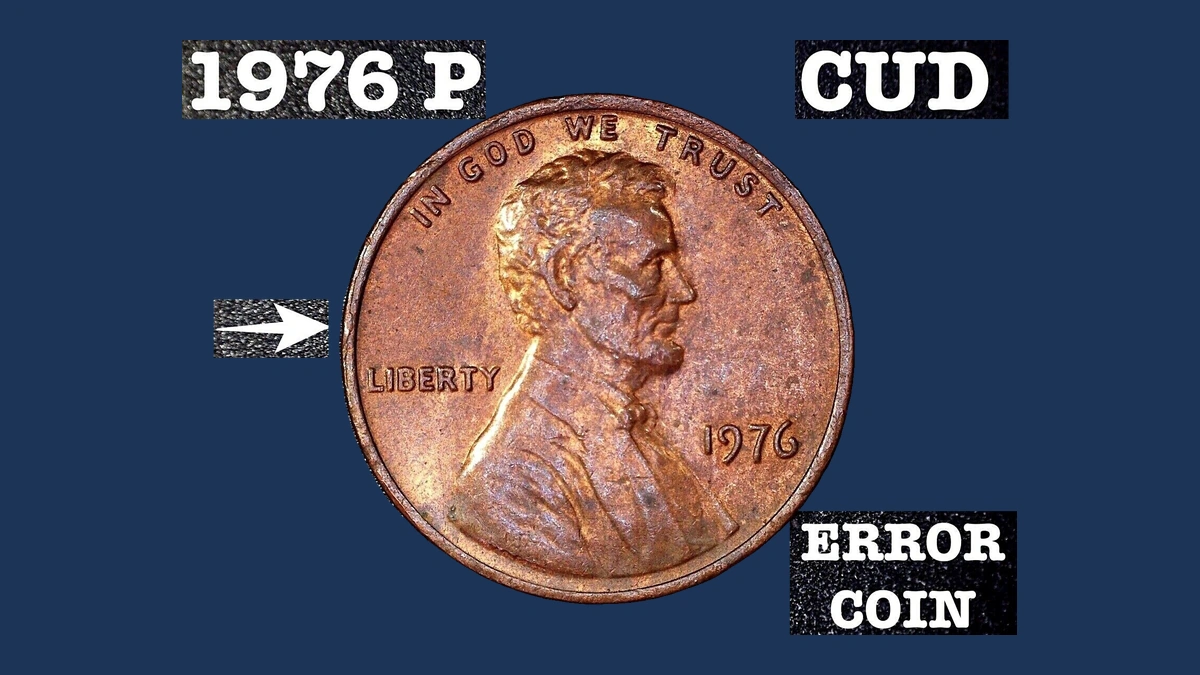
A narrow raised line and a broad raised blob can begin with the same problem: damage to the stamping tool. Coin metal fills the opening during striking.
A crack leaves a line. A missing tool piece leaves a larger patch; collectors call a patch connected to the rim a cud.
Philadelphia and Denver examples include rim breaks and lines running between Lincoln’s portrait and the edge. A small bar between B and E gives the BIE chip its nickname.
The documented LC-76-1 cud is one example. Different rim shapes should be compared with their own images rather than assumed identical.
Estimated Value
Small cracks and BIE chips can fit an estimated $2–$30. Larger, clear rim cuds can fit approximately $30–$500, with condition and size influencing demand.
A 2021-D retained cud sold for $186 in September 2025. Its broken tool piece stayed in place, and its later zinc-centered metal differs from the 1976 cent.
That sale provides a related tool-break comparison. It does not establish one price for every small crack or every differently shaped rim blob.
How to Identify
Turn a low light across the suspected feature. A tool crack usually leaves raised metal, while a scratch cuts down into the finished coin.
Check the normal 3.11-gram weight and 19.05-mm diameter with a scale and calipers when safe. Look along the smooth edge for solder or other added material.
Under a 10× magnifier, trace a raised patch to the rim. A large rim connection supports a cud; an isolated interior blob is a different size of tool break.
For a BIE, locate the bar specifically between B and E in LIBERTY. Do not use the nickname for every lump beside a letter.
The feature should rise naturally from the original struck surface.
6. 1976 Lincoln Penny Off-Center Strike (Estimated Up to $500)
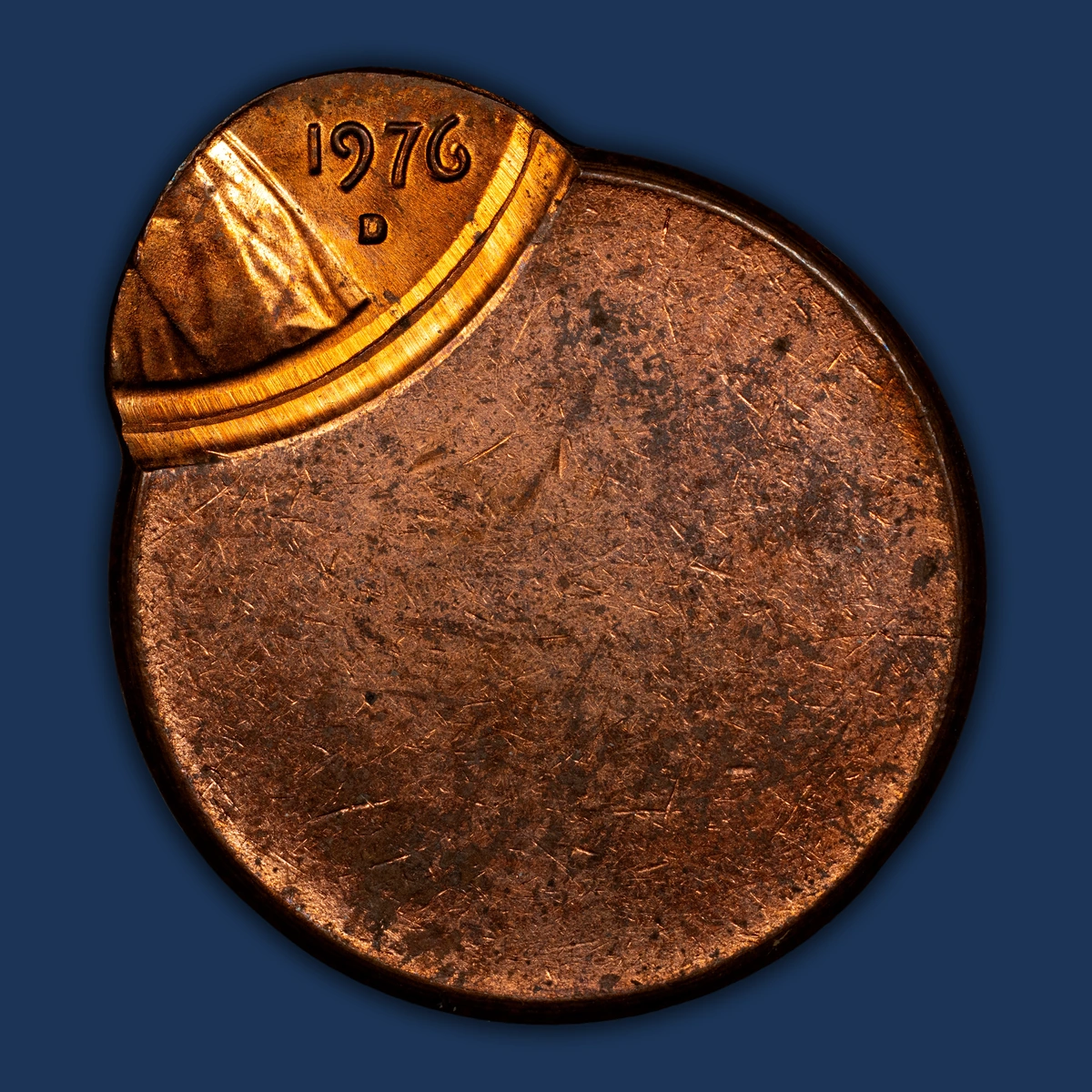
Only a small part of the design reached one recorded 1976-D penny. The coin was struck about eighty percent off center.
The blank had entered the press in the wrong position. Much of its original surface lay outside the space reached by the stamping tools.
A large unstruck area does not mean eighty percent of the metal disappeared. The disc can still contain roughly its normal amount of copper-rich metal.
The recorded example was graded PCGS MS63 Brown, meaning unworn with noticeable marks and brown color. Other reported 1976 shifts need their own surviving date and mint checked.
Estimated Value
Estimate $15–$500 for dated off-center examples with different amounts of displacement and preservation. A readable year makes a large shift easier to collect by date.
A fifty-five-percent off-center 1984-D penny sold for $41 in September 2024. Its copper-coated zinc metal differs from the copper-rich 1976 coin.
That result shows why the percentage alone does not set the price. Clear identity, undamaged surfaces, and an attractive outline can matter more than a slightly larger blank area.
How to Identify
Compare the two faces without hiding any part of the outline. The unstruck area and lost design should fit the same misplaced blank.
A shifted border on just one side can arise from a misaligned tool instead. Look for untouched metal opposite real design loss, not simply an uneven rim.
Use a scale against 3.11 grams and calipers against the normal 19.05-mm diameter. The new outline can differ even when little metal was lost.
Inspect the smooth edge and plain surface with a 10× magnifier for cuts or grinding. Find the surviving date before assigning the year.
An original blank area beside corresponding missing design on both sides is the practical off-center pattern.
7. 1976-D Lincoln Penny Thick or Thin Blank (Estimated Up to $600)
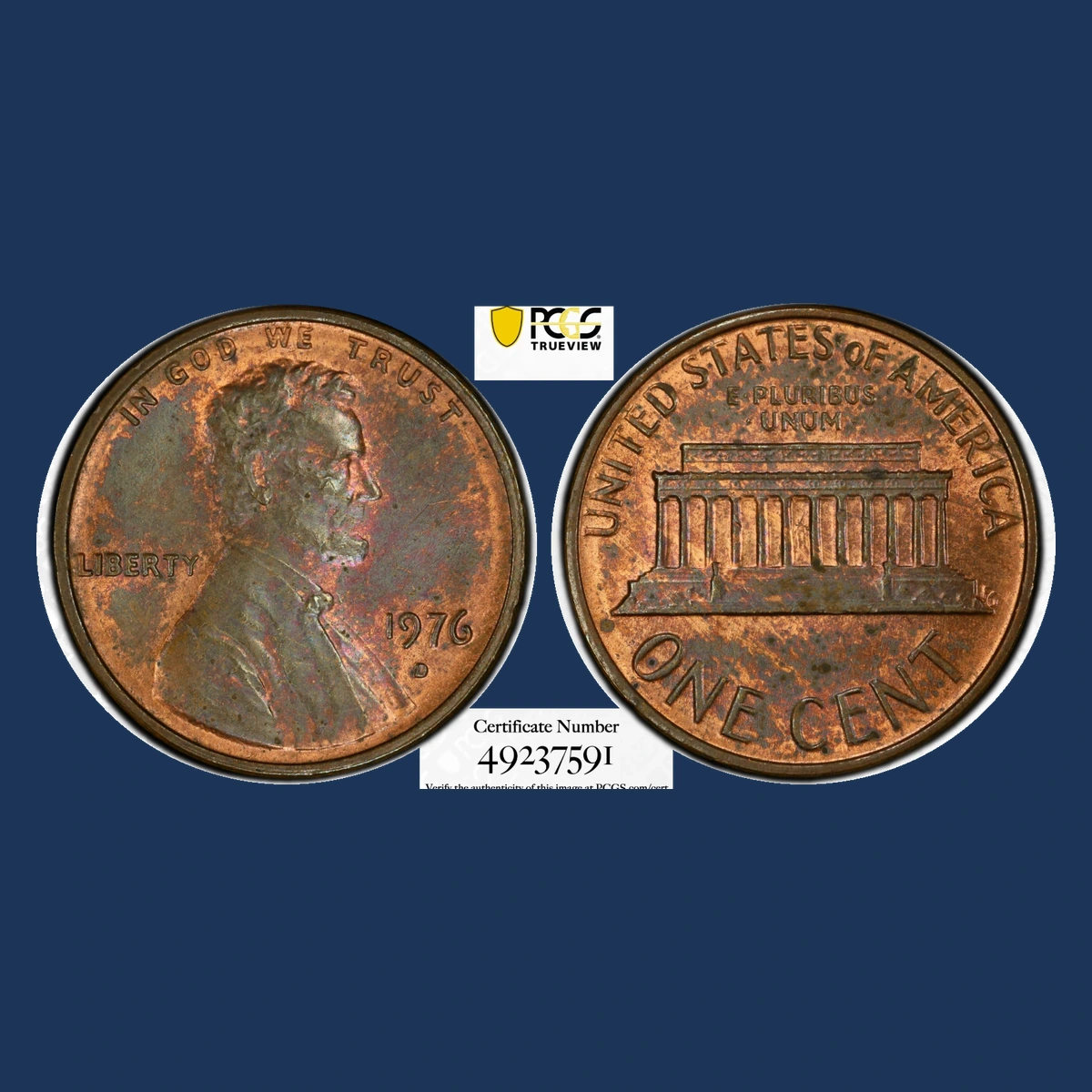
The strip used to make blanks can have the wrong thickness. A thick section supplies extra metal; a thin section supplies too little.
A documented 1976-D cent weighs 3.78 grams and was graded PCGS MS63 Brown as a rolled-thick blank. A separate published report describes a 1.69-gram Denver thin-blank example.
The heavy coin remains a copper-rich blank. It should not be confused with the similarly heavy but silver-colored copper-nickel piece described later.
The thin example requires careful surface examination. Corrosion, filing, or separation of metal can also lower a finished penny’s weight without a thin strip being responsible.
Estimated Value
The 3.78-gram thick-blank coin sold for $129 on December 23, 2024. Estimate approximately $75–$600 for genuine thickness errors, depending on the change and preservation.
The same-year thick-blank sale is a useful starting comparison. It is not a transaction for the reported 1.69-gram thin coin.
A thin example must retain evidence that it started thin before striking. Metal lost later through acid or filing does not receive the same premium simply because the scale reading is low.
How to Identify
Check the scale with a known weight before taking repeated readings. A normal 1976 cent is 3.11 grams; the reported extremes here lie well outside that starting point.
Calipers compare diameter with 19.05 mm and document thickness at accessible parts of the edge. Avoid pressing hard against the coin.
Use a 10× magnifier to inspect both faces and the smooth edge. Corrosion pits, filing lines, or a split surface can explain missing metal.
For a heavy piece, inspect for seams or added coatings. Similar weight does not establish the same metal as the 3.78-gram copper-rich example.
Original design on naturally thick or thin metal must agree with the measurements.
8. 1976-D Lincoln Penny Cupped Broadstrike (Estimated Up to $750)
This broadstrike has more than a wide outline. Its expanded border also rises, giving the penny a cupped shape.
The ring that normally controls the blank’s edge did not contain the metal as intended. Metal spread outward as the tools pressed the design into it.
The recorded Denver example was graded PCGS MS63 Red and Brown. That describes an unworn coin with marks and a mixture of copper-red and brown surface color.
A cupped border alone does not prove that the coin became stuck to a tool. The recorded description is a cupped broadstrike, with expanding metal forming the outline.
Estimated Value
Use an estimated $50–$750 for a genuine cupped broadstrike. The amount of outward spread and the height of its original border help distinguish it from a modest broadstrike.
A flatter 1980-D broadstrike sold for $57 in March 2021. It provides a copper-rich cent comparison, not the exact price of the cupped 1976-D example.
An intact, clearly struck design supports the stronger estimate. Later bending or hammering can create an unusual shape without adding a mint-error premium.
How to Identify
View the coin from the side without trying to flatten it. The raised border should be examined together with the expanded design area.
A scale compares the metal amount with a normal 3.11-gram cent. Calipers record the actual width and cup height rather than forcing the outline into a 19.05-mm circle.
Under a 10× magnifier, follow the outer lettering around both faces. A broadstrike should retain the intended design within the spread metal.
Inspect the smooth edge for later squeezing and look for crushed details along an artificial bend. A cup does not by itself establish a stuck-coin cap.
Original outward flow continuing into the raised border is the feature to match.
9. 1976-D Lincoln Penny Double Strike (Estimated Up to $1,000)
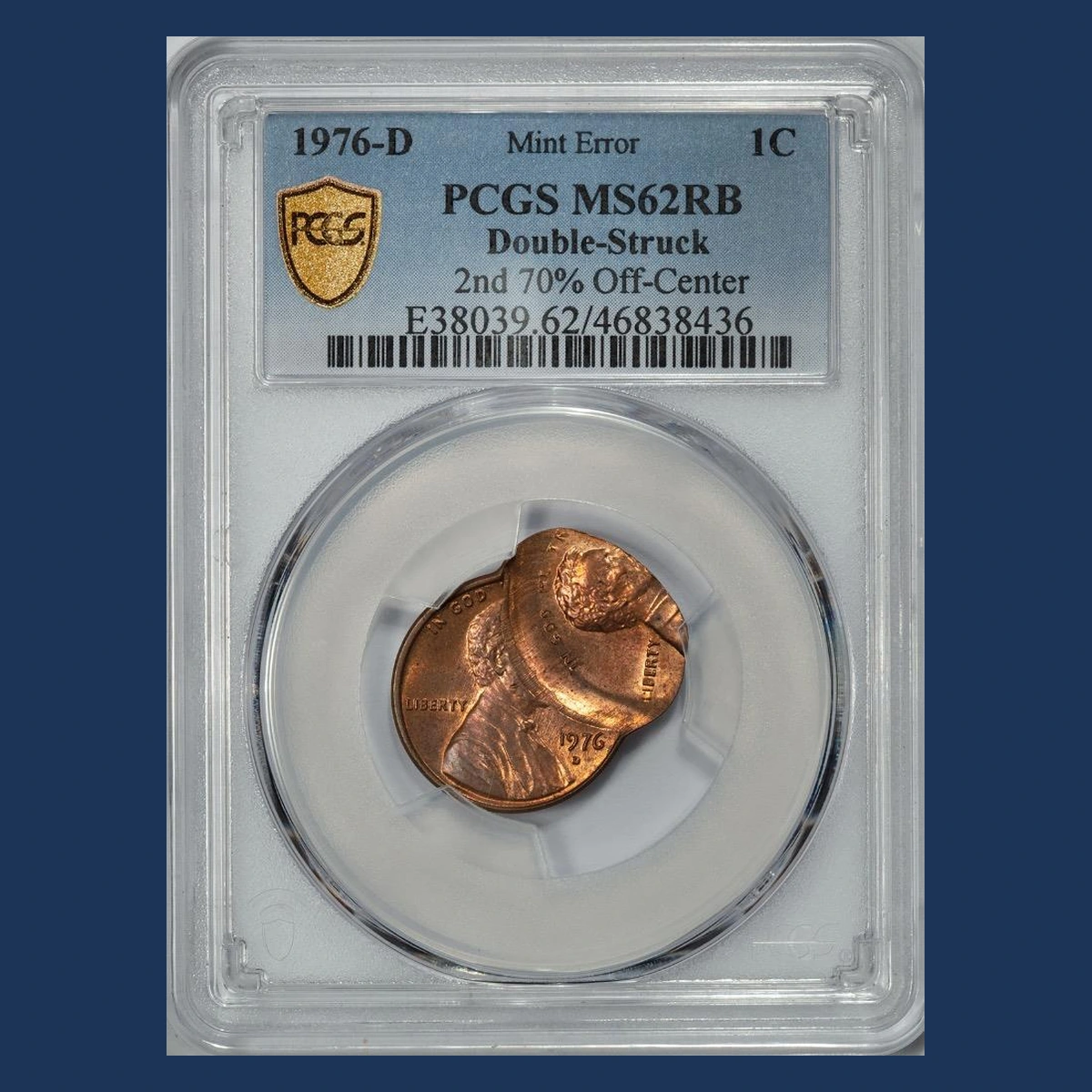
A second striking position can preserve another piece of Lincoln, the date, or the building. The penny moved before receiving another blow.
One documented 1976-D example has its second strike about seventy percent off center. Another reported specimen has a much larger ninety-five-percent displacement.
These percentages describe different coins. They should not be combined into a sequence for one piece.
Counterfeit repeated strikes are also known for this date. A fake can have suspiciously clear repeated dates and odd tool lines around LIBERTY, so two visible numbers alone do not establish a genuine double strike.
Estimated Value
An estimated $50–$1,000 covers genuine shifted double strikes with different amounts of readable design. Clear overlapping impressions can explain the accident more effectively than a nearly empty second strike.
A 1979 cent with an off-center second strike sold for $204 in September 2023. Its copper-rich metal makes it a useful nearby-year comparison.
The 1976-D seventy-percent example was graded PCGS MS64 Red and Brown. Its own condition and surviving impressions should guide the price rather than the displacement number alone.
How to Identify
Trace the repeated designs under a 10× magnifier, keeping the complete coin in view. Each position should belong to a connected impression rather than several isolated extra digits.
Compare LIBERTY and the nearby open surface with a genuine example. Strange raised tool lines and unnatural repeated lettering can expose a counterfeit.
The normal metal amount is 3.11 grams. A scale checks that figure, while calipers record changes from the usual 19.05-mm outline.
Inspect the smooth edge and the opposite face for later pressing or artificial impressions. Strong-looking dates do not outweigh other signs of fabrication.
Two original strike positions with a believable overlap establish the error more clearly than repeated numbers alone.
10. 1976-D Lincoln Penny Struck Through a Flipped Fragment (Estimated Up to $1,000)
A fragment can become trapped between a blank and the stamping tool. Its outline and existing details may then interrupt the new penny’s design.
The recorded 1976-D example was described as struck through a flipped, double-struck fragment on the back. Its NGC MS66 Red grade indicates an unworn coin with relatively few marks and copper-red color.
The fragment carried the complicated striking history. The description does not mean the whole receiving penny flipped and received two complete strikes.
Look at the local interruption first. Its outline and overlapping impressions explain why this is more specific than an ordinary weak patch.
Estimated Value
Estimate $100–$1,000 for a confirmed impression from an identifiable struck fragment. Clear transferred detail and the receiving coin’s preservation make the event easier to appreciate.
A 2017-D cent with a front struck-through error sold for $228 in March 2025. That zinc-centered coin offers a general comparison, without reproducing this fragment’s complex history.
The estimate covers the 1976-D receiving penny. It does not assume a loose fragment is included or assign an extra value to an object that is not documented.
How to Identify
Concentrate on the back of the penny under a 10× magnifier. Follow the interruption’s boundary and distinguish transferred detail from the normal Memorial design.
Photograph both faces before deciding which object moved. The fragment’s flipped or repeated impressions should not be mistaken for full extra strikes on the receiving coin.
A normal 1976-D penny weighs 3.11 grams and measures 19.05 mm across. Use a scale and calipers on an accessible piece, and examine its smooth edge.
Do not pry at a mark to see whether anything remains attached. Compare the original surface with dents or scratches that could have formed later.
The small blocked area and its transferred impressions provide the identifying relationship.
11. 1976 Lincoln Penny on a Clad Dime Blank (Estimated Up to $1,500)
The wrong blank can leave Lincoln without enough room for the lettering. A dime blank is smaller and lighter than the copper-rich disc intended for a 1976 cent.
Denver examples include a coin graded PCGS MS61. A separate Philadelphia coin was struck about twenty-five percent off center on a dime blank and graded NGC MS65.
The Philadelphia example was recorded at 2.3 grams. Its misplaced design belongs to that coin, not every Denver wrong-blank example.
These unused blanks have copper-nickel outer layers around a copper center. They should not carry an earlier Roosevelt portrait or torch from a finished dime.
Estimated Value
The Denver PCGS MS61 example sold for $480 on December 23, 2024. Its grade means unworn but with substantial marks.
Estimate $250–$1,500 across genuine dime-blank cents, including stronger off-center combinations. The amount of surviving identity and surface quality influence the comparison.
The Philadelphia coin’s extra displacement needs assessment as part of one complete piece. A price for a plain wrong blank and another for an off-center cent should not simply be added together.
How to Identify
A normal clad dime blank begins near 2.268 grams and 17.91 mm. Compare those figures with the cent’s normal 3.11 grams and 19.05 mm.
A scale and calipers can test an accessible example. Some spreading during striking can change the final diameter, so size alone does not identify the starting disc.
Use a 10× magnifier to inspect truncated lettering and the edge’s copper center. Normal cent edges are smooth; an unused dime blank need not preserve dime-style grooves.
Check both faces for earlier dime details. Those would place it in the overstruck-dime group instead.
The smaller layered metal should carry only the cent design, with any off-center area belonging to the same strike.
12. 1976-D Lincoln Penny on an Unusual Copper-Nickel Blank (Estimated Up to $2,500)
Almost the same weight can hide a very different metal. This Denver cent weighs about 3.75 grams, close to the thick copper-rich example but with a different composition.
The reported mixture is 71 percent copper and 29 percent nickel. Its starting blank has no established country or denomination.
The coin was certified as unworn with edge damage. Scraping already present on the blank also survived the strike, especially on the front.
A second account records 3.76 grams for the same piece. That small reporting difference does not turn it into another specimen or a standard five-gram nickel blank.
Estimated Value
This unusual coin sold for $1,265 on August 1, 2009. The sale included its documented edge damage.
An estimated $800–$2,500 is a comparison range for a similarly identified wrong-metal cent. Exact composition and preservation matter greatly.
The more recent $480 dime-blank sale concerns a different, lighter layered blank. It helps show why silver color alone cannot select a price, while the unusual alloy requires its own closer comparison.
How to Identify
Color is only the beginning. A 10× magnifier can inspect the design and old abrasions, but cannot measure the metal mixture.
Check an accessible coin with a precise scale, comparing approximately 3.75 grams with the ordinary cent’s 3.11 grams. Calipers compare its dimensions with the usual 19.05-mm diameter.
Inspect the edge for added plating, seams, and damage. A normal cent has a smooth edge, and added coatings can imitate an unusual silver-colored surface.
Professional metal testing must distinguish this alloy from a copper-rich thick blank or a clad dime blank. Do not assign it to a foreign country from appearance alone.
The verified unusual mixture, genuine date, and heavy blank must agree.
13. 1976 Lincoln Penny Struck Over a Roosevelt Dime (Estimated Up to $3,000)
The smaller coin had already become a dime before it received the cent design. Parts of Roosevelt’s design remain underneath Lincoln and the Memorial.
A recorded 1976 example was graded PCGS MS63. The older dime details were especially visible on the back.
This is different from a cent struck on an unused dime blank. The earlier design proves that the metal went through dime striking before entering the cent press.
The underlying dime’s year is not established here. The 1976 cent date should not be assigned to the older coin merely because both designs share the same piece of metal.
Estimated Value
Use an estimated $700–$3,000 for an authenticated cent over a finished dime. The clarity of both designs and their dates can affect collector interest.
A 1980 cent over a 1980-P dime brought $1,920 in September 2025. That sale supplies a nearby copper-era cent-design comparison, not a price or host date for the 1976 piece.
An overlapping portrait that can be recognized is more useful than unexplained extra lines. Damage obscuring the earlier dime design can weaken the comparison.
How to Identify
Begin on the back, where the recorded example shows particularly clear remains of the dime design. Use a 10× magnifier to trace recognizable torch or lettering fragments.
Then inspect the front for Roosevelt beneath Lincoln. Keep each surviving number with the design that produced it.
Compare the scale reading with the dime’s normal 2.268 grams rather than a cent’s 3.11 grams. Calipers record expansion from the dime’s starting 17.91 mm instead of assuming the cent’s 19.05 mm.
Examine the layered edge and any remaining grooves for seams or later alteration. Another strike can distort that boundary.
Genuine older dime features beneath the cent design identify the two-denomination error.
14. 1976 Lincoln Penny Reported on a Nickel Blank (Estimated Up to $3,000)
A cent on a nickel blank would carry Lincoln’s design on a larger, heavier disc. A normal United States nickel blank weighs five grams.
Year guides report this possibility for 1976, particularly Denver. However, the documented 3.75-gram copper-nickel cent is not a standard nickel blank.
The reported nickel-blank type therefore needs a separate coin with the correct metal, weight, and original cent design. A silver-colored surface alone cannot supply those facts.
The difference is physical, not just a choice of name. Repeating the unusual copper-nickel coin’s auction description does not change its weight into five grams.
Estimated Value
For a professionally confirmed cent on a genuine nickel blank, use a conditional estimated range of $800–$3,000. This is not a claimed sale of a verified 1976 example.
Recent wrong-blank cents provide the broader comparison, including the 1976-D dime-blank coin sold for $480 in December 2024. Its smaller layered blank is physically different.
The higher conditional range reflects the larger wrong denomination. It applies only after the five-gram blank identity is established, not to a coated ordinary penny.
How to Identify
A standard nickel blank is about 5.00 grams and 21.21 mm, compared with 3.11 grams and 19.05 mm for a normal 1976 cent.
Use a precise scale and calipers before studying color. A reading near 3.75 grams instead matches the separate unusual-alloy discussion and does not prove a nickel blank.
The nickel alloy is normally 75 percent copper and 25 percent nickel. Professional testing should check that mixture without scratching the surface.
With a 10× magnifier, examine the date, D if present, and smooth edge for altered digits, seams, or added metal.
The larger genuine blank, correct mixture, and original cent strike must be demonstrated together before using the nickel-blank estimate.
Conclusion
The weight needs an explanation, not just a surprising number. A thick copper-rich cent, a copper-nickel blank, and a smaller dime blank can all change what appears on a 1976 penny.
Estimated values range from $2–$3,000. Small raised chips sit near the lower end; unusual metal and overlapping denominations occupy stronger ranges. Keep each price with its actual coin, and confirm the starting blank before relying on color alone.