1961 Penny Error List with Pictures

The older date is the surprise: a 1961-D cent still shows 1960-D beneath its later design. That cross-year overstrike brought $4,320 in September 2024.
This 1961 penny error list includes more affordable finds too, from raised letter-space chips to thin split blanks. Estimated ranges extend from $3–$7,500, depending on what happened to the coin and how clearly it remains visible.
Compare the examples below to learn where each clue appears and what it means.
1. 1961 Lincoln Penny BIE Chip and Raised Die Crack (Estimated Up to $100)
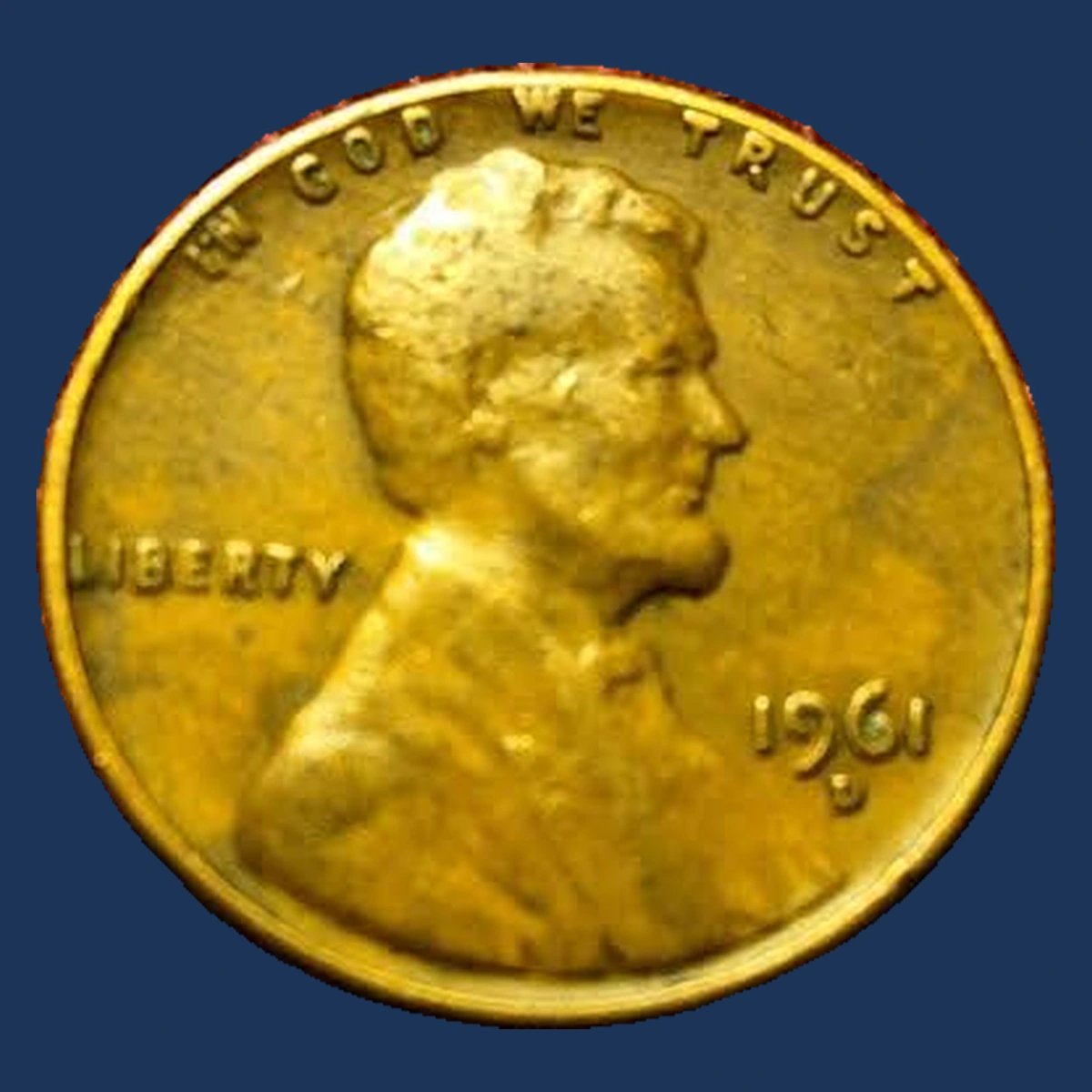
An extra upright bar between B and E can make LIBERTY look as though it contains an I. This BIE feature comes from a small piece breaking out of the stamping tool.
A narrow tool crack can instead leave a raised line across the coin. The line’s location depends on the particular tool, so it need not pass through LIBERTY.
Year lists report both effects for 1961. They do not establish a specific rim-connected lump or one pattern shared by every mint.
Height matters. A cut, trapped dirt, or attached metal can look unusual without coming from the stamping tool.
Estimated Value
Tiny raised features usually belong at the affordable end of this guide. Estimate $3–$25 for ordinary BIE chips and $3–$100 for identified raised tool cracks of varying prominence.
These are comparison ranges for the reported types, not auction prices assigned to particular photographs. A clear line or bar on an original surface is easier to study than one blurred by wear.
A rim-connected break needs separate supporting evidence. The word crack does not establish that more dramatic feature.
How to Identify
At 10× magnification, inspect the space between B and E without scraping away anything lodged there. A struck BIE bar should rise naturally from the original surface rather than sit on it as separate material.
For a suspected tool crack, move the light across the line to check its height. A groove cut below the surface points to another cause.
The normal copper-alloy cent weighs 3.11 g and measures 19.05 mm, checked with scale and calipers if altered metal is suspected. Trace the raised bar or line into the surrounding struck surface to distinguish it from a scratch or attachment.
2. 1961 Lincoln Penny Reported Doubled Front Design (Estimated Up to $200)
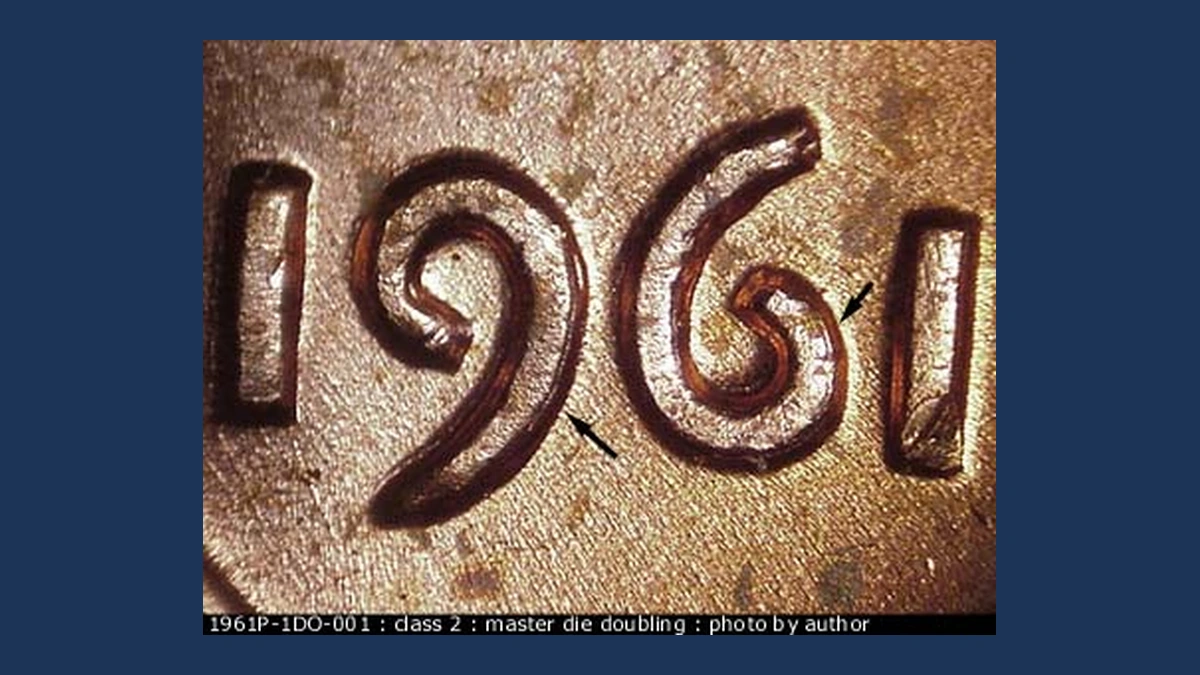
Lettering can show a second raised edge when the stamping tool already carries a repeated design. The finished coin receives that image in a single strike.
The 1961 year guides report this type on Philadelphia and Denver cents, pointing to the date, LIBERTY, and motto. They do not provide one matched catalog pattern for every reported example.
Inspect the outline itself. A rounded repeat differs from a low flat shelf caused by movement during striking.
The Denver mintmark is a separate feature below the date. Extra detail confined to D should not be described as doubling across Lincoln’s front design.
Estimated Value
For an identified minor doubled-front pattern, use an estimated $5–$200. A clear raised repeat in a recognizable letter or digit gives the buyer more to compare than general thickness.
The range is not a realized price for the broad year-guide report. Preservation and the strength of the matched pattern affect where a particular coin belongs.
Keep mintmark-only doubling outside this comparison. The D-over-horizontal-D variety has its own evidence and prices, even though both types can first look like extra lettering.
How to Identify
Photograph the entire date and motto before enlarging any single edge. Use a 10× magnifier to follow the shape of a suspected repeat through a complete letter or digit.
Check the same feature under a different light angle. A reflection moves, while real raised detail remains attached to the design.
A scale and calipers compare 3.11 g and 19.05 mm, the ordinary cent standards. Philadelphia has no mintmark and Denver has D, so record that identity alongside the repeated feature.
Look for a rounded second contour that follows the original design, rather than a flat shelf that cuts into the letter’s normal width.
3. 1961 Lincoln Penny Flaking Alloy on Either Face (Estimated Up to $300)
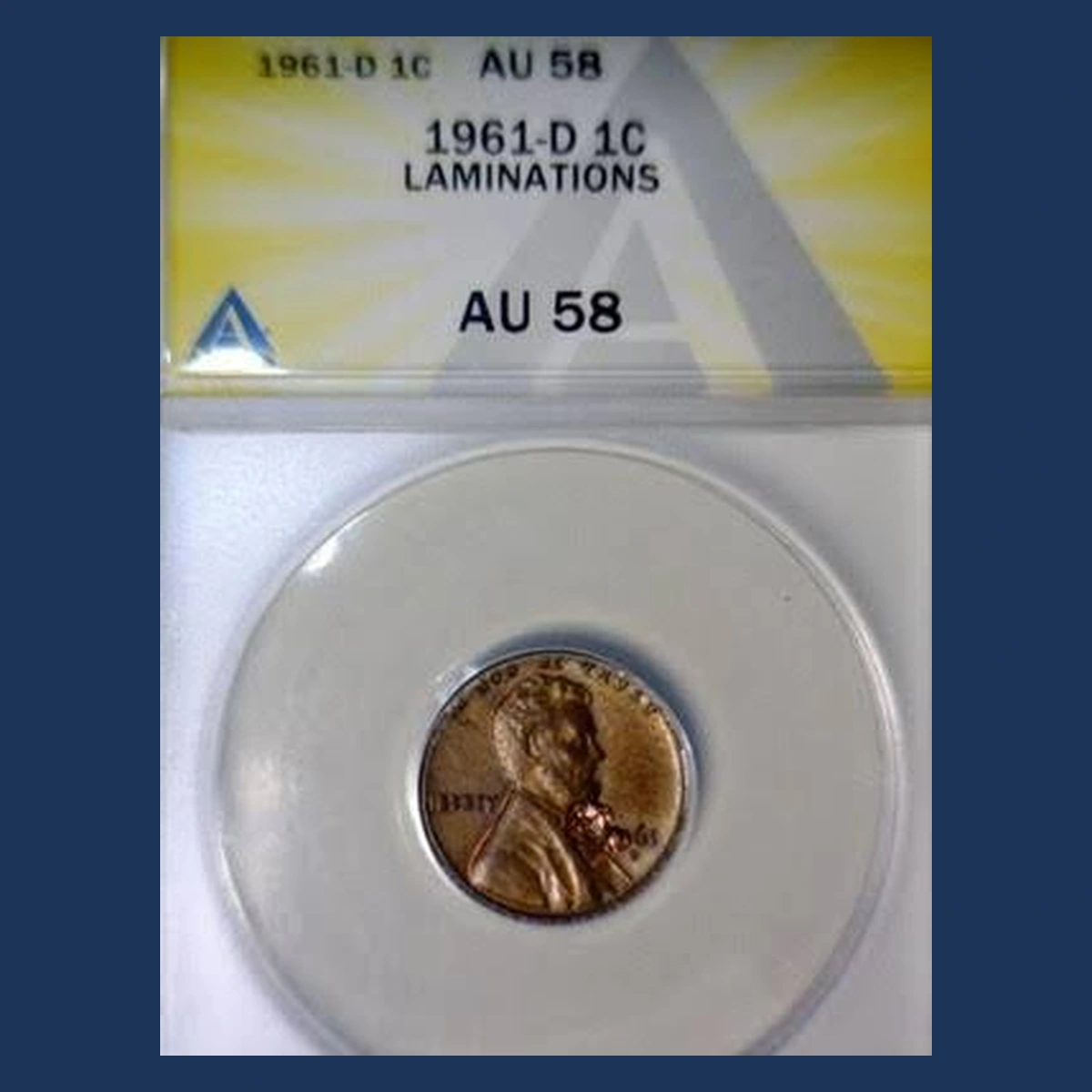
A loose layer can reveal rough metal below the original design. The weakness lies within the copper alloy, so the resulting flake is not modern copper plating lifting from a zinc core.
An owner’s Philadelphia example shows separation above LIBERTY toward the motto. Separate Denver reports describe front peeling and a back area between roughly one and three-thirty o’clock.
Those locations identify different examples. They should not be combined into a single coin with damage on every listed area.
Collectors call this separation lamination. Nearby scratches, stains, or damage need their own explanations instead of automatically becoming additional mint errors.
Estimated Value
Estimated lamination values run from $5–$300, depending on the peeled area, surviving design, and condition. A visible attached layer or clear internal split can make the mechanism easy to understand.
The owner and dealer reports here are not recorded auction results for all three examples. Their locations describe the physical features being compared.
Condition remains important around the peel. A coin with extra scratches or corrosion may be less appealing even when the original alloy separation is correctly identified.
How to Identify
Look above LIBERTY and toward the motto on the reported Philadelphia example, then compare its rough peeling boundary under a 10× magnifier. Keep the separately reported Denver back peel in its one-to-three-thirty area.
Examine any remaining flap without lifting it. The original design may end at the separation or remain partly attached to the thin layer.
A precise digital scale compares the full 3.11-g cent weight; an attached flake may cause little or no loss. Calipers compare the normal 19.05-mm outline.
Follow the split surface beneath the peeling metal, distinguishing its natural texture from scratches, stains, or corrosion beside it.
4. 1961 Lincoln Penny D Over a Horizontal D (Estimated Up to $350)
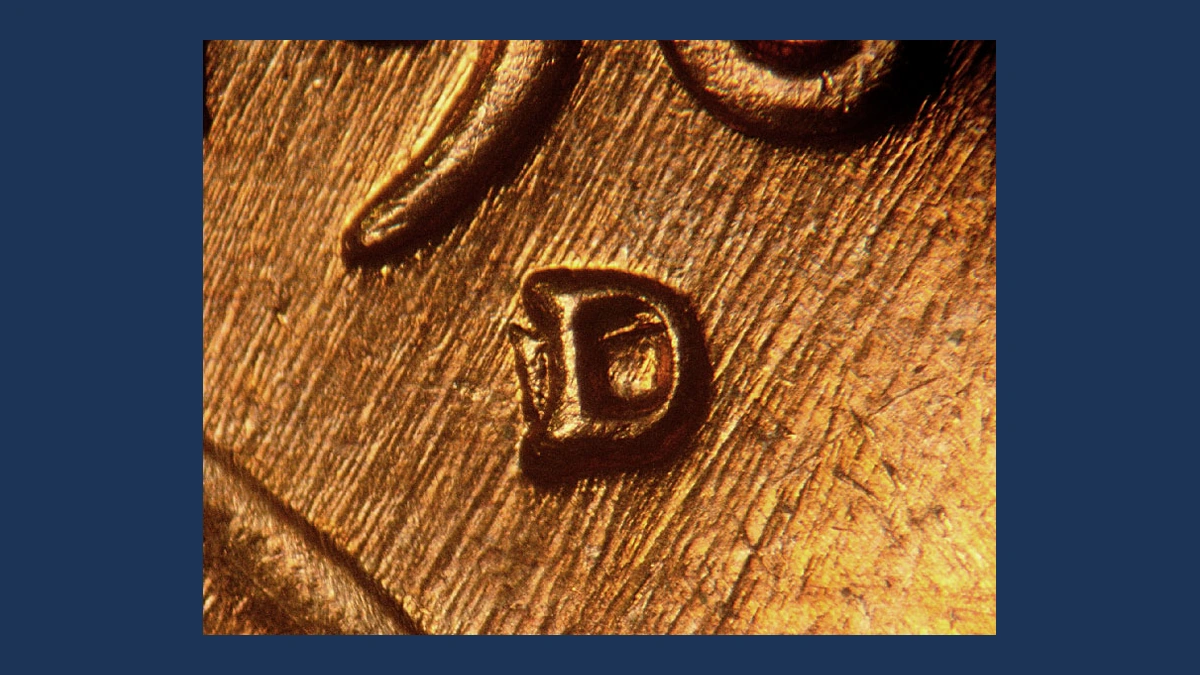
The upright D can conceal part of an earlier sideways D. Look inside the letter and along its left side for the surviving rotated shape.
The mintmark punch first entered the die, or steel stamping tool, in the wrong orientation. A later upright impression did not erase every part of that earlier letter.
This variety is known as D over horizontal D and is cataloged as FS-501. It concerns the small mintmark, not a second strike of the entire coin.
Damage can also distort D. The surviving lines must fit a sideways letter rather than an isolated bump or cut.
Estimated Value
PCGS’s auction record lists an NGC MS65 Red example at $84 in October 2022. MS65 means unworn with relatively few marks, while Red describes the copper color.
An estimated $10–$350 covers identified examples with differing wear and clarity. A legible sideways remnant makes the variety easier to recognize.
The $84 sale is one actual comparison, not a guaranteed price for every D with an odd interior. Match the horizontal letter before comparing grades.
How to Identify
Focus a 10× magnifier on the mintmark below 1961 and trace its interior before inspecting the outer edge. Compare the horizontal remnant with a clear FS-501 photograph, looking inside and to the left of the upright D.
Check that the extra lines belong to a sideways letter rather than a random gouge. The surrounding date should remain visible in the same photograph.
For a loose coin, scale and calipers compare the standard 3.11 g and 19.05 mm. Those measurements establish an ordinary cent body, not the particular variety.
Trace enough of the earlier D to recognize its horizontal orientation within the later upright mintmark.
5. 1961 Lincoln Penny Reported Cracked Blank (Estimated Up to $400)
A gap within the coin differs from a raised line left by a cracked stamping tool. Here, the blank’s own metal has split.
A 1961 year page reports an ANACS MS63 Brown example with a defective cracked blank. The report does not establish a location or mint for that coin.
The important physical clue is the gap and how the design meets it. Metal already cracked before the blow can receive design around its damaged area.
Later bending can also split a cent. Its bend, torn metal, or cut marks may show that the finished coin was damaged after striking.
Estimated Value
Estimate $25–$400 for an identified defective cracked blank. The year page describes an ANACS MS63 Brown example offered at $250, which is an asking price rather than a confirmed sale.
The quoted grade means an unworn brown coin with noticeable marks. It should remain attached to that reported example rather than being assigned to any cracked-looking cent.
A natural gap and preserved surrounding design support comparison. A split caused by later bending or cutting does not receive the same estimate.
How to Identify
Inspect the gap with a 10× magnifier from both face-on and edge-on angles. Check whether the struck letters and surface follow the opening naturally or were torn apart afterward.
Compare the full coin with the normal 3.11 g on a scale and 19.05 mm using calipers. A crack can remain near the normal weight because the metal has separated without necessarily falling away.
Do not flex the coin to test the opening. Record any bend, fresh tear, or cutting marks separately.
Follow the gap through the coin’s body to distinguish a defective blank from a raised tool-crack line on solid metal.
6. 1961 Lincoln Penny Back Struck Through a Late Coin Cap (Estimated Up to $450)
The Memorial can appear shallow while Lincoln’s side stays more normal. A stuck coin covering the back stamping tool can interfere with the design reaching the blank.
That stuck coin forms a cap over the tool. Repeated striking thins it, allowing a weak version of the design to show through in its later stage.
A recorded Denver example is a late-stage capped-die strike graded ANACS MS62 Red and Brown. Its Memorial side carries the affected image.
It is not the deep cup-shaped cap itself. Ordinary wear or polishing can also flatten the building, so compare the surface and both faces.
Estimated Value
The estimated range is $25–$450 for an identified 1961-D late cap strike. The recorded ANACS MS62 Red and Brown grade describes an unworn coin with noticeable marks and mixed copper color.
For a separate-year comparison, a 1965 back cap strike in NGC MS62 Brown sold for $61 in July 2021. That sale is not assigned to the Denver 1961 coin.
Visible distortion and original surface explain the effect. General flatness on a worn Memorial provides a weaker comparison.
How to Identify
Compare the Memorial’s shallow details with the clearer Lincoln side under the same light. Use a 10× magnifier to see whether the weak image changes gradually across the back.
Polishing scratches and circulation wear can reduce the building too. Inspect high points and the surrounding smooth background together instead of judging only the roof.
The ordinary copper-alloy cent measures 19.05 mm and weighs 3.11 g. Calipers and a scale help check for metal removed by later abrasion.
Follow the weak Memorial image into its clearer surroundings, looking for an impression transmitted through a covering rather than rubbed away after striking.
7. 1961 Lincoln Penny Split Blanks, Including a Clipped Example (Estimated Up to $500)
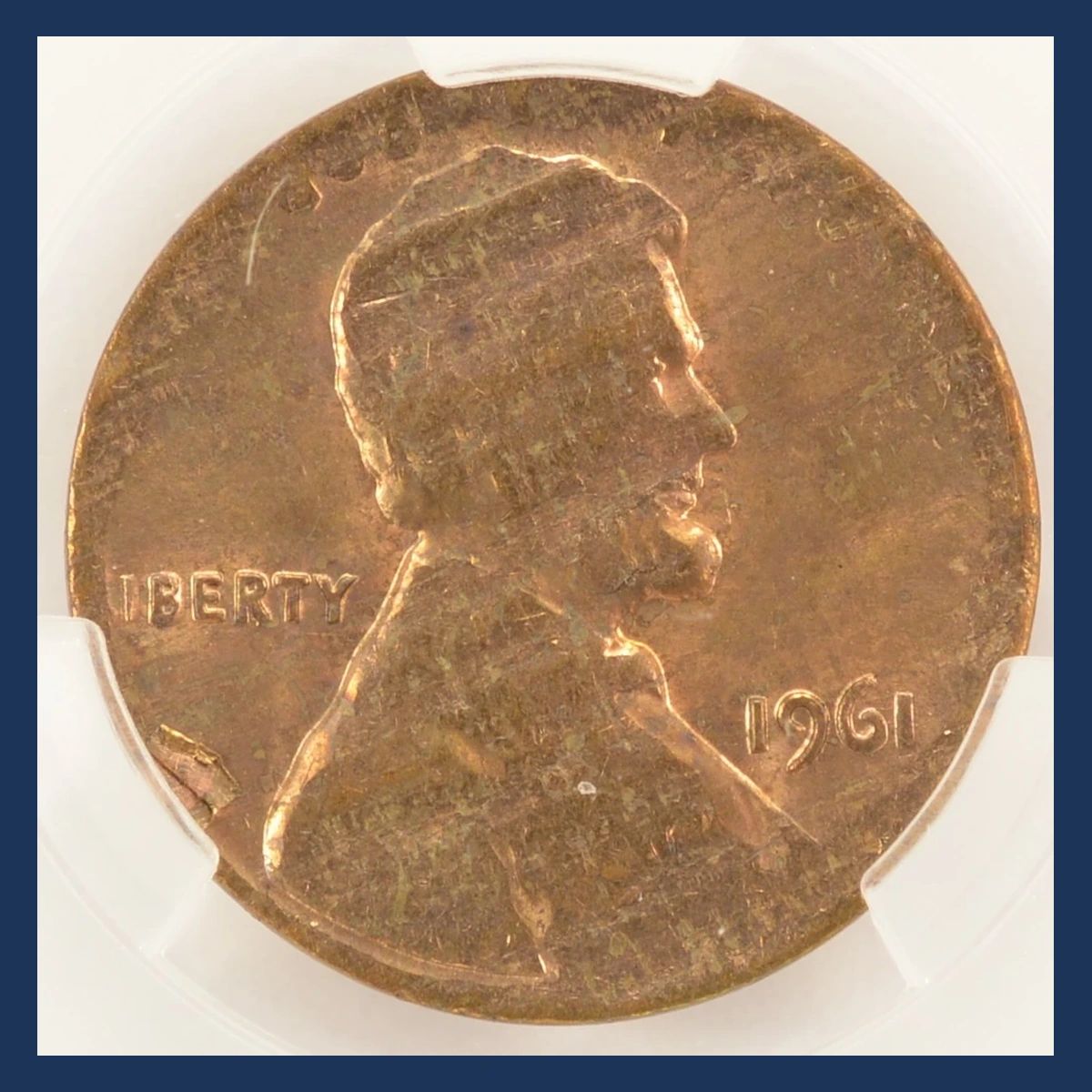
A cent can be unusually thin when its blank separates into layers before striking. The remaining piece then receives a design over the exposed split surface.
Philadelphia examples weigh 1.66 g and 1.67 g, while a Denver example is 1.42 g. These measurements belong to different coins.
A collector’s report also describes a 1961 split blank with a small curved clip of about 5%. The missing edge adds another physical feature to that thin piece.
Low weight alone cannot establish the cause. Grinding, corrosion, or another blank type can make a cent light without leaving split texture beneath the design.
Estimated Value
The 1.66-g Philadelphia cent graded PCGS AU55 brought $35 in March 2025. AU55 indicates light circulation wear.
A dealer lists the separate 1.67-g CACG MS61 Red and Brown coin at $125, an asking price rather than a completed sale. That coin is unworn with substantial marks or surface limitations.
An estimated $25–$500 covers identified split blanks and the reported clip combination. Compare the split texture, surviving design, and condition instead of assigning one price to every light cent.
How to Identify
Weigh the coin and compare it with the complete cent standard of 3.11 g. Keep the cataloged 1.66-, 1.67-, and 1.42-g examples separate rather than treating one number as the required weight.
With a 10× magnifier, inspect the rough split face for design impressed over that texture. Calipers help show the thin edge while comparing the width with the normal 19.05 mm.
For the reported clip combination, inspect the missing curved edge in addition to the broad split surface. Scraping marks may reveal later weight loss.
Trace the struck design across the rough separated layer to establish that the blank split before receiving its image.
8. 1961 Lincoln Penny Curved or Ragged Missing Blank Edge (Estimated Up to $600)
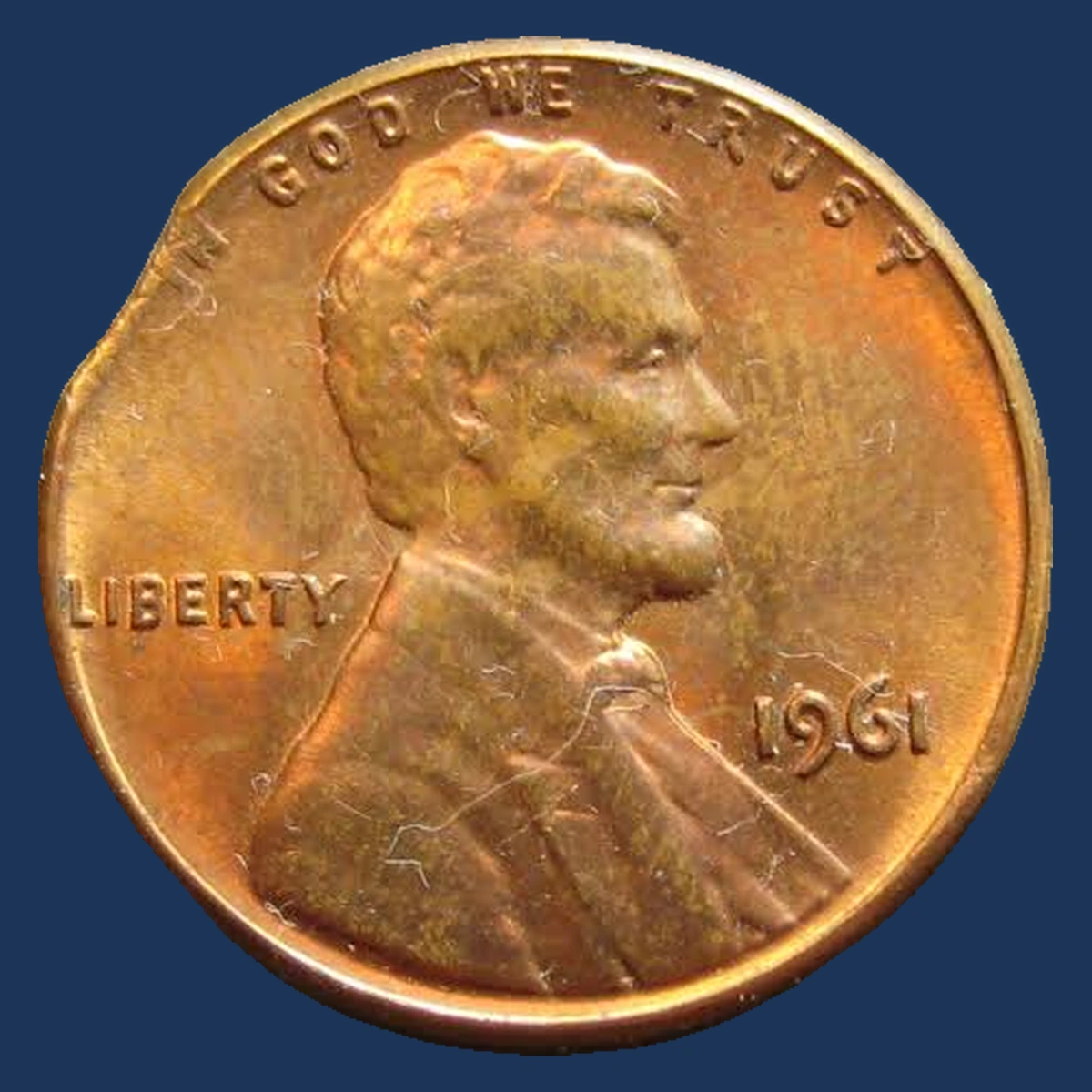
A missing bite or rough boundary can start with an incomplete blank. The cent design is then struck on whatever metal remains.
A year list reports curved clips without a fixed mint or percentage. A separately recorded ragged example has about 60% missing metal and weighs 1.03 g.
The ragged coin’s grading description also notes damage. That later condition problem does not erase the cataloged mint error, but it should stay visible in the description.
A curved edge and a jagged edge are different shapes. Neither is proved genuine solely by the lack of a raised rim beside the gap.
Estimated Value
The 1.03-g ragged piece sold for $139 in March 2025, in a PCGS Genuine holder with Uncirculated Details and Damage noted. That means it was judged unworn but could not receive an ordinary straight grade.
Estimated values span $10–$600 for identified curved and ragged clips. The size, remaining date, and preservation all influence the comparison.
The recorded price includes the damaged coin’s limitations. Do not present it as a problem-free example merely because the original missing-blank error is accepted.
How to Identify
Examine the missing edge with a 10× magnifier and follow the design as it approaches that boundary. Look for struck detail formed around the absent metal rather than a cut through completed letters.
The large ragged example is recorded at 1.03 g, far below the normal 3.11 g. A scale measures that loss, while calipers compare the surviving arc with a full 19.05-mm cent.
Check for later scratches or impacts independently from the clip. They can coexist on the same genuine error.
Trace the gap’s original boundary and nearby struck design, keeping the mint-made missing section separate from the coin’s later damage.
9. 1961 Lincoln Penny Displaced Strike with Blank Crescent (Estimated Up to $750)
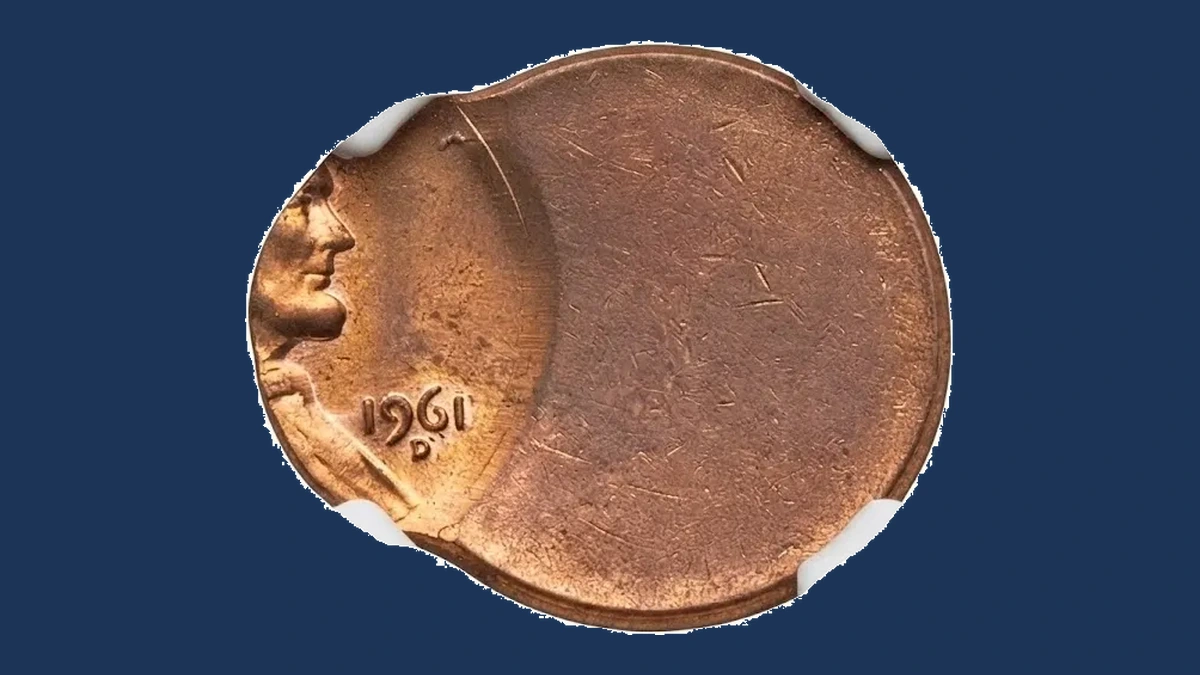
A large part of the disk can remain blank while the design appears near one edge. This shows that the blank missed its intended position between the tools.
Philadelphia records include strikes about 85% off center toward nine o’clock. A separate Denver collector example is about 75% off center.
The remaining date and any mintmark help identify each specimen. Those details cannot be borrowed from another coin simply because its blank crescent looks similar.
Unlike a clip, the unstruck area still contains metal. A single displaced strike also differs from two overlapping impressions, even when little design survives.
Estimated Value
The ANACS MS60 Brown 85% example brought $59 in March 2025. A separately recorded 85% example in PCGS MS63 Red and Brown sold for $129 in April 2022.
Both were unworn, but their grades and surface colors differ. The same stated percentage does not make them the same specimen or give them equal value.
Estimate $15–$750 for identified off-center examples. Surviving dates, attractive original surfaces, and a clear impression all help determine the individual comparison.
How to Identify
Locate the surviving dated portion carefully before studying the blank crescent. Under a 10× magnifier, follow where the strike ends and compare the matching position on the other face.
The Philadelphia examples shift toward nine o’clock; do not transfer that direction automatically to the Denver coin. Read the visible mint area where it survives.
A scale compares the ordinary 3.11-g blank and calipers the normal 19.05-mm outline. A simple displaced strike does not require missing metal.
Follow the original unstruck surface into the surviving impression, checking that the blank area was missed by the tools rather than ground smooth later.
10. 1961 Lincoln Penny Second Off-Center Strike, Sometimes One-Sided (Estimated Up to $1,000)
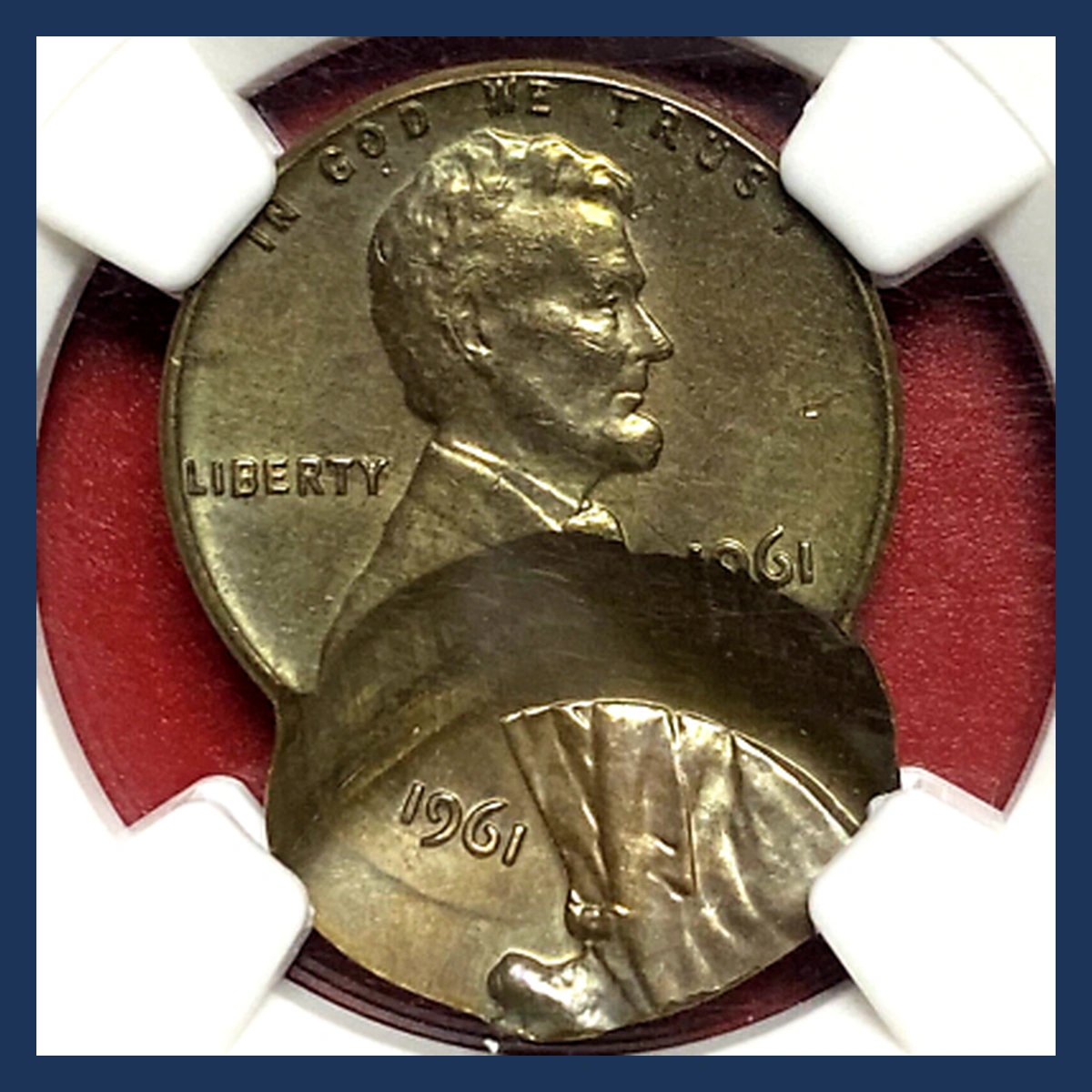
A tiny extra impression at the edge can be the surviving part of a second strike. A recorded Denver cent received its later blow about 97% off center.
Another historical report describes a no-mintmark 1961 cent with a second strike about 90% off center and a blocked side. The term uniface means that one side did not receive its normal direct tool impression.
These are separate examples. A blank caught between a tool and the coin can explain the blocked second side.
Overlapping designs establish separate blows. They differ from a small doubled letter repeated by one faulty stamping tool.
Estimated Value
The Denver 97% second-strike coin sold for $69 in March 2025, graded PCGS MS63 Red and Brown. It was unworn with noticeable marks and mixed copper color.
An estimated $40–$1,000 covers identified double strikes and the reported blocked-side combination. The surviving overlap and date matter as much as the percentage of displacement.
The small second impression explains why a large percentage need not bring a high price. The $69 result should not be reassigned to the separate 90% uniface report.
How to Identify
Look for a second recognizable letter, date segment, or portrait edge with a 10× magnifier. Trace it separately from the main impression before deciding which blow came later.
For the blocked-side report, compare both faces at the second strike’s position. One side can lack normal direct tool detail, but the exact affected face must come from the specimen itself.
The normal cent starts at 3.11 g and 19.05 mm, measured by scale and calipers when loose. Spread metal can change the final outline.
Follow the extra impression into the earlier design so that two blows, rather than a single doubled-looking edge, explain the overlap.
11. 1961 Lincoln Penny Staple Struck into the Back (Estimated Up to $1,500)
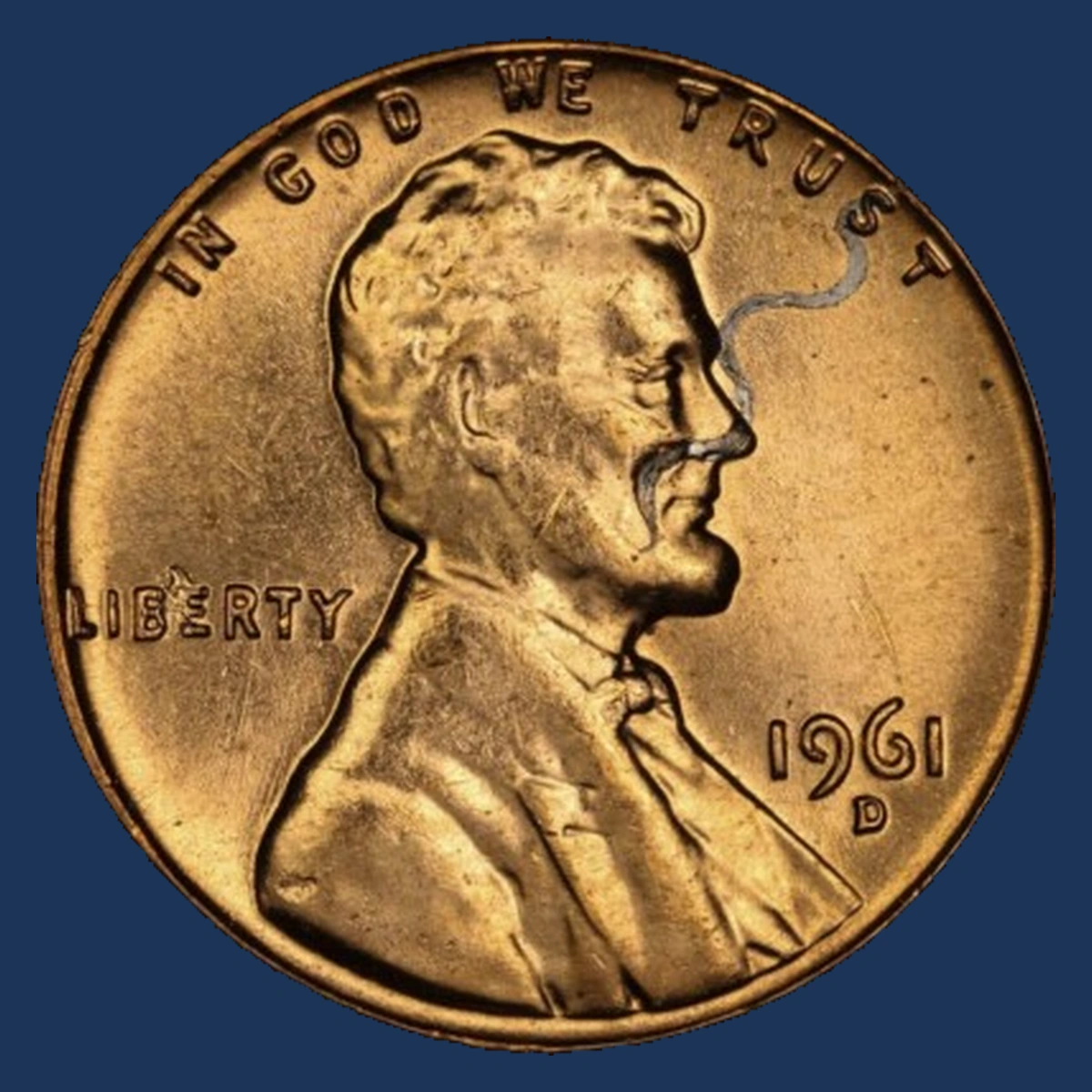
An object caught during striking can become pressed into the coin instead of leaving only a hollow. Heritage identifies a 1961 cent with a staple struck into its back.
The staple blocked part of the Memorial-side impression while pressure forced it into the surface. Its relationship to the surrounding design is more useful than the general presence of foreign metal.
The recorded example was graded NGC MS62 Brown. The title does not establish a universal position or staple outline for other coins.
A staple attached later is different. Its contact with the coin should show how striking affected both together.
Estimated Value
The NGC MS62 Brown staple example brought $576 in June 2023. MS62 means an unworn coin with noticeable marks or surface limitations.
Estimate $150–$1,500 for an identified comparable struck-in object, depending on its visibility, retention, and surrounding condition. The actual result provides a direct 1961 example.
The presence of a staple is not enough by itself. The object must belong to the original striking event rather than an attachment or puncture made after the coin entered circulation.
How to Identify
Carefully inspect the retained object and its contact with the Memorial-side design under a 10× magnifier. Look for struck metal fitting around it and for normal design interrupted where the staple blocked the tool.
Do not try to remove it.
Compare a loose coin with the ordinary 3.11-g, 19.05-mm cent using a scale and calipers without pressing the retained object. Its presence can affect the measured weight.
Look for glue, a fresh puncture, or bent metal that may reveal later attachment. Follow the staple’s contact into the surrounding struck detail to establish whether the object was caught during the blow.
12. 1961 Lincoln Penny Strike on a Silver Dime Blank (Estimated Up to $3,000)
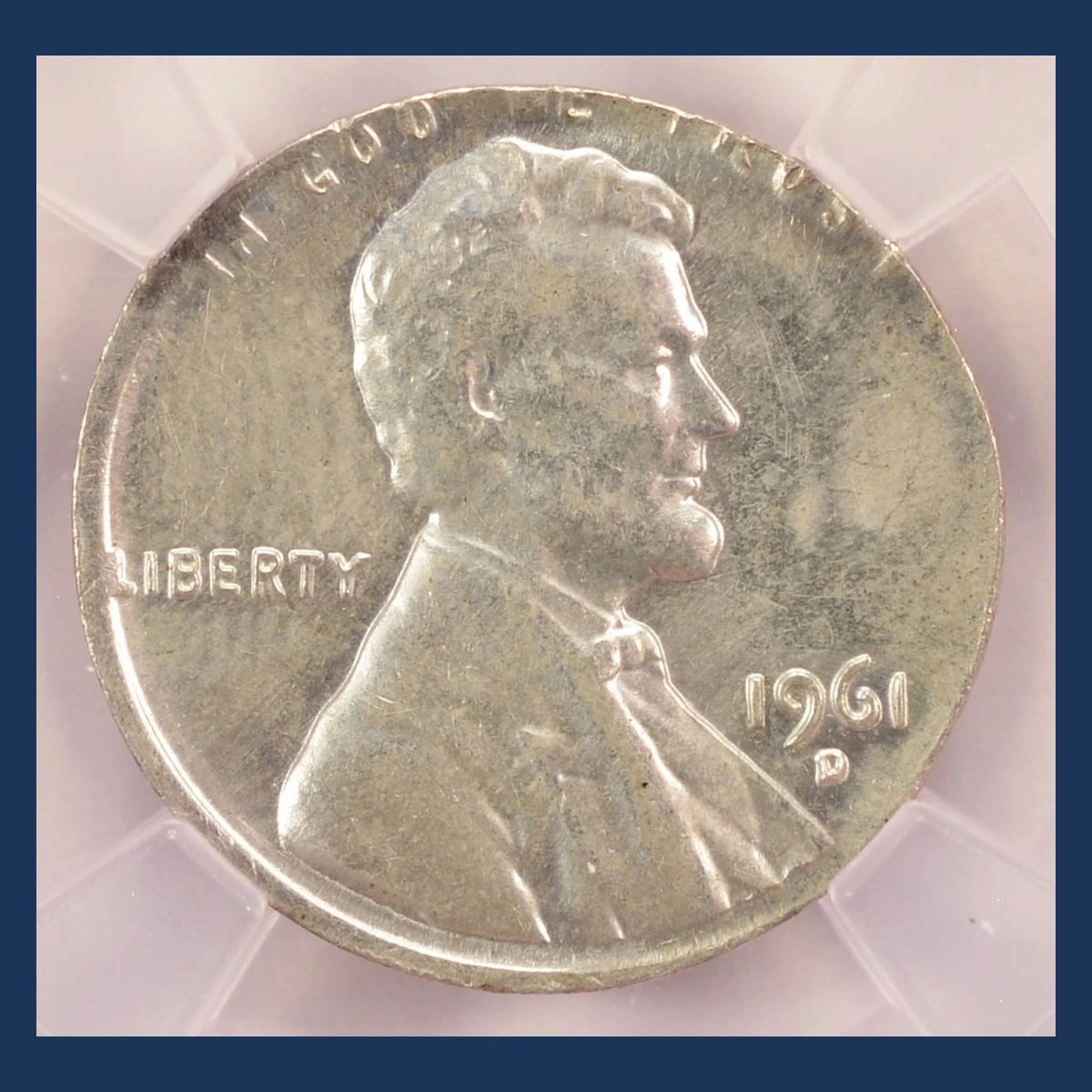
Letters can stretch toward the edge of a small silver-colored cent because the blank was prepared for a dime. The cent design had less metal available than it normally receives.
Heritage recorded a no-mintmark 1961 example on a silver dime blank, graded PCGS MS61. Its outer lettering shows this spreading clearly.
A silver dime blank normally weighs 2.50 g rather than the cent’s 3.11 g. It contains 90% silver, unlike the copper-rich alloy of an ordinary penny.
The unused blank had no Roosevelt portrait. Its edge need not have normal dime grooves, since cent tools formed this coin.
Estimated Value
The PCGS MS61 silver-blank example sold for $1,175 in January 2013. It was unworn, with fine surface lines limiting its grade.
An estimated $500–$3,000 covers identified cent-on-silver-dime-blank examples with differing preservation and surviving design. A readable date and clear wrong-blank features help establish the comparison.
This price concerns a no-mintmark specimen, not every pale Denver penny. Color can be changed by plating without creating a silver blank or the smaller original disk.
How to Identify
Compare the outer letters with the edge: the larger cent design may stretch or run out of room on the smaller disk. Use a 10× magnifier to inspect the surfaces and edge without scraping them.
A scale compares the silver dime blank’s nominal 2.50 g with the cent’s 3.11 g. Calipers compare about 17.9 mm for the dime blank and 19.05 mm for a normal cent, allowing for later spreading.
An added coating can make copper look white, so professional non-damaging metal testing can support identification. Look for silver composition and dime-blank measurements together with cent designs, without requiring a grooved dime edge.
13. 1961 Lincoln Penny 1961-D Design over a 1960-D Cent (Estimated Up to $7,500)
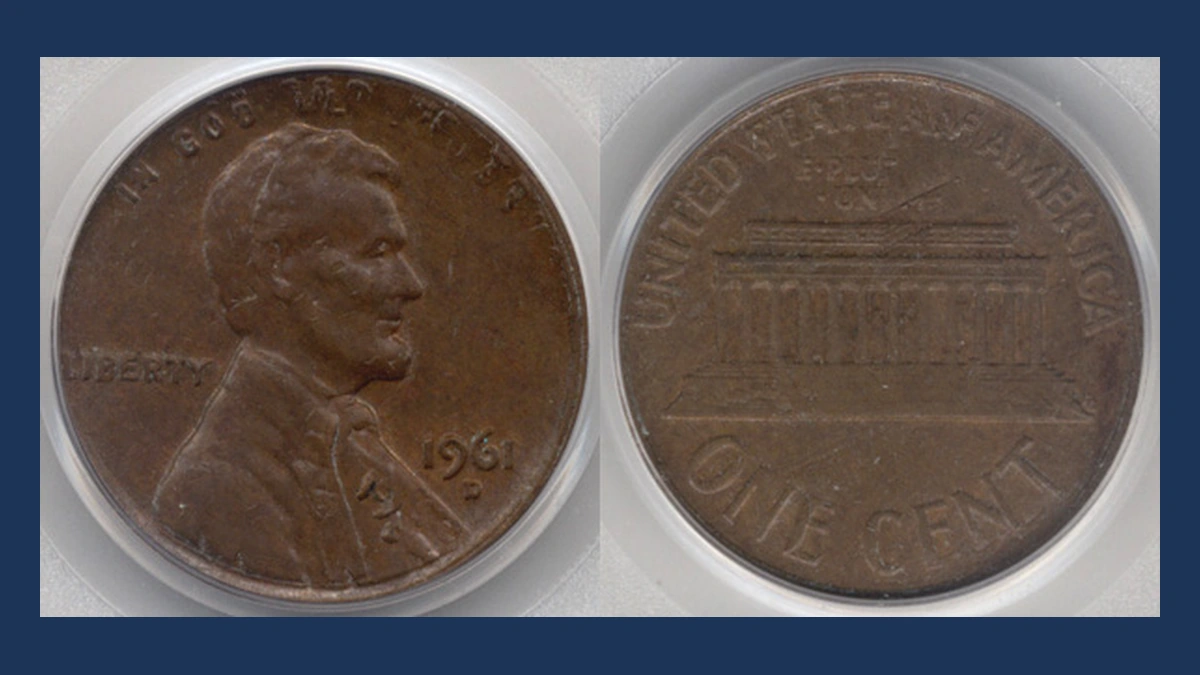
The earlier 1960 date and D remain near the right edge of Lincoln’s vest from the later strike. They reveal a finished cent receiving another year’s design.
The later impression is 1961-D, turned counterclockwise relative to the older one. Both are one-cent designs, so this is a cross-year overstrike rather than a double-denomination error.
The underlying 1960-D coin has the Small Date style. That older identity comes from its surviving design, not from the shape of the later 1961 date.
The result preserves two dated strikes. A damaged digit or random lines cannot demonstrate the same history.
Estimated Value
The PCGS AU58 cross-year cent brought $4,320 in September 2024. AU58 describes only slight circulation wear.
For an identified comparable overstrike, estimate $2,500–$7,500. The readable older date and mintmark make the sequence unusually easy to demonstrate.
The two dates are the key comparison, rather than the number of visible outlines alone. An ordinary same-year double strike should not receive this range merely because it has overlapping portraits or lettering.
How to Identify
Locate the later Lincoln portrait’s vest, then inspect its right border with a 10× magnifier. Carefully read the older 1960 date and D separately from the 1961-D impression.
Compare the counterclockwise relationship of the later design and follow other surviving earlier details where visible. They should fit a second cent design, not scattered dents.
A scale compares the ordinary 3.11-g cent metal, and calipers record the outline against 19.05 mm. Another strike can spread the already finished coin.
Read both dates and connect the older 1960-D details to the vest area of the newer portrait to establish the cross-year sequence.
Conclusion
A sideways D, rough split surface, and two different dates point to very different production mistakes. Read the feature on the coin before choosing a price comparison.
Estimated values range from $3–$7,500, with the cross-year 1961-D overstrike at the top of this guide. Keep damage descriptions with genuine errors when both are present.
Clear photographs of both faces and the edge help show exactly what survived.