1908 Penny Error List with Pictures

A second strike can turn one small Indian Head cent into two overlapping pictures. A 1908 example with its second strike 55% off center brought $4,080 at Heritage in June 2024.
Other 1908 penny errors hide in the date, beside the portrait, or along the edge. The examples below span an estimated $5–$5,000, from small tool defects to striking mistakes.
Read on to see which marks deserve a closer look and how to separate them from damage.
1. 1908 Indian Head Penny Die Rust (Estimated Up to $200)
A patch of tiny bumps appears above the ribbon on one 1908 date variety. The roughness came from rust on the die, the steel tool that stamped the coin.
Pits in that tool left raised spots in the copper. This differs from corrosion that ate into the penny after it entered circulation.
The affected variety also has extra strokes near the date. Collectors call it Poliquin 39 or Snow 35.
The date helps identify the tool involved, but the rough patch is the feature to examine here.
Estimated Value
An estimated $10–$200 covers worn through clearer examples showing this rusted-tool surface. The figure values the whole penny, including its date variety and condition.
It is an estimate for a small tool defect, not a recorded sale of this particular rust patch. Roughness alone rarely commands the price of a large striking error.
A readable date and clean surrounding copper make the bumps easier to study and usually easier to sell.
How to Identify
Tiny raised bumps from a rusty tool differ from pits that corrosion eats into a coin. Tilt the ribbon area under a lamp and inspect the bumps above it through a 10× magnifier.
Green deposits or widespread roughness call for caution because they can hide the original surface. If the outline also looks altered, check the plain edge, then use calipers and a scale for 19.05 mm and 3.11 g.
A normal size and weight will not distinguish these two kinds of roughness. To identify the documented variety, compare the repunched 1 below its base with the Snow 35 photograph.
2. 1908 Indian Head Penny Die Cracks and Retained Rim Break (Estimated Up to $300)
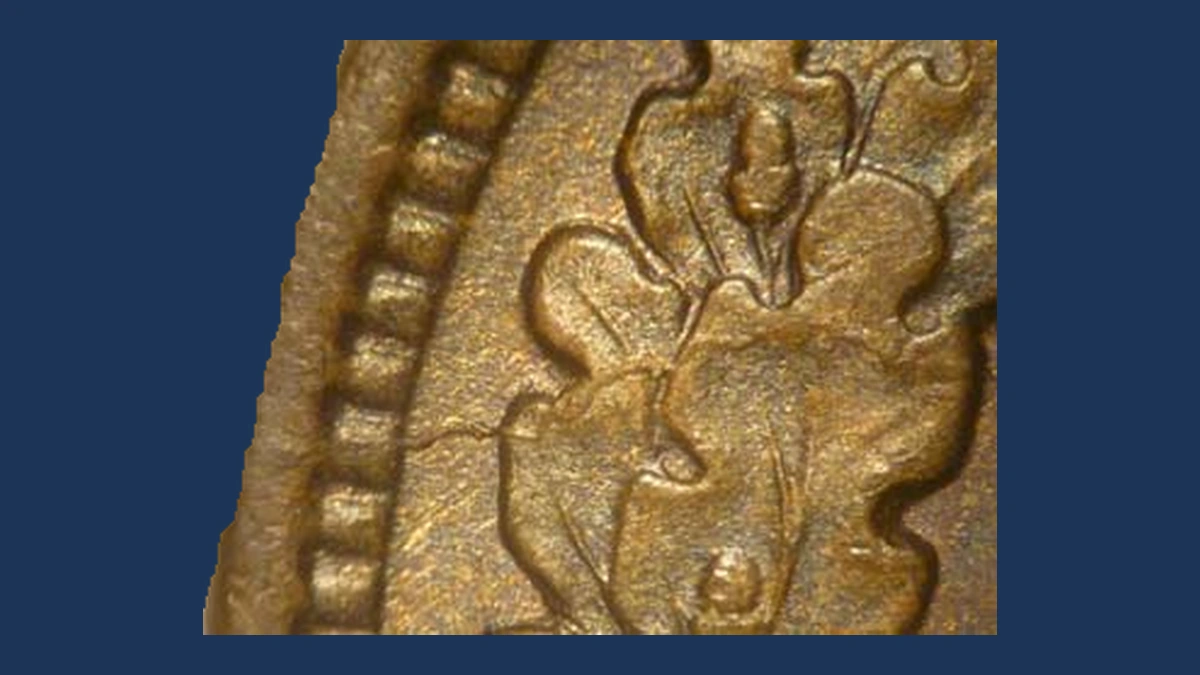
A thin raised line can run from the rim into the wreath. It forms when copper fills a crack in the stamping tool.
One 1908 variety shows a larger break along the lower-left back rim. The broken part of the tool stayed in place, so some design remained visible.
This is called a retained rim break. It need not look like a completely smooth blob.
Other 1908 pennies have narrower cracks at different positions. Their paths belong to their individual tools, rather than one pattern found on every coin.
Estimated Value
Small cracks fit an estimated $5–$40 range, while a clear retained rim break can place a coin around $40–$300. These are estimates for complete coins.
The larger break generally gives collectors more to see. A faint line may add almost nothing to an otherwise ordinary worn penny.
Condition and the underlying date variety still matter. Do not apply the upper figure to a scratched rim or to every penny with a raised line.
How to Identify
The large back-rim feature is easiest to assess with the coin upright. Place the area from about 7:15 to 8 o’clock under a 10× magnifier.
Look for design that continues across the displaced section; a retained tool piece can still stamp part of its pattern. For a narrow crack elsewhere, use side lighting to distinguish a raised line from a cut.
Check the plain edge near the feature for a blow that pushed copper onto the face. A scale and calipers should remain close to the normal 3.11 g and 19.05 mm.
The lower-left break has a second useful clue on this variety. Find the separate crack entering from about 3:30 and follow it toward the T.
3. 1908 Indian Head Penny Marks Transferred During Die Making (Estimated Up to $300)
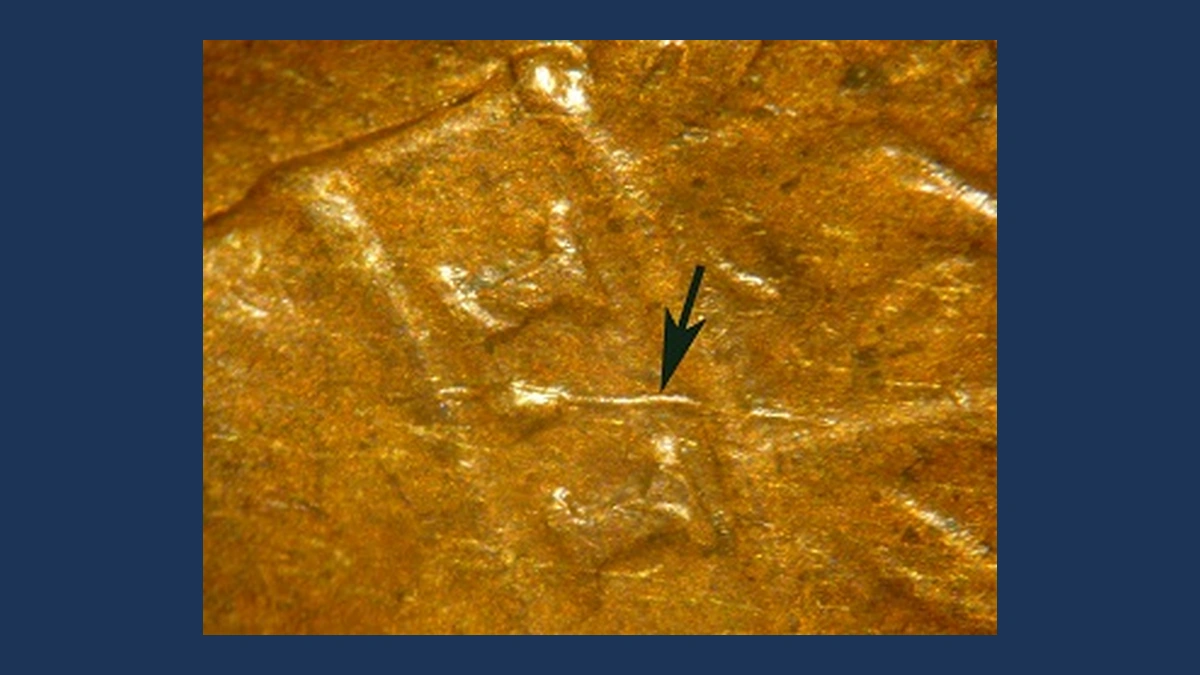
A fine threadlike mark can become part of a coin’s design before that coin is struck. Debris caught while the stamping tool was being made can leave a mark that repeats on later coins.
One 1908 example runs from the second feather toward the L in LIBERTY. Another lies near the mouth, where the original material is not identified.
A third tool left marks along the lower back border and left wreath. These are separate examples of the same broad process.
They differ from an object caught against an individual coin.
Estimated Value
Budget an estimated $20–$300 for a recognizable example of these small transferred marks. This range includes the penny and any accompanying date variety.
The mark’s clarity matters more than a dramatic label. A faint trace on worn copper may be difficult to appreciate even when the variety is correctly identified.
These figures are estimates for minor tool features, not prices from separate sales of the feather, mouth, and wreath examples.
How to Identify
Tool-made marks repeat, while an individual scratch does not belong on every coin from the same tool. Pick the photograph for the mouth, feather, or back-wreath example before making a comparison under the same lighting.
Use a scale and calipers to check 3.11 g and 19.05 mm, and inspect the plain edge for squeezing. Passing those checks does not establish how a fine line formed.
Through a 10× magnifier, look for cuts crossing normal detail instead of copying the photographed mark. For the feather example, track the line from the second feather through the lower-right L and below the headband.
4. 1908 Indian Head Penny Die Sinking (Estimated Up to $300)
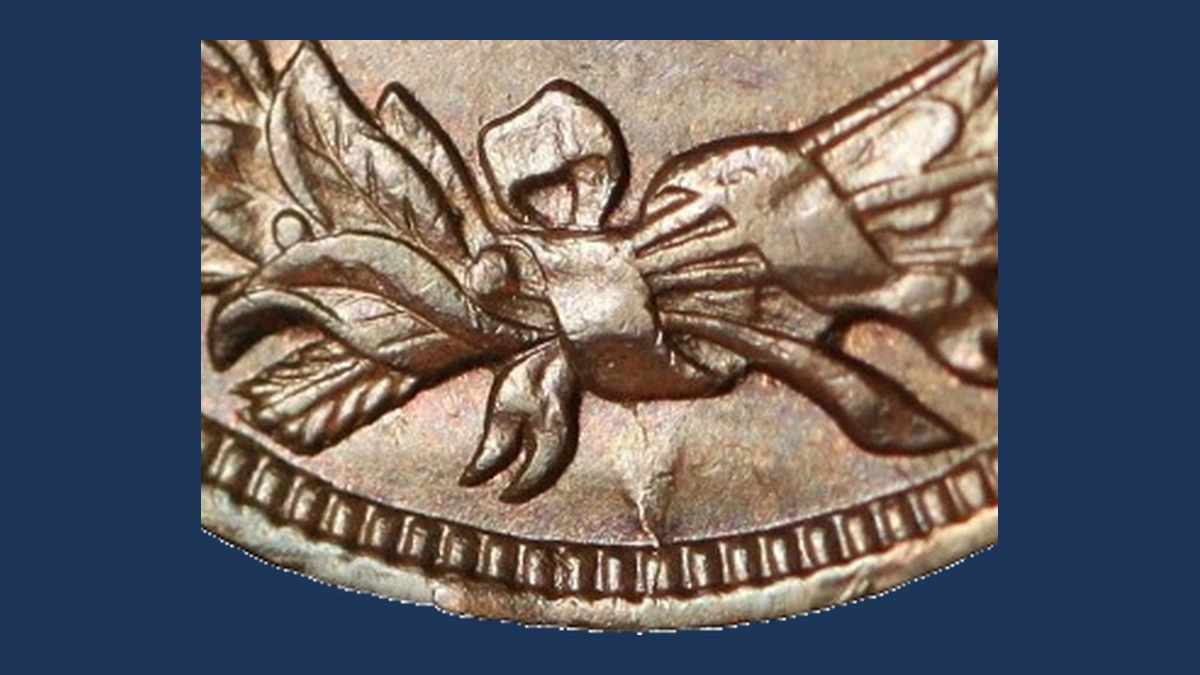
A small part of the coin’s surface can look swollen or uneven while nearby details remain normal. A worn stamping tool may have sunk or bent locally under repeated pressure.
Coins made afterward copy that changed surface. Collectors call the tool failure die sinking.
For one 1908 variety, the change develops near the top of the front. Another affected area lies between the arrow tails and wreath stems on the back.
Earlier coins from the same tool lack the front feature. Its absence therefore does not rule out that date variety.
Estimated Value
An estimated $10–$300 allows for worn examples through clear, attractive coins showing the surface change. This is a whole-coin estimate, rather than a measured premium for die sinking alone.
The date variety and condition account for part of the price. A broad, visible change is more useful to collectors than a barely noticeable uneven patch.
A bulge caused by a blow or heat does not qualify for this mint-error range.
How to Identify
A late tool can make an uneven surface that an early example of the same variety lacks. Set photographs of both stages beside the coin instead of relying on one comparison.
Then inspect the plain edge and opposite face for an impact that could have made a bulge. A scale and calipers provide the ordinary checks of 3.11 g and 19.05 mm.
Sweep a light across the top of the front and use a 10× magnifier to rule out stuck-on material. On the back, watch the changing reflection between the arrow tails and wreath stems for the matching later-tool surface change.
5. 1908 Indian Head Penny Lamination (Estimated Up to $500)
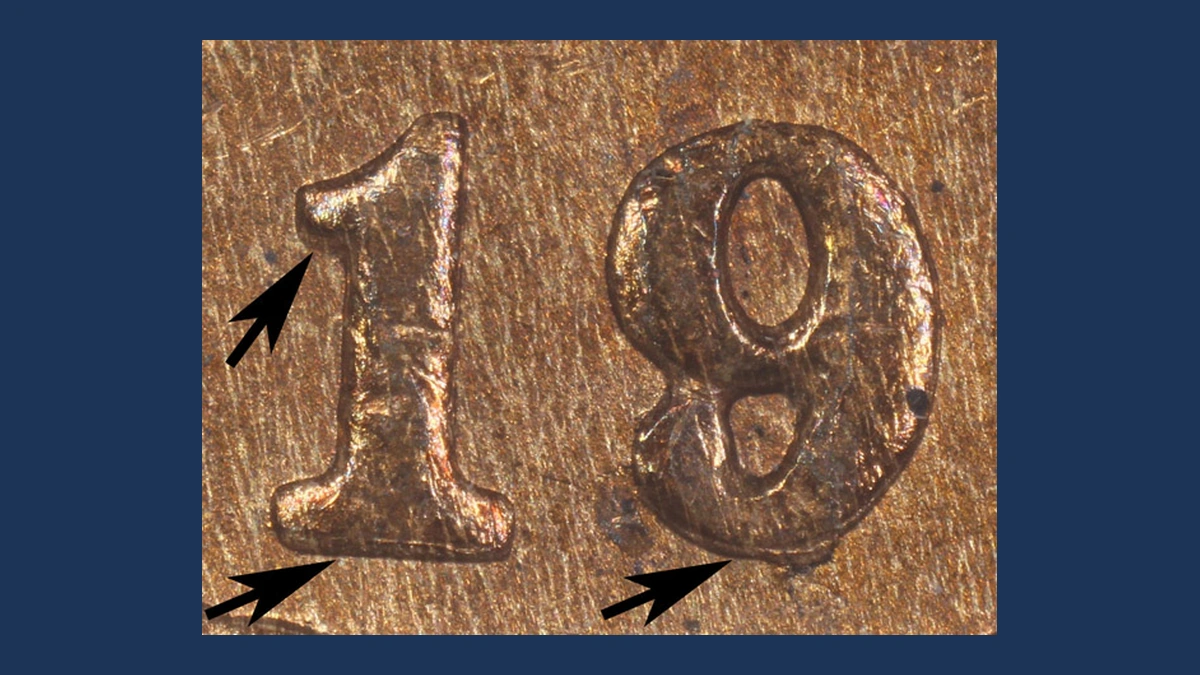
A thin piece of copper can split away from the rest of the penny. This separation, called lamination, starts with a weakness within the metal rather than a damaged stamping tool.
One Philadelphia example has a split near the bottom of the 9. The split moved part of an extra date stroke, changing its apparent position.
A separate 1908-S example has peeling on the back. Its location should not be copied onto the Philadelphia coin.
Even pennies made with the same stamping tool will not all share an individual metal split.
Estimated Value
Lamination examples fit an estimated $10–$500, with mint, condition, and the size of the split shaping the price. The scarcer S coin can cost more before any error premium is added.
A different 1908-S lamination coin, graded VF35 Details by ANACS, sold for $86.25 in December 2007. That older sale is not the price of the PCGS F15 back-lamination example pictured here.
Large intact flakes can attract more interest than small missing patches.
How to Identify
Leave any loose flap alone; lifting it can destroy the evidence of a metal split. With a 10× magnifier, look along its edge for a thin layer or rough exposed interior.
An intact flap may leave the weight close to 3.11 g, while a missing flake can lower it. Use a scale, and check the surviving 19.05 mm diameter with calipers without pressing on loose metal.
Inspect the plain edge for another opening in the layer. A deep scoop surrounded by pushed-up copper instead suggests a gouge.
On the Philadelphia example, the split moved an extra stroke below the 9. Follow that fragment sideways under low light to see where it separates from the solid copper beneath.
6. 1908 Indian Head Penny Struck Through Debris (Estimated Up to $500)
Small sunken marks can interrupt an otherwise struck surface. Debris caught between the coin and a stamping tool blocks the design and leaves an impression when the press closes.
The documented 1908 example has minor impressions on the back. It is also struck 35% off center, so the small marks are only part of its unusual appearance.
The object that made them is not identified. A thread, grease patch, or metal fragment should not be named from a vague mark alone.
This event happens during coin striking, rather than during tool making.
Estimated Value
For minor debris impressions by themselves, use an estimated $20–$500 range. The size, visibility, and condition of the affected area make a large difference.
The known 1908 example also has a strong off-center strike. Its full value belongs with that more dramatic combination, so it should not set the price of a tiny isolated mark.
The range here is a comparison-based estimate, not a separate sale price for the small back impressions.
How to Identify
On the documented coin, ignore the large blank crescent at first. That belongs to the off-center strike, not the small back impressions.
Inspect a depression through a 10× magnifier. Look at its edges for a sharp mound of displaced copper, which can point toward a later impact.
A scale should read near 3.11 g if no metal was lost. Record the shape with calipers against an ordinary cent’s 19.05 mm diameter, allowing for this coin’s off-center strike.
Check the plain edge for tool marks. Neither the weight nor an unusual outline identifies the material that caused a depression.
Choose a normal design detail beside one small impression. Follow it into the affected area and see whether it stops cleanly at the depression’s boundary.
7. 1908 Indian Head Penny Misplaced Date (Estimated Up to $1,500)
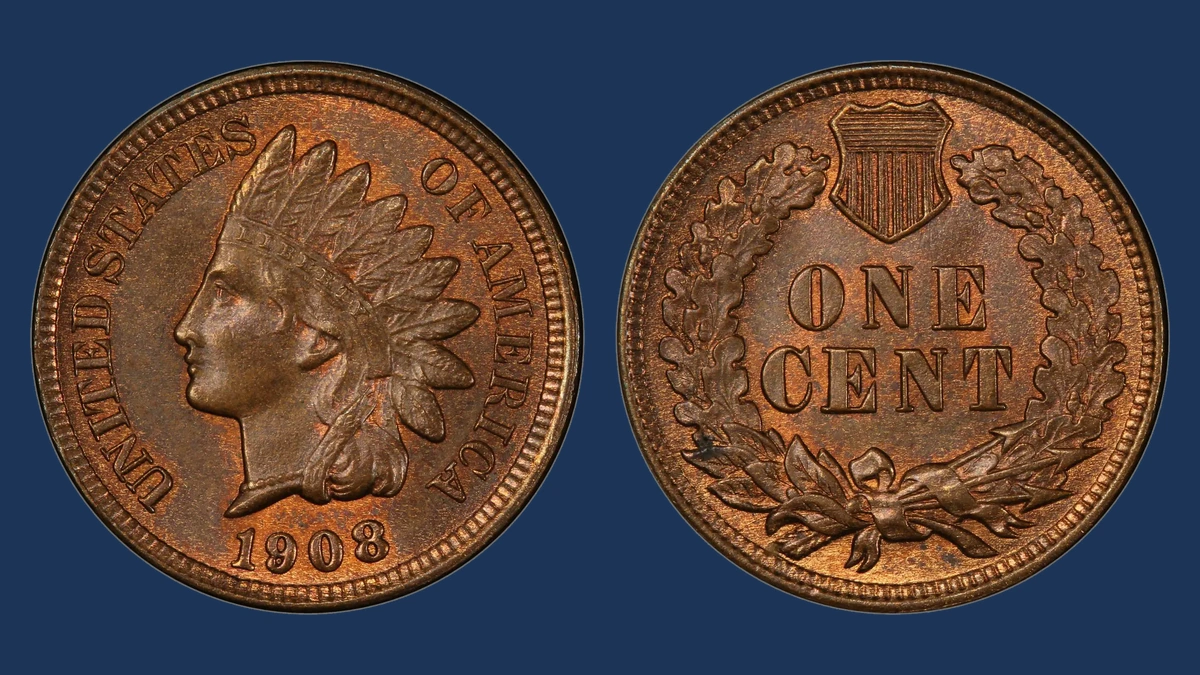
Tiny curves below 1908 can be parts of a second date in the wrong place. The date punch struck the stamping tool too low, leaving pieces of digits among the border teeth.
The normal date was then added in its proper position. On finished coins, both sets of marks can remain visible.
Several different 1908 tools show this mistake. The well-known FS-301, also called Snow 4, has misplaced digits beneath the date.
Other examples show only selected digit tops. Extra strokes beside the main date can also occur on the same coin.
Estimated Value
Prices are estimated at $25–$1,500 across worn and attractive unworn examples. A stronger misplaced digit is easier to recognize and can make a coin more appealing.
PCGS records a $1,187 eBay result in December 2021 for an FS-301 graded MS65 Red and Brown. That is a high-grade comparison, not the value of every 1908 misplaced date.
Small traces on worn coins belong toward the lower end, especially when the variety is difficult to confirm.
How to Identify
The border teeth below the date are easy to overlook. Scan them with a 10× magnifier from beneath the 1 toward the 8.
Before assigning a variety, check for reshaping along the plain edge. A scale and calipers provide the usual checks of 3.11 g and 19.05 mm, although normal measurements cannot identify an extra digit.
Look for a curve that fits part of a number. Random blobs or dents do not become misplaced digits simply because they sit below the date.
The Snow 4 photographs show FS-301, one of several patterns. For that variety, match each extra digit’s curve to its position beside the same normal digit and border tooth.
8. 1908 Indian Head Penny Broadstrike (Estimated Up to $1,500)
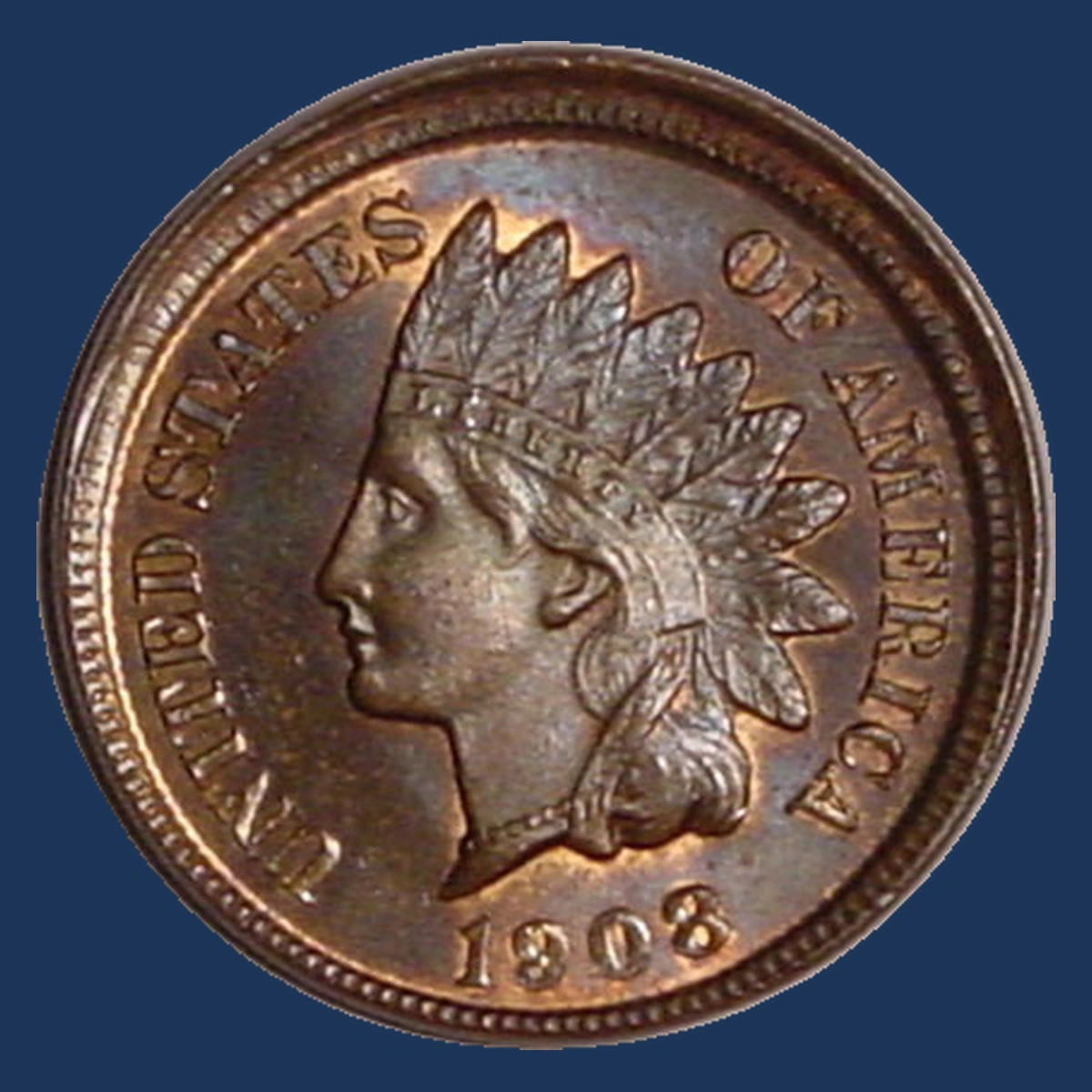
The complete design sits inside a wider spread of copper on a broadstruck penny. The coin was struck without proper support from the collar, the ring that normally controls its width.
Metal could move outward more freely. This differs from an off-center strike, where part of the design misses the metal entirely.
A centered 1908 broadstrike graded MS65 Brown appears in the Chamberlain collection. Another auction example has a Fine Details grade and damage on the front.
That damage lowers appeal; it is not another mint error created by the broadstrike.
Estimated Value
Allow an estimated $50–$1,500 for 1908 broadstrikes, from worn or damaged pieces to attractive unworn coins. This is a guide to the whole coin, not a claimed sale of the MS65 example.
For a lower-priced comparison, a 1939 Lincoln cent broadstrike graded MS62 Red and Brown sold for $46 in 2004. That different design and older result do not establish a current 1908 price.
Clean surfaces and a clear outer spread support the higher estimates.
How to Identify
A broadstrike should spread the original copper, so weigh the coin before judging its large outline. A reading far above the normal 3.11 g needs an explanation beyond an ordinary broadstrike.
Calipers can show how its width differs from 19.05 mm. Inspect the plain edge for hammer blows or squeezing that could also have widened it.
Use a 10× magnifier where letters approach the outer spread. Flattened letters and repeated impact marks suggest later damage rather than natural movement during striking.
An unevenly placed design can still belong to a broadstrike. Check the entire outer row of lettering: it must remain present, because missing design would point toward an off-center strike.
9. 1908 Indian Head Penny Curved Clip (Estimated Up to $1,500)
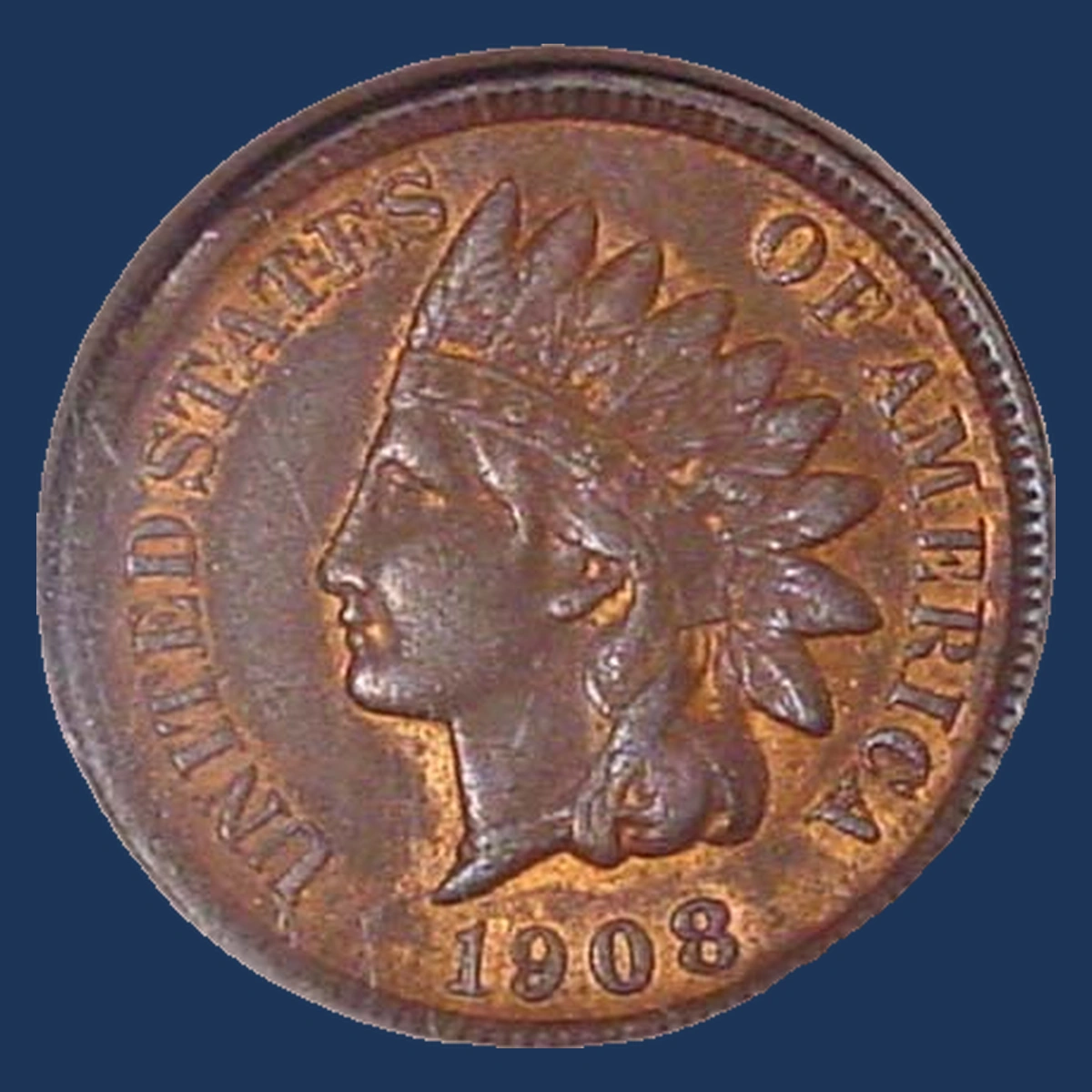
A curved bite appears in the edge of the documented 1908-S penny. Part of its round metal disc was already missing before the design was struck.
This can happen when the machine cutting new discs overlaps a hole left by an earlier cut. The incomplete disc then moves through the remaining minting steps.
The Chamberlain example has the missing section near 10 o’clock and an AU58 Brown grade. That grade indicates slight wear.
Its S mintmark sits below the bow on the back. An ordinary Philadelphia cent does not have that mintmark.
Estimated Value
The estimated range is $250–$1,500 for a genuine 1908-S curved clip, depending on wear, surface quality, and the clip’s appearance. The underlying San Francisco penny already has collector value.
A 1939 Lincoln cent clip graded MS64 Brown sold for $180 in January 2023. It offers a comparison for the error mechanism, not for the scarcity of the 1908-S coin.
The Chamberlain AU58 example is a documented coin, but no transaction amount is assigned to it here.
How to Identify
Check the mint before estimating the coin. Use a 10× magnifier below the back wreath’s bow to locate the S.
Then inspect the missing arc near 10 o’clock. Copper at its ends should show the effects of striking, rather than fresh cutting or saw marks.
Weigh it: missing metal generally takes it below the normal 3.11 g. With calipers, compare the surviving round portion against the standard 19.05 mm width.
The rest of the edge should be plain. A weak rim opposite the missing section can support a genuine clip, but its absence alone does not settle the question.
Look closely at both ends of the arc and follow the struck design as it approaches the missing metal.
10. 1908 Indian Head Penny Repunched Mintmark (Estimated Up to $2,000)
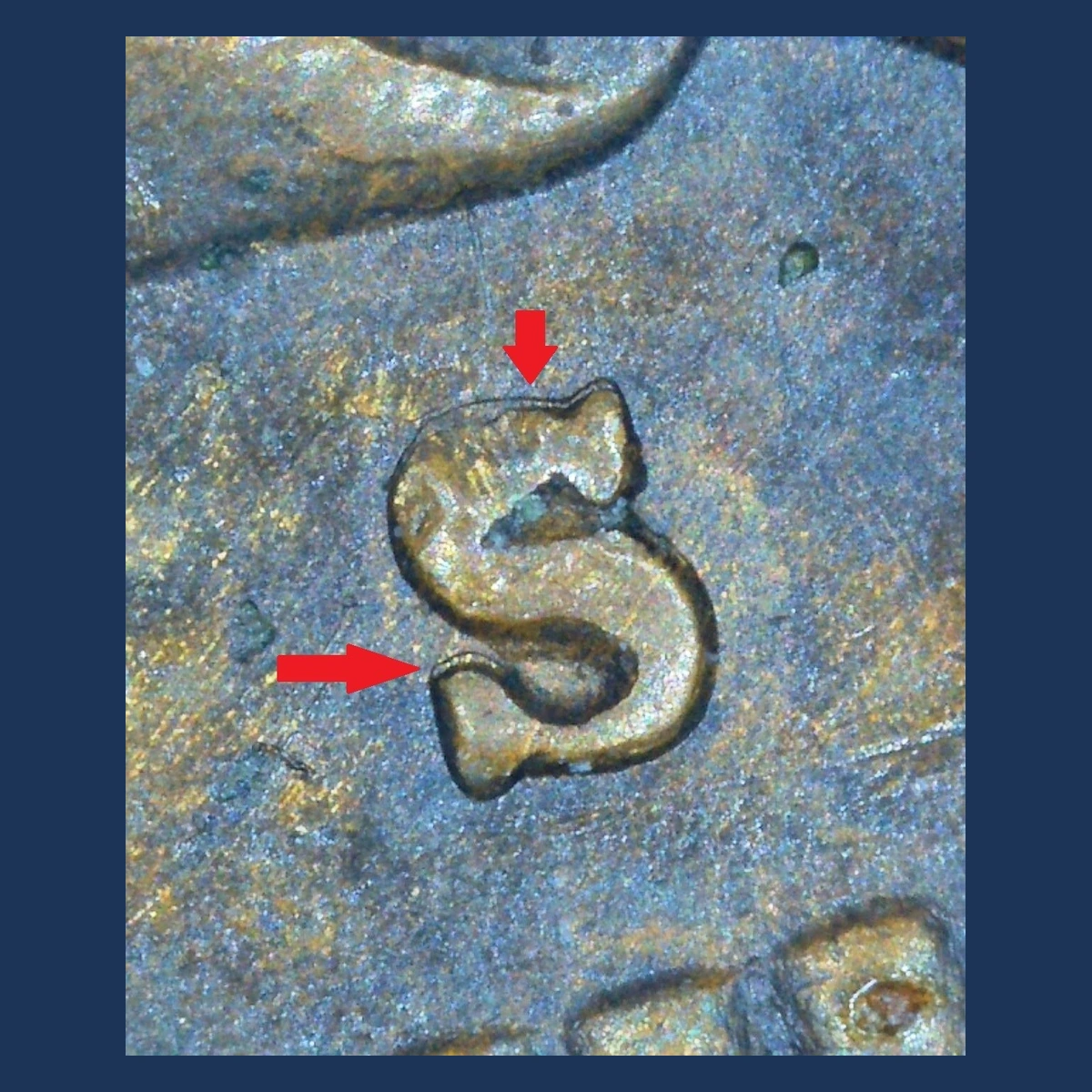
An extra curve beside the S can reveal that the mintmark punch entered the stamping tool more than once. Slightly different positions left overlapping S shapes on later coins.
The 1908-S Indian Head cent has a listed S-over-S variety. Its mintmark belongs below the wreath’s bow on the back, not beside the date.
This was the first year San Francisco struck Indian Head cents. Philadelphia coins have no mintmark.
A thick or damaged S alone does not prove repunching. The small extra stroke must fit the shape and position of the recorded variety.
Estimated Value
A 1908-S/S graded MS62 Brown sold at Goldberg for $750 in June 2021, as recorded by PCGS Auction Prices. MS62 describes an unworn coin with noticeable marks.
An estimated $150–$2,000 allows for wear, stronger surfaces, and the clarity of the overlapping mintmark. The estimate includes the value of the 1908-S penny itself.
A faint extra mark should not receive the same premium as a clearly identified S-over-S.
How to Identify
A tiny added or altered mintmark can imitate a valuable variety. Start at the copper surrounding the S and use a 10× magnifier to look for cuts or an unnatural join.
The edge should be plain, and a scale and calipers should give about 3.11 g and 19.05 mm. These checks reveal major alteration but cannot prove that a second S was punched into the tool.
Compare the S with a normal example, watching for a separate rounded stroke rather than a flat ledge. With the back upright, locate that extra curve below the wreath bow and match it to the recorded S-over-S.
11. 1908 Indian Head Penny Repunched Date (Estimated Up to $3,000)
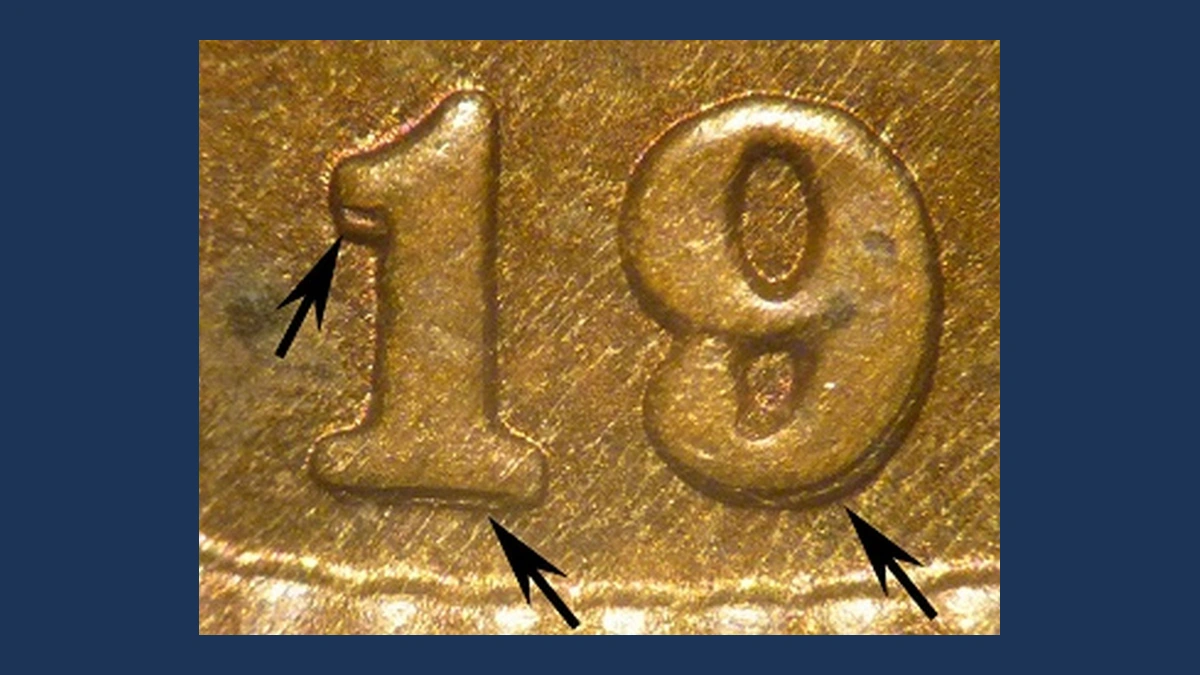
The edge of a date digit may have an extra foot, loop, or curved stroke. A second placement of the date punch left both impressions in the stamping tool.
Unlike a misplaced date, these extra strokes sit beside the normal digits. Many separate 1908 varieties show this effect.
On Snow 1, the 9 has extra traces around its upper loop and base. Other examples affect different numbers.
There are also San Francisco date varieties and a Philadelphia Proof example. Proof means a specially made collector coin; it is not a type of date error.
Estimated Value
An estimated $20–$3,000 covers ordinary worn examples through attractive Proof or scarce high-grade pieces. The broad range includes the coin’s underlying value, not just the extra date strokes.
For context, the related 1908 misplaced-date FS-301 has a recorded $1,187 high-grade eBay result. That different variety illustrates the importance of condition, but does not set a repunched-date price.
Small ordinary examples sit much lower. A Proof should be priced as a Proof before adding any variety premium.
How to Identify
Check whether the coin is a Proof or a circulation issue before selecting a date photograph. Also separate Philadelphia coins from San Francisco examples with an S on the back.
A scale and calipers should show the ordinary 3.11 g and 19.05 mm, with a plain edge. These measurements do not choose the date variety.
Scan each digit’s outline through a 10× magnifier and note which ones have rounded extra strokes. A flat shelf does not by itself show an earlier date punch.
Do not assume that the entire date must look doubled. For Snow 1, concentrate on the 9 and look for extra traces both around its upper loop and near its base.
12. 1908 Indian Head Penny Off-Center Strike (Estimated Up to $3,000)
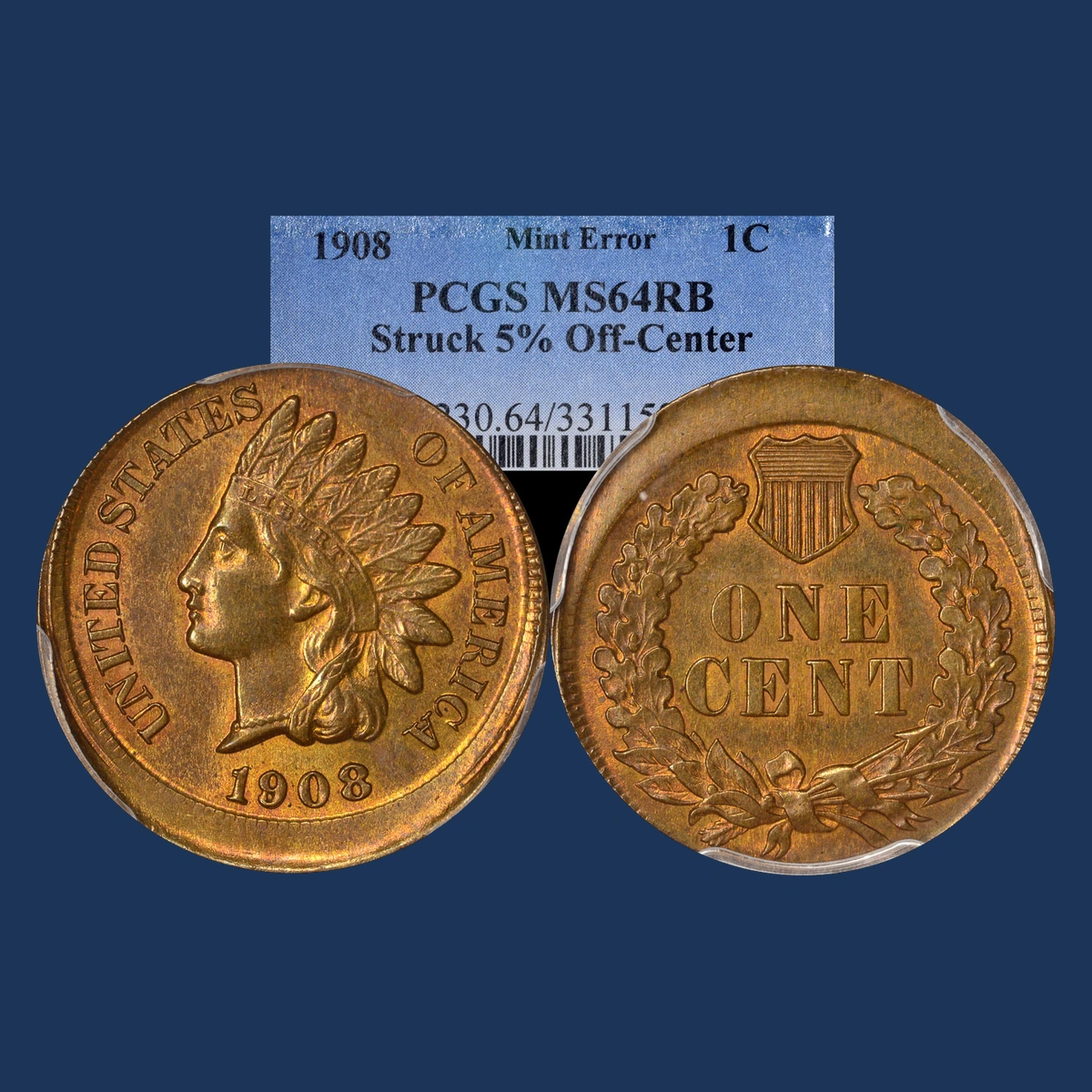
A blank crescent borders a shifted design on an off-center penny. The metal disc was not fully beneath the stamping tools when the press closed.
Some of the design therefore missed the metal. The resulting coin can keep its full date even when a substantial area remains blank.
Documented 1908 examples range from about 5% to 35% off center. The direction differs between coins, including examples shifted toward the top and lower right.
A 35% example also has small debris impressions on the back. Those marks do not occur on every off-center coin.
Estimated Value
The estimated range is $100–$3,000, covering modest shifts through attractive, strongly off-center 1908 cents. These figures are estimates, not individual sale prices for every illustrated percentage.
A readable date, clean copper, and a striking shape usually help. A slightly shifted coin is generally less dramatic than one missing much of its design.
The 2026 auction appearance of a 25% off-center example graded AU53 confirms another lightly worn coin; no sale amount is assigned to it here.
How to Identify
Compare the two faces before assigning an off-center percentage. A displaced front with a normally centered back can have a different cause from a disc sitting outside both tools.
Check the blank crescent through a 10× magnifier for grinding scratches. At the boundary, normal design should end where the disc passed beyond the striking area.
A scale should still approach 3.11 g because unstruck metal remains part of the coin. Use calipers to record the outline against 19.05 mm, and check the plain edge for filing.
Only a readable date establishes this example as 1908 without further evidence. Examine the shifted date to ensure its final digit is an 8 rather than a damaged neighboring year.
13. 1908 Indian Head Penny Double Strike with Possible Indent (Estimated Up to $5,000)
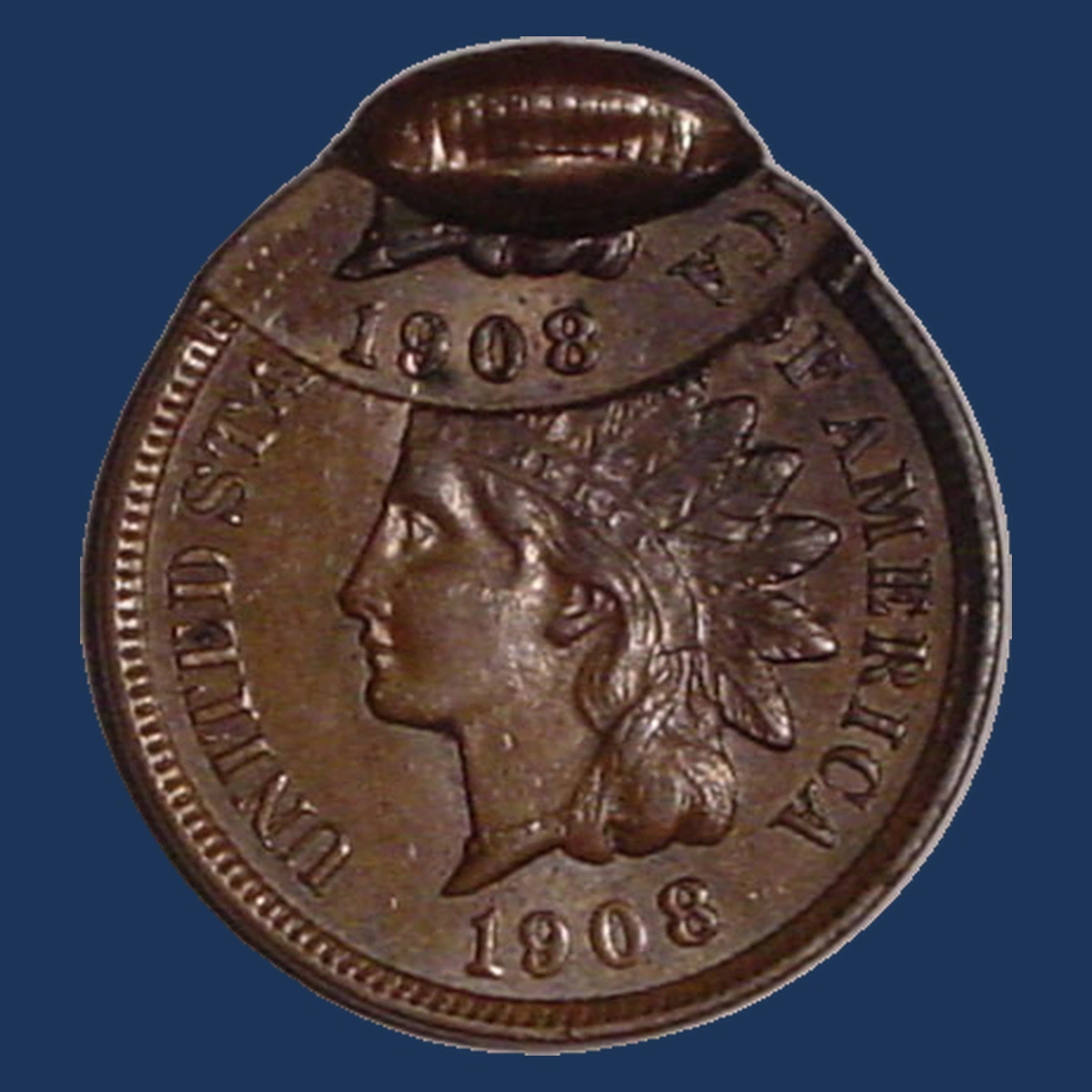
Two separate impressions of the design overlap on these pennies. The first struck coin stayed in the press area and moved before receiving another blow.
One 1908 example has a second strike 55% off center. Others have second strikes 70% or 80% off center toward the top.
The latter examples also show an indent, a depression where another metal disc blocked part of the blow. Their indents are not identical.
This is much more than a doubled date stroke. Whole sections of the portrait, lettering, or border repeat around separate centers.
Estimated Value
A 1908 double strike graded MS62 Brown brought $4,080 at Heritage on June 17, 2024. Its second strike was 55% off center.
Use an estimated $400–$5,000 across worn through attractive examples, with the overlap and any added indent considered individually. Larger displacement does not automatically guarantee a higher price.
Two readable dates or clearly separated design centers can make the striking sequence easier for collectors to appreciate.
How to Identify
Check the coin’s metal and outline before counting apparent images. A scale should approach 3.11 g if no metal was lost, while calipers may show spreading beyond the ordinary 19.05 mm.
Examine the plain edge for squeezing, then find the centers of the two design impressions. Under a 10× magnifier, the later impression should flatten some detail from the earlier one where they overlap.
A smooth depression can interrupt the second strike when another disc blocks part of the blow. On the 70% example, look within that second struck area for the separate 5% indent; the 80% example requires its own comparison.
Conclusion
Begin with the shape of the coin, then look at the date and the tiny S below the back wreath. A missing piece, extra digit stroke, and second strike tell very different stories.
The estimated $5–$5,000 range covers modest defects through dramatic errors. Keep the coin’s condition and mint in mind, and leave loose metal untouched while you compare the actual feature.