1899 Penny Error List with Pictures

A second date can make an 1899 penny look as though two coins overlap. One lightly worn example, struck again far off center, sold for $632.50 in July 2007.
This 1899 Indian Head penny error list covers estimated whole-coin values of $5–$50,000. Small tool marks occupy the lower end, while a cent design struck over a silver dime belongs to a very different price range.
Follow the visible clues below, from raised lines and extra digits to missing metal and overlapping designs.
1. 1899 Indian Head Penny Small Back-Design Rotations
The back can sit a few degrees away from its usual upright position. This happens when the two stamping tools, called dies, are slightly turned relative to each other.
Recorded examples include clockwise turns of four, five, seven, and eight degrees. A separate coin with fine fabric marks copied from its tool has a ten-degree turn.
These are small angles, not sideways or upside-down backs. Each belongs to a particular pair of tools.
The same coins often have repeated date strokes or clash marks. Those features help choose the correct comparison but do not measure the angle.
Estimated Value
For ordinary circulated examples with these small rotations, estimate $5–$100. Much of that whole-coin value may come from condition or an accompanying date variety.
The slight tilt alone should not be priced as a major rotation. A thirteen-degree rotation is also recorded on an 1870 Indian cent, with its value tied to the complete coin.
Compare preservation and the actual angle together. An unworn repunched-date example may exceed this modest range because of its other qualities.
How to Identify
Place the front upright in a holder that keeps the coin from turning. Flip it from top to bottom around a horizontal line through its center, then compare the back with a vertical guide.
Repeat the movement before measuring the angle with a protractor. A photograph tilted by the camera can easily imitate one of these small rotations.
Use a magnifier to locate the shield’s center and inspect the plain edge for a join.
For a loose bronze coin, compare a scale reading with 3.11 grams and caliper width with 19.05 millimeters. Neither ordinary measurement proves rotation; the same slight clockwise tilt must return during a controlled flip.
2. 1899 Indian Head Penny Raised Tool Lines and the Upper-Lip Spur
A thin raised spur projects from the upper lip on Snow-28. A groove in the stamping tool filled with coin metal and left this distinctive feature.
That coin also has an earlier stroke below the 1 and a clash mark through C in CENT. The date remnant and transferred design have separate causes.
Other recorded tools left fine lines near the lower border and unusual bumps inside or beneath the date. A bump alone does not establish repunching or a misplaced numeral.
Its position and shape must match the particular tool, rather than merely resembling the better-known lip spur.
Estimated Value
Estimate $10–$200 for a clear upper-lip spur and about $5–$150 for smaller matched tool marks on ordinary coins. The complete coin’s condition remains part of those amounts.
These are estimates, not sale prices assigned to the catalog photographs. The 1899 Snow-13 repunched-date example that brought $288 in January 2025 has a different feature.
An unexplained bump should not inherit that named variety’s value. Sharp original surfaces make a small tool mark easier to compare.
How to Identify
An isolated border bump needs a different photograph from the upper-lip spur. Keep the entire date visible in close-ups so you can place each tiny mark accurately.
For the spur, use a 10× magnifier to follow the projection from the upper lip into the surrounding surface. Look for a seam, solder, or disturbed metal that would suggest an attached fragment.
A loose bronze cent should weigh near 3.11 grams and measure about 19.05 millimeters. Check with a scale and calipers, then inspect the plain edge.
Now compare the spur’s shape with Snow-28, including its accompanying date remnant. A mark inside the last 9 or among the border teeth belongs to its own tool comparison, not an invented complete numeral.
3. 1899 Indian Head Penny Fabric Traces Copied from a Stamping Tool
Fine marks around UNITED and below the date can record fibers trapped while a stamping tool received its design. The affected tool then copied those marks onto later coins.
This is called a hub-through: the obstruction affected tool making before the penny was struck. It differs from fabric lying directly on a blank in the coin press.
On Variety 30, the traces occur mainly among the lower-left border teeth, including areas below 1 and 8. Repeated strokes within 899 and back clash marks accompany them.
Later stages also developed a back crack and a small chip on a wreath leaf.
Estimated Value
For a matched ordinary example, use an estimated $10–$250, with condition and the repeated-date pattern contributing to the total. Tiny fiber traces do not automatically make a worn coin valuable.
The catalog illustrates lightly worn examples, without a realized price used here. A broad, dramatic fabric impression made during coin striking would be a different comparison.
Judge how clearly the fine pattern survives. Corrosion that hides the marks can make the tool match difficult even when the date remains readable.
How to Identify
Compare the marks below 1 and 8 with the lower-left border in the Variety 30 photographs. A 10× magnifier helps separate the fine repeated pattern from scratches crossing the finished surface.
Check the accompanying date strokes rather than identifying fabric from one rough tooth. The extra lines need to occupy the same positions relative to the date and border.
For a loose coin, compare its scale weight with 3.11 grams and its caliper width with 19.05 millimeters. Inspect the plain edge for damage.
The later back crack begins near eleven-fifteen and reaches the left wreath. Its small leaf chip belongs to a later stage, so absence of that chip does not rule out an earlier example.
4. 1899 Indian Head Penny Clash Marks from Touching Tools
A faint shape before Liberty’s face can come from the back design. The stamping tools touched without a blank between them, marking each other’s surfaces.
Later coins copied these outlines alongside the intended design. Recorded 1899 examples include marks through C in CENT and beside the denomination, with separate front traces near the feathers.
One tool pair clashed while rotated and misaligned. Its exact angle was not measured in the catalog, so another coin’s seven-degree turn cannot be assigned to it.
Polishing and continued use can weaken clash marks. Different stages of one tool need not show every trace equally.
Estimated Value
Ordinary 1899 clash marks can fit an estimated $10–$300, depending on their clarity and the coin’s condition. An accompanying collectible date pattern may also influence the price.
The comparison is a recognizable transferred outline, not just any line near the eye. The $288 Snow-13 date-variety sale from January 2025 provides a same-year price scale, rather than a clash transaction.
Coins with several related tool features receive one whole-coin assessment. Adding the top of each separate range would overstate their value.
How to Identify
Choose the face with the clearest extra shape, then compare it with the opposite design. Under magnification, follow enough of the outline to recognize a letter or part of the portrait.
An isolated cut can imitate one short segment without matching the full shape.
Photograph both faces before checking the date variety. Different 1899 tool pairs carry clash marks in different places.
For a loose cent, use a scale and calipers to compare 3.11 grams and 19.05 millimeters, and examine the plain edge for alteration.
On the rotated-clash example, use its own photographs to judge the displaced outlines. Do not borrow a precise angle from a separate repunched-date coin.
5. 1899 Indian Head Penny Cracks, Chips, and Rim Breaks
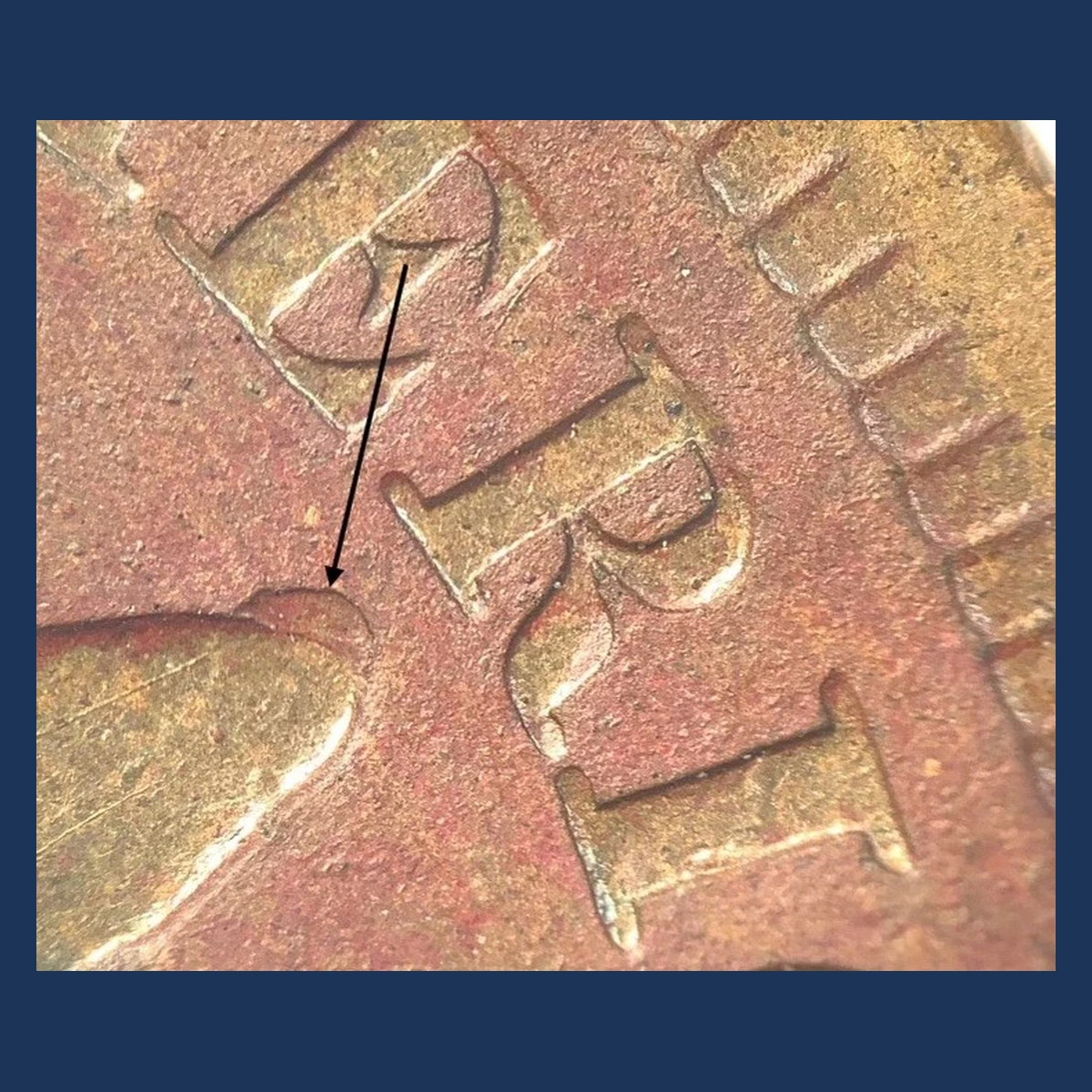
A small lump inside the last 9 can come from a chipped stamping tool. Other 1899 tools developed cracks through the wreath or damage along the outer edge.
Later strikes copied the openings as raised metal. A larger missing edge piece can leave a rim-connected patch called a cud.
The recorded cracks follow several routes, including the shield area and the lower ribbon. They should not be combined into one pattern.
A general report of cuds does not establish one pictured outline. Small border breaks and an interior feather chip are not automatically the same as a large rim-connected cud.
Estimated Value
Estimate $5–$150 for modest cracks and chips, and roughly $30–$750 for stronger, authenticated rim breaks. These ranges include the underlying penny and its condition.
For context, a later 1946-S Lincoln cent with a cud sold for $288 in March 2021. That result does not price an unidentified bump inside an 1899 date.
When a chip accompanies date repunching, value the actual combination. A filled loop alone cannot prove that an earlier numeral was once visible beneath it.
How to Identify
Use side lighting to decide whether a line rises above the surface or cuts into it. A scratch can push up metal along its edges, but the central groove still points to damage.
At the last 9, compare the precise loop and chip shape under a 10× magnifier. Different tools can leave similar-looking lumps.
Inspect a suspected cud where it reaches the plain edge. Look for a folded rim or added metal before accepting a broken-tool explanation.
A scale and calipers check a loose coin against 3.11 grams and 19.05 millimeters. Match cracks to their own shield, wreath, or ribbon photographs rather than treating every raised line as one variety.
6. 1899 Indian Head Penny Rim Clip
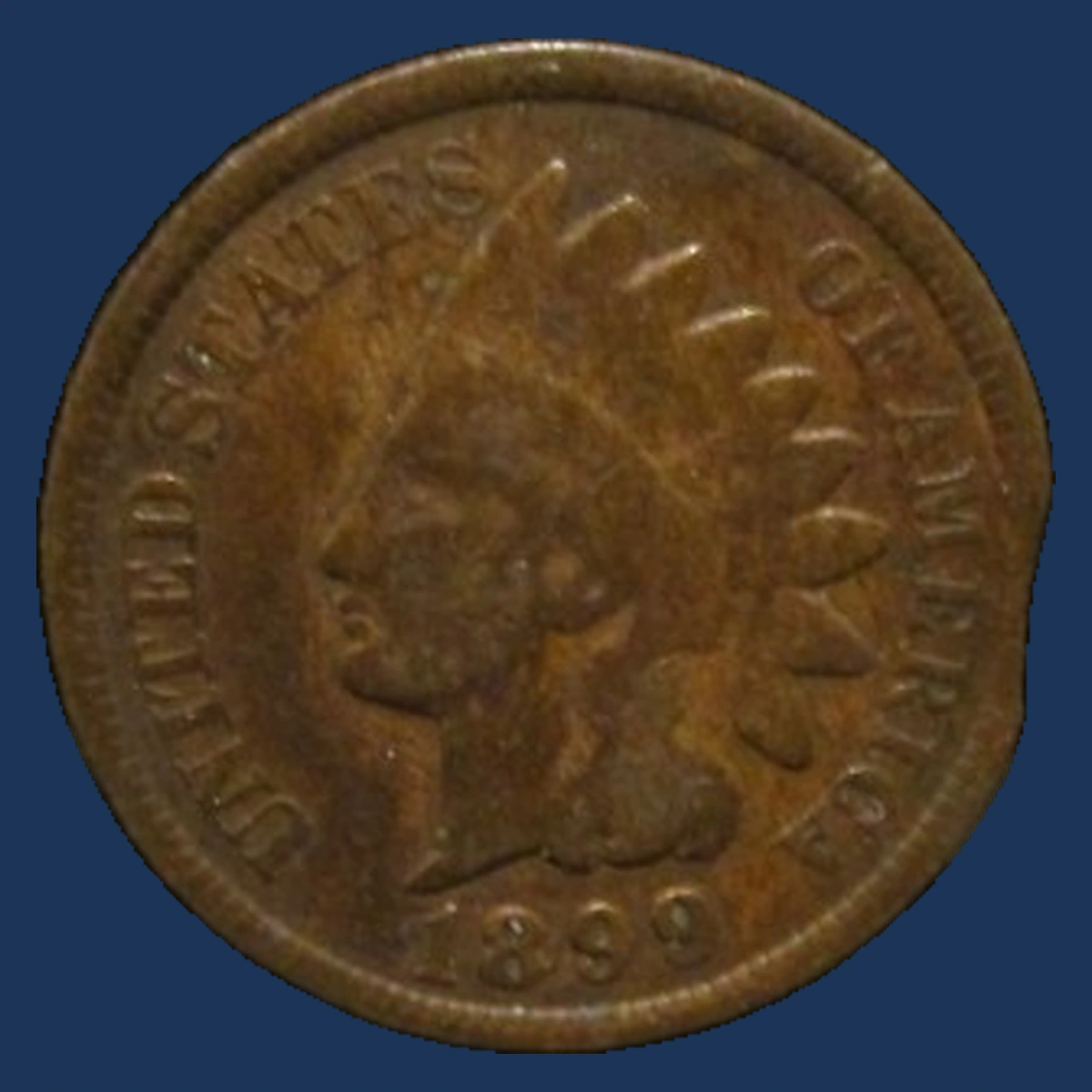
A missing piece at the edge can begin before the coin has any design. The blank-cutting operation produced an incomplete metal disc, which later entered the press.
An 1899 rim clip appears in the Rippere collection records with an ANACS XF45 Details grade. The number describes a circulated coin with much detail remaining.
The Details label flags a condition problem, but the available listing does not name its cause. It should not be treated as a problem-free coin.
The missing section’s own shape matters. A curve or straight edge from another clipped penny cannot establish the form of this example.
Estimated Value
For genuine 1899 clips, estimate $40–$750 across worn and better-preserved examples. The recorded XF45 Details coin needs comparison with similarly qualified pieces.
A 1910-S clip graded MS63 Red and Brown sold for $134 in March 2025. That unworn Lincoln cent offers context, with a different date, design, and condition.
The comparison does not establish the 1899 coin’s gap shape or final sale price. Size, original edge formation, and surface problems all affect the whole-coin estimate.
How to Identify
Photograph the complete outline before enlarging the gap. This keeps the readable 1899 date, missing section, and opposite rim together in one record.
Under a 10× magnifier, check the ends of the gap for original rim formation and inspect its exposed edge for saw cuts or filing.
A loose coin can be weighed against the normal 3.11 grams. Use calipers across intact portions to compare 19.05 millimeters rather than treating the shortened span as its original diameter.
Any weakness opposite the gap is supporting evidence, not a substitute for examining the gap itself. Keep a certified coin sealed and check its label for the stated condition qualification.
7. 1899 Indian Head Penny Struck Through Material
Material between a blank and a stamping tool can keep part of the design from forming. The obstruction may leave a depression or a patch of weak detail.
A dealer lists a worn 1899 cent as struck through, without naming the material in the available description. A wire, cloth, or metal fragment should not be assigned from that label alone.
This happened during coin striking, unlike the fiber pattern copied from Variety 30’s tool. The two effects involve different stages of production.
The surrounding design can help distinguish interrupted striking from a dent made after the coin left the Mint.
Estimated Value
Use an estimated $20–$800 for an authenticated 1899 struck-through example. The affected area, visibility of the date, and remaining condition guide the comparison.
A 1920 bronze cent struck through a metal fragment sold for $134 in March 2025. Its known obstruction provides context but does not identify the material on the dealer’s worn 1899 coin.
The upper end suits a clear, substantial effect on an appealing coin. A small weak patch or unexplained dent needs a more modest assessment.
How to Identify
Follow a clear design element into the affected area under a magnifier. Note whether the detail stops, becomes faint, or appears crushed after it had already formed.
Look around the boundary for a raised lip or displaced metal that suggests a later impact.
If material remains attached, photograph it without picking it out. The contact area can explain more than the object’s color.
For a loose coin, check its scale weight against 3.11 grams and caliper width against 19.05 millimeters. Inspect the plain edge for related damage.
A match to Variety 30’s repeated border pattern calls for the tool-making explanation instead. A one-coin obstruction needs evidence in its own surface and design.
8. 1899 Indian Head Penny Misplaced Date Fragments
The top of an extra 9 can hide among the border teeth below the main date. The date punch touched the wrong part of the tool before the intended date was finished.
On Snow-27, the extra fragment lies below and left of the first 9. Another recorded tool places a 9 top beneath the right foot of 1.
These are separate patterns. A third catalog listing combines misplaced digits and repunching without giving the usable location detail.
Marks described as musical-note shapes also occur below the date on another tool. Their appearance does not establish that they are misplaced numbers.
Estimated Value
Estimate $25–$2,000 for identified 1899 misplaced-date varieties, depending on the fragment and the complete coin’s preservation. The range applies to a matched numeral pattern, not every border bump.
An 1878 Snow-2 with misplaced 78 fragments sold for $1,920 in October 2019 at MS65 Red. Its unworn condition and surviving original color contributed to that result.
Keep that sale attached to 1878. An accompanying repunched date on an 1899 coin is part of the same whole-coin assessment.
How to Identify
Use the main date as a position guide while viewing the lower border through a 10× magnifier. Locate the first 9, then examine the teeth below and to its left for the Snow-27 fragment.
If the extra curve is beneath the right foot of 1, switch to the photograph for that separate tool. Do not stretch one reference image to fit both locations.
A loose bronze cent normally measures 19.05 millimeters with calipers and weighs 3.11 grams on a scale. Check the plain edge and border for cutting or added metal.
Photograph the raised curve without filling in a whole digit that is not visible. Its shape and position must agree with the same date punch.
9. 1899 Indian Head Penny Off-Center Strikes
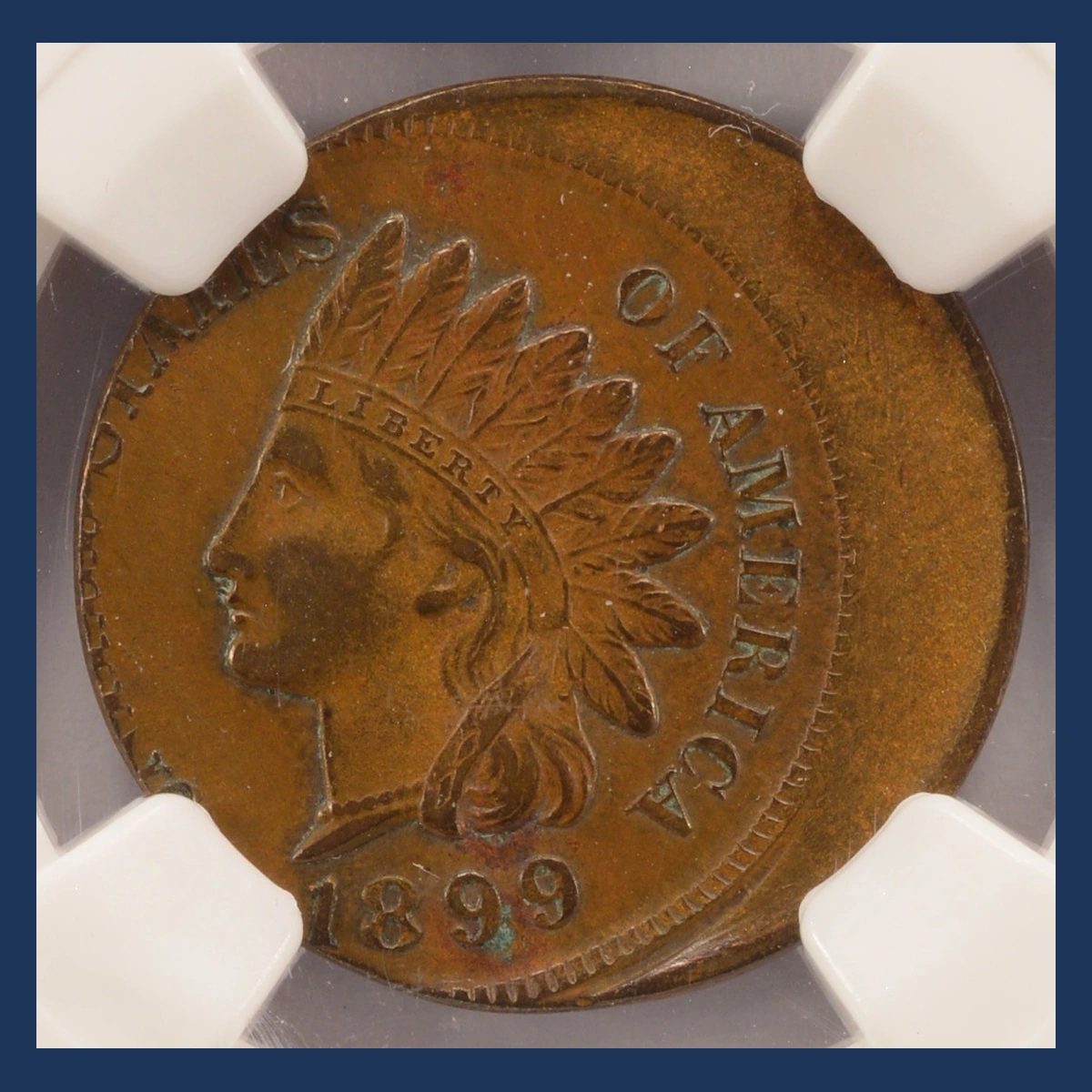
Unused metal beside a shifted design shows that the blank sat partly outside the striking position. Some intended lettering fell beyond the available disc.
A recorded 10% off-center 1899 cent shifts toward two o’clock, affecting the upper-right front lettering. PCGS graded it MS63 Red and Brown, meaning unworn with some original copper color.
A separate 15% example was graded NGC MS64 Red and Brown. Its percentage and preservation belong to that coin.
Neither is automatically a double strike. One misplaced blow can produce the blank crescent without leaving two overlapping dates or portraits.
Estimated Value
The 15% off-center MS64 Red and Brown coin sold for $492.88 in June 2026. The separate 10% MS63 Red and Brown example brought $402.50 in September 2005.
Estimate $150–$2,500 for dated 1899 off-center cents across different conditions and amounts of displacement. Both cited results concern unworn coins, so a heavily worn example needs another comparison.
A larger empty crescent does not guarantee a higher value. Readable date digits, natural surfaces, and clear original striking evidence matter too.
How to Identify
Keep the 1899 date upright and compare the cut-off lettering with the blank crescent opposite it. For the 10% coin, the shift belongs near two o’clock.
Photograph the back at the same scale and check that its design fits the same displaced disc.
Use a scale on a loose example against 3.11 grams, since an off-center blow need not remove metal. Calipers record its outline beside the normal 19.05-millimeter diameter.
Under magnification, inspect the plain edge for grinding that could remove finished design.
The 15% example needs its own image for direction. A wide rim on one face with a centered back may instead reflect a shifted single tool.
10. 1899 Indian Head Penny Partial Mirror-Image Impression
A struck coin can become trapped against another blank and act like a temporary stamping surface. Its raised design presses a sunken, reversed image into the next coin.
Collectors call this a brockage. It differs from ordinary doubled lettering because the transferred design faces the wrong way and usually sinks below the surface.
A republished 1978 sales catalog describes an 1899 cent with a partial brockage near eleven-thirty. The affected area was listed as about ten percent on a heavily worn coin.
The description establishes a small partial impression, not a full-face mirror image. Its surviving shapes need examination.
Estimated Value
For an authenticated partial brockage of this kind, estimate $200–$3,500. The recognizable mirrored design, size of the affected area, and remaining condition determine the useful comparison.
The separate 1899 double strike that sold for $632.50 in July 2007 provides a broad same-year striking-error reference. It is not a brockage sale and has a different surface pattern.
A faint patch on a worn penny belongs well below an exceptionally clear mirrored impression. Two coins pressed together after minting do not qualify.
How to Identify
Inspect both faces before naming a partial brockage. Two coins squeezed together later may leave crushing on the other face and damage around the plain edge.
For a loose penny, use a scale and calipers to compare 3.11 grams and 19.05 millimeters. Normal measurements alone cannot prove when the impression formed.
Then enlarge the affected area near eleven-thirty with a 10× magnifier.
Find a recognizable design fragment that is both reversed and recessed. Compare it with the contacting coin’s design, since a dark stain or normal-facing raised outline will not explain a brockage.
The reported area covers about ten percent, not the whole face. Its boundary and the surviving reversed detail should fit the same contact event, rather than an unrelated rim dent.
11. 1899 Indian Head Penny Double Strikes with Two Dates
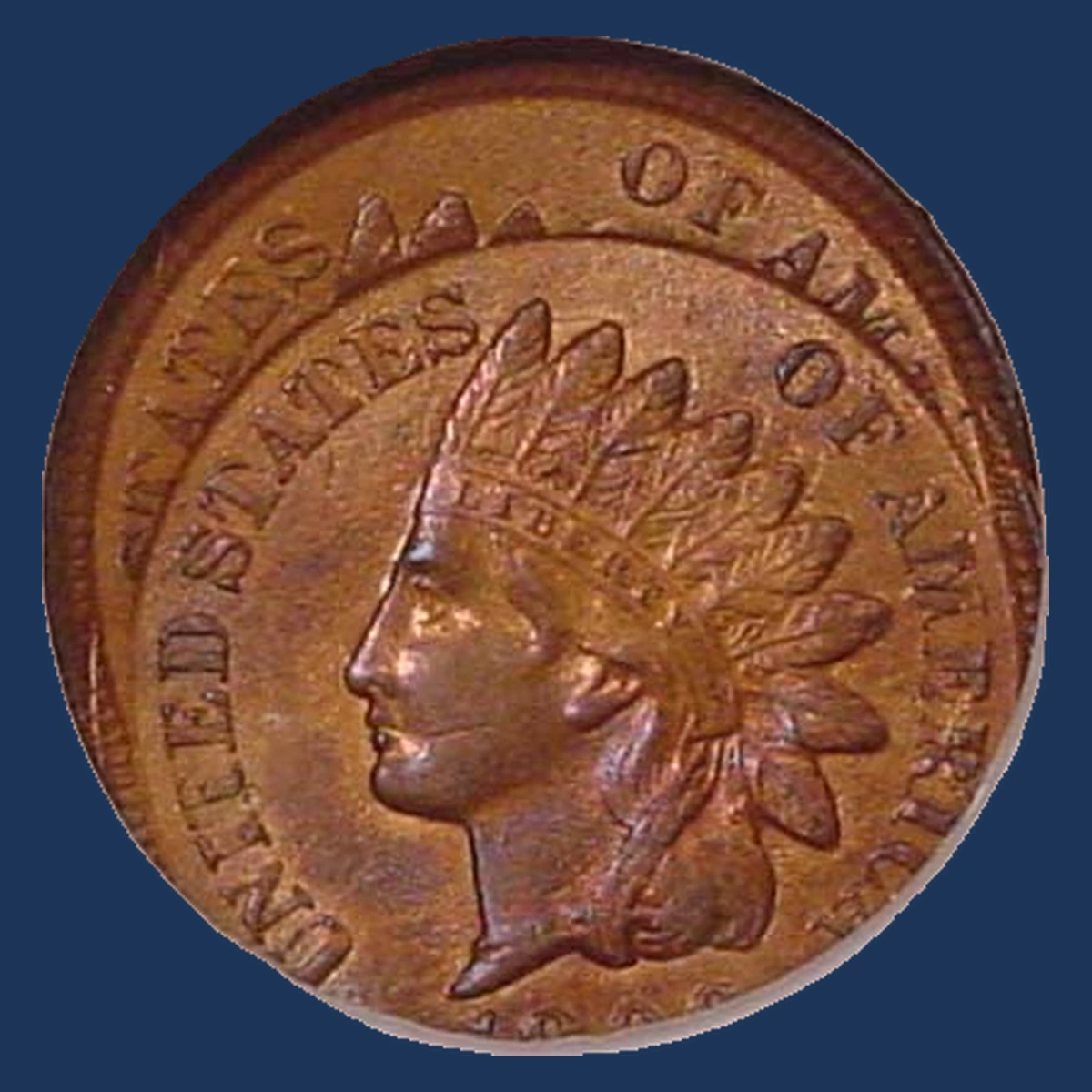
Two readable dates can remain when a coin moves before another blow. The second impression overlaps or extends beyond the first instead of simply thickening one numeral.
One worn example has a second strike 10% off center toward eleven o’clock. Another lightly worn coin received its second blow 85% off center, with almost another complete date.
That farther-off-center second strike formed a design on only one face. It is described as uniface, meaning one-sided.
A separate cleaned example has about 5% displacement toward twelve o’clock. Its surface treatment and smaller shift belong to that coin alone.
Estimated Value
The 85% example brought $632.50 in July 2007, as recorded by Heritage. The 10% example sold for $603.75 in November 2003.
Estimate $200–$5,000 for genuine double strikes with identifiable dates, allowing for wear, overlap, and surface problems. A clear additional portrait can be more appealing than a cramped second impression.
The cleaned 5% coin sold in a two-coin lot. That lot’s total must not be assigned to the 1899 penny alone.
How to Identify
Trace each date to its own nearby border or portrait detail under a magnifier. A small extra stroke beside 9 is not enough to establish two complete blows.
Find places where the later strike flattened the earlier design. Check the back to see whether it received another design or remained one-sided at the new striking area.
For a loose coin, use a scale to compare 3.11 grams and calipers to record the shape against 19.05 millimeters. Examine the plain edge for a join.
Keep the five-, ten-, and eighty-five-percent examples separate in photographs. The cleaned coin’s close overlap cannot explain the distant second date on the much more displaced example.
12. 1899 Indian Head Penny Repunched Dates on Ordinary and Proof Coins
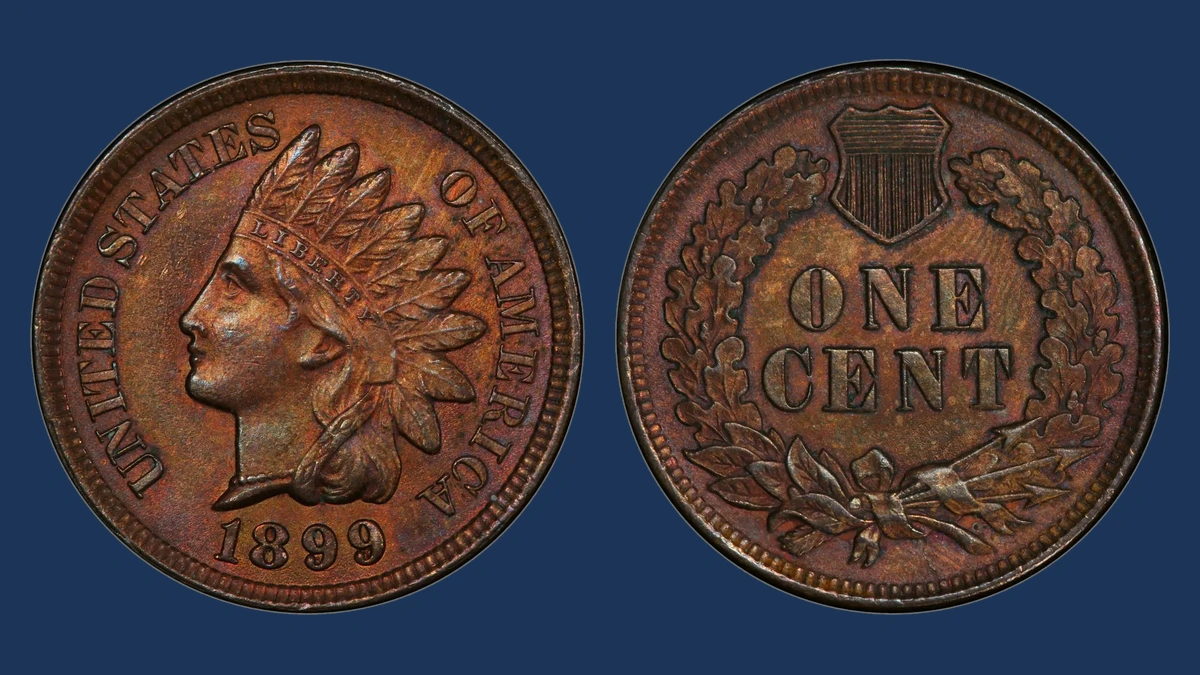
An earlier position of the date can leave raised strokes beside the finished digits. Workers punched the date into the tool again without covering every part of the first impression.
Some 1899 patterns repeat several digits, while others mainly affect one 9. Their directions differ, so the same photograph cannot identify them all.
One tool pair first made collector coins, called Proofs, before making ordinary cents. Later cracks on the ordinary coins do not automatically belong on the earlier Proofs.
A chip filling a date loop is different from an earlier numeral stroke. Its presence alone does not establish repunching.
Estimated Value
An unworn Snow-13 example graded MS64 Red and Brown brought $288 in January 2025. Its named date pattern and preservation belong together in that comparison.
Estimate $15–$2,000 for ordinary repunched dates and roughly $300–$5,000 for matched Proofs across different conditions. The Proof range is an estimate, not a sale assigned to the later ordinary tool pairing.
Extra strokes do not establish Proof manufacture. Finish, condition, and the complete tool match must support the higher comparison.
How to Identify
If a seller calls the coin a Proof, settle that identity before comparing the price. Check its specially prepared finish and the complete tool pairing; a shiny surface or repeated date alone is not enough.
The ordinary coins made later from that tool pair can carry cracks absent from earlier Proofs. For a loose coin, check 3.11 grams on a scale, 19.05 millimeters with calipers, and the plain edge for alteration.
Now photograph the four date digits together and mark each extra stroke’s direction under a 10× magnifier. Compare the complete pattern: Snow-1 repeats several digits, while Snow-13 has a different arrangement around the first 9.
A filled loop can be a chip instead of a hidden earlier digit.
13. 1899 Indian Head Penny Cent Design Struck over a Barber Dime
A finished silver dime can receive a cent design if it enters the wrong press. Parts of its earlier design may survive beneath the new impression.
The reported 1899 piece was struck over an 1899 Barber dime. Its modern record gives an NGC AU53 grade, indicating light circulation wear.
This is a double-denomination error: two different coin designs occupy one piece of metal. It differs from a cent struck on an unused dime blank.
The earlier dime details are faint. Their presence must be established on the actual coin rather than inferred from silver color or small size alone.
Estimated Value
Estimate $10,000–$50,000 for an authenticated example of this rare combination. Preservation, visible remains of both designs, and a clear identity are central to the whole-coin value.
A 1909 cent struck over a 1906 dime sold for $37,375 in September 2006. That unworn example provides comparison context, not a transaction for the 1899 AU53 coin.
The recorded 1899 history identifies a struck Barber dime beneath the cent. A merely silver-colored penny does not qualify for this range.
How to Identify
Begin with magnified photographs of both faces and identify specific remains of the Barber dime beneath the cent design. Faint earlier lettering must belong to that design, not random scratches.
Keep a certified example sealed and use recorded measurements. For comparison, an 1899 dime’s standard is 2.50 grams, about 17.9 millimeters, and 90% silver; an ordinary cent is 3.11 grams and 19.05 millimeters.
A second strike can alter width and edge detail, so these standards are not measurements assigned to the error. A scale, calipers, and a nondestructive metal test can support specialist examination of a loose coin.
Check for plating or a joined edge. The strongest evidence combines the correct metal with recognizable surviving designs from both denominations.
Conclusion
On an 1899 penny, a repeated digit, a mirrored impression, and a second date tell different stories. Start with the shape that is actually present, then choose the matching kind of error.
Estimated whole-coin values span $5–$50,000. Small tool marks should not inherit the price of a silver double-denomination rarity, and several features on one penny still require one combined assessment.