1898 Penny Error List with Pictures

Small digit fragments helped an 1898 misplaced-date penny reach $1,998 at Heritage in January 2015. PCGS records that sale for an MS66 Red example, an unworn coin with strong original copper color.
The 1898 penny error list also covers tilted backs, clipped edges, and coins struck twice. Estimates run from $5 for modest features on circulated coins to $3,000 for more dramatic double strikes.
Read on to compare the tiny marks with errors that changed the entire design.
1. 1898 Indian Head Penny Rotated Back Design
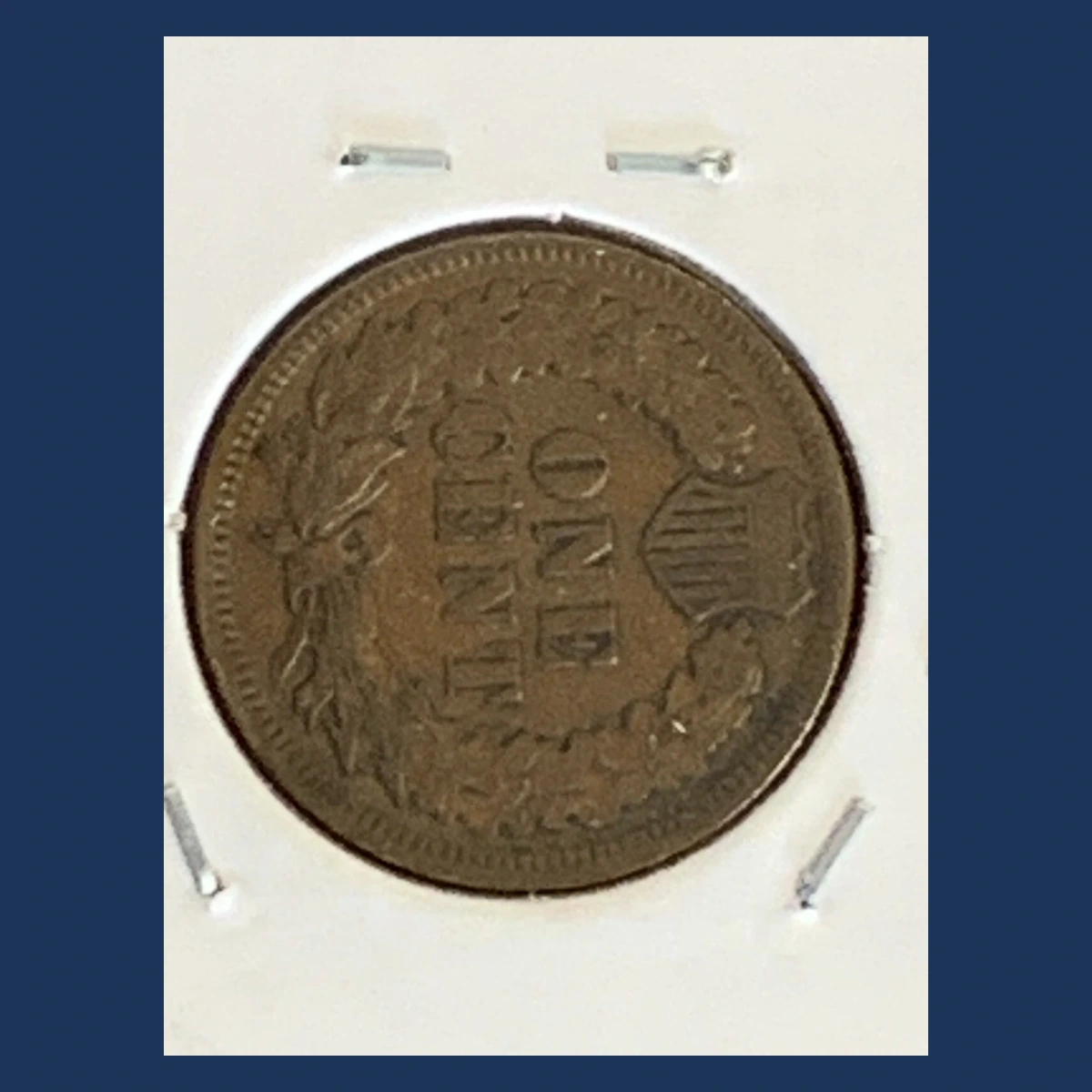
Turn a normally aligned penny from top to bottom, and both designs should appear upright. On the recorded Variety 44, the back instead sits about seven degrees clockwise from its expected position.
The two dies, the steel stamping tools, were slightly out of line with one another. This changed the relationship between the faces without moving either design off its own center.
Seven degrees is a small tilt. It should not be confused with a dramatic half-turn or with a photograph taken at an angle.
The same variety also carries other tool marks.
Estimated Value
For a circulated example with only a slight seven-degree tilt, estimate $5–$50. Much of that amount can come from the ordinary coin and any clearly matched accompanying variety.
A small rotation does not deserve the price of a large, obvious turn. The cataloged Variety 44 also has doubling, cracks, and a clash mark, which belong to the same penny.
Compare its complete condition rather than adding an individual maximum for every feature.
How to Identify
Hold the front upright and flip the coin from top to bottom without twisting your fingers. Repeat the movement to see whether the same small back tilt returns.
A holder with an upright guide line helps keep the position steady. Compare the back against a normal Indian Head penny, and measure the angle from straight-on photographs.
Use a 10× magnifier to confirm matching Variety 44 marks if that number is claimed. A scale and calipers check a loose bronze penny against 3.11 g and 19.05 mm.
Those tools cannot measure rotation. Keep the front fixed during the flip; turning the coin sideways can create a false change in alignment.
2. 1898 Indian Head Penny Clash Mark Through CENT
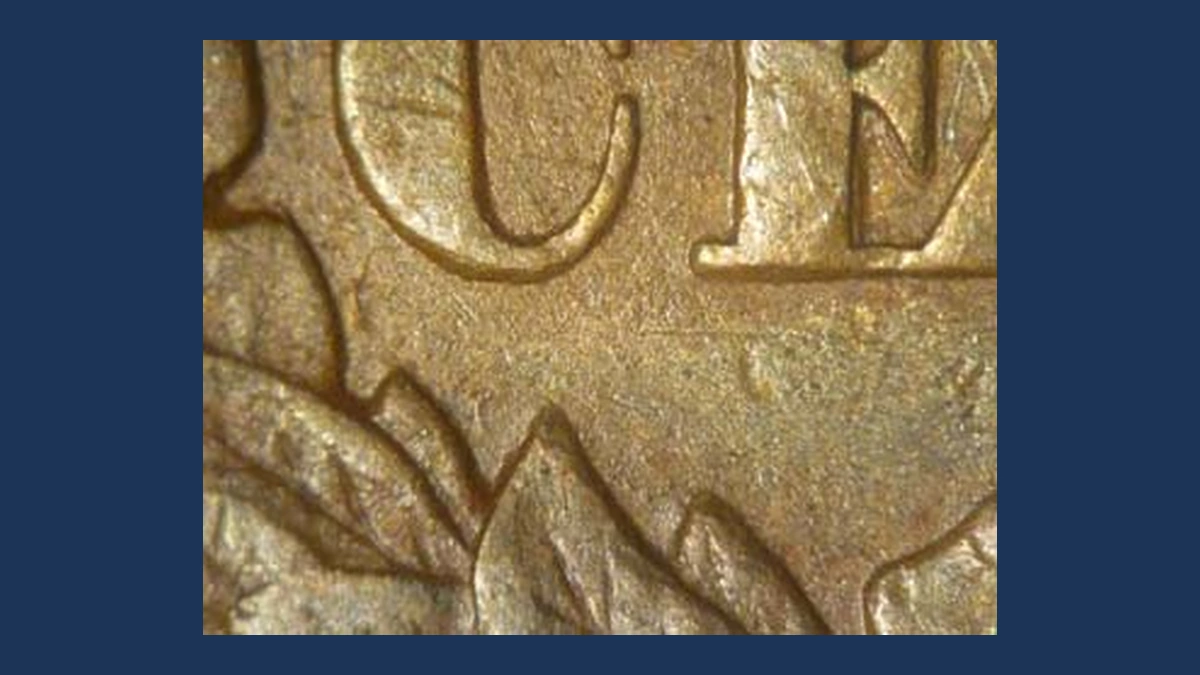
The C of CENT can have an extra outline crossing it on Variety 44. That outline was transferred when the front and back tools struck one another without a blank, the flat metal disc, between them.
Afterward, the affected tool could copy the extra trace onto new pennies. This is called a die clash.
The extra line is part of an opposite-side design, not another letter punched into CENT. The recorded variety also has cracks following parts of the wreath.
Those cracks came from openings in the tool and should not all be mistaken for the clash.
Estimated Value
Estimate $10–$300 for a clearly matched 1898 clash across worn and better-preserved coins. A recognizable transferred outline is more useful than a faint line that could have another cause.
No separate auction result is assigned here to the Variety 44 clash. Its other features can help identify the same coin, but they do not each represent an additional purchase.
Heavy wear or later scratches may hide the trace through CENT and reduce its appeal.
How to Identify
Compare the line through CENT’s C with the Variety 44 photographs under a 10× magnifier. Include the whole word in your photograph so that the path of the extra trace stays clear.
Now compare the lines along the wreath. A line running around that design may be a crack rather than a copied portion of the opposite face.
Weigh a loose coin on a scale against 3.11 g and compare its width with 19.05 mm using calipers. Normal measurements do not establish a clash, so return to the shape crossing the C and check whether later scratches cut across it.
3. 1898 Indian Head Penny Raised Texture from a Rusted Tool
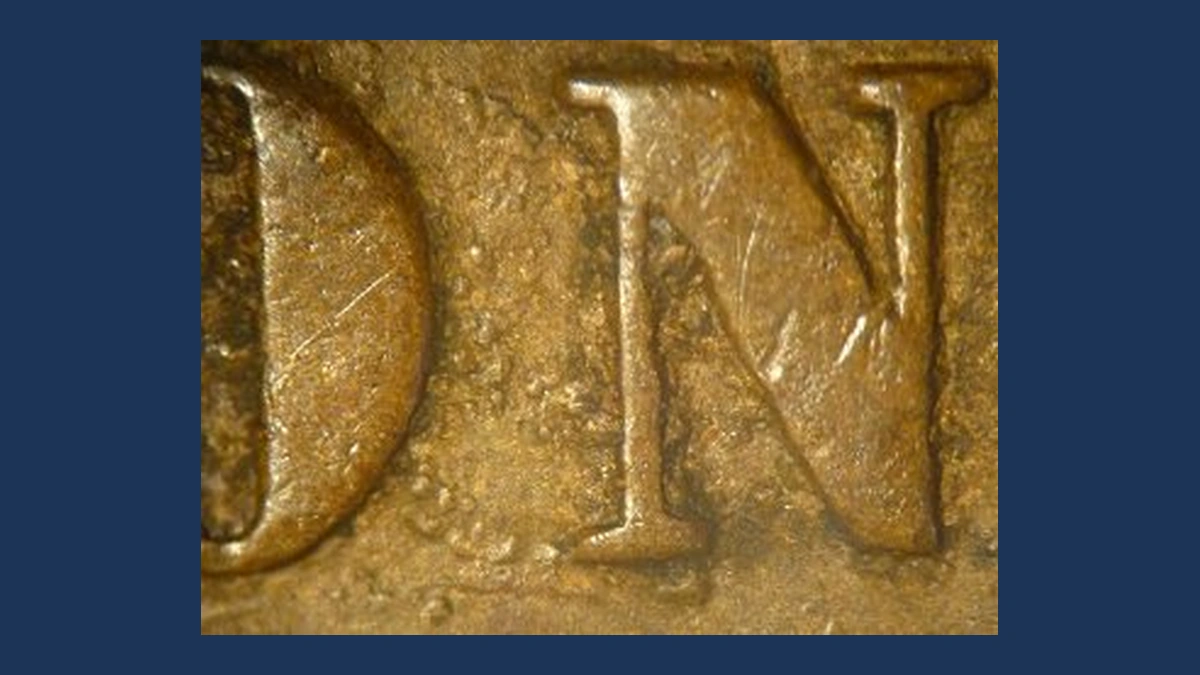
The back of RST-001 has patches of raised roughness inside the wreath near eight-thirty, around ON in ONE, and below the shield. These areas record rust damage on the stamping tool.
Rust left tiny cavities in the steel. When bronze entered those cavities during striking, it formed small bumps on the penny.
This is different from corrosion attacking the coin after it left the Mint. That later damage can leave holes, crust, or an uneven surface across unrelated places.
The arrangement of the raised patches helps separate the two explanations.
Estimated Value
An estimated $15–$300 covers recognizable 1898 rusted-tool examples in circulated through better-preserved condition. This range is a comparison for the complete penny rather than a published RST-001 auction sale.
Clear original texture can interest a variety collector, especially when several recorded areas remain visible. Random roughness without a convincing match is a weaker basis for a premium.
Corrosion or cleaning that obscures those areas should be considered when comparing the grade and price.
How to Identify
Before magnifying the texture, check whether the surface is covered with corrosion or loose deposits. Do not scrape them away to expose the marks.
A scale compares a loose example with the normal 3.11 g, while calipers check about 19.05 mm. Metal lost to corrosion can affect those readings.
At 10×, inspect inside the wreath near eight-thirty.
Then examine ON and the area below the shield with the lamp moved sideways. Small raised points should catch the light above the surrounding surface, rather than appear as holes cut into it.
Compare all three areas with RST-001 photographs. A matching group of raised patches is stronger evidence than roughness in one random place.
4. 1898 Indian Head Penny Curved, Straight, or Multiple Clips
An incomplete blank can leave a missing section along the finished penny’s edge. The 1898 year guide reports curved, straight, and multiple clips.
A curved gap can form when a blank-cutting punch overlaps a hole already made in the metal sheet. A straight edge can result when a blank reaches the end of that sheet.
More than one missing section can appear on a single blank. These shapes describe related blank-cutting mistakes, not separate strikes on the same coin.
The year report does not identify a certified specimen for each shape, so an individual coin still needs examination.
Estimated Value
For modest clips, estimate about $50–$300 across circulated and unworn examples. Larger or multiple clips with clear original surfaces can fit roughly $250–$1,000.
These are estimates informed by the year guide’s ranges, not confirmed sales of three specific coins. The guide places straight and curved clips below stronger multiple-clip examples in similar condition.
A missing piece made by cutting a finished penny has a different cause and does not receive the same error comparison.
How to Identify
Photograph the entire outline before focusing on one gap. Two missing sections can be easier to assess together than as separate close-ups.
With calipers, compare intact parts of the coin with its usual 19.05 mm diameter. Weigh it on a scale against 3.11 g; an incomplete blank should have less metal.
Look through a 10× magnifier at the rim where it reaches the gap. The original rim may weaken there or on the opposite side.
A straight cut needs close inspection for filing grooves and a fresh surface. A curved dent may instead push metal inward, so check whether the supposed missing segment is actually folded into the coin.
5. 1898 Indian Head Penny Cracks and Retained Rim Breaks
A thin raised line can follow the wreath where the stamping tool began to crack. On Variety 44, recorded paths run along parts of the right and left wreath.
The front also has a rim break near four to four-thirty. Other 1898 pairings have retained or partial breaks on the back.
In a retained break, the cracked tool section stays in place for a time. Its outline may surround design that is still partly visible.
These larger bounded areas differ from a simple scratch or a dent pushed into the edge after minting.
Estimated Value
Use an estimated $5–$100 for modest cracks and $50–$1,000 for clearer retained breaks or substantial rim cuds. Their size and visibility matter alongside the coin’s wear.
A faint early line should be compared with similar cracks, not with a later large patch from a broken tool. These ranges are estimates rather than sales for every stage.
On Variety 44, the cracks accompany other marks; value the combined penny rather than adding their separate highest estimates.
How to Identify
Examine a thin line at 10× as the light moves across it. A tool crack leaves raised metal; a scratch normally leaves a groove below the finished surface.
For Variety 44, compare the right-wreath path from about two to three-forty-five with the left path from ten-forty-five toward nine.
A larger rim patch needs another check.
Use a scale and calipers on a loose coin against 3.11 g and 19.05 mm, then inspect for solder or added metal. Keep a separate back break distinct from Variety 44’s front break.
Follow the boundary of a retained section and look for design still inside it. A crushed rim instead shows metal displaced by an outside blow.
6. 1898 Indian Head Penny Doubled Front or Back Details
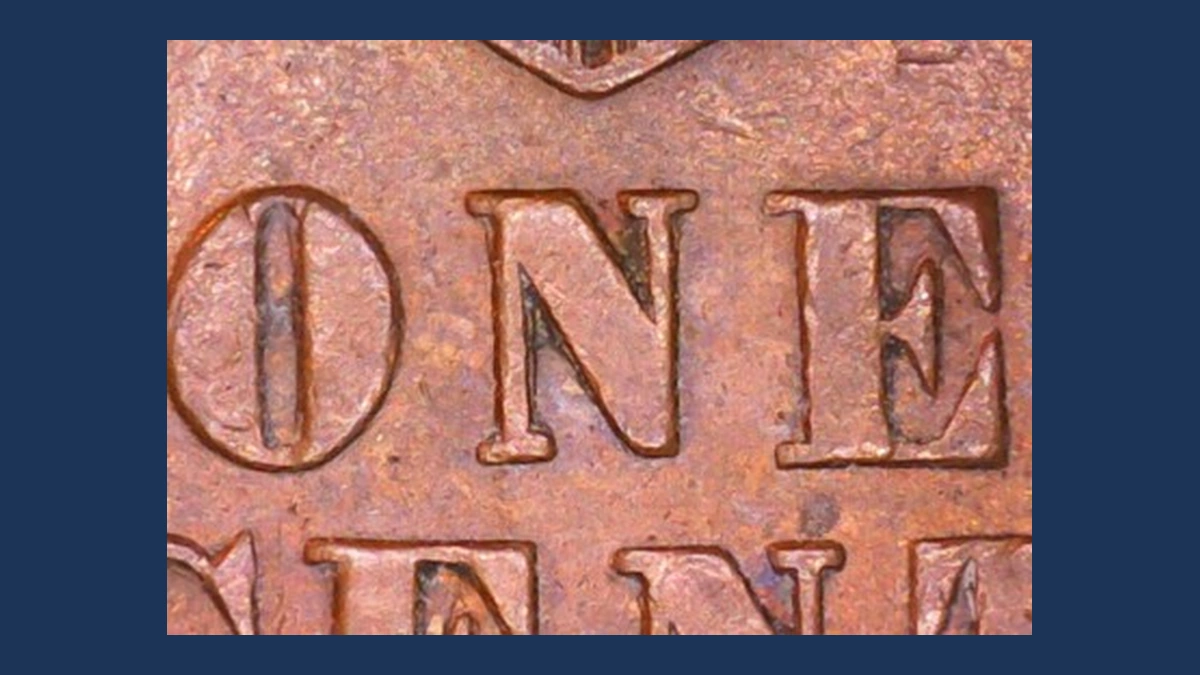
The left and lower-left wreath show repeated leaves and veins on DDR-001. The extra detail lies toward the center and comes from a doubled image in the stamping tool.
That back is paired with a front cataloged as RPD-019, which has a repunched date. The date and wreath features have different causes.
Variety 44 has another pattern on the front instead. Its doubling appears on UNITED and, more faintly, OF AMERICA.
Looking only at ONE’s E would miss the useful wreath features of DDR-001 and would not identify the separate front variety.
Estimated Value
Estimate $20–$1,200 for identified 1898 doubled-design examples, depending on the strength of the pattern and the full coin’s condition. Lightly doubled, worn letters generally make a weaker comparison than clear repeated shapes.
These values are estimates rather than a sale record for every pairing. On DDR-001, check the accompanying repunched date as well.
For Variety 44, assess its other tool marks together with the front doubling instead of assigning a separate total to each one.
How to Identify
Begin with the back wreath for DDR-001 and use a 10× magnifier to inspect the leaves and veins on the left. Compare their inward repeated edges with a normal wreath, rather than relying only on ONE.
For a loose coin, a scale and calipers check the ordinary bronze specifications of 3.11 g and 19.05 mm. The RPD-019 date can help match this back, but must also agree with its own photographs.
Variety 44 requires a front view instead: UNITED should show the clearer doubling, with weaker detail at OF AMERICA. Compare several letters for consistent repeated outlines; a flat shelf alongside one letter may come from movement during striking.
7. 1898 Indian Head Penny Struck Through a Capped Tool
The front design can look blurred or partly hidden because another coin covered the stamping tool. That stuck coin became a cap, acting as a layer between the tool and the next blank.
Mint Error News records an 1898 example graded NGC MS66 Brown. The grade describes an unworn, well-preserved coin with brown surfaces.
This penny was struck through the cap; it is not itself the cup-shaped coin that stuck to the tool. Some intended detail, including the date, can remain visible through the interference.
The amount of distortion depends on the cap’s condition.
Estimated Value
Use an estimated $500–$1,500 for a confirmed 1898 front struck-through-cap error with a readable year and clear evidence of the process. The well-preserved published example provides the main condition comparison.
A year guide reports $625 for an NGC MS66 Brown example, but does not supply a dated primary auction lot. Treat that as a reported amount rather than a newly verified sale.
An ordinary weak strike or later smoothing would require a different assessment.
How to Identify
Inspect how much of the date remains and compare the blurred front with the published MS66 Brown example. Use a 10× magnifier to follow the change from readable detail to flattened or distorted areas.
Check the back too. Its design can help show that the problem affected the front striking surface rather than the entire coin wearing smooth.
An accessible loose cent normally weighs 3.11 g on a scale and measures about 19.05 mm with calipers. Keep a certified example in its holder and use its recorded measurements.
Look for scratches from later smoothing across the weak front. Such cuts are different from detail that failed to form beneath an intervening cap.
8. 1898 Indian Head Penny Off-Center Strike
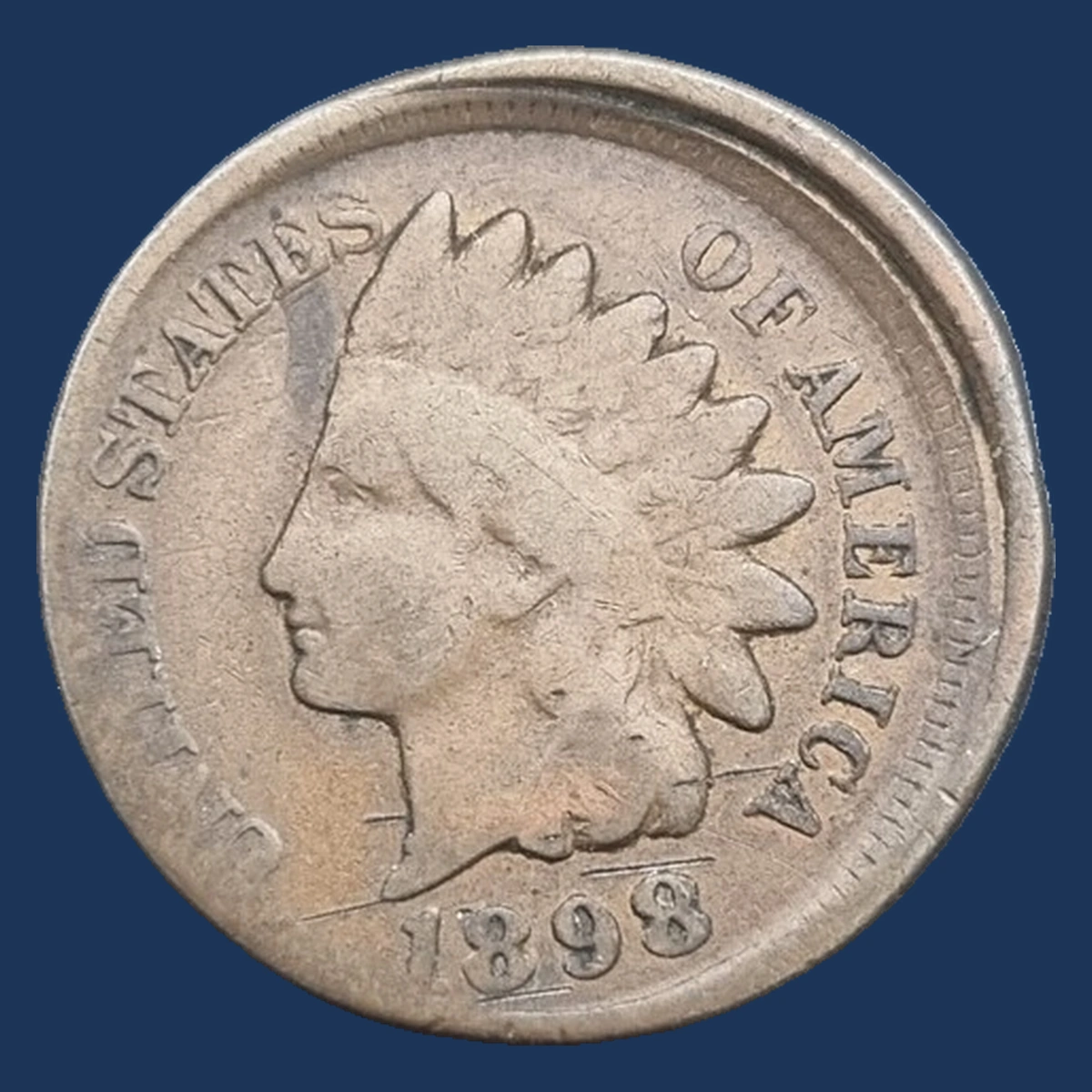
A blank crescent can remain beside the struck design when the blank enters the press off-center. The missing design on the opposite side reflects the same shift.
Heritage records an 1898 penny struck about eighteen percent off-center and graded Fine 12 by CACG. Fine 12 indicates substantial circulation wear, though the main design remains recognizable.
This example belongs to the single off-center group. It should not be confused with the separate 1898 double strike that has two dates.
Its percentage describes the amount of displacement, not how much of the metal blank was missing.
Estimated Value
A Greysheet auction listing reports $305 for the 18% off-center CACG Fine 12 example at Heritage in June 2026. That is a circulated-coin comparison.
Estimate $100–$600 for modest shifts and $400–$1,500 for larger readable-date examples in suitable condition. The second range is an estimate, not a price for that Fine 12 coin.
Damage to the blank crescent or missing date detail can change how useful an otherwise similar comparison is.
How to Identify
Find the date and the blank crescent in a full photograph before estimating the percentage off-center. A closer crop can hide how much of the design is actually missing.
At 10×, inspect the unstruck metal for grinding or filing marks. Scraping away a finished design does not reproduce an original blank surface.
Check the weight of a loose cent on a scale against 3.11 g.
Calipers can compare its intact width with the normal 19.05 mm. Some displaced strikes have distorted edges, so record the shape as well as one diameter.
Examine the opposite side of the blank crescent for cut-off design. A complete design with only an uneven border is a different appearance.
9. 1898 Indian Head Penny Repunched Date
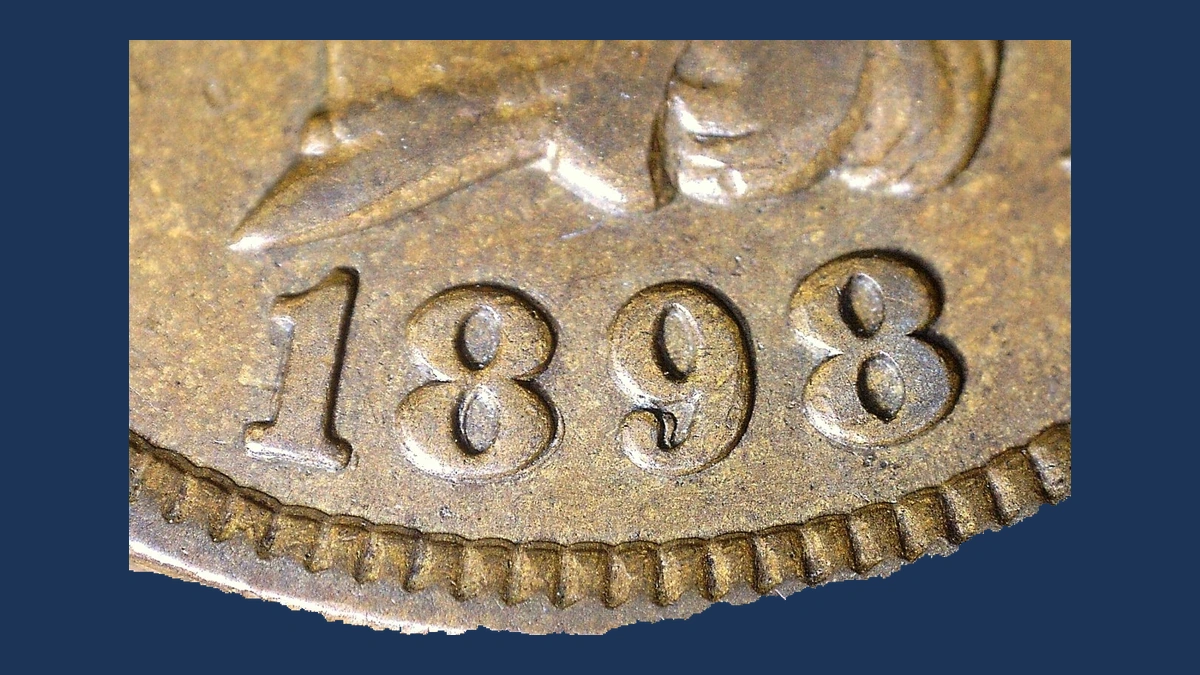
The 898 can show earlier strokes to the right of the main numerals on one recorded pattern. A date punch was placed into the tool more than once, leaving overlapping impressions.
The resulting penny received those extra strokes along with the normal date. It did not need a second strike to acquire them.
Other 1898 date varieties have different positions and directions of repunching. Their photographs should be matched individually rather than calling every thick 98 the same variety.
One repunched-date front also occurs with DDR-001, so both faces can help identify that combination.
Estimated Value
For identified repunched-date varieties, estimate $20–$2,000 from worn examples through well-preserved coins with clearer patterns. The range includes the condition and color of the whole penny.
A year guide reports a high-grade example at $1,725, without enough auction detail to assign that amount to every variety. It is a limited comparison, not a uniform price.
A coin with the DDR-001 back needs both sides assessed together, rather than adding full separate prices for date and wreath.
How to Identify
Take one sharp photograph containing all four date digits. Through a 10× magnifier, compare the right sides of the 898 for the recorded eastward pattern.
Keep the bottoms of the digits visible too. A dark edge or a low flat shelf can imitate an earlier stroke without forming another part of the numeral.
Different varieties require different shapes, not merely a general doubled appearance.
For a loose bronze cent, compare 3.11 g on a scale and 19.05 mm with calipers. Normal readings do not identify the date punch, so trace each suspected extra stroke into a recognizable numeral curve or straight section.
10. 1898 Indian Head Penny Misplaced Digits in the Border
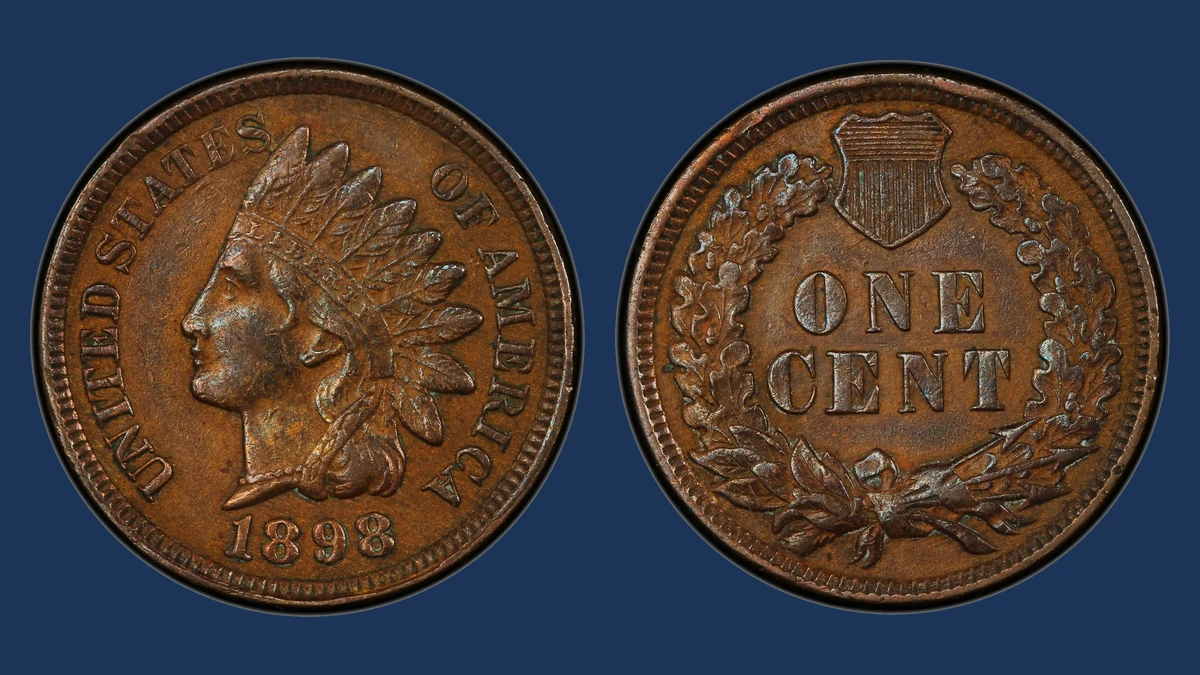
Look below the main date for a tiny piece of another numeral among the border teeth. A recorded 1898 pattern shows the top of an 8 or 9 beneath the normal 9.
The earlier punch landed too low during tool preparation. Although the date was corrected, part of that misplaced impression remained outside the normal row of numerals.
The fragments can be much smaller than a complete digit. Their position and curvature help separate them from a chip or rough tooth.
Snow-5, also called FS-402, is one cataloged misplaced-date variety for this year.
Estimated Value
PCGS records $1,998 for an MS66 Red FS-402 at Heritage in January 2015. That represents a strongly preserved, unworn red coin, not a typical pocket-worn example.
Estimate $40–$2,500 across identified 1898 misplaced-date varieties and conditions. Clear digit fragments and attractive original surfaces support stronger comparisons.
Other misplaced-date numbers need their own image match before using the FS-402 result; a bump below the date alone is not enough.
How to Identify
Use a 10× magnifier and light from the side to inspect the border below the 9. Include the main numeral above it so the small fragment’s position can be measured visually.
A scale and calipers can check a loose cent against 3.11 g and 19.05 mm. Neither separates a misplaced date from a chipped border tooth.
Follow the top curve of the suspected extra digit through the surrounding border. Compare its shape with the cataloged photograph, without assuming that every small arc is an 8.
Lower the light slightly if the border teeth hide the trace. The recognizable numeral fragment, in the correct space beneath the main date, is the feature to match.
11. 1898 Indian Head Penny Two Strikes with a Shifted Second Impression
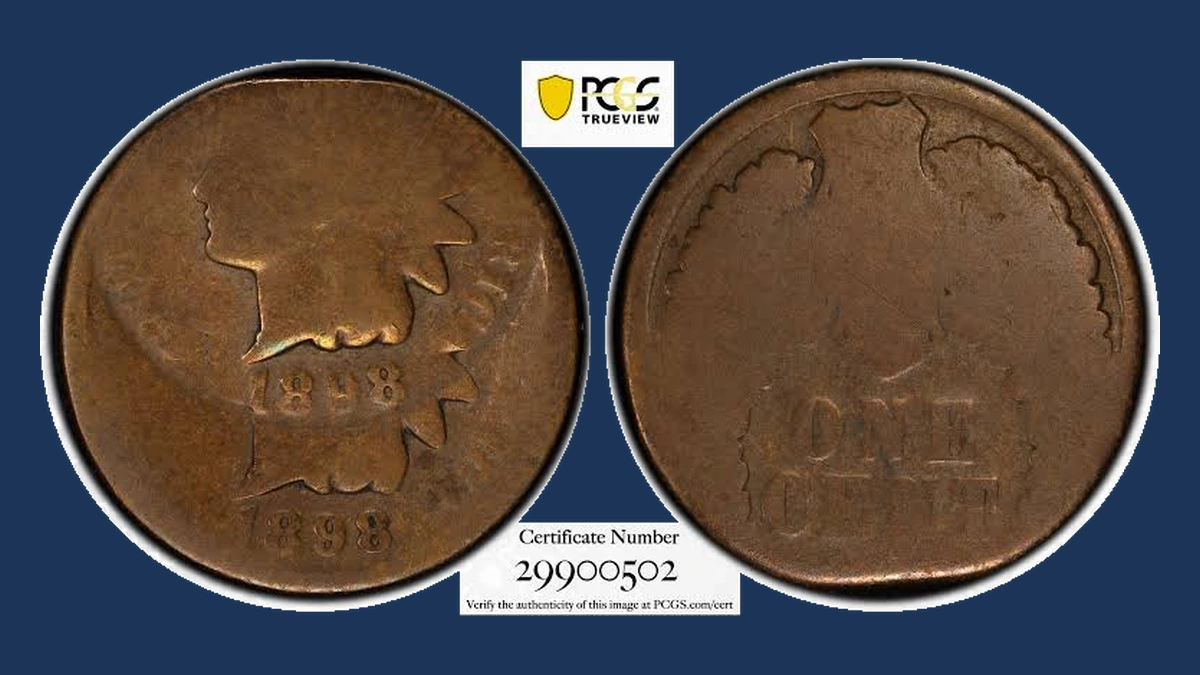
Two dates are visible on the published 1898 double-struck penny. The first strike was centered, while the second landed about twenty percent off-center toward twelve o’clock.
The coin moved between blows instead of leaving the press after the first strike. The second impression overlapped the earlier portrait and lettering.
Mint Error News illustrates the example as NGC MS64 Brown, an unworn coin with some marks. Its two dates are a clearer sign of repeated striking than one thick numeral.
A separate double-struck coin may have a different direction or amount of movement.
Estimated Value
Estimate $200–$3,000 for confirmed 1898 double strikes, depending on wear, displacement, and how clearly both impressions remain visible. Stronger preserved examples belong in a different comparison from heavily worn ones.
A year guide reports a double-struck example at $1,400, but gives no dated auction lot linking that price to the illustrated MS64 Brown coin. The amount remains a reported comparison.
Both dates and the overlapping design should be evaluated as parts of one striking error.
How to Identify
Start with the two dates and determine which impression belongs to the centered strike. Then follow the second design upward toward twelve o’clock in the published example.
Use a 10× magnifier to inspect places where the two impressions overlap. The repeated shapes should continue across more than a single date digit.
On a loose coin, record the usual bronze weight of about 3.11 g with a scale. Calipers can compare its outline with the normal 19.05 mm, allowing for metal spreading during the second blow.
A coin pressed against another coin after minting may show sunken, reversed detail. Here, look for two recognizable struck designs with movement between them.
Conclusion
A fragment below the date, a raised line, and a second portrait come from different steps in making a penny. The 1898 examples here span estimated values of $5–$3,000, with grade and the exact feature shaping each comparison.
Keep the complete coin in view before magnifying one detail. Where several features share the same penny, compare that whole coin instead of adding separate maximum prices.