1897 Penny Error List with Pictures

A number does not belong in Liberty’s neck, yet that is where one 1897 variety hides its extra 1. Heritage has cited an $8,862.50 sale for a well-preserved red-and-brown example.
Not every extra line is a number. This 1897 Indian Head penny error list separates misplaced digits from tool scratches, repeated dates, and striking errors.
Estimated values run from $5 to $9,000. Use the checks below to identify what changed on the coin before choosing a price comparison.
1. 1897 Indian Head Penny Die Gouge or File Mark (Estimated Up to $300)
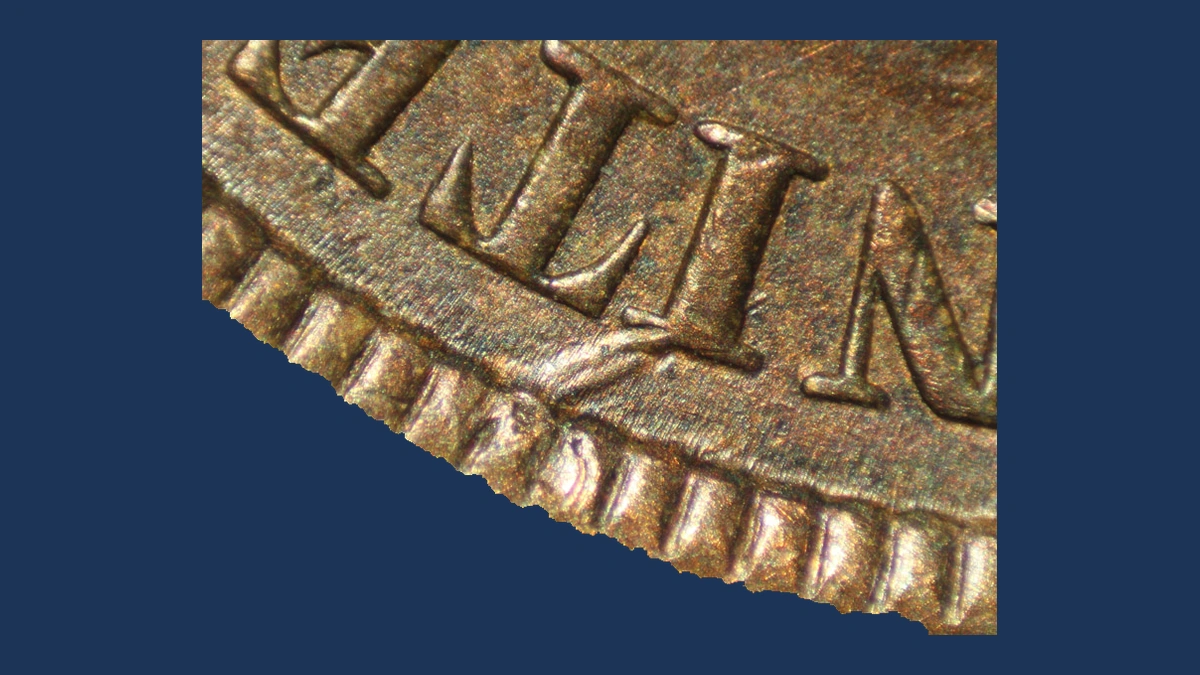
A thick raised line may run from the border into a letter. It can be the coin’s copy of a groove cut into the stamping tool.
The tool is called a die. Metal fills its groove during the blow, leaving a raised mark instead of a scratch cut into the finished penny.
One documented 1897 line connects the rim near 8:15 with the I in UNITED. Another runs from the border near 11 o’clock into the T in STATES.
These are separate examples. A line’s path, thickness, and connection to a letter are more useful than its length alone.
Estimated Value
For a matched raised tool mark, estimate $10–$300, with clearer examples in better condition supporting stronger prices. This is an estimate for the complete penny.
The mark’s shape matters more than its nickname. A faint line on a worn coin should not receive the same comparison as a prominent, clearly original groove impression.
These minor varieties occupy a different market from the neck’s misplaced 1. That digit’s high sale should not be copied onto an unrelated tool line.
How to Identify
Inspect the line’s beginning at the smooth edge for cutting or added metal before following it into a letter. Record safely accessible weight and width with a scale and calipers against 3.11 grams and about 19 millimeters.
Under a 10× magnifier, change the light angle to separate a raised line from a cut-in scratch. Raised sides along a scratch can be misleading.
The UNITED example begins near 8:15 and reaches the I. The separate STATES example runs inward from around 11 o’clock toward the T.
Choose the matching photograph and follow the complete route. A similar-looking line that crosses another letter needs a different comparison.
Do not scrape the mark to test its height; low side lighting preserves the surface while showing the difference.
2. 1897 Indian Head Penny Rotated Dies (Estimated Up to $600)
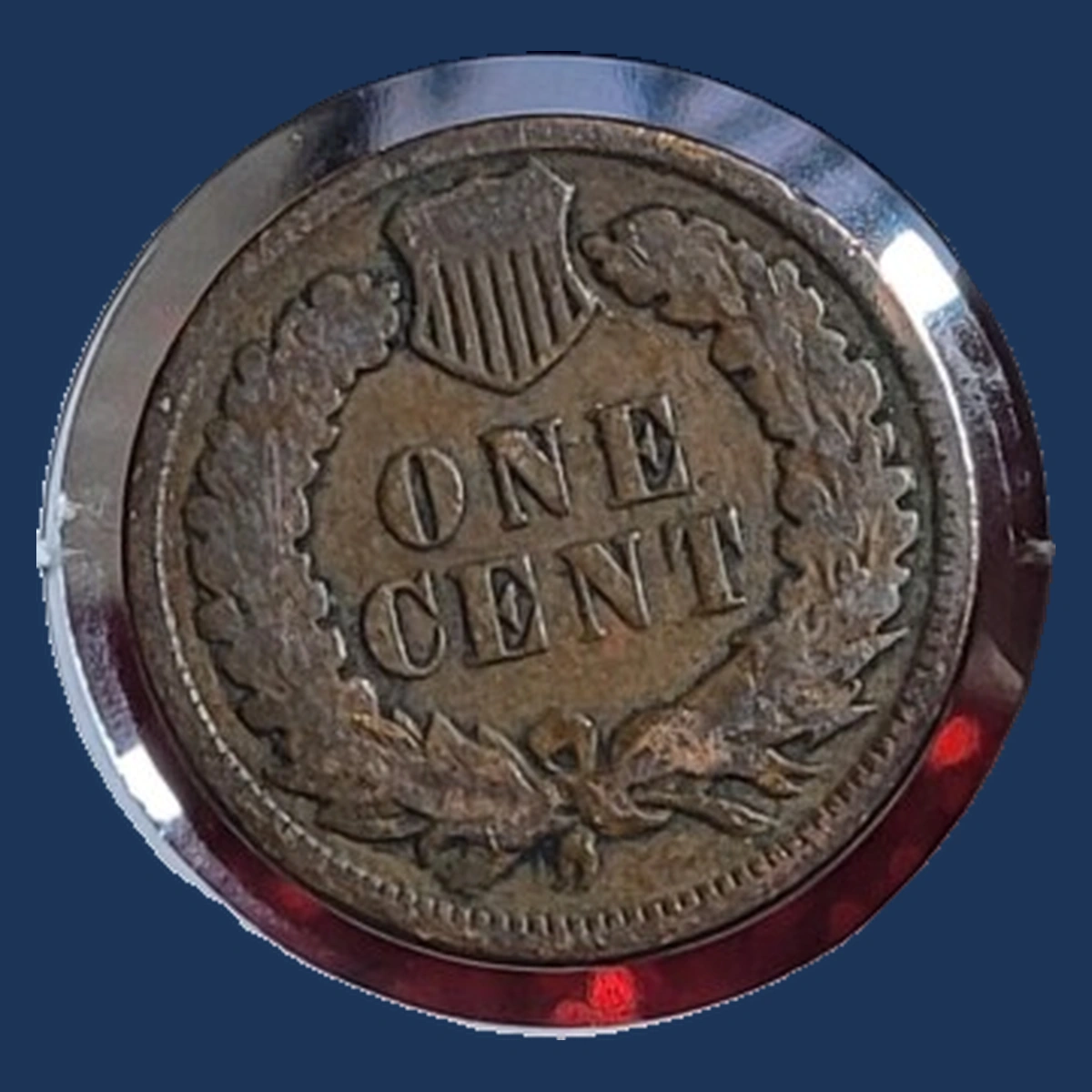
The back can sit at an unexpected angle even though both faces have clear, single designs. One stamping tool was turned away from its intended alignment.
This is a rotated-die error. It differs from a coin that moved between two separate strikes.
The 1897 catalog records counterclockwise back rotations of 106, 134, and 162 degrees. These describe different examples or tool stages rather than three images on one penny.
The angle only means something when both sides are compared using the same flip. Turning a loose photograph, or rolling the coin sideways, can make a normal coin appear incorrectly aligned.
Estimated Value
An estimated $40–$600 covers substantial, confirmed rotations with different wear and surface quality. Larger angles can be easier to display, but condition still affects the whole-coin price.
No separate auction result is assigned to each of the three cataloged angles. They are evidence of rotation, not three automatic price tiers.
The error should be demonstrated in a consistent top-to-bottom flip. An angle created by the way a seller arranged two photographs does not establish a rotation premium.
How to Identify
Hold the portrait upright and flip the coin top to bottom around a horizontal axis, without twisting it sideways. A normally aligned United States cent should now show an upright back.
Repeat the flip while filming both sides in one uninterrupted view. Measure the back’s deviation from upright rather than comparing two independently rotated photographs.
Use a magnifier to inspect the smooth edge for an assembly seam; record accessible scale and caliper readings against 3.11 grams and about 19 millimeters. Those checks help screen altered pieces but do not measure the angle.
Compare the direction as well as the size of the turn. A second set of overlapping letters would require a separate multiple-strike explanation.
3. 1897 Indian Head Penny Die Cracks and Cuds (Estimated Up to $750)
A raised line can pass through the wreath or run inward from the edge. It forms when a crack in the stamping tool fills with coin metal.
If a piece breaks away at the tool’s rim, a broader solid lump can replace the intended design. This is called a cud.
One documented 1897 back has cracks near 3:15, 6 o’clock, and 8:45. Other examples have smaller rim breaks or a large cud between about 1:45 and 3:45.
The positions describe separate patterns. A scratch through the wreath or a rim folded by impact cannot be identified from position alone.
Estimated Value
Small visible cracks can fit an estimated $5–$75. Stronger rim breaks and full cuds may fall around $50–$750, with original surfaces and remaining detail affecting the comparison.
A 1946-S Lincoln cent with a cud sold for $288 in March 2021. It is a later bronze-cent comparison, not a sale for the 1897 upper-right back break.
The entire coin receives one value. Multiple cracks on the same penny do not create a separate price to add for every line.
How to Identify
Begin at the edge if a broad patch is suspected. Under a magnifier, determine whether raised metal connects to the rim and replaces the intended design, as expected for a full cud.
Thin cracks call for a different check: trace the raised line through the surrounding design without assuming every line at a similar clock position is related. An internal flaw with no rim connection is not automatically a cud.
Weigh and measure safely accessible examples against 3.11 grams and roughly 19 millimeters using a scale and calipers. Inspect the smooth edge for folding or added metal before comparing the patch with the documented back-rim shape.
4. 1897 Indian Head Penny Broadstrike (Estimated Up to $750)
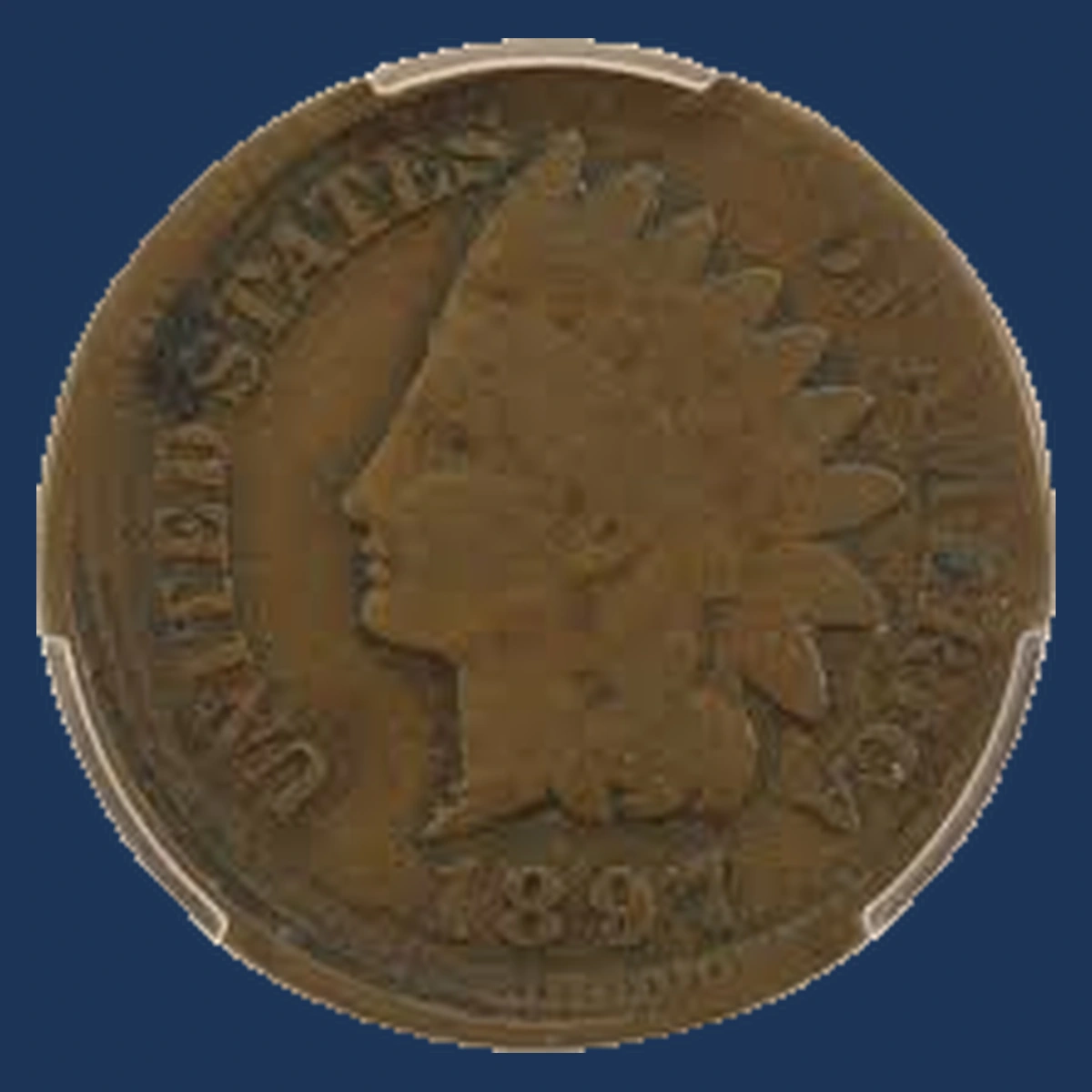
A wider border can form when the ring around the blank, the flat metal disc, fails to contain the strike normally. The coin’s metal spreads beyond its intended outline.
That ring is called the collar, and the result is a broadstrike. The full intended design remains on the metal even if the border is uneven.
A dealer listed an example graded SEGS F12, meaning a worn coin with recognizable details. Compare it with coins showing similar wear.
A larger diameter alone is not proof. Flattening after manufacture can also spread a penny while damaging its portrait, lettering, and edge.
Estimated Value
The SEGS F12 broadstrike appeared in a dealer listing at an asking price of $120. That is not a completed auction result.
Estimate $40–$750 for genuine examples ranging from worn pieces to clearer, better-preserved coins. The dealer’s worn example should not stand in for the upper end.
A different-year 1905 Indian cent broadstrike graded AU58 Brown sold for $258.50 in May 2016. Its lighter wear offers a useful comparison, while the date and individual spread remain different.
How to Identify
Calipers can establish how the coin’s widest and narrowest spans differ from the normal 19-millimeter diameter. Record accessible weight on a scale against 3.11 grams; expansion alone should not remove metal.
Then trace the outer lettering and border with a magnifier. The whole intended design should remain on the blank rather than disappear past an edge.
On a worn F12 example, expect softened details. Do not mistake that wear for proof that the design was absent when struck.
Inspect the smooth edge and the portrait for crushing. A hammered coin may be wide, but flattened features and impact marks can explain its shape without a failure of the retaining ring.
5. 1897 Indian Head Penny Repunched Date (Estimated Up to $1,000)
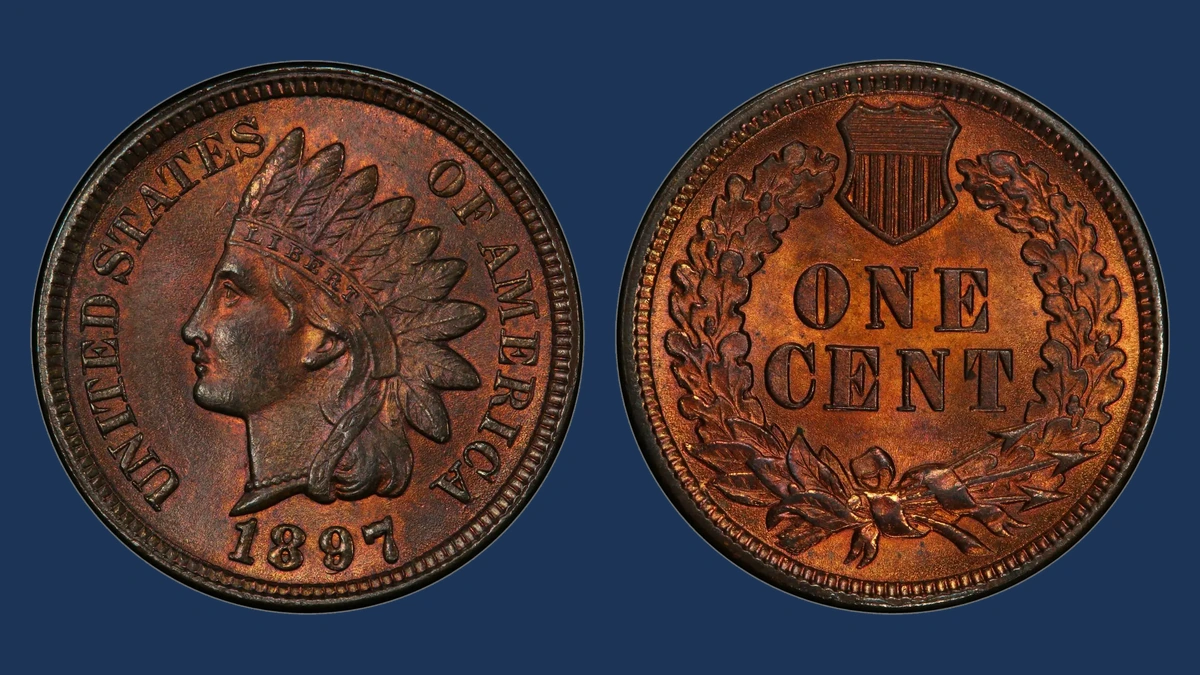
Extra strokes can appear inside the date’s loops or beside a digit’s base. They remain from an earlier date punch placed slightly differently in the stamping tool.
The date was added separately to the tool during preparation. More than one punch position could therefore survive in its finished shape.
Documented 1897 varieties include raised remnants near different parts of 1, 8, 9, and 7. A direction correct for one variety need not describe another.
This is not a second full strike on the coin. The portrait may remain entirely single even when the date has several visible extra strokes.
Estimated Value
An estimated $10–$1,000 covers minor date remnants through stronger, well-preserved varieties. The range depends on the particular pattern, not just the claim that the date looks doubled.
For a same-series comparison, a different 1905 repunched-date cent graded XF40 sold for $396 in July 2013. That is a worn coin with substantial detail remaining.
Its sale does not give every 1897 date variety a $396 value. The correct extra strokes, the degree of wear, and original surface quality need to agree.
How to Identify
Choose a known variety photograph before drawing arrows around the date. Compare the extra strokes with that picture, rather than joining unrelated bumps into a number.
Check the coin’s smooth edge and date surface for alteration. Safely accessible scale and caliper readings should be compared with 3.11 grams and about 19 millimeters.
With the date upright, use a magnifier to follow a remnant within a loop or beside a base. Compare its direction with the matching photograph.
Now inspect the other affected digits on that same variety. An isolated flat shelf may have formed during striking rather than during date punching.
Do not require the portrait to repeat as well; date repunching can leave the rest of the front single.
6. 1897 Indian Head Penny Doubled Die Obverse (Estimated Up to $1,500)
Repeated raised edges in LIBERTY can suggest that the front design was doubled in the stamping tool. The coin then copies the repeated detail with a normal blow.
This is called a doubled die obverse, with obverse meaning the front. An 1897 year-specific report lists this category.
The report does not establish a certified variety for every doubled-looking letter. Comparison with a properly identified example remains necessary.
Date-only repetition is especially easy to confuse with it. Indian cents can have repunched dates because their dates were punched separately, while a flat shelf beside lettering can form during the strike.
Estimated Value
For a genuine, matched doubled-front example, use an estimated $15–$1,500. This is a conditional range, not a claimed auction result for an established 1897 variety.
An 1887 Indian cent with recognized front doubling sold for $1,380 in June 2025. Its different date and established pattern should stay attached to that price.
The upper comparison requires more than a doubled-looking date. If the mark is a repunched digit or a flat shelf, the stronger doubled-die price does not apply.
How to Identify
An extra date stroke belongs in the repunched-date comparison until the rest of the design supports a different explanation. Under a 10× magnifier, compare LIBERTY with a normal penny and follow any raised outline around its corners.
Inspect the smooth edge for alteration, then use scale and caliper readings from an accessible coin to check 3.11 grams and about 19 millimeters. These basic measurements cannot establish a doubled-letter variety.
Return to the suspected repeated edge under low light and judge its height relative to the main letter. A low flat shelf beside a narrowed letter can result from movement during striking, so that shape cannot supply the stronger tool-doubling identification.
7. 1897 Indian Head Penny Off-Center Strike (Estimated Up to $1,500)
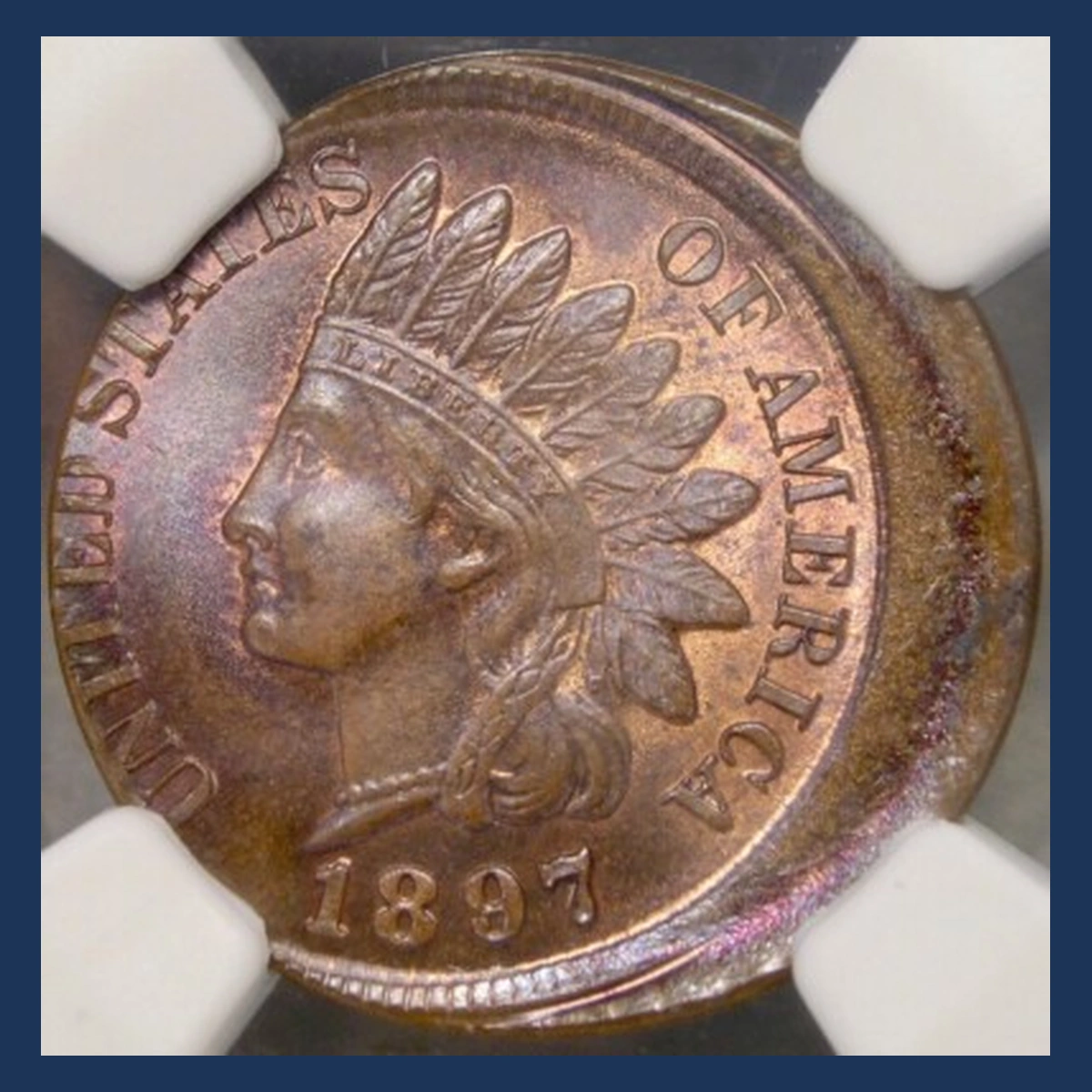
An unused crescent beside an incomplete portrait shows where a misplaced blank missed part of the strike. The back should tell the same story.
A pictured 1897 example is described as about 10% off center. A separate GreatCollections listing records a 10% example graded NGC AU55 Brown, a lightly worn coin.
The two references should not be assumed to show the same specimen. Their condition and exact boundaries need individual comparisons.
An off-center strike differs from a small blanking clip or one face shifted by a misaligned tool. Those other problems change the outline or design relationship in different ways.
Estimated Value
For genuine 1897 examples with an identifiable date, estimate $100–$1,500, depending on the amount of displacement and preservation. No realized price is used for the GreatCollections AU55 example.
A 10% off-center 1897 cent graded PCGS AU58 sold for $280.60 in March 2026. AU58 means very slight wear, so compare its preservation as well as the displacement.
The percentage is only one part of the value. Date digits, attractive surfaces, and the absence of later damage can matter just as much.
How to Identify
Check whether the original blank is complete before calling its bare area an off-center crescent. A scale reading compared with 3.11 grams can reveal missing metal on a safely accessible example.
Record the outline with calipers beside the normal 19-millimeter diameter. Distortion calls for several spans, not one assumed circular measurement.
Now compare the two faces under a magnifier: both incomplete designs should fit the same misplaced blank. If only one face shifts, examine the possibility of a misaligned tool instead.
Read the surviving date before choosing an 1897 price. Along the smooth edge and unused surface, look for grinding that removed a completed image rather than original metal that never received one.
8. 1897 Indian Head Penny Double Strike (Estimated Up to $3,000)
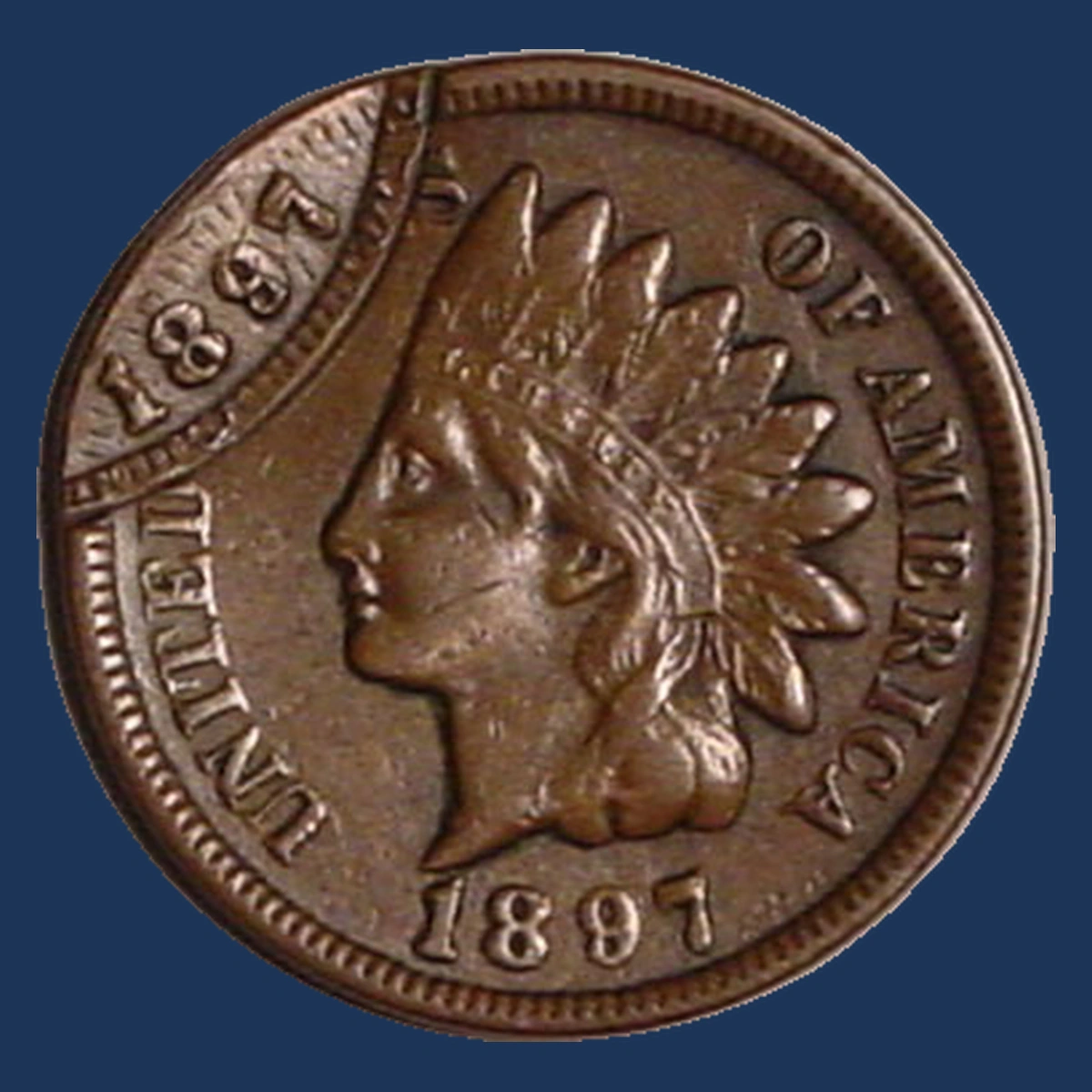
Two dates can survive when a penny remains in the press for another blow. A strongly displaced second strike may leave just part of the later portrait and lettering.
The pictured 1897 example received its second strike about 80% off center near 10 o’clock. Both dates remain useful clues to its two design positions.
This differs from a coin that turned slightly between blows while staying within the retaining ring. Both are multiple strikes, but their overlap looks different.
The repeated image should extend beyond a small digit. Portrait, lettering, and border fragments need to fit the same striking sequence.
Estimated Value
Estimate $300–$3,000 for genuine double-struck 1897 cents, with clear separated designs and better preservation supporting higher comparisons. No sale is assigned to the pictured 80% second-strike example.
A different 1897 coin, double struck after turning within the retaining ring, sold for $352.50 in August 2013. Its NGC VG8 grade describes a well-worn piece.
That Heritage sale is a same-year comparison with a different overlap. The dramatic off-center example should not inherit its condition or exact price.
How to Identify
Locate both dates on the illustrated type, then mark the design that belongs with each one on a photograph. A magnifier helps follow small portrait or letter fragments into their correct strike position.
Before counting extra blows, inspect the smooth edge for joined pieces or evidence of later pressing. Compare safely accessible scale and caliper readings with 3.11 grams and about 19 millimeters, allowing for distortion.
The later image should fit the large shift near 10 o’clock on this particular example. A different coin with a small turn inside the ring will have another pattern.
A flat shelf at one digit cannot explain two complete date positions. Look for the matching portrait and border fragments rather than treating every ridge as another strike.
9. 1897 Indian Head Penny Reverse Brockage and Off-Center Strike (Estimated Up to $4,000)
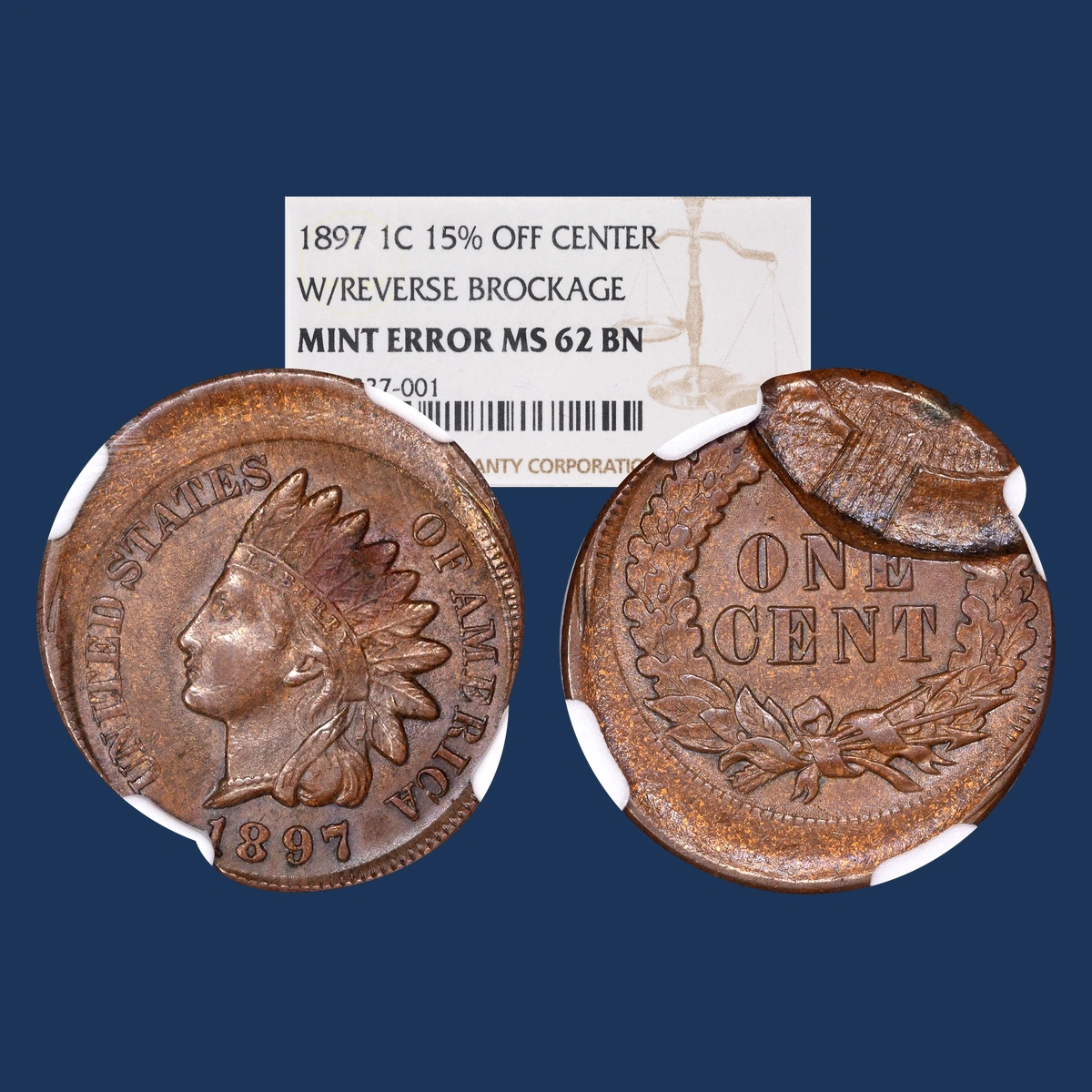
A sunken, backward image on the back can come from another already struck coin trapped in the press. That coin transfers its raised design into the new blank.
The resulting mirror impression is called a brockage. It differs from ordinary raised lettering copied directly from a steel tool.
A collection example dated 1897 combines a back brockage with a 15% off-center strike. It is graded NGC MS62 Brown, an unworn coin with noticeable marks.
Both errors belong to the same penny. The mirrored area and the unused metal must fit that one object rather than photographs from separate examples.
Estimated Value
An estimated $700–$4,000 covers a genuine 1897 brockage with off-center displacement, allowing for the clarity of the transferred design and surface quality. It is one whole-coin range.
For a modern comparison, a 2001 partial-front brockage sold for $79 in March 2025. That copper-plated zinc Lincoln cent differs in material, age, and the affected face.
The later sale shows why the mechanism alone cannot set the Indian cent’s value. No separate off-center amount is added to the 1897 estimate.
How to Identify
Check whether the unusual back image is sunken and reversed, using a magnifier and a properly oriented front photograph. A raised normal-direction duplicate calls for a different explanation.
Follow the mirror detail to the boundary of the affected area. Then compare the unused crescent on both faces with the reported 15% displacement.
The collection coin is the piece that received the transferred image, not the older coin that pressed it. Keep that distinction when comparing any photographs of coins stuck to tools.
Inspect the smooth edge for later squeezing and record accessible weight and caliper spans against 3.11 grams and about 19 millimeters. If a pressure mark lacks a matching mirror design, do not treat a plain dent as this brockage.
10. 1897 Indian Head Penny Misplaced Date (Estimated Up to $9,000)
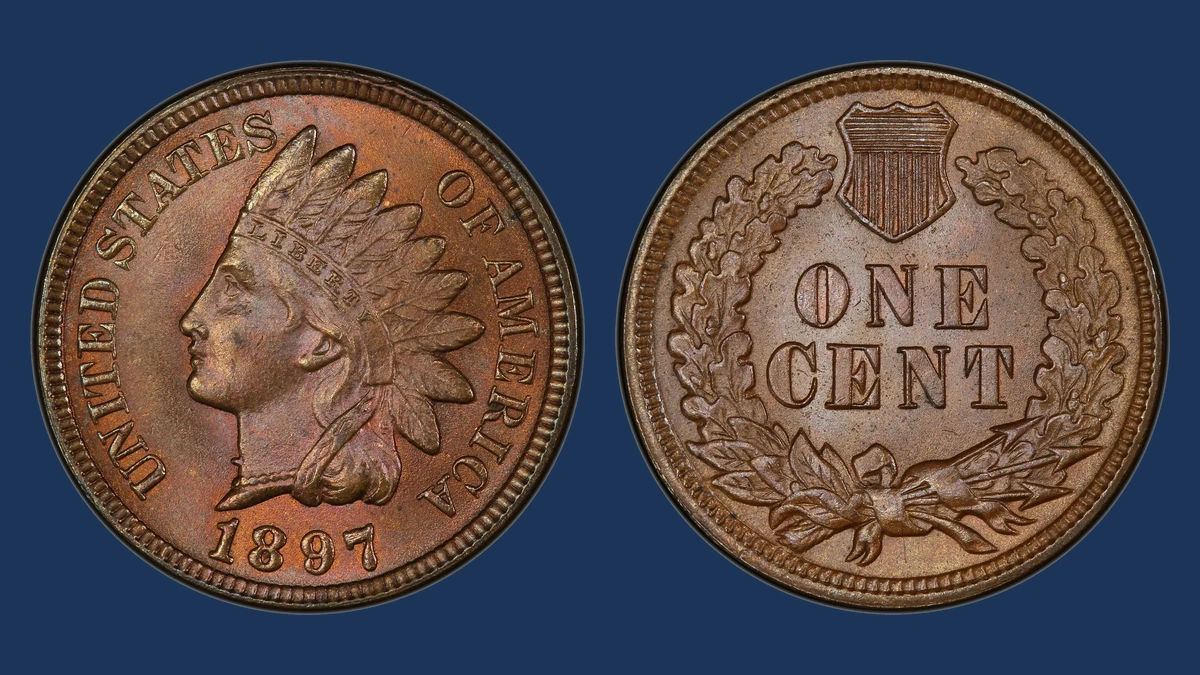
A small raised part of a 1 can appear inside Liberty’s neck, away from the real date. It came from a date-punch impression placed in the wrong part of the stamping tool.
Other 1897 misplaced-date varieties leave a 1 or fragments of 9 and 7 among the border teeth. These have different locations and should be compared separately.
The misplaced number may be only partly visible. A clear corner or curve can matter more than a complete digit.
This differs from a scratch or a random tool groove. The raised shape must fit both a number and its documented position.
Estimated Value
Heritage cited an earlier $8,862.50 result for an MS64 Red and Brown neck example. PCGS also records $4,080 in April 2021 for an MS64 Red coin.
These are unworn high-grade comparisons, with different amounts of red copper color. Estimate $25–$1,500 for many worn through ordinary unworn examples, and roughly $1,500–$9,000 for exceptional recognized varieties.
The neck and border varieties do not automatically share a price. The surviving digit, condition, and original color all matter.
How to Identify
A small corner can be enough to identify the neck variety; do not start by searching for a complete free-standing 1. Compare Liberty’s neck with a normal portrait under the same enlargement.
Use low side lighting and a magnifier to see whether the corner is raised. A cut-in line needs another explanation.
Check for tooling around the mark and along the smooth edge. Scale and caliper readings from safely accessible metal can be compared with 3.11 grams and about 19 millimeters.
If the extra digit is in the border instead, select photographs of that particular variety. Its position relative to the main date is part of the match.
Follow the surviving border strokes without extending random bumps into a number that is not visible.
Conclusion
The estimated $5–$9,000 range covers everything from modest raised cracks to exceptional misplaced-date examples. The neck’s extra 1, a repeated date stroke, and a line copied from a damaged tool need different comparisons.
For larger errors, photograph both faces before counting strikes or measuring rotation. A mirror image on the back is another clue entirely, and its value belongs to the complete coin rather than several prices added together.