1884 Penny Error List with Pictures

An empty crescent on a penny can be original metal that never received a design. An 1884 example struck 20% off-center sold for $373.75 at Heritage in September 2005.
This 1884 Indian Head penny error guide also covers smaller discoveries in the date and along the rim. Estimated whole-coin values run from $5 to $1,500.
The checks below explain where to look and how to tell a mint-made feature from later damage.
1. 1884 Indian Head Penny Die Cracks, Chips, and Rim Breaks (Estimated Up to $400)
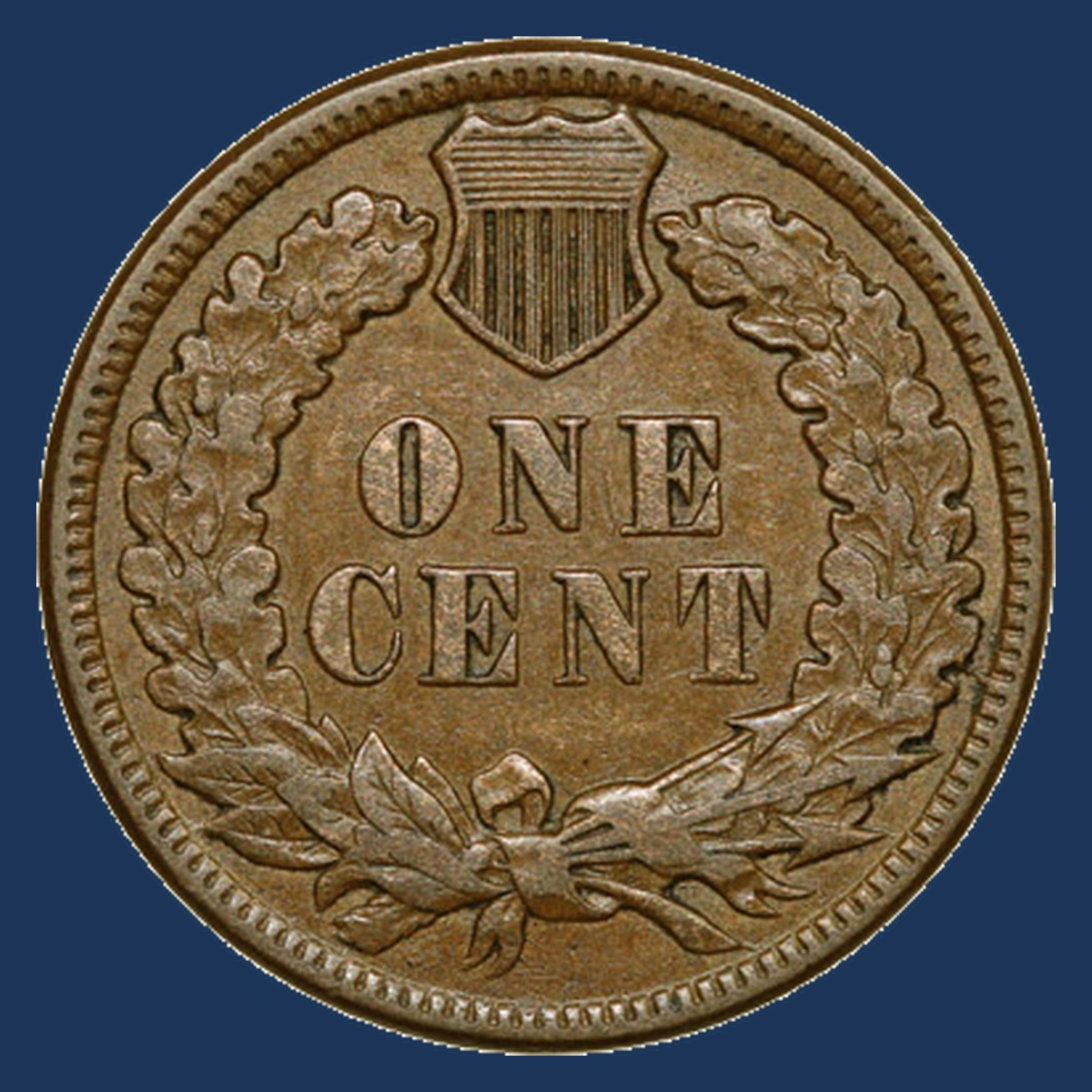
A scratch removes or pushes aside metal, but a damaged stamping tool can leave extra raised metal on a coin. That steel tool is called a die.
A thin split in it produces a raised line. A small missing piece can make a blob, while a larger edge break leaves a patch that reaches the rim.
The 1884 catalog records several rim-break positions and a small chip near the C in AMERICA. Some breaks retained part of their design because the broken tool fragment stayed in place.
The examples are separate, not one coin with every feature.
Estimated Value
Allow an estimated $5–$400 for these circulation-coin features. Fine lines and tiny chips on worn pennies generally occupy the lower end.
A large, clearly defined rim break has more visual impact and can bring a stronger premium. The estimate includes the ordinary value of the coin rather than adding the full range to it.
No single 1884 sale is assigned to all these patterns. Size, condition, and the original shape of the break need to be considered together.
How to Identify
Begin with the plain edge beside the mark. A squeezed rim can push metal into the design, so inspect it through a 10× magnifier for flattening or fresh tool marks.
For a cataloged front break, compare the area around 2:15–3:45; a separate back break lies around 3:00–4:15. Do not expect both positions on one penny.
A scale and calipers should give results near 3.11 g and about 19 mm for a normal bronze cent. Those readings do not explain a raised line.
Follow the line in angled light to see whether it rises above the surface. For the small chip, check the localized raised lump near the C in AMERICA instead of searching the whole rim.
2. 1884 Indian Head Penny Repunched Date (Estimated Up to $500)
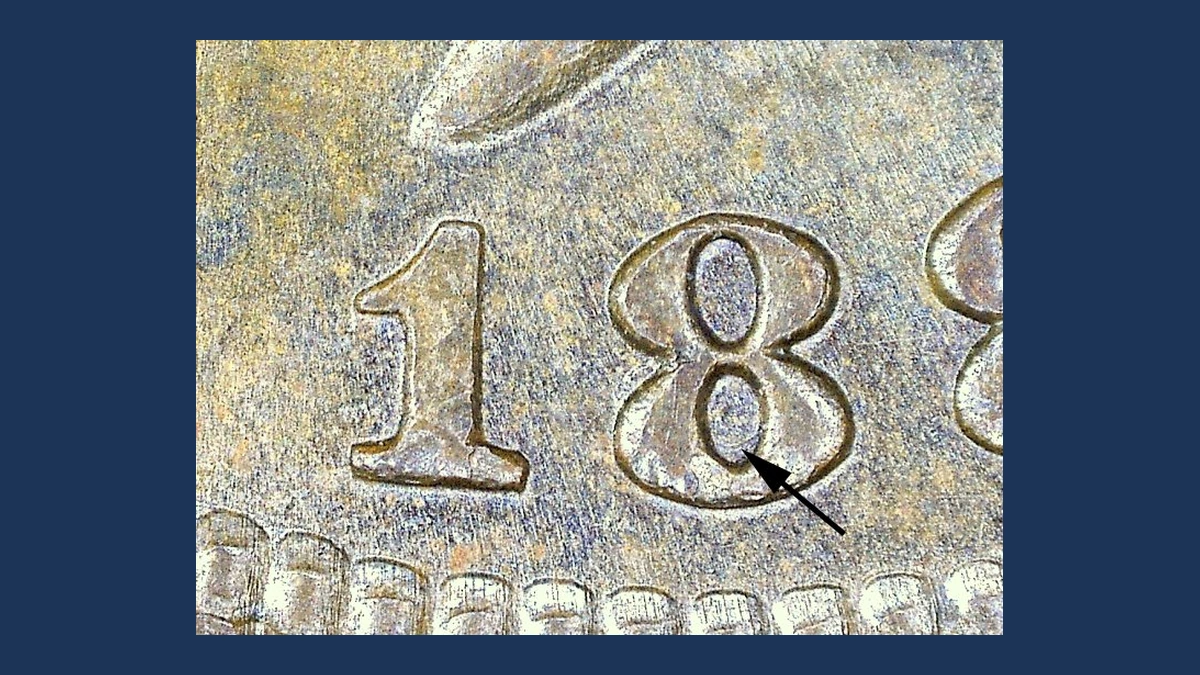
The two 8s are the place to concentrate. Small extra curves beside their normal outlines may come from a date punch applied more than once.
The punch carried the numbers into the stamping tool before coins were made. A slight movement between blows could leave an earlier curve beside the final, stronger digit.
Each coin made with that tool could repeat the same feature. The penny itself did not need a second strike.
For 1884, compare the actual extra strokes with the date photographs. A thick-looking 8 alone is not enough to establish a repunched date.
Estimated Value
Estimate $15–$500 for an identifiable 1884 repunched date across ordinary circulated and unworn examples. Clear separation between digit strokes helps collectors recognize what they are buying.
A 1904 FS-301 cent graded an unworn MS64 Brown sold for $168 in January 2019. That different-date sale offers a scale for a minor variety, not a price for an 1884 coin.
Surface damage and heavy wear can reduce the value. The upper end assumes a sharp, attractive example with a convincing date match.
How to Identify
Use a clear ordinary 1884 date photograph to learn the normal shape of each 8. Then compare your coin at 10×, concentrating on whether an extra curve follows part of a digit.
A flat shelf along several design edges can result from movement during striking, rather than a second date-punch position. Look at nearby letters as well as the date before deciding which explanation fits.
With a scale and calipers, compare the coin with 3.11 g and about 19 mm, and inspect its plain edge for alteration. Finish at the clearest extra curve on an 8: its shape and position should agree with one photographed 1884 repunched-date example.
3. 1884 Indian Head Penny Misplaced Date (Estimated Up to $700)
Tiny number tops can hide below the normal date, mixed into the tooth-like border. On the listed 1884 form, the area beneath the second 8 and the 4 deserves attention.
The date punch first entered the stamping tool too low. Adding the date in its proper place left traces of that earlier position behind.
Those traces became raised fragments on the finished pennies. They are called a misplaced date because they lie away from the intended numbers.
A low but otherwise normal date is different. The identifying feature is an extra fragment, not simply a narrow gap beneath 1884.
Estimated Value
A matched 1884 misplaced date has an estimated whole-coin range of $25–$700. Both the visible fragment and the condition of the penny affect where it belongs.
For comparison, a 1908 FS-301 coin graded an unworn MS65 Red and Brown has a recorded $1,187 eBay price from December 2021. That is a different variety rather than an 1884 auction result.
Less distinct fragments on worn coins fit lower estimates. Do not transfer the price of a high-grade later example directly.
How to Identify
Set the date upright under a lamp.
With a 10× magnifier, move below the second 8 and the 4 into the small border teeth. Keep the full date in view so a normal tooth is not mistaken for a detached number.
The 1884 variety photographs let you compare the extra tops with the surrounding border. The nearby teeth help locate the mark more reliably than its shape alone.
Weigh the coin on a scale and measure with calipers against 3.11 g and about 19 mm. Examine the plain edge without cleaning or scraping it.
Return to the photographed extra digit tops and check that yours occupy the same positions below the second 8 and 4.
4. 1884 Indian Head Penny Off-Center Strike (Estimated Up to $1,500)
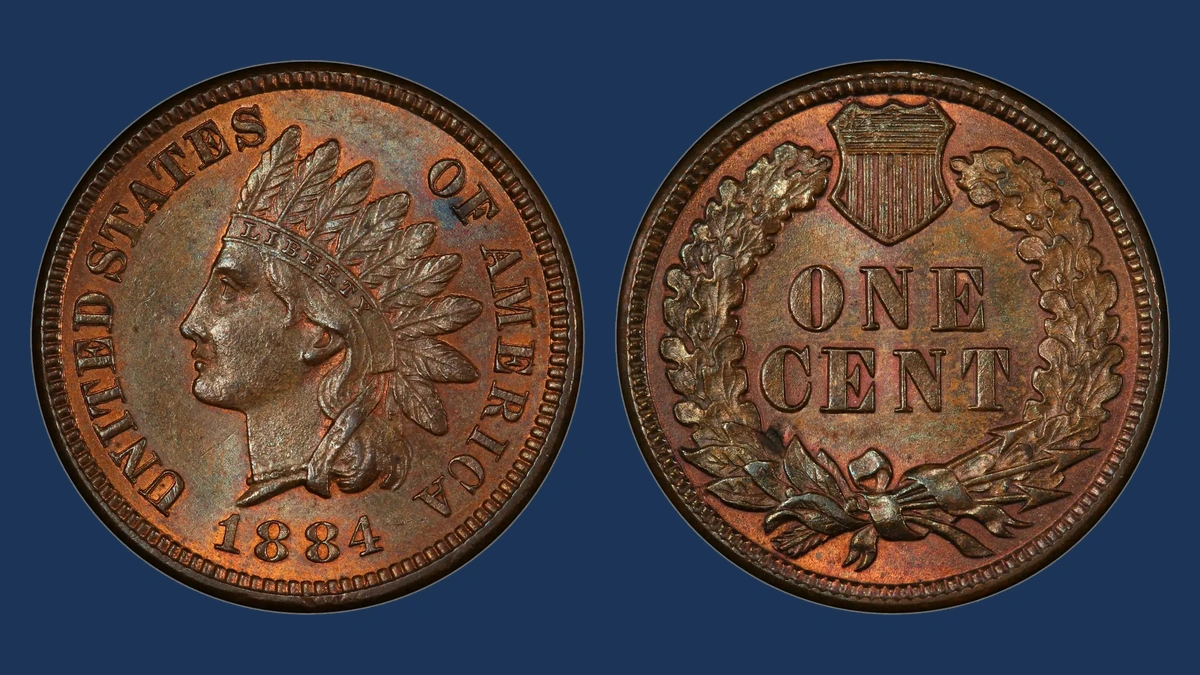
Parts of STATES OF and the wreath ribbon are missing from the recorded 1884 example. The coin was struck 20% off-center toward 12 o’clock.
Its metal disc sat too far from the intended position when the stamping tools met. Some of the design landed beyond the metal, while another area remained unstamped.
PCGS graded the coin AU55, meaning it has light circulation wear. That condition describes this particular example rather than every 1884 off-center penny.
The offset direction determines which letters disappear. Another coin shifted differently would not have the same missing-letter pattern.
Estimated Value
The 1884 PCGS AU55 example sold for $373.75 on September 24, 2005. That actual result prices a 20% off-center coin with light wear.
An estimated $150–$1,500 covers a wider selection of genuine dated examples. The amount of displacement, visible date, and surface condition all affect the comparison.
The old sale is a useful starting point, not a current offer. A more dramatic shift is not automatically more valuable if it removes the date.
How to Identify
Keep the empty metal in view while checking the outline. An off-center strike leaves unused metal on the coin; a clip removes a section before striking, and a later cut removes finished detail.
Check the date and inspect both faces through a 10× magnifier. For the recorded 20% example, compare the interrupted STATES OF and wreath ribbon, rather than assuming every off-center coin loses those details.
A scale reading should be near the normal 3.11 g unless wear or another defect changes it. Record the shape with calipers against the usual diameter of about 19 mm.
Follow the plain edge into the untouched metal and inspect where the stamped design ends naturally beside it.
Conclusion
The border tells several different stories on 1884 pennies: hidden digit tops, raised rim breaks, or metal missed by an off-center strike. Study the specific shape before deciding what caused it.
Estimated values here range from $5 to $1,500. The documented $373.75 off-center sale provides a real example, while the smaller date and tool features need comparisons suited to their condition and clarity.