1867 Penny Error List with Pictures

The name “1867/67” can sound like a changed year, but it describes extra strokes from the same date. An unworn brown example sold for $2,500 in June 2000.
This 1867 Indian Head penny error list also explains a letter appearing near the eye, damaged stamping tools, shifted strikes, and repeated designs. Estimated whole-coin values span $25–$15,000.
Use the checks below to distinguish a tiny tool feature from a coin that actually received another blow.
1. 1867 Indian Head Penny Trace of C beside Liberty’s Eye
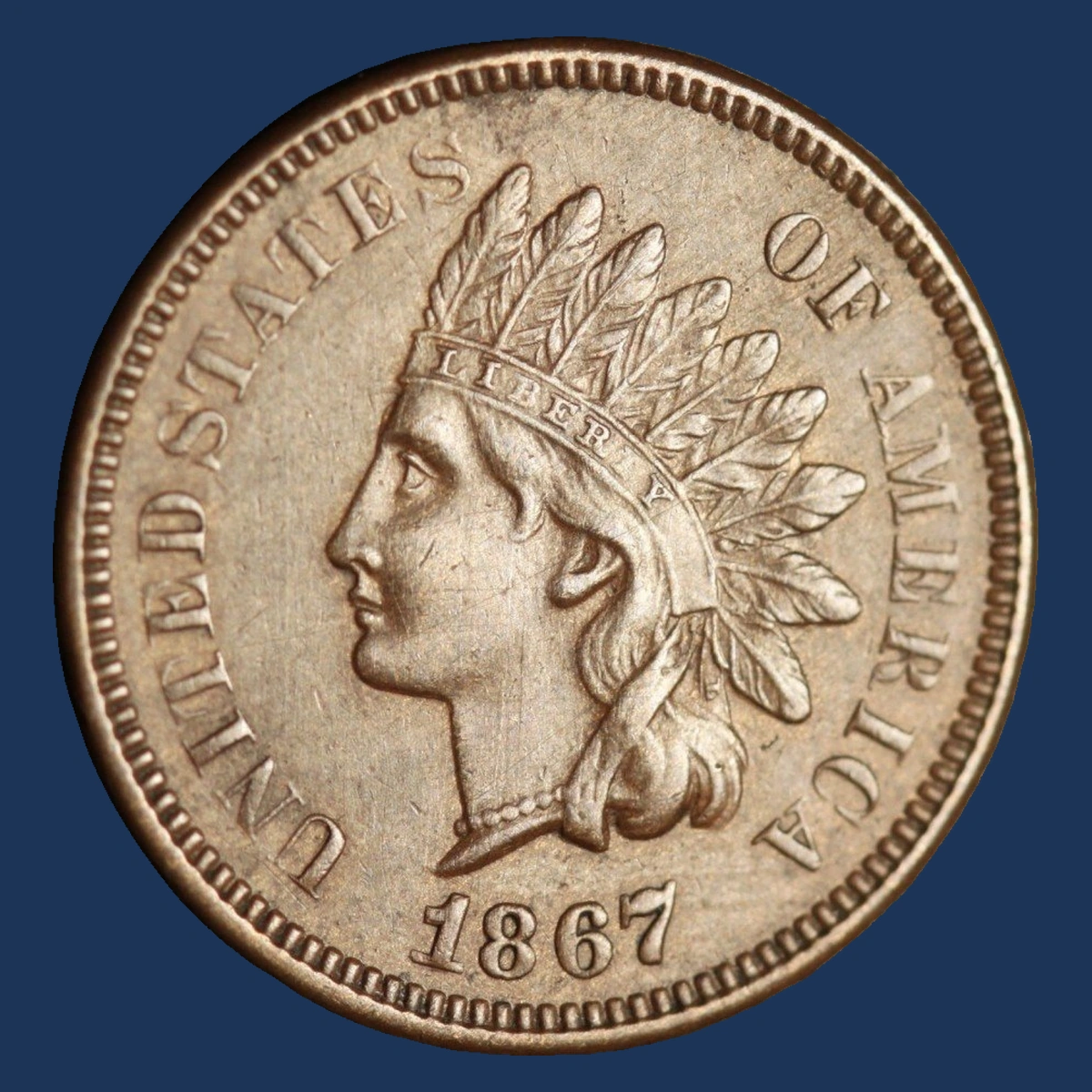
A curved mark in front of Liberty’s eye can come from a letter on the opposite face. The recorded Snow-5a and Snow-5b varieties show a trace of C from CENT.
The front and back stamping tools touched without a blank between them. That contact marked their surfaces, and later pennies copied the extra traces.
This is a die clash, with die meaning the steel tool that stamps the design. It does not require the penny itself to receive two blows.
The C-shaped trace belongs beside the eye. A scratch elsewhere should not be assigned the same explanation because it curves.
Estimated Value
For recognizable 1867 clash marks, estimate $25–$250 on worn cents and $250–$1,000 on better-preserved examples. The underlying coin and its date variety contribute to that complete value.
An 1875 repunched-date example with another tool feature, a neck chip, sold for $5,040 in August 2020. Its exceptional red, unworn condition makes it a broader tool-variety comparison, not a price for this clash.
A faint transferred letter on an ordinary worn penny belongs in a more modest comparison.
How to Identify
Compare the C in CENT on the back with the extra curve near the front eye. A 10× magnifier should help you follow a recognizable transferred shape rather than just a thick portrait edge.
The recorded variety associates that location with Snow-5a and Snow-5b. Use its matching photographs instead of moving the C to another facial area.
A loose bronze penny should be checked against 3.11 grams and about 19 millimeters with a scale and calipers. Inspect its plain edge for alteration.
Move the lamp to distinguish the trace from a cut. A narrow scratch can cross both the normal portrait and the surrounding open surface.
2. 1867 Indian Head Penny Repeated Back Design from a Doubled Tool
A doubled back design begins in the stamping tool, before a coin is made. Slightly shifted design impressions in the steel can leave extra outlines on coins struck from it.
The 1867 catalog lists this category as DDR-001, also called Snow-6. DDR is short for doubled die reverse, meaning a doubled back tool.
The variety has the normal Shallow N style on the back. Identifying the doubled version requires extra outlines beyond that ordinary design.
The Shallow N shape itself is normal. Neither that letter style nor a thick wreath establishes the doubled variety.
Estimated Value
For a correctly matched 1867 Snow-6 doubled back, estimate $50–$500 in circulated condition and $500–$3,000 with stronger preservation. The range assumes the reported doubled pattern is actually identified.
An 1889 Indian cent with a doubled back sold for $240 in July 2025 at AU55, meaning light wear. It offers recent same-series context for a different pattern.
An ordinary Shallow N cent does not receive that estimate simply because its back lettering looks unusual. Surface quality remains part of the price.
How to Identify
For a loose penny, use a scale and calipers to compare its weight and width with 3.11 grams and about 19 millimeters. Those measurements establish the normal bronze size, while a look around the plain edge can reveal later alteration.
The Shallow N letter style is only a starting point. Compare the whole back with a confirmed Snow-6 example, then inspect the corresponding small details through a 10× magnifier.
Tilt the light across each suspected doubled outline. A rounded extra contour differs from a flat shelf that seems to shave down the original design.
Keep full-back and enlarged photographs together when asking a specialist to confirm the match. An unusual N alone does not establish this variety.
3. 1867 Indian Head Penny Cracks, Rim Breaks, and a Proof Ear Chip
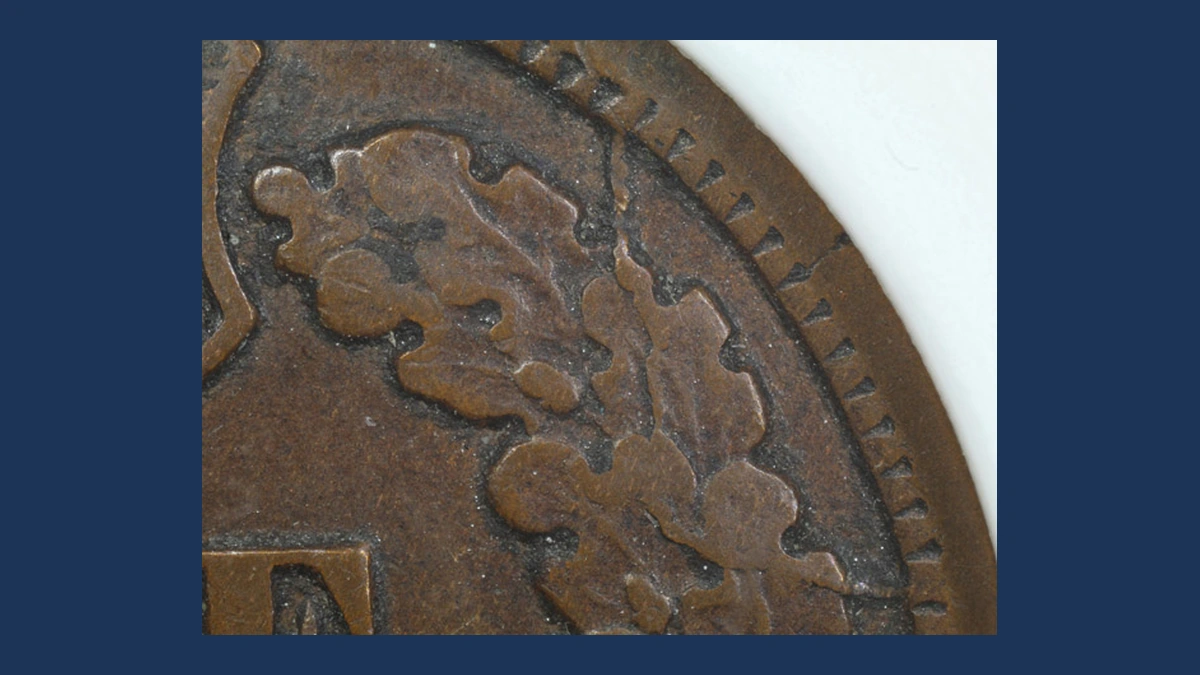
A broken stamping tool can leave a thin raised line, a small bump, or a broad rim patch. The shape depends on where the steel cracked or fell away.
Circulation examples have back cuds near one to two-thirty, with other breaks along the lower or left rim. Some retain design because the broken steel stayed in place.
A separate Proof variety has a tiny chip above the ear. Proof means a specially made collector coin, rather than an ordinary circulation strike.
That Proof chip needs its own comparison. It is not a feature on the circulation coins with back cracks.
Estimated Value
Estimate $25–$200 for modest circulation cracks and $75–$2,000 for clearer cuds or retained breaks. An unworn 1866 Indian cent with a back cud brought $504 in March 2021.
For the 1867 Proof ear-chip variety, allow roughly $500–$5,000 across different conditions and copper colors. Much of that value belongs to the Proof coin itself.
The small chip is not a separate $5,000 bonus. A circulated back cud and a specially made Proof need different condition comparisons.
How to Identify
Choose the circulation or Proof example before selecting an enlarged photograph. On a Proof, inspect above the ear with a 10× magnifier and establish the special issue from the complete coin.
For circulation backs, examine the rim connection of a broad patch. Retained breaks can still contain lettering or wreath detail, unlike a fully open gap in the tool.
The variety reference separates these patterns. Do not join the upper-right, lower, and left breaks into one imagined coin.
A scale and calipers compare a loose bronze example with 3.11 grams and about 19 millimeters. Look along the plain edge for folded copper, and use side light to distinguish raised cracks from scratches.
4. 1867 Indian Head Penny Single Strike Thirty-Five Percent Off Center
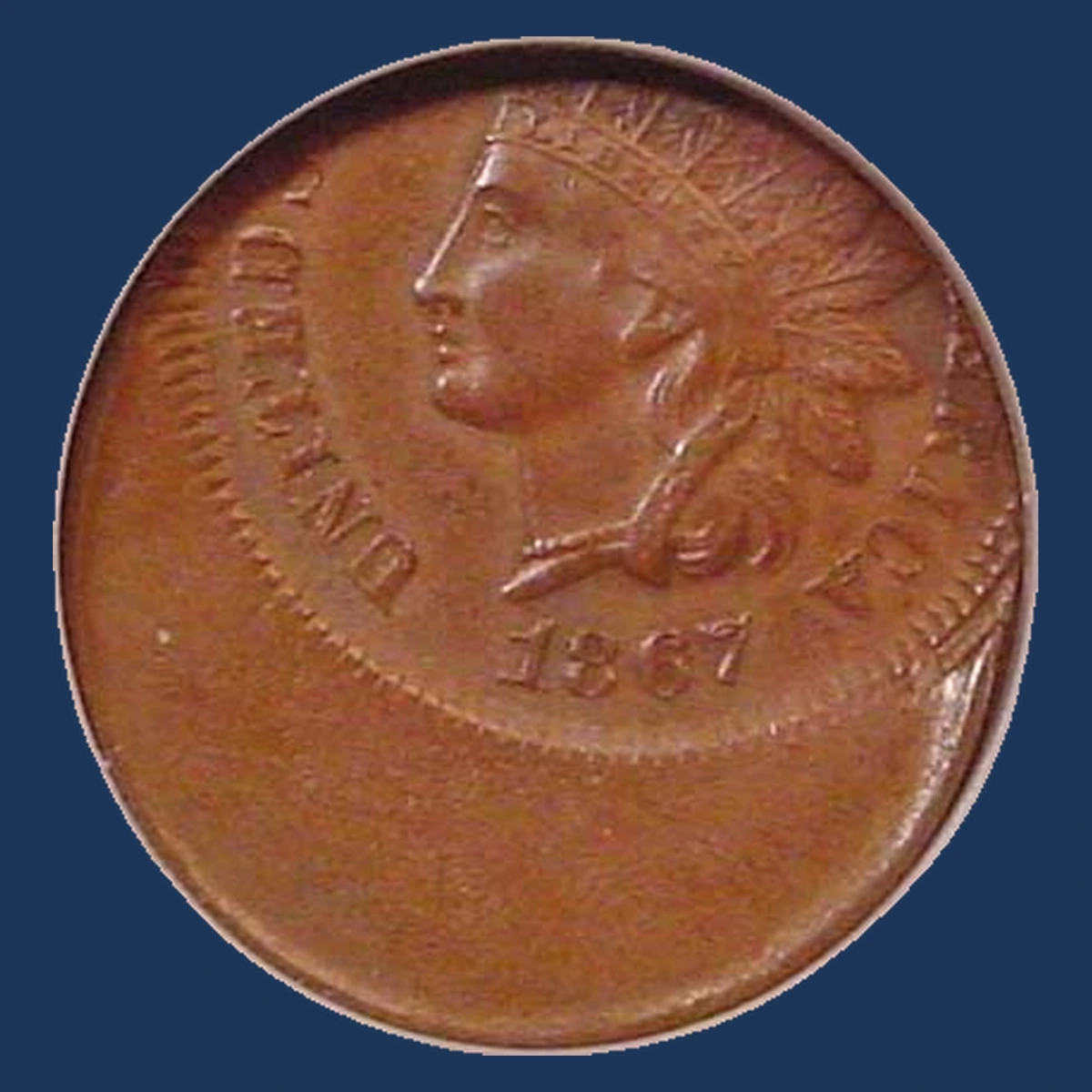
One 1867 cent has its design shifted toward one o’clock by about thirty-five percent. Part of the portrait and lettering missed the copper blank during the blow.
The remaining bare crescent records the blank’s misplaced position. There is one main impression, rather than an earlier centered design beneath a later strike.
Mint Error News illustrates the example graded NGC MS63 Brown. MS63 describes an unworn coin with visible marks, and Brown describes the copper’s color.
The same collection also includes double strikes. Their second-strike percentages do not describe this separately recorded single-strike coin.
Estimated Value
Estimate $200–$1,000 for readable worn 1867 off-center cents and $1,000–$5,000 for substantial shifts with better preservation. The documented MS63 Brown example belongs with unworn comparisons.
A worn 1875 cent struck twelve percent off center sold for $391 in February 2005. That is a different date, condition, and degree of displacement.
The range values one coin. A bare crescent does not command the upper end without a clear original date, sound surfaces, and evidence that the misplaced strike is genuine.
How to Identify
For a loose penny, measure several widths with calipers beside the normal diameter of about 19 millimeters. Use a scale to compare the usual 3.11 grams.
An off-center blow changes where the design lands without necessarily removing copper. Low weight requires another explanation, such as wear or lost metal.
Keep the date upright when checking the one-o’clock direction. Under a 10× magnifier, inspect where the design stops at the original bare area.
Compare the front and back before deciding that the blank was displaced. A shift confined to one face can reflect one misplaced stamping tool.
Inspect the plain edge and bare crescent for grinding that removed a finished design.
5. 1867 Indian Head Penny 1867 over 67 and Other Repeated Date Strokes
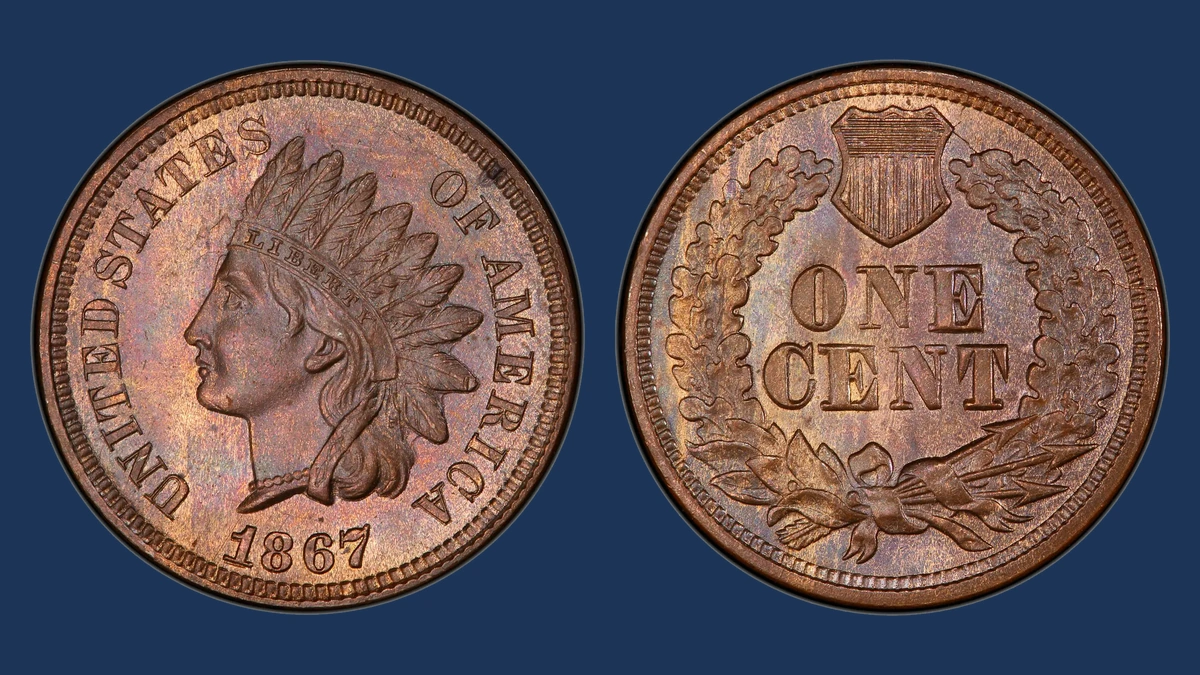
The final 6 and 7 can carry visible earlier strokes above them. This is the prominent repunched-date variety commonly written as 1867/67.
The date punch entered the stamping tool at slightly different positions, leaving parts of both impressions. The year stayed 1867; the extra 67 does not come from a different earlier year.
Some patterns also show earlier detail at the 8 or opening 1. Their directions differ, so each needs its own close comparison.
The repeated numerals were already in the steel before the coin was struck. They are not evidence that the whole penny received another blow.
Estimated Value
PCGS records $2,500 in June 2000 for an MS65 Brown 1867/67. MS65 means an unworn coin with relatively few marks.
Estimate $50–$750 for identifiable circulated repunched dates and $750–$6,000 for attractive unworn examples. The precise date pattern and remaining copper color affect the complete price.
An ANACS MS64 Brown Snow-1 also brought $522.50 in March 1995. These are historical sales in different circumstances, rather than a fixed price for every doubled-looking date.
How to Identify
A repeated part of 67 is not a change from one year to another. Keep a normal 1867 date photograph beside the candidate to see which strokes are extra.
Enlarge the full date with a 10× magnifier before concentrating on the 6 and 7. The prominent variety has earlier strokes above these digits.
Other examples need comparisons around the 1 or 8 instead. Follow the curve of the suspected earlier numeral; a scratch or a flattened shelf need not fit that shape.
For a loose coin, check the usual 3.11 grams with a scale and approximately 19 millimeters with calipers, including the plain edge. Size cannot prove a repunched date, so the older numeral’s surviving shape must still match.
6. 1867 Indian Head Penny Two Strikes with a Displaced Second Design
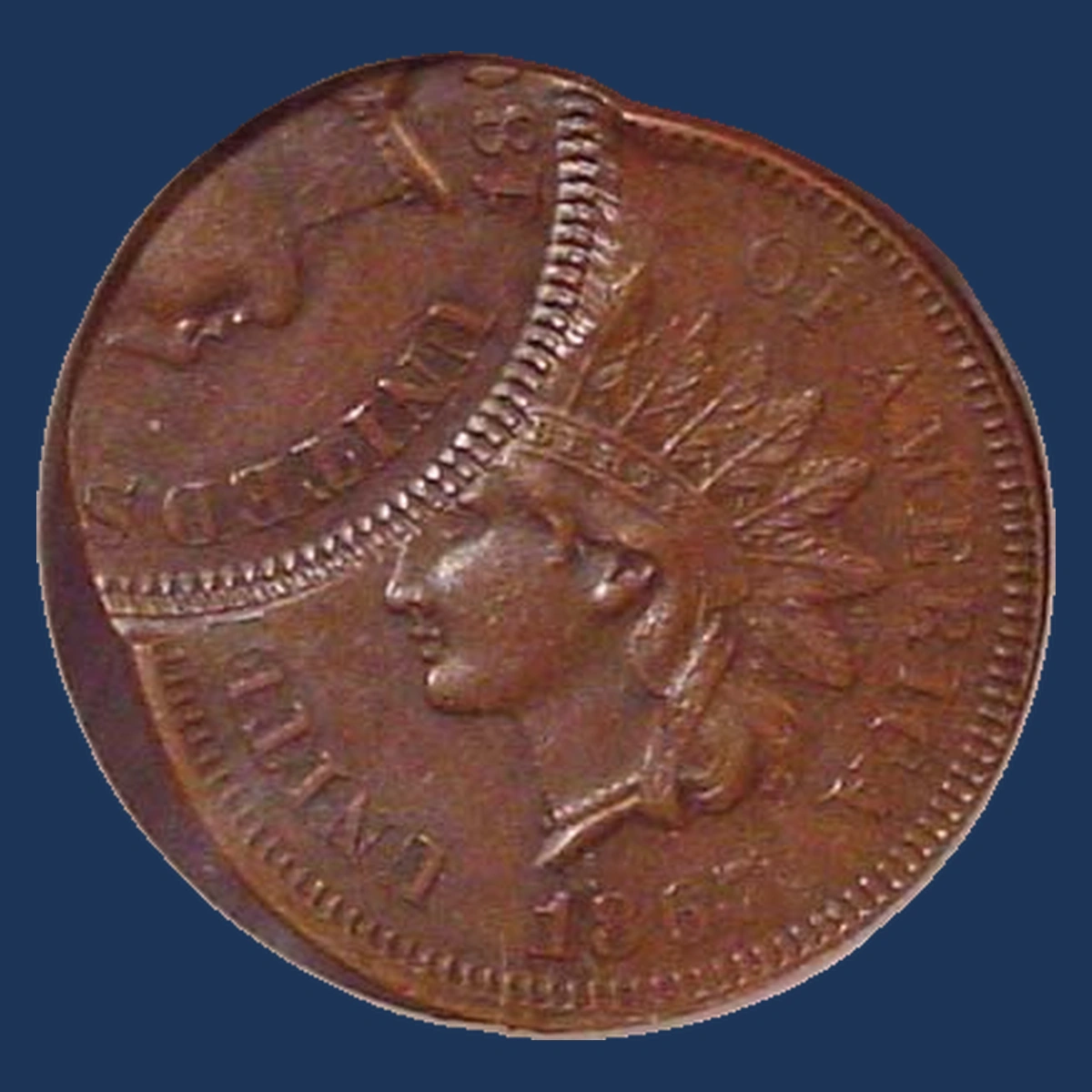
Two sets of design can survive when a struck penny moves and receives another blow. One NGC MS63 Brown example began centered, then received a second strike sixty-five percent off center toward eleven o’clock.
A separate NCS example has an eighty-five-percent off-center second strike. Almost the entire second date remains, with only a corner of its 7 beyond the metal.
NCS described that coin as About Uncirculated Details with corrosion. It retains lightly worn detail but has damaged surfaces.
These are different examples. The amount of displacement and surface problems of the second should not be assigned to the first.
Estimated Value
The corroded eighty-five-percent example brought $517.50 in January 2006. A later Heritage record for an 1867 double strike with the same broad description reports $528.75 in April 2014.
Estimate $500–$3,000 for recognizable worn or damaged double strikes and $3,000–$15,000 for dramatic, better-preserved examples. Keep the surviving dates and surface condition in the comparison.
The range covers both blows on one coin. The second strike’s off-center position is part of that event, not another full value to add.
How to Identify
The shape of the coin helps explain where the later blow landed. For a loose penny, use calipers to record several widths and a scale to compare its weight with the usual 3.11 grams.
A normal cent is about 19 millimeters across, but repeated striking can change that outline. Check the plain edge for trimming or later squeezing before treating its shape as original.
Now enlarge both dates and the overlapping designs with a 10× magnifier. The corroded auction example has almost its entire second date, except a corner of the 7.
The separate sixty-five-percent coin does not need that exact missing corner. On either example, trace two normal raised impressions rather than mistaking a backward sunken copy for a second strike.
Conclusion
Start with the kind of extra detail: an earlier date stroke, a transferred letter, a broken-tool mark, or another complete strike. Those clues explain different minting events.
Estimated whole-coin values run from $25–$15,000. Match the actual variety and condition before using an auction result, and keep the Proof ear chip separate from circulation examples.
The name 1867/67 repeats part of the same year; it does not describe an older dated coin struck again.