1825 Cent Error List with Pictures

Raised lines around the stars and a sunken curve beside Liberty’s face point to different mint problems. Their height matters as much as their shape.
This 1825 cent error list covers estimated whole-coin values from $35 to $15,000. One unworn N-2 with a back crack sold for $12,650 in September 2011; excellent preservation, rather than the crack alone, explains that high price.
Follow the examples below to tell shifted strikes, blocked designs, and damaged stamping tools apart.
1. 1825 Coronet Head Cent Wreath Turned about Forty-Five Degrees
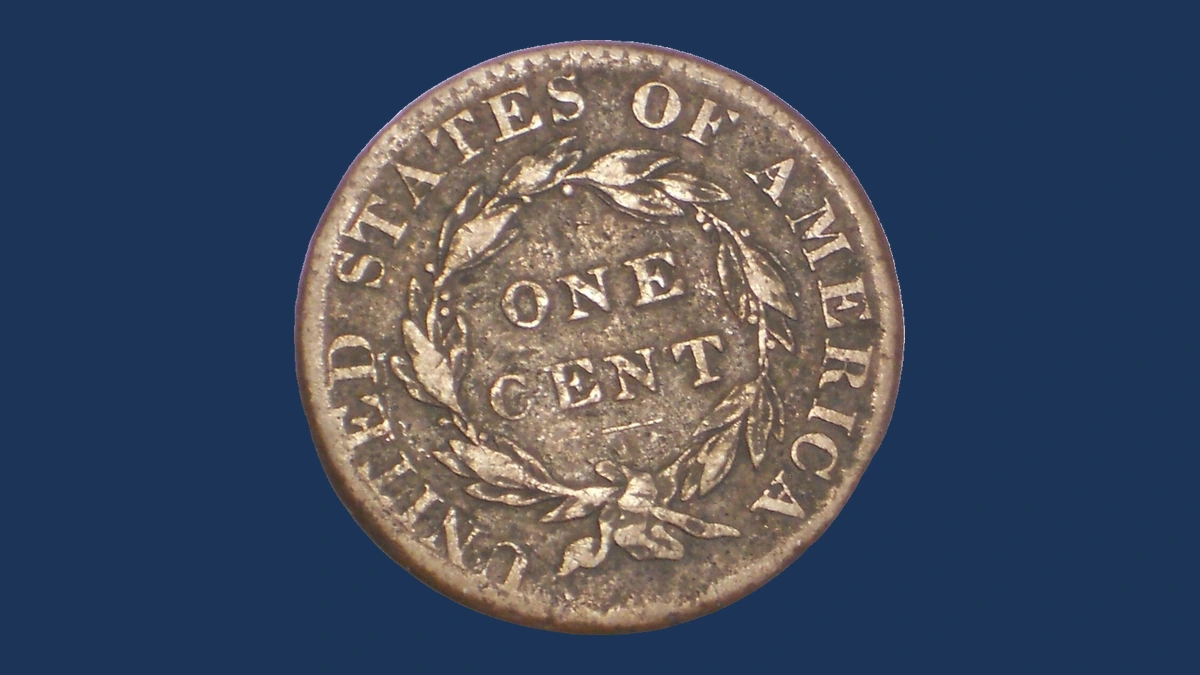
With Liberty held upright, a top-to-bottom flip should leave the wreath upright too. A tilted wreath means the two dies, or stamping tools, were aligned differently.
A collector records about forty-five degrees of rotation on an 1825 N-6. The coin is graded AU50 Brown, indicating light wear.
The report does not give a clockwise or counterclockwise direction. That must be measured on the individual coin.
Forty-five degrees is half of a right angle, so the lean should be visible without extreme magnification. It concerns the angle between the two faces, not extra overlapping letters from a second strike.
Estimated Value
For worn 1825 cents with a clear turn, estimate $75–$600. Lightly worn or unworn examples with attractive surfaces can fit roughly $600–$3,000.
The collector’s AU50 N-6 has no sale amount used here. As a different-year comparison, a widely rotated 1852 NGC MS65+ Red-Brown cent sold for $2,350 in November 2014.
That 1852 was unworn and strongly preserved. Its price should not be transferred unchanged to a more worn 1825 simply because both backs lean.
How to Identify
To measure the lean, keep a vertical guide line behind the portrait and turn the coin over from top to bottom. Photograph the wreath before adjusting your grip, then use a protractor to measure its central line.
If wear makes that center unclear, use a 10× magnifier to compare the paired wreath sides. Repeat the flip to make sure a sideways twist did not create the angle.
A scale and calipers can check a loose copper cent against 10.89 g and roughly 28 mm. These establish its basic size, while the fixed-line photograph establishes alignment; record the actual direction instead of supplying one from the collector’s incomplete note.
2. 1825 Coronet Head Cent Curved Depression beside Liberty’s Profile
A curved indentation beside Liberty’s profile was described as mint-made on an 1825 N-9. The same coin has overlapping back details from two strikes.
The indentation is a struck-through mark. Material between the blank and a stamping tool stopped the normal design from forming in that narrow area.
The catalog does not identify what the material was. A curved outline alone cannot prove that it was a wire, thread, or hair.
The coin was graded NGC AU58, showing very little circulation wear. Its front indentation should be distinguished from scratches added later, even though both can form curved lines.
Estimated Value
A worn 1825 cent with a clear struck-through mark fits an estimated $75–$600. For a lightly worn example with attractive surfaces, allow roughly $600–$4,000 for the complete coin.
The cataloged NGC AU58 also has a double-struck back. No separate sale price for its front indentation is assigned here.
When comparing that example, assess both features together. A small curved depression on an otherwise ordinary worn cent does not inherit the full value of the better-preserved compound error.
How to Identify
Compare the curve with the face immediately beside it under a 10× magnifier. Light from opposite sides should show an indentation interrupting the struck surface, not a raised line.
Look for sharp scraping, a shiny cut, or metal pushed up beside a groove. Those features can suggest damage inflicted after the coin left the press.
On a loose copper cent, use a scale and calipers to record its size against 10.89 g and about 28 mm. A thin intervening object need not alter either measurement noticeably.
The back’s doubled lettering is a separate clue on this particular N-9.
Photograph the front curve with the whole portrait still visible. Let its edge and the adjoining design guide the assessment instead of naming an unseen object from the curve alone.
3. 1825 Coronet Head Cent Design Struck toward Eleven O’Clock
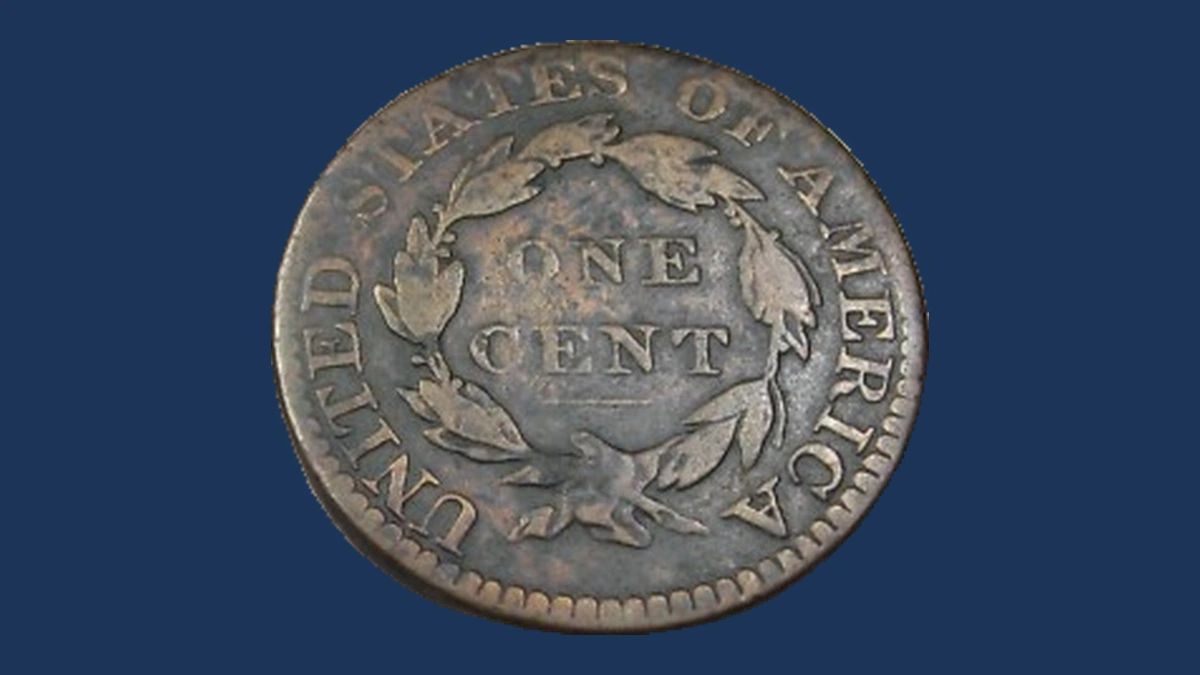
The portrait and stars sit too far toward the upper left, leaving part of the copper without a design. The blank was not centered beneath the stamping tools.
Heritage cataloged an 1825 cent struck about 20% off center toward eleven o’clock on the front. Some letters in UNITED and AMERICA fell beyond the back edge.
The coin also showed corrosion and a scrape near the E in ONE. Those are condition problems, separate from the misplaced strike.
ANACS described substantial remaining wear and lowered its overall assessment for damage. Its rough surface does not erase the clearly shifted design.
Estimated Value
The corroded 20% off-center cent sold for $322 in April 2002. Its ANACS label described VG Details, Net Good 4: heavy wear with additional damage.
For similar worn pieces, estimate $250–$1,500. Cleaner examples with a readable date and stronger detail can fit roughly $1,500–$5,000.
This is a whole-coin estimate, not a price per percentage point of displacement. The old sale shows why corrosion and scraping must be considered alongside the size of the blank crescent.
How to Identify
A bare crescent contains copper, so weigh a loose example before mistaking the unstruck area for missing metal. A scale compares 10.89 g, while calipers record the outline against the usual diameter of roughly 28 mm.
Now compare both faces in complete photographs, with a 10× magnifier for the edges of the letters. The upper-left displacement on the front should fit the design lost from UNITED and AMERICA on the back.
Flattened finished lettering and sharp cuts along an edge can signal later alteration rather than an unstruck blank. Keep the scrape near ONE and the corrosion separate from the displaced strike when evaluating this particular example.
4. 1825 Coronet Head Cent Overlapping Back Letters from Two Blows
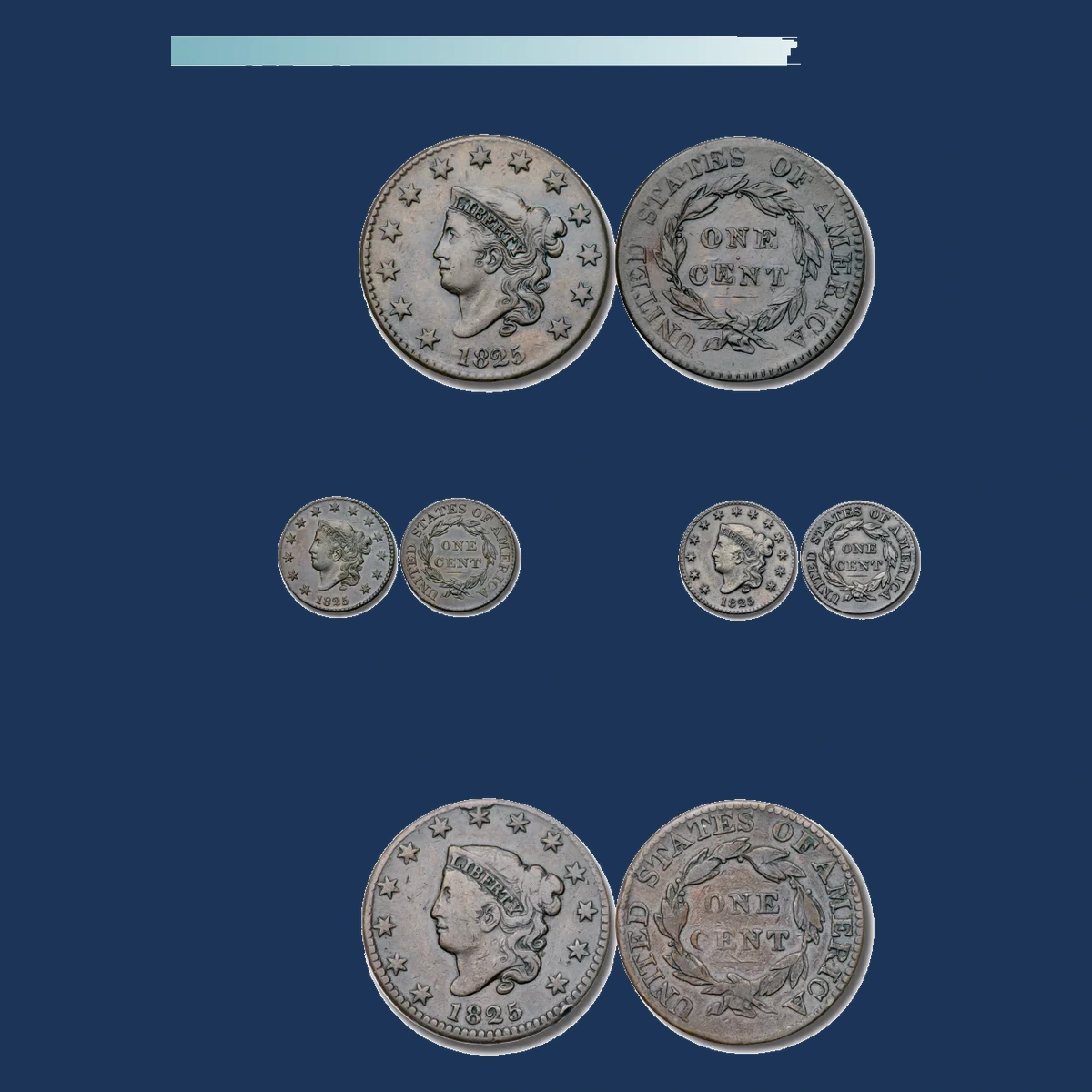
Two sets of back letters can sit only a small angle apart. The 1825 N-3 catalog example shows roughly five degrees of clockwise overlap, easiest to see in ONE CENT.
A separate N-9 has a smaller counterclockwise shift at the A in STATES. Its earlier left upright overlaps the later right upright.
Both descriptions identify a double strike, meaning the coin received two blows. The fronts do not show the same rotated doubling.
The N-3 catalog suggests it might have helped create a mirror impression on another blank. That suggestion does not establish a sunken mirror image on this cent.
Estimated Value
Estimate $400–$2,000 for circulated 1825 double strikes with visible overlapping letters. Strong, lightly worn examples can fit about $2,000–$7,000, depending on clarity and surface quality.
The N-3 was cataloged at VF20, or moderate wear, while the N-9 was NGC AU58 with only slight wear. These are different coins, and neither is assigned a completed sale price here.
The N-9’s curved front indentation also belongs to the same coin. Do not add its full estimate again to the double-strike estimate.
How to Identify
The A in STATES gives a compact test on the N-9: use a 10× magnifier to compare the two upright strokes. A second displaced letter shape matters more than a flat shelf along one edge.
For N-3, inspect ONE CENT instead, where the catalog describes a clockwise turn between impressions. Compare several letters to see whether their displacement follows the same small rotation.
A scale and calipers check a loose cent against the copper standard of 10.89 g and about 28 mm. Closely overlapping strikes may leave little change in its outline.
Examine the front too, rather than expecting matching doubled details on both faces. Keep the N-3’s clockwise pattern separate from the N-9’s counterclockwise pattern when using photographs.
5. 1825 Coronet Head Cent Cracks around the Stars and a Break at Star Seven
A raised line can nearly circle the portrait, while a raised patch can swallow a star point. Both reflect broken areas in the stamping tools.
The N-4 has a line from the top of the date’s 1, clockwise through the stars, to the bottom of 5. A different N-2 has a back crack from the border toward the wreath stem.
On N-10, a rim-connected break called a cud covers the outer point of star seven. This is a larger opening in the tool rather than a simple narrow crack.
These features belong to separate examples and should be compared individually.
Estimated Value
Circulated cracks and small rim breaks fit an estimated $35–$800 whole-coin range. Highly preserved examples may reach $800–$15,000, with the coin’s condition driving much of the difference.
An N-2 graded PCGS MS64 Brown sold for $12,650 in September 2011. That grade describes an unworn coin with strong preservation.
Its back crack was one feature of a valuable cent. The result is not a suitable standalone price for a thin raised line on a worn example.
How to Identify
The star-seven patch is easiest to assess from the edge, where a later rim blow might have folded copper inward. Side lighting and a 10× magnifier show whether the patch rises into the place of the star’s outer point.
Use a scale and calipers on sound areas of a loose cent to check about 10.89 g and 28 mm. Do not press the jaws against the raised patch.
The N-4’s fine line needs a different view: trace it from the top of 1 around the stars toward the bottom of 5.
For N-2, turn to the back and follow the line from the border toward the wreath stem.
Each crack should stand above intact copper rather than cut down through the finished design.
Conclusion
The easiest 1825 clues are not all large: a doubled A, a star joined to the rim, or a curved depression can each matter. A turned back requires a different check, using a controlled flip.
Estimated whole-coin prices here run from $35 to $15,000. Preservation explains much of that spread.
Compare the specific mark and condition together, and remember that the N-9’s front depression and doubled back belong to one coin with one price.