1813 Cent Error List with Pictures

A backward design can make an early copper cent especially interesting. An 1817 brockage reached a $7,500 winning bid before fees in January 2015, providing a different-year comparison for the type reported in 1813.
This 1813 penny error list covers estimated values of $75–$10,000. Some features are small raised lines; others change the whole design.
The coin is the copper Classic Head large cent. Follow the metal’s shape to distinguish a stamping mistake from later damage.
1. 1813 Classic Head Cent A Raised Line from a Cracked Tool
A narrow raised line can form when copper enters a crack in the stamping tool. The tool is called a die, so collectors name the resulting feature a die crack.
The copper coin itself does not have to split. A crack in its own metal would be a different problem.
The 1813 year material includes this type, but does not establish a dependable route for the line. A catalog heading also mentions a crack without clearly describing its path.
The actual line must therefore show how it formed. A bright scratch edge can resemble a raised ridge under strong lighting.
Estimated Value
For a genuine 1813 die crack, estimate $75–$250 on worn cents and $250–$700 on sharper examples. These conditional estimates include the underlying collectible value of the coin.
Minor cracks can add little by themselves. An exceptionally preserved 1818 cent with circular cracks brought $8,700 in August 2020, but its quality explains much of that very different price.
A thin scratch should not receive the same treatment simply because its edges catch the light.
How to Identify
View the line from opposite sides under a low lamp before calling it a crack. Through a 10× magnifier, look for a raised center rather than a cut floor with metal pushed up beside it.
Follow the feature toward the plain edge to see whether it becomes an opening through the copper. A crack in the blank requires a different explanation from a ridge left by a cracked tool.
Check a loose cent with a scale against its original 10.89 grams and calipers against roughly 28–29 millimeters. Photograph the whole line with the readable date, since its location alone cannot identify this unresolved 1813 report.
2. 1813 Classic Head Cent A Slightly Shifted Front Design
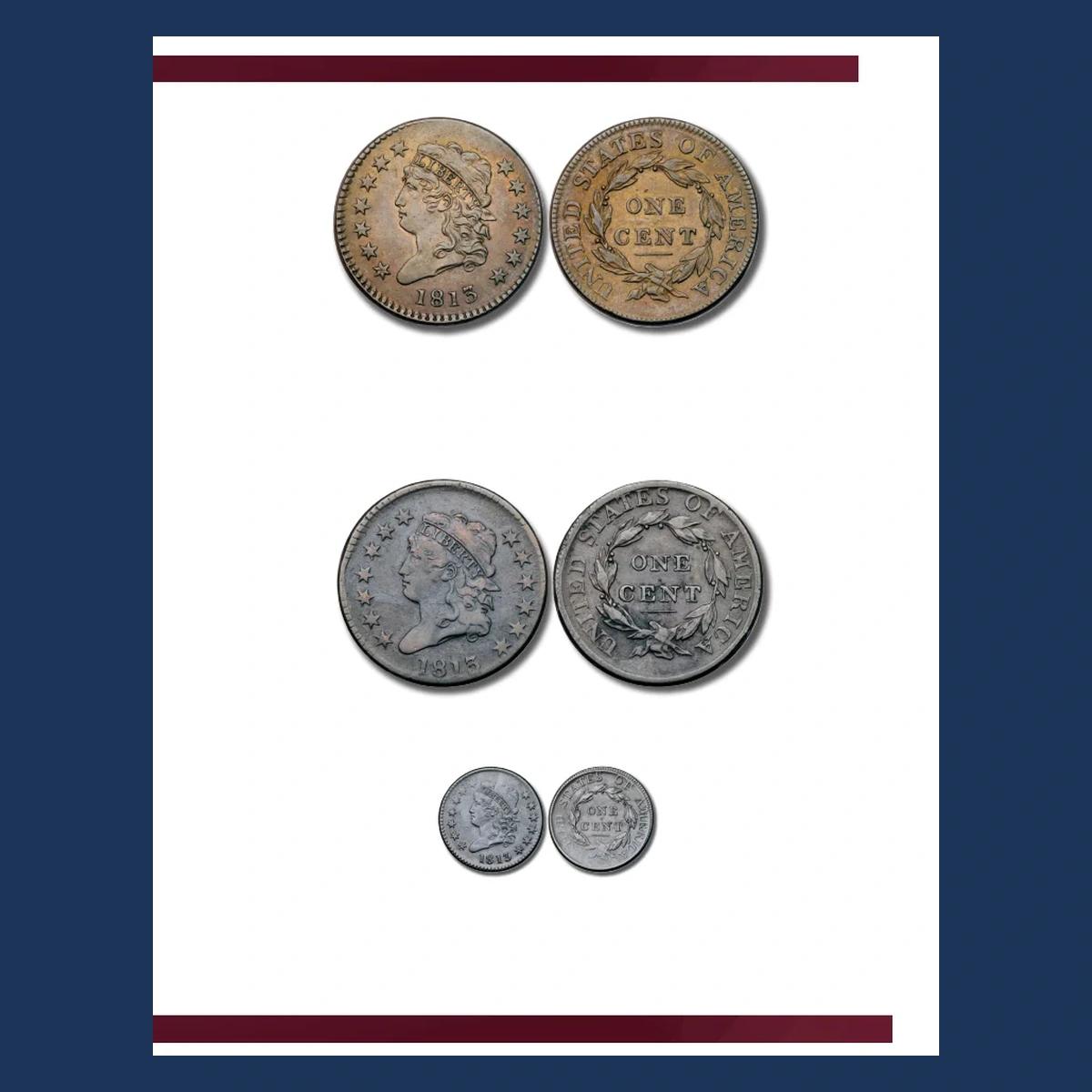
The border can become narrow on one side even when most of the coin looks ordinary. One stamping tool may have been slightly displaced while the blank stayed in its usual position.
A 2026 Early Cents Auctions catalog describes an 1813 cent with its front tool shifted toward one o’clock. That is toward the upper right with Liberty upright.
This is called a misaligned die. It differs from the twenty-percent off-center strike discussed below.
The same cataloged coin also has faint clash marks on the back. Those extra lines do not cause the shifted front border.
Estimated Value
Use an estimated $100–$350 for a clearly matched worn example and $350–$900 for a sharper cent. A slight shift often contributes less than condition to the whole coin’s value.
The catalog describes its example as VF35, meaning moderate wear with substantial remaining detail. That is the catalog’s assessment, not an invented grading-service certification.
The cent’s clash marks and front misalignment occur together. Do not add the full value range for each feature as if buying two separate coins.
How to Identify
Compare both faces before measuring the narrow front border. A small one-face shift is different from a misplaced blank that leaves unused copper and missing design on both sides.
Hold Liberty upright and compare the upper-right border with its opposite side. The catalog describes the front tool as shifted toward one o’clock.
Use a scale and calipers on a loose cent to compare it with 10.89 grams and roughly 28–29 millimeters. Inspect the plain edge beside the narrow border for impact damage.
A 10× magnifier helps show whether the border was struck narrowly or flattened afterward. Keep both complete outlines visible in photographs instead of judging the shift from a cropped portrait.
3. 1813 Classic Head Cent Lamination
Thin copper can loosen from a coin’s surface when the metal contains an internal weakness. The defect is called lamination and may leave a flap or an exposed shallow patch.
The 1813 year guide reports this type without establishing one specimen’s exact location. Not every example needs to retain a loose flap.
Corrosion can leave rough patches too, while scraping removes metal after the coin was made. Neither should be identified as lamination simply because the surface looks uneven.
The important clue is a separation within the original copper, rather than a coating peeling from its surface.
Estimated Value
Estimate $100–$400 for a worn 1813 cent with an identifiable lamination and $400–$1,200 for a clearer, more attractive example. These are estimates for genuine metal separation.
An 1841 large cent with a front lamination brought $564 in December 2021. Its later date and different preservation make it a broad comparison rather than a result for 1813.
Most small flakes add less interest than a clearly visible original separation. Deep corrosion is not a substitute for that feature.
How to Identify
Protect any attached flap first, without lifting it or rubbing the nearby copper. A separation that has already lost its flap needs the exposed patch preserved just as carefully.
If a loose coin is stable, use a scale against the original 10.89 grams and calipers across intact spans against 28–29 millimeters. Keep both tools away from fragile metal.
Look along the boundary through a 10× magnifier with side lighting. A thin layer separating within the copper is more useful evidence than roughness alone.
Inspect the plain edge for a seam or alteration.
Photograph the exposed area together with surrounding design. A later scrape can remove metal without following an original weak layer inside the blank.
4. 1813 Classic Head Cent Faint Traces of the Opposite Design
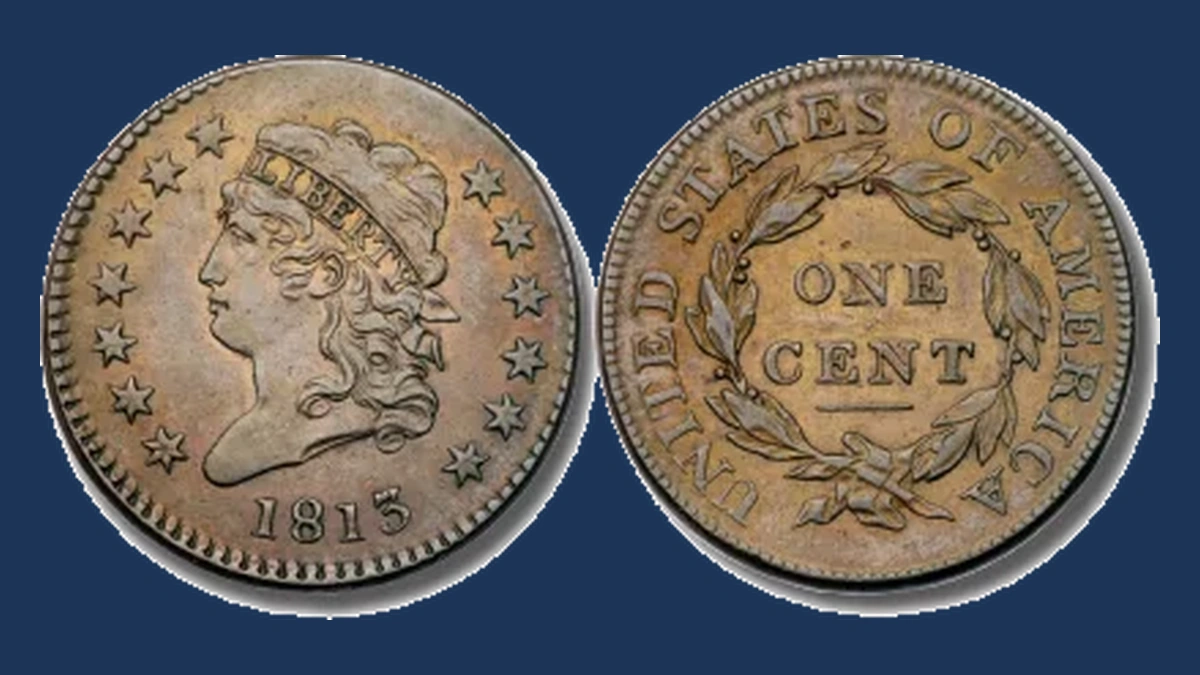
A faint line beside a wreath berry can preserve contact between the two stamping tools. They struck each other without a copper blank between them, leaving marks that transferred to later coins.
This is a die clash. It can put traces of the front design on the back, or the reverse.
The 2026 auction catalog locates the clearest traces on one 1813 cent near the berry above N in ONE. That cent also has a slightly shifted front design.
Three fine scratches above CENT are recorded separately. They should not be used as clash evidence.
Estimated Value
An estimated $100–$450 covers worn cents with recognizable clash traces, while $450–$1,500 allows for sharper examples. These are whole-coin estimates rather than a price per faint line.
The cataloged 1813 cent combines clashing with a small front alignment shift and later scratches. Its overall appearance needs to be evaluated together.
A clear design fragment can attract interest, but random lines in the wreath do not qualify. Better preservation also makes those subtle original traces easier to display.
How to Identify
First find the scratches above CENT so you can set them aside when examining the original marks. The catalog places the clearest clash traces near the berry above N in ONE.
Inspect that area through a 10× magnifier and compare several connected curves with the front design. Random straight lines do not establish contact between the two stamping tools.
For a loose coin, check its identity with a scale against 10.89 grams and calipers against roughly 28–29 millimeters. The edge should be plain.
Tilt the lamp to separate shallow design traces from cut grooves. Include the berry and main lettering in photographs, keeping the faint extra curves in their proper positions rather than showing isolated bright lines.
5. 1813 Classic Head Cent A Crack in the Copper Blank
A crack in the coin’s own copper is different from a raised line left by a cracked steel tool. The metal disk, or planchet, may have been weak before it was struck.
West Coast Coins listed an 1813 Classic Head cent with a cracked planchet. The seller described it as Very Fine to Extra Fine, meaning a circulated coin with substantial detail.
The available description does not give the crack’s direction or depth. Those details must be read from the actual object.
A later cut, bend, or deeply corroded groove can imitate an opening in the blank.
Estimated Value
The dealer listed its cracked-blank cent at $695. That was an asking price; an out-of-stock label does not establish a completed sale at that amount.
For authenticated examples, estimate $150–$700 with ordinary wear and $700–$1,800 for stronger preservation and a clearly original crack. These ranges concern the complete coin.
The opening’s relationship to the struck design matters more than its length alone. A crack created by bending the cent after minting does not receive the same premium.
How to Identify
Support the cracked cent without pinching or flexing it. Photograph both faces and the plain edge before attempting measurements, especially if the opening appears unstable.
Use a 10× magnifier to examine the walls for cutting strokes or corrosion, then follow how the design meets the gap. A narrow raised ridge without an opening is a tool-crack feature instead of a split in the copper.
Only weigh or measure a loose coin if handling is safe, using a scale against 10.89 grams and calipers against roughly 28–29 millimeters. Those original standards can reveal missing metal, but they cannot establish when a crack formed.
6. 1813 Classic Head Cent A Twenty-Percent Off-Center Strike
The design on the reported 1813 example moves toward eleven o’clock, between the top and left of the upright coin. An unstruck crescent remains beside it.
Mint Error News reproduced a 1982 catalog describing this cent as twenty percent off center. The older listing called it Fine and noted some green corrosion.
The blank had missed its proper position before the blow. Part of the intended design fell outside the copper disk.
That affects both faces and differs from a small shift in just the front stamping tool. The green surface material is a separate condition issue.
Estimated Value
Estimate $300–$1,200 for worn, dated examples and $1,200–$4,000 for a sharper, attractive off-center cent. A readable year and original surfaces help support the higher values.
The 1982 catalog listed its Fine example at $175, an old asking price rather than a verified auction result. Corrosion would also affect that coin’s appeal.
As a different-year comparison, an undated cent attributed to 1808 brought $6,462.50 in February 2018. It had a larger thirty-percent displacement and very light wear.
How to Identify
Locate the readable date and the unused copper before comparing the reported twenty-percent displacement. The empty design area should still contain metal.
With Liberty upright, the cataloged strike lies toward eleven o’clock. Compare the back using the same physical edge as a reference to see whether both faces support the same misplaced blank.
A scale can record a loose cent against 10.89 grams, while calipers compare intact spans with roughly 28–29 millimeters.
Inspect the plain edge and the transition into unused metal through a 10× magnifier. Trimming or grinding can imitate an altered outline or missing design.
Keep green corrosion in the condition assessment. Photograph the original strike boundaries without scraping away the surrounding surface.
7. 1813 Classic Head Cent A Complete Sunken Mirror Image
A backward design can fill one side of a cent while the opposite side carries a normal raised image. This is a full brockage.
Another struck coin acted as a stamping surface. Its raised design pressed into a fresh blank, leaving a hollow, reversed copy instead of the intended opposite design.
Walter Breen’s early-cent reference records full brockages for 1813. The listed examples represent the same basic mistake despite their different tool pairings.
The actual specimen determines which design is repeated. A faint clash trace or a later squeezed impression should not be substituted for a complete brockage.
Estimated Value
For a genuine full 1813 brockage, estimate $1,500–$5,000 in worn but readable condition and $5,000–$10,000 for an especially attractive example. These are estimates, not a newly established 1813 sale.
A different-year 1817 brockage reached a $7,500 winning bid at Goldberg in January 2015, before the buyer’s fee. Its condition and design clarity help explain the comparison.
A readable normal face and convincing original mirror impression are essential. Later coin-to-coin damage does not receive these values.
How to Identify
Read the letters on both sides before judging the depth of the unusual image. A full brockage combines normally raised design with a sunken copy that reads backward.
Under a 10× magnifier and low light, follow several connected letters or portrait features. A few stray reversed marks do not demonstrate a complete brockage.
For a loose cent, use a scale against the original 10.89 grams and calipers against roughly 28–29 millimeters. Inspect its plain edge for a join or marks of later squeezing.
Then compare the surrounding surfaces for distortion from pressing two finished coins together. Preserve the normally reading 1813 date in the same photographs as the mirror image so the coin’s identity remains clear.
Conclusion
The estimated $75–$10,000 range covers everything from a minor tool crack to a convincing full brockage. On an 1813 cent, first decide whether the unusual feature rises above the surface, opens within the copper, or repeats a design.
That distinction separates several easily confused errors. Preserve loose flakes and cracks, keep later scratches or corrosion in the condition assessment, and compare both faces before using a price range.