1794 Cent Error List with Pictures

Two off-center blows left an extraordinary 1794 cent with overlapping designs on both faces. It sold for $588,000 at Heritage in August 2024.
The 1794 penny errors below include much more affordable examples, with estimated whole-coin values spanning $250–$600,000. The top figure belongs to exceptional preservation and a dramatic mistake, not every old copper with an uneven edge.
This is the Liberty Cap large cent, with a cap and pole beside Liberty. Read on to compare its visible errors and prices.
1. 1794 Liberty Cap Cent Raised Tool Cracks
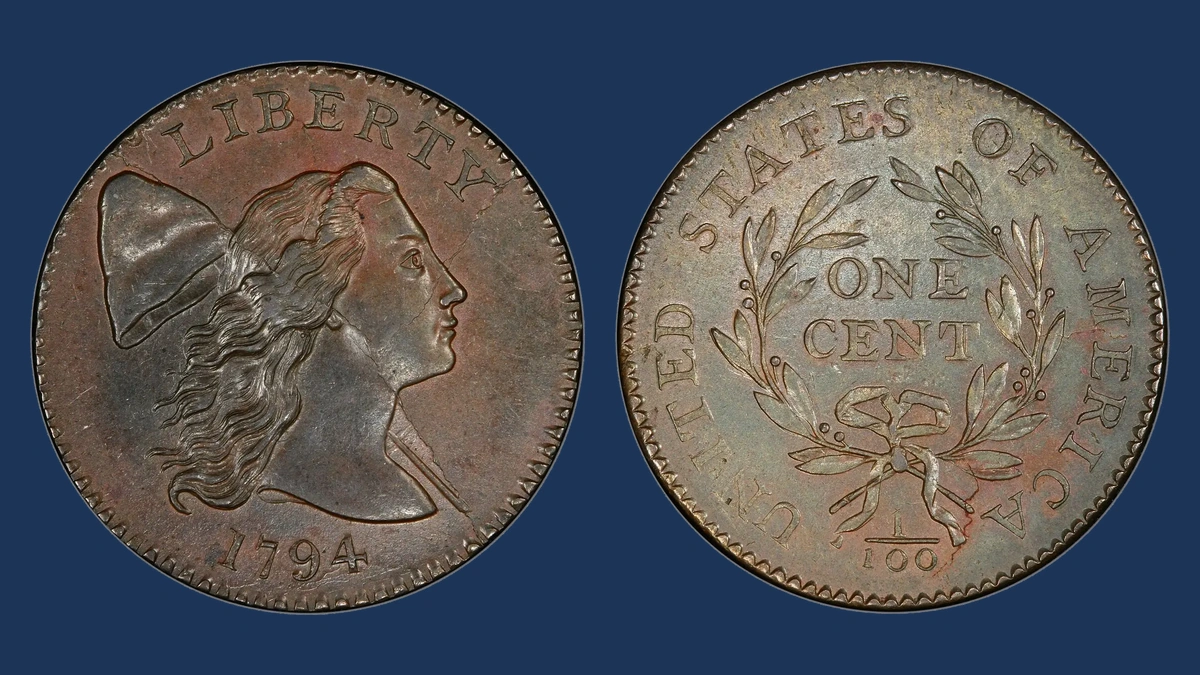
Cracks in a stamping tool can leave raised lines across a coin. The tool is called a die, and copper fills its small openings during the strike.
One recorded 1794 variety has a line running through the first S in STATES. Other tools developed different paths, so one crack map cannot identify every cent of the year.
The spectacular double-struck coin also shows a front crack repeated by the two blows. That repeated line belongs to its combined striking history.
A scratch cuts into the finished copper instead, even when it follows a similar route across the lettering.
Estimated Value
Estimate $250–$1,500 for worn examples with clear cracks and $1,500–$6,000 for attractive cents with more remaining detail. Rare tool combinations or exceptional preservation can cost more.
An early-copper price list offered a worn example with the STATES crack for $1,850. That was an asking price for the complete coin, not an auction result or the value of the line alone.
Cleaning, rough corrosion, and rim damage can reduce appeal despite a genuine crack.
How to Identify
A scratch can have raised metal along its sides, so a bright line alone proves little. With a 10× magnifier and low light, check whether the feature itself rises from the surface or has a cut through its center.
Trace the line through the first S in STATES on the recorded example and into neighboring detail. Other 1794 cents require their own matching crack paths.
For a loose cent, use a scale and calipers against the original 13.48 grams and roughly 29 millimeters. Inspect the lettered edge for seams or damage, then compare the line with clear photographs of the same variety rather than trying to scrape or lift it.
2. 1794 Liberty Cap Cent A Separating Copper Layer
A weak area inside the copper can allow part of the surface to separate. A thin piece may remain attached or fall away, leaving an uneven shallow patch.
This is lamination. Breen’s early-cent reference records a specific 1794 example without supplying one required location for all candidates.
A separate dealer-listed cent has a thin edge separation together with a shallow clip. Those two features belong to the same object.
The original coin is copper throughout, so a peeling modern coating is a different problem. Rough corrosion also needs to be distinguished from a natural separation within the metal.
Estimated Value
Use an estimated $300–$2,000 for worn examples and $2,000–$8,000 for attractive cents with an obvious original separation. Condition can outweigh the size of the flaw.
A dealer listed a lightly worn 1794 cent with both a shallow clip and an edge lamination at $10,500. That asking price reflects the whole coin and sits above this working range.
Do not add a second full clip valuation to that object, or treat the offer as a completed sale.
How to Identify
An attached flap needs protection before it needs a closer photograph. Set the cent on padding and keep pressure away from the loose portion.
With a 10× magnifier, follow the boundary into the copper. Original design continuing onto a flap helps show its relationship to the struck surface.
A coating lies above the coin, while a gouge cuts through finished detail. Compare the affected area with undisturbed metal rather than relying on roughness alone.
Weigh a loose example against 13.48 grams and measure it against about 29 millimeters. Missing copper can lower weight, but an attached layer may leave it nearly unchanged.
Include the lettered edge in photographs, especially where the separation reaches it.
3. 1794 Liberty Cap Cent Misplaced and Repunched Date Digits
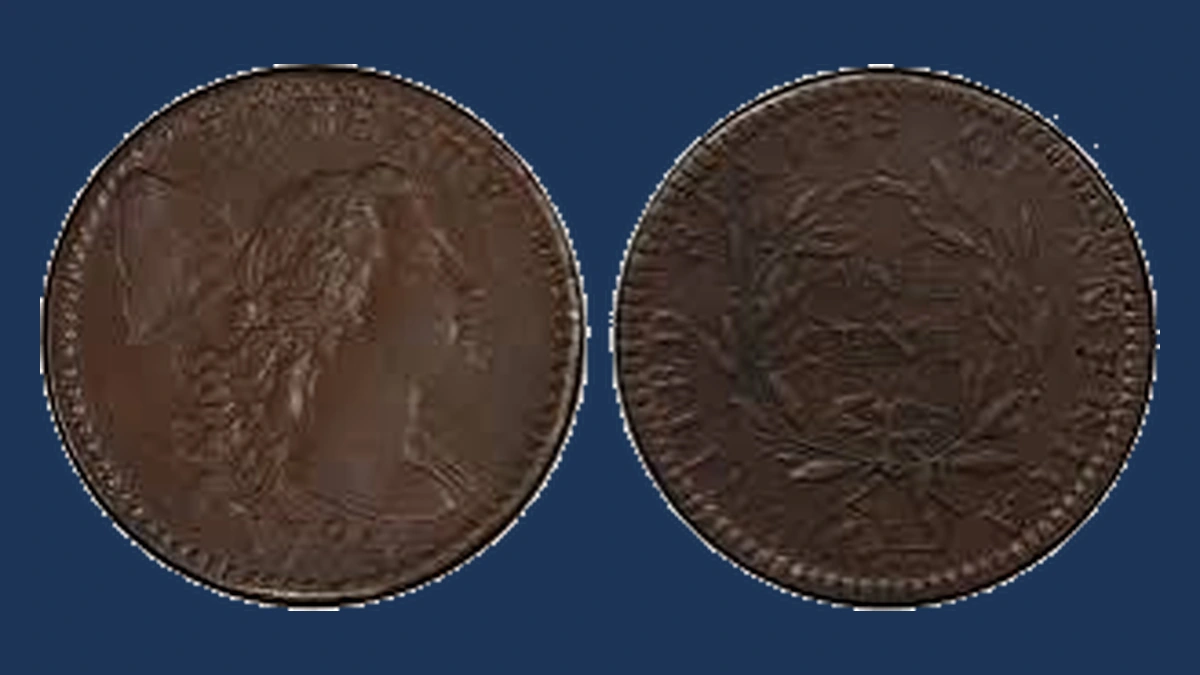
Date digits were placed into the stamping tools by hand. A digit could land too low, lean the wrong way, or leave part of an earlier impression after correction.
Breen records the Fallen 4 and other misplaced 1794 digits. His list also includes repeated impressions of the first 1 and, on another tool, the whole date.
These features were already in the tool before a coin was struck. They are not evidence that the finished coin received a second blow.
The different placements belong to separate examples and should not be combined into one imaginary date pattern.
Estimated Value
For clear, correctly matched date varieties, estimate $300–$2,000 on worn cents and $2,000–$12,000 on more attractive examples. Especially rare tool combinations or unworn coins require higher-level comparisons.
These figures are whole-coin estimates, not a fixed payment for each extra digit stroke. Wear may hide the earlier impression even when the rest of the date remains readable.
An altered digit, scratch, or bright reflection should not receive the same premium without a match to the original tool pattern.
How to Identify
Photograph all four digits together before zooming in on the 4 or first 1. The spacing and alignment of the complete date help distinguish a cataloged variety from an isolated odd mark.
Use a 10× magnifier to look for remnants that fit the shape of an earlier digit. Compare the specific date pattern, because the Fallen 4 and repeated first 1 are separate cases.
Check for cutting or smoothing around the numeral. A changed date can imitate a misplaced stroke without sharing the original tool’s other features.
For a loose cent, record weight near the original 13.48 grams and width near 29 millimeters. Inspect the lettered edge while preserving every small date remnant untouched.
4. 1794 Liberty Cap Cent A Shifted or Tilted Stamping Tool
One face can sit too close to the rim while the opposite face remains differently positioned. A stamping tool has shifted sideways rather than the entire blank simply missing the center.
A specialist price list describes a 1794 example with its front shifted toward three o’clock. This is different from a tilted tool.
When the two tool faces are not parallel, they can leave corresponding weak areas across a coin. The edge can still have ordinary thickness.
Those two alignment problems share this section, but one photograph of an uneven border cannot prove both of them.
Estimated Value
Estimate $500–$3,000 for worn examples with a clear alignment problem and $3,000–$15,000 for attractive cents with more detail. Exceptional pieces fall outside these ordinary working estimates.
The specialist price list offered the three-o’clock example for $5,800. It also has cracks and clash marks, and the catalog discusses different opinions about its condition.
That figure is an asking price for one combined coin, not a separate premium for the shifted front design.
How to Identify
Compare the front border all the way around, then repeat the check on the back. A sideways shift of one tool needs a different explanation from both designs missing the same part of a blank.
For possible tilt, examine corresponding weak areas on both faces through a 10× magnifier. Use calipers to compare edge thickness around the coin without squeezing it.
A thin section of the blank can also produce weakness, but that section would have less metal. Tilted tools can leave weak detail despite normal edge thickness.
Weigh a loose cent against 13.48 grams and measure its diameter near 29 millimeters. Photograph the lettered edge and both complete faces before assigning a direction or a cause.
5. 1794 Liberty Cap Cent Ghost Traces from the Opposite Design
The two tools can meet when no copper blank lies between them. Their contact leaves marks that later appear as faint pieces of the opposite design.
This is called a die clash. A specialist catalog describes a 1794 cent with one set of clash traces on both faces and no cracks.
The famous double-struck example is a different coin. Its faint front clash lies above the hair and to the right of the cap.
Keep those examples separate when comparing photographs. A few ghost traces do not establish that your own cent also has two complete strikes.
Estimated Value
For identifiable clashes, estimate $500–$3,000 on worn cents and $3,000–$15,000 on attractive examples. Much of the value still comes from the date, variety, and preservation.
The specialist price list offered the circulated S-25 example at $6,750. That is an asking price, not a completed sale.
An exceptional unworn coin may cost far more, but its full value cannot be assigned solely to faint transferred lines.
How to Identify
First separate a possible clash from two complete strikes. A few faint fragments can come from tool contact without producing a second full portrait or date.
Check a loose cent with a scale and calipers against 13.48 grams and roughly 29 millimeters. Examine the lettered edge for seams or squeezing before trusting an unusual transferred shape.
Now place a normal back photograph beside the front marks and look for matching wreath or letter fragments. Reverse the comparison to search the back for parts of Liberty, using a 10× magnifier and low light.
The mark above the hair belongs to the separate double-struck example. Do not use that location to fill gaps in the S-25 example’s description.
6. 1794 Liberty Cap Cent A Straight Clip from the End of the Strip
A blank cut at the end of a copper strip can lack a straight section. The remaining disk still receives a design, leaving a shortened edge on the finished coin.
The recorded 1794 example has a straight clip between seven and nine o’clock on the front. On the back, the gap lies near D-STAT.
PCGS graded it VG8, indicating heavy wear with some design remaining. The catalog also describes unusual edge-letter spacing caused when the incomplete blank slipped in the lettering machine.
The clip and the affected edge words belong to this same coin, not two separate discoveries.
Estimated Value
For an authenticated 1794 clip, estimate $500–$3,000 on worn examples and $3,000–$20,000 on attractive or substantial pieces. These are whole-coin estimates.
The cataloged VG8 straight clip also carries disrupted edge lettering, so both features should be assessed together. No individual completed-sale amount is assigned to that example here.
A separate lightly worn cent with a shallow clip and lamination had a $10,500 dealer asking price. Its condition and different combination prevent treating it as the same object.
How to Identify
With Liberty upright, inspect the shortened front edge from seven to nine o’clock. Use a 10× magnifier to compare the ends of the gap with the remaining struck design.
Photograph the back near D-STAT as well. A sawed-off section can resemble a straight clip but may leave fresh cuts through completed letters.
A loose cent can be weighed against its original 13.48 grams. Measure intact parts of the outline with calipers against roughly 29 millimeters, allowing for the missing section.
The auction catalog also records interrupted edge words on this coin. Leave a certified example inside its holder even if the holder hides that lettering; do not open it just to complete the photograph.
7. 1794 Liberty Cap Cent Missing or Repeated Edge Words
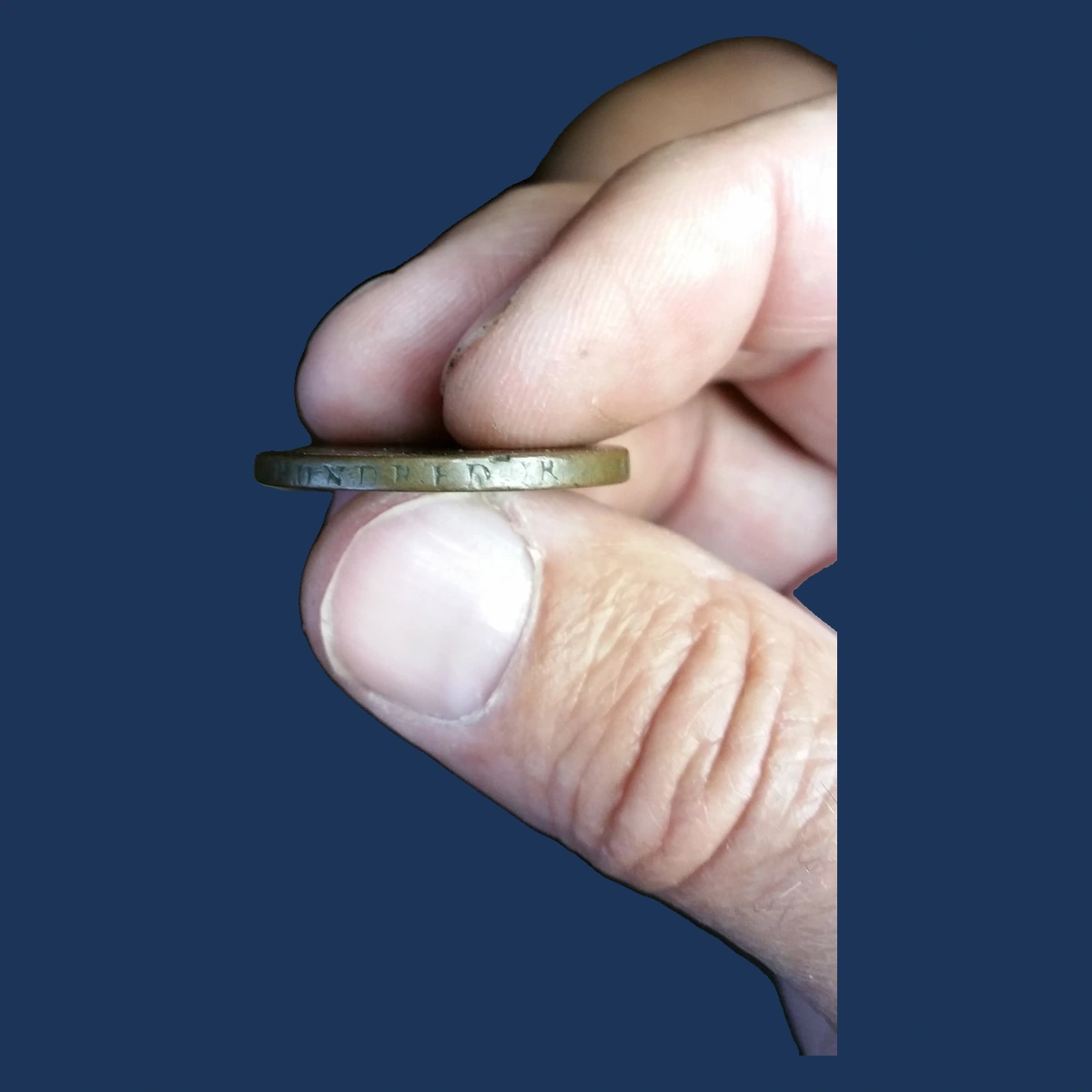
The edge normally reads ONE HUNDRED FOR A DOLLAR. These words were applied before the front and back designs were struck.
An incomplete blank could slip in the lettering machine. The straight-clipped example has a large space between HUNDRED and FOR, with LAR O missing on the opposite edge.
A different 1794 cent appears in an auction catalog with doubled edge letters. That is a separate case from the gap caused by the clipped blank.
The words must be examined around the full circumference. One worn or hidden section cannot establish a minting mistake by itself.
Estimated Value
Estimate $500–$4,000 for worn coins with convincing original edge-letter errors and $4,000–$25,000 for clearer or especially attractive examples. These are estimates for the whole cent.
The separate doubled-edge example was cataloged as Good 4, a heavily worn grade, without a sale figure used here. The letters’ visibility matters alongside the coin’s ordinary condition.
For the straight-clipped cent, the missing words and the clip form one combined object; the two price ranges must not be added together.
How to Identify
Read the edge a little at a time, keeping a written sequence of the words. Photograph overlapping portions so the full circuit can be reconstructed without guessing hidden letters.
For the straight clip, locate the unusually wide space between HUNDRED and FOR. The missing LAR O belongs on the opposite part of that same coin.
A doubled-edge candidate needs repeated letter shapes rather than simple dents. A 10× magnifier helps distinguish their strokes from later cuts or filing.
Check a loose cent with a scale against 13.48 grams and calipers against about 29 millimeters. Lost edge metal may reduce weight.
If a holder hides the edge, use existing catalog photographs or a grading service’s inspection rather than removing the coin yourself.
8. 1794 Liberty Cap Cent A Reported Overweight Blank
A blank cut from overly thick copper strip can produce a heavier cent. This differs from copper added to the finished coin or two halves joined together.
Breen records a 1794 example at 222 grains, equal to 14.39 grams. That is about 6.7 percent above the original 13.48-gram standard.
The reference says the author had not personally examined that piece. Its weight is therefore a historical report, not a substitute for measuring and authenticating a candidate.
A thick-looking rim alone is insufficient. The entire coin’s metal, dimensions, and surface must support an original overweight blank.
Estimated Value
For a genuine 1794 cent on an overweight blank, estimate $1,000–$8,000 when worn and $8,000–$30,000 for stronger preservation. These conditional estimates assume an original Mint-made blank error.
The historical 14.39-gram report supplies no completed sale used here. A copy can also be heavy, so extra weight alone cannot justify the range.
Use the coin’s ordinary grade and rarity alongside the verified weight difference, rather than applying a fixed price for each extra gram.
How to Identify
Use a scale reading hundredths of a gram and check it with a known reference weight. Record the candidate’s actual result rather than copying 14.39 grams from the historical report.
Compare its diameter with about 29 millimeters using calipers. Measure thickness at several safe points, avoiding raised lettering and pressure on the rim.
Under a 10× magnifier, inspect the lettered edge for a seam, solder, or signs of casting. Added metal and copies need to be excluded before diagnosing a thick original blank.
The early-cent reference treats the overweight piece as a report. A specialist should assess the metal and original surfaces together with the measurements before assigning it a Mint-error identity.
9. 1794 Liberty Cap Cent A Sunken Mirror Design
A coin left in the press can press its raised image into the next blank. The new coin receives a sunken mirror impression instead of the normal design on that side.
Collectors call this a brockage. Breen records a 1794 example identified through details of the back tool.
That attribution matters when a normal readable date is absent or replaced by the unusual impression. The year should follow the documented tool match, not an imagined date.
Later squeezing two finished coins together can also leave depressed detail, so a mirror image needs careful examination before being called a Mint error.
Estimated Value
For a genuine brockage attributed to 1794, estimate $2,000–$10,000 on worn examples and $10,000–$40,000 for stronger, clearer pieces. These are estimates rather than a recorded sale for the book’s example.
A later 1817 large-cent brockage had a winning bid of $7,500 before fees in January 2015. Its different date and condition make it a related comparison.
Authentic reversed design and a sound year attribution are essential before applying the 1794 range.
How to Identify
An unreadable date need not end the comparison, but an old-looking cent cannot be assigned to 1794 by appearance alone. Photograph the normal face closely enough to match its surviving design details with a documented example.
Then use a 10× magnifier on the unusual face. Its letters and major features should be both reversed and sunken; a vague dent does not supply that evidence.
For a loose cent, record its weight and width with a scale and calipers against 13.48 grams and roughly 29 millimeters. Include the lettered edge in photographs, looking for joining seams, casting, or pressure damage that could explain a false mirror image.
Keep the shallow details uncleaned for a specialist’s comparison.
10. 1794 Liberty Cap Cent Two Off-Center Strikes
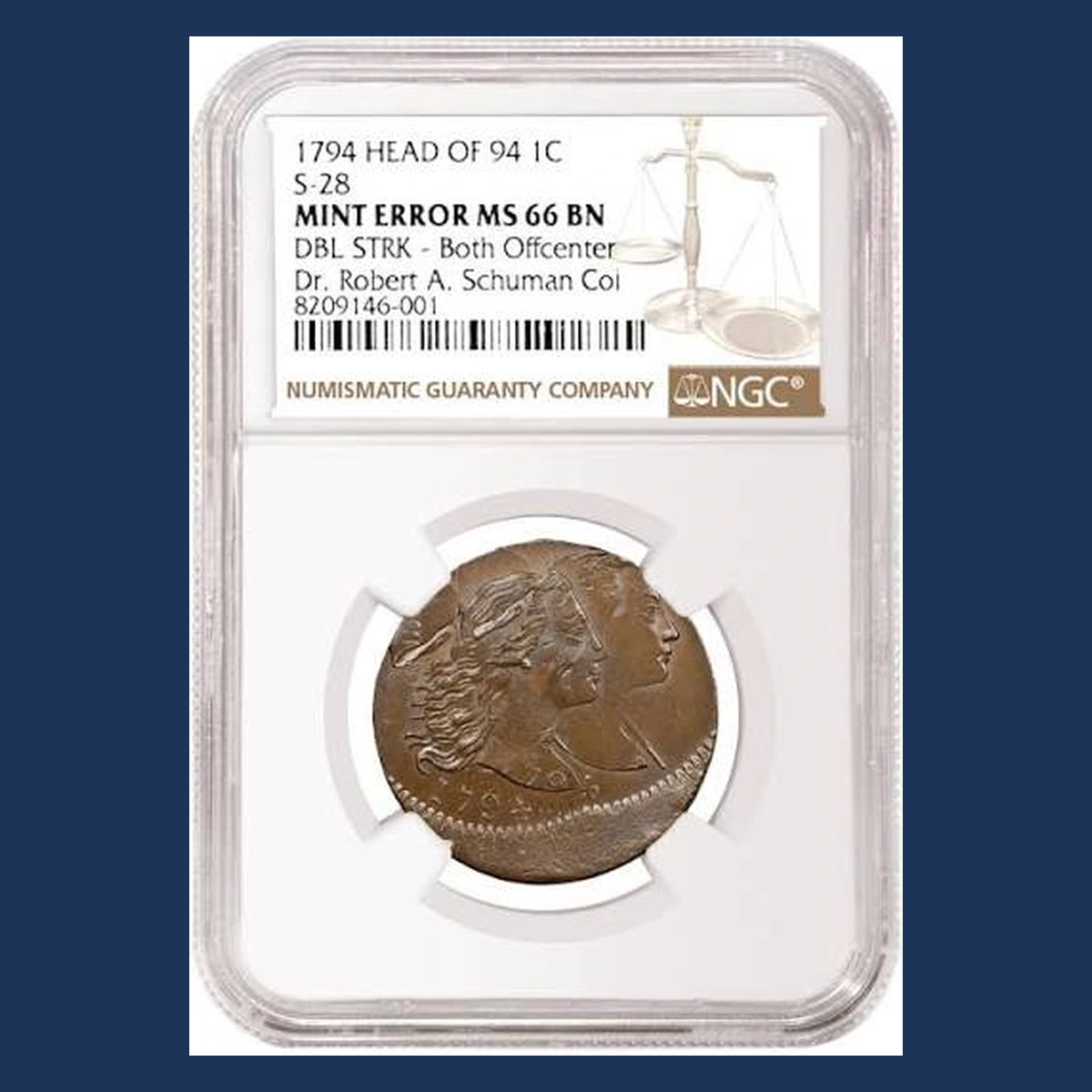
Two portraits and overlapping inscriptions make this exceptional cent easy to recognize. It stayed in the press for another blow, with both strikes landing off center.
Unstruck areas remain on both faces. Those patches preserve the blank’s surface beside the finished designs.
NGC graded the coin MS66 Brown, indicating unusually strong unworn preservation. The spectacular shape does not mean its surface is badly worn.
The same coin also has a repeated crack and a faint clash mark. Those smaller features accompany the two-strike error, so they should not become additional whole coins in a price comparison.
Estimated Value
The MS66 Brown double strike sold for $588,000 on August 14, 2024. That result includes the buyer’s premium and reflects extraordinary preservation as well as the error.
Estimate $1,000–$25,000 for worn readable repeated strikes, with exceptional museum-quality pieces extending to $25,000–$600,000. Most candidates belong far below the record example.
The off-center blows and repeated design are priced together, not as separate purchases.
How to Identify
Trace one portrait and its related lettering, then follow the other impression separately. Use a 10× magnifier where one blow flattened details from the earlier strike.
The unused copper beside the overlapping designs should be examined on both faces. It is different from a patch ground smooth after minting.
Photograph the whole outline before assigning a percentage or direction; the record example should not supply those measurements for every double-struck cent.
A loose piece started near 13.48 grams and about 29 millimeters. A scale and calipers can document its present weight and expanded shape.
Include the lettered edge and remaining dates. A doubled letter inside an otherwise single design needs a different explanation from two complete displaced impressions.
Conclusion
For 1794 Liberty Cap cent errors, estimated whole-coin values span $250–$600,000. The record double strike sits at an exceptional level; ordinary cracks or alignment problems on worn coins cost far less.
Inspect the edge as well as both faces, because missing or repeated edge words can reveal a separate part of the minting process. Preserve fragile copper and keep all features on one coin together when judging its value.