1976 Nickel Error List with Pictures

A tiny Jefferson portrait in the middle of a dollar-sized disk is the standout among these 1976 nickel errors. Mint Error News reports a $13,200 Heritage auction result for that unusual piece.
More approachable finds include missing metal, shifted designs, and doubled letters. Estimated values across this list run from $20 to $20,000.
Read on to compare the visible clues, including why a brown nickel is not automatically struck on a penny blank.
1. 1976 Jefferson Nickel Broadstrike
A broadstruck nickel spreads beyond its usual round boundary while keeping the design on the coin. The metal escapes because the surrounding steel ring, called the collar, fails to contain it.
The result may look wide and flat around the outside. It does not need a missing wedge or a second portrait.
Year guides report ordinary 1976 examples without a mint letter. Those coins belong to the circulation issue, whose front shows Jefferson and whose back shows his home, Monticello.
A wide border alone is only the starting clue.
Estimated Value
Budget an estimated $20–$150 for a genuine ordinary 1976 broadstrike. A broad, clean border usually attracts more interest than a slight spread.
For a recent comparison, a 1999-P broadstruck nickel sold for $89 in March 2025. That is a different year, used here to place a modest broadstrike in context.
Coins flattened after leaving the Mint do not earn this range merely because their diameter is larger.
How to Identify
Set the coin beside a normal nickel before magnifying it. Does the extra width surround a complete design, or has part of Jefferson or the lettering disappeared beyond the edge?
The second pattern points toward an off-center strike. A broadstrike allows the design to remain inside an expanded outline, even when the border is uneven.
Use calipers on a loose coin to compare its width with the normal 21.21 millimeters. A scale should remain close to 5 grams unless another error removed metal.
Inspect the plain edge and the expanded border with a 10× magnifier. A flattened, battered surface with squeezed lettering suggests later pressure rather than free spreading during the original strike.
2. 1976 Jefferson Nickel Lamination and Split Blanks
A thin flap, rough opening, or unusually thin coin can come from metal separating inside the blank. Collectors call local peeling a lamination.
One 1976 nickel graded AU58, meaning only slight wear, has this problem on its front. The description does not fix it to Jefferson’s cheek or another specific feature.
A separate Denver example weighed 3.4 grams after its blank split before striking. It then received the nickel design on the thinner piece.
This second form affects the body of the blank, rather than leaving just a small peeled patch.
Estimated Value
Small surface separations are estimated at $25–$100; a clear blank split before striking is estimated at $100–$300. The amount of missing metal and the surviving design help separate those ranges.
The front-lamination 1976 AU58 coin sold for $55 in October 2022. That result prices a local surface defect, not the separate 3.4-gram Denver example.
Keep any attached flap intact, since breaking it away can reduce both value and useful evidence.
How to Identify
Leave a raised flap alone. Under a 10× magnifier, follow its edge to see whether the separation runs within the metal instead of across a scraped surface.
The thin Denver coin needs a different check: look for struck design on the split piece. A piece that split before striking can carry detail across a rough inner surface; one that separated later may expose an unstruck interior.
For a loose coin, weigh it and measure its thickness and width with calipers. Normal specifications are 5 grams and 21.21 millimeters, with a plain edge.
The cataloged Denver piece weighs 3.4 grams. Do not turn that measurement into a weight requirement for the separate local front lamination.
3. 1976 Jefferson Nickel Doubled Dies
Extra outlines in the motto, date, or building can suggest a doubled die. A die is the steel tool that stamps a coin, and this error begins with a doubled design in that tool.
Year sources list front doubling around IN GOD WE TRUST, LIBERTY, and 1976. They also describe back doubling around the country name, motto, and Monticello’s columns.
The reports do not establish one specific mint or collector version. Each side therefore needs its own photograph and comparison, rather than treating every doubled-looking 1976 nickel as the same variety.
Estimated Value
For confirmed doubled designs matching these reported areas, use an estimated $25–$300. Small but clear doubling belongs near the lower end; strong separation on attractive coins supports higher prices.
This is a conditional estimate for the reported 1976 types, not a recorded sale of a named variety. The front and back reports do not supply a matching auction price.
Flat shelf-like doubling from movement during striking should not receive the same premium.
How to Identify
Start with one letter that appears doubled and change the lighting angle. A reflection moves with the light; an actual extra ridge remains in the metal.
A 10× magnifier can then reveal split corners or two rounded outlines. A flat ledge that cuts into the normal letter is more consistent with movement during striking.
Check nearby letters before deciding. On the back, compare Monticello’s columns with a normal coin so that ordinary repeated architectural lines are not mistaken for doubling.
A loose example should also be checked with a scale and calipers against 5 grams and 21.21 millimeters. Inspect its plain edge for alterations, then seek a matching photographed example with the same mint identity and doubled features.
4. 1976 Jefferson Nickel Off-Center Strike
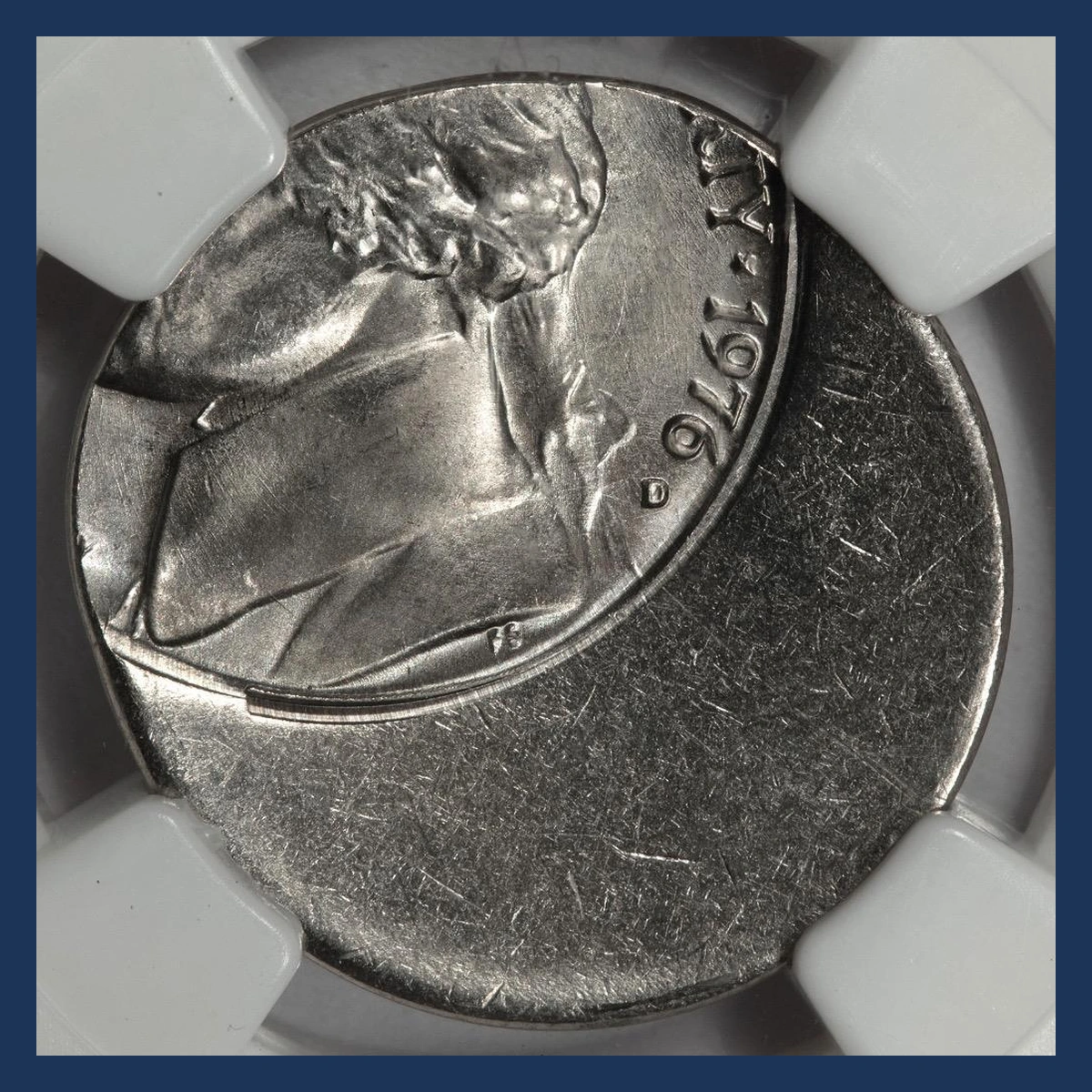
A large blank crescent beside part of Jefferson means the disk missed the center of the striking tools. Only the portion caught between them received the design.
A no-letter 1976 example is described as 45% off center toward twelve o’clock. A separate Denver coin is 65% off center toward eleven o’clock.
Those directions belong to different coins. They should not be combined into one imagined example.
Both are ordinary circulation strikes. A readable year helps collectors place an off-center coin, while an intact D also identifies Denver production.
Estimated Value
Estimated values run about $30–$400, depending on the visible date, amount of displacement, and condition. Large blank areas can be appealing, but a missing date limits the audience.
The no-letter 45% example sold for $39 in January 2022. A different 35% example brought $104 in February 2010.
These individual results are more useful here than prices for mixed groups containing several error coins, whose total cannot be assigned to one nickel.
How to Identify
A normal-weight disk can lose much of its visible design without losing metal. Weigh a loose suspect first, comparing it with 5 grams, and use calipers to record its outline against 21.21 millimeters.
Then turn the coin over. A genuine off-center strike leaves a corresponding displaced design on both faces, while a shifted front with a normal back suggests a different fault.
Inspect the plain edge and blank crescent with a 10× magnifier for cuts or scraped-away detail. The crescent should still be part of the original disk.
Finally, read the surviving date and any D. Keep the date upright when describing a clock direction, and record only the percentage and direction that belong to that particular coin.
5. 1976 Jefferson Nickel Clipped Blanks
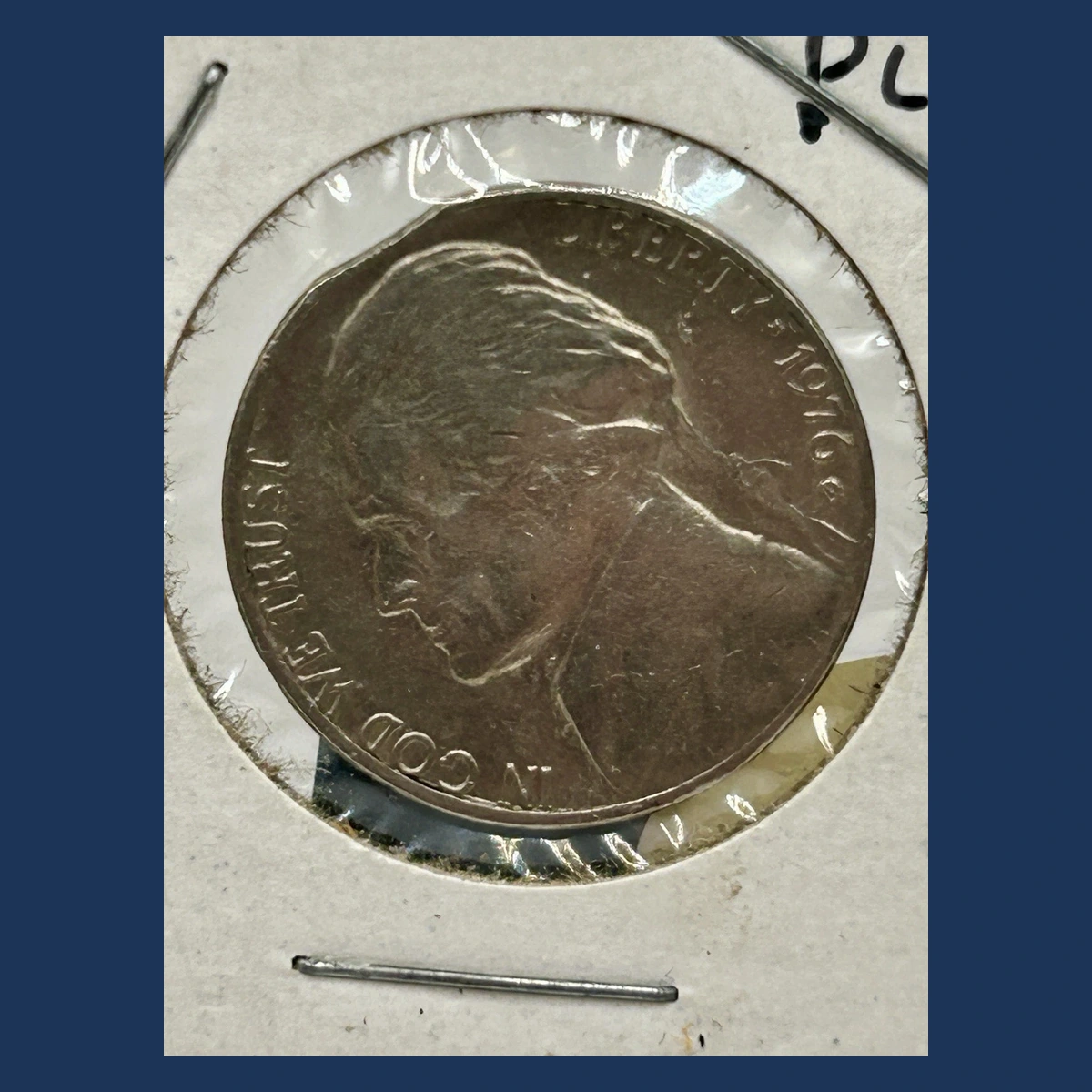
A clipped blank reaches the press with part of its metal already missing. The completed nickel can have a curved gap instead of a full circle.
A no-letter 1976 example has a 40% curved clip. Denver examples include a basic clip and two coins that also spread beyond the collar during striking.
One of those Denver coins has a 25% clip; another has a 55% curved clip. Their expanded strikes add a second visible feature to the same coin.
A larger gap does not automatically mean greater value or better condition.
Estimated Value
Allow an estimated $30–$150 for ordinary clips and $90–$400 for dramatic clipped broadstrikes. These prices cover each complete coin, including any combined spread.
The no-letter 40% clip sold for $67 in January 2017. Denver’s 25% clipped broadstrike brought $152.75 in August 2015, while a separate 55% example sold for $144 in January 2018.
Clean surfaces and a clear date can matter more than choosing the largest percentage.
How to Identify
Do not start by comparing the gap with the 40% example. First determine whether metal was missing before striking or was cut away afterward.
Under a 10× magnifier, follow the plain edge through both ends of the gap, looking for smooth metal flow rather than fresh saw marks. A softened rim opposite the gap supports an original clip, although it can be subtle or absent.
Use a scale and calipers on a loose coin to check reduced weight and surviving width against 5 grams and 21.21 millimeters. Then examine the remaining border: extra spread surrounding intact design supports the added broadstrike, while cut-off design calls for a closer look at where the blank sat during striking.
6. 1976 Jefferson Nickel Broken Collar
Two bumps on the side of one 1976-D nickel came from breaks in the collar. This steel ring surrounds the blank during striking and normally keeps the edge smooth and round.
Metal pushed into two damaged areas of that ring. The resulting lumps were described at five o’clock and ten-thirty on a coin graded MS64, an unworn coin with some marks.
Collectors call these collar cuds. They are different from a raised patch on the front or back caused by a broken design-stamping tool.
Estimated Value
A reasonable estimated range is $100–$400 for a clear example with both edge lumps. The two breaks belong to one coin and are priced together.
Fred Weinberg’s price list in Mint Error News offered the MS64 1976-D specimen for $200. That was a dealer asking price, not a completed auction result.
A strong edge photograph and an intact surface make the difference between an understandable mint error and a bump with no clear cause.
How to Identify
Front and back photographs can hide this error. Ask for a continuous side view that shows the plain edge, keeping the date upright to locate five o’clock and ten-thirty.
The two raised areas should grow outward from the edge. Under a 10× magnifier, inspect their joins for solder, added metal, or a displaced lip caused by an impact.
Check the nearby face rims too. A blow after minting may crush one rim while forcing metal sideways, which differs from metal filling a broken collar.
On a loose coin, compare weight and diameter with 5 grams and 21.21 millimeters using a scale and calipers. Measure between unaffected points as well as across each lump so the local expansion remains visible in the record.
7. 1976 Jefferson Nickel Underweight Copper-Nickel Blank
This brown-toned nickel weighs 3.7 grams, well below the normal five grams. Its recorded alloy is still 75% copper and 25% nickel.
That mixture is ordinary for a Jefferson nickel. The error concerns the blank’s weight and specifications, not the mere presence of copper.
The example was graded MS62 Brown by NGC, meaning unworn with noticeable marks and brown color. Color alone does not turn it into a nickel struck on a copper penny blank.
Nor does the weight identify a particular foreign denomination without further evidence.
Estimated Value
Estimate $150–$600 for a genuine example of this underweight blank type. Its recorded sales provide a more useful guide than guesses based only on brown color.
The 3.7-gram MS62 Brown nickel brought $408 in October 2022 and $192 in June 2023. These are separate auction appearances of the described type, not two premiums to add together.
A new find needs the same weight and material checks before this range becomes a useful comparison.
How to Identify
Begin with the scale, because a normal-looking outline can hide a thin blank. Record the weight of a loose coin without cleaning it, and compare it with the normal 5 grams.
Use calipers to measure both width and thickness. The usual diameter is 21.21 millimeters, but the auction description does not provide this specimen’s exact measured diameter.
Now inspect the plain edge and both faces with a 10× magnifier. Corrosion, filing, or a split surface can also remove metal, leaving evidence that explains the low reading differently.
The documented 3.7-gram coin’s alloy matches normal nickel metal. A professional material test, together with original struck surfaces, is more informative than calling every brown lightweight coin copper.
8. 1976 Jefferson Nickel Double Strike
Two dates or overlapping portraits can show that a nickel stayed in the press for another blow. Its second impression may fall well away from the first.
A no-letter 1976 example is described with the second strike 75% off center and two visible dates. Denver pieces include both more general double strikes and a second strike shifted off center.
One Denver coin also has a wheel mark on its back. That later surface damage is separate from the minting error and affects how collectors judge the coin’s condition.
Estimated Value
Double-struck 1976 nickels are estimated at $150–$800. Clear separation between two impressions and a readable date help the stronger examples.
A Denver coin graded MS60, meaning unworn but heavily marked, sold for $288 in August 2021. Another Denver example with an off-center second strike and back damage brought $180 in September 2023.
The latter result includes the condition problem; it should not set the ceiling for a cleaner coin with two bold dates.
How to Identify
Make a simple sketch of the two impressions from photographs of both faces. Label only the letters or portrait portions that you can follow, rather than assuming that every doubled shape belongs to a second strike.
A 10× magnifier should help show older raised design continuing beneath a newer impression. A sunken, reversed copy instead raises the possibility that another finished coin was pressed against this one.
For a loose piece, measure weight and width with a scale and calipers against 5 grams and 21.21 millimeters. Examine the plain edge for later impacts, allowing for natural spreading from repeated blows.
The reported no-letter 75% second strike has two dates. A Denver example must be judged from its own overlapping design, not that specimen’s percentage.
9. 1976 Jefferson Nickel Broken Dies and Cuds
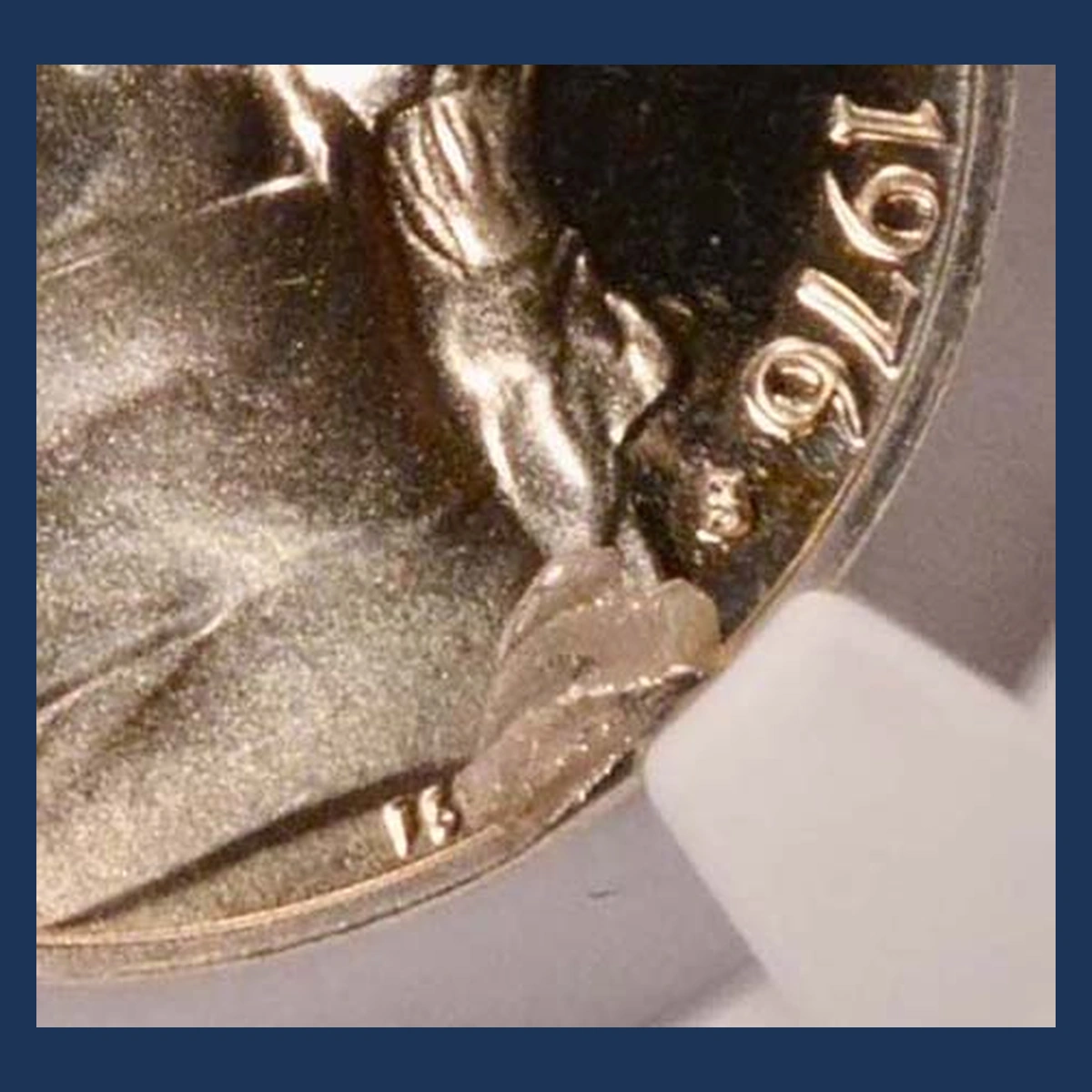
A raised patch touching the rim can form where part of a stamping die breaks away. Metal fills the opening, making a lump that collectors call a cud.
The 1976-S Proof example has a thorn-like rise near five o’clock on the front. Proof coins are specially prepared collector pieces, often with mirror-like backgrounds.
This rise lies between the small FS designer initials and the S mint letter, closer to FS. It extends toward the base of Jefferson’s tied hair.
An ordinary no-letter 1976 cud is separately listed in a specialist catalog.
Estimated Value
Ordinary 1976 cuds are estimated at $40–$250, while attractive examples of the S Proof break are estimated at $250–$800. The collector finish creates a separate market within this broken-tool type.
A 1976-S graded PR68 Deep Cameo sold for $504 in May 2022. That grade describes a very well-preserved Proof with strong contrast between frosted details and shiny backgrounds.
Do not apply its price automatically to a worn ordinary nickel with a different raised patch.
How to Identify
Choose the correct comparison before studying the lump: an S Proof and an ordinary no-letter nickel need different photographs. A loose coin can be checked against 5 grams and 21.21 millimeters with a scale and calipers.
For the Proof pattern, find the small FS initials and look toward the S. FS names designer Felix Schlag here, not the steps on Monticello.
Gentle side lighting and a 10× magnifier should reveal the thorn-like rise extending toward the hair. Follow its connection to the rim, checking the adjacent plain edge for a crushed lip or impact that pushed metal onto the face.
A solder line or cut around the lump suggests added metal. The ordinary no-letter cud must match its own catalog photograph instead.
10. 1976 Jefferson Nickel Struck on a Dime Blank
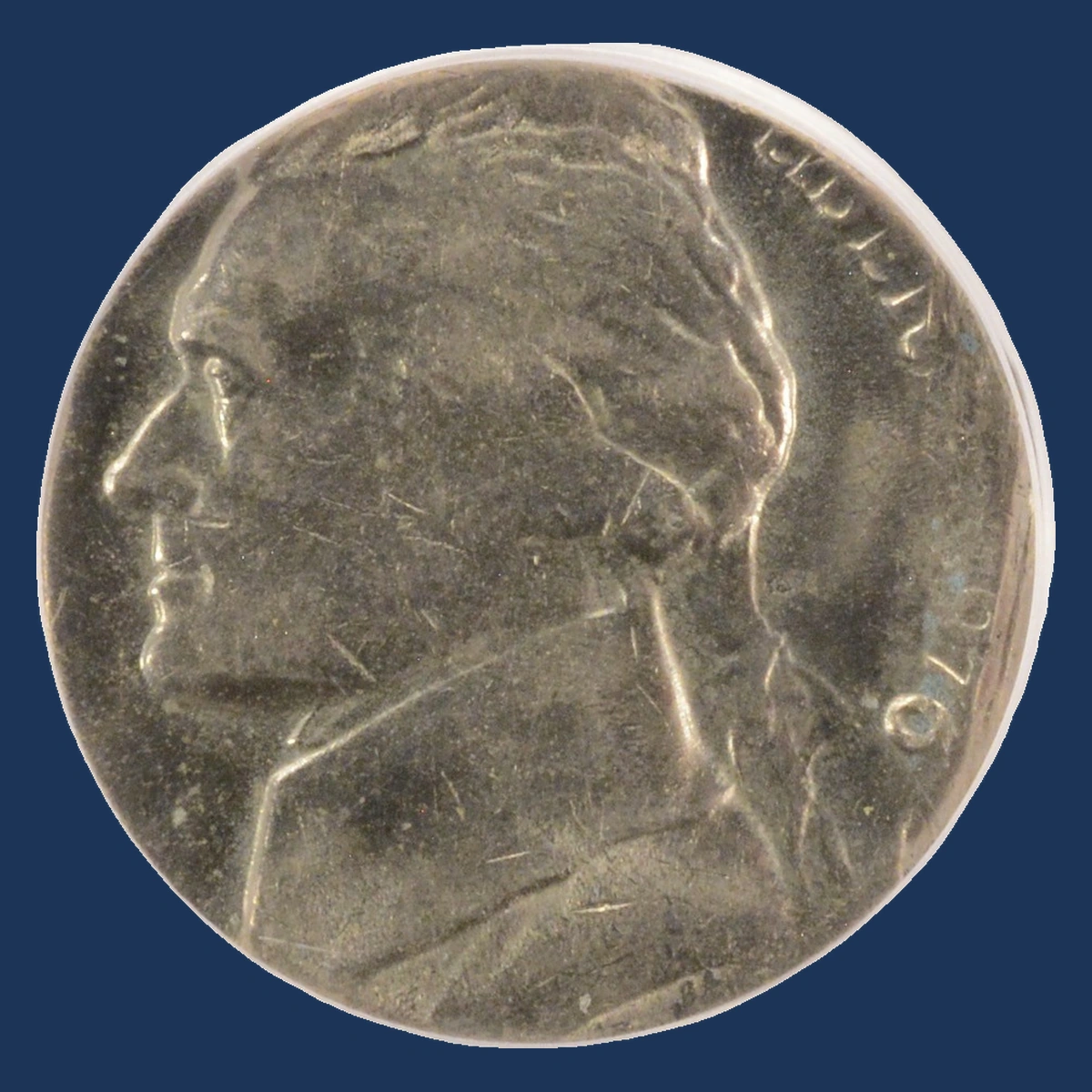
A small silver-colored disk can carry Jefferson instead of Roosevelt when a dime blank enters the nickel press. The nickel design is too large for the available metal.
Outer letters may be cut off, while the edge can reveal the dime blank’s copper core. This is different from a normal nickel, whose metal is the same alloy throughout.
Recorded 1976 examples include a 2.31-gram piece and a separate 2.23-gram piece. The latter was dated as “1976” by the grading service even though the visible date was incomplete.
Estimated Value
An estimated $300–$1,000 covers typical authenticated 1976 examples on dime blanks. Clear dating, preservation, and the amount of surviving nickel design influence the position within that range.
A PCGS MS64 example sold for $492 in December 2024. Another example graded MS63 by ANACS brought $504 in September 2025.
The separate 2.23-gram coin sold for $517 in January 2017; its partly missing date should remain part of the description when comparing it with a fully dated piece.
How to Identify
There should be nickel detail without an older Roosevelt portrait underneath. A blank dime disk has not yet received the dime design, so any surviving Roosevelt letters would point to another kind of error.
For a loose piece, compare its weight with a dime’s standard 2.268 grams and its width with 17.91 millimeters. Striking can alter the outline; recorded examples need not equal those figures exactly.
A normal nickel is 5 grams and 21.21 millimeters. Use a scale and calipers, then inspect the edge with a 10× magnifier for a copper core and signs of filing.
Do not demand a dime’s edge grooves: those are made during striking, not an unavoidable feature of an unused dime blank.
11. 1976 Jefferson Nickel Struck on Philippine Blanks
One foreign-blank error looks strikingly unlike a round nickel: it is a small aluminum square with rounded corners. It was intended for a Philippine one-sentimo coin before receiving Jefferson’s design.
An NGC example weighs 1.2 grams. A separate dealer description records 18.5 grains, an older weight unit equal to about the same amount.
The Philippine five-sentimo blank is a different type. Its recorded 1976 nickel weighs 3.37 grams and was graded MS60.
These blanks should not be identified from color alone or treated as the same foreign denomination.
Estimated Value
For the Philippine five-sentimo blank type, estimate $600–$1,500. The 3.37-gram MS60 example sold for $862.50 in January 2011.
The smaller aluminum one-sentimo type is estimated at $700–$2,000. An NGC MS62 example weighing 1.2 grams brought $822.50 in January 2017.
The square outline makes the aluminum piece especially easy to recognize, but price still depends on its surviving date and surfaces. These are separate coins, with separate weights and sale records.
How to Identify
Separate the two blank types before looking for a price. The rounded square and very light aluminum body fit the one-sentimo piece; 3.37 grams belongs to the different five-sentimo example.
A label reading 18.5 grains must not be copied as 18.5 grams. Photograph the unit along with the weight.
Use a scale and calipers on a loose coin to record weight, width, and thickness. Compare with a normal 5-gram, 21.21-millimeter nickel, then examine the plain outer edge and cut-off letters with a 10× magnifier.
Filing can make a round nickel smaller, but it leaves altered boundaries rather than an original strike fitted to a foreign blank. Retain the grading service’s material identification instead of guessing another country from appearance.
12. 1976 Jefferson Nickel Struck Over a Finished Cent
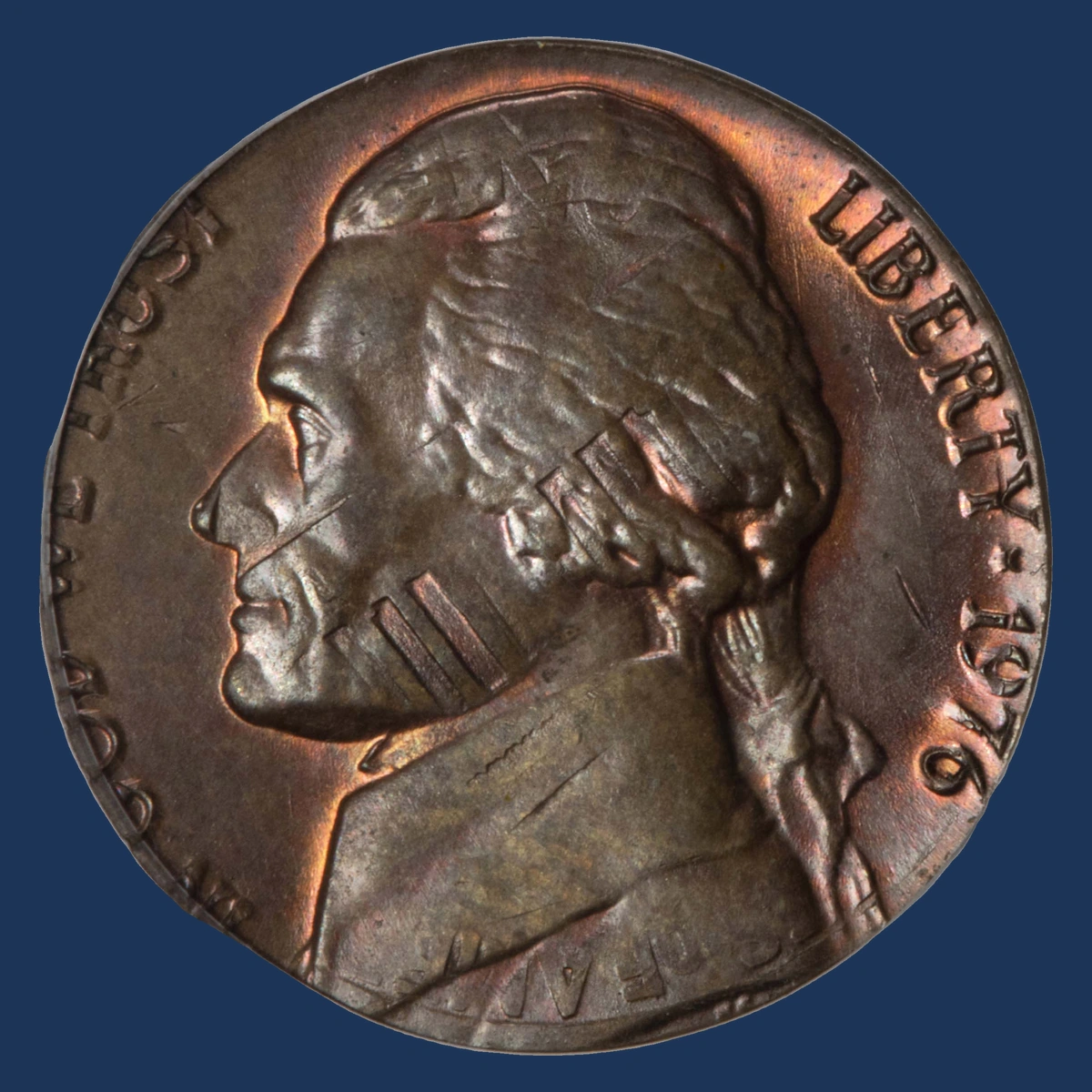
Old Lincoln-cent details beneath Jefferson prove that this disk was already a coin before the nickel strike. This is an overstrike, also called a double-denomination error.
A documented 1976 example has ES OF AM along the lower front. On the back, Lincoln faces northwest relative to Monticello, and Memorial columns survive.
Another example places the cent’s date and LIBERTY on the nickel’s back. That reversed face arrangement is described as flipped over on a struck cent.
It does not by itself prove two separate nickel strikes on the same piece.
Estimated Value
Estimate $450–$2,500 for 1976 nickels struck over finished cents. Recognizable cent lettering or two readable dates can make a coin easier to appreciate.
The MS64 example with Memorial columns sold for $492 in September 2019. A separate MS65 double-denomination example brought $1,200 in December 2024.
Fred Weinberg listed the flipped-face AU58 example at $950. That figure is a dealer asking price, while the two other figures are auction results for different specimens.
How to Identify
Copper color alone cannot distinguish a blank from a finished cent used again. For a loose coin, record weight and width with a scale and calipers: the period’s cent standards are 3.11 grams and 19.05 millimeters.
A normal nickel is 5 grams and 21.21 millimeters. Inspect the plain edge for later squeezing before tracing the hidden design with a 10× magnifier.
On the documented ordinary arrangement, follow ES OF AM along the lower front and Memorial columns across the back. On the flipped-face piece, the cent’s date and LIBERTY belong on the nickel’s back instead.
Photograph whichever arrangement your coin actually shows. Recognizable older cent details establish the overstrike; they do not establish an extra nickel strike without a second nickel impression.
13. 1976 Jefferson Nickel Proof Brockage with Die Clash
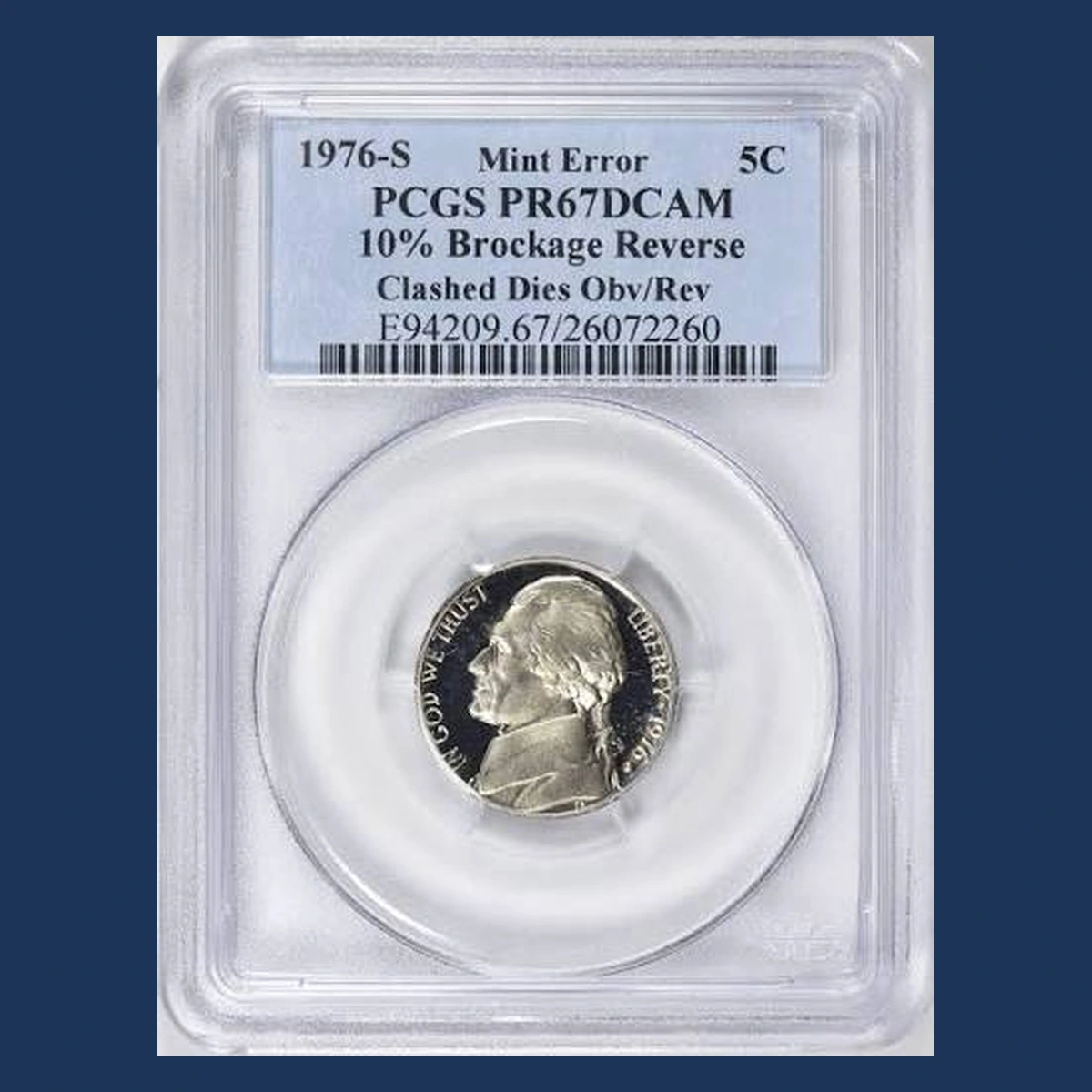
A brockage is a sunken, mirror-image design pressed into a new coin by another struck coin. The reported 1976-S Proof has this effect across about 10% of its back.
It is also described with die-clash marks on both faces. Those marks begin when the stamping tools hit each other without a blank between them, transferring faint parts of the opposite design.
The two effects differ in depth and appearance. The year report names a PR67 Deep Cameo example, but gives no precise position for the small brockage area.
Estimated Value
For an authenticated S Proof showing both reported effects, use an estimated $500–$3,000. This is a conditional range for the combined coin, not a confirmed sale price for that specimen.
A different, undated Jefferson nickel with 30% brockage and an off-center strike sold for $336 in June 2024. It provides an ordinary-strike comparison, while the special Proof finish and clear clash marks can support a higher range.
Do not add separate prices for each effect.
How to Identify
Keep the coin protected and study the back first. A 10× magnifier should reveal part of a recognizable design facing the wrong way and sinking below the surrounding surface.
Then look for much shallower traces of the opposite design on each face. A clash mark should follow a transferred design shape; random scratches or cloudy patches do not establish a clash.
Confirm the S and the collector finish before comparing with this reported Proof. Its stated grade is not a substitute for matching the actual features.
For a loose coin, record 5-gram and 21.21-millimeter comparisons with a scale and calipers and inspect the plain edge. Later pressure can also make a mirror impression, so intact original surfaces around its boundary matter.
14. 1976 Jefferson Nickel Struck on a Copper Cent Blank
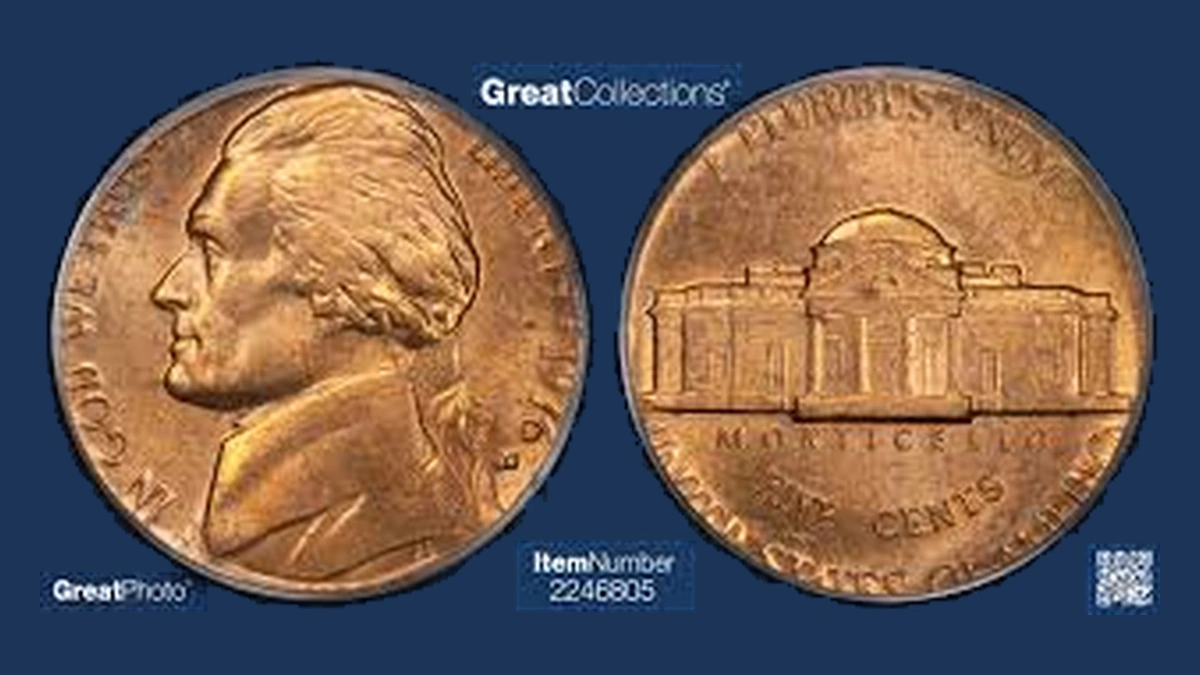
Jefferson can appear on a copper-colored disk that is too small to hold the full nickel design. A cent blank, the disk prepared before striking, entered the wrong press.
Ordinary 1976 examples include no-letter and Denver coins. Recorded Denver weights of 3.09 and 3.1 grams fit the period’s copper cent material.
A separate 1976-S Proof was also struck on a 3.1-gram cent blank. Its mirror-like background and frosted central details distinguish it from the ordinary strikes.
None of these blank errors requires surviving Lincoln lettering, because the disk had not first become a finished cent.
Estimated Value
Ordinary examples are estimated at $200–$1,000, while S Proof pieces are estimated at $2,500–$6,000. A Denver example sold for $408 in September 2024.
The PR68 Red Ultra Cameo Proof brought $4,800 in March 2023. Its grade describes excellent preservation with strong contrast between frosted detail and shiny fields.
That special collector coin should not set an ordinary brown Denver example’s price, even though both used copper cent blanks.
How to Identify
Brown color is not enough. Place an ordinary suspect beside a normal nickel and look for a genuinely smaller disk with nickel lettering cut off at its boundary.
A loose copper-cent-blank piece should be compared with 3.11 grams and 19.05 millimeters using a scale and calipers. Those are cent standards, below the nickel’s normal 5 grams and 21.21 millimeters.
Inspect the plain edge with a 10× magnifier for copper-colored metal throughout, rather than a thin applied coating. Filing marks would also weaken the claim.
For the S Proof, check the S and preserved mirror-like backgrounds as well as weight. Polishing an ordinary coin makes shine but does not create original Proof surfaces or prove that a cent blank was used.
15. 1976 Jefferson Nickel Nickel Impression on a Dollar-Sized Blank
The small Jefferson design sits near the center of a much larger disk. Its 1976 date and S remain clear despite the weak portrait impression.
The opposite face shows enlarged, sunken, reversed traces of Roosevelt’s neck, date, and mint letter. This is not simply a normal dime portrait paired with a normal nickel portrait.
The NGC-described piece weighs 22.37 grams and has a plain edge. Specialists have discussed mismatched tools and a possible test striking; the exact production sequence remains an interpretation of this unusual object.
Estimated Value
A working estimate is $10,000–$20,000 for this documented dollar-sized piece. Its unusual two-sided design places it far above an ordinary nickel on a smaller wrong blank.
Mint Error News records a $13,200 Heritage result for the type. The August 2016 Heritage appearance was not sold, so that date must not be attached to the reported $13,200.
This range concerns the documented object, not any home-altered disk with a small pressed portrait.
How to Identify
Compare both faces with the documented photographs before trying to name the mechanism. One side needs the centered, weak Jefferson impression with 1976-S; the other needs the expanded, reversed Roosevelt traces.
Use a 10× magnifier to distinguish sunken copied details from ordinary raised dime lettering. The two faces do not show two normal, equally sized coin designs.
The recorded 22.37-gram weight is close to a clad Eisenhower dollar’s 22.68 grams. For a loose piece, use a scale and calipers against the dollar’s 38.1-millimeter diameter, while recording the actual measurements.
A normal nickel is only 5 grams and 21.21 millimeters. Inspect the plain edge and complete surfaces for seams or added parts, then have the unusual metal-and-design combination examined in person.
Conclusion
These 1976 nickel errors span an estimated $20–$20,000, from modest expanded strikes to the unusual dollar-sized piece. The same year also offers affordable clips and much more expensive Proof nickels on copper cent blanks.
Let the metal and surviving design guide your next step. A light nickel may have lost part of its blank, while old Lincoln lettering proves that another finished coin went through the press.
Keep those differences with each photograph.