1938 Buffalo Nickel Error List with Pictures

The tiny D below FIVE CENTS is a useful first stop on a 1938 Buffalo nickel. Some coins show another D underneath; others preserve pieces of an earlier S.
An exceptionally preserved D-over-S coin sold for $25,300 in August 2004. The 1938 Buffalo Nickel errors covered here span estimated whole-coin values of $20–$26,000.
All regular Buffalo nickels dated 1938 came from Denver. Read on to separate their unusual mintmarks, missing metal, and reported leg detail from ordinary wear.
1. 1938-D Buffalo Nickel Peeling Metal on the Back
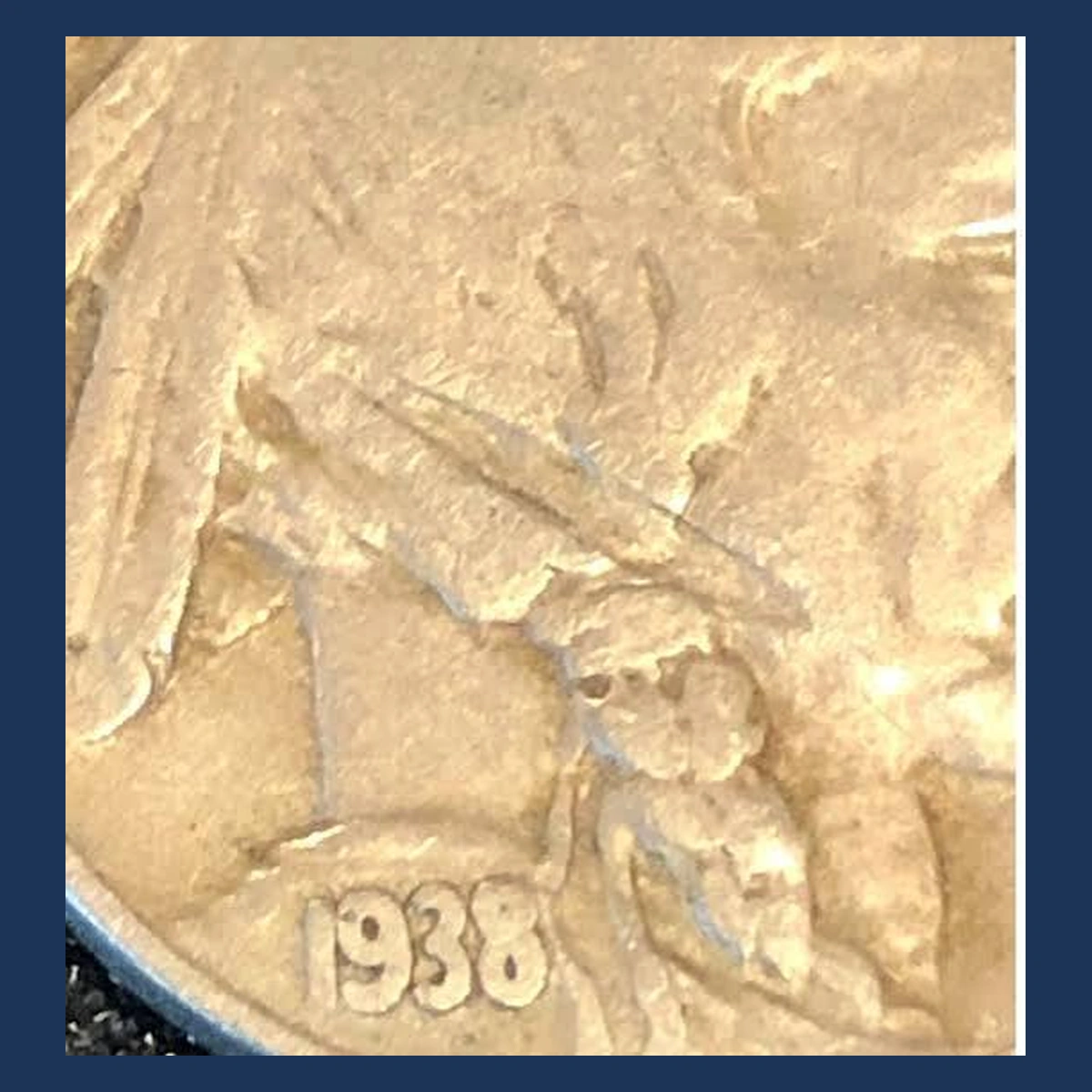
A small layer can lift away from the metal beneath it, leaving a flap or a rough shallow patch. This surface separation is called lamination.
A seller described the defect on the back of a golden-toned 1938-D nickel in an older PCGS holder. The MS65 grade describes an unworn coin with relatively few marks.
The seller’s description does not establish that PCGS separately certified the lamination. Its location needs to be matched to the actual surface.
The copper-nickel alloy is not plated. Peeling original metal therefore differs from losing a coating or merely changing color.
Estimated Value
Allow an estimated $30–$350 for genuine 1938-D surface laminations, ranging from worn examples to attractive unworn coins with clear separation. The amount refers to the complete nickel.
A shallow flake may add little, while a larger attached layer can make the error easier to appreciate. The MS65 seller example also carries value from its preservation and color.
A grading holder by itself does not price the defect. Buyers should be able to see the original boundary without disturbing the metal.
How to Identify
Leave any attached flap in place and photograph the back with light coming from the side. Find the edge of the separation without lifting it.
For a loose coin, use a scale and calipers against the normal 5 grams and 21.21 millimeters. Check its plain edge too; a small lost flake may not change a household scale reading.
Use a 10× magnifier to compare the exposed area beneath the flap with the surrounding struck design. A scratch can push metal up along its sides, while a stain changes color without creating a separated layer.
The holder’s condition grade does not establish the seller’s lamination claim. Look for the actual boundary where original coin metal has lifted or separated.
2. 1938-D Buffalo Nickel D over D Mintmark
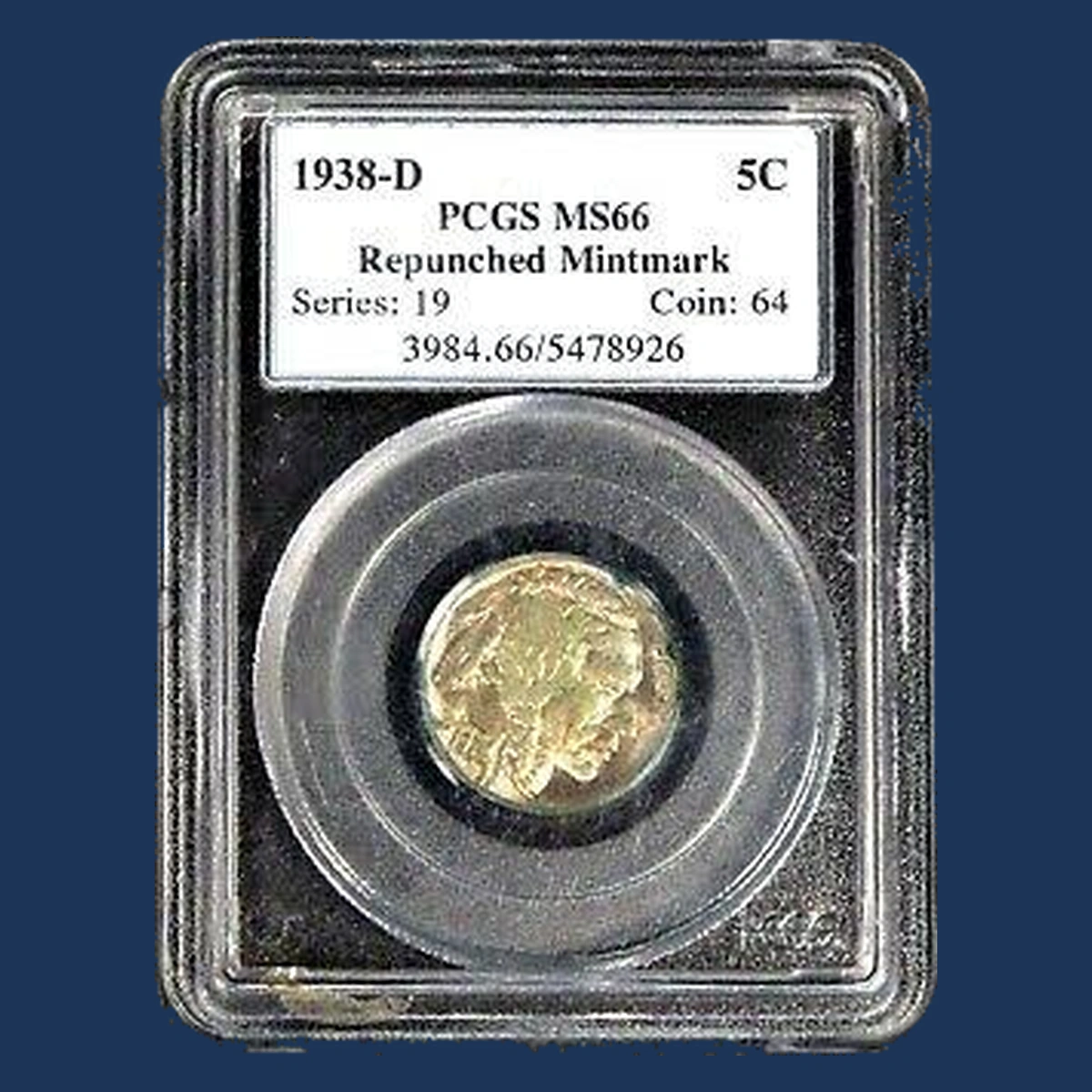
A second curved stroke beside the D can preserve an earlier position of the same letter. The mintmark was punched into the steel stamping tool, then entered again slightly out of place.
The finished coin received that already repeated letter when it was struck. It did not need two trips through the press.
D-over-D examples appear in a specialist collector’s illustrated set. A year guide also reports a three-punch D pattern, which needs its own photograph.
These belong to the same basic mintmark error. An extra curve should match a D before it is named as that letter.
Estimated Value
Estimate $20–$1,000 across genuine D-over-D examples, depending on the strength of the extra letter and the whole coin’s condition. Recognizable examples generally belong nearer the lower part of that span.
An unworn nickel with clear extra strokes makes a stronger comparison than a worn coin with an indistinct bump. Exceptional surface quality can raise the price.
A report of three impressions does not prove a rarity count. The visible pattern must justify the identification before any premium is assigned.
How to Identify
Locate FIVE CENTS on the back, then move down to the D beneath it. Use a 10× magnifier to follow any extra straight and curved portions around the main letter.
Compare the entire outline with an identified D-over-D photograph. An isolated lump could come from damage or a small break in the stamping tool.
Normal measurements remain about 5 grams and 21.21 millimeters for a loose coin checked with a scale and calipers. Its edge is plain, but neither measurement identifies the mintmark pattern.
A sideways or shifted earlier D needs its own matching strokes. Do not change the identification to D-over-S simply because the first curve is difficult to interpret.
3. 1938-D Buffalo Nickel Straight Clip
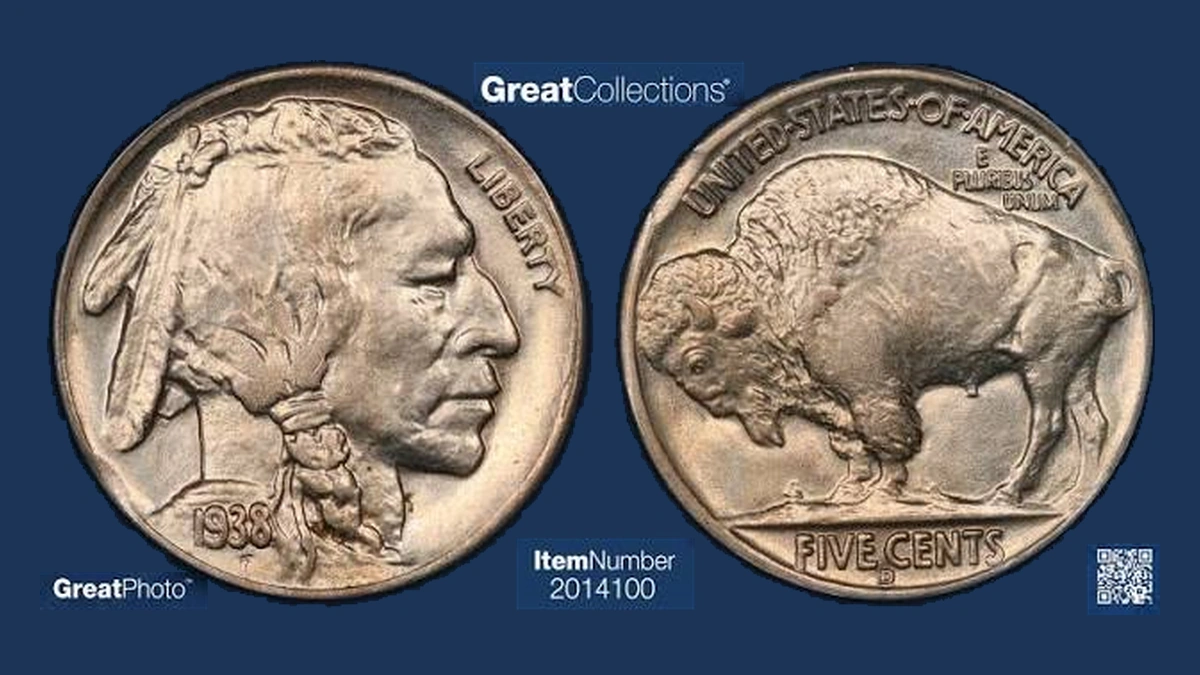
A straight section can be missing when a blank is punched across the end or edge of the metal strip. The incomplete disk then receives the coin’s design.
The rim forms around that earlier shortage, rather than being cut off after the coin is finished. This is called a straight clip.
A year guide describes a 1938-D example with about ten percent missing and an MS65 grade. That grade indicates an unworn coin with relatively few marks.
The report does not specify a clock position. A straight gap on another coin must be examined on its own boundaries.
Estimated Value
The year guide reports a $630 sale for its ten-percent MS65 example, without supplying a sale date. Estimate $100–$1,000 for comparable genuine straight clips, allowing for condition and the missing area.
A clear date and original struck rim help a collector understand the error. Small shortages on worn coins need lower comparisons than an attractive unworn example.
This is a price for missing metal that predates the strike. Later saw cuts or filing do not receive the same error value.
How to Identify
Weigh a loose candidate against the normal 5 grams and measure its intact spans against 21.21 millimeters using calipers. Missing weight supports a shortage, but it cannot show when the metal was removed.
Follow the straight gap to its two ends, where the struck rim begins again. Use a 10× magnifier to inspect the design beside those ends and the surviving plain edge.
Look for file tracks, sharp burrs, or letters sliced through after they were struck. Rim weakness opposite an original clip can help, although it need not appear on every example.
The reported ten-percent figure belongs to that example. Photograph how the remaining design meets the gap rather than trying to make every genuine clip match the same percentage.
4. 1938-D Buffalo Nickel Reported Three-and-a-Half Legs
Part of a buffalo leg appears missing on a 1938-D coin shown in a specialist collector’s set. The owner describes it as a three-and-a-half-leg minor variety and a discovery coin.
The displayed grade is PCGS MS62, meaning an unworn coin with noticeable marks. The collector’s statement is not the same as an independent check of the full certification record.
The name alone does not establish which leg segment is affected or how it disappeared. It should not borrow the familiar markers of the 1937-D three-legged variety.
Abrasion and weak striking can also reduce leg detail.
Estimated Value
For a genuine example matching the reported variety, use a conditional estimate of $200–$3,000. This is a comparison with collectible missing-design varieties, not a recorded sale of the displayed coin.
The preserved leg pattern and reliable identification matter more than a nickname. Ordinary wear or a scraped-away leg should not receive the same premium.
Condition also affects the whole coin. A clear unworn example would offer a better view of the missing segment than a heavily worn nickel.
How to Identify
Compare all four leg positions with a normal 1938-D back before deciding which detail is absent. Photograph the entire buffalo so the missing segment stays connected to the rest of the design.
Use the collector’s illustrated example for this particular claim, not a different year’s three-legged coin.
A 10× magnifier helps reveal scraping, altered texture, or wear around the weak area.
For a loose candidate, use a scale and calipers against 5 grams and 21.21 millimeters and inspect the plain edge. Normal dimensions cannot establish a leg variety.
The complete pattern must match the reported 1938 coin without relying on an assumed cause.
5. 1938-D Buffalo Nickel D over S Mintmark
An earlier S can leave curved traces underneath a later D. The two letters were punched into the same stamping tool, with Denver’s D becoming the final visible mintmark.
The resulting coin was struck at Denver. It does not represent a regular 1938 San Francisco Buffalo nickel issue.
Collectors call the feature D-over-S, or an overmintmark because two different mint letters overlap. Several patterns exist, so one coin’s visible S remnants need not look exactly like another’s.
This differs from D-over-D repunching. The earlier strokes must fit an S rather than merely showing an extra curve.
Estimated Value
A PCGS MS68 example set a recorded historical high of $25,300 in August 2004. That exceptional preservation should not be used to price every D-over-S nickel.
Estimate $25–$26,000 across worn pieces through exceptional top-grade examples, with many ordinary collectible coins closer to $50–$600. A separate MS67 certification record shows a $576 October 2021 sale.
The visible earlier S, surface quality, and exact variety guide the comparison. High grade can account for much of the price difference.
How to Identify
Confirm the Buffalo design and the 1938 date first; Jefferson nickels were also made that year. Locate the D below FIVE CENTS on the back.
A loose Buffalo nickel normally weighs about 5 grams and measures 21.21 millimeters on a scale and calipers. Its edge is plain, but those measurements cannot identify the earlier letter.
Under a 10× magnifier, follow the extra strokes beneath and around the D. Compare them with the same documented D-over-S pattern, since different patterns preserve different pieces of the S.
A recognizable S curve is more useful than one isolated bump. If the extra strokes instead fit the straight side and curved bowl of another D, compare D-over-D examples.
Conclusion
Estimated values for these 1938-D Buffalo nickel errors run from $20 to $26,000. The high end belongs to exceptional coins, while a small mintmark variety or shallow lamination may be much more affordable.
Check the actual D, missing section, or leg detail before using a price comparison. Keep this Buffalo design separate from the 1938 Jefferson nickel, and remember that a seller’s error description is different from a grading service’s condition grade.