1898 Nickel Error List with Pictures

A wrong-size blank need not look copper-colored. An 1898 Liberty Nickel on a foreign blank sold for $977.50 in a Heritage auction reported by Mint Error News.
The 1898 Liberty Nickel errors below have estimated values of $10–$3,000. They include extra date outlines, missing metal, and a strike pushed toward the edge.
Read on to see which visible clues call for a magnifier and which need a weight or size check.
1. 1898 Liberty Nickel Raised Lines from a Cracked Tool
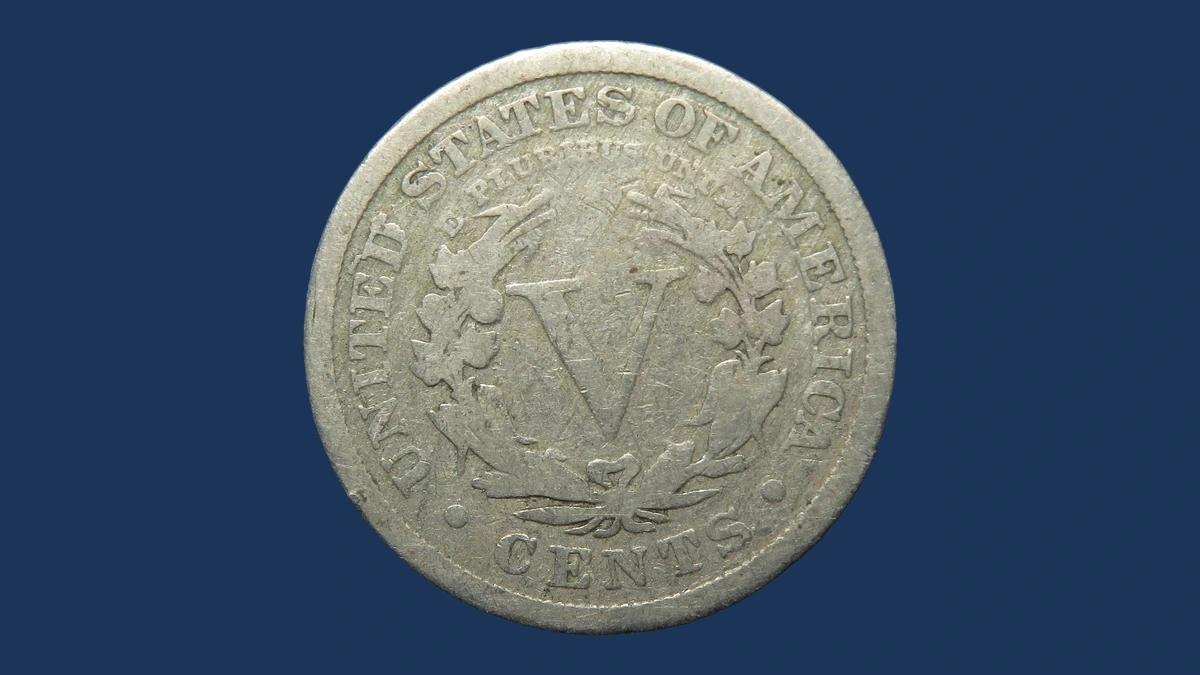
A narrow ridge near a star or letter may look like an extra line in the design. It can form when the steel stamping tool develops a crack.
Coin metal enters that small opening during striking and copies it as a raised line. The tool is called a die, which explains the name die crack.
This error type is reported for 1898 without one established path across the coin. A scratch, an opening in the coin itself, or rough corrosion needs a different explanation, even when it lies near the same letters.
Estimated Value
An estimated $10–$150 covers ordinary worn through attractive examples with a genuine raised crack. A faint line often contributes little beyond the coin’s normal value.
The upper end requires a clear feature and better preservation, rather than a claimed rare pattern without a matching coin. This is an estimate, not a reported sale of a particular 1898 crack.
Price the complete nickel once; several branches from the same cracked tool do not create separate full-coin values.
How to Identify
Change the light direction before deciding whether the line is raised. Under a 10× magnifier, a scratch usually has a groove, even if displaced metal stands along its sides.
Follow a true raised ridge across the nearby design, checking for material attached on top. If the line is an actual opening, inspect the plain edge to see whether the coin itself has cracked.
A loose nickel should be near 5 g on a scale and 21.2 mm with calipers. Those normal measurements do not prove that a tool crack caused the line.
Compare the line’s center with the adjacent surface: a continuous raised ridge supports a die crack more than a cut or a gap.
2. 1898 Liberty Nickel Peeling Metal
Peeling metal can leave a flap or a shallow rough patch where a thin piece has come away. This is lamination, a separation within the metal mixture.
The ordinary 1898 nickel contains copper and nickel mixed throughout. It does not have a separate outer coating that should peel off as part of its normal construction.
Lamination is reported for this year without a fixed location on either face. A patch on one coin therefore need not sit beside the same letter or portrait feature as a patch on another.
Estimated Value
Estimate $15–$250 for a genuine local peel, depending on condition, size, and how clearly the layer can be seen. A tiny defect on a worn nickel often adds little.
A retained flap can attract more interest than a vague rough patch. These are whole-coin estimates, not a sale assigned to a photographed 1898 specimen.
A coin missing a thin local layer should also remain distinct from a much larger split through the entire blank.
How to Identify
An attached flap should stay attached.
Do not pull it up to expose the underside or clean beneath it.
Look across the surface from a low angle, using a 10× magnifier to find the thin layer’s boundary. Metal scraped aside after minting often shows a gouge and a pushed-up lip instead.
Check where the peel meets surviving letters or portrait detail, then inspect the plain edge if the separation reaches it. A natural opening follows a layer within the coin rather than sitting above an undamaged design.
For a loose piece, compare 5 g on a scale and 21.2 mm with calipers. Little weight may be lost if the flap remains, so inspect its attachment rather than relying on weight alone.
3. 1898 Liberty Nickel Clipped Blank
A curved bite in the outline can begin before the design is struck. The unfinished metal disk, called a blank, may be punched from a strip partly overlapping an earlier hole.
That leaves an incomplete disk for the press. Its missing arc becomes a clipped-blank error when the design is added.
This type is reported for ordinary 1898 Liberty Nickels without a fixed percentage or clock position. A later cut can imitate the outline, so the rim beside the gap is more informative than the curved shape alone.
Estimated Value
A confirmed curved clip suggests an estimated $25–$350 whole-coin range. A readable date, a clear original boundary, and better surfaces can support a stronger price.
As a different-design comparison, a 1997-P Jefferson Nickel with a 20% clip sold for $124 in March 2025. That amount does not establish the size or value of an 1898 clip.
A cut made after minting receives no clip premium simply because its shape resembles an incomplete blank.
How to Identify
Begin at the two ends of the missing arc, where the struck rim approaches the gap. A 10× magnifier may reveal metal flow and weakness that formed during striking, rather than a sharp cut through finished detail.
Use a scale to compare a loose coin with the normal 5 g, then calipers across intact spans against 21.2 mm. A clip removes weight but can leave the original diameter between surviving points.
Inspect the remaining plain edge and the exposed arc for filing or saw marks. Weakness on the opposite rim can support a clip, but may not be obvious; prioritize the natural transition at both ends of the gap.
4. 1898 Liberty Nickel Repunched Date
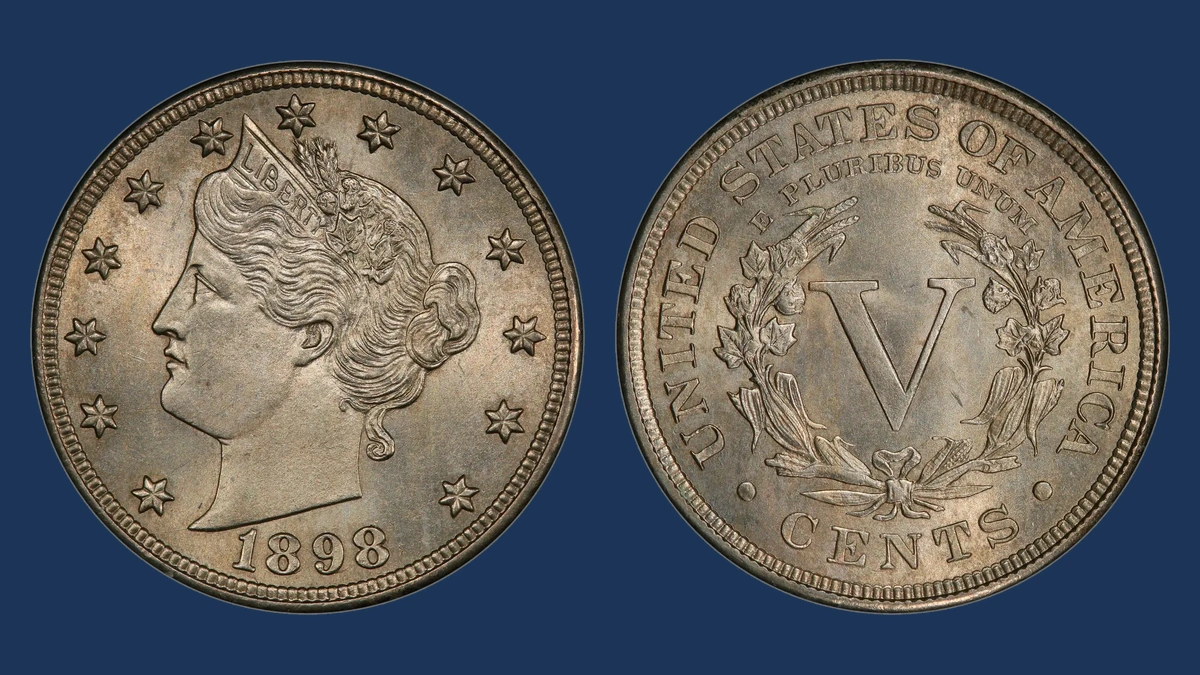
Extra pieces of digits can remain where a date punch entered the stamping tool more than once. The resulting coins copy those earlier outlines along with the finished date.
This is a repunched date. Reported 1898 clues include the base of 1, the lower first 8 toward the right, and the inside of the 9’s tail.
A cataloged FS-302 example was graded NGC Uncirculated Details, meaning it retained unworn detail but had a condition problem. That problem is separate from the extra date strokes and should not be counted as another Mint error.
Estimated Value
An ANACS AU58 FS-302 example sold for $528 in June 2019. Estimate $40–$1,000 for identified 1898 repunched dates across worn and attractive unworn condition.
The auction record describes a lightly worn discovery example. It is a different coin from the NGC Uncirculated Details listing.
Clear matching outlines matter, but cleaning or other damage can reduce the whole-coin value even when more of the original design survives.
How to Identify
Locate the 1, the first 8, and the 9 through a 10× magnifier. Check beneath the 1, to the right of the lower first 8, and inside the 9’s tail.
Put an identified example beside the coin at the same angle, rather than enlarging just one ambiguous mark. A real older digit outline should follow the shape and position of the earlier punch.
For a loose nickel, confirm roughly 5 g with a scale and 21.2 mm with calipers, and check the plain edge. These standards help establish the coin itself; they cannot identify the date variety.
Move the light and compare the complete date again. Extra rounded digit strokes that remain in the same places are stronger evidence than flat shelves or glare.
5. 1898 Liberty Nickel Off-Center Strike
The border teeth can be cut off even while the word CENTS remains complete. That is the appearance described for an 1898 nickel struck about 15% off center toward eleven o’clock.
The coin was graded PCGS MS64, an unworn grade. Its design shifted because the blank was not centered beneath the stamping tools.
This specific example shows why checking letters alone can miss a modest offset. Follow the small border details and the unused metal too, while keeping this coin’s direction separate from any other off-center 1898 example.
Estimated Value
For a genuine dated off-center example, estimate $150–$2,000. The upper portion suits attractive unworn coins with clear displacement and good remaining detail.
The recorded MS64 coin has no auction amount assigned here. For comparison, a different-year 1902 Liberty Nickel struck 20% off center, graded XF40, sold for $561.20 in March 2026.
That worn comparison helps frame the market without pricing the two coins as identical examples.
How to Identify
Read CENTS, then inspect the small border teeth beyond it through a 10× magnifier. On the recorded example, the word is intact even though part of the surrounding border was lost.
Compare both faces and locate the unused metal opposite the shifted design. An uneven rim on just one face can have a different cause.
A scale should remain near 5 g if no metal has been removed. Calipers can record any spread beyond the ordinary 21.2 mm outline.
Inspect the plain edge for grinding or flattening after striking. For this particular MS64 coin, follow the roughly fifteen-percent shift toward eleven o’clock rather than requiring missing letters that the description says remain complete.
6. 1898 Liberty Nickel Strike on a Foreign Blank
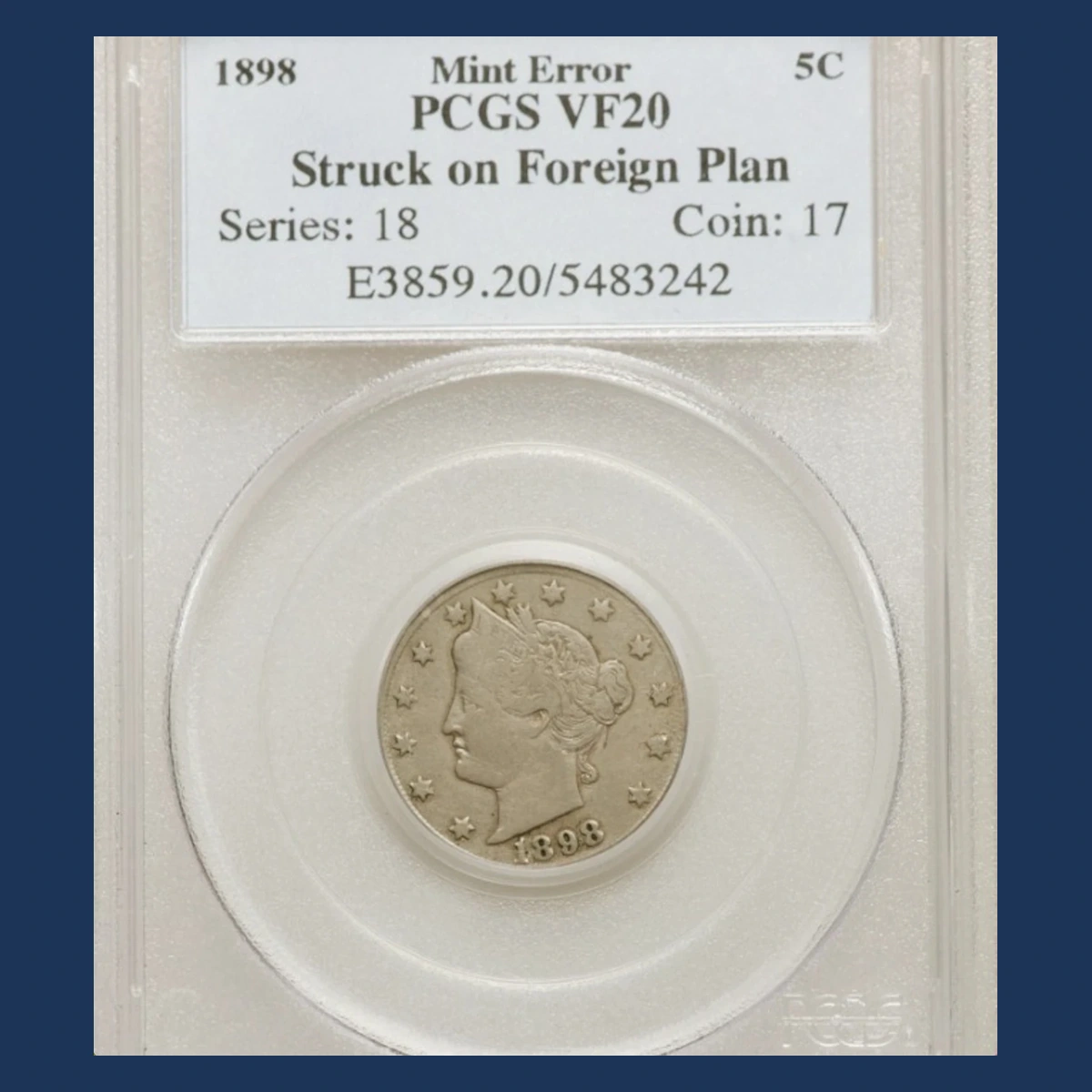
A nickel design can appear soft or crowded when the press receives a blank meant for another coin. The blank may still have a silver-gray appearance if its metal mixture resembles a normal nickel.
Recorded 1898 examples include a PCGS VF35 piece identified as struck on a Nicaragua five-centavo blank. A separate NGC AU55 foreign-blank coin had Nicaragua suggested as its likely origin.
Those descriptions are not interchangeable measurements. The reported foreign blank uses copper and nickel, so this error should not be rewritten as a copper cent-blank strike merely because the dimensions differ.
Estimated Value
A foreign-blank 1898 nickel graded NGC AU55 brought $977.50 in a Heritage sale reported in Mint Error News. Estimate $300–$3,000 for comparable authenticated pieces, allowing for wear and the strength of the blank identification.
The price is for the complete error coin, not a normal Nicaragua five-centavo piece. The stronger end requires convincing measurements and preservation.
No exact weight or sale is assigned here to the separate PCGS VF35 example.
How to Identify
Use a scale and calipers before drawing conclusions from color. Compare the loose coin with the normal nickel standards of 5 g and 21.2 mm, keeping the actual readings with its photographs.
Next examine the plain edge through a 10× magnifier for filing or corrosion that could reduce a normal coin. A matching copper-nickel color does not rule out a foreign blank.
Compare the design with an identified example, especially where the outer details approach the smaller outline. Weak detail alone can also come from wear or a poor strike.
The particular foreign denomination requires professional confirmation from measurements and metal examination. Ask that the claimed blank identification be checked, rather than accepting a country name based only on appearance.
Conclusion
For 1898 Liberty Nickel errors, estimated whole-coin values run from $10 to $3,000. A faint raised crack belongs in a different price range from a confirmed foreign-blank strike.
Follow the specific clue: extra digit outlines, a natural missing section, a peeling layer, or an offset design. Keep color separate from metal identity, and compare the coin’s measurements before assuming a foreign blank was used.