1889 Nickel Error List with Pictures

A nickel design on a small brown disk is an eye-catching mistake. Scotsman’s 2026 catalog estimated one cleaned 1889 cent-blank example at $2,200–$2,400, before the buyer’s fee.
That is a catalog estimate, not a sale result. This 1889 nickel error list covers estimated values of $30–$6,000, including subtle date marks and coins with unusual outlines.
Read on to learn which details matter before comparing a find with a valuable error.
1. 1889 Liberty Head Nickel Broadstrike
Extra metal around the design can make a broadstruck nickel look wider than it should. During striking, the collar, a ring around the blank, failed to keep the metal within its normal outline.
The design remains complete while the border spreads outward. This differs from a strike that misses part of the blank.
A 2013 auction listing describes an 1889 example graded ANACS VF20 Details with corrosion. The grade indicates moderate wear, while the corrosion describes later surface damage rather than another part of the minting error.
Estimated Value
For an identified broadstrike, estimate $50–$300, comparing similar circulated Liberty Head nickels with expanded borders. A clearly visible spread and readable date make the error easier to display.
The corroded VF20 Details example belongs among damaged comparisons. Its condition should not set the price of an attractive, original coin.
Wear can soften the outer design, and heavy pitting may hide how the metal spread. Those problems can reduce appeal despite the unusual shape.
How to Identify
A loose candidate’s width and weight provide a useful starting pair of measurements. Use calipers to compare the outline with 21.2 millimeters and a scale to compare the weight with 5 grams.
A wider coin of roughly normal weight may have spread during striking, but examine every outer letter and star as well. A broadstrike preserves the full design, whereas missing design opposite an untouched crescent points toward an off-center strike.
With a 10× magnifier, check the plain edge and the widened border for filing, hammering, or squeezing. Corrosion pits can obscure the original shape, so follow surviving design into the border rather than counting every rough spot as mint-made.
2. 1889 Liberty Head Nickel Repunched Date FS-301
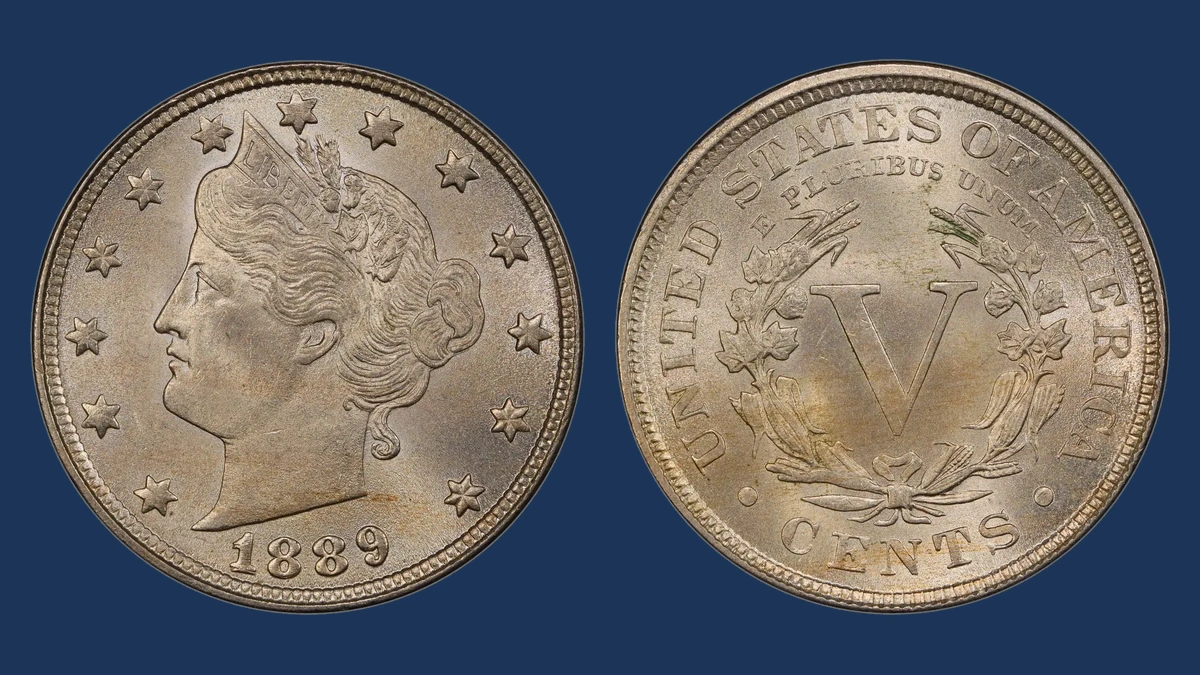
The date can carry small extra strokes when its punch entered the steel stamping tool more than once. Coins made from that tool then repeat those traces beside the normal digits.
Collectors call this a repunched date. It is different from a finished coin receiving two strikes.
GreatCollections lists an 1889 FS-301 example graded PCGS XF40, meaning it has noticeable wear but retains useful detail. Its variety number identifies the date pattern to compare; a random bump beside an 8 or 9 does not establish the same variety.
Estimated Value
Use an estimated range of $50–$600 for properly matched FS-301 examples, comparing repunched dates on similar Liberty Head nickels. Clear date remnants and attractive surfaces support the stronger end.
A worn example may preserve enough detail for identification even when the small traces are faint. An unworn coin can cost more because of both its condition and variety.
Cleaning or scratches across the date can hurt appeal. A sharp photograph helps show what a buyer is paying for.
How to Identify
Place a straight-on photograph of the whole date beside the cataloged FS-301 example. Match the actual extra strokes before assigning that number.
Use a 10× magnifier and move the light from one side to the other. Rounded raised remnants should stay in the same position as the shadows change.
Flat shelves, scratches, and corrosion bumps need different explanations. Keep the complete date visible so that one isolated mark does not drive the comparison.
For a loose intact coin, a scale and calipers should read near 5 grams and 21.2 millimeters. Check the plain edge for alteration; ordinary measurements support the coin’s identity but do not identify the date variety.
3. 1889 Liberty Head Nickel Peeling Metal Layer
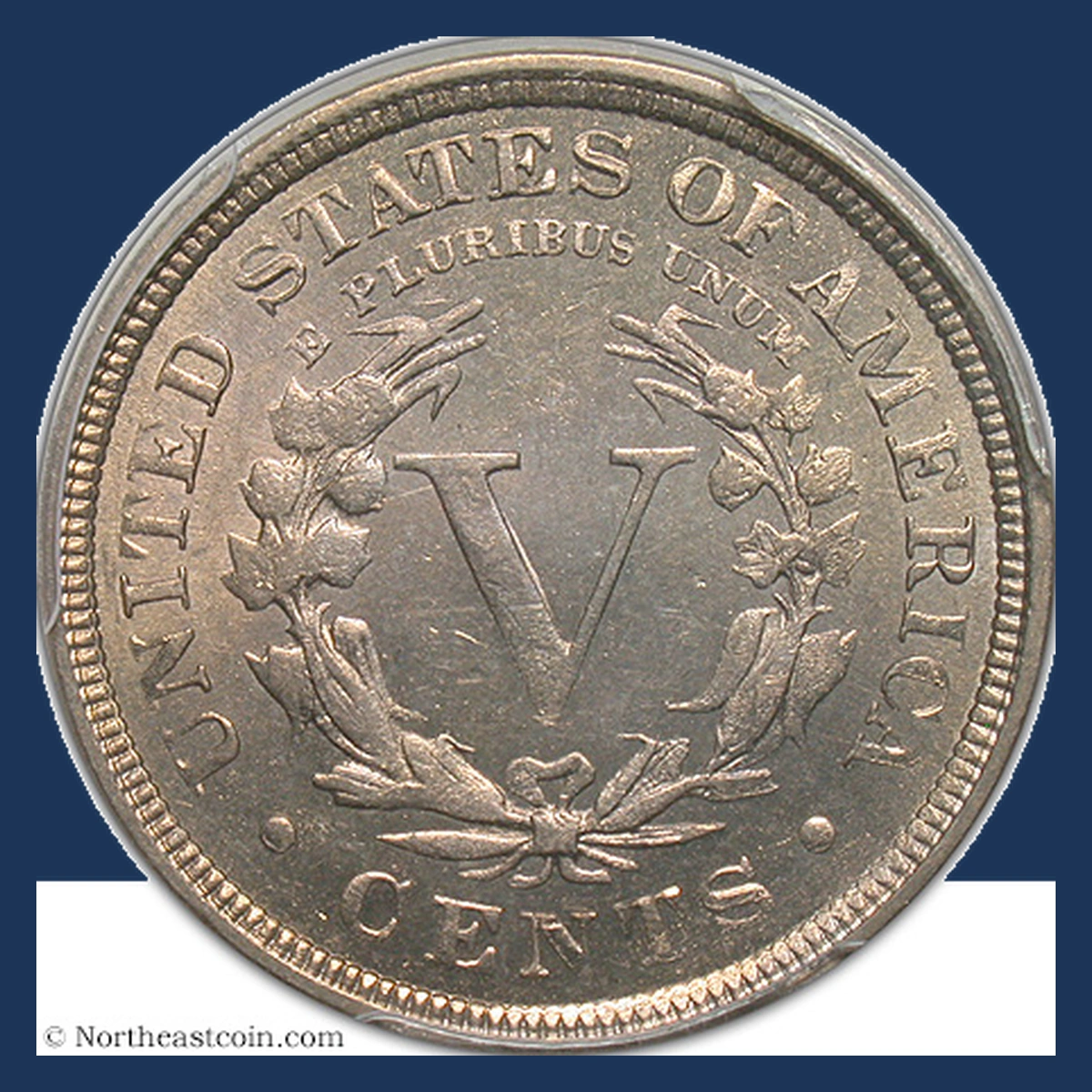
A thin flap or missing surface layer can begin inside the metal strip used to make a blank. If that metal separates, the finished nickel may show a peeling surface rather than a clean, solid face.
One dealer example is graded PCGS MS64, meaning it is unworn with some marks. Its original surface still matters when judging the error.
The listing identifies a laminated blank, but the exact affected area needs to be matched to its photographs. An ordinary nickel is a copper-nickel alloy throughout, so this is not a missing copper center or a modern layered covering.
Estimated Value
Estimate $30–$800 for genuine examples, allowing for the size of the peel and the coin’s condition. The PCGS MS64 example was listed at $750, a dealer asking price rather than a confirmed sale.
A visible separation with attractive surrounding detail makes the flaw easy to understand. Heavy wear, scratches, or a large missing piece that removes important design can reduce its appeal.
An attached flap should stay in place; removing it changes the object being valued.
How to Identify
Leave a lifted flap untouched and photograph its attachment under low side lighting. A 10× magnifier should show where the surface separates from underlying metal, rather than where a cutting tool scraped a trench.
If the coin can rest safely on a scale, compare its weight with the normal 5 grams. Metal already lost can lower the reading, while a sheet still attached may leave it close to normal.
Check an undamaged span against 21.2 millimeters with calipers, keeping their tips away from the lifted layer. Then inspect the plain edge and both faces for signs of prying, which can turn an original separation into a damaged coin.
4. 1889 Liberty Head Nickel Off-Center Strike
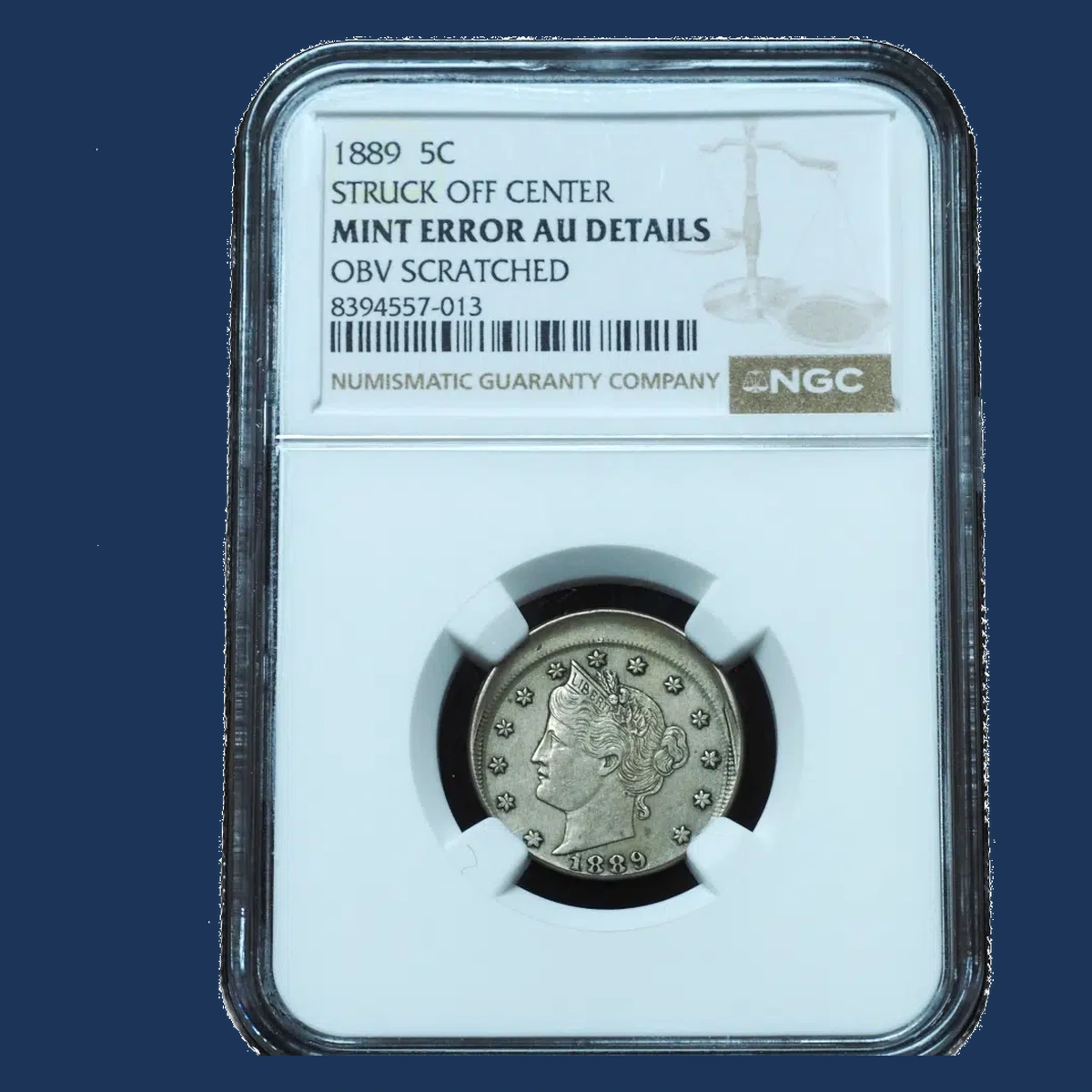
Two partly missing stars help show where this nickel missed the stamping tools. The documented NGC MS62 coin was struck 15% off center toward 7:30, leaving part of the design beyond the blank.
Untouched metal remains on the other side. Its gold and gray coloring is separate from the striking error.
MS62 means the coin is unworn but has noticeable surface imperfections. The shift in the design, rather than its color or grade alone, explains the error; both faces need to agree with the blank entering out of position.
Estimated Value
Estimate $300–$2,500 for genuine dated examples, with preservation and the visible shift guiding comparisons. An unworn coin with clear design can attract more interest than a heavily worn piece.
For a different-year comparison, an 1893 Liberty Head nickel struck 15% off center sold for $1,725 in November 2007. That historical result concerns a separate coin.
A readable date helps establish the year. Scratches or cleaning can lower appeal even when the displacement is dramatic.
How to Identify
Find the first two stars beside the date and see where their outlines run beyond the metal. On the documented example, that loss belongs to the recorded 15% shift toward 7:30.
Turn to the back and locate the corresponding displacement. A narrow rim on only one face does not by itself show an off-center strike.
Under a 10× magnifier, follow the boundary between struck design and untouched metal. The crescent should remain present, rather than being an area filed off a finished nickel.
Use a scale and calipers on a loose coin to compare with 5 grams and a normal 21.2-millimeter diameter. Record its actual outline and inspect the plain edge for later cutting or crushing.
5. 1889 Liberty Head Nickel Struck on a Cent Blank
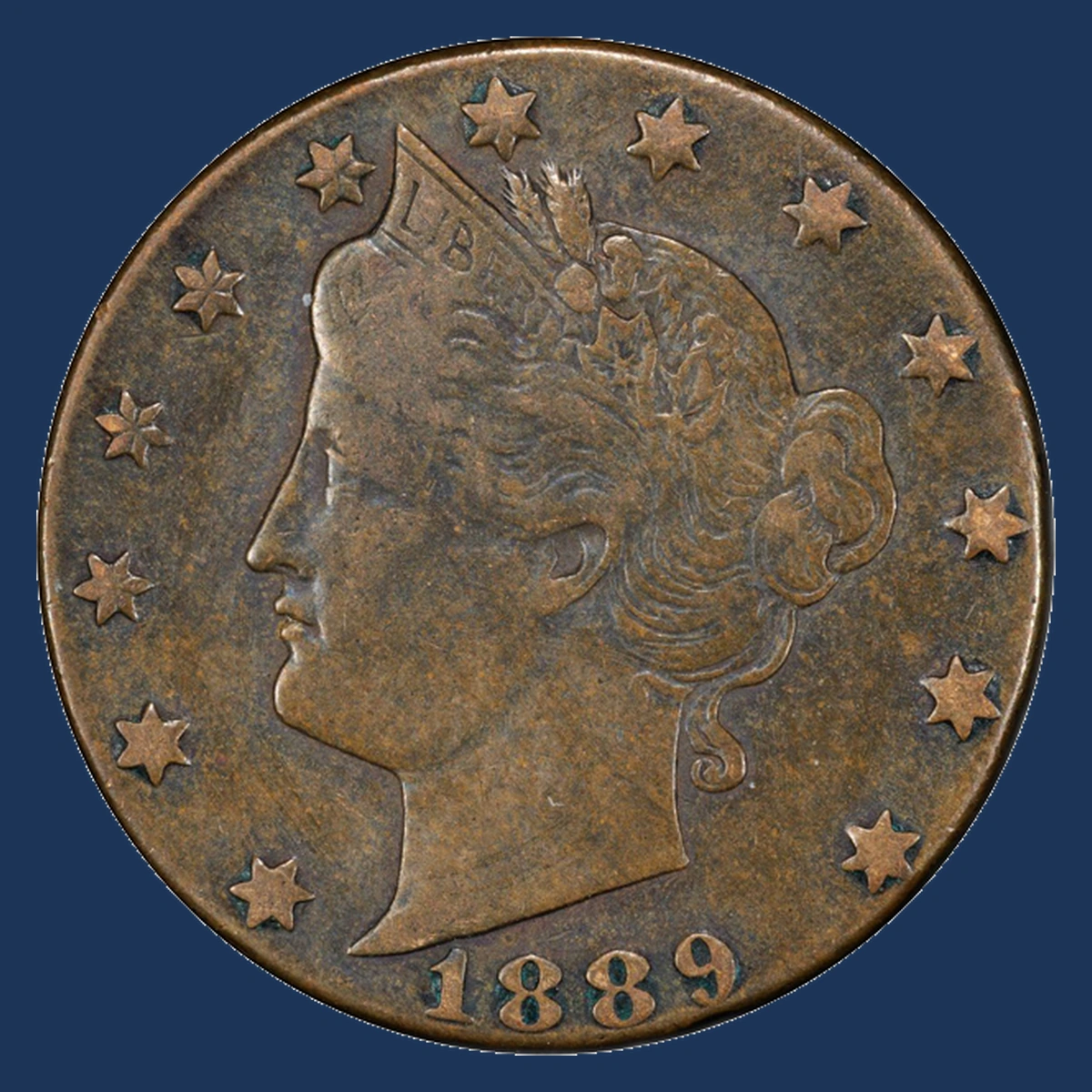
A smaller brown blank gives the nickel design less room than usual. When a blank intended for a cent receives the nickel’s design, the outer details can extend beyond the available metal.
Scotsman describes an 1889 example as PCGS VF Details, cleaned. That means the coin has moderate wear and later cleaning, in addition to the original wrong-blank error.
A separate published example is graded NGC AU Details, indicating lighter wear with a condition problem. These descriptions concern different specimens; their grades and surfaces should not be combined into one coin.
Estimated Value
For authenticated cent-blank examples, estimate $2,000–$6,000. Scotsman’s 2026 catalog entry estimated the cleaned VF Details coin at $2,200–$2,400 before its 18% buyer’s fee.
That estimate is not a completed auction result. For context, a different 1905 cent-blank Liberty Head nickel sold for $3,120 in August 2024.
Readable dates, original surfaces, and attractive remaining design matter. Cleaning can lower a coin’s appeal even when the unusual blank is correctly identified.
How to Identify
For a loose candidate, weigh first and then measure its diameter with calipers. A period cent blank starts near 3.11 grams and 19.05 millimeters, compared with a nickel’s 5 grams and 21.2 millimeters.
Those are normal blank standards, not measurements of the two described examples. The strike can spread a smaller blank beyond its starting diameter.
Inspect the cropped design under a 10× magnifier. Does the lettering run naturally beyond the available metal, or has a tool cut through a completed border?
Follow the plain edge all the way around for grinding or filing. Brown color can come from plating and does not prove bronze.
Ask for a metal test that leaves no scratch. The composition should agree with the smaller blank suggested by the design and measurements.
Conclusion
The estimated range of $30–$6,000 covers very different 1889 nickel errors. A small surface peel, a spread-out coin, and a nickel struck on bronze need different comparisons.
Keep a close photograph of the date and both sides before checking weight or size. Preserve any attached metal, and leave sealed coins in their holders; original surfaces make both identification and price comparisons easier.