1880 Nickel Error List with Pictures

An extra outline below the second 8 does not tell the whole story of an 1880 nickel. One unworn ordinary-strike example with that feature sold for $46,000 in January 2006.
Similar date traces also occur on Proofs, collector coins made with special preparation. That distinction has a major effect on the prices of 1880 Shield nickel errors.
The examples below have estimated whole-coin values from $300–$50,000. Read on to check the letters, date, and metal before comparing prices.
1. 1880 Shield Nickel Re-engraved Fishhook S
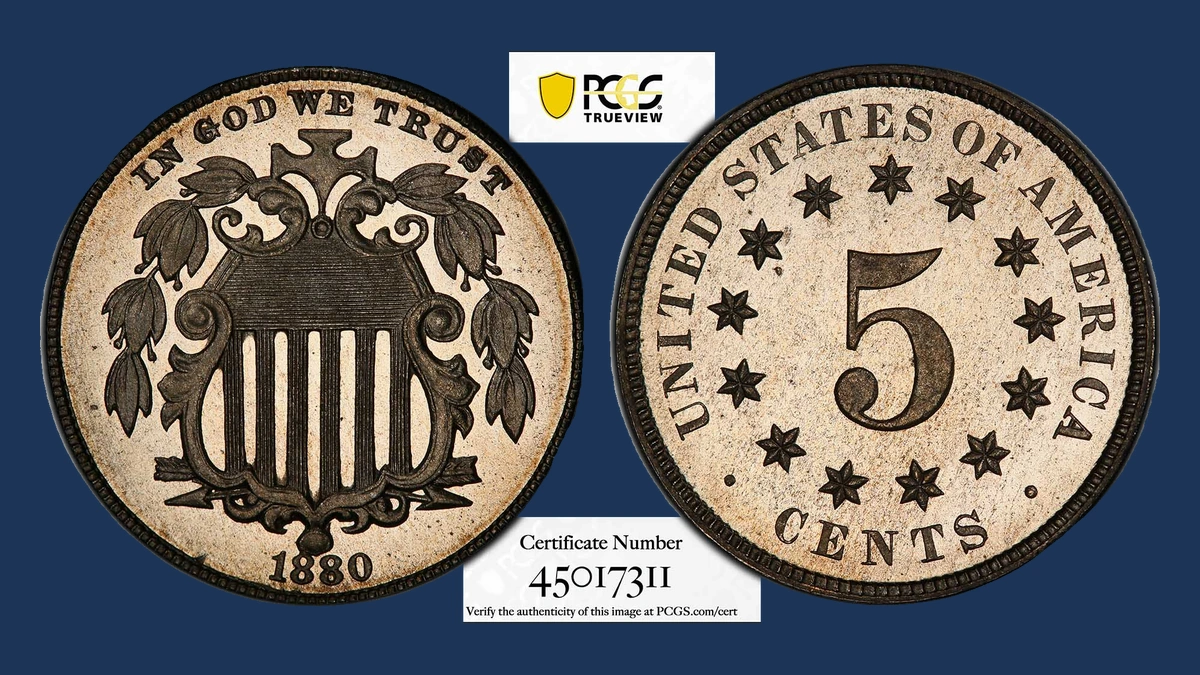
The ends of an S on the back can look oddly hooked instead of smoothly rounded. These shapes come from hand repairs to damaged lettering in the tools used to make the coin design.
A die is the steel tool that stamps a coin. Repairs made earlier in the tool-making process can pass into that die and then appear on the finished nickel.
PCGS illustrates an 1880 Proof with the fishhook S feature. The relevant letters are in STATES and CENTS; they are part of words, not an S mintmark.
Estimated Value
An estimated $500–$2,500 covers collectible Proof examples with clear repaired letters, from lower-condition pieces through attractive unworn coins. The amount is for the whole coin, not a separate premium for each S.
Surface quality and overall preservation can matter more than the size of the hook. Scratches or harsh cleaning can keep an otherwise obvious example near the lower end.
Compare with another 1880 Proof rather than applying the much higher prices of rare ordinary-strike coins.
How to Identify
Find STATES at the top of the back and CENTS below the large 5. Use a 10× magnifier on the final S in each word.
The repair described in STATES affects the top of its S; the repair in CENTS affects the bottom. Compare the hooked contours with a normal rounded letter, rather than treating every rough edge as a repair.
A loose Shield nickel should measure about 20.5 mm with calipers and weigh about 5 grams on a scale. Its edge is plain, with no regular grooves.
The illustrated 1880 example is a Proof, but the letter alone is not a test for that production type. Read the grading description and assess the whole coin before using a Proof price comparison.
2. 1880 Shield Nickel Lamination
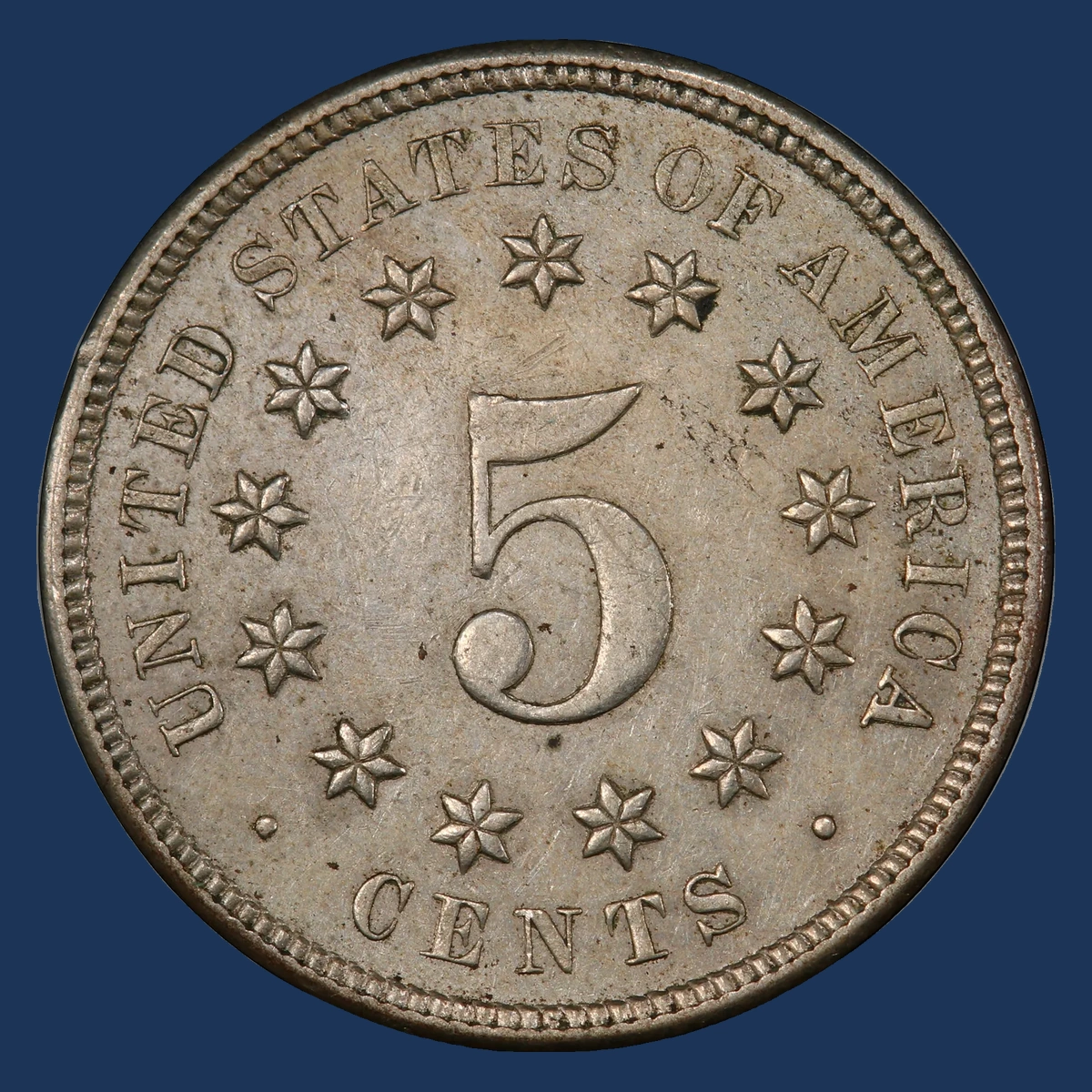
A small rough opening on the back can mark a layer of metal that has separated. This is lamination, a flaw within the original metal rather than a coating peeling off.
An owner showed an 1880 Shield nickel with a small back-side lamination and later reported its PCGS grade as PR55. That means a Proof with wear.
A separate seller record describes an AU55 nickel with minor lamination, but does not settle its production type. These are separate reports, and the Proof identity of the first coin should not be transferred to the other.
Estimated Value
For a worn Proof with a small genuine lamination, estimate $300–$1,500. A coin confirmed as a scarce ordinary strike could instead fall around $5,000–$20,000, depending on condition.
These figures mostly reflect the coin itself, not a large reward for a small peeling patch. The high ordinary-strike range does not apply merely because a worn Proof looks less shiny.
The separate AU55 seller description therefore needs its production type established before it can be priced against either group.
How to Identify
Do not peel or probe the affected area. Under a 10× magnifier, examine whether a thin layer separates from rough metal below it.
An 1880 nickel is a uniform copper-nickel alloy, not a layered modern coin. A peeling flaw should not be described as a missing outer clad layer.
Take a scale reading for a loose coin and compare it with 5 grams; a very small flaw may barely change the weight. Calipers provide the normal 20.5-mm diameter check, and the plain edge should show no grinding.
The owner’s example has its flaw on the back, but no exact clock position is established. Follow the actual opening in the metal, then check the holder’s Proof or ordinary-strike description before judging its value.
3. 1880 Shield Nickel Repunched Second 8
The second 8 in 1880 can have another portion of the same number showing below it. Collectors often call this the dropped 8, but no loose digit fell onto the coin.
The date was punched into a stamping tool in more than one position. The earlier impression remained visible beneath the final 8.
This feature occurs on Proofs and on an ordinary-strike example cataloged by Heritage. A tool first prepared for Proof production may later have struck ordinary coins, so the extra outline cannot identify the production method by itself.
Estimated Value
Heritage sold an NGC MS65 example for $46,000 in January 2006. That unworn ordinary-strike coin combined a scarce date with strong preservation.
Estimated values run about $500–$3,000 for Proofs and $5,000–$50,000 for ordinary strikes, depending on grade. These are whole-coin ranges, not the price of the extra 8 alone.
A worn Proof must not be priced as a scarce ordinary coin simply because circulation has dulled its reflective surface.
How to Identify
Begin by reading the grading description, if there is one. PR or PF indicates a Proof, while an ordinary-strike identification needs more than a shiny or dull surface.
Check a loose coin with a scale and calipers against 5 grams and 20.5 mm, and examine its plain edge. Both production types share those specifications.
Now enlarge the second 8 with a 10× magnifier. Look below it for a curved remnant of the earlier number; a normal digit merely touching the nearby round ornament is a different feature.
Compare the remnant with an identified repunched-date photograph. A flat ledge from striking movement or a scratch below the number should not substitute for the raised outline of an earlier 8.
Conclusion
The second 8, the curved ends of an S, and a peeling surface each reveal a different kind of mistake. None alone settles whether an 1880 nickel is an ordinary strike or a Proof.
Estimated whole-coin values span $300–$50,000, with much of that spread reflecting rarity and condition. Match the coin’s production type first, then compare the small feature that caught your eye.