2010 Half Dollar Error List with Pictures

A 1991-P Kennedy half dollar with two overlapping designs sold for $1,092.50 in 2009. It is a comparison for the 2010 half dollar errors below, not a recorded 2010 sale.
Estimated values span $10–$1,200. Read on to distinguish a peeling surface, missing initials, repeated design details, and shifted strikes, while remembering that 2010 coins came with several different metals and surface finishes.
1. 2010 Kennedy Half Dollar Struck-Through Error (Estimated Up to $150)
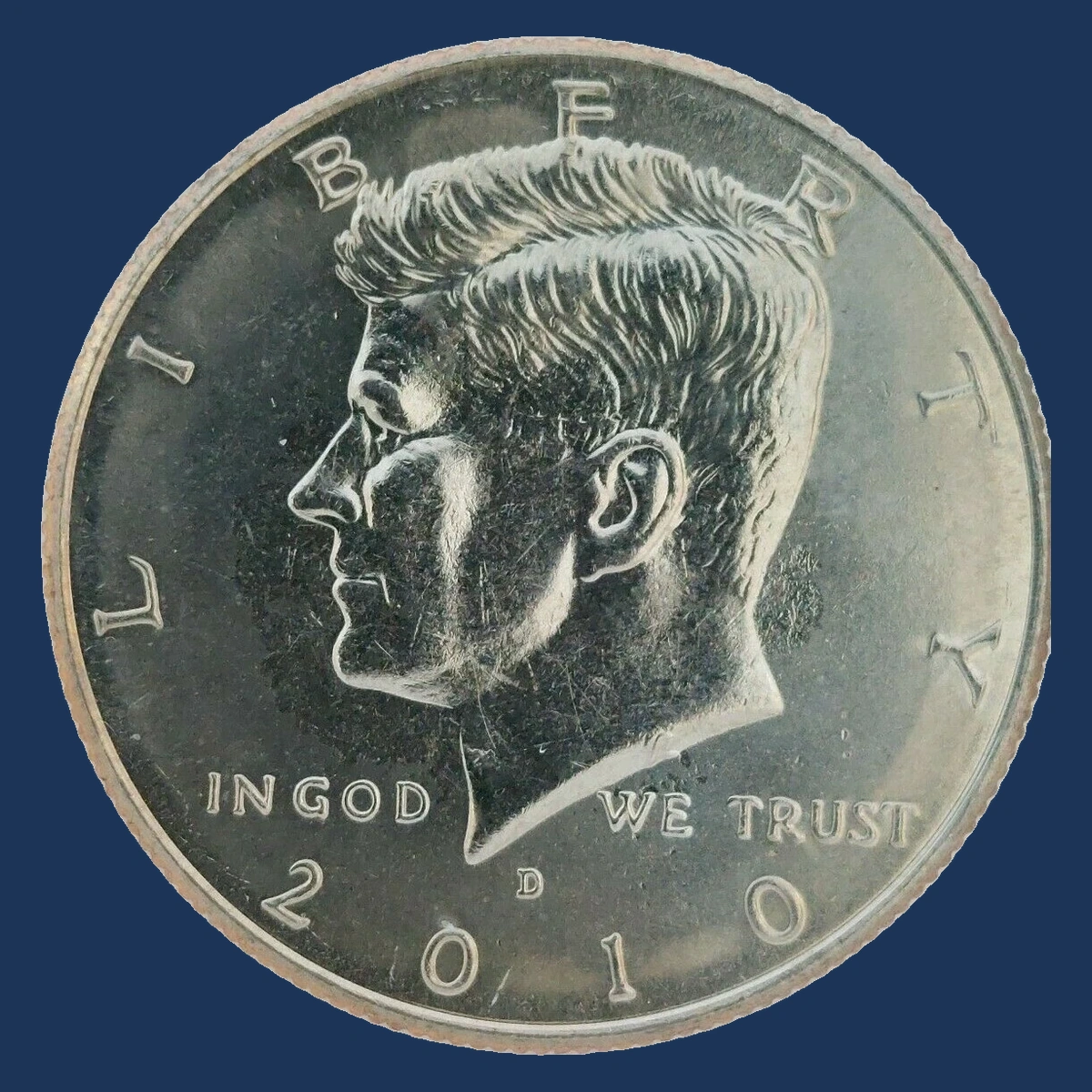
A weak letter or an unusual depression may show where something interrupted the strike. One Philadelphia seller described grease interference, while a Denver listing used the more general name strike-through.
Neither report provides an independent error certification or a clear description of the affected area. They describe ordinary coins rather than specially textured satin examples.
A strike-through happens when material blocks contact between the stamping tool and the metal disc. Grease filling a recessed letter can weaken that letter, while a separate object may leave its own outline, so the two reports need not involve the same material.
Estimated Value
Estimated value is $10–$150 for a genuine localized strike-through on an ordinary layered-metal coin. A faint interruption fits lower than a clear impression with intact surrounding detail.
A 1976-D struck through material on both sides sold for $114 at Heritage in March 2025. That gives a recent Kennedy comparison.
The result belongs to a different year. No sale price or certified grade is assigned to either seller-reported 2010 example here.
How to Identify
Check the boundary between normal and affected detail with a magnifier before naming the material. A later gouge can cut through finished design and push metal into sharp lips.
Confirm the P or D and complete date, then examine the edge grooves and copper center stripe. A scale and calipers can compare the regular 11.34 grams and 30.61 millimeters.
Those measurements identify the coin but do not prove a strike-through. A dull patch alone could be wear, corrosion, or an intentional finish difference.
First look for interrupted design inside the mark, with normal detail immediately around it. A dull color by itself does not identify this error.
2. 2010 Kennedy Half Dollar Missing FG Candidate (Estimated Up to $150)
The tiny letters FG stand for Frank Gasparro, who designed the back of the Kennedy half dollar. They can disappear in a photograph because of weak detail, wear, or lighting.
The 2010 guide raises missing initials as a possibility by comparison with known varieties from other years. It does not identify a certified 2010 example or its mint and finish.
Heavy polishing can remove the recessed letters from the steel stamping tool, preventing later coins from receiving them. Scraping the letters off an already finished coin has a different cause and leaves a different surface.
Estimated Value
Use a conditional estimate of $20–$150 for an independently identified 2010 with both initials genuinely absent because of the stamping tool. This range covers worn coins and more affordable examples with no wear.
Known 1982-P No FG halves graded NGC MS66 sold for $84 in early 2022. MS66 describes well-preserved unworn coins.
Their recognized identity provides a comparison, not a ready-made identification for 2010. Difficult-to-see letters are not automatically the same feature.
How to Identify
Find the initials on a normal coin first. Their position is below the eagle’s left leg, on your right, beside the tail feathers and arrows.
Use a magnifier and light from several directions to search for any piece of F or G. Compare nearby leg and feather detail for broad wear or localized smoothing.
Then identify the finish and metal. A scale should show about 11.34 grams for regular metal or 12.50 grams for silver proof, with calipers near 30.61 millimeters and grooves around the edge.
The first useful clue is that neither letter appears as you move the light. The surrounding surface should show no scraping or smoothing.
3. 2010-D Kennedy Half Dollar Lamination Error (Estimated Up to $200)
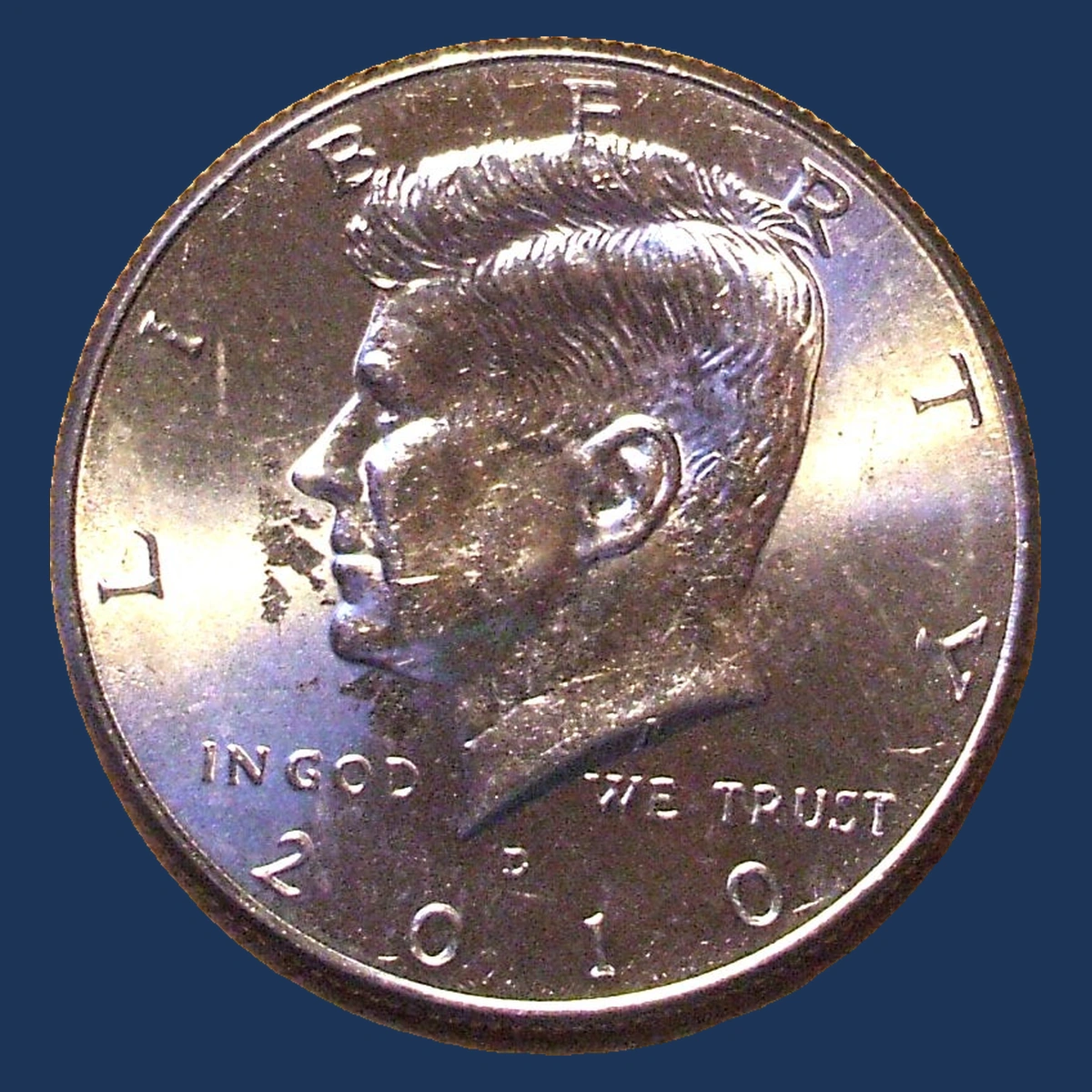
A peeling patch can expose a weak layer inside the coin’s metal. Collectors call this lamination, and the Denver seller described it on both sides of a 2010-D.
The report gives no independent certification, exact position, or layer thickness. Both surfaces need examination rather than assuming two entire outer layers are missing.
A weak bond or defective area can allow only a small part of the surface to separate. A local flap may remain attached, so the presence of peeling does not by itself show that the coin’s full copper-nickel layer failed to stay bonded.
Estimated Value
Estimated value is $25–$200 for genuine local separation with a readable 2010-D date and mintmark. Assess the visible extent on both sides without simply doubling a premium.
A 2006 satin-half guide estimates roughly $40–$120 in added value for smaller lamination features. That is a guide comparison from a different finish.
It is not a completed sale of the seller-reported 2010-D. A complete missing outer layer would also need a different assessment.
How to Identify
Do not lift or bend a loose flap. Keep the coin flat and inspect the opening with a magnifier for a layer that joins the original metal.
Check both faces for the reported peeling. Added plating can blister, while heat and chemicals can damage a normal surface, so color alone is not enough.
Use a scale against the intact 11.34 grams. Missing metal may lower the weight, but an attached flap may leave it almost unchanged.
Calipers across intact areas should show about 30.61 millimeters, with normal grooves elsewhere on the edge. A layered opening continuous with the coin’s original metal is the most useful first sign.
4. 2010 Kennedy Half Dollar Doubled Die Reverse (Estimated Up to $250)
An extra raised outline on the eagle side is the feature behind the 2010 doubled-back report. CoinHub’s year list names it without giving a mint, finish, or exact letter to examine.
A doubled die is a steel stamping tool made with repeated design details. It can leave the same extra shapes on successive coins.
That makes a matching example more useful than one enlarged bright edge in a photograph. The report concerns the back, so a doubled-looking line around Kennedy’s portrait would be a different feature and cannot establish the listed back-doubling variety.
Estimated Value
The estimated range is $25–$250 for genuine identified back doubling on an ordinary layered-metal coin. It assumes actual extra design rather than glare or a flat shelf.
A published 1982 guide estimates $20–$150 for its reported back doubling. That offers a different-year comparison for modest features.
The upper end allows for clearer, more noticeable doubling. It does not establish a named 2010 variety or an individual certified sale.
How to Identify
The year list does not specify a location, so begin by finding a reliable identified comparison. Keep the whole back visible before inspecting a small area.
Confirm the mint and finish, and inspect the edge grooves. A scale and calipers can compare 11.34 grams for ordinary metal or 12.50 grams for silver proof, both about 30.61 millimeters across.
Use a magnifier to follow a rounded extra shape or clear separation. A worn tool can thicken letters, while movement during striking can leave a flat ledge.
Look for a second raised outline that also appears in the same place on a known example.
5. 2010 Kennedy Half Dollar Clipped Planchet Error (Estimated Up to $500)
A piece can be missing from the round metal blank before it receives the coin’s design. The remaining disc is struck with the portrait and eagle around that incomplete edge.
CoinTrackers includes clips in its 2010 list, but its page mixes different metals and finishes. It does not establish a definite San Francisco silver-proof clip.
Look at the gap itself and how the nearby design formed. A piece cut from a finished coin can leave a neat crescent too, so an attractive missing shape needs evidence that the metal was absent before striking.
Estimated Value
Estimated value is $25–$500, from a small original clip to a substantial missing segment on a well-preserved coin. The year guide emphasizes stronger examples above $100.
For an affordable comparison, a 1993-D curved clip graded ANACS MS64 brought $34.74 including buyer’s premium in August 2025. MS64 means no wear but some marks.
That different-year sale supports including small clips at the lower end. It does not establish a 2010 transaction.
How to Identify
Identify the mint, finish, and metal before weighing the coin. A scale can compare the remaining mass with 11.34 grams for regular metal or 12.50 grams for silver proof.
Calipers across an unaffected span should be near 30.61 millimeters. Then use a magnifier at both ends of the gap, where the original rim and edge grooves meet the missing section.
Look for filing, saw marks, or fresh burrs that indicate a later cut. Weakness in the opposite rim can support a clip, although it is not always obvious.
Start with the ends of the gap: the rim should look naturally formed there, without fresh cuts or pushed-up metal.
6. 2010 Kennedy Half Dollar Off-Center Strike Candidate (Estimated Up to $550)
A blank crescent is only part of the evidence for an off-center strike. The designs on both sides should also be shifted and cut off in a matching way.
The round metal disc sat partly outside the normal striking position, so the tools could not reach all of it. That differs from a coin widened around a complete design.
The 2010 guide discusses possible Philadelphia and Denver examples using hypothetical percentages. It does not identify a certified coin with those exact measurements, and a shifted tool affecting only one side needs a different explanation.
Estimated Value
The comparative range is $50–$550. The guide places small shifts around $50–$100 and much stronger examples with readable dates at several hundred dollars.
A 1991-D struck fifty percent off center brought $546.25 in 2009. PCGS graded it MS62, meaning no wear but noticeable marks.
That older sale helps explain the upper end of this price range. It does not turn the guide’s hypothetical 2010 percentages into measured examples or provide a recorded 2010 sale.
How to Identify
Align photographs of both sides using the same physical edge points. Find the missing design and check whether the untouched metal occupies the corresponding region on each face.
Use a magnifier to distinguish original blank texture from a surface shaved or ground flat later. Keep the surviving date and mintmark visible rather than inferring the year from packaging.
For an ordinary layered-metal example, use a scale and calipers against 11.34 grams and 30.61 millimeters. Record any spreading and note where edge grooves remain.
Two shifted designs beside genuine untouched metal establish the error more directly than one unusually broad rim.
7. 2010 Kennedy Half Dollar Double-Strike Candidate (Estimated Up to $1,200)
Two designs in different positions can remain when a coin receives a second blow after moving. Pieces of the first picture may survive beneath the newer one.
The 2010 guide describes what such a coin could look like, rather than documenting an example. It does not establish a mint, grade, finish, or amount of movement.
Proofs are specially made collector coins and normally receive repeated blows in the same position. Those intended strikes are not an error simply because the tools hit more than once, so visible evidence of an unintended extra impression is needed.
Estimated Value
Estimated value is $300–$1,200 for a genuine ordinary-metal example with clearly overlapping designs. Separation of the pictures, readable identity, and condition affect the comparison.
A 1991-P double strike brought $1,092.50 in the published 2009 FUN results. Its ANACS MS64 PL label describes an unworn coin with reflective, prooflike surfaces.
That is a different-year sale. A flat shelf beside letters does not qualify as a second strike or receive this estimated range.
How to Identify
Choose two surviving parts of the suspected first picture and compare how each moved relative to the newer design. They should tell the same story rather than two unrelated marks.
Examine the overlap with a magnifier and check both faces for support. A later squeeze against another coin can leave a recessed mirror-image mark instead of a genuine extra strike.
Inspect edge grooves and spreading, then use a scale and calipers to compare 11.34 grams for regular metal or 12.50 grams for silver proof, with a normal diameter of 30.61 millimeters.
Start with two recognizable design parts that have shifted together. Random dents or one thick letter are not enough.
Conclusion
Estimated values run from $10 to $1,200, depending on the actual feature and condition. Peeling concerns the metal, doubling begins in a stamping tool, and a double strike adds another impression.
Start by identifying the finish and metal, then compare both sides and the edge. The reported 2010 examples and broader possibilities do not all have the same evidence, so apply each price range only after its stated checks.