1996 Half Dollar Error List with Pictures

Two different 1996 half dollar errors carried the same $135 asking price in Fred Weinberg’s 2016 dealer list. One had an off-center design; the other had a shallow dent and an uneven edge.
Neither price was an auction result. The 1996 half dollar errors below have estimated values from $5 to $300.
Some clues are tiny. Read on to learn where to look, what each mark means, and how the errors differ.
1. 1996-P Kennedy Half Dollar Spike Head Die Crack (Estimated Up to $20)
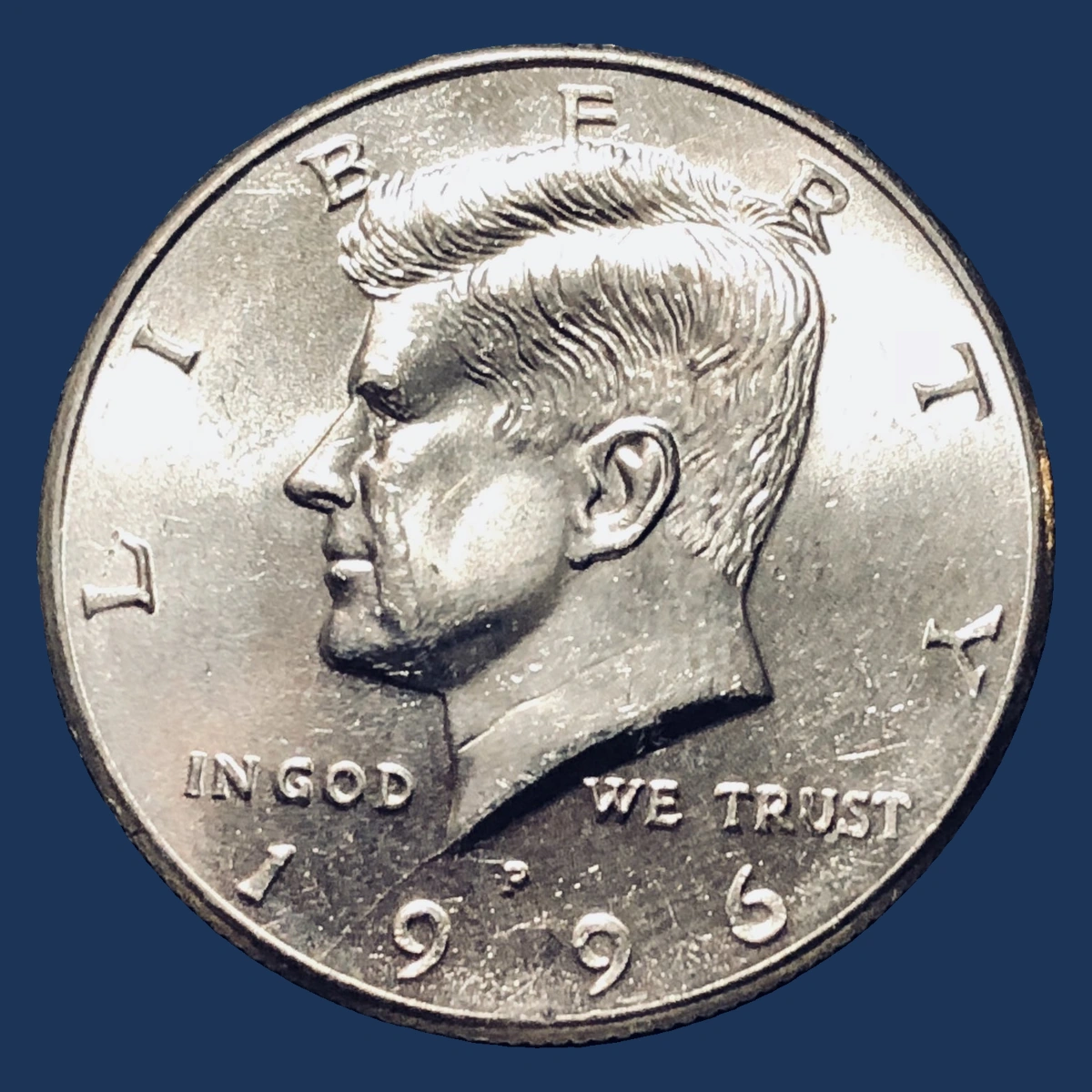
A raised line running from Kennedy’s portrait to the rim gives the reported 1996-P Spike Head its name. It is a seller’s nickname for a die crack, not a different portrait design.
The die is the steel tool that stamps the coin. When this tool cracks, coin metal can squeeze into the opening and form a thin ridge.
That ridge sits above the surface. A scratch usually cuts into it instead.
The seller did not give an exact position around the rim. Look for the connected line between the portrait and edge rather than a particular clock position.
Estimated Value
A small genuine Spike Head crack has an estimated value of $5–$20. The line should be easy to see on an otherwise ordinary coin.
The 1996-P seller listing describes the feature but does not establish a certified grade or completed auction price. The range is an estimate.
A much larger broken area could be a different error. The catchy name alone does not raise the price.
How to Identify
Start at Kennedy’s portrait and follow the line toward the rim with a 10× magnifier. Tilt the light so you can see whether the line stands up or cuts down.
Check more than one point. A scrape may leave metal piled beside a groove, which can fool the eye in a single photograph.
Find the P mintmark and inspect the edge for the copper-colored core between the outer layers. This layered construction is called clad.
A normal coin weighs 11.34 grams and measures about 30.61 millimeters across; use a scale and calipers to check. The key is a raised, connected ridge between portrait and rim without an underlying scratch.
2. 1996-P Kennedy Half Dollar Struck Through Grease (Estimated Up to $50)
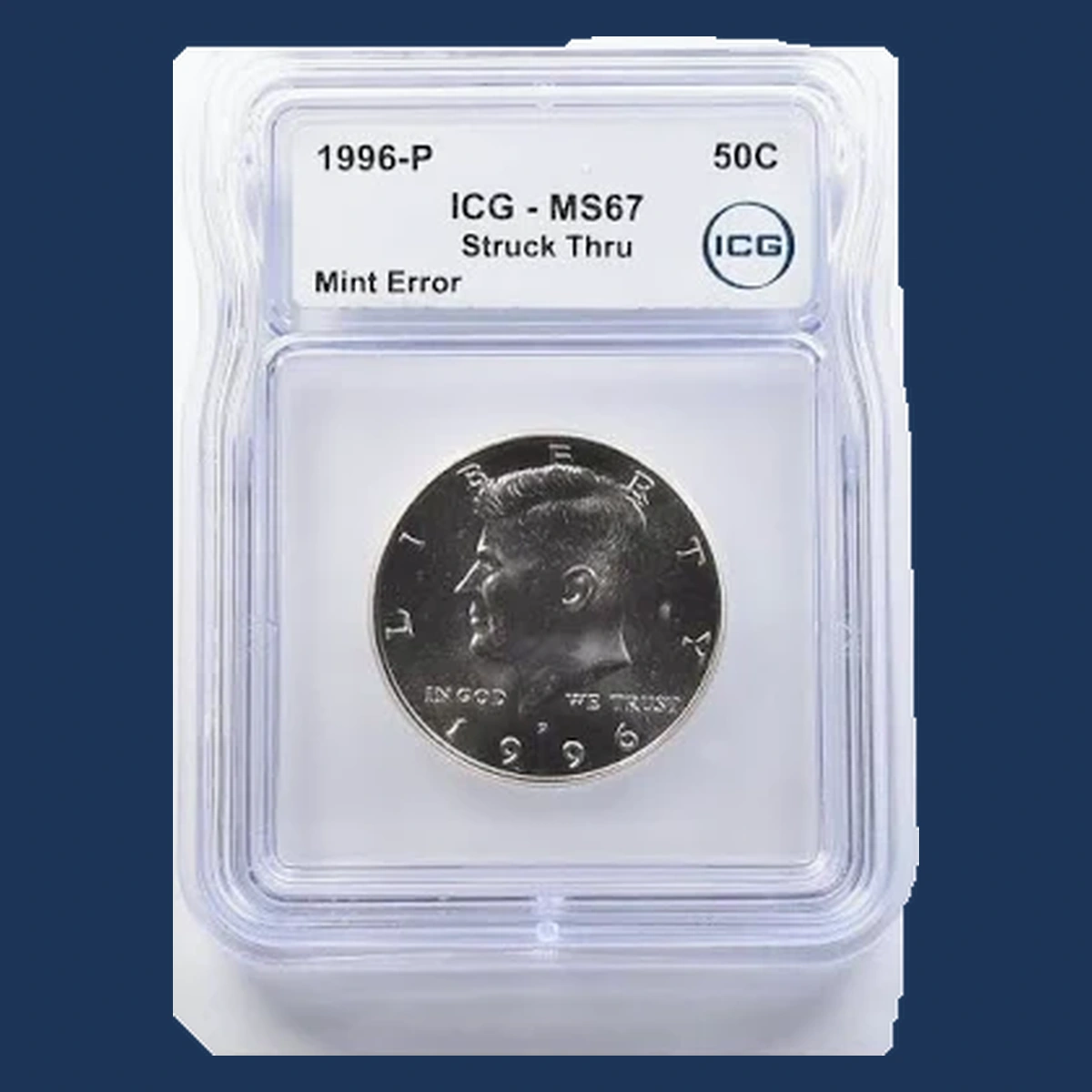
Front details on a 1996-P half may look faint while nearby details remain sharp. Grease between the blank and the stamping tool can block parts of the design.
Robinson’s Coin Town described one as struck through grease. The dealer called it BU, meaning bright with no wear, but did not name a missing letter.
Grease can fill small hollows in the tool and stop them from forming raised letters or other details. Wear works differently.
It rubs away metal after the coin leaves the Mint. Scraping can also remove details, so weak lettering alone does not prove this error.
Estimated Value
Estimate $10–$50 for a small, clear grease strike-through on a 1996-P half. Better surfaces and a larger area of missing detail can bring more interest.
The dealer’s BU label is a description, not a grading-service number. No completed sale price is attached to that example here.
For comparison, a 1976-D half with strike-through on both sides sold for $114 in March 2025. That different-year coin had a broader error than the small area priced here.
How to Identify
Sharp details beside a weak patch give you a useful place to begin. Under a 10× magnifier, compare the surfaces inside and outside that patch.
Scraping often leaves cuts or disturbed metal. Ordinary wear tends to flatten exposed high points rather than leave one local patch among crisp designs.
The P mintmark and copper-colored edge core identify the usual clad coin. A loose example should be close to 11.34 grams and 30.61 millimeters across on a scale and calipers.
Inspect the edge ridges too, and do not assume every missing letter was blocked by grease. A smooth, original surface where the design failed to form is the strongest first clue.
3. 1996 Kennedy Half Dollar Clashed Dies (Estimated Up to $150)
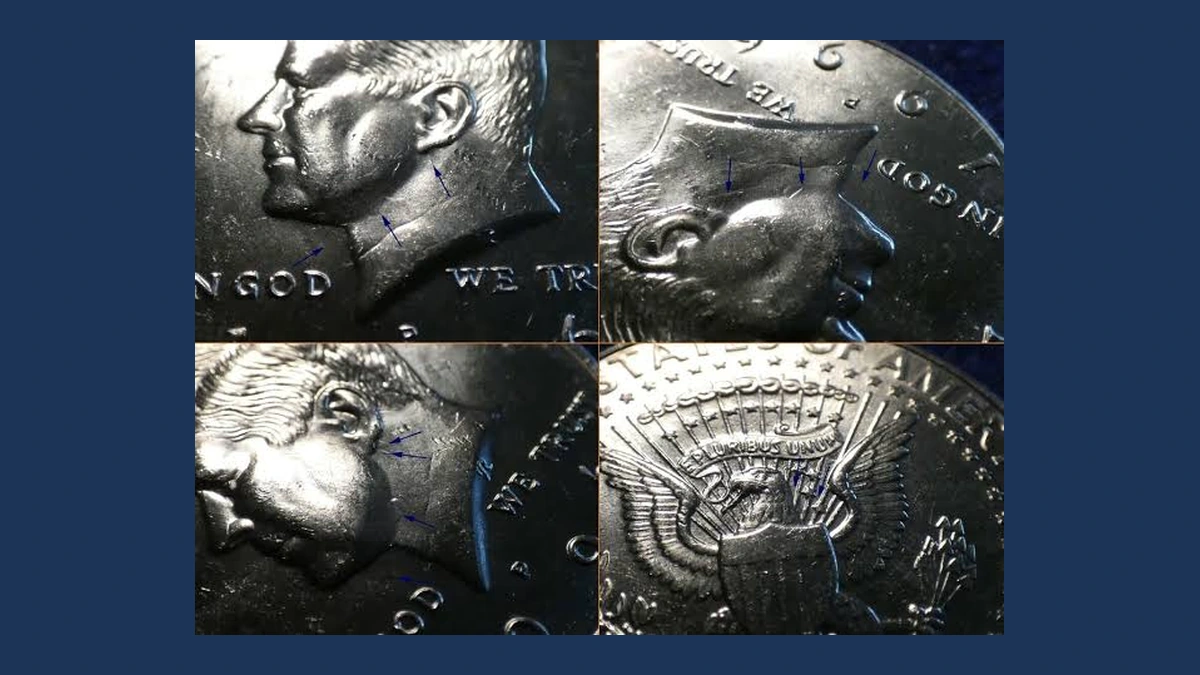
Faint outlines near Kennedy’s neck or beside the eagle may resemble part of the coin’s other side. Those shapes can be clues to clashed dies.
This happens when the two stamping tools hit each other with no metal blank between them. Each tool can pick up marks from the other.
Later coins can carry those extra marks alongside their normal designs. Nothing needs to be missing from the coin.
Reports for 1996 do not identify a mint for every example. A clear match to the opposite design matters more than a stray line that merely looks unusual.
Estimated Value
Clear clashes on ordinary 1996 halves have an estimated range of $25–$150. Strong outlines are generally easier to appreciate than tiny, faint traces.
The 1996 price guide makes that same distinction. This range is an estimate, rather than a recorded sale of one certified example.
Condition also matters. A high grade can add value on its own, so the full price of an unusually well-preserved coin should not all be credited to the clash.
How to Identify
Place clear photographs of both sides together and compare the suspected outline with the opposite design. Look near Kennedy’s neck and beside the eagle.
A 10× magnifier helps you follow a faint curve beyond one short line. A scratch may wander across the coin, while a clash should match part of the other design in the correct position.
Record the mintmark on the actual coin. These reports concern ordinary clad halves, normally 11.34 grams and 30.61 millimeters across.
Use a scale and calipers for those checks, then inspect the copper-colored edge core and ridges. Before paying extra, find the recognizable opposite-side shape; one unexplained line is not enough.
4. 1996 Kennedy Half Dollar Curved and Double Clips (Estimated Up to $200)
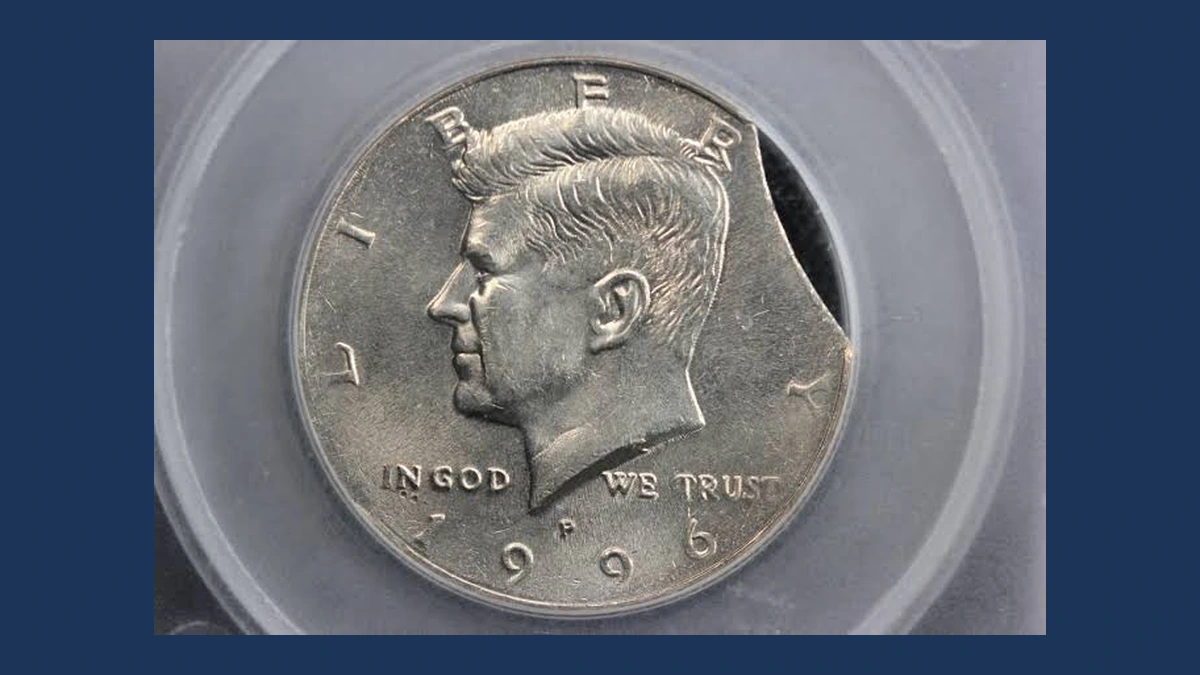
A curved gap is missing from one 1996-P half graded MS66 by NGC. This certified example has a ten-percent clip and came from the Rippere collection.
A year guide also shows a separate 1996 half with two reported clips. It is a different coin.
Clips start when metal blanks are punched from a strip. If a punch overlaps an earlier hole, the next blank comes out incomplete.
The coin is then struck with that gap already present. One gap or two comes from the same basic problem, while a later cut leaves different marks along the edge.
Estimated Value
Estimate $20–$100 for ordinary curved clips and $60–$200 for larger multiple clips or especially well-preserved examples. Size, appearance, and condition all matter.
The NGC MS66 ten-percent clip auction ended in December 2024, but its public page does not show a sale price used here. These ranges are estimates.
The separate double-clip report gives no mint or certified grade. It should not inherit the Philadelphia coin’s MS66 grade.
How to Identify
A genuine clip needs more than a curved outline. Inspect the missing section with a 10× magnifier for saw marks, filing, or fresh cut metal.
Look across the coin from the gap. The opposite rim can be weak, a clue called the Blakesley effect, though it does not look the same on every clipped coin.
A scale should show less than the normal 11.34 grams, in keeping with the missing metal. Calipers should measure the surviving body against the normal 30.61 millimeters.
Inspect the copper-colored core and edge ridges where they meet each gap. On a double clip, both gaps need original-looking struck borders, not just one convincing section.
5. 1996 Kennedy Half Dollar Off-Center Strike (Estimated Up to $250)
The design on one certified 1996 half sits about five percent off center. A small bare margin and the design’s position against the edge help show the shift.
The metal blank was not centered between the stamping tools when they struck. Both sides must be checked.
Weinberg listed this coin in 2016 as PCGS MS64, meaning no wear but some marks. He called the front semi-prooflike, meaning it had some mirror-like shine.
That shine does not make it a Proof, a specially made collector coin. The listing does not identify the mint or the direction of the shift.
Estimated Value
The five-percent off-center coin was offered for $135 in 2016. A comparable attractive, uncirculated example has an estimated range of $100–$250.
That old dealer price is not a completed sale or a current offer. It gives a useful starting point for a small offset.
A readable date, clean surfaces, and an obvious shift help the coin’s appeal. Serious damage reduces that appeal, while a much larger off-center strike needs a separate price comparison.
How to Identify
Turn the coin over before judging the offset. The design should be displaced on both sides, with bare metal beside the struck area.
If only one side is shifted, one stamping tool may have been misaligned instead. Keep the date and any mintmark in your photographs.
Under a 10× magnifier, inspect the boundary for later trimming or flattening. Then weigh a loose coin against the normal 11.34 grams.
Measure its widest points with calipers, noting any difference from the usual 30.61 millimeters. Check the edge ridges and copper-colored core as well.
A bare margin paired with a matching design shift on both faces gives the clearest starting test.
6. 1996 Kennedy Half Dollar Indent with Tilted Partial Collar (Estimated Up to $300)
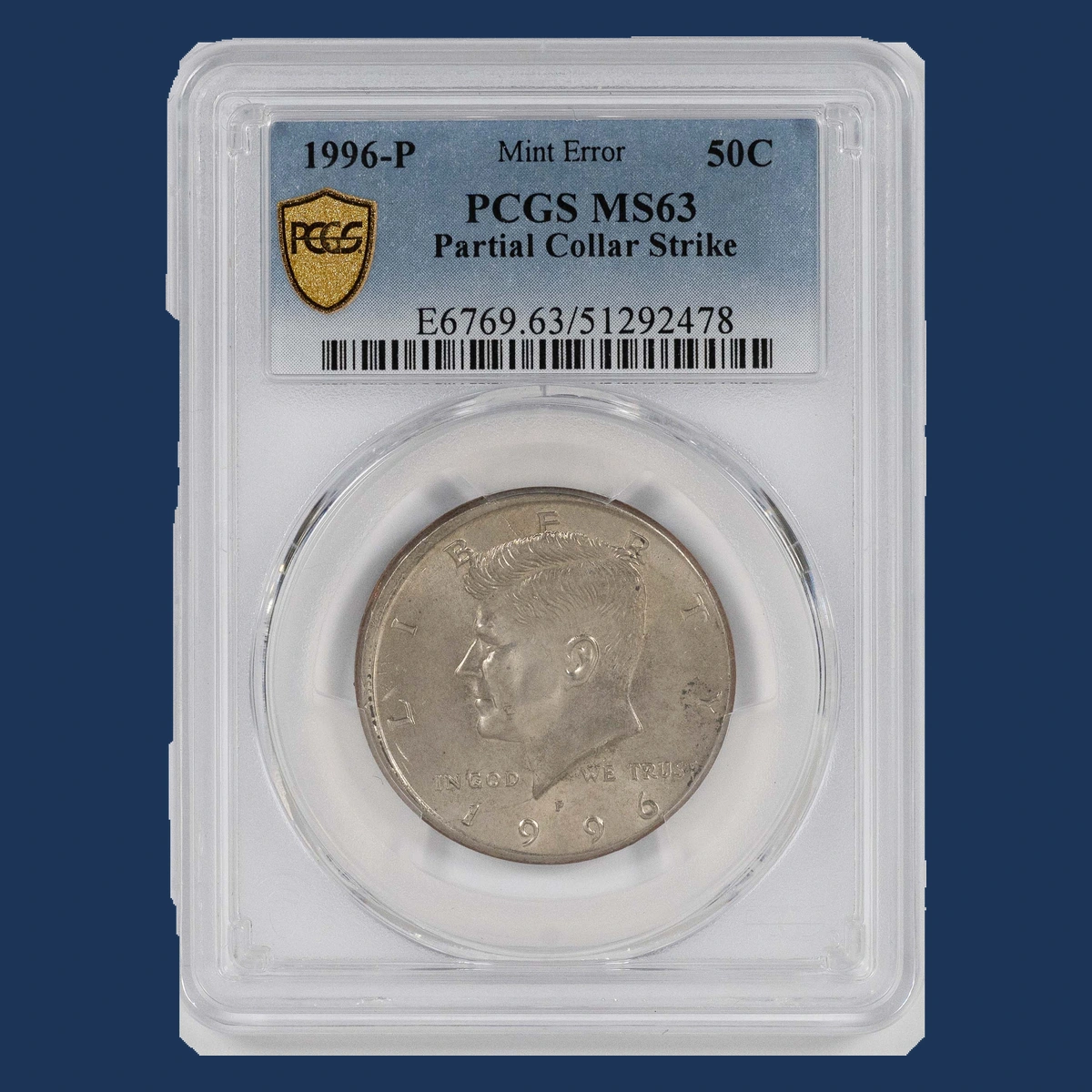
A shallow depression near seven o’clock appears on the 1996 half in Weinberg’s listing. Its edge also changes shape around the coin.
PCGS graded it MS64 and described a five-percent indent with a tilted partial collar. These are two features on one coin.
An overlapping metal blank can block part of a strike and leave an indent. The collar is the ring that holds the coin’s edge during striking.
When the blank sits tilted in that ring, some parts of the edge are held differently from others. Unlike a clip, an indent need not remove metal.
Estimated Value
The 2016 Weinberg list offered this combined error for $135. Estimate $125–$300 for a similar coin with a clear indent and uneven collar marks.
This is an estimated whole-coin price based on an old asking price. It is not an auction result.
Both features must be visible. Adding a separate imagined price for each feature would overstate the evidence, especially if one feature is faint or the surfaces are damaged.
How to Identify
View the depression near seven o’clock from the front and the edge. A 10× magnifier should show how the surrounding design meets its boundary.
Now turn the coin slowly. The edge should change in a connected pattern around the coin, with some areas showing a step or different height of ridges.
One battered patch on the rim cannot establish a tilted collar error. Look for the relationship around the whole edge.
An indent normally leaves the metal in the coin, so compare its weight with 11.34 grams. Use calipers to check any spread beyond the usual 30.61 millimeters and inspect the copper-colored core.
The shallow struck depression and changing edge profile must support each other.
Conclusion
The estimated range for these 1996 errors runs from $5 to $300. A small raised crack is far easier to overlook than a clip or an uneven edge.
Turn the coin over and inspect its side before deciding what happened. Missing metal, a shallow indent, and a shifted design tell different stories.
The two $135 dealer offers remain historical asking prices, not auction results.