1983 Half Dollar Error List with Pictures

One coin can show several minting mistakes. A 1983-P half dollar struck repeatedly and spread beyond its normal width sold for $552 in June 2024.
This 1983 Kennedy half dollar error list covers missing initials, shifted designs, and overlapping impressions. Estimated values range from $15–$1,500.
Some clues need a magnifier, while others change the whole outline of the coin. Read on to learn what each mark means and where to check your half dollar.
1. 1983 Kennedy Half Dollar Misaligned Die Error (Estimated Up to $150)
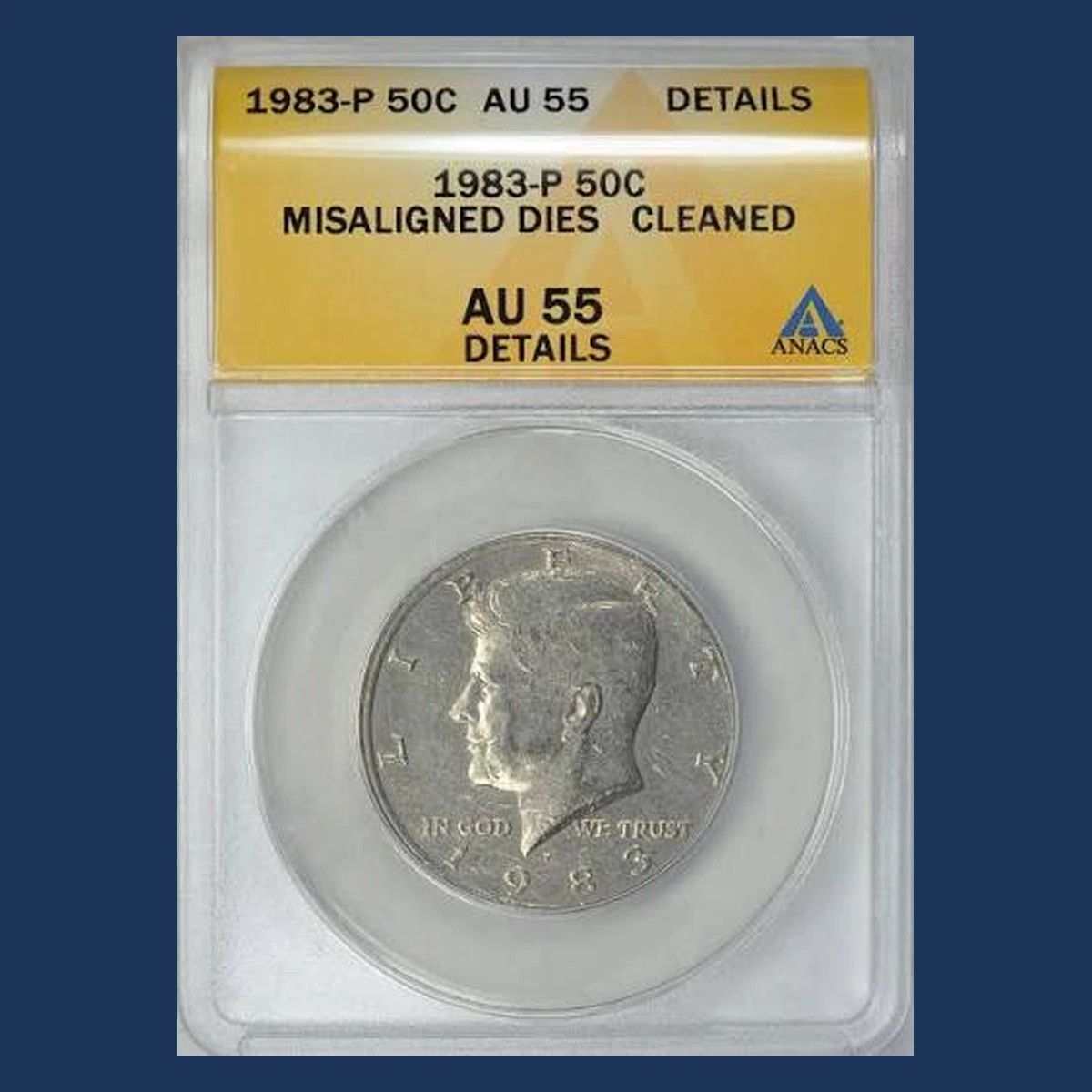
One side may have a wide border while the other looks properly centered. This can happen when a die, the steel tool that stamps the design, shifts out of position.
Its partner can stay in the correct place. The result is called a misaligned die error.
A year guide lists this problem for 1983 halves without identifying a particular mint or amount of movement. Always look at both sides: an uneven border on a single photograph does not show whether one tool moved or the entire blank was misplaced.
Estimated Value
The estimated range is $15–$150 for a genuine, visible shift on an otherwise normally sized half dollar. A slight imbalance belongs toward the lower end, while a stronger shift can attract more interest.
A 1990-P half struck 10% off-center sold for $198 in September 2025. NGC graded it MS66, meaning no circulation wear and few marks.
Its different, more dramatic error provides only a broad price comparison.
How to Identify
Set the coin flat and look straight down at each face. An angled view can make a normal border look uneven.
Use a 10× magnifier where the lettering approaches the rim. Compare the design’s position with the actual coin edge, rather than comparing Kennedy’s portrait with the eagle.
Check the width with calipers against 30.61 mm and the weight with a scale against 11.34 g. Look around the ridged edge for filing, crushing, or a seam that could explain the unusual border.
Take clear photographs of both sides in the same position. One shifted design with a normally centered opposite face points toward a misaligned tool.
Matching shifts on both faces suggest an off-center strike.
2. 1983 Kennedy Half Dollar Struck Through Error (Estimated Up to $300)
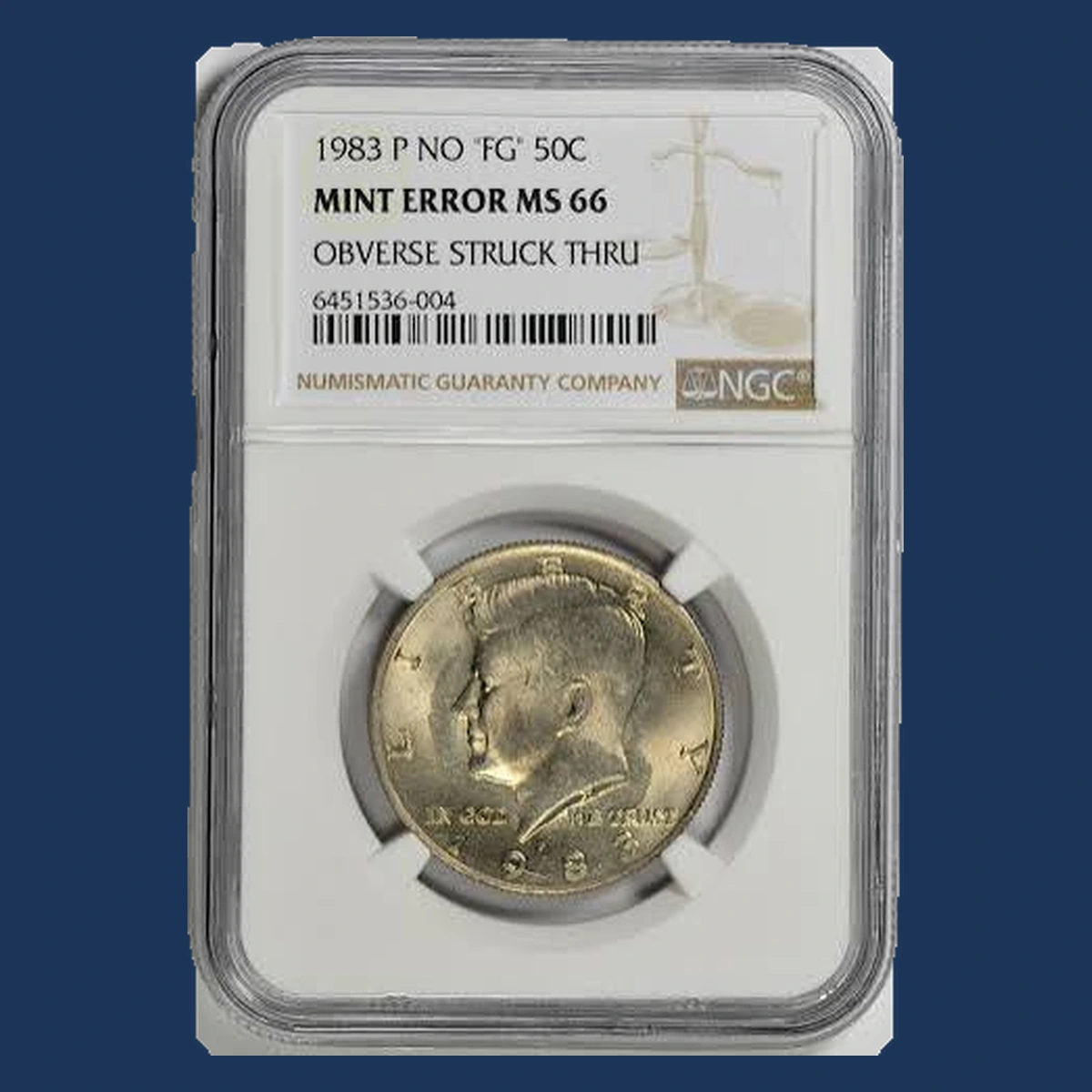
A reported 1983-P has a disturbed patch on the front and an extra rim outline. The patch may come from material caught between the blank and the stamping tool.
Collectors call this a struck-through error. The obstruction can leave a hollow, hide some of the design, or copy its own shape onto the coin.
The report does not identify the material, so the mark cannot confidently be called wire or cloth. The extra rim also needs its own check.
By itself, it proves neither a second strike nor a doubled design.
Estimated Value
A genuine example has an estimated value of $20–$300. An obvious, well-preserved impression usually attracts more attention than a small area of weak detail.
A clad 1976-D Kennedy struck through material on both sides sold for $114 at Heritage in March 2025. That sale concerns another year.
It helps compare the general kind of error, but does not establish a sale price for the reported 1983-P or an extra premium for its rim.
How to Identify
Follow the edge of the disturbed patch with a 10× magnifier. Move the light slowly to see where the normal design stops and the unusual surface begins.
A later hit often pushes metal up around a dent. Material caught during striking instead changes how the design forms beneath or beside it.
Photograph the extra rim separately. Unless other parts of the design also repeat, the rim alone does not show that the coin was struck twice.
For an unsealed coin, use a scale to compare with 11.34 g and calipers to compare with 30.61 mm. Inspect the ridged edge as well.
The most useful starting point is the boundary between intact design and the disturbed patch, especially any raised metal suggesting a later impact.
3. 1983 Kennedy Half Dollar Doubled Die Obverse Error (Estimated Up to $350)
Look closely at TRUST and the other front lettering for extra outlines. In a doubled die, the stamping tool itself carries a doubled design before it ever touches the coin.
Every coin made from that tool can repeat the same pattern. This is different from a coin receiving a second strike.
Reports mention this feature for 1983, but do not establish a particular numbered variety or mint. Another year’s doubled letters cannot identify this one.
A useful comparison must match the shapes and positions on an actual 1983 half dollar.
Estimated Value
The estimated range is $25–$350 for a correctly identified doubled die. Clear separation, condition, and collector recognition affect the price.
A flat ledge caused during striking does not bring the same premium.
A recognized 1974-D doubled die sold for $49 in May 2026. ANACS graded it MS64, meaning no circulation wear and relatively few marks.
That earlier variety is a comparison, not proof of the reported 1983 doubling.
How to Identify
Under a 10× magnifier, inspect the ends of the letters in TRUST. Look for small splits or two rounded outlines, then see whether neighboring letters show a matching pattern.
Change the light angle. A reflection can disappear, while a real raised line remains part of the coin.
Flat ledges that cut into letters often come from movement during striking. Do not assign a variety number until the entire pattern matches a known example.
Use a scale and calipers to check the normal 11.34 g and 30.61 mm, and inspect the ridged edge. These measurements also fit 1983-S proofs, the specially made collector coins.
Begin with separated outlines in TRUST, then check whether the same doubling continues into other letters.
4. 1983 Kennedy Half Dollar Missing FG Initials Error (Estimated Up to $400)
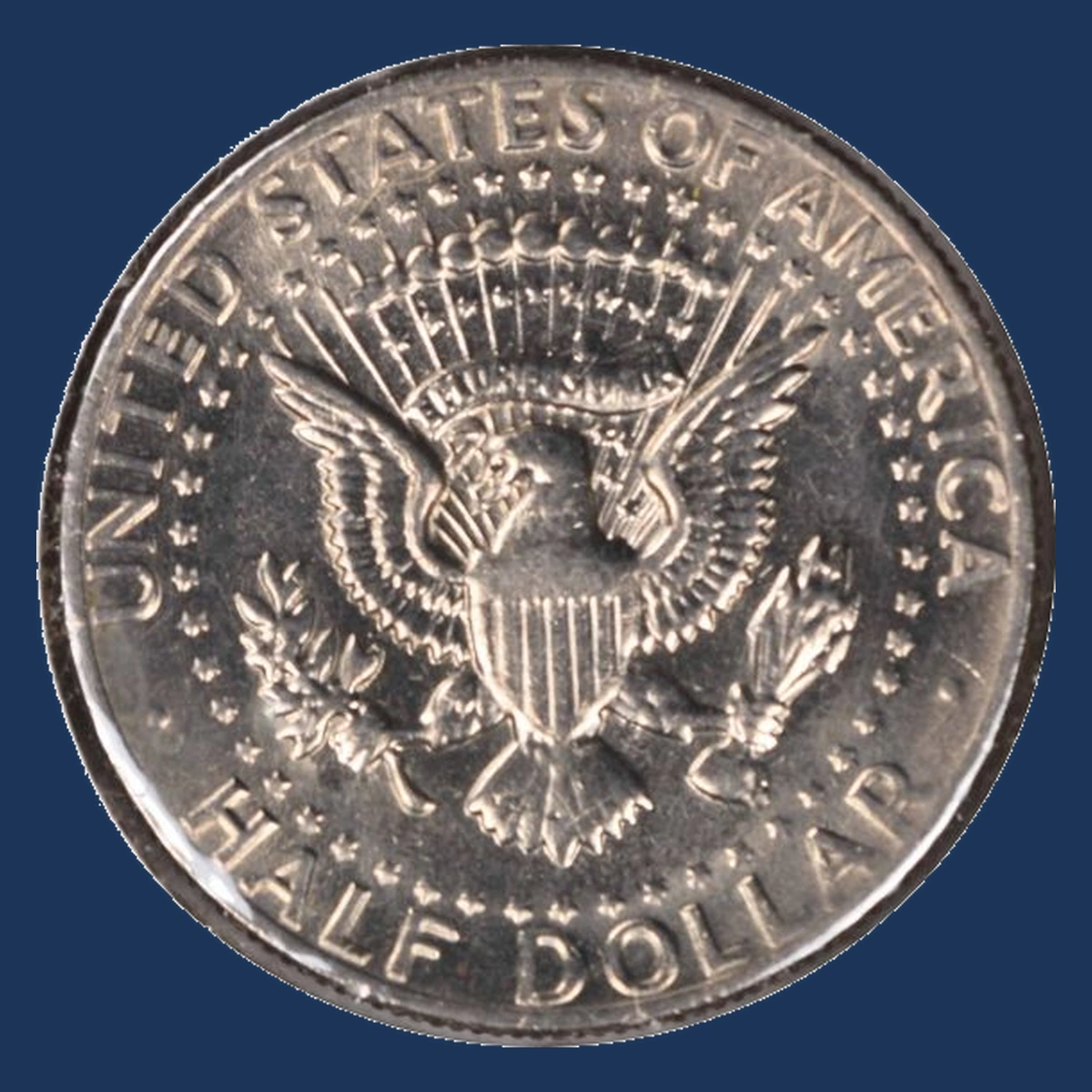
The tiny FG initials normally identify designer Frank Gasparro on the back. A collector’s PCGS Registry gallery shows a 1983-P described by its owner as having no FG because of grease during striking.
Grease can fill small holes in a stamping tool and stop the letters from forming. Heavy polishing of the tool can also remove those details before striking.
These are different causes of the same missing letters. Wear or deliberate rubbing can erase them later too, so the feathers and smooth metal beside the initials deserve a close look.
Estimated Value
Use an estimated $30–$400 range, with the coin’s condition and the cause of the missing letters affecting its value. A small grease-related omission is different from an established polished-tool variety.
A 1982-P No FG graded PCGS MS66+ sold for $384 in May 2024. That grade indicates no circulation wear and few marks.
The recognized earlier variety does not automatically give the owner-described 1983-P example the same value.
How to Identify
Find the FG position beside the eagle’s tail feathers by comparing a normal half dollar. Then turn your coin beneath a light and search for faint surviving strokes with a 10× magnifier.
Check the nearby feathers. General wear can flatten both the initials and those details, while rubbing may leave scratches in the smooth background.
Grease-related weakness may affect a small neighboring area. A sharply formed back with missing initials calls for a different explanation from broadly weak detail.
A scale should read near 11.34 g and calipers near 30.61 mm for an ordinary coin.
Inspect the ridged edge for damage too. The first useful check is whether FG is truly absent under changing light, with the surrounding metal undisturbed.
5. 1983 Kennedy Half Dollar Clashed Dies and Partial Collar Error (Estimated Up to $450)
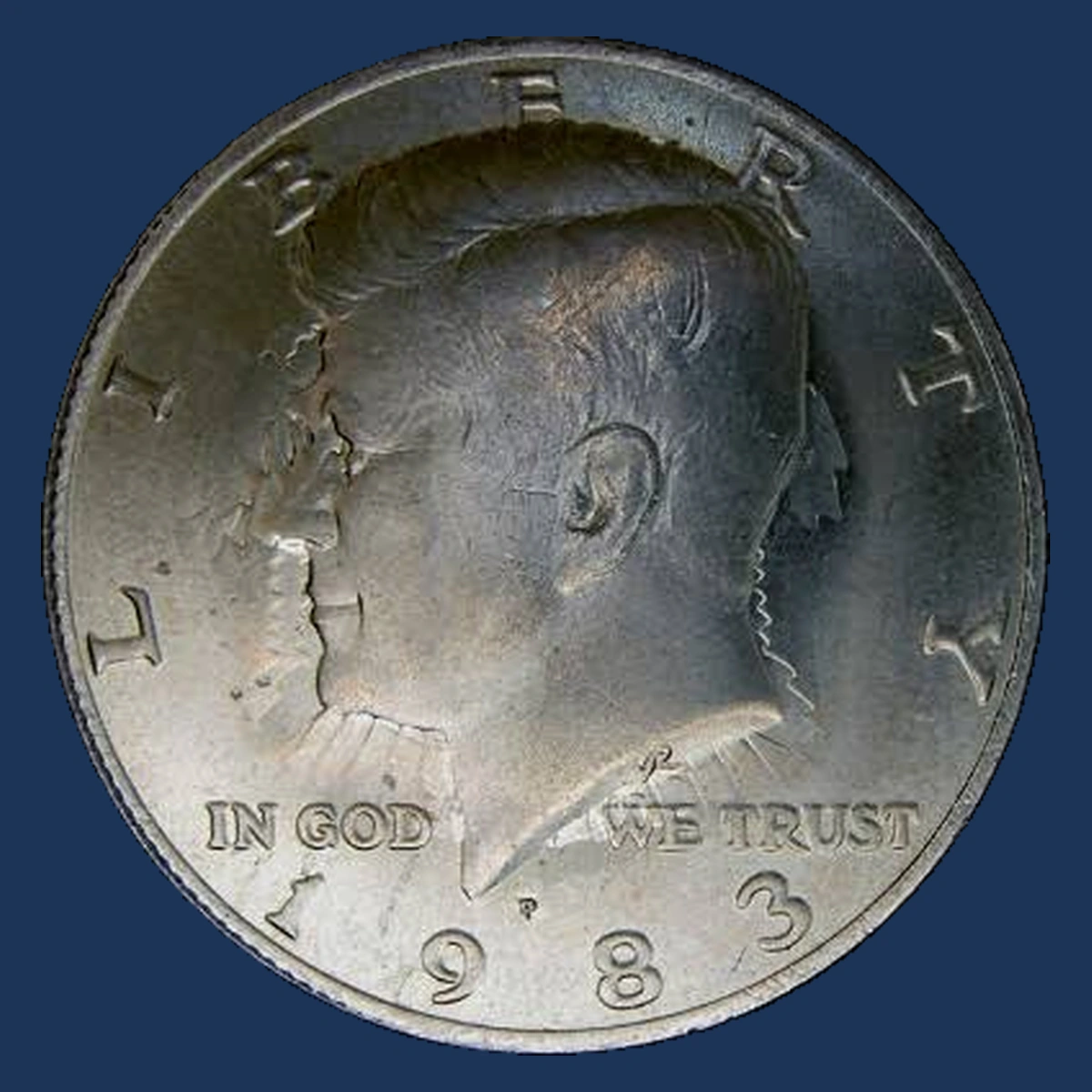
Faint design traces and an uneven edge can occur on the same coin. A collector’s Registry display describes a 1983-P with both clashed dies and a tilted partial collar.
A clash happens when the two stamping tools hit each other without a blank between them. They can then leave traces of the opposite design on later coins.
The collar is the ring that limits the coin’s width. If the blank sits partly outside it at an angle, an uneven step can form along the edge.
This is separate from the reported clash marks.
Estimated Value
The estimated range for this combination is $50–$450. Clear clash marks and a visible stepped edge matter more than simply having two error names.
A 1973-S proof with a strong clash sold for $720 in October 2022. This specially made collector coin had a PCGS PR68 Deep Cameo grade, describing excellent surfaces with frosted designs against mirrorlike backgrounds.
Its different finish and stronger marks limit the comparison with a regular 1983-P.
How to Identify
Inspect the edge all the way around. A tilted partial collar can leave a changing step between the part held inside the ring and the part that spread outward.
An isolated rim nick is not enough. Compare the edge ridges and the wider section to see whether they form a continuous pattern.
Now use a 10× magnifier on the faces. Any claimed clash outline should match part of the opposite design in the position where the tools would meet.
A scale should read near 11.34 g for an intact coin, while calipers may show local expansion beyond 30.61 mm. Check both clues separately: an uneven original edge step supports the collar error, and matching opposite-design outlines support the clash.
6. 1983 Kennedy Half Dollar Broadstrike Error (Estimated Up to $500)
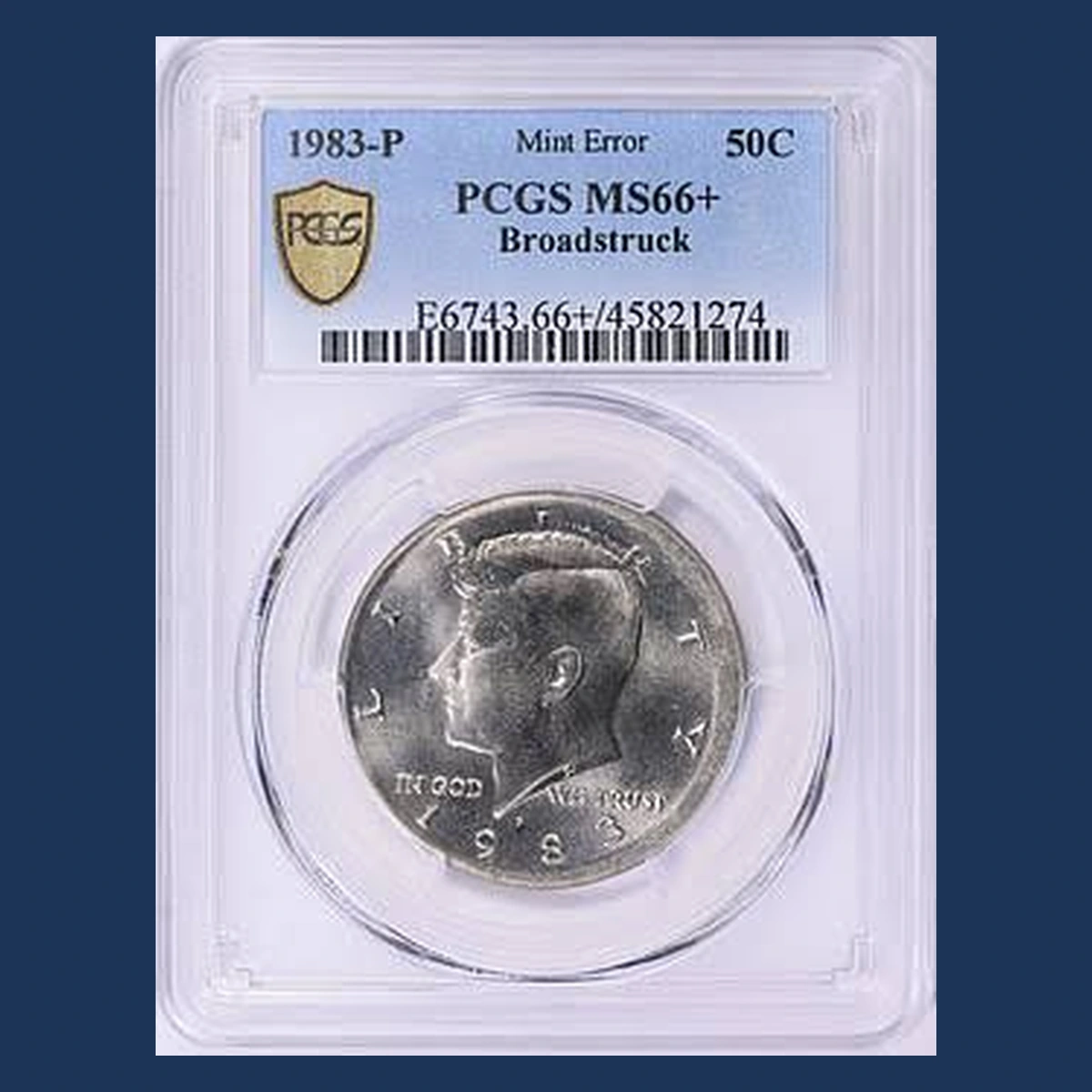
A broadstrike can be wider than a normal half dollar while keeping the complete design. The metal spreads because the surrounding collar ring fails to hold it within the usual width.
The border may look uneven or unusually broad. Parts of the normal edge ridges can be missing as well.
Sullivan Numismatics lists a 1983-P example graded NGC MS65, meaning no circulation wear and relatively few marks. It is separate from the repeated-strike coins described below.
A wide outline alone does not show that a coin was struck more than once.
Estimated Value
Sullivan Numismatics asks $175 for its 1983-P MS65 broadstrike. This is a retail offer, not a completed sale.
Use $100–$500 as an estimated range, with surface quality and the appearance of the expanded outline affecting the price. A regular 1990-P broadstrike graded ANACS MS61 sold for $192 in March 2025.
That lower grade means no circulation wear but numerous marks, showing why appearance matters alongside grade.
How to Identify
Follow the outer letters and full date with a 10× magnifier. For a broadstrike, the intended design should remain complete inside the enlarged coin.
Measure the outline with calipers against the normal 30.61 mm width. A scale should still be close to 11.34 g if the coin has not lost metal.
Inspect the edge where the usual ridges are missing or interrupted. The spread should come from the strike, rather than an attached border or hammering after the coin was made.
For a sealed example, use recorded measurements and clear edge photographs instead of opening its holder. A complete single design within an expanded outline is the key starting clue.
Overlapping impressions indicate an additional striking error.
7. 1983 Kennedy Half Dollar Off-Center Strike Error (Estimated Up to $800)
A blank crescent sits beside the design on the listed 1983-P off-center example. Sullivan describes it as 10% off-center and graded NGC MS64, meaning no circulation wear and relatively few marks.
The blank was not fully beneath the stamping tools when they came together. Some metal received no design, while part of the intended design missed the coin.
Year guides also mention Denver examples. The listed Philadelphia coin’s grade and 10% shift belong to that particular piece, however, and should not be used to describe every reported 1983 off-center half.
Estimated Value
The recorded dealer offer for the 1983-P NGC MS64 example was $225 asking. The broader estimated range is $75–$800, from small shifts to dramatic examples that keep a readable date.
A different-year 1990-P half struck 10% off-center sold for $198 in September 2025, graded NGC MS66. That coin had no circulation wear and few marks.
The upper estimate is for more striking errors, not every 10% example.
How to Identify
Check the empty crescent on both faces before estimating a percentage. A genuine off-center strike should leave related areas without design on the front and back.
Inspect the blank metal with a 10× magnifier. Grinding can remove a design later, but it also changes the surface and boundary.
Make sure the surviving date actually reads 1983, then check the mintmark. Those details identify the coin more reliably than a seller’s heading.
Use a scale against 11.34 g and take caliper readings in several directions against a normal 30.61 mm coin. Examine the edge ridges and any expanded part together.
Start by matching the blank crescent on both sides.
A shift limited to one face is more likely a misaligned tool.
8. 1983 Kennedy Half Dollar Off-Center Strike with Indent Error (Estimated Up to $1,000)
This coin has two areas that look as though part of the design is missing. The reported 1983-P was struck 50% off-center and also has a 25% indent on the back.
The first error left a blank crescent. The indent is a separate hollow made when another blank overlapped the coin during striking.
That covering blank blocked the normal design and pressed into the surface. The historical report calls the coin AU, meaning some circulation wear, and notes scratches.
Those scratches are damage, rather than another part of the minting error.
Estimated Value
Mint Error News issue 24 reports a historical $660 sale for this off-center coin with a reverse indent. The report describes wear and scratches without assigning a numerical grade.
The estimated range is $350–$1,000 for similar combinations. Cleaner surfaces, an obvious indent, and a readable date can support a higher price, while scratches reduce appeal.
The two minting features belong to one coin and should not receive separate added prices.
How to Identify
Find the empty crescent, then turn to the separate hollow on the back. Use a 10× magnifier to follow where the normal design stops at that hollow’s edge.
A later dent often has pushed-up metal around it. Compare the surrounding surface carefully rather than accepting every depression as an indent.
Look inside the hollow for reversed, sunken letters or design. Those would suggest contact with a previously struck coin, called a brockage, rather than a plain blank.
For a loose coin, compare its weight with 11.34 g on a scale and its width with 30.61 mm using calipers, allowing for expansion. Inspect the edge as well.
The defining overview shows a blank crescent and a separate reverse hollow.
9. 1983 Kennedy Half Dollar Off-Center Strike with Partial Brockage Error (Estimated Up to $1,200)
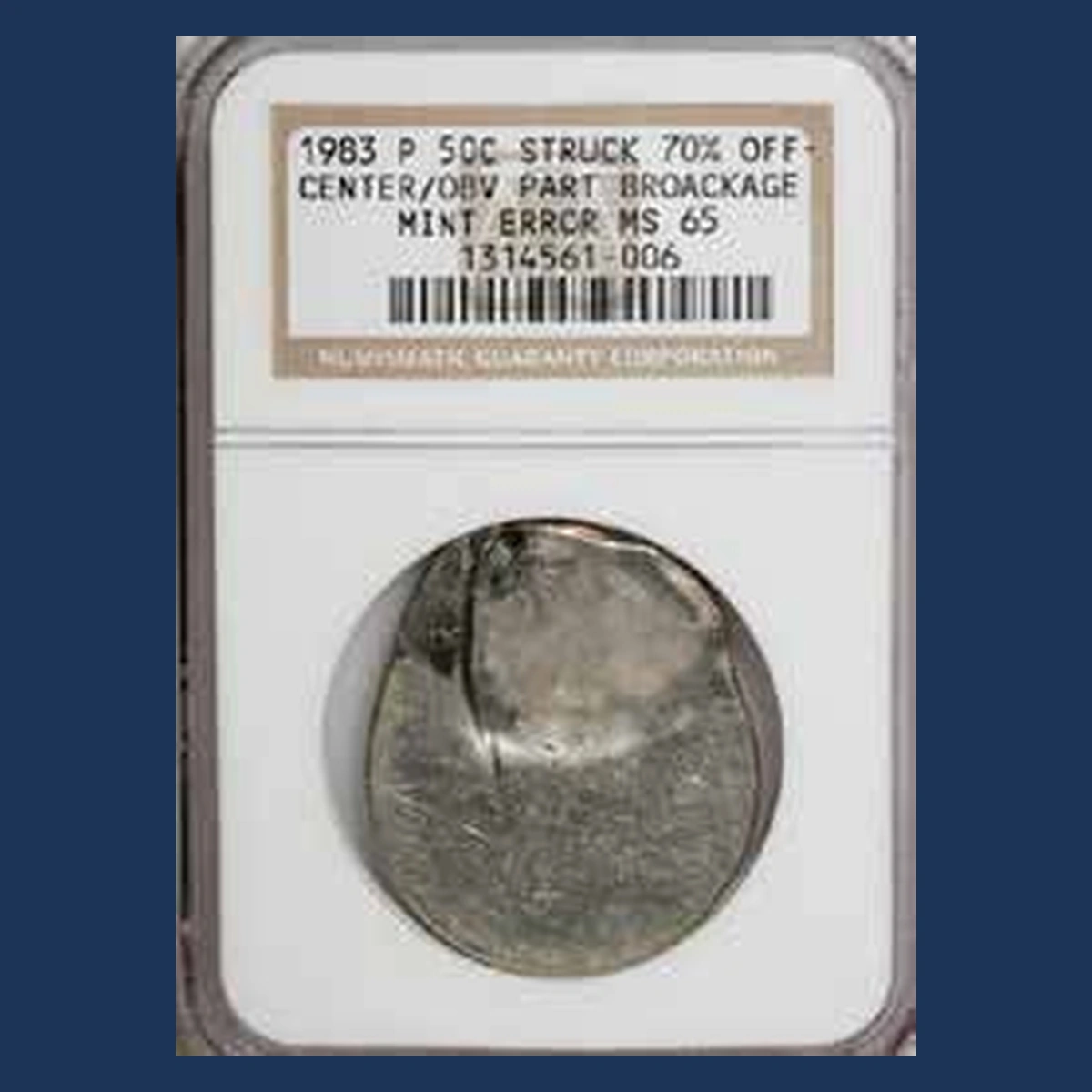
A sunken, backward design is the important clue to a brockage. It forms when an already struck coin gets between a stamping tool and a fresh blank.
The older coin presses its raised design into the new one. The resulting copy is recessed and reversed, rather than a normal raised impression.
Mint Error News reports a 1983-P with a partial brockage on the front and a 70% off-center strike. NGC graded it MS65, meaning no circulation wear and relatively few marks.
Both features belong to that one coin.
Estimated Value
Mint Error News issue 26 reports $632.50 at a Heritage FUN auction for the combination. That historical price includes both errors together.
Use an estimated $400–$1,200 range for similar examples with clear identification. Strong backward design details and attractive surfaces support the higher end.
A large empty crescent alone does not make a better brockage, because collectors need to see the sunken copied design.
How to Identify
Examine the partial front impression with a 10× magnifier. Check that its details sink into the surface and appear backward compared with the normal design.
A second strike from a normal tool usually leaves raised detail. A plain indent leaves a hollow without a recognizable backward design, so neither is the same feature.
Look at the entire coin to connect the copied impression with the large empty crescent. A close-up alone can hide how the two errors fit together.
An intact blank should remain near 11.34 g on a scale, although calipers may show expansion beyond the normal 30.61 mm. Inspect the edge too.
The strongest clue is recognizable, backward, sunken design inside the struck area.
10. 1983 Kennedy Half Dollar Double and Multiple Strike Errors (Estimated Up to $1,500)
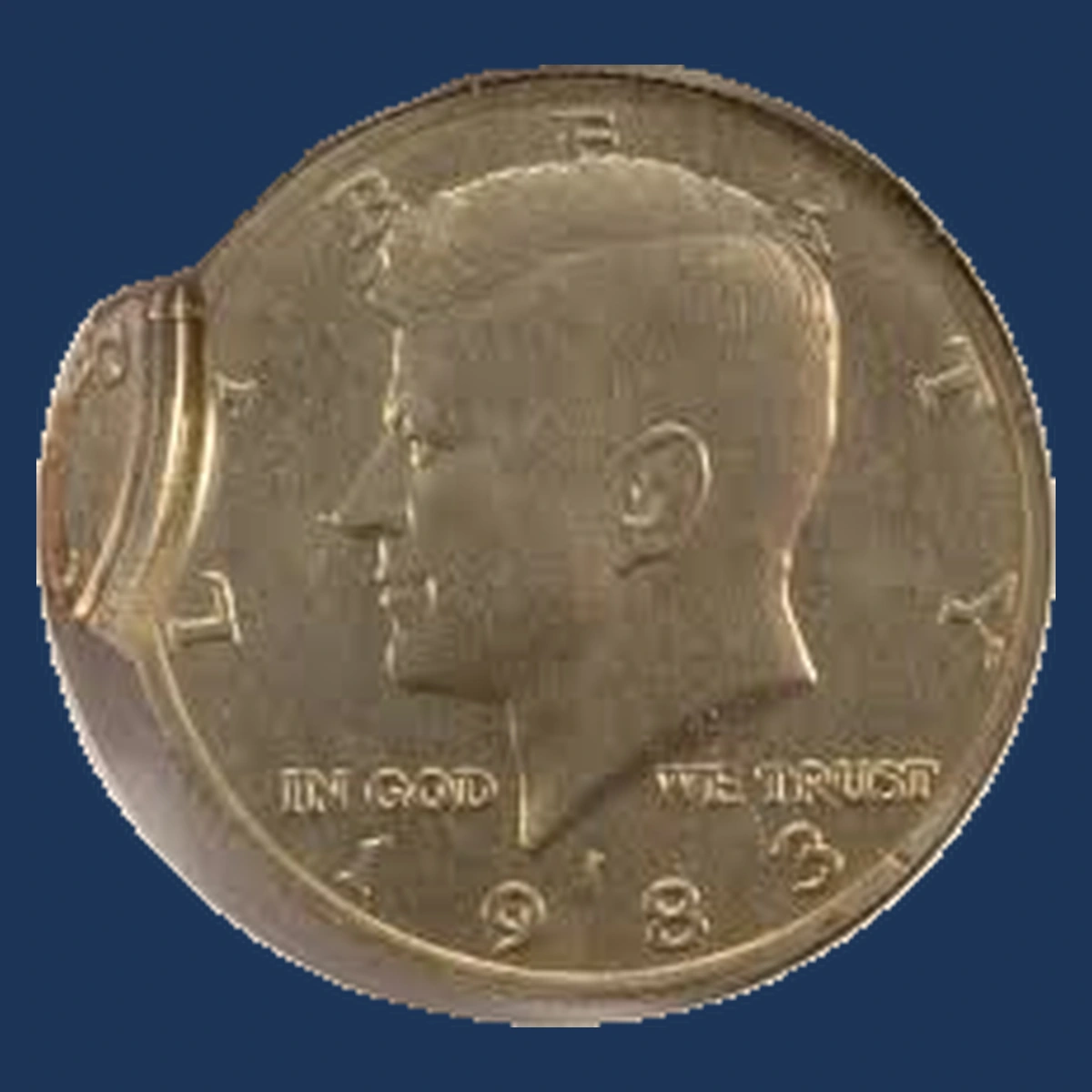
Several 1983-P coins show overlapping strikes, but their details differ. Heritage recorded an NGC MS66 double strike with a broad second impression and an indent on the front.
A separate NGC MS63 repeatedly struck broadstrike sold in 2024. Another report describes four strikes, without establishing that it is the same coin.
An ANACS MS63 example has a second strike 93% off-center, with that impression showing design on only one side. MS grades mean no circulation wear.
MS63 coins generally have more noticeable marks than MS66 examples, and each combination needs its own comparison.
Estimated Value
The NGC MS63 repeatedly struck broadstrike sold for $552 in June 2024. The estimated range for these combinations is $300–$1,500, depending on how clearly the separate strikes show.
A 1998-P double strike with a broad second impression sold for $317.20 in June 2026. Its CACG MS64 grade indicates no circulation wear and relatively few marks.
That different-year sale helps compare simpler examples, while dramatic, readable combinations can command more.
How to Identify
Use a 10× magnifier to trace each separate impression. Look for overlapping dates, letters, or portrait details that fit distinct striking positions, rather than tiny doubled edges on one design.
The example with a 93% off-center second strike should show a small additional impression, with no matching design on its opposite side. The MS66 example instead needs a separate check of its front indent.
A scale should remain near 11.34 g for an intact coin. Calipers may read wider than the normal 30.61 mm after metal spreads, and the edge may show altered ridges.
Do not call a coin four-struck without seeing evidence of four impressions. Start by tracing separate overlapping designs that each fit a different strike position.
Conclusion
Some 1983 half dollar errors change one small detail, while others distort nearly the entire coin. Compare both sides before deciding whether you see missing initials, a shifted design, or more than one strike.
Estimated values span $15–$1,500. Match the price to the complete coin and its condition, keep photographs of the edge, and avoid adding separate prices for features found together.