1956 Half Dollar Error List with Pictures

A 1956 Franklin half dollar made on a smaller quarter blank sold for $1,150 in December 2009. The date survived even though outer letters did not fit on the metal.
The 1956 half dollar errors below have estimated values from $40 to $4,000. Some are easiest to spot at the edge; others need a close look at letters or feathers.
Read on to compare the different features. Ordinary coins and specially made collector proofs need separate checks.
1. 1956 Franklin Half Dollar Lamination Error (Estimated Up to $200)
A thin part of the surface can lift or split even when the design was struck in the correct position. This separation within the metal is called lamination.
A weak region in the silver alloy lets one layer open away from the rest. The 1956 account does not locate a particular peel.
It also does not say whether the coin is an ordinary strike or a collector proof. Check the actual example.
All 1956 halves use silver-copper alloy. Their peeling is different from a missing copper-nickel outer layer on a later half dollar.
Estimated Value
Estimated value is $40–$200 for visible original separation on an ordinary worn or lower-grade unworn coin. The whole coin is included in that figure.
The range draws on modest Franklin peeling errors and ordinary lower unworn 1956 prices around $30–$50. It is not a sale record for one particular flap.
A natural attached layer can attract interest. Cleaning or missing metal can reduce appeal, while an exceptional proof needs a separate condition comparison.
How to Identify
Look for an opening that follows a layer beneath the original surface. A magnifier and low light help show the boundary without probing it.
Keep any flap attached. A scale may stay near the normal 12.50 grams if the metal remains present, but read lower if part fell away.
Use calipers across intact areas against 30.6 millimeters, and inspect the edge grooves and both sides for damage. A scrape cuts across a surface, while corrosion eats irregular cavities.
A natural layer boundary within the silver alloy is the quickest useful finding, rather than pits, scooped cuts, or an imagined outer cladding.
2. 1956 Franklin Half Dollar Clipped Planchet Error (Estimated Up to $500)
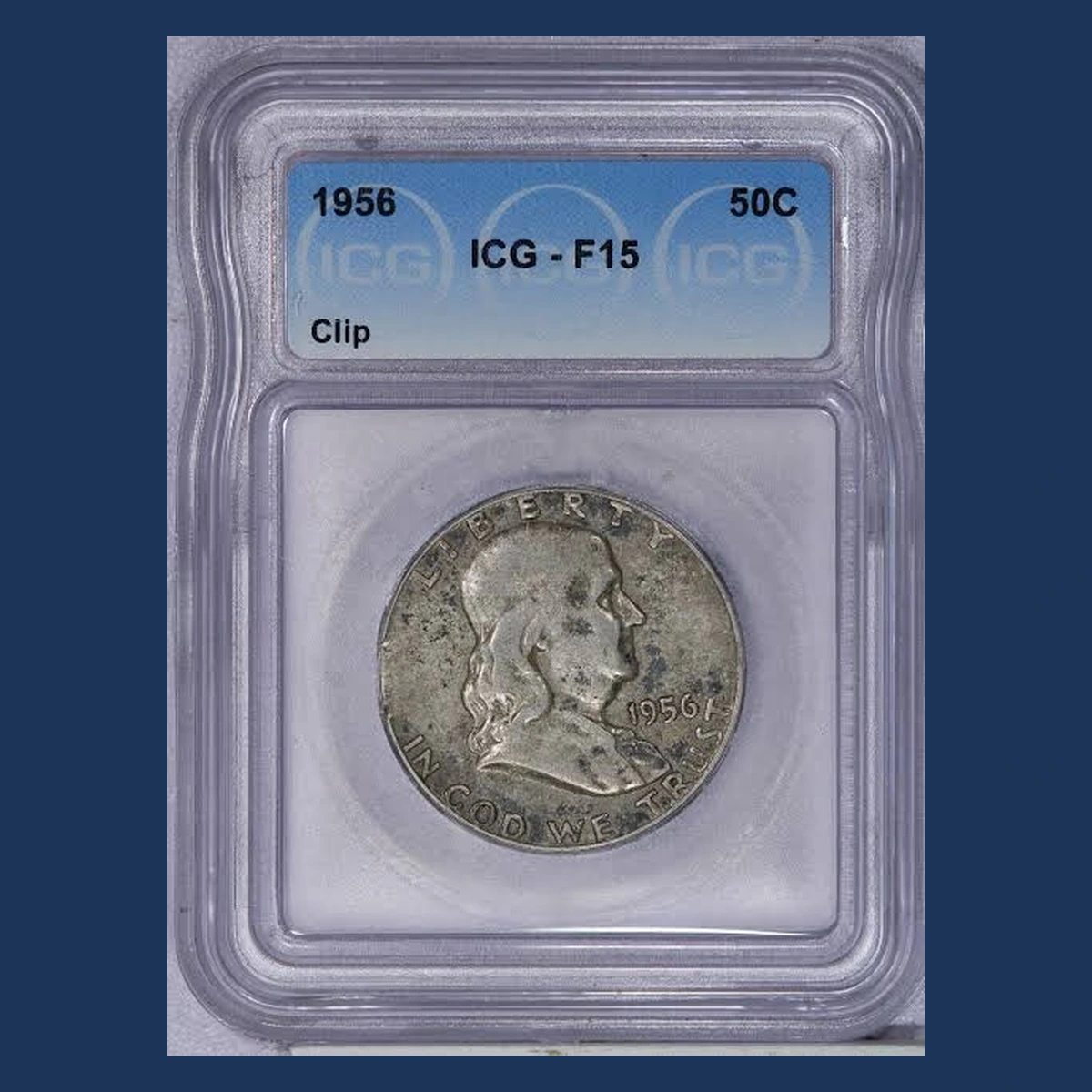
Two different 1956 coins show why the size of a clip belongs to an individual example. GreatCollections listed a two-percent clip graded PCGS MS64, while a CONECA account describes a nine-percent curved gap near one o’clock.
The larger gap removes part of R and all of TY in LIBERTY. Much of OLL is also missing on the back.
Those missing letters do not describe the smaller coin. A genuine clip starts with an incomplete blank, the round metal disc used to make a coin.
Its design and rim form around a gap already present in the metal.
Estimated Value
Estimated value is $75–$500 for clear original clips, from modest unworn examples to more noticeable missing sections. The two-percent MS64 sold in November 2017, but its public page hides the final price.
A four-percent clip on a 1962-D brought $84 in March 2011. Its PCGS MS61 grade means no wear but noticeable marks.
That gives a historical lower-priced comparison. The larger 1956 clip still needs its own condition assessment, not a price multiplied by percentage.
How to Identify
For the nine-percent coin, compare the gap at LIBERTY with the missing OLL on the back. Use the smaller coin’s own photographs for the two-percent example.
Weigh the remaining metal against the original 12.50 grams. Calipers can compare an intact width with 30.6 millimeters, while the missing section should explain the weight loss.
Under a magnifier, inspect where the edge grooves enter the gap. Saw marks or a cut through finished lettering suggest later removal.
A weak opposite rim can help when present. Natural transitions into a gap that existed before striking give the immediate physical test for a genuine clip.
3. 1956 Franklin Half Dollar Proof-Style Reverse on a Business Strike (Estimated Up to $600)
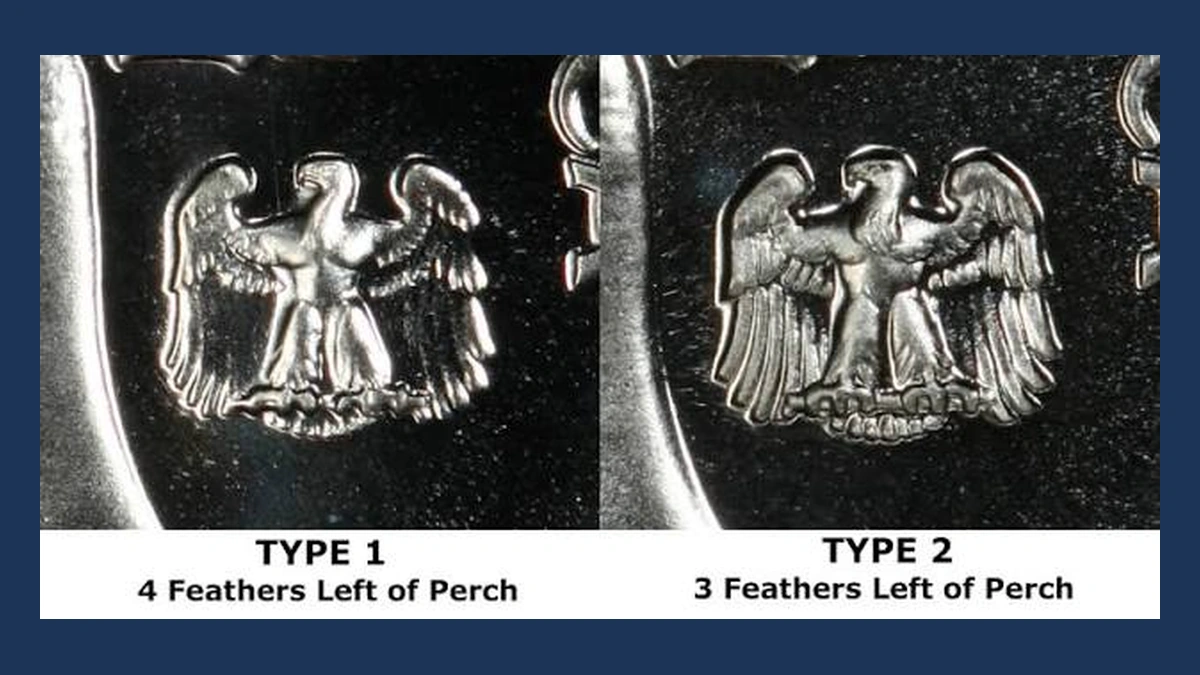
The little eagle beside the bell has two different intended designs. Type 2 has a more detailed-looking bird and a different arrangement of feather tips.
It is normally associated with collector proofs, while Type 1 is normally found on coins made for ordinary use. Error-Ref reports a small number of ordinary 1956 strikes with the Type 2 design.
The unusual feature is that combination of design and production method. A normal Type 2 proof is not an error, and counting a different number of feathers does not mean the eagle was doubled or struck twice.
Estimated Value
Estimated value is $75–$600 for an identified ordinary strike with the reported Type 2 back, in lower to middle unworn grades. Normal 1956 values provide the starting point.
No completed sale of this particular design combination is used here. The extra allowance depends on proving that it is an ordinary strike.
A normal Type 2 collector proof does not receive the same estimate just because the eagle has the expected feather count.
How to Identify
Decide how the coin was made before counting feathers. Examine the whole surface with a suitable identified comparison, since cleaning can make an ordinary coin shiny and toning can hide a proof’s reflective areas.
A scale and calipers compare the shared 12.50 grams and 30.6 millimeters. Both types have edge grooves, so size alone cannot settle the question.
Use a magnifier with the design pictures. Type 2 has three feathers left of the perch and four tips on the other side.
Type 1 instead shows four and five feather tips. Compare the same areas on both birds.
A Type 2 eagle on a confirmed ordinary strike identifies the unusual pairing; that eagle on a normal proof does not.
4. 1956 Franklin Half Dollar Obverse Strike-Through Error (Estimated Up to $750)
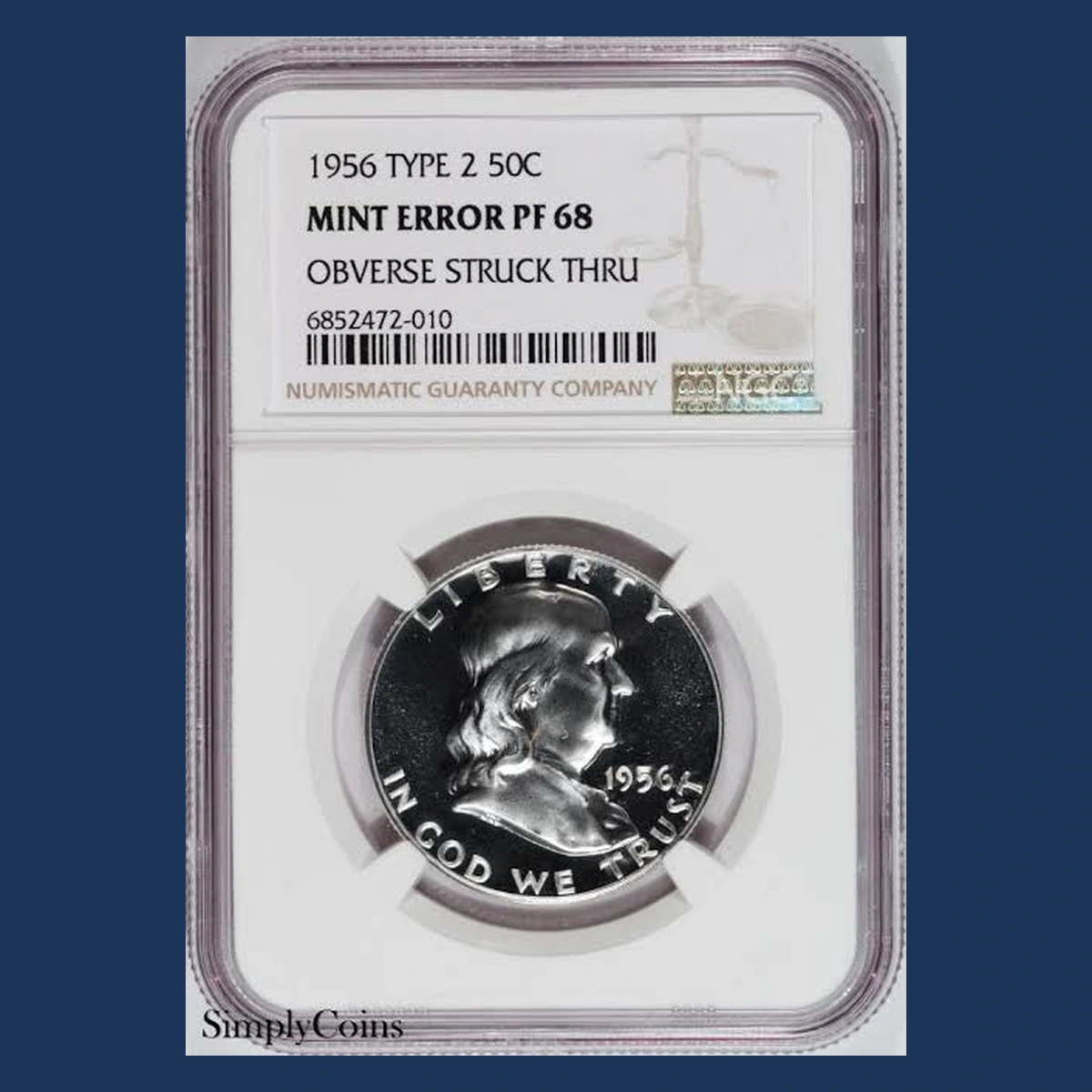
An area on the front of a 1956 Type 2 proof did not receive its normal design. GreatCollections identified the coin as struck through material and graded it NGC PF67 Cameo.
A proof is a specially made collector coin. Cameo describes frosted details against reflective areas, and the grade indicates a well-preserved example.
Material between the steel stamping tool and the metal disc can leave a depression or missing detail. The auction does not identify that material.
A separate report describes a thread-shaped mark on another example. It does not prove that thread caused this proof’s error.
Estimated Value
Estimated value is $150–$750 for a visible strike-through on an attractive Type 2 proof. The PF67 Cameo example sold in May 2015, but its final price is not visible publicly.
The estimate considers both the collector coin and the extra interest of its interrupted design. It is not that auction’s hidden result.
An ordinary circulation coin with a small line starts from a different value. The finish and the mark should be assessed together.
How to Identify
Locate the affected front area in the auction photographs and compare where the normal design meets it. A magnifier should show whether detail stopped forming or was cut away later.
Change the light without cleaning the proof. Fine scratches and polished patches can complicate the view, and a narrow mark alone does not identify thread or wire.
Inspect the edge grooves, then use a scale and calipers on an unholdered coin to compare 12.50 grams and 30.6 millimeters. Those normal readings do not prove an obstruction.
Look for a mark where normal design stops at a naturally formed boundary. A fresh scrape instead cuts through the finished surface.
5. 1956 Franklin Half Dollar Doubled Die Obverse (Estimated Up to $900)
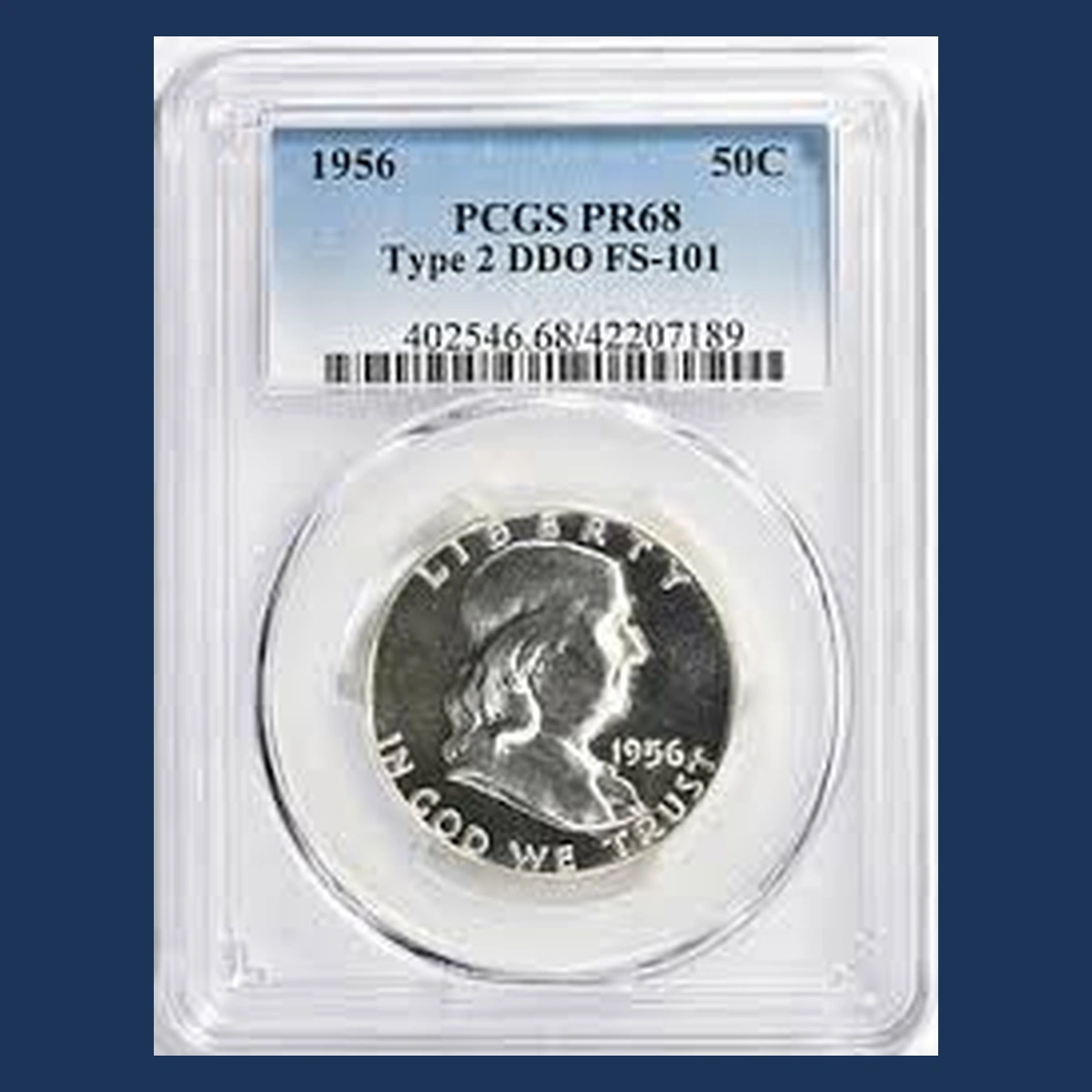
A letter may be unusually thick or show a separated second edge. Both can occur when repeated design details are made in the steel stamping tool, called a doubled die.
Wexler’s 1956 catalog records examples on ordinary coins and proofs. It points to LIBERTY, the motto, and the date, with different shapes on different tools.
One proof has spreading toward the center in some letters and clearer separation in others. Another mainly shows thickened shapes.
Compare one example at a time. Do not combine marks from different dies or accept any heavy-looking word as proof of doubling.
Estimated Value
Estimated value is $50–$200 for a modest identified ordinary-strike example. Similar proof varieties have an estimated $100–$900 range, including better Cameo condition.
The year guide puts a Type 2 front-doubled PR67 Cameo around $315–$375. That is a guide estimate, with higher-grade examples reported above it.
Match the actual doubled pattern before using a price. A changed catalog number or broadly thick lettering does not make every 1956 coin the same variety.
How to Identify
Choose an example of the same production finish in Wexler’s photographs. Compare its whole date and lettering before zooming into one isolated bright letter edge.
Inspect the complete Philadelphia back without a mintmark and the edge grooves. A scale and calipers can compare the normal 12.50 grams and 30.6 millimeters.
Under a magnifier, follow the shape of thickening or separation at several connected letter strokes. A low flat shelf from movement during striking is different, and changing light can expose reflections.
A consistent match to one documented front-doubling pattern is the useful identification, rather than general heaviness across unrelated letters.
6. 1956 Franklin Half Dollar Bugs Bunny and Other Die Clashes (Estimated Up to $1,000)
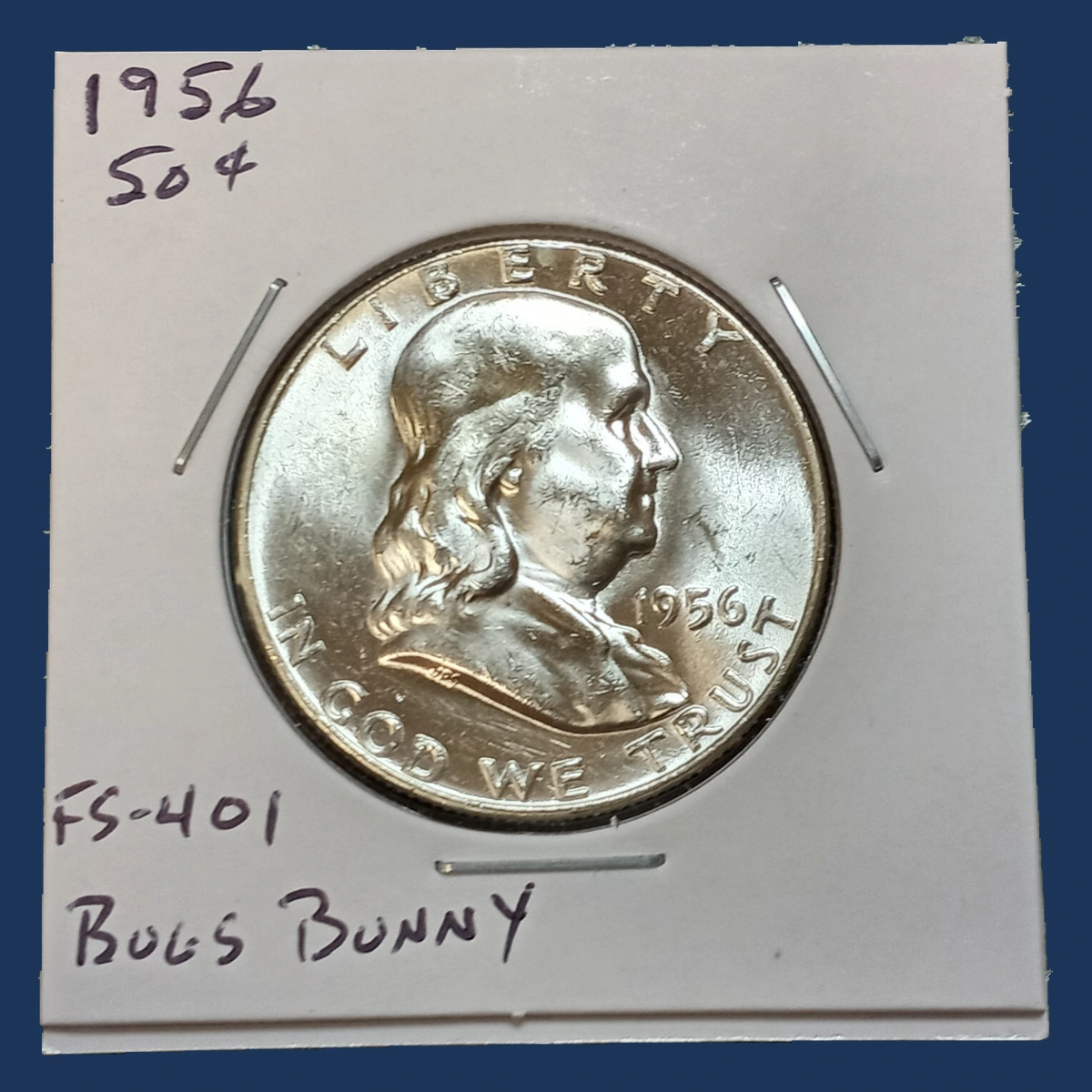
A small projection below Franklin’s upper lip looks like an extra tooth. That gives the familiar clash its Bugs Bunny nickname.
The front and back stamping tools struck each other without a coin between them. Eagle detail marked the front tool, which then left the projection on later coins.
The year material also reports a separate clash near the nose. It is not a second required mark on every Bugs Bunny example.
A random facial scratch does not prove either clash. The mark needs a matching shape from the opposite design.
Estimated Value
Reported eBay results for NGC MS64 Bugs Bunny coins include $48.52 in September 2026 and $68 in July 2026. Estimated ordinary unworn value is $45–$200.
Superior coins with Full Bell Lines, meaning clear lines on the bell, have an estimated $200–$1,000 range. The guide reports $989 for an MS66 FBL in March 2022.
The separate nose-area clash needs its own match. It does not automatically receive the higher mouth-variety price.
How to Identify
Look just below the upper lip under a magnifier and change the light to follow the raised toothlike shape. Compare the adjacent surface for a cut or metal pushed up by a hit.
For a nose-area mark, use that separate example and compare the shape with the opposite design. The known mouth mark cannot prove that an unrelated line near the nose is also a clash.
Check the unmarked Philadelphia back and edge grooves, then compare 12.50 grams and 30.6 millimeters with a scale and calipers. Judge bell-line clarity separately.
Look for the known tooth shape at the mouth, or the separately documented nose trace, matching the opposite design.
7. 1956 Franklin Half Dollar Proof Doubled Die Reverse (Estimated Up to $1,000)
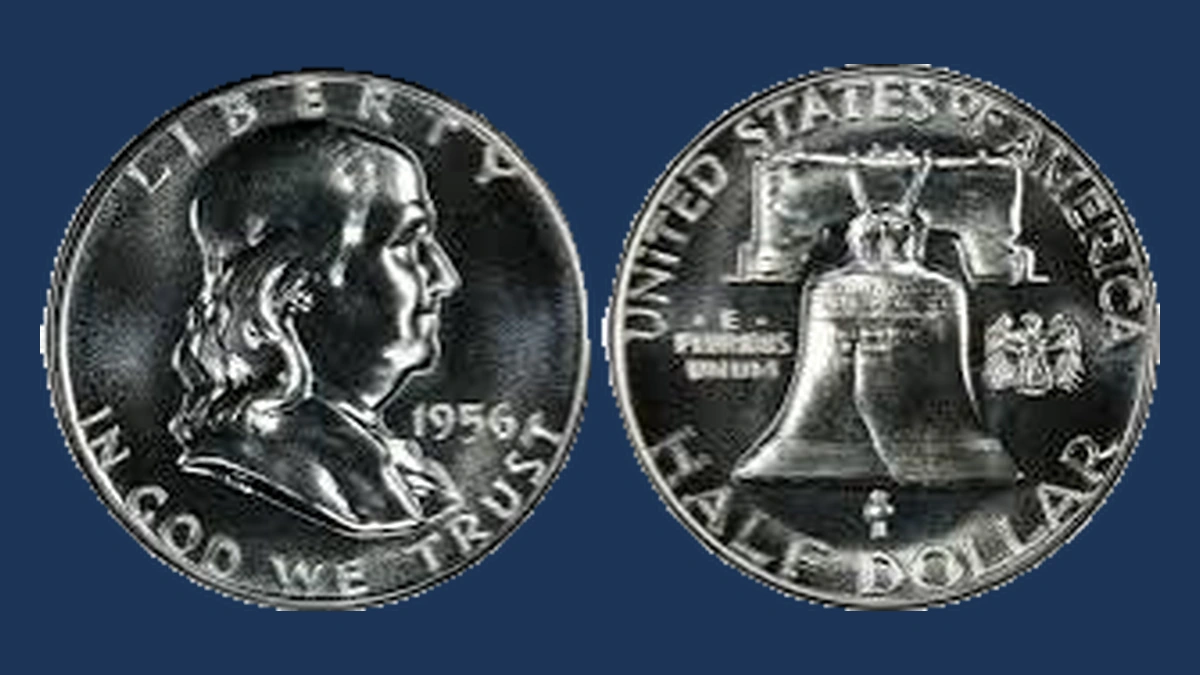
Extra outlines on the back can appear even when the front has none. Some documented 1956 proofs have doubling on both sides.
Wexler records repeated letters around the bell and other examples with extra shapes on the eagle or lower bell area. The exact locations depend on the individual stamping tool.
Some show more than two outlines. The cause is the same: repeated details were already in the tool before it struck the coin.
Normal Type 1 and Type 2 eagles have different feather designs. Counting those feathers identifies the basic design; it does not prove doubling.
Estimated Value
Estimated value is $50–$1,000 across the proof varieties and conditions discussed. The year guide places ordinary examples from modest sums into several hundred dollars, with Cameo examples reaching about $1,000.
Its table reports two different PR67 back varieties at $65 and $216 in November 2025. Those are guide-reported sales.
The coins can differ in their doubled pattern, surface contrast, and condition. Having back doubling alone does not make their values interchangeable.
How to Identify
Identify Type 1 or Type 2 before comparing the letters around the bell. Use a magnifier on UNITED STATES OF AMERICA, HALF DOLLAR, and E PLURIBUS UNUM.
Follow extra shapes into the bell or eagle only where the same documented example shows them. Do not combine the clearest marks from several different coins.
Move the light to separate raised detail from reflections. Inspect the edge grooves and use a scale and calipers to compare 12.50 grams and 30.6 millimeters.
Match the extra shapes to one known doubled back. A normal eagle design change or an isolated flat shelf is not the same feature.
8. 1956 Franklin Half Dollar Quarter Planchet Error (Estimated Up to $4,000)
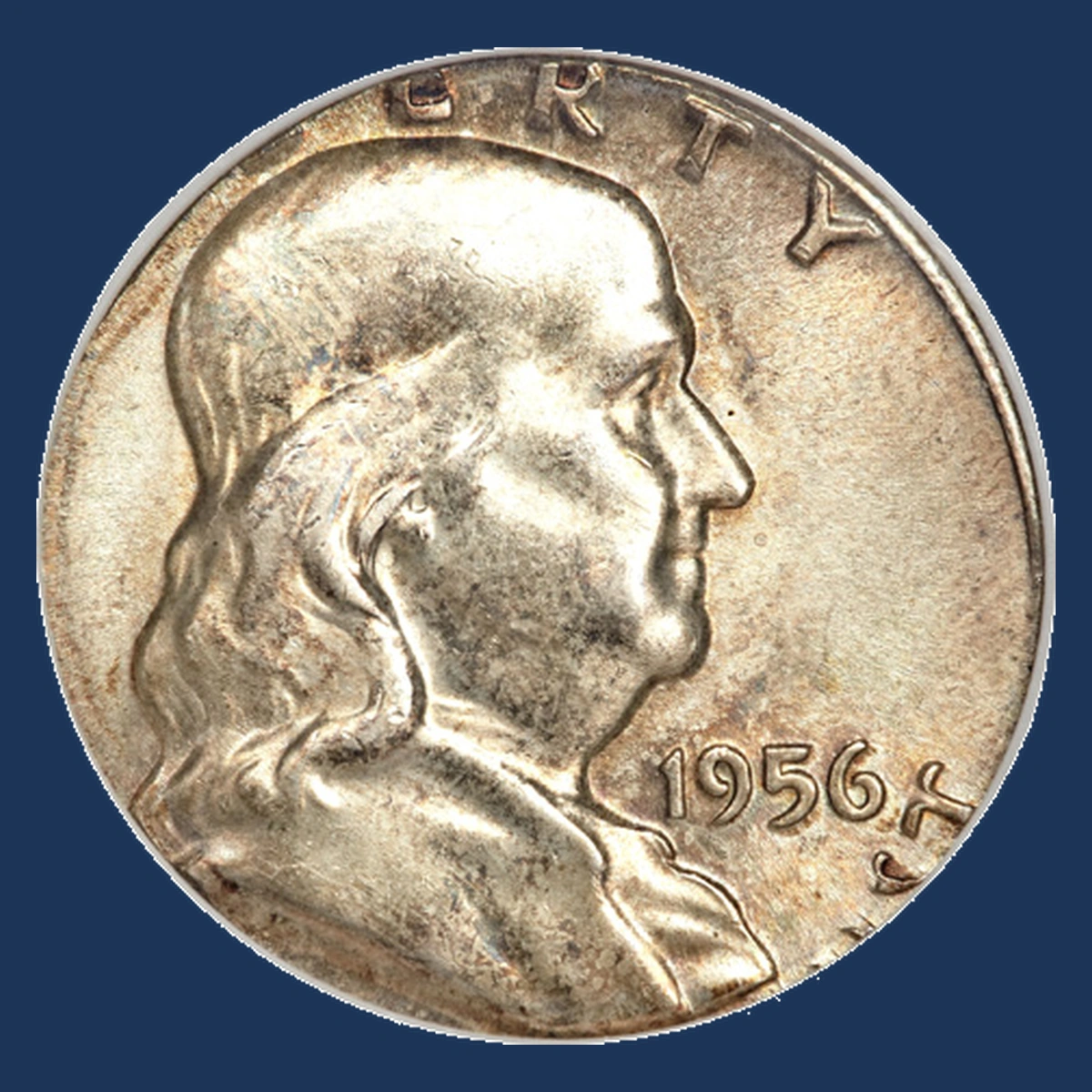
Most of Franklin and the bell fit on this smaller disc, but several outer words do not. The coin was struck on a metal blank intended for a quarter.
Heritage describes that blank as shifted toward one o’clock on the front. This is part of the wrong-blank coin’s appearance, not a separate off-center strike on a normal half-dollar disc.
ANACS graded it MS62, meaning no wear but noticeable marks. The mintmark area is missing, yet the surviving 1956 date identifies Philadelphia because no other mint made half dollars that year.
Estimated Value
The ANACS MS62 sold for $1,150 at Heritage on December 4, 2009. A working estimate is $1,200–$4,000 for a similarly identified quarter-blank strike.
The old sale is a historical comparison, not a guaranteed offer today. Better surfaces and more complete identifying details can support higher interest.
The original blank must still be established. An unidentified small silver coin does not automatically qualify for the same error or price.
How to Identify
Weigh the coin and record its actual width with calipers. A silver quarter blank begins near 6.25 grams and 24.3 millimeters, compared with 12.50 grams and 30.6 millimeters for a half dollar.
Striking can widen the smaller blank, and the catalog gives no measured dimensions for this coin. Do not treat the starting numbers as its exact readings.
Keep the 1956 date visible and compare the missing parts of IN GOD WE TRUST and UNITED STATES OF AMERICA. Inspect the edge with a magnifier for cutting or filing.
Look for reduced weight and silver metal together with half-dollar letters cut off naturally at the smaller edge.
Conclusion
Estimated values span $40–$4,000, with each range tied to the coin’s actual feature and condition. The eagle design and doubled details are separate questions, and a normal Type 2 proof is not an unusual ordinary-strike pairing.
For physical errors, measure a suspected small blank, inspect a clip’s original boundary, and leave loose metal attached. Those simple checks help keep the individual 1956 examples and their prices from being mixed together.