1939 Half Dollar Error List with Pictures

A 1939-D half dollar with a doubled design sold for $2,160 at Stack’s Bowers in April 2025. Its MS67+ grade places it among very well-preserved coins.
You do not need a top-grade coin to start checking 1939 half dollar errors. Look for an unusual sunken mark, an extra D, or repeated parts of the front design.
The estimates below span $60–$2,200. Read on to find out what each feature means and how to recognize it.
1. 1939 Walking Liberty Half Dollar Struck-Through Error (Estimated Up to $200)
A sunken mark or a patch of missing detail can form when something gets in the way as a coin is stamped. Collectors call this a struck-through error.
The obstruction sits between the blank metal disc and the die, the tool that stamps the design. It stops part of the design from reaching the coin.
The material may fall away afterward, leaving its mark behind. A 1939 half dollar guide describes this kind of interference; it does not mean a second coin design was stamped underneath.
Estimated Value
Allow an estimated $60–$200 for a small, visible struck-through mark on a worn or lower-grade unworn 1939 half dollar. A larger mark and better surfaces can raise interest.
A useful comparison is a 1976-D half dollar struck through on both sides, sold for $114 in March 2025. NGC had certified the error.
That sale involved a different year and design. It helps price a modest error, rather than an unusually large one.
How to Identify
Study the mark with a 10× magnifier and move the light around it. Look at where the normal design stops or weakens.
A dent made after minting may push metal up around its edge. Fresh scrapes or a raised lip are reasons to look more closely.
Do not guess what caused a hollow from its shape alone. Several kinds of damage can look like a struck-through mark.
A loose Walking Liberty half dollar should be close to 12.50 grams when unworn and about 30.6 millimeters wide. Check with a scale and calipers, and look for the normal grooves around the edge.
This error can leave those measurements unchanged. The quickest reliable check is an expert’s examination or a certification label that specifically identifies the struck-through error.
2. 1939-D Walking Liberty Half Dollar Repunched Mintmark Error (Up to $1,292.50)
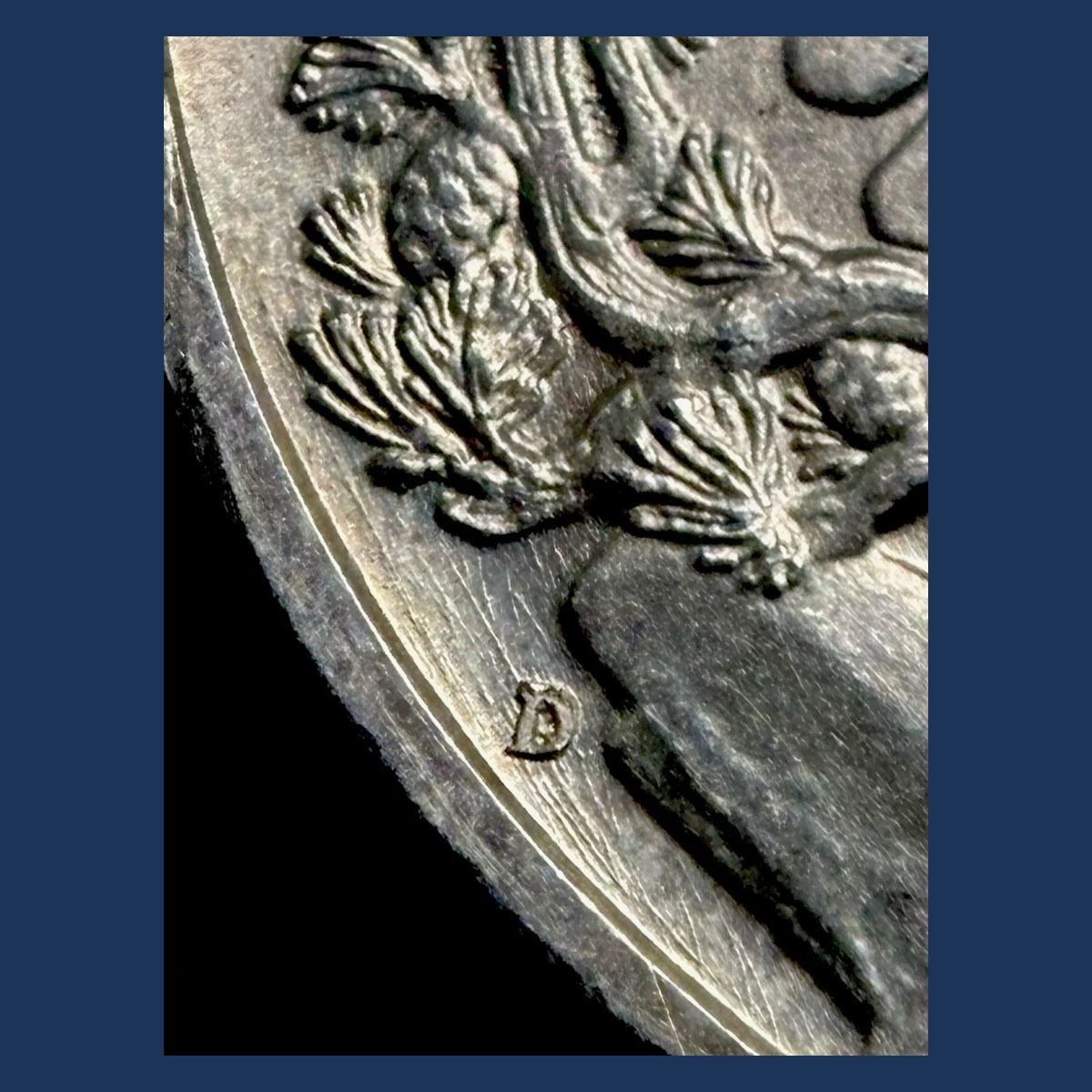
Find the small D on the back, below the pine branch at the lower left. On the variety called FS-501, part of a second D appears above it.
The D identifies Denver. Workers punched this letter into the die by hand, and a slight shift between blows left two impressions.
Those extra lines appeared on coins made with that die. This is called a repunched mintmark.
Other 1939-D varieties have different extra outlines. A thick D alone does not prove FS-501; its shape must match that particular variety.
Estimated Value
For certified FS-501 coins graded MS63–MS65, estimate $300–$1,300. These grades describe unworn coins with different amounts of marks and other surface flaws.
A PCGS MS64+ example brought $1,292.50 at Kagin’s in September 2017. That is a historical sale of this specific variety.
Compare the shine and marks as well as the extra D. Worn coins or other minor doubled mintmarks should not automatically receive the same price.
How to Identify
Look above the D with a 10× magnifier. The extra curve should follow the shape of another D, rather than look like an uneven bump.
Then find DOLLAR on the back. A line joining the bottoms of O and L is a second clue recorded for FS-501.
Check both features together. Corrosion, a hit, or a flat shelf caused by movement during stamping can make one letter look doubled.
The coin’s size provides another basic check. Use a scale and calipers on a loose example: an unworn half dollar is 12.50 grams and about 30.6 millimeters across, with a grooved edge.
To recognize FS-501 quickly, match the extra D above the mintmark and the line below OL to the same reference photo.
3. 1939 Walking Liberty Half Dollar Doubled Die Obverse Error (Up to $2,160)
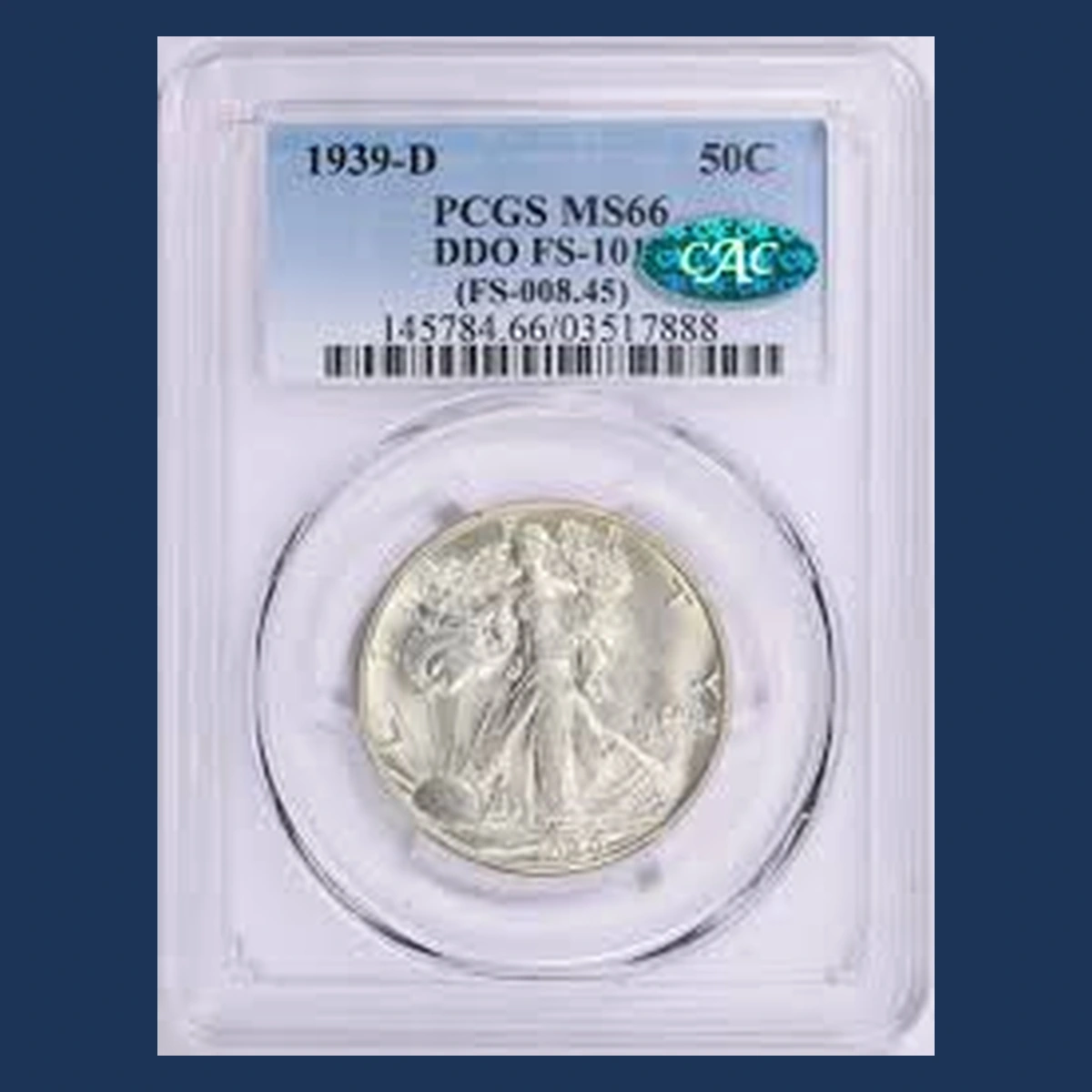
Extra outlines can appear in several parts of the front design on a 1939-D FS-101 half dollar. Look at the motto, parts of LIBERTY, the stars, flag folds, and leaves.
The design was doubled when it was put into the die. That tool then stamped the repeated details onto coins, even with just one strike.
This is a doubled die. Wear can hide some of its smaller clues.
Philadelphia and San Francisco also have listed doubled-die varieties. Their patterns differ, so Denver’s extra lines are not a checklist for every 1939 coin.
Estimated Value
The Denver FS-101 has an estimated $150–$2,200 range for certified MS64–MS67+ examples. These are unworn coins, with higher grades generally showing fewer marks.
A PCGS MS66 with CAC approval sold for $720 at Heritage in November 2025. An NGC MS67+ brought $2,160 at Stack’s Bowers in April 2025.
Both sales concern the Denver variety. They do not set the value of every doubled-looking 1939 half dollar.
How to Identify
First look at the mintmark on the back. D means Denver, S means San Francisco, and no letter means Philadelphia.
For a Denver FS-101, use a 10× magnifier to compare the motto and the other doubled front details with a confirmed example. Several marks should match the same photo.
Do not combine clues from different mints. Their dies were different.
Tilt the light to separate raised extra outlines from scratches and flat shelves beside the design. Those lookalikes do not establish a doubled die.
For a loose coin, check the usual 12.50-gram weight, 30.6-millimeter diameter, and grooved edge with a scale, calipers, and magnifier. The fastest identification is a matching group of doubled details on a reference coin from the same mint.
Conclusion
An unusual hollow, an extra mintmark, and a doubled front design call for different checks. The estimated $60–$2,200 overall range depends on which error you have and how well the coin has survived.
Find the mintmark before comparing doubled details. Then match the visible marks to one specific variety; a thick letter or a single odd line is only a starting clue.