1917 Half Dollar Error List with Pictures

A 1942 Walking Liberty half struck on a quarter blank sold for $18,000 in January 2022. It provides a comparison for the smaller-blank type below; the historical candidate’s incomplete date reads 1917 or 1947.
These 1917 Walking Liberty half dollar errors span estimated $50–$25,000 values. Some require a close look at lettering, while others change the edge or size.
Begin by locating D or S: in 1917, either letter can appear on the front or back.
1. 1917 Walking Liberty Half Dollar Die Crack Error (Estimated Up to $250)
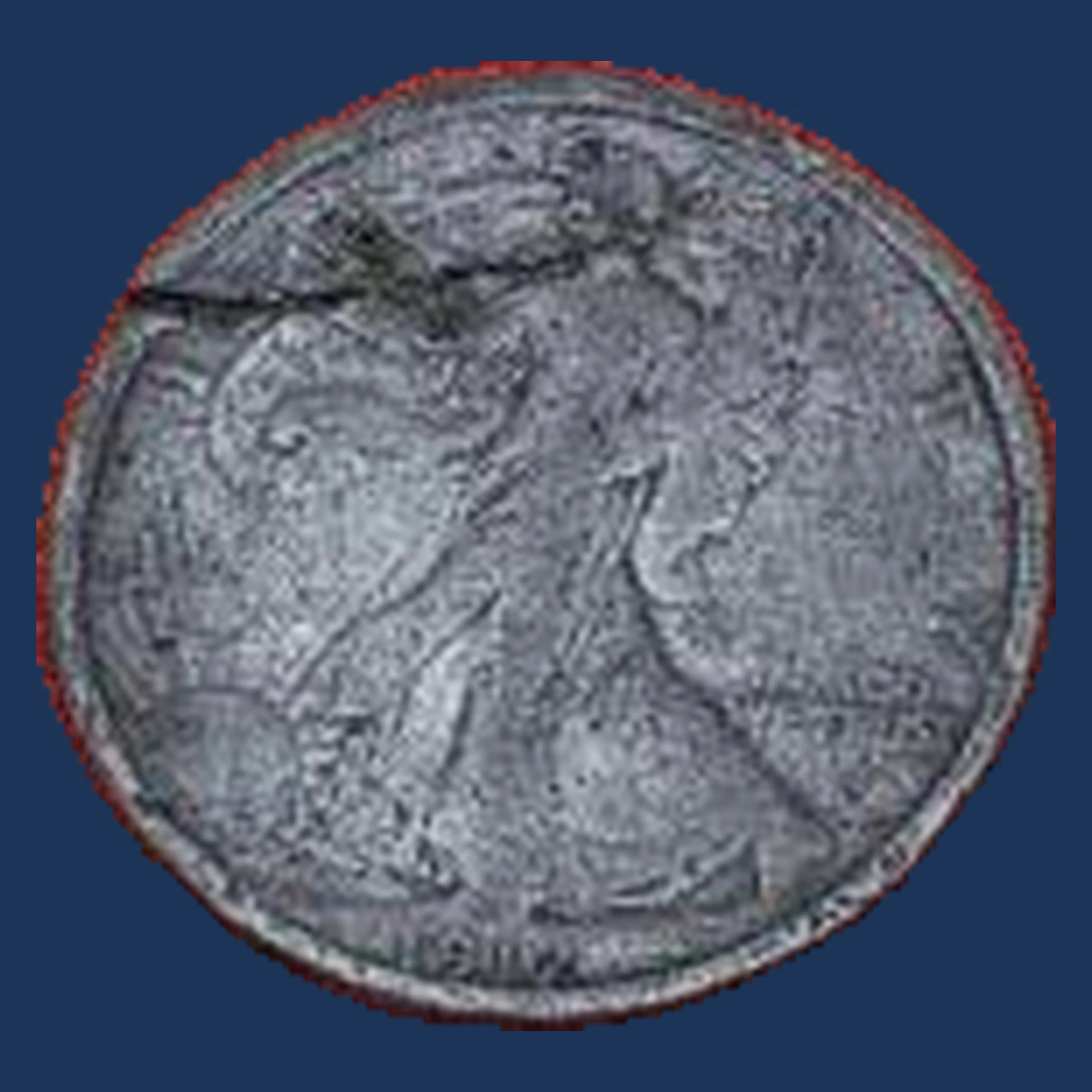
A thin raised line can record damage to the tool rather than damage to the coin. A die, the steel tool that stamps coins, can crack after repeated use.
Silver enters the narrow opening during striking. It leaves a ridge on the finished half dollar.
Schackmann’s auction list describes a 1917 example with a die crack. The text does not identify its mint or locate the line.
Inspect the actual raised feature before naming it. A familiar crack from another date cannot supply the missing location, and an ordinary scratch has a different cause.
Estimated Value
An estimated $50–$250 covers small recognizable cracks on worn through modest unworn examples. The seller’s listing gives no sale result or separate error certification.
For comparison, a 1976-D Kennedy half with a larger break on the back brought $256 in June 2026. It was graded MS65, meaning well-preserved and unworn.
That different-series example helps frame interest in visible tool damage. A thin crack usually has less visual impact than a substantial raised break.
How to Identify
Follow the suspected line from end to end with a 10× magnifier. Check whether its center rises above the surface or forms a sunken channel.
A scratch may push metal up along its sides, but the middle remains cut into the coin. Change the light direction to see that difference.
Record the date and actual mint-letter position on both faces. Do not assume where the letter belongs on a 1917 example.
The normal silver half weighs 12.50 grams and measures 30.6 mm. Check safely accessible coins with a scale and calipers, then inspect the edge grooves.
A continuous raised track joined to the struck surface is more useful than a dark line whose color happens to match the coin.
2. 1917-S Walking Liberty Half Dollar Rim Clip Error (Estimated Up to $400)
A clipped blank is missing part of its outline before the pictures are struck. The press then shapes the remaining metal around that gap.
The Rippere Collection included a specific 1917-S rim clip with S on the back. It was graded VG10, meaning heavy wear with some clear detail remaining.
That version matters because another 1917-S issue carries its letter on the front. The two should not be mixed in a comparison.
The listing gives neither the gap’s clock position nor its percentage. Keep the whole outline visible instead of filling in those details from another example.
Estimated Value
For worn examples, estimate $75–$400. The GreatCollections listing records a completed March 2025 sale, but its public text does not show the realized price.
A different-year 1942-S rim clip brought $81.90 including fees in May 2025. Its MS62 grade means unworn with noticeable marks.
That sale offers a comparison for a small rim error. It is not the price of the Rippere 1917-S, whose year, wear, and mint-letter version must remain separate.
How to Identify
Find S below the branch near the lower-left edge on the back. That matches the version of the Rippere example; a front S identifies the other 1917 issue.
Examine the missing segment with a 10× magnifier. Look at how the struck design and edge grooves approach the gap.
A later cut may leave burrs, tool marks, or an abrupt break through finished detail. Weakness opposite the gap can support an original clip, but matching color alone cannot.
Use a scale and calipers when safely accessible against 12.50 grams and 30.6 mm across intact areas. Missing metal should affect the weight.
Natural strike changes around the gap provide the useful distinction from a cut made after striking.
3. 1917 Walking Liberty Half Dollar Obverse Lamination Error (Estimated Up to $500)
A thin layer can peel away from the front of a silver half dollar. The weakness lies within the metal, not in the picture stamped on it.
An attached flap may remain, or a flake may fall away and expose the layer beneath. Collectors call this a lamination.
The year material places the reported feature on the front. It does not identify a mint, mint-letter position, or exact outline.
This is not a claim that the whole coin split into two discs. A gouge can also remove surface metal, so the edge of the affected area needs inspection.
Estimated Value
Estimate $75–$500 for visible front laminations on worn through modest unworn examples. A same-series comparison is a dealer’s $275 asking price for a 1947 front lamination graded MS65.
That grade indicates well-preserved unworn condition. The dealer offer is neither a 1917 coin nor a completed auction sale.
For 1917, identify the mint-letter version and condition first. Their underlying value may matter more than a small peel, and unattractive damage can reduce the coin’s appeal.
How to Identify
Light the edge of the affected area from several directions under a 10× magnifier. Look for a thin layer opening within the metal rather than a hollow scraped from above.
If a flap remains attached, photograph it without moving it. Pulling can break it away and destroy evidence of the separation.
Inspect the edge grooves for cuts or a split continuing toward the side. Record the full date and mint-letter position on both faces.
Use a scale and calipers when safely accessible against 12.50 grams and 30.6 mm. An attached flap may leave the weight almost normal; lost metal should reduce it.
A sheet-like boundary continuing beneath surviving struck detail is the clearest visible sign of a natural lamination.
4. 1917 Walking Liberty Half Dollar Partial Collar with Rim Clip Error (Estimated Up to $750)
One 1917 half combines a clip at five o’clock with an unusually expanded edge. The catalog also notes scratches around three o’clock, which are separate later damage.
Only part of the blank stayed inside the retaining ring during striking. That partial restraint left a step between the held section and the metal that spread outward.
Collectors call this a partial-collar strike. It is not the same as a complete broadstrike.
The clipped segment began earlier, during blank production. The catalog does not establish a branch mint for this worn example, so its mint identity needs its own check.
Estimated Value
Jim’s Coins listed a $359 minimum bid for the compound error in a historical catalog. It described the coin as EF, meaning worn with substantial detail, and noted field scratches.
That minimum is not a completed sale. An estimated $250–$750 suits a similar worn combination.
Clear clipping and strong edge expansion can attract interest, while scratches reduce appeal. Price the complete coin rather than adding separate amounts for its clip and partial-collar features.
How to Identify
Start with an edge-on view. Under a 10× magnifier, look for a step between metal held by the retaining ring and metal that spread beyond it.
Different edge grooves across that transition can support the partial-collar explanation. A rim flattened by a later hit has a different surface.
Measure several spans with calipers against the usual 30.6 mm. A scale should be compared with 12.50 grams, allowing for the missing clipped section.
Examine the five-o’clock gap separately and record the scratches near three o’clock. Photograph both faces to identify the mint-letter version.
The recognizable combination is an original clip beside a genuine change from restrained to expanded edge metal, rather than one battered rim.
5. 1917 Walking Liberty Half Dollar Tilted Die Clash Error (Estimated Up to $1,000)
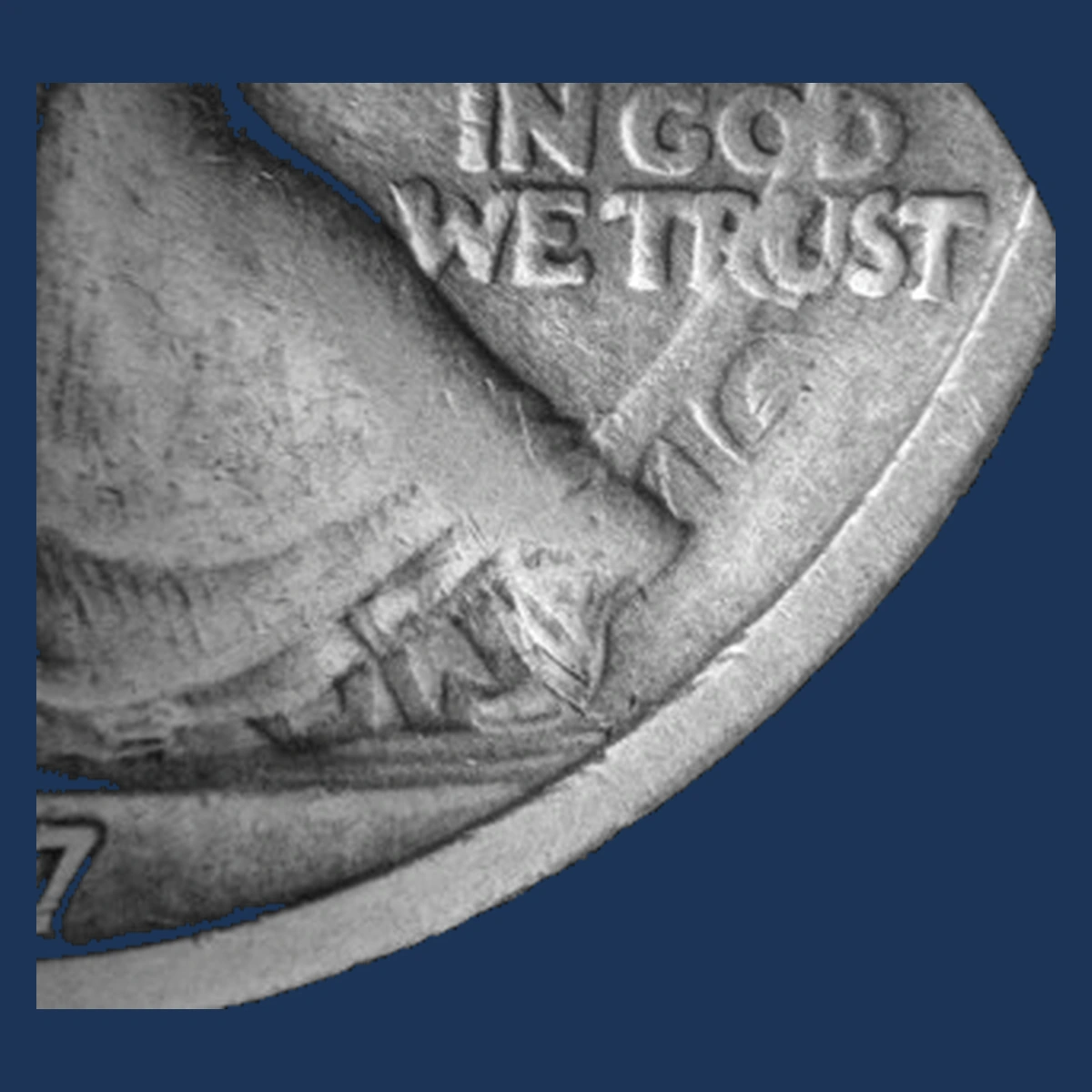
Mirrored pieces of AMERICA can appear beside Liberty on this unusual coin. The strongest marks lie at the lower-right front and upper-right back.
The two stamping tools hit each other while tilted, transferring part of the lettering and eagle’s wing. Later strikes passed those unwanted shapes to coins.
Fainter traces left of Liberty point in a different alignment. They show that at least one other, weaker clash also occurred.
The published examination does not establish which contact came first. Both patterns belong to the coin’s story, rather than fitting one simple contact between the tools.
Estimated Value
An estimated $150–$1,000 suits worn examples with clear transferred lettering and original surfaces. The published examination provides no transaction price for this particular coin.
A different comparison is a 1973-S Kennedy with strong clashes on both faces, sold for $720 in October 2022. Its PR68 grade describes a very well-preserved Proof, a specially made collector coin.
Its frosted design against mirror-like areas also differs from the Walker. That sale therefore illustrates interest, not a 1917 price record.
How to Identify
Hold Liberty upright and inspect the lower-right front with a 10× magnifier. Look for sunken, mirror-image pieces of AMERICA and the eagle-wing outline.
Compare the upper-right back and weaker marks left of Liberty with the published examination. The two sets need not align because they came from separate contacts.
Random scratches will not form matching parts of the opposite design. Keep the different directions visible rather than forcing every trace into one pattern.
Record the mint-letter version and inspect the edge grooves. Use a scale and calipers when safely accessible against 12.50 grams and 30.6 mm.
The mirrored back lettering at the lower-right front is the distinctive feature to find first.
6. 1917 Walking Liberty Half Dollar Repunched Mintmark Error (Estimated Up to $2,000)
The mint letter can be on either face in 1917. Denver and San Francisco moved their letters from the front to the back during the year.
A repunched mintmark forms when a letter punch enters the stamping tool in slightly different positions. Part of the earlier D or S may remain beside the final impression.
The year lists report this category without identifying one mint, face, or direction of movement. They do not establish the same variety on all four branch-mint versions.
Find the actual letter first. A general explanation of repunching cannot supply a missing identification.
Estimated Value
An estimated $100–$2,000 allows for worn examples on different mint-letter versions. The visible earlier impression and value of the underlying coin both matter.
No named 1917 auction example sets this range. A recognized 1939-D/D graded MS64+ sold for $1,292.50 in September 2017; that grade indicates strong unworn condition with some marks.
It is a different-year comparison. Its grade and extra-letter direction should not be copied onto a 1917 D or S.
How to Identify
On front-letter versions, inspect the lower-right area below the motto. On back-letter versions, inspect the lower-left area beneath the branch.
Use a 10× magnifier to trace the suspected extra D or S. Look for a curve or small end stroke that fits the same letter.
A thick border alone does not prove a second punch. Inspect for an added mintmark and compare with a verified example of the same mint and letter position.
Check the edge grooves, then use a scale and calipers when safely accessible against 12.50 grams and 30.6 mm. Keep the full date visible.
The useful match is a recognizable earlier letter in the correct 1917 location, not a direction borrowed from another year.
7. 1917 Walking Liberty Half Dollar Doubled Die Obverse Error (Estimated Up to $2,500)
IN GOD WE TRUST is the area named in the year’s doubled-front reports. The proposed feature is extra raised design carried by the stamping tool.
A coin struck once with that tool could receive repeated outlines. This differs from movement during striking that leaves a low, flat shelf beside a letter.
The reports do not identify one exact letter, direction, or specialist number. The motto is therefore an inspection area, not a complete identification by itself.
Keep the full date and correct mint-letter version with any close-up. Wear or thick lettering alone does not establish the doubled design.
Estimated Value
The estimated $75–$2,500 range spans minor doubling on worn coins through strong examples in unworn condition. A 1939-D FS-101 graded MS67+ sold for $2,160 in April 2025.
That exceptionally well-preserved coin is a recognized variety from another year. It does not give a specialist number to the reported 1917 feature.
The 1917 coin’s mint-letter version, condition, and clear match remain essential. A general website reference to a variety number is not enough.
How to Identify
Compare the motto with an ordinary coin of the same 1917 version. Under a 10× magnifier, look for an additional rounded outline rather than simply thicker letters.
A flat step that narrows the original stroke may come from movement during striking. Change the light to separate a physical extra shape from glare.
Photograph the complete front with its date and any mint letter. The back must also remain visible because it may carry the letter instead.
Inspect the edge grooves and check safely accessible coins with a scale and calipers against 12.50 grams and 30.6 mm. Keep scratches separate from the proposed doubling.
Matching raised separation on a verified example made with the same tool is stronger evidence than an isolated suspicious letter.
8. 1917 Walking Liberty Half Dollar Off-Center Strike Error (Estimated Up to $12,000)
An off-center strike can remove the very area needed to identify a 1917 mint. A letter may be missing because that part of the picture never reached the blank.
This matters when D or S could appear on either face. An empty expected location does not always mean Philadelphia.
The blank entered the press out of position, leaving incomplete pictures beside untouched metal. Both faces should agree with that movement.
The year list reports the category without an exact percentage, direction, or mint-letter version. Those details must come from the particular coin being examined, not from another example.
Estimated Value
Estimated values of $100–$12,000 span small shifts on worn coins through rare, attractive unworn examples. A 1918 half struck ten percent off center sold for $10,575 in April 2013.
Its MS65 grade means well-preserved and unworn. That historical result concerns the following year, not a documented 1917 sale.
Missing identifying details can limit a comparison. A partly unreadable 1917 branch-mint coin should not automatically receive the price of a fully identified high-grade example.
How to Identify
Map what remains of both pictures before naming the mint. Examine both possible mint-letter areas and note whether each area actually received a strike.
Bare metal where a letter should be does not prove Philadelphia manufacture. Keep that gap in the identification rather than filling it with an assumption.
Under a 10× magnifier, inspect the boundary between struck design and untouched blank. Later grinding or cutting leaves a different surface.
Use a scale and calipers when safely accessible against 12.50 grams and 30.6 mm, allowing for distortion. Inspect where the edge grooves formed.
Compare both faces: matching missing design beside original bare metal supports an off-center blank, while only one shifted picture suggests tool alignment.
9. 1917 Walking Liberty Half Dollar Silver Quarter Planchet Error (Estimated Up to $25,000)
Only the tops of the date survive on this historical quarter-blank candidate. A listing once called it 1917, but a later census recorded it as 1917 or 1947.
The incomplete date cannot support the same certainty as four readable digits. The two possible years must stay attached to the example.
The underlying mistake is a half-dollar picture struck on a smaller silver blank. Its limited surface cannot hold all the design.
A clearly dated 1942 comparison shows the same basic mechanism, but its photograph cannot settle the date of this separate coin held in a private collection.
Estimated Value
Authenticated Walking Liberty halves on silver quarter blanks have an estimated $10,000–$25,000 comparison range. An undated MS64 example sold for $15,000 in May 2022; a dated 1942 MS64 brought $18,000 that January.
MS64 means unworn with some marks. Remaining date detail and condition affect the result.
The historical 1917-or-1947 entry has no sale price provided here. These comparisons do not turn its partial date into a confirmed 1917 or assign it an invented grade.
How to Identify
Photograph the surviving date tops under several light angles before trying to complete the year. Use a 10× magnifier to compare the remaining shapes with both 1917 and 1947.
Measurements provide a separate test. A normal half starts at 12.50 grams and 30.6 mm; a silver quarter blank starts at 6.25 grams and 24.3 mm before striking spreads it.
Use a scale and calipers when safely accessible. Inspect the edge for natural flow, any grooves, and evidence that metal was trimmed away.
A specialist can check whether the metal and weight fit the smaller blank. The missing date remains a separate question.
Quarter-weight silver carrying naturally cut-off half-dollar designs supports the wrong-blank mechanism, even when the full year cannot be read.
Conclusion
For 1917, start by finding which face carries the mint letter. That choice affects comparisons for clips, doubled details, and off-center strikes before condition or price enters the discussion.
Estimated values span $50–$25,000 across the different types. Preserve both faces and the edge in photographs, and keep the quarter-blank candidate’s incomplete 1917-or-1947 date separate from the firmly dated auction comparisons.