1841 Half Dollar Error List with Pictures

Curved lines like baseball stitching helped one 1841-O half dollar stand out. The coin sold for $13,800 at Scotsman in November 2019.
The two 1841 half dollar errors below involve repeated date digits and cracked dies. Their estimated prices span $500–$14,000 across the grades discussed.
Read on to find the extra date strokes and learn why the New Orleans “Baseball” pattern brings more than an ordinary crack.
1841 Liberty Seated Half Dollar Repunched Date Error (Up to $3,172.50)
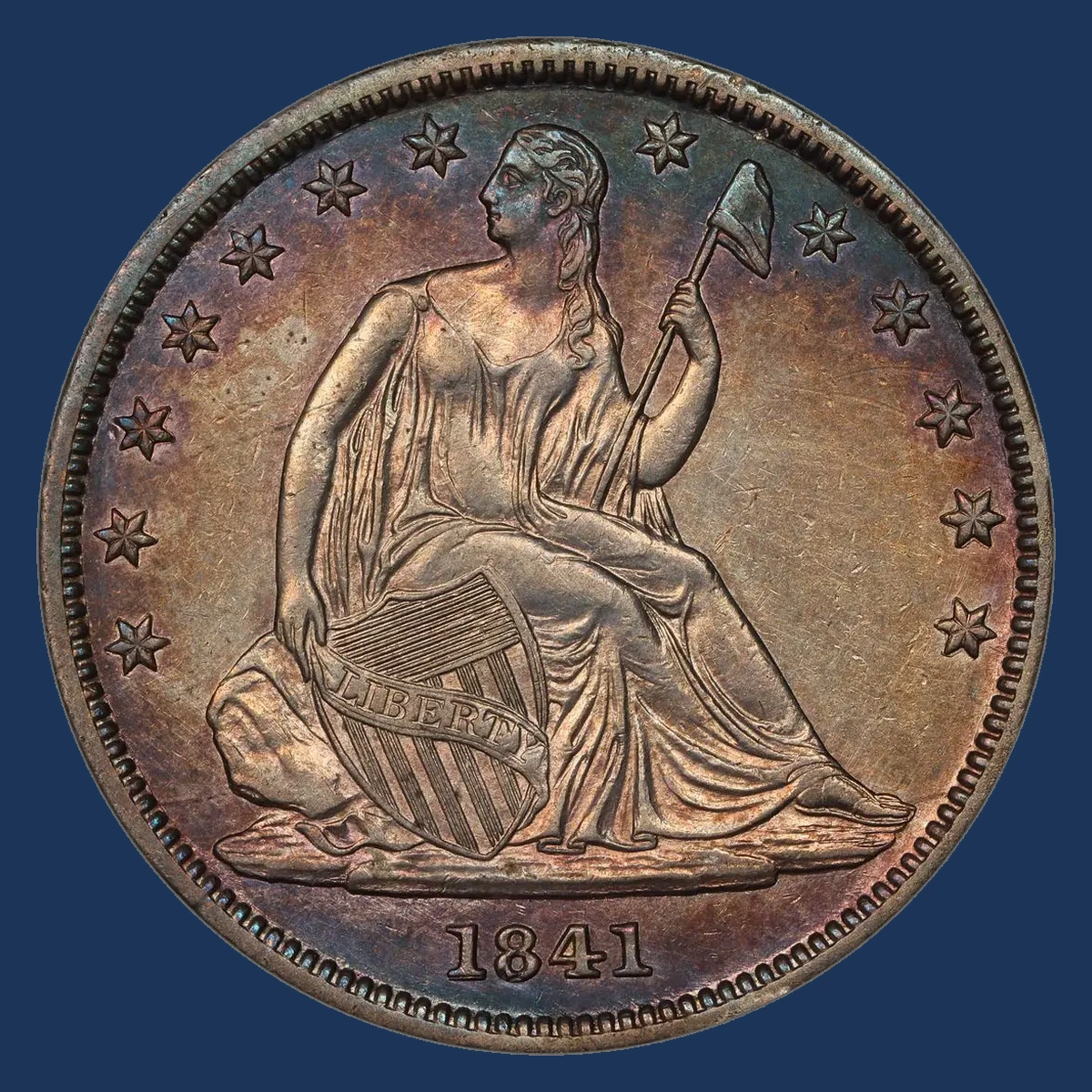
The first 1 and 8 can show extra parts of the same digits. Workers punched the date into a steel die, the tool that stamps coins, more than once.
A slight change in position left part of the earlier impression visible. Coins struck from that die then carried the repeated strokes as raised metal.
The Philadelphia version called WB-1 appears on regular coins made for circulation. WB-1 is its catalog name.
Some also have cracks through the stars or faint marks from the opposing die. Proofs, specially made collector coins, have a separate repunched-date report and need their own comparison.
Estimated Value
A PCGS MS63 example with CAC approval sold for $3,172.50 in May 2018. The Newtown Collection catalog records that sale.
Estimate $500–$3,500 for lightly worn through lower-grade uncirculated examples, roughly AU to MS63. An 1843 repunched-date coin graded PCGS AU53 brought $516 in September 2024.
That newer sale is a different-year comparison for the lower end. Condition and the complete coin matter more than the extra strokes alone.
How to Identify
Study the first two digits with a 10× magnifier. Look for extra strokes that fit parts of the 1 and 8, then compare their positions with a WB-1 photograph.
A thick digit is not enough. A scratch cuts into the surface, while movement during striking can leave a flat ledge beside a normal digit.
For this Philadelphia regular issue, check that the back has no mintmark. A proof is a specially made collector coin and must be compared with its own die.
Use a scale against the unworn standard of 13.36 g and calipers against about 30.6 mm. Inspect the reeded edge, meaning the grooves around the coin.
Matching both extra digit shapes to the correct WB-1 example gives the quickest answer.
1841 Liberty Seated Half Dollar Die Crack Error (Up to $13,800)
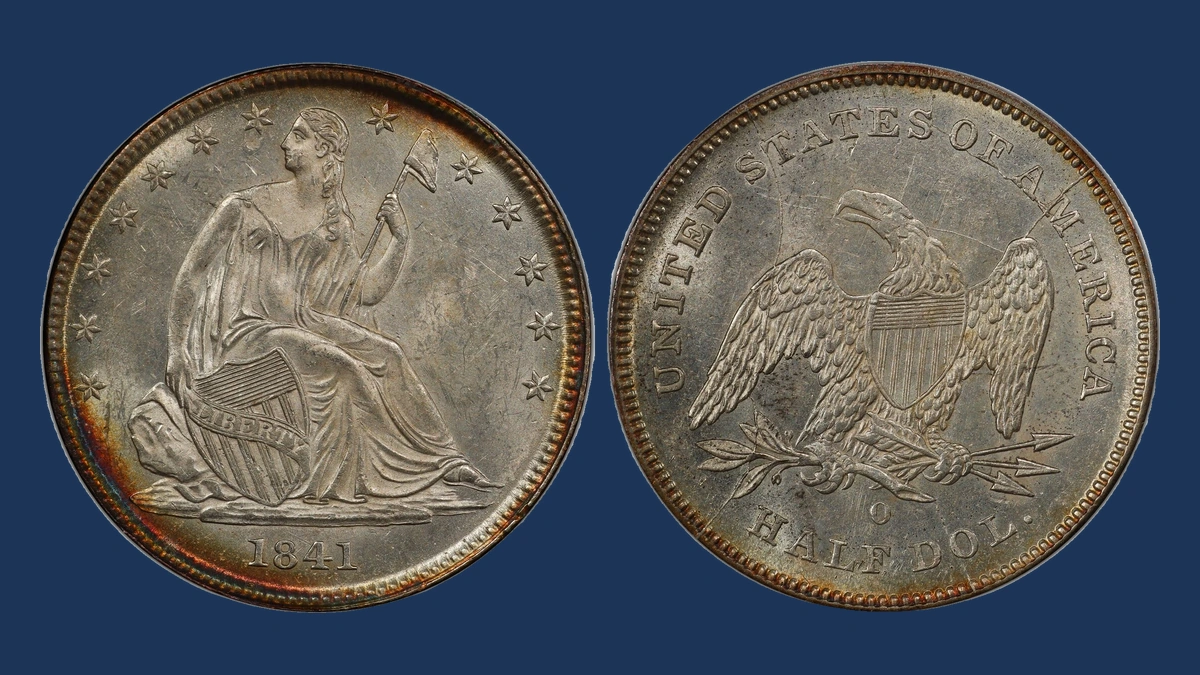
Curved ridges on the back look like baseball stitching. That shape gives the New Orleans variety its Baseball nickname.
The pattern comes from cracks in the die, the steel tool that stamps the design. Silver enters those cracks during striking and forms raised lines on the coin.
The coin itself did not split. Its catalog name is WB-2, and the O beneath the eagle identifies New Orleans.
Philadelphia coins can show other cracks, including lines through the stars. They belong to the same general error type but do not have the New Orleans Baseball pattern.
Estimated Value
The PCGS MS63+ Baseball example brought $13,800 in November 2019. A worn PCGS XF45 example sold for $2,820 in January 2017.
An estimated $2,500–$14,000 covers comparable coins from XF45 through MS63+, ranging from visible wear to no circulation wear. The distinctive crack pattern adds specialist interest.
Ordinary Philadelphia cracks do not deserve the same premium. A matching year is not enough to apply the Baseball price to a different pattern.
How to Identify
Find the O below the eagle first. It identifies the New Orleans coin whose reverse carries the Baseball pattern.
Use a magnifier to trace the curved ridges and compare the whole arrangement with a known example. Wear can weaken parts of a fine line, but the remaining paths should still fit.
Scratches are different. They cut into the surface and may push irregular lips of metal up beside the cut.
Philadelphia star-area cracks need a separate comparison and should not be mixed into this pattern. Check a loose coin with a scale and calipers against 13.36 g and about 30.6 mm.
Look for normal grooves along the edge. The quickest identification is a matching Baseball pattern together with the O mintmark.
Conclusion
Look at the mintmark before choosing a comparison. Philadelphia’s WB-1 has the repeated 1 and 8, while New Orleans has the Baseball crack pattern.
Estimated values span $500–$14,000 overall: $500–$3,500 for the repunched-date examples discussed and $2,500–$14,000 for the Baseball coins. Match the actual feature and condition, since a small crack elsewhere does not carry the same value as the famous curved pattern.