1826 Half Dollar Error List with Pictures

A slightly off-center 1826 half dollar sold for $1,500 in December 2023. Its MS63 grade describes an unworn coin with visible marks, so condition contributed to that result.
Other 1826 half dollar errors include repeated edge words, a tilted back design, and raised cracks. Estimated whole-coin ranges span $150–$1,800.
The six types below also cover a reported doubled nose, explaining what each visible feature can—and cannot—tell you.
1. 1826 Capped Bust Half Dollar Double-Profile Appearance (Estimated Up to $400)
An extra line beside Liberty’s nose can catch the eye immediately. One seller describes an 1826 half dollar with a doubled nose and several other unusual features.
That description names an appearance, not a proven cause. Movement during striking may leave a second-looking edge, while a scrape or dent can imitate one.
It does not automatically mean the coin was struck twice. Nor does it prove that the die, the steel tool that stamps coins, carried a doubled picture.
Examine the nose and nearby portrait together. Related raised detail is more useful than an isolated bright line.
Estimated Value
Estimate $150–$400 for worn examples with a modest extra nose outline. An ordinary 1826 O-101 graded EF40 sold for $240 including fees in August 2025.
EF40 means worn but retaining substantial detail. That sale gives a whole-coin comparison rather than a price for the nose.
A separate seller asks $900 for an uncertified coin described as slightly worn with several unusual features. The asking price does not isolate the value of its doubled-looking profile.
How to Identify
Keep the nose sharply focused under a 10× magnifier while moving the light. A physical extra outline should remain when the shadow changes.
Then inspect the lips, chin, and nearby flat surface. A scraped channel, fresh bright metal, or a raised lip around a dent suggests later damage.
Look at the whole portrait to judge how far the extra outline extends. A narrow isolated line deserves a different explanation from several related contours.
The back and lettered edge help confirm the coin’s identity. On safely accessible examples, use a scale and calipers against about 13.48 grams and 32.5 mm.
First establish a real second nose outline in the metal; its shape and surrounding surface determine what caused it.
2. 1826 Capped Bust Half Dollar Rotated-Die Error (Estimated Up to $500)
The eagle may sit at an angle when you turn the coin over. A 2010 auction catalog describes an 1826 O-115 with the back rotated about thirty-five degrees counterclockwise.
That means the back points left of its expected upright position. The two stamping tools were set at an unusual angle relative to each other.
The pictures can still be centered and complete. Their relationship changes, rather than their individual shapes.
The reported angle belongs to that particular coin. Two photographs straightened separately cannot prove rotation because editing removes the original relationship between the faces.
Estimated Value
For a worn example around XF condition with a thirty-five-degree rotation, estimate $200–$500. The 2010 catalog identifies the example but gives no sale result in the cited description.
An ordinary 1826 O-101 graded EF40 sold for $240 including fees in August 2025. It provides a comparison for underlying condition.
That is a different variety. The measured tilt and quality of the surfaces determine whether the rotated example attracts additional interest.
How to Identify
Hold Liberty upright without marking the coin. Flip it top to bottom around a fixed horizontal line; the eagle should normally finish upright too.
Photograph before and after that flip, keeping the camera still. A protractor can then measure how far the eagle leans left.
Compare with Nashville lot 4152, which describes about thirty-five degrees counterclockwise. Do not measure photographs that have been independently rotated.
Inspect the lettered edge with a 10× magnifier for seams or alteration. If safely accessible, use a scale and calipers against about 13.48 grams and 32.5 mm.
Repeat the controlled flip: the same leftward tilt should appear every time.
3. 1826 Capped Bust Half Dollar Doubled Edge Lettering Error (Estimated Up to $600)
Before receiving the portrait and eagle, the blank passed through a separate edge-lettering step. Repeating or shifting that step could place extra letters across the original words.
A seller reports doubled edge lettering on an 1826 half dollar. The useful evidence lies around the edge, not necessarily on either face.
The portrait need not be doubled too. Different tools made the edge inscription and the main pictures.
Uneven spacing alone is not proof of an extra impression. Worn letters, dents, and later attempts to cut words into the edge can also make the inscription look crowded.
Estimated Value
Allow an estimated $250–$600 for worn examples with clear overlapping letters. A different-year 1834 half with doubled edge words sold for $220 in July 2026.
Its Fine Details grade describes a worn coin with a condition problem; that example had been cleaned. Better-preserved 1826 pieces may attract more.
The 1826 seller report has no verified sale amount. A few unclear strokes should not receive the same value as a readable repeated sequence.
How to Identify
Read the edge slowly through one full turn and write down the words in order. Keep track of photograph overlaps so a letter does not get counted twice.
Under a 10× magnifier, find where an extra letter crosses or repeats the original inscription. Compare its depth and surface with nearby letters.
Modern engraving may leave cuts or pushed-up metal unlike the original wording. Check for filing and damage from use in jewelry too.
Both faces should identify the same 1826 half dollar. Use calipers and a scale when safely accessible against about 32.5 mm and 13.48 grams; the edge carries letters rather than grooves.
Look for readable repeated letters in the metal itself, not simply an unusually tight gap between words.
4. 1826 Capped Bust Half Dollar Die-Clash Error (Estimated Up to $950)
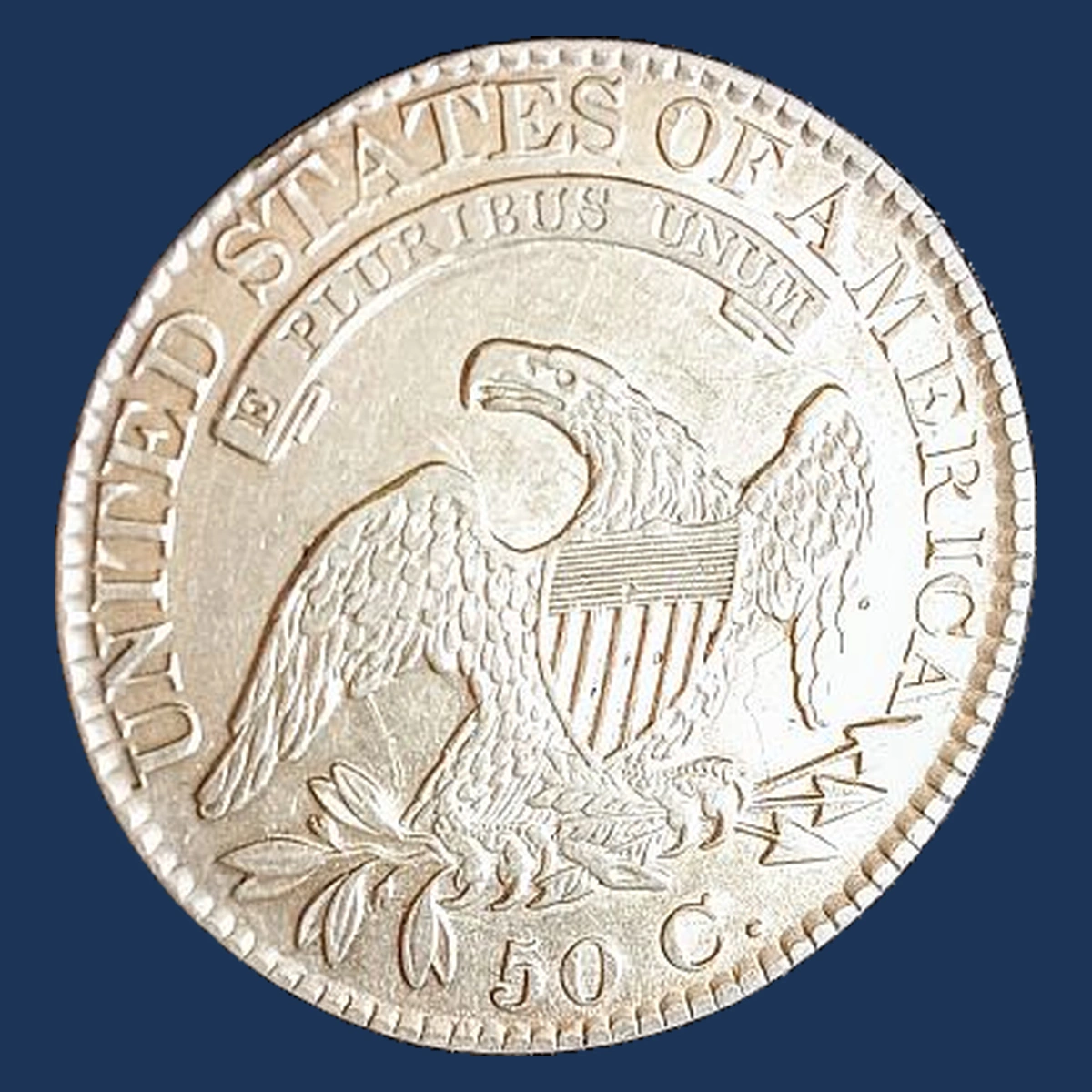
A faint shape near the eagle may come from the picture on the other face. This can happen when the stamping tools hit each other without a blank between them.
The tools pick up parts of the opposing design. Later coins receive those traces along with their normal pictures, an effect called a die clash.
Collectors report marks above and right of the eagle’s head on one 1826 example. A different seller describes marks below both wings.
Those are separate observations. Their shapes need to resemble the opposite design, rather than simply form an extra line.
Estimated Value
Estimated values of $250–$950 cover worn through slightly worn examples with recognizable clash marks. A seller asks $900 for an uncertified 1826 described as having several unusual features.
That is an offer for the whole coin. Neither the stated condition nor a separate clash value has been certified.
The ordinary EF40 sale at $240 in August 2025 provides a lower-condition comparison. It does not establish that both coins share the same marks.
How to Identify
Place clear photographs of both faces beside each other. Try to connect the unusual fragment with a shape from the opposite picture.
For the collector’s example, inspect above and right of the eagle’s head. For the seller’s different coin, inspect beneath the wings instead.
Use a 10× magnifier and change the light. A shallow transferred shape differs from a scratch cutting into the flat surface.
Check the full date and lettered edge before comparing details. On safely accessible coins, a scale and calipers should be consistent with about 13.48 grams and 32.5 mm.
The useful clue is a recognizable part of the opposite design in the matching location, rather than a collection of unexplained lines.
5. 1826 Capped Bust Half Dollar Die-Crack Error (Estimated Up to $1,300)
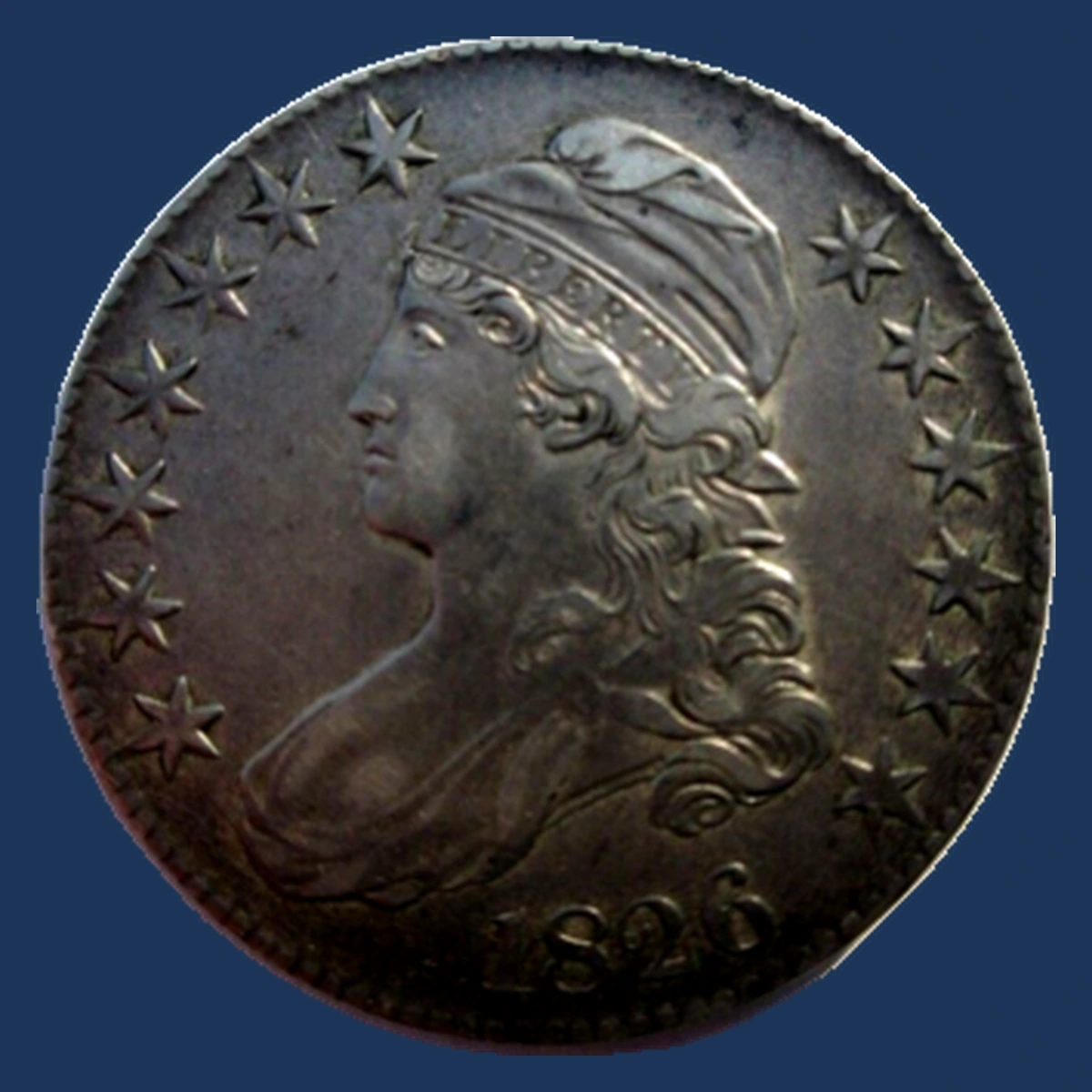
Raised lines can follow the tops of letters across the back. One 1826 variety, O-118a, has reported cracks along NITED STATES and MERICA.
A different offered coin has a raised line below the date on the front. These are separate patterns, not two required parts of one error.
The tool cracked while in use. Silver entered the narrow opening and left a ridge on each later coin it struck.
The route helps identify which tool made the coin and how far the crack had developed. Compare that route before treating a line as the same variety.
Estimated Value
An 1826 O-104 with cracks on both faces sold for $1,020 including fees in August 2025. Its AU58 grade means only slight wear.
Estimate $200–$1,300 for common worn examples through coins of comparable condition. The auction piece is a different variety from O-118a.
Its price chiefly reflects the complete half dollar and its preservation. It does not establish a fixed amount to add for every visible raised line.
How to Identify
Follow the line along NITED STATES and MERICA while keeping the letter tops visible. If you have the separate date-underline example, study that front feature instead.
Light the coin from opposite sides under a 10× magnifier. A die crack should stand above the surface; a scratch usually forms a recessed cut.
Rough sides or dragged metal may reveal later damage even when a line follows a plausible path. Compare both faces with a matching example, not only the enlarged crack.
Inspect the lettered edge and check accessible coins with a scale and calipers. The original standards are about 13.48 grams and 32.5 mm.
A continuous raised ridge following the documented route is the key distinction from a scratch.
6. 1826 Capped Bust Half Dollar Slightly Off-Center Error (Estimated Up to $1,800)
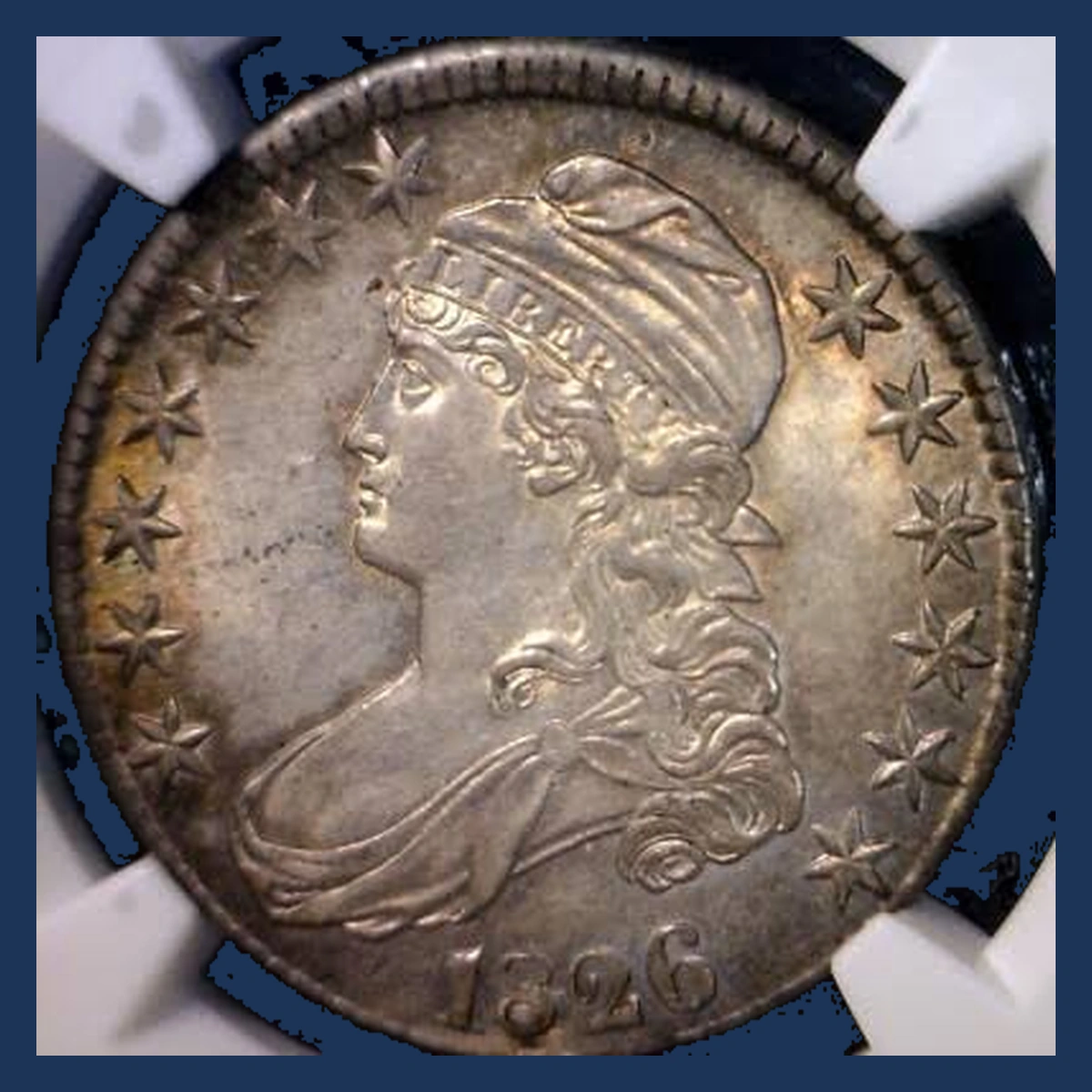
A small shift can leave most of the picture clear. The cataloged O-104a example shows displacement toward the lower front and upper back.
It was graded MS62, meaning unworn with noticeable marks. A separate auction coin received MS63 and was also described as slightly off center.
Neither description gives a measured percentage. The two coins should keep their own details and prices.
Early half dollars can have uneven borders for other reasons. Matching displacement on both faces is more useful than a wide border seen in one cropped photograph.
Estimated Value
The MS63 example sold for $1,500 on December 18, 2023. The separate MS62 O-104a brought $1,080 in October 2018 and $1,140 in December 2020.
Estimated values of $900–$1,800 cover similarly preserved unworn examples with small shifts. These are whole-coin prices, including condition and surface quality.
They do not mean that slight off-centering alone adds that amount to a worn half dollar. A lower-condition example needs a different comparison.
How to Identify
Examine the entire border before focusing on Liberty. On the MS62 O-104a, follow the picture toward the lower front, then check the upper back.
Keep track of the coin’s orientation when photographing both sides. If only one picture shifts, a misaligned tool may explain the uneven border instead.
Use a 10× magnifier to inspect missing border detail and signs of trimming. The edge should retain its original lettering, without cuts that imitate a misplaced strike.
Calipers record the outline against roughly 32.5 mm, while a scale checks the original 13.48-gram weight. Measure only when safely accessible.
For this cataloged example, the lower-front shift should agree with the upper-back shift on the same coin.
Conclusion
Estimated values of $150–$1,800 cover everything from a modest doubled-looking nose to an unworn half with a small off-center strike. The higher recorded prices include the condition of the whole coin.
Turn the coin over and inspect its edge as well as the portrait. Repeated words, a tilted eagle, and raised cracks tell different stories; a seller’s combined asking price does not put a separate value on each feature.