2019 Sacagawea Dollar Error List with Pictures

Too many edge letters and no edge letters at all are the two mistakes to examine here. For perspective, an older 2010 Native American missing-edge dollar brought $1,708 in May 2026.
This 2019 Sacagawea dollar error list separates an enhanced collector coin with overlapping text from an ordinary coin with none. Estimated values run from $150–$3,000.
The 2019 space-themed back helps identify the issue. Follow the edge around to see which mistake you might have.
2019 Sacagawea Dollar Enhanced Finish with Doubled Edge Lettering
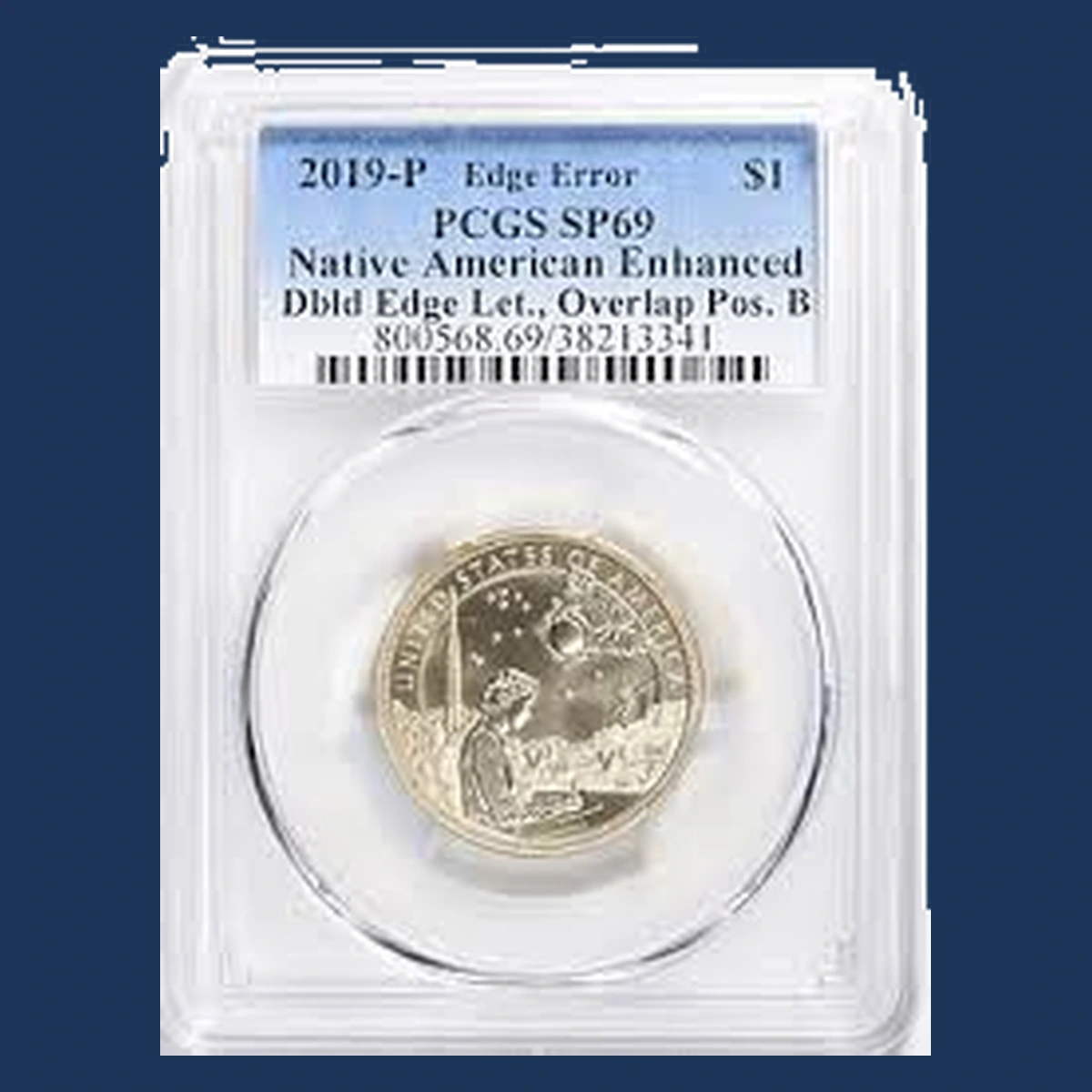
Two sets of sunken letters run into each other around this dollar’s edge. They face the same direction, leaving overlapping dates, mint letters, motto letters, and stars.
This variety belongs to the Philadelphia Enhanced Uncirculated issue, a specially finished collector coin from the Coin and Currency Set. It is not the ordinary Philadelphia dollar or a San Francisco Proof.
PCGS identifies the overlap as Position B. That label describes which way the edge text faces relative to the portrait.
Position B alone is normal. The additional overlapping impression is the error collectors need to see.
Estimated Value
An estimated $150–$1,500 allows for differences in the overlap’s visibility and the enhanced surfaces’ preservation. Clear duplicated letters are more useful than a vague shadow in one photograph.
GreatCollections sold a discovery piece in February 2020, graded PCGS SP69, meaning nearly perfect special-strike surfaces. Its public page does not display the realized price.
The range above is an estimate, not that hidden auction result. Scratches or fingerprints can lower interest in a delicate collector finish.
How to Identify
Find 2019 or P on the edge and inspect it beneath a magnifier. Look for two sunken impressions facing the same direction, rather than a bright reflection beside one letter.
Follow the doubled outlines into nearby motto letters and stars. Their spacing should make sense as another pass of edge lettering, not scattered dents.
Next compare the faces with an enhanced-finish example from the Coin and Currency Set. The different surface textures are part of that special finish, not extra errors.
Position B refers to text readable with Sacagawea’s side facing up. A single inscription in that direction remains normal.
Turn the lighting while watching the same pair of letters. Two real recessed outlines remain present when a reflected highlight moves.
2019 Sacagawea Dollar Missing Edge Lettering
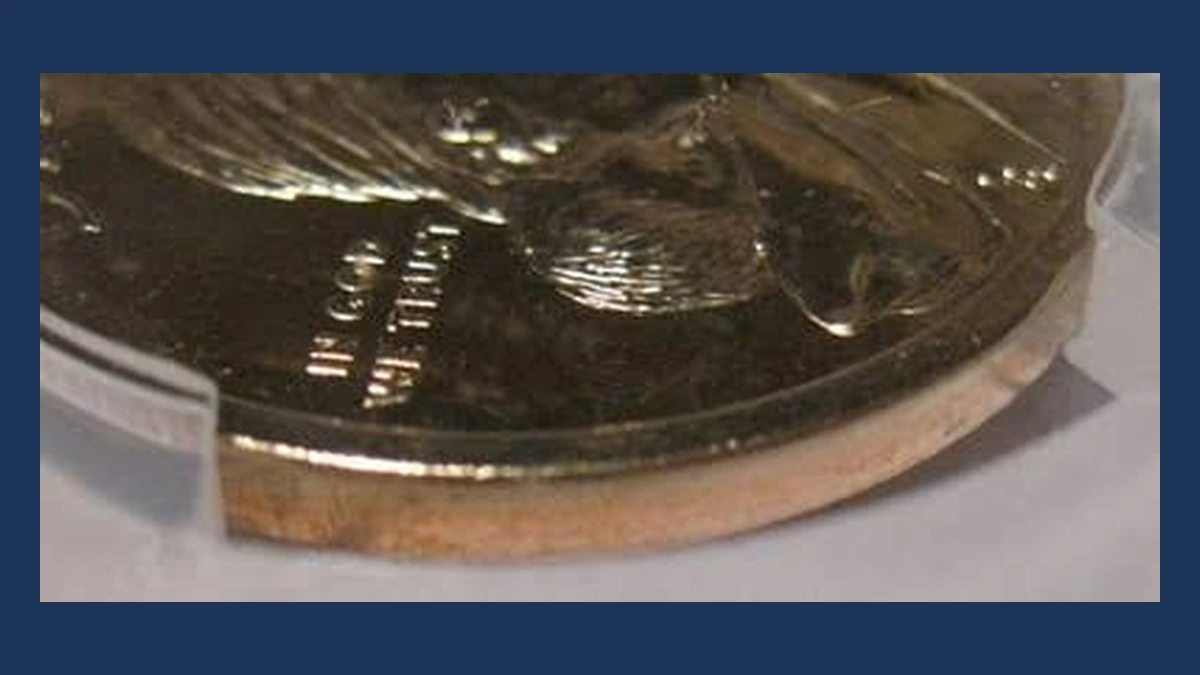
Without its edge text, this dollar also loses the visible year and mint letter. Its space-themed back still identifies the 2019 Native American issue.
PCGS lists the missing-edge type, and a certified MS66 ordinary-strike example has appeared for sale. MS66 describes a coin without circulation wear and with few marks.
The absent edge marks do not establish Philadelphia or Denver. Neither mint should be assigned just from the familiar Sacagawea portrait.
These dollars normally receive edge lettering after their faces are struck. Missing that operation can leave intact face designs beside a completely unlettered edge.
Estimated Value
For a genuine example, estimate $500–$3,000. A seller lists the PCGS MS66 coin at $2,999.95; that is an asking price, not a completed sale.
A different missing-edge dollar, the satin-finish 2010 Native American SP67, sold for $1,708 at Heritage in May 2026. Its year and special finish differ from this ordinary 2019 coin.
The two figures offer context, while original edge surfaces and the coin’s preservation remain central to judging an individual example.
How to Identify
Check the back before searching for a date that may be absent. The 2019 design honors Native American contributions to spaceflight, with Mary Golda Ross and an astronaut.
Follow the entire edge under magnification, including the spaces where the year and mint letter normally sit. Faint letter bottoms indicate weak text rather than complete omission.
For a loose coin, a digital scale and calipers can help detect metal removed by grinding. Normal specifications are about 8.1 grams and 26.49 millimeters, though matching those figures does not prove authenticity.
Look for parallel scratches or an unnaturally flattened edge band. An original smooth edge should be checked all the way around, not accepted from a photograph of one blank stretch.
Conclusion
Both errors concern the edge, but they leave opposite clues. Doubled lettering needs two overlapping impressions; missing lettering needs a complete original edge with no text.
For authenticated 2019 examples, estimated values span $150–$3,000. The enhanced finish belongs to the documented doubled-edge variety, while the missing-edge example is an ordinary strike.
Compare the space-themed back and the whole edge before judging either coin.