2002 Dollar Coin Error List with Pictures

The light-gray 2002-D dollar that brought $8,050 in January 2009 weighed only 5.6 grams. It had been struck on a quarter blank instead of the usual golden dollar blank.
This 2002 Sacagawea dollar error list also includes peeling metal, repeated lettering, and incomplete blanks. Estimated prices across the seven groups run from $15–$12,000.
Some clues are much smaller than a change in color. Read the descriptions below to learn where to look and which price comparison fits.
1. 2002 Sacagawea Dollar Raised Lines from Cracked Stamping Tools
A crack in the steel stamping tool leaves an extra raised line on the coins it makes. The tool is called a die, and the resulting feature is a die crack.
For 2002-D, a year guide reports lines across Sacagawea’s cheek or jaw. A separate 2002-S Proof has two cracks on the eagle side.
Proofs are specially made collector coins. The cataloged PCGS PR69 Deep Cameo has nearly flawless surfaces and strong contrast between the picture and background.
Its two back lines were described as about three-eighths and five-sixteenths of an inch long. They are not the Denver face cracks.
Estimated Value
Estimate $15–$400 for these cracked-tool dollars, with finish, condition, and the strength of the line affecting value. A tiny ridge can add little to an otherwise ordinary coin.
The nearly flawless San Francisco Proof offers a different comparison from a worn Denver example. Its reflective background may make the cracks especially easy to see.
Use the whole coin’s preservation when choosing a price. Two lines on one Proof do not mean two separate error prices should be added.
How to Identify
Choose the face to inspect after reading the mint letter below the date. Check the cheek and jaw for the Denver report, or the eagle side for the San Francisco Proof.
Pass a low light over the line while viewing it through a magnifier. The metal should form a ridge rather than a groove cut into the surface.
A scratch can push up metal along its sides. Inspect its center before deciding that a bright line came from a broken tool.
Follow each Proof line individually and photograph it with the nearby eagle design. The listed lengths alone cannot identify its starting point or the route across the coin.
2. 2002 Sacagawea Dollar Doubled Designs on the Front or Back
Two close raised outlines may appear around a letter or part of a feather. If the stamping tool itself carried that repeated shape, one strike can reproduce it on the coin.
This is called a doubled die. It differs from striking a finished coin twice after it moves in the press.
The 2002 guide points to LIBERTY, the date, and IN GOD WE TRUST on the front. It also reports the eagle’s feathers and surrounding words on the back.
These are reported inspection areas, not one confirmed pattern shared by every mint. The finish and exact repeated shape need matching.
Estimated Value
A correctly identified doubled-design dollar has an estimated range of $20–$500. Clear separated edges in several details are more convincing to collectors than a slightly thick letter.
The range is for the reported 2002 types and does not claim a particular certified auction result. A close match to a known pattern is needed before using its upper end.
Wear or glare can hide the small clues. Flat extra shelves caused during striking should not receive the same variety premium.
How to Identify
Compare two or three suspect letters before enlarging a single edge. A repeated shape that continues through neighboring details gives more information than a lone bright line.
On the front, inspect LIBERTY, the date, and the motto with a magnifier. On the back, compare the eagle’s feathers with E PLURIBUS UNUM and UNITED STATES OF AMERICA.
Look for rounded extra outlines or small splits where letter strokes join. Then move the lamp and check that the shapes remain part of the metal.
An extra flat shelf can come from movement during striking, while camera shake can double everything in a photograph.
Match the particular face, mint, and finish with a confirmed example rather than treating every reported area as one variety.
3. 2002 Sacagawea Dollar Design Blocked by Foreign Material
Part of the picture can fail to form when something lies between a blank and the stamping tool. This is called a strike-through, because the tool strikes through or against that material.
A 2002-D example graded NGC MS67 has a strike-through on the eagle side. MS67 means it has no circulation wear and very few marks.
The guide also reports weak front letters in LIBERTY or the motto. Those reports do not identify the material responsible.
A smooth patch does not prove grease, and a line does not automatically prove wire. The shape of the actual impression provides the clue.
Estimated Value
Estimated values of $20–$600 cover authenticated examples with modest missing detail through more visible impressions. A distinct texture or shape that interrupts the picture usually gives collectors more to examine.
The Denver MS67 is a documented back-side example, but its grade alone does not measure the error’s size. Compare the affected area as well as the condition.
A rubbed surface or later dent needs a different explanation. It should not receive the price of a genuine obstruction during striking.
How to Identify
On a Denver candidate, examine the eagle side where the normal picture stops or becomes weak. A magnifier and low angled light can show whether a texture remains within that area.
Follow its border into a nearby letter or feather to see how the obstruction interrupted the original strike. Scraping instead may leave dragged metal, repeated scratches, or a flattened surface across the design.
For weak front letters, check other high points for ordinary wear before suggesting that material blocked the tool. Photograph the whole coin with the affected area enlarged, so the D, date, and finish remain connected with the feature.
4. 2002 Sacagawea Dollar Multiple Clips in the Original Blank
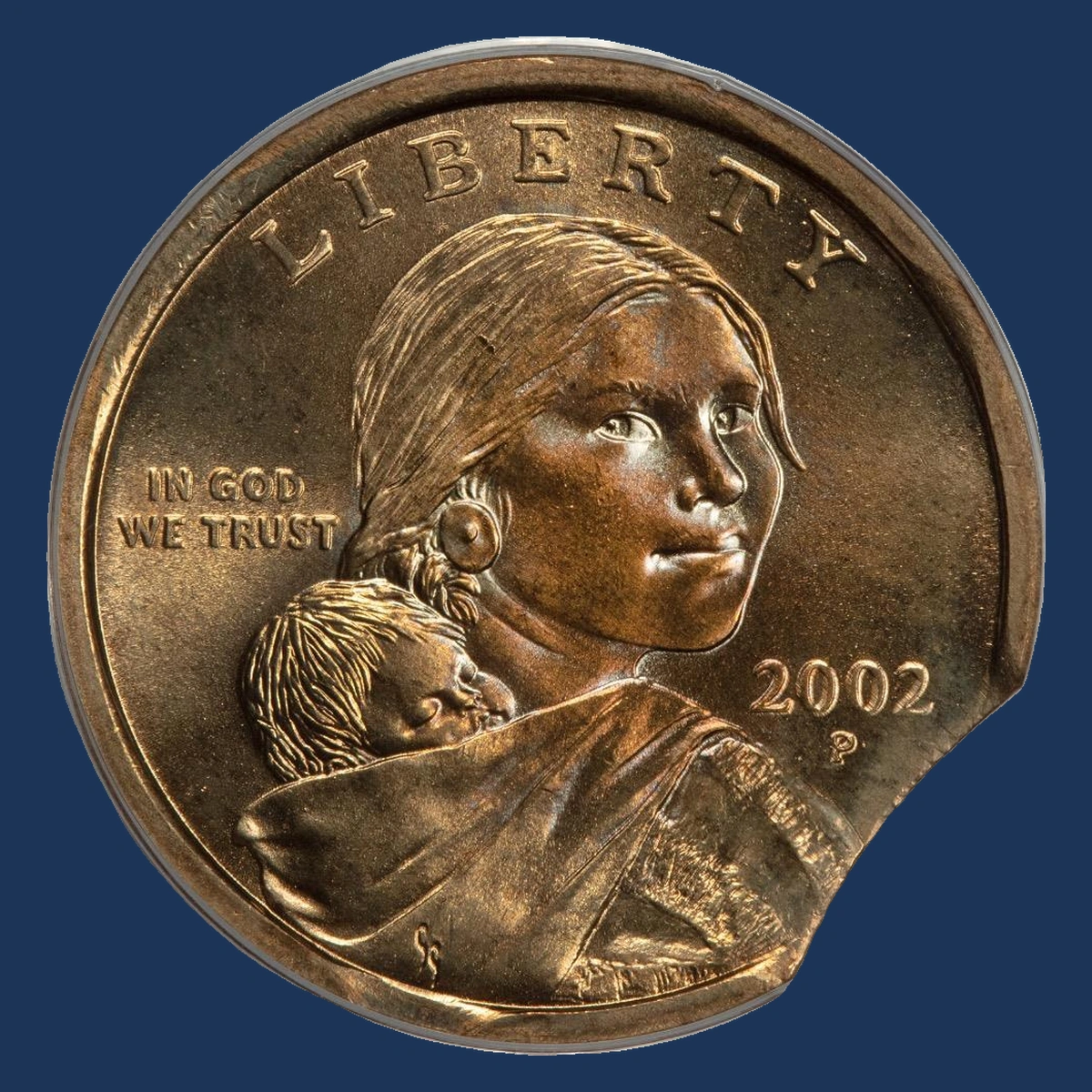
Three small gaps can belong to one defective blank rather than three separate accidents after striking. A 2002-P dollar cataloged with five percent triple clips was graded PCGS MS64.
That grade describes an unworn coin with noticeable small marks. The missing sections arose before the dollar design was stamped onto the incomplete disc.
An owner also reported a 2002-S Proof with two clips inside its original set. That is a separate report, and the packaging alone does not authenticate the gaps.
Each clip needs original struck edges around it. Later cuts or filed sections can imitate the outline.
Estimated Value
For the ordinary Philadelphia type, estimate $50–$600, allowing for the total missing metal and condition. Three tiny clips may be less dramatic than one large, clearly original gap.
An authenticated San Francisco Proof double clip has a conditional estimated range of $150–$1,500. The owner’s set report does not supply a confirmed sale for that coin.
Assess every gap and the surrounding surfaces together. The number of clips does not multiply the price of a single-clip dollar.
How to Identify
View the entire rim first and mark the position of every missing section on a photograph. This prevents a large close-up from hiding the other two clips on the Philadelphia example.
Under a magnifier, check how the raised rim and nearby details meet each gap. A naturally incomplete blank can cause weakness as the metal spreads during striking.
Search the inside surfaces for file marks or sharp burrs that suggest later cutting. Any weak area opposite a clip can add support, but should not be the only test.
For a Proof still in its set, inspect it through the packaging without forcing it open.
All of the missing sections must show original surfaces before the coin can be accepted as a multiple clip.
5. 2002 Sacagawea Dollar Off-Center Strike
The portrait and eagle may both lose part of their outer design when a blank enters the press in the wrong position. An unstruck arc remains along the other side.
A 2002 year guide includes this off-center type. It does not identify a particular mint, direction, or percentage for an individual specimen.
The two faces should help explain the same misplaced blank. A difference confined to one face may instead come from a shifted stamping tool.
An uneven border is only a clue. The intended picture must actually run beyond the metal, rather than remain complete inside a wide rim.
Estimated Value
For an authenticated single off-center strike, estimate $100–$2,000. The portion of design missing and the survival of the date both influence the coin’s appeal.
A large blank arc gives a clear display, but losing the year can make the piece harder to collect by date. Smaller shifts need particularly clear photographs of the incomplete artwork.
These are estimates for the reported 2002 type. A second strike, damaged edge, or wrong blank would require a different comparison.
How to Identify
Find the date before deciding which year belongs to a displaced design. Include the unstruck arc in the same photograph so its relationship to the surviving digits is clear.
Now look at the edge opposite that arc. Some lettering or artwork should run off the blank, rather than ending normally inside an unusually broad border.
Turn the dollar over and keep its orientation unchanged while comparing the eagle side. A related shift on both faces supports a misplaced blank.
Examine the untouched area with a magnifier for scraping or grinding. Removing an ordinary coin’s design leaves changed surfaces, unlike blank metal that never received a picture.
The blank arc and lost outer design need to explain each other.
6. 2002 Sacagawea Dollar Peeling Metal and Clamshell Separation
A loose metal layer can remain attached while lifting away from the rest of the coin. Collectors call a peeling layer lamination, and a large hinged opening can resemble a clamshell.
The 2002-D front-side example graded NGC MS67 is separate from the San Francisco Proof. Its precise affected area should be read from that specimen.
The 2002-S NGC Proof-64 Cameo has an outer layer split along the edge from six to twelve o’clock. Cameo describes contrast between the raised picture and background.
A layer still hanging from the coin is different from one that has fallen off completely.
Estimated Value
A Denver front lamination graded MS67 sold for $15 in September 2002. Estimate $15–$300 for comparable ordinary examples, depending on the size and appearance of the peel.
Fred Weinberg’s price list in Mint Error News offered the San Francisco Proof clamshell for $1,850. That was an asking price, not an auction result.
For a comparable authenticated Proof clamshell, estimate $600–$3,000. An intact attached layer generally provides a clearer display than a flap broken off afterward.
How to Identify
Look along the edge of the San Francisco Proof without trying to widen its opening. Use a magnifier to follow the separation from six to twelve o’clock and locate the metal still joining the layers.
The Denver front peel needs its own close view. Study whether the stamped picture crosses the attached layer and the surface beneath it.
Tool scratches inside an opening or a bent-back flap can indicate later interference. Never pull on loose metal to test the bond.
A simple color boundary at the edge can be normal on a layered coin. An actual opening between connected layers, rather than color alone, distinguishes the clamshell form.
7. 2002 Sacagawea Dollar Struck on a Quarter Blank
One 2002-D dollar has light-gray metal where the usual golden color should be. It was struck on a blank prepared for a quarter and weighs a reported 5.6 grams.
The NGC MS66 example is well centered despite the smaller disc. Its catalog describes narrow rims continuing all the way around both faces.
That is an important difference from a badly cropped wrong-blank coin. Missing letters are not required on every example of this error.
The quarter blank had not already received Washington’s design. An underlying quarter picture would describe a different striking sequence, rather than this unused-blank mistake.
Estimated Value
The NGC MS66 quarter-blank error realized $8,050 at Heritage in January 2009. MS66 denotes an unworn coin with few marks, and the catalog recorded its weight as 5.6 grams.
An estimated $4,000–$12,000 applies to comparable authenticated 2002-D quarter-blank dollars. Bright original surfaces, a readable identity, and a well-preserved strike contribute to the comparison.
The silvery color needs to come from the wrong metal itself. An added coating does not create the same error.
How to Identify
Compare the candidate’s color with a normal golden dollar under neutral light, then weigh a loose coin on a digital scale. The documented example weighs 5.6 grams, while a normal Sacagawea weighs about 8.1 grams.
Use calipers and edge photographs to examine its smaller body and narrow rims. A normal quarter blank starts around 5.67 grams, but striking can change its diameter.
The outer design need not be missing, since the cataloged Denver coin has complete narrow rims. Nor must a blank carry a quarter’s edge grooves before it is struck.
Read the D below the date and have the metal checked for an added coating. The useful match is the dollar design on genuine quarter metal, with weight and original surfaces supporting that identity.
Conclusion
The 2002 errors span small raised lines, missing pieces of the blank, peeling layers, and a dollar made from quarter metal. Estimated whole-coin values run from $15–$12,000.
Check the mint letter and finish before comparing two examples. A San Francisco Proof and a Denver ordinary strike may show different forms of the same broad error.
Keep loose layers untouched and remember that a plain edge is normal for this year.