2015 Dime Error List with Pictures

A P mintmark on a 2015 dime can belong to an ordinary circulation coin or a special silver collector issue. That difference matters before you call unusual metal an error.
The year guide reports $430 for a 2015-P off-center dime. The 2015 dime errors below have estimated values from $5 to $500, depending on the feature and condition.
Read on to separate shifted designs, raised lines, and damaged metal from the year’s normal varieties.
1. 2015 Roosevelt Dime Raised Cracks and Retained Cuds
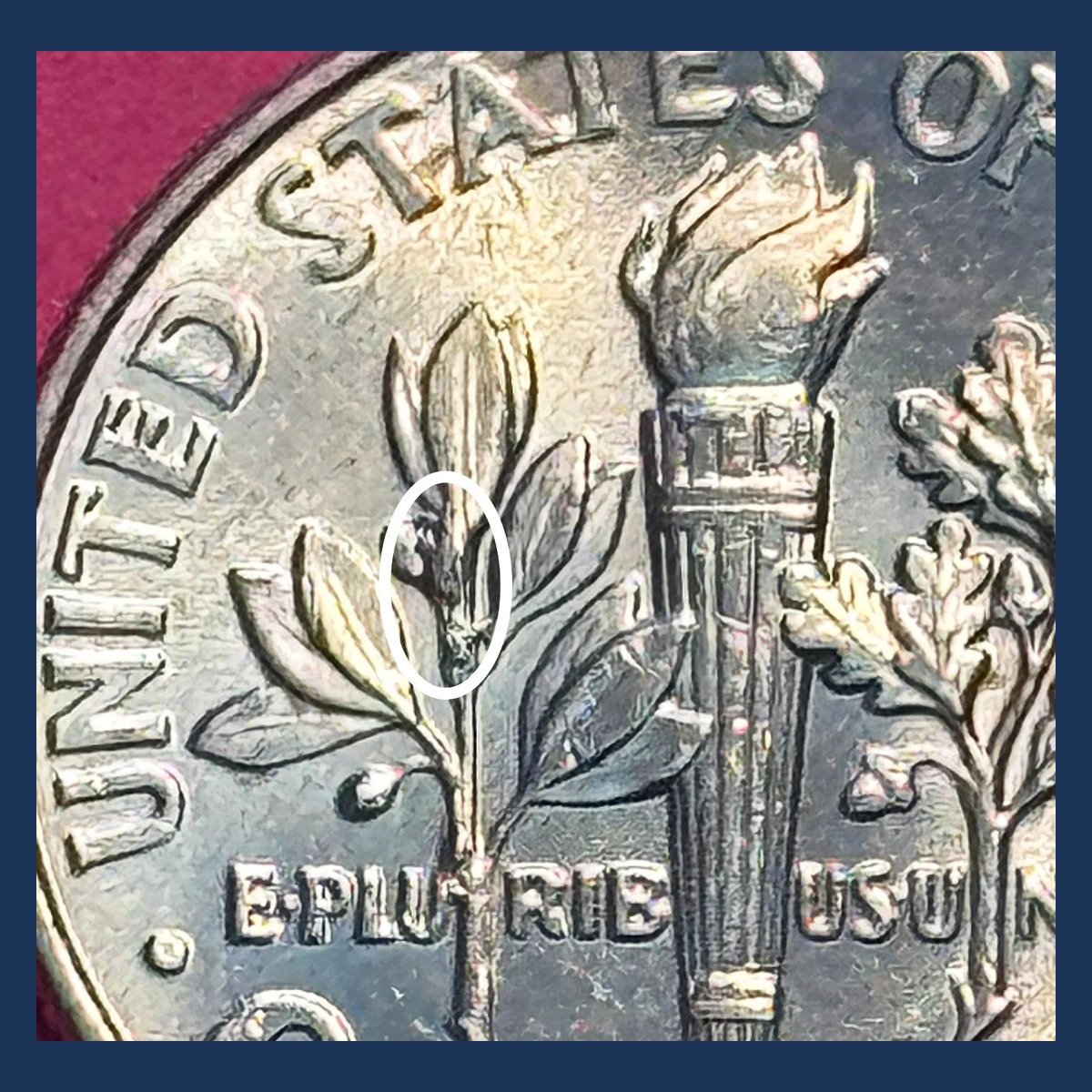
A thin raised line can cross the design or the smooth background of a dime. It forms when metal enters a crack in the die, the steel tool that stamps the coin.
The 2015-D reports also include a retained cud on the reverse. This happens when a cracked piece of the tool remains in place but shifts slightly.
Part of the design may survive on the affected patch, often beside a small step. A completely plain raised blob at the rim is a different appearance and should not automatically receive the same description.
Estimated Value
Fine cracks fit an estimated $5–$25 range, while a clear retained cud may reach $30–$200. Size alone is not enough; a visible step and surviving design make the larger feature easier to recognize.
The year guide reports $185 for a 2015-D retained-cud coin graded MS64, meaning unworn with some marks. Treat that figure as a guide-reported result, while comparing the actual shape and condition of another coin.
How to Identify
Follow the line under a 10× magnifier with light coming from the side. A crack should stand above the surrounding surface, although a scratch can also push up metal along its edges.
For the retained-cud report, examine the reverse rim area for a separated patch that still carries design. A step beside that patch is more useful than a random raised lump.
Check a loose D coin with a scale and calipers against 2.268 grams and 17.91 millimeters. These measurements identify the ordinary clad issue; they do not establish the cause of the raised metal.
A genuine retained patch should show connected coin metal and a displaced section of design, without glue or an added substance.
2. 2015 Roosevelt Dime Parallel Marks from Feeder Contact
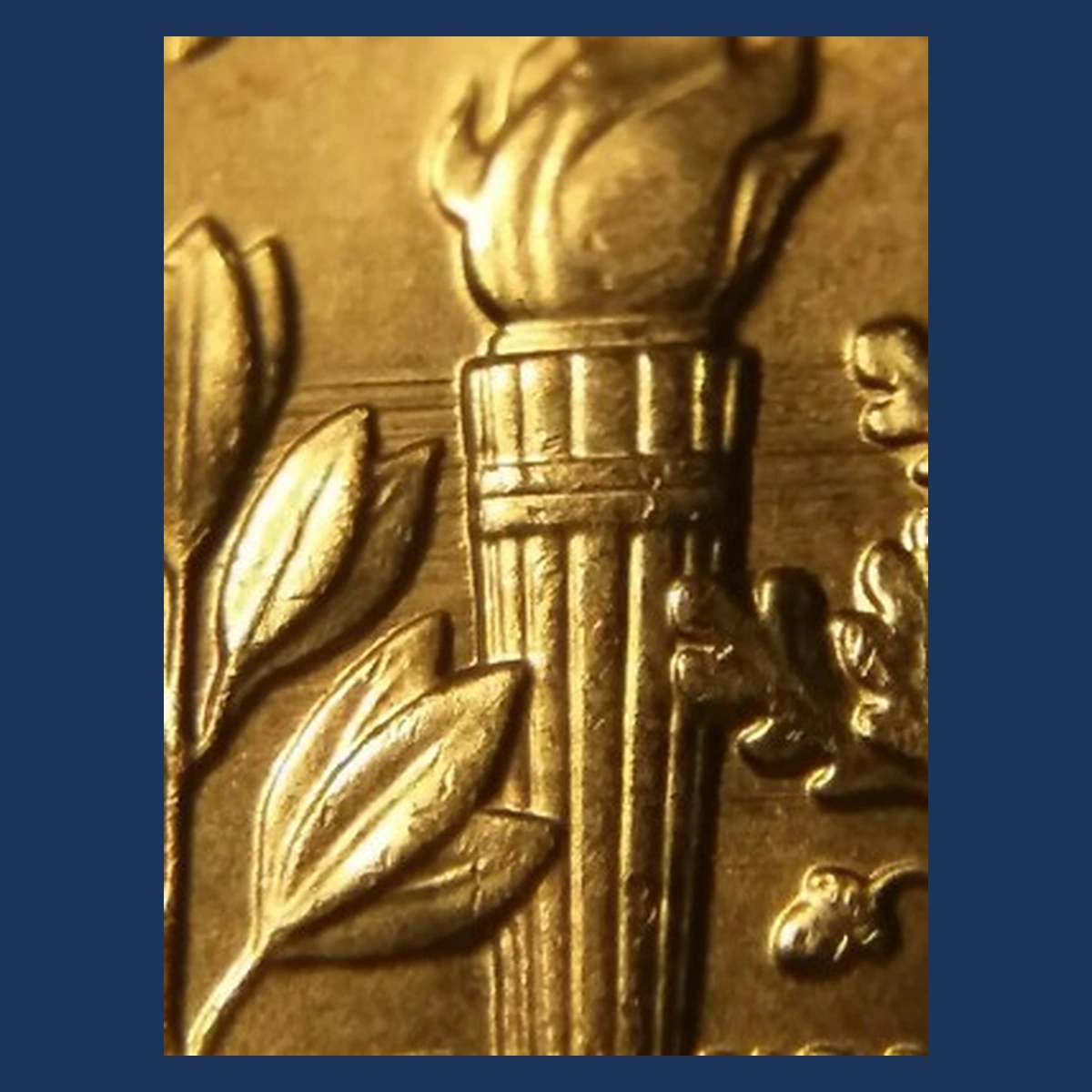
Several straight, roughly parallel marks on the front are described as feeder-finger damage in the 2015-P guide. A feeder finger is the metal arm that moves blanks into position for striking.
The guide explains these marks as contact between that arm and the blank. The exact cause still needs to be checked on the individual coin.
Raised edges beside a line are not proof of a mint error. Scratches made later can also push metal upward, so the marks’ shape and relationship to the stamped design matter more than that single clue.
Estimated Value
An estimated $50–$200 suits a confirmed feeder-contact error with clear, original marks. The upper end reflects the year guide’s reported $200 example, rather than a separately identified auction result.
Demand depends on how convincingly the lines show minting damage. A professionally identified coin is a better comparison than a loose dime with ordinary scratches.
Heavy wear or additional scraping can hide the original pattern and sharply reduce interest in the piece.
How to Identify
Photograph the entire front before examining individual lines. Their shared direction and their path across the design are important parts of the pattern.
Use a 10× magnifier to inspect where a line meets Roosevelt’s portrait or a letter. Was the design stamped over an earlier mark, or was the finished design cut through afterward?
A P mintmark alone does not prove that a 2015 coin is clad. The special silver Reverse Proof has shiny designs and a frosted background.
For a loose circulation coin, use a scale and calipers to check 2.268 grams and 17.91 millimeters. The normal silver version weighs 2.50 grams.
Compare the complete line pattern with an identified circulation example; raised scratch edges alone cannot prove feeder contact.
3. 2015 Roosevelt Dime Expanded Edge from a Broadstrike
A broadstruck dime can look wider than normal, with a spread border around the design. The surrounding collar, a ring that controls the coin’s width, failed to hold the blank properly during striking.
The 2015-D guide reports this error on an ordinary clad coin. Its design should remain complete even though the outer metal has spread.
Edge grooves can be absent or incomplete where the collar did not contain the metal. This differs from an off-center strike, where part of the design misses the blank and an untouched crescent remains.
Estimated Value
Use approximately $40–$225 for a genuine 2015-D broadstrike. A wide, clearly spread border with an attractive complete design belongs nearer the upper end than a slight expansion.
The year guide reports $210 for an MS60 example, an unworn coin with noticeable marks. Compare the spread border as well as the grade when judging a similar piece.
Wear, bent edges, and later flattening reduce value because they make the original minting shape harder to see.
How to Identify
Measure the coin in several directions with calipers, using 17.91 millimeters as the ordinary width. Then weigh it on a scale: a broadstrike spreads the original metal, so a clad example should remain near 2.268 grams.
Check whether all the letters and main design remain on the expanded coin. Missing design beside an untouched crescent suggests an off-center strike instead, even when the coin also looks unusually wide.
Use a magnifier and side lighting to examine the spread edge for grinding, flattening, or a rolled rim. A complete design inside an outwardly spread border supports a broadstrike more strongly than width alone.
4. 2015 Roosevelt Dime Rotated Front and Back Designs
Roosevelt can be upright while the torch finishes tilted after you flip the coin from top to bottom. The 2015-P guide describes this as a rotated-die error.
The front and back stamping tools were turned out of their normal relationship. The designs can still sit in the middle of the coin, because rotation does not require a sideways shift.
An uneven border alone therefore does not prove this error. Separate photographs can also create a false impression if someone turns each picture independently, so a continuous flip is the better demonstration.
Estimated Value
Allow an estimated $25–$225, with a large, clearly repeatable turn generally more desirable than a small tilt. The coin’s overall condition also affects the price.
A year guide reports $210 for a 2015-P example offered through eBay in 2016. Without the original transaction, that figure remains a reported comparison.
Do not assign a ninety-degree premium to a coin whose actual angle has never been measured or shown in a consistent flip.
How to Identify
A photograph of each face cannot establish rotation if the pictures have been turned separately. Film the coin continuously while holding Roosevelt upright.
Keep your fingers fixed at the sides and flip the coin from top to bottom. The torch should finish upright on a normal dime.
Repeat the movement without twisting your grip. A real rotation should return the torch to the same tilted position.
A magnifier helps read the P near the date. For a loose ordinary clad example, check 2.268 grams with a scale and 17.91 millimeters with calipers.
Leave a graded coin sealed in its holder during the test. Judge the repeated top-to-bottom flip, since turning a normal dime left to right makes its reverse appear upside down.
5. 2015 Roosevelt Dime Blocked or Sunken Design
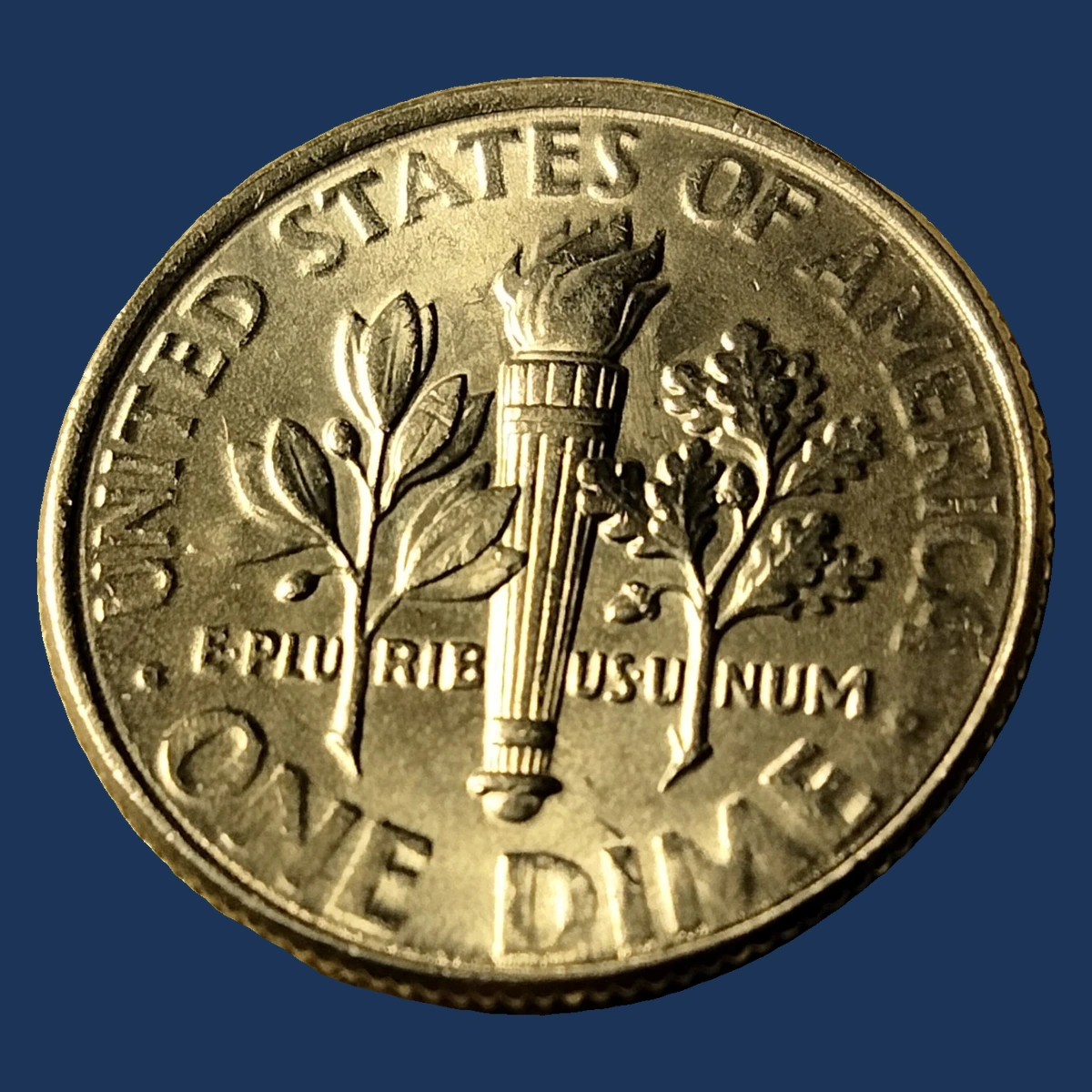
A small part of the design may look unusually faint, or a shallow impression may interrupt the coin’s surface. Material trapped between the blank and stamping tool can prevent the design from forming normally.
The year reports include a 2015-P front-side example and more general grease-filled detail. Grease can block a recessed part of the tool, leaving a letter or feature weak.
A visible depression may have a different shape from a grease-filled letter. The appearance alone does not justify naming the trapped material as wire, cloth, or another specific object.
Estimated Value
Light blocked detail can fall around $5–$30; a clear, larger struck-through impression may bring $40–$250. Surrounding sharpness helps show that the missing detail is localized.
The 2015 year guide reports $210 for a front-side example graded MS63, meaning unworn with visible marks. This is a secondary price report.
A vague flat patch on a heavily worn dime is a much weaker comparison than a well-defined original impression.
How to Identify
Look at the surrounding letters before concentrating on the weak spot. Clear nearby detail makes a local blockage more plausible than even wear across the entire face.
Under a 5× or 10× magnifier, examine the edge of any depression. Sharp cuts, torn metal, or scraping can indicate damage after the coin left the Mint.
For faint letters, compare a normal dime under the same light. Do not clean out a suspected deposit or scratch the weak area to test it.
A loose P circulation coin should measure about 2.268 grams on a scale and 17.91 millimeters with calipers. A localized original gap beside sharp design is more useful than general softness across the coin.
6. 2015 Roosevelt Dime Doubled Design on Either Face
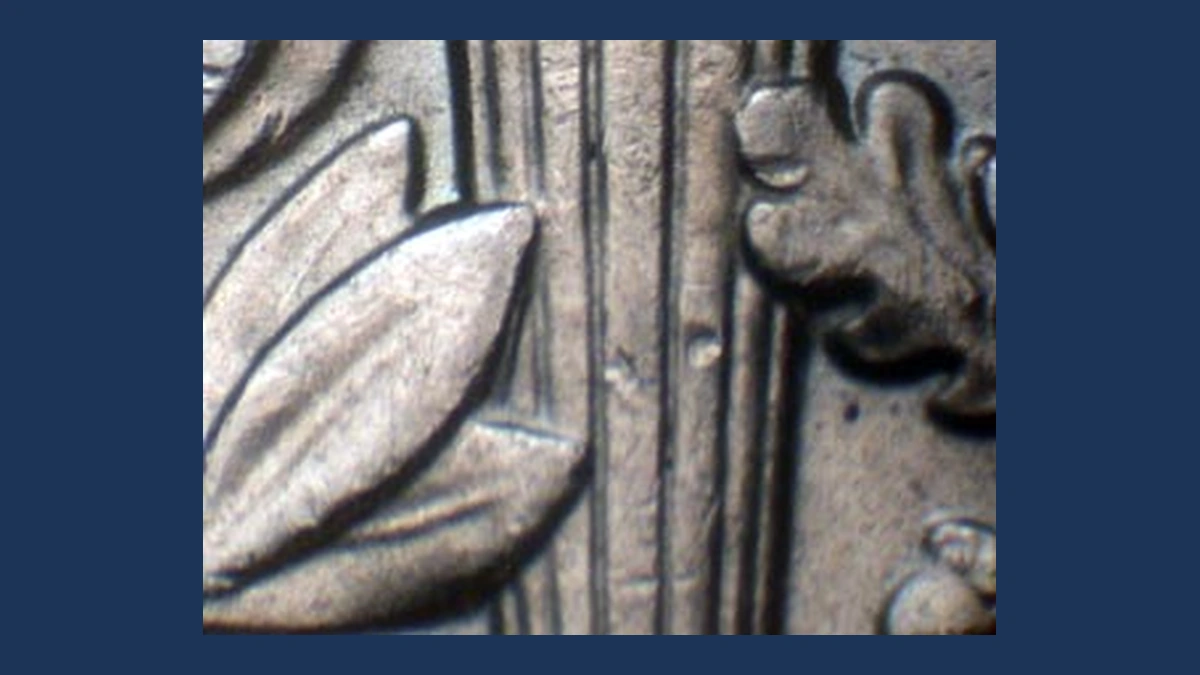
Two rounded outlines can appear where a letter or small design feature should have only one edge. In a doubled die, the stamping tool itself carries the doubled design and repeats it on coins.
The 2015-P reports include doubling on the reverse, around the torch, branches, or lettering. Front-side reports separately mention the date, LIBERTY, and IN GOD WE TRUST.
These are different patterns, not a promise that one coin has both. Flat ledges beside letters can come from movement during striking and should not be confused with a rounded second design.
Estimated Value
Minor clear doubling can be estimated at $15–$50, while stronger, identifiable examples may reach $75–$275. Rounded separation that is easy to see usually draws more attention than slight thickening.
The reverse estimates overlap the year guide’s $100–$260 range. Front and reverse reports should be compared separately, because their patterns and strength differ.
A named variety must match the actual coin; an unsupported label or a flat striking shelf does not justify the stronger-doubling range.
How to Identify
Choose the face you are checking first. On the front, inspect the date and nearby lettering; on the reverse, examine the torch, branches, and letters.
Use a 10× magnifier and move the light rather than the coin. A shadow that disappears as the light changes is not a second metal outline.
The reported reverse positions are not consistent enough to identify a named variety from one thick letter. Compare the whole pattern with clear images of an established example.
Circulation coins weigh 2.268 grams and measure 17.91 millimeters, checked with a scale and calipers. A normal silver collector dime instead weighs 2.50 grams.
Look for rounded, repeated separation on the relevant features, rather than a flat shelf that cuts into the normal design.
7. 2015 Roosevelt Dime Unusual Color from Improper Heating
A 2015-D dime may be reported as unusually dark or copper-colored because of improper annealing. Annealing is the heating step used to soften blanks before they receive their designs.
An abnormal result can change the surface appearance without removing an entire outer layer. The year guide reports such a coin, but color alone cannot establish how it formed.
Natural staining, later heating, chemical exposure, and added plating can produce similar colors. A dime with a genuinely missing layer is another possibility, and its reduced weight gives a different clue.
Estimated Value
For a confirmed heating-related mint error, estimate $50–$325. An even, clearly original surface on an unworn coin makes a stronger comparison than patchy staining on a circulated piece.
The year guide reports $310 for a 2015-D example graded MS65, meaning unworn with relatively few marks. Bright original detail beneath the unusual color helps explain interest in such pieces.
Brown color alone gives an ordinary dime no automatic error premium; the cause matters more than the shade.
How to Identify
Before studying the color, determine whether the outer metal is still present. Examine both faces and the edge with a 10× magnifier for peeling, exposed copper, or signs of stripping.
Weigh a loose D coin on a precise scale and check its width with calipers. The ordinary standard is 2.268 grams and 17.91 millimeters; a large weight loss needs a different explanation.
View the surface under neutral light beside a normal dime. Look for corrosion pits, unnatural coatings, or disturbed metal around the letters.
Appearance and normal weight can narrow the possibilities, but they cannot prove a particular heating history. Professional examination should distinguish an original mint surface from staining or heat damage before the color receives an error value.
8. 2015 Roosevelt Dime Peeling or Separating Metal
A thin flap can lift away from the surface, leaving rough metal beneath it. This is called lamination, a separation within the coin’s metal or between poorly bonded layers.
The year reports include a 2015-D example. A retained flap and an area where metal has already fallen away can look different, even when both involve a weak bond.
The visible opening does not always reveal when the separation occurred. A small peeling patch should also be distinguished from a whole outer layer coming away or an entire blank splitting into pieces.
Estimated Value
Use an estimated $25–$350 for genuine examples, depending on size, retained metal, and condition. A small edge flake has less visual impact than a broad, clearly attached flap.
The year guide reports $315 for a 2015-D example graded MS63, an unworn coin with visible marks. Compare the visible size of the separation before applying that figure to another dime.
A flap bent or torn by later handling can lose appeal even when the original weakness began at the Mint.
How to Identify
Do not lift the flap. Its attachment and the design across it can preserve evidence that would be lost if the metal broke away.
Use angled light and a 10× magnifier to inspect the opening from the side. Look for a natural separation within the metal rather than a sharp tool cut.
An attached flap may leave a circulation coin near its original 2.268 grams. Check with a scale without pressing on the lifted area.
Calipers can compare its width with the normal 17.91 millimeters. Do not squeeze the damaged edge while measuring it.
Inspect nearby letters for cutting and displaced edges. A rough separation beneath attached metal supports lamination more strongly than a peeled-looking patch surrounded by fresh scratches.
9. 2015 Roosevelt Dime Missing Outer Metal Layer
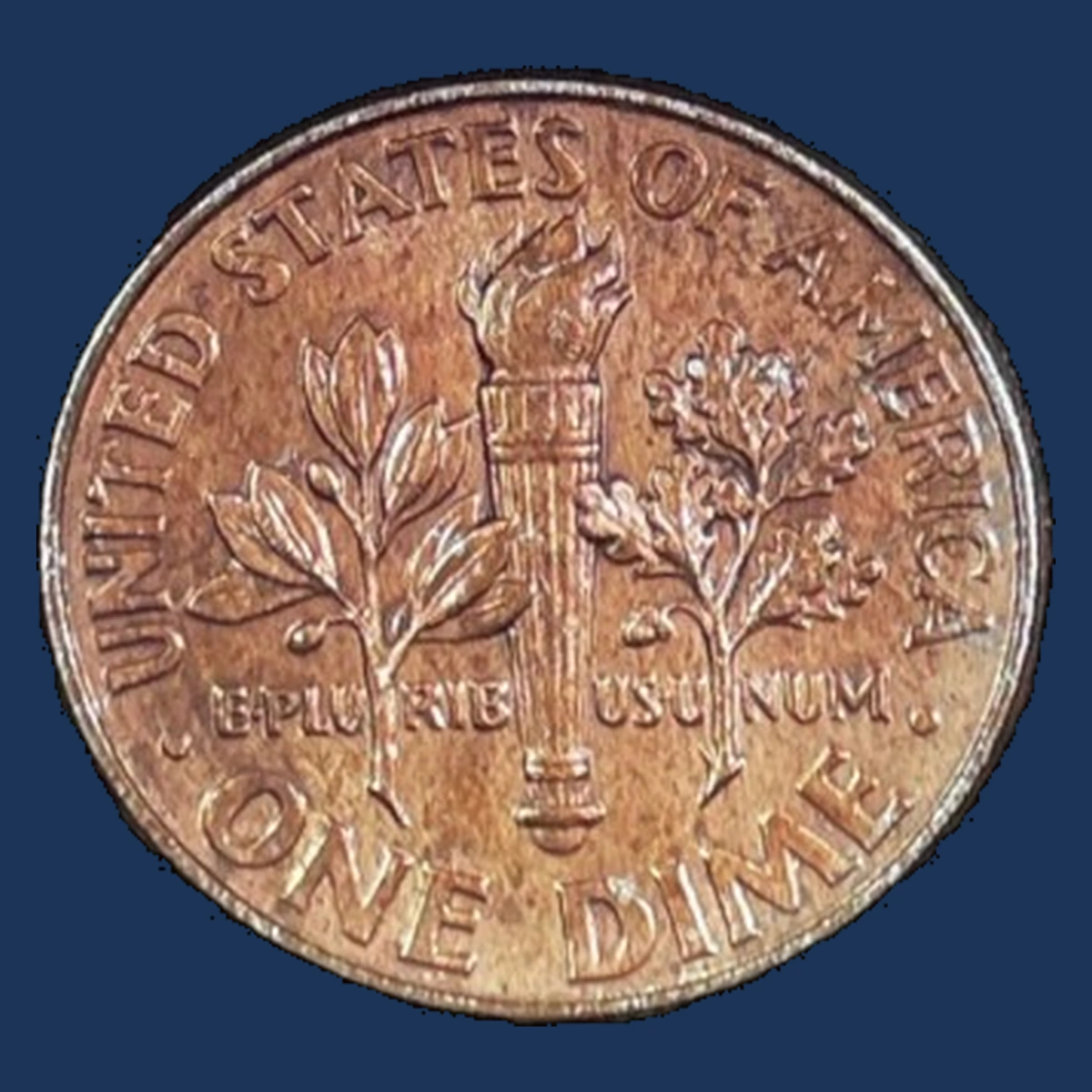
An ordinary dime has silver-colored outer layers over a copper core. If one outer layer is missing, a whole face or a large area can show the copper beneath.
The 2015 guides report this error among ordinary clad dimes. Missing metal should also affect weight, unlike a simple change of surface color.
Normal silver collector coins must stay separate. The S silver Proof and the special W Proof and P Reverse Proof contain ninety percent silver, so their different metal is intentional.
A Proof is a specially made collector coin, not an error by itself.
Estimated Value
A genuine missing-layer example has an estimated range of $150–$450. Clear exposed copper, original struck detail, and good overall condition support the stronger end of that range.
The year guide reports $415 for a 2015 example graded MS60, an unworn coin with noticeable marks. Its price is useful as a reported comparison, without treating every copper-colored dime as equivalent.
Chemical stripping or grinding after minting can expose copper too, but neither earns the same mint-error premium.
How to Identify
Identify the issue before weighing it. The 2015 S silver Proof, W silver Proof, and P silver Reverse Proof normally weigh 2.50 grams.
For an ordinary P or D circulation dime, use 2.268 grams as the scale comparison. A missing outer layer should reduce that weight.
Inspect the copper-colored face with a 10× magnifier, following it to the edge. Then compare the opposite face for normal metal and struck detail.
Calipers should place the width near 17.91 millimeters. Scraping or acid damage can alter the lettering and surface even when it also reduces weight.
Look for original struck detail on the exposed copper, together with a genuinely absent edge layer. Color plus low weight still needs examination for metal removed after minting.
10. 2015 Roosevelt Dime Off-Center Strike
An untouched crescent beside a partly missing design is the most obvious feature of an off-center strike. The blank sat partly outside the stamping tools when they came together.
Both faces should show a related shift. The outline may stretch, but the error does not require a piece of metal to be missing.
The 2015 year guide reports a Philadelphia example. A readable date establishes the year more clearly, while the surviving mintmark helps identify the issue.
A narrow border on one face alone may instead come from a stamping tool sitting off to one side.
Estimated Value
Estimate $30–$500, with stronger visible offsets and a surviving date generally attracting more attention. Condition and the amount of recognizable design still matter.
The 2015 error guide reports a $430 Heritage result in 2018 for a 2015-P coin graded MS60. That is a guide-reported price for an unworn example with noticeable marks.
An undated piece cannot receive a 2015 premium merely because a seller assigns it to that year.
How to Identify
Find the date on the struck portion before deciding that the coin belongs to 2015. Check the mintmark if it survives, then turn the coin over to compare the design cutoff.
The unstruck crescent should correspond on both faces. A 10× magnifier can help distinguish untouched blank metal from an area that has been ground smooth after striking.
Check weight with a scale against the ordinary clad standard of 2.268 grams. Record the changed outline with calipers against a normal width of 17.91 millimeters; spreading can alter the shape without removing metal.
An incomplete edge from a clip is a different feature. An original blank crescent beside matching design loss on both faces is the clearest off-center clue.
Conclusion
These 2015 dime errors span estimated values of $5–$500, from fine raised cracks to clearer off-center strikes. The reported $430 example provides a guide comparison, not a verified price for every similar dime.
Identify the normal issue before judging its metal: 2015 includes several silver collector versions. Then compare the actual feature, measurements, and surface condition, keeping ordinary wear and later damage out of the error category.