1987 Dime Error List with Pictures

How does a dime acquire Lincoln’s portrait? One finished 1987-P dime entered a cent press, leaving traces of Roosevelt underneath the newer penny design.
An NGC MS67 example sold for $747.50 at auction in 2011. Other 1987 dime errors involve much smaller changes, such as an extra D outline or the missing M in DIME.
Estimated values in this guide range from $2–$2,500. Follow the visible feature first, then compare the coin’s mint, surfaces, and remaining design.
1. 1987 Roosevelt Dime Raised Lines from Cracked Tools
A thin ridge can cross a dime when the steel stamping tool develops a crack. Metal enters that opening and leaves a raised line on the coin.
The tool is called a die, which explains the name die crack. Its mark stands above the surface instead of cutting down into the finished design.
Cracks are reported for 1987 without one fixed path or mint assigned to the category. The line must be traced on the actual coin, because a scratch or a narrow ridge beside an impact can look similar in a photograph.
Estimated Value
For genuine modest cracks, estimate $2–$100. A clear raised line across otherwise attractive detail can be more interesting than a faint trace hidden among ordinary design lines.
Circulation wear and scratches can make a crack harder to recognize. Several short cracks on one dime also need one whole-coin assessment, rather than a separate full price for each.
This estimate requires original raised metal from a damaged tool. Dirt or a scratch does not earn the same premium.
How to Identify
Compare the suspect line with a normal dime before deciding that it is extra metal. Roosevelt’s hair and the torch already contain narrow raised lines that can look unusual in a close photograph.
Once you find an extra line, move a small light across it and watch the shadow change. A ridge above the surface differs from a groove cut down through the finished design.
Follow the line through nearby details and inspect both sides for a dent or displaced metal. A raised lip beside an impact can imitate a tool crack, so photograph the surrounding area as well as the line itself.
2. 1987 Roosevelt Dime Reported Doubled Front or Back Details
A stamping tool can carry a repeated part of its design before it touches a blank metal disk. The coins made from that tool then show the same extra outlines.
This is called a doubled die. Front-side checks involve lettering or the date, while back-side checks involve the torch and surrounding words.
For 1987, these remain proposed possibilities rather than identified patterns with a specific catalog match. A thick letter or a flat shelf beside the date should therefore be examined on its own merits, without borrowing a famous variety from another year.
Estimated Value
For a confirmed minor doubled-tool pattern, a conditional estimated range is $10–$150. Clear repeated corners or rounded separation would support stronger interest than vague thickening.
The range does not assign a rare-variety price to every doubled-looking 1987 dime. Wear and movement during striking can create similar-looking edges without a doubled design in the tool.
A useful comparison requires the same mint, face, and actual pattern. An impressive nickname cannot replace those matching details.
How to Identify
Select the face carrying the suspected extra outline. Do not combine one coin’s front letters with a different coin’s torch details.
Use a magnifier to examine corners and ends rather than just long straight edges. A rounded repeated shape differs from a low flat ledge beside a reduced letter.
Compare a normal coin with similar wear so flattened detail does not create a false contrast. Change the light to separate fixed metal from glare.
Photograph several nearby features at the same scale and seek a specialist match. A repeated pattern should explain the extra shapes together, rather than rely on one letter that looks thick under bright light.
3. 1987 Roosevelt Dime Repunched D Mint Marks
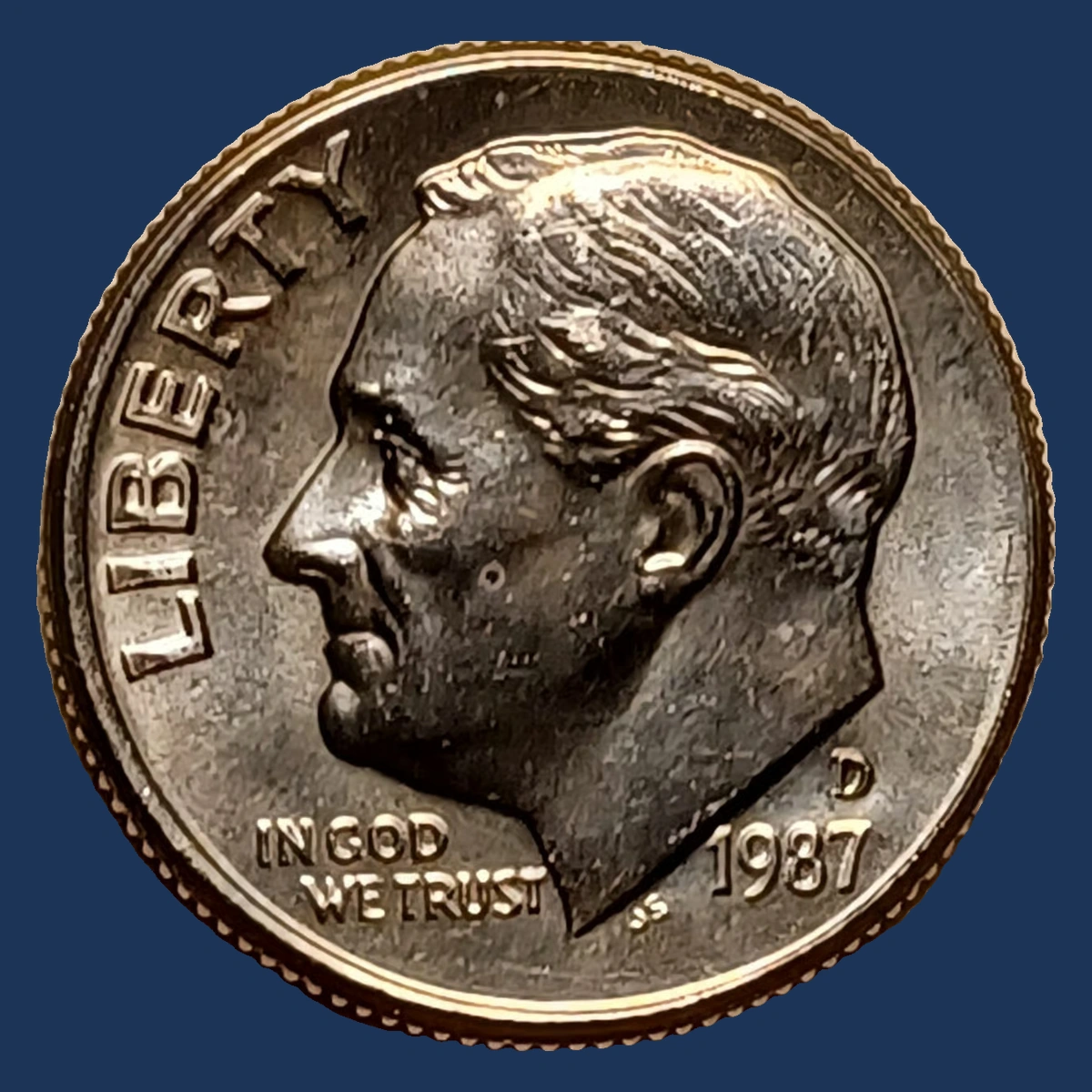
The small D above the date was placed into the stamping tool separately from the main design. Repeating that punch in a slightly different position could leave another D outline.
The cataloged WRPM-001, also called CONECA RPM-001, has an extra impression shifted upward. A separate CONECA RPM-002 is described as rotated counterclockwise.
These are two patterns, not different names for one coin. The rotation in RPM-002 concerns the small letter impression, rather than a whole portrait turned relative to the torch on the other face.
Estimated Value
Identified minor D/D examples have an estimated value of $10–$200. A clear extra letter on an unworn surface is easier to appreciate than a trace flattened by circulation.
Price the upward and rotated patterns separately. A damaged D need not match either variety.
The estimate covers each complete dime in its own condition. Damage, cleaning, and weak surviving details can reduce interest even when the repeated mint letter is genuine.
How to Identify
Look above the date for D, the Denver mint letter. The smaller JS near the bottom of Roosevelt’s portrait names the designer and is not another mint mark.
For the upward variety, inspect the top of D for another raised portion of the letter. The Wexler catalog identifies this as WRPM-001, also called RPM-001.
For RPM-002, examine the upper and lower ends together. Their extra shapes should fit a counterclockwise turn of the letter impression.
Change the light angle to separate raised curves from shadows or a low flat shelf.
Photograph the entire D with nearby surface visible, then have the pattern matched to the appropriate variety. Do not combine the upward and rotated patterns into one test.
4. 1987 Roosevelt Dime Expanded Outline from a Broadstrike
A broadstrike forms when the collar ring fails to contain the blank’s edge during striking. The dime can spread wider than its normal outline.
The important combination is extra metal outside a complete main design. A shifted image that loses intended details beyond the blank needs an off-center comparison instead.
Broadstrikes are reported for 1987 without a specified mint or actual diameter. A wide border alone cannot establish the process, because hammering or squeezing a finished coin can also enlarge its outline while damaging the details that were already struck.
Estimated Value
Comparable genuine simple broadstrikes have an estimated range of $25–$300. Visible spread with a readable date makes the error easier to display than a slight uneven rim.
An attractive original surface helps distinguish the coin from a later flattened piece. Heavy contact marks or crushed letters reduce that appeal.
The range assumes the broad outline formed during striking. A large measured diameter is supporting information, but it does not replace the complete design and original edge evidence.
How to Identify
Measure a loose coin across its widest and narrowest points with calipers, using the normal 17.91-millimeter diameter for comparison. A graded coin can stay safely in its holder while you examine its outline.
Now follow the outer words on both faces to see whether the complete main design fits inside the expanded metal. Look for original letters that spread naturally rather than details crushed by hammering or squeezing after minting.
Check the edge beside the widest section for changes in its grooves. A smooth expanded area can support lost collar restraint, but extra width alone cannot distinguish a broadstrike from a coin flattened later.
5. 1987 Roosevelt Dime Clipped Blank
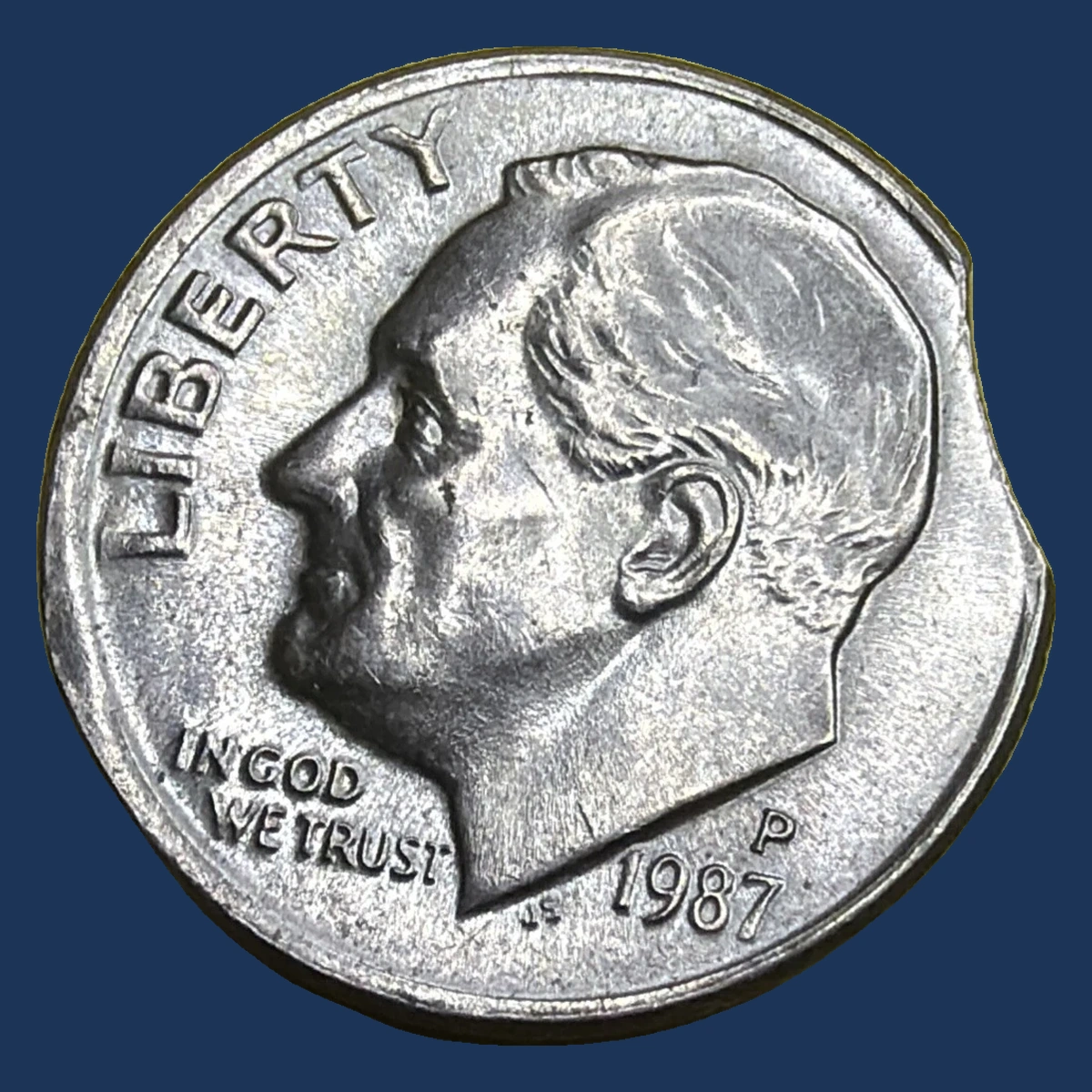
A gap can begin in the metal blank before the portrait or date exists. The remaining disk then receives the dime design around that incomplete edge.
Collectors call this a clipped blank. A curved gap and a straight missing segment can arise in different parts of blank production, so their outlines need separate examination.
The 1987 report does not specify one shape, percentage, or mint. Those details should come from the actual candidate, and a missing section is different from the plain metal that remains on an off-center strike.
Estimated Value
Genuine clipped dimes have an estimated value of $20–$350, depending on size, condition, and how clearly the original gap can be shown. A readable date supports identification.
A conspicuous missing section on a clean coin generally makes a better display than a tiny rough edge. Yet a large later cut is still damage, not a more valuable clip.
Compare the boundary and nearby design before price. The estimate applies to metal missing before the original strike.
How to Identify
View the exposed edge through the coin’s thickness, then follow the rim toward each end of the gap. Saw cuts or fresh file marks can reveal later removal.
Look for lettering or rim detail that softened or stretched beside an original opening. Those clues connect the missing metal with the original strike.
Weakness at the opposite rim can support a clip, but its absence alone does not settle the question.
If the coin is loose, record its weight without treating weight loss as proof of timing. Cutting a finished dime also makes it lighter.
Keep the full outline in the photograph. Its relationship to the surviving design is more useful than a close view of an unexplained missing piece.
6. 1987 Roosevelt Dime Missing Outer Metal Layer
The pale face of an ordinary dime is an outer sheet bonded to a copper center. If that sheet is absent, the copper can remain visible beneath the struck design.
This is a missing-clad-layer error. The normal copper stripe along the edge does not indicate the same problem, because that stripe belongs to the original layered construction.
A missing layer is reported for 1987 without a confirmed face or mint in the year list. Brown color alone cannot identify it, since staining, added plating, and chemicals can also change the surface.
Estimated Value
For a genuine comparable missing-layer dime, estimate $50–$600. The amount of exposed copper and preservation of its original design affect the comparison.
Different-year 2000-D examples brought $132 for back-layer loss in November 2020 and $104 for front-layer loss in December 2022. Those are separate coins with identified affected faces.
A 1987 candidate needs its own edge and surface examined. Neither sale assigns it a face, weight, or fixed price from color alone.
How to Identify
First decide whether pale outer metal is actually absent or only discolored. Follow the edge beside the brown face to see how the copper center meets the surviving sheets.
A normal copper stripe around the edge is not missing cladding.
If the coin is loose, compare its weight with the normal 2.268 grams. That standard also applies to 1987-S Proofs, the specially made collector dimes; this year has no ordinary silver Proof version.
Examine the exposed face for original design impressed into copper. Scrape lines and chemical pits can explain metal loss after minting instead.
Take side and face photographs together so the layer boundary can be compared with the design. A low weight cannot settle that distinction by itself.
7. 1987 Roosevelt Dime Off-Center Strikes from Philadelphia and Denver
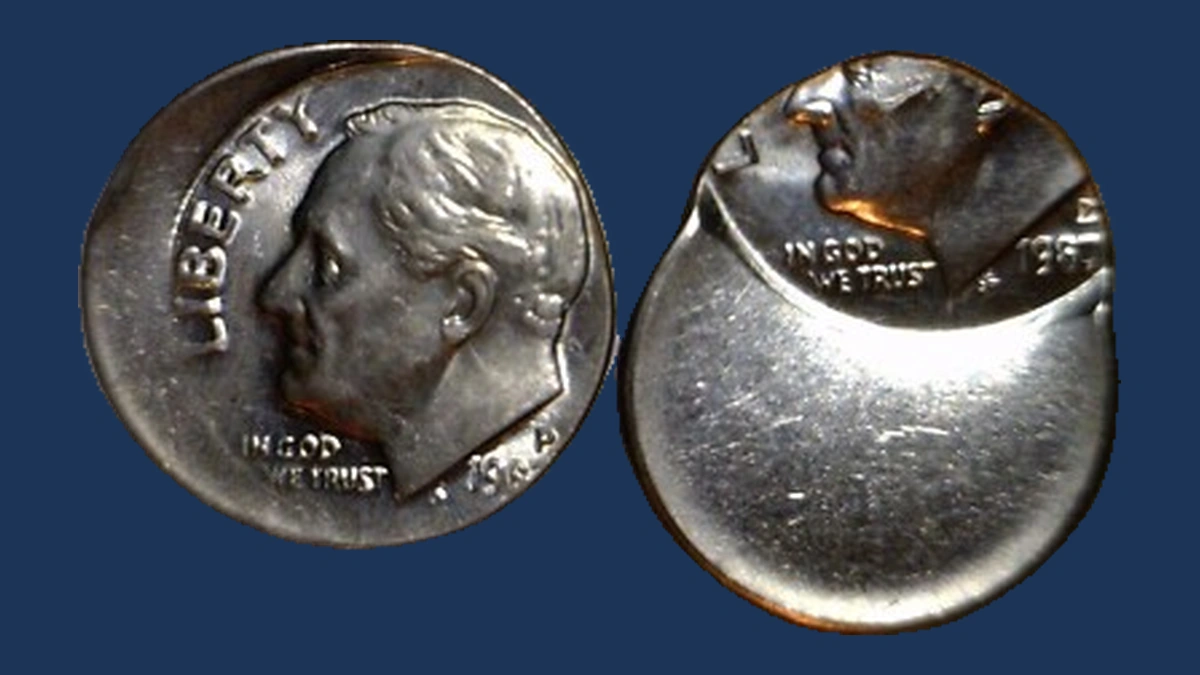
An off-center dime has plain metal beside a design that partly missed the blank. The blank sat away from its intended position when the two stamping tools came together.
A Philadelphia example was listed as thirty percent off center toward eleven o’clock. A separate Denver coin was described as forty-five percent off center toward eleven-thirty.
Those amounts and directions belong to different pieces. The plain area still exists as metal, so it should not be confused with a clipped-out gap or used to count how much of the coin has disappeared.
Estimated Value
Individual genuine dated examples have an estimated range of $30–$750. A clearly readable year, clean blank area, and visually strong shift support greater interest.
Older dealer auction lists showed minimum bids of $18 for the Philadelphia coin and $26 for the Denver coin. Those figures were starting requirements, not completed sales.
Compare the actual displacement and condition of a candidate before pricing it. A larger percentage does not automatically overcome heavy damage or a missing date.
How to Identify
With Roosevelt upright, identify where the design runs beyond the metal. The listed Philadelphia coin shifts toward eleven o’clock, while the Denver example shifts closer to twelve.
Turn the coin over and compare the unused area on that face. Both designs should fit the same misplaced blank.
Check that the date and mint actually survive, rather than completing missing digits from a seller’s description. Preserve the whole outline in photographs.
Inspect the plain metal for grinding lines or flattened remains of finished detail. An original unstruck area differs from a surface erased later.
If only one face is shifted while the other remains centered, compare a misaligned stamping tool before applying the off-center label.
8. 1987 Roosevelt Dime Design Blocked by a Grooved Fragment or Grease
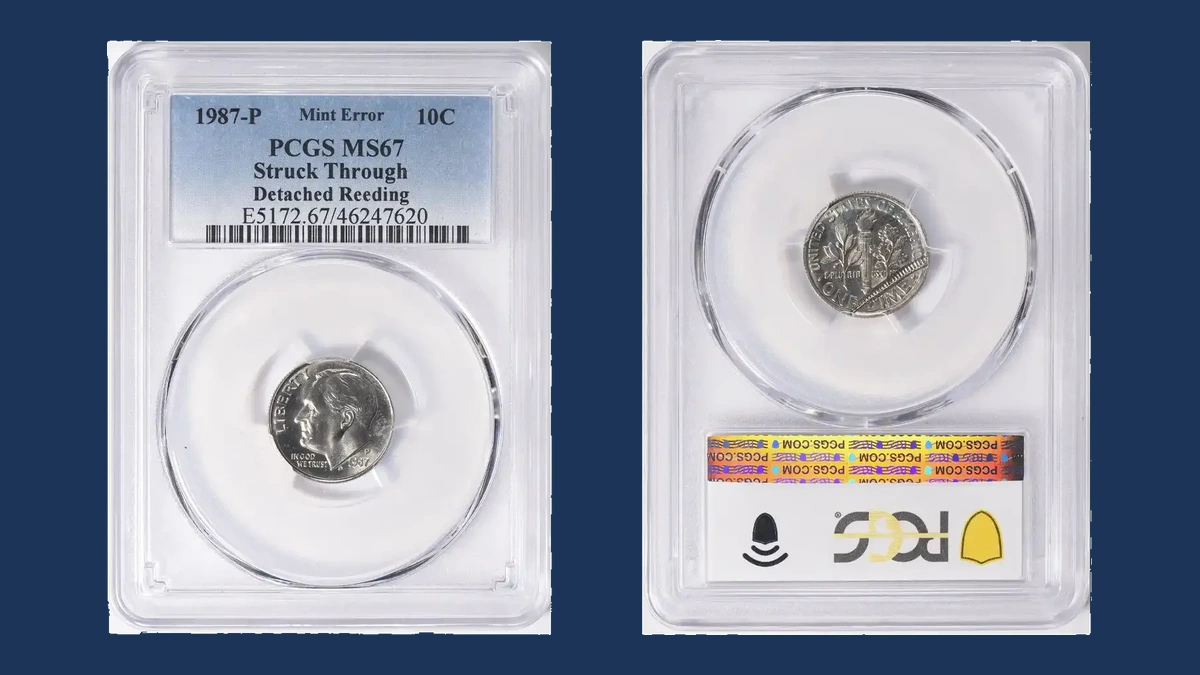
An object caught between the blank and a tool can leave its own impression instead of normal dime detail. A Philadelphia example was graded PCGS MS67 with detached reeding struck through the surface.
Reeding means the closely spaced grooves normally found around a coin’s edge. The detached piece left a regular grooved pattern, rather than ordinary edge grooves in their correct place.
A different 1987-P report concerns grease blocking the M in DIME. The other letters formed while that filled recess prevented the M from appearing, even with normal striking pressure.
Estimated Value
For a confirmed missing-letter effect from grease, estimate $5–$75. A clear original impression from detached grooved metal can support an estimated $100–$1,000, depending on visibility and preservation.
The PCGS MS67 grade describes an unworn coin with very few marks. Such preservation helps show the grooved impression without interference from circulation wear.
A distinct repeated groove pattern offers a different comparison from one weak letter. The size and clarity of the interruption affect the whole coin’s appeal.
How to Identify
Find where the parallel grooves begin and end on the affected face. The cataloged example identifies detached reeding, not a broken piece of the collar ring.
Look at the depression and surrounding struck detail under side lighting. Later contact with another coin’s edge can leave damage that needs to be distinguished from the original impression.
For the grease example, inspect the space where M belongs in DIME and compare the neighboring letters. General wear should also affect other exposed details.
Keep these two observations separate in photographs. The missing M does not require a grooved fragment, and the fragment’s impression should not be assigned a face or clock position without seeing it.
9. 1987 Roosevelt Dime Second Strike with a Blocked Back Area
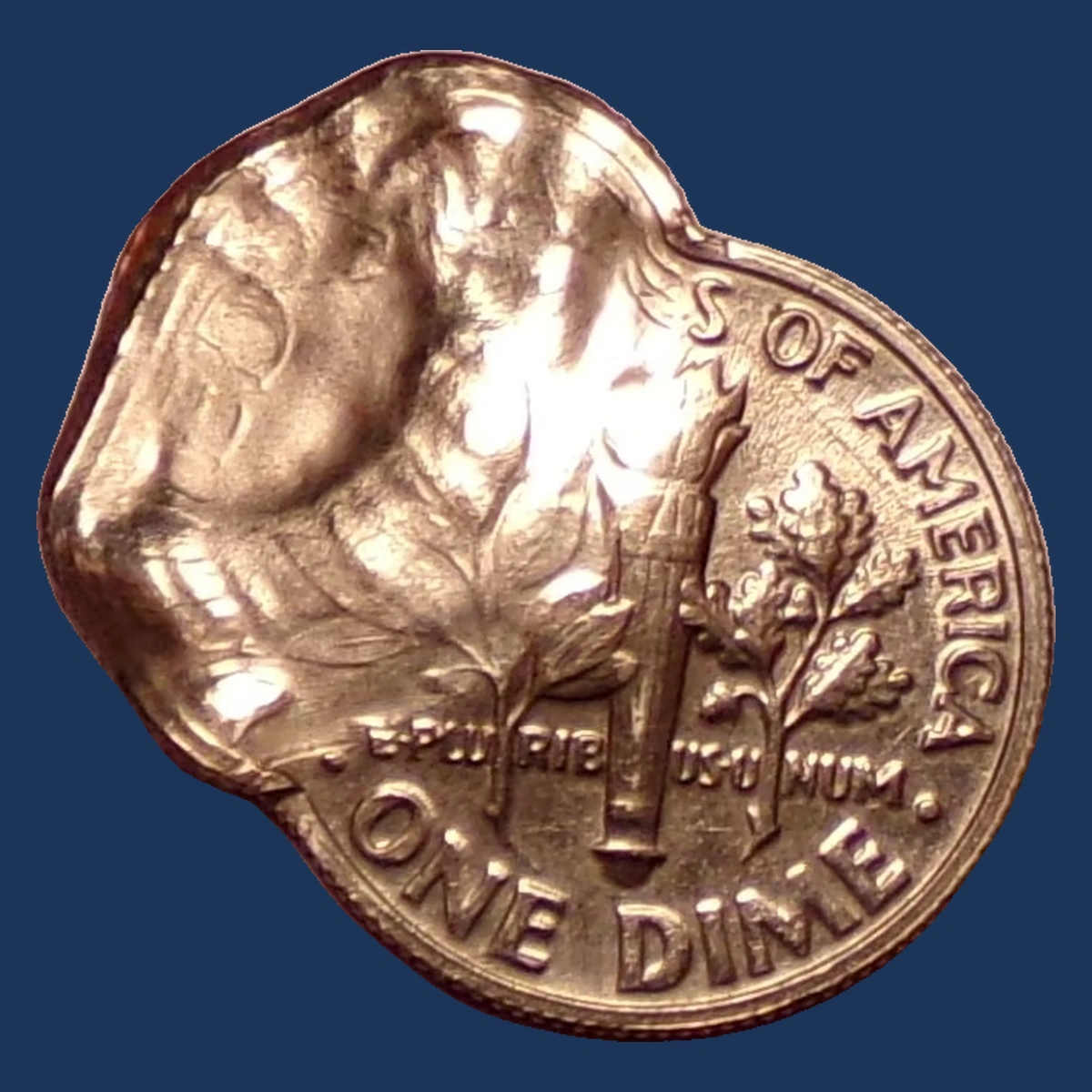
A Philadelphia dime discussed by its owner shows a stretched second image on the front but no corresponding fresh back design in that area. The reported weight is 2.27 grams.
The explanation offered by an experienced specialist is that the dime received its second blow while resting above another blank. That blank blocked the back tool as the front metal spread.
Traces from clashed tools also appear behind and below the ear on the same dime. This is a reported combined error, without a numerical grade or a measured off-center percentage established.
Estimated Value
For a comparable authenticated double-strike and blocked-back combination, estimate $150–$1,500. The estimate depends on a clear match between the second front image and the affected back area.
A clear second image beside the matching flat back area helps explain the sequence. Original surfaces and a readable year improve its display.
The nearby clash traces belong to the same coin and should not receive a second full value added on top. Later damage can still reduce its overall appeal.
How to Identify
The key comparison is between the stretched front image and the flatter area directly behind it. Place full photographs of both faces beside each other and locate those matching regions before studying smaller marks.
Trace connected letters or portrait details through the second front image. The owner’s illustrated discussion explains how another blank underneath could have blocked the second back impression.
A flat back area without copied detail is not a backward-image transfer. Keep that distinction separate from the faint clash marks near the ear, which come from the stamping tools touching each other.
Check the ear-area marks against the opposing design on a normal dime. They need their own shape comparison, even though they appear on the same coin.
10. 1987 Roosevelt Dime Reported Wrong-Blank Candidate
A dime design on an unusually small or heavy piece of metal may suggest that the wrong blank entered the press. A blank is the metal disk that receives the design.
This 1987 category remains a possibility to examine, rather than a confirmed example on an identified foreign or domestic blank. Measurements need to agree with the edge and the surviving design.
It also differs from a finished dime struck again as a cent. That later cent strike leaves two coin designs together, while an unused wrong blank begins without either design.
Estimated Value
If a genuine 1987 dime on an incorrect blank is authenticated, use a conditional estimated range of $300–$2,000 for a modest wrong-blank example. The actual metal and original blank identity would narrow that comparison.
The range does not claim a known sale or a confirmed specimen. An altered normal dime should not be placed within it simply because it is light or unusually colored.
Compare original construction and preserved design before treating unusual measurements as a premium.
How to Identify
Record weight and diameter on a loose candidate using a scale and calipers. Normal 1987 dimes are clad metal weighing 2.268 grams and measuring 17.91 millimeters.
Inspect the edge for the normal copper center, added plating, or removed metal. A changed surface color does not establish another denomination’s blank.
Follow the design to the outer boundary and look for filing or cutting. Later trimming can create a smaller dime without a wrong blank entering the press.
Have a specialist examine the metal without scraping it. Measurements and an original edge should support that identification before a particular blank or denomination is named.
Photograph any missing or unusually crowded outer letters as well as the complete outline.
11. 1987 Roosevelt Dime Struck Again with a Penny Design
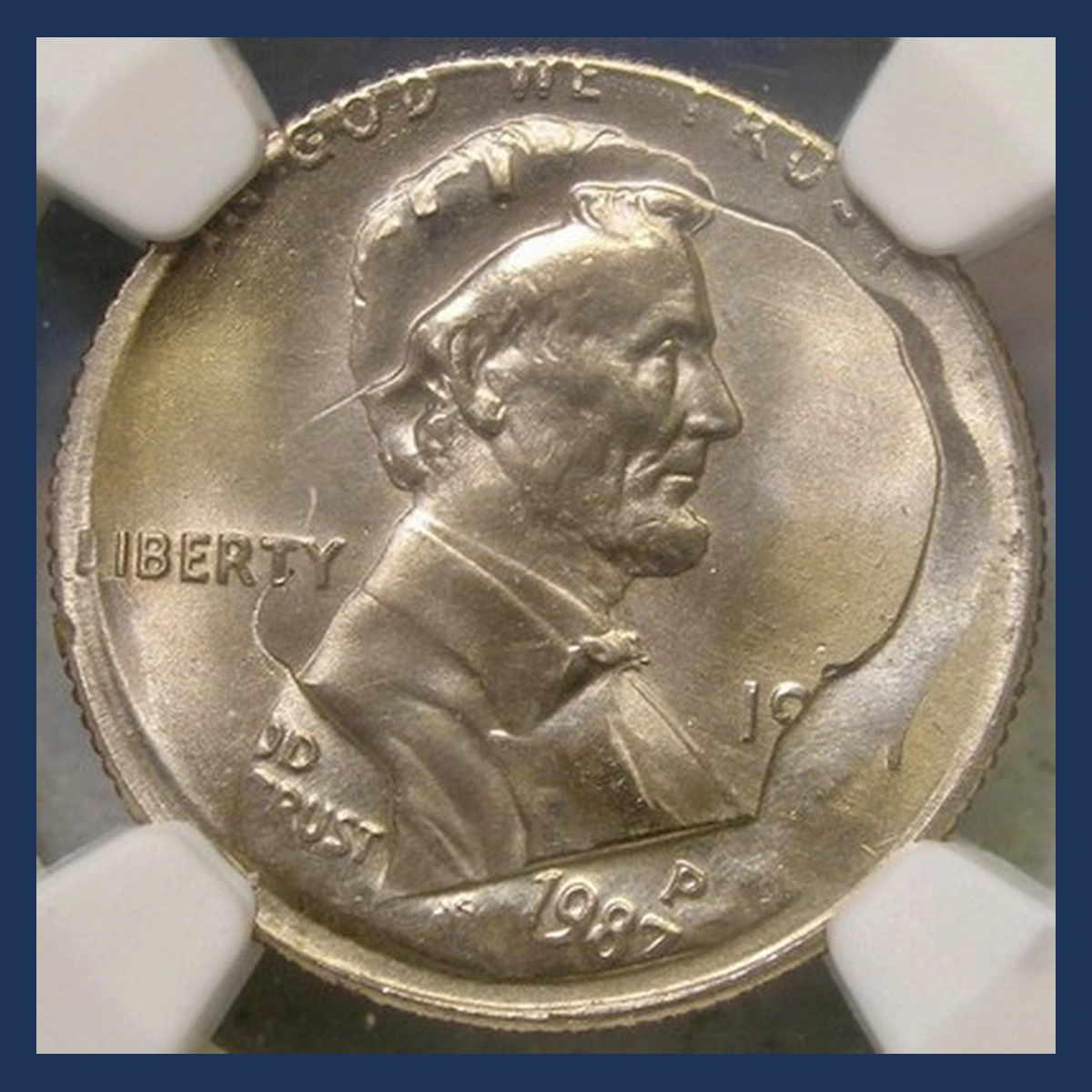
Lincoln can overlap Roosevelt when a finished dime enters the cent press. The newer cent impression may flatten some earlier details while leaving others visible between its design features.
An NGC MS67 example is recorded with a 1987 cent design over a 1987-P dime. The grade describes an unworn coin with very few marks.
This is called a double-denomination error because one piece of metal carries designs from two denominations. It differs from a cent struck on an unused dime blank, which would have no earlier Roosevelt or torch image underneath.
Estimated Value
A recorded MS67 example brought $747.50 in 2011, while another auction record shows $660 in April 2020. The records alone do not establish whether the same coin appeared twice.
Estimate $600–$2,500 for comparable authenticated pieces with readable designs and attractive surfaces. A different-year 2001 cent over a 2001-P dime sold for $1,320 in September 2025.
The clarity of both designs matters more than simply adding the two face values together.
How to Identify
Locate a dime feature that cannot belong to the cent design, such as Roosevelt’s profile or part of the torch. Trace enough connected detail to recognize the earlier image.
Find where a newer cent feature crosses it and compare the other face for the same sequence. One continuous piece should carry both designs.
Read each date and mint independently. A visible cent year does not automatically establish the underlying dime’s year.
Inspect the edge for seams or added metal that might reveal a joined novelty. The dime’s layered construction should remain compatible with the piece.
A specialist should confirm the order of the strikes. Surviving original dime detail is essential evidence that the first coin was already finished before the cent impression arrived.
Conclusion
A missing M and an extra portrait come from very different events. The estimated $2–$2,500 range for these 1987 dime errors reflects that variety, along with each coin’s condition.
Check raised and sunken details separately, and keep the two documented D/D patterns distinct. A small mint-letter feature does not establish doubling elsewhere.
Protect the original surface and photograph the whole coin before making close-ups. Those wider views keep dates, mints, and unusual shapes connected.