1979 Dime Error List with Pictures

Extra letter tips on the rim can be more revealing than a missing mint mark. On a 1979 circulation dime, having no mint letter is normal.
The real 1979 dime errors include missing layers, clipped blanks, and a triple strike with a flip. That triple-struck Denver coin sold for $1,495 in September 2008.
This guide covers estimated values from $5 to $2,500. Continue below to compare the marks you can see and understand why similar-looking coins can have different prices.
1. 1979 Roosevelt Dime Die Cracks and Rim Breaks
A line or lump above the normal surface may come from a damaged stamping tool. A crack in that steel tool, called a die, lets coin metal fill the opening during striking.
A larger missing piece at the tool’s edge can leave a raised, blank patch connected to the coin’s rim. Collectors call that patch a cud.
Both forms appear in the 1979 error listings, without one exact position defining the group. A swollen rim caused by a later blow is different from a raised patch made inside the press.
Estimated Value
Small cracks can fall around $5–$30, while clearer rim breaks have an estimated range of $30–$150. These are estimates for genuine raised features made during striking.
Size is only part of the appeal. A sharply outlined break beside readable lettering is easier to appreciate than a vague lump on damaged metal.
Corrosion and later rim blows reduce desirability. They should not be used to make a modest crack appear like a larger, more valuable mint error.
How to Identify
View the suspected feature under light from the side. A 10× magnifier helps show whether the line rises above the surface or is a groove cut into it.
If there is a large patch, follow it to the rim. A cud connects there and lacks the design that the broken part of the tool could no longer stamp.
Weigh a loose dime against 2.268 grams and compare its width with 17.91 mm using calipers. Check the edge grooves beside the feature for signs of a later blow.
Look at the opposite face as well. Metal pushed around by damage may leave a dent nearby; an added deposit can show a boundary that does not belong to the struck surface.
2. 1979 Roosevelt Dime Doubled Dies
A second rounded outline can appear when the design is doubled on a stamping tool before coin production. Every coin struck by that tool can then repeat the extra detail.
For 1979 dimes, front reports point to LIBERTY, IN GOD WE TRUST, and the date. Back reports mention ONE DIME or torch details, without establishing a single exact doubling pattern.
The two sides need separate examination. A faint shelf beside a front letter does not establish a doubled die, and it cannot prove that a back feature is also doubled.
Estimated Value
An estimated $10–$150 covers minor genuine doubling once its form is established. Visible separation and readable surrounding detail place a coin above an indistinct example.
Front and back reports do not automatically carry the same demand. A clear photograph of the actual doubled feature is more useful than a seller’s general description.
Flat shelf-like mechanical doubling usually adds little. The estimate applies to doubled design in the tool, not every coin with thick or blurred lettering.
How to Identify
Choose one reported area and compare it with the same area on an ordinary 1979 dime. A 10× magnifier is useful, but similar lighting matters just as much.
For a loose coin, establish normal size and weight with calipers and a scale: 17.91 mm and 2.268 grams. Check the edge grooves without expecting them to confirm a doubled die.
Return to the letter corners. Rounded extra outlines or clear splits deserve more attention than a flat shelf pressed lower than the main letter.
On the back, inspect ONE DIME and the torch independently. Do not borrow the strong pattern of a better-known dime from another year just because the same words appear on both coins.
3. 1979 Roosevelt Dime Repunched D Mint Mark
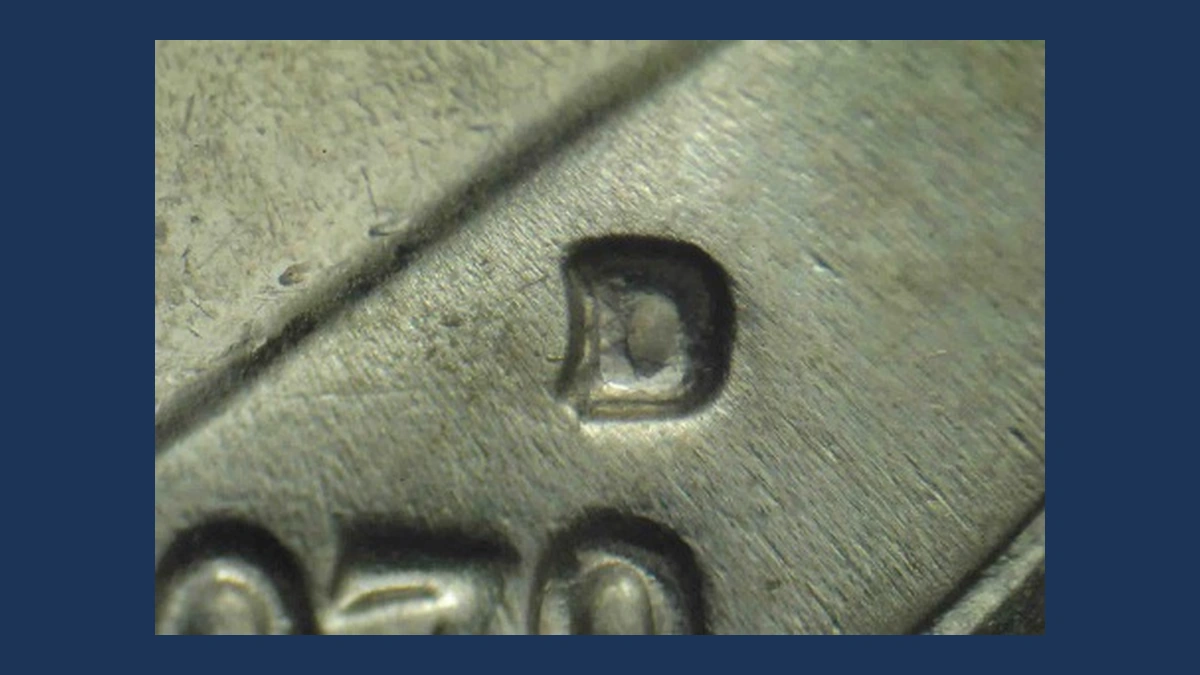
The D above the date can show part of a second D toward the left. This comes from punching the mint letter into the stamping tool more than once in slightly different positions.
The Wexler catalog records this Denver pattern as WRPM001. It also describes fine raised lines in the open area left of Roosevelt’s forehead.
On the back, a short line near the lower left of the first A in AMERICA supplies another comparison point. These small marks help match the tool but do not replace the doubled D itself.
Estimated Value
For a convincing match, allow an estimated $15–$175. Small extra portions of the D on a worn coin belong near the lower end.
An unworn example with a clear secondary outline can be more appealing. The supporting raised lines help a buyer compare it with the catalog photograph.
The estimate concerns this repeated mint letter, not a missing letter or general doubling elsewhere. Heavy scratches near the D can hide the useful detail and lower its value.
How to Identify
The second D should extend toward the left of the main mint letter above the date. Under a 10× magnifier, compare that outline with the catalog photograph before inspecting smaller supporting marks.
A loose dime can be weighed against 2.268 grams and measured against 17.91 mm with calipers. Its grooved edge and normal size identify the basic coin, not the repeated D.
Now move into the open area left of the forehead. Compare the thin raised lines there with the catalog, then check the short line near the first A in AMERICA on the back.
All those details should fit together. A matching line elsewhere does not compensate for a D whose secondary outline runs in the wrong direction.
4. 1979 Roosevelt Dime Letter Tips Repeated on the Rim
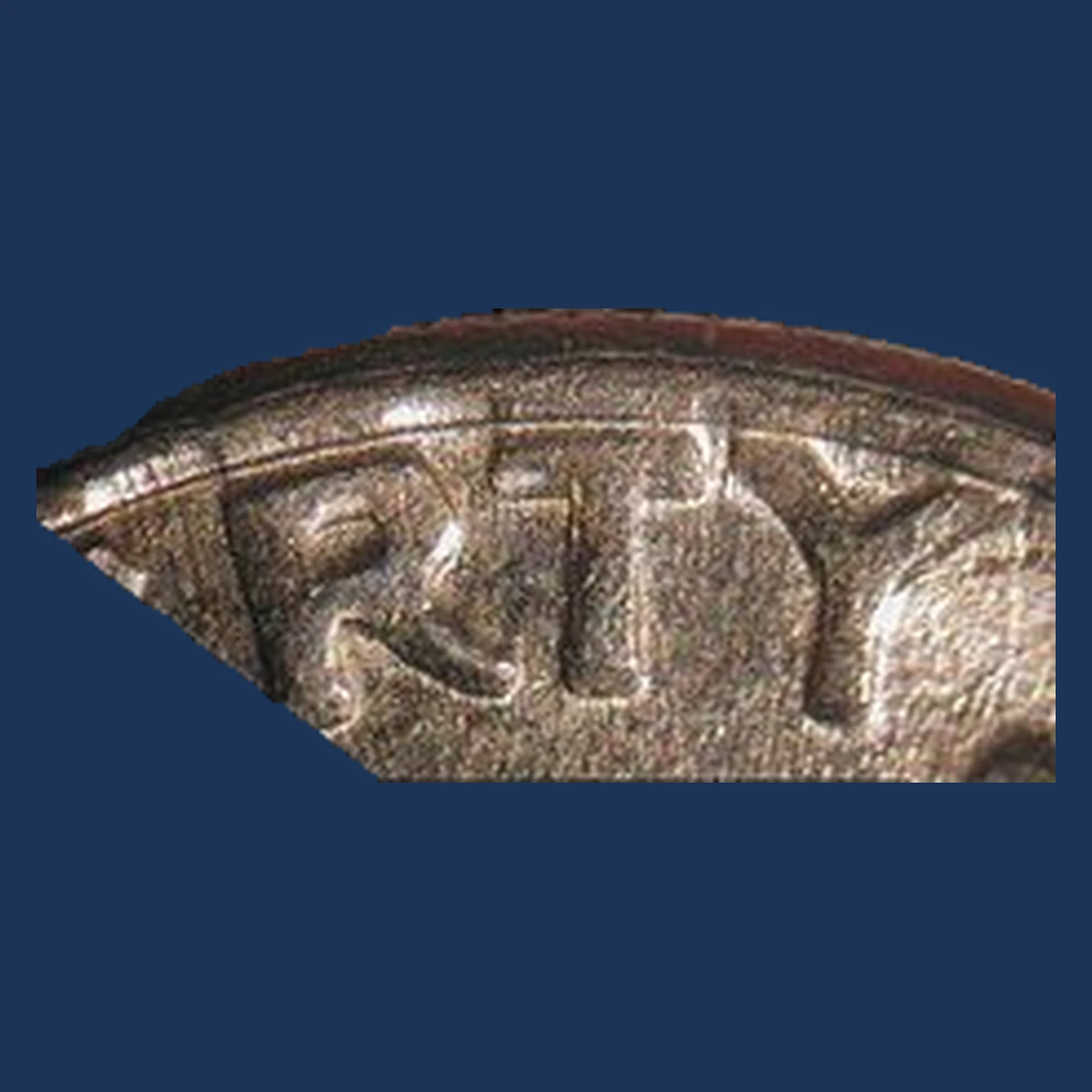
On this Denver dime, extra letter tips sit on the rim above the last four letters of LIBERTY. They are not a second complete word in the usual position.
The stamping tool bounced upward, shifted, and touched the rim again. This rare form of machine doubling is called rim-restricted design duplication.
Mike Diamond described the example after examining it under a microscope. The spaces between the extra letters were flattened too, and tiny surface lines had transferred onto the rim; these details distinguish the effect from ordinary wear of the tool.
Estimated Value
An estimated $30–$200 is appropriate for a clear, genuine example of this unusual rim doubling. A readable group of letter tips is more useful than one vague mark.
The value differs from an ordinary doubled-die premium because the extra contact happened during striking. Most routine mechanical doubling has little added value.
Here, the recognizable rim pattern and its matching surface details provide the interest. Heavy wear or rim damage can erase precisely the features that make it collectible.
How to Identify
Diamond’s examination links the extra ERTY tips with flattened spaces between them. Start with that whole rim section, using a 10× magnifier rather than judging a single isolated bump.
On a loose dime, a scale and calipers provide comparisons with 2.268 grams and 17.91 mm. Inspect the outer edge grooves for a later impact that could have disturbed the same area.
Follow the tiny surface lines from the open coin surface to their copies on the flattened rim. That transfer helps show that the tool contacted the border a second time.
Keep the lower shelf beside R and T separate from the upper tips. They are different visible effects, even though both came from movement during striking.
5. 1979 Roosevelt Dime Partial Collar and Back Struck Through
Two different marks appear on this no-mint-mark dime. Its edge shows where the blank sat only partly inside the collar, the ring that controls width and forms the edge grooves.
The unconfined part could spread farther, producing a step. Meanwhile, something between the back stamping tool and the blank blocked part of the design.
The NGC MS64 example combines both effects on one coin. The grade means an unworn coin with visible marks; the description does not identify the trapped material or place it at a particular clock position.
Estimated Value
This combined error sold for $32 in January 2015. That modest result is a useful reminder that two minting problems do not automatically produce a high price.
An estimated range of $30–$250 allows for clearer steps, larger blocked areas, and better surfaces. A readable date also helps buyers place the coin.
The edge step and back depression share one whole-coin value. Neither ordinary rim wear nor later scraping of the back earns the same mint-error premium.
How to Identify
Side photographs are the best starting point. Look for a step between a section constrained by the collar and a section that spread beyond it.
For a loose coin, calipers can compare the two widths with the usual 17.91 mm. A scale checks whether its weight remains close to 2.268 grams.
Inspect the transition between edge grooves and the smoother expanded portion with a 10× magnifier. A filed edge may show grooves cut away rather than two surfaces formed during the strike.
Now examine the back area where the design was blocked. Its surface should show a striking interruption rather than tool scratches; do not call the trapped object cloth or grease without a shape that supports that identification.
6. 1979 Roosevelt Dime Broadstrike
A broadstrike leaves extra spread-out metal around a coin’s design. The collar failed to contain the blank, allowing the metal to move farther outward during the blow.
The main design remains on the coin, unlike an off-center strike that loses part of it. Edge grooves may also be incomplete because the collar did not work normally.
Standalone broadstrikes are reported for 1979 dimes with no mint letter and with D. They should be judged separately from the specific Denver coin that combines broadstriking with several missing pieces of its blank.
Estimated Value
A standalone broadstrike is estimated at $30–$300. A slight spread on an ordinary worn dime usually fits near the lower end.
A wide, clean border around the complete design gives a buyer more to see. Good lettering and an undamaged edge can support a stronger price.
This range does not add the value of missing blank pieces. A broadstrike that also has clips must be priced as that actual combined coin, rather than by adding two separate estimates.
How to Identify
The first distinction is between extra width and missing design. Follow all the outer lettering around both faces; a broadstrike retains the design inside its spread-out border.
For a loose piece, compare width and weight with 17.91 mm and 2.268 grams using calipers and a scale. Extra width with roughly normal weight fits metal spreading outward, while lost weight raises questions about removed metal.
A 10× magnifier helps inspect the widened border, edge grooves, and lettering. Grinding can remove grooves; hammering can spread the coin but also flatten design that should have been freshly struck.
If the edge instead has a clear step between two widths, examine it for partial collar. The edge shape determines which striking problem deserves closer investigation.
7. 1979 Roosevelt Dime Missing Outer Layer
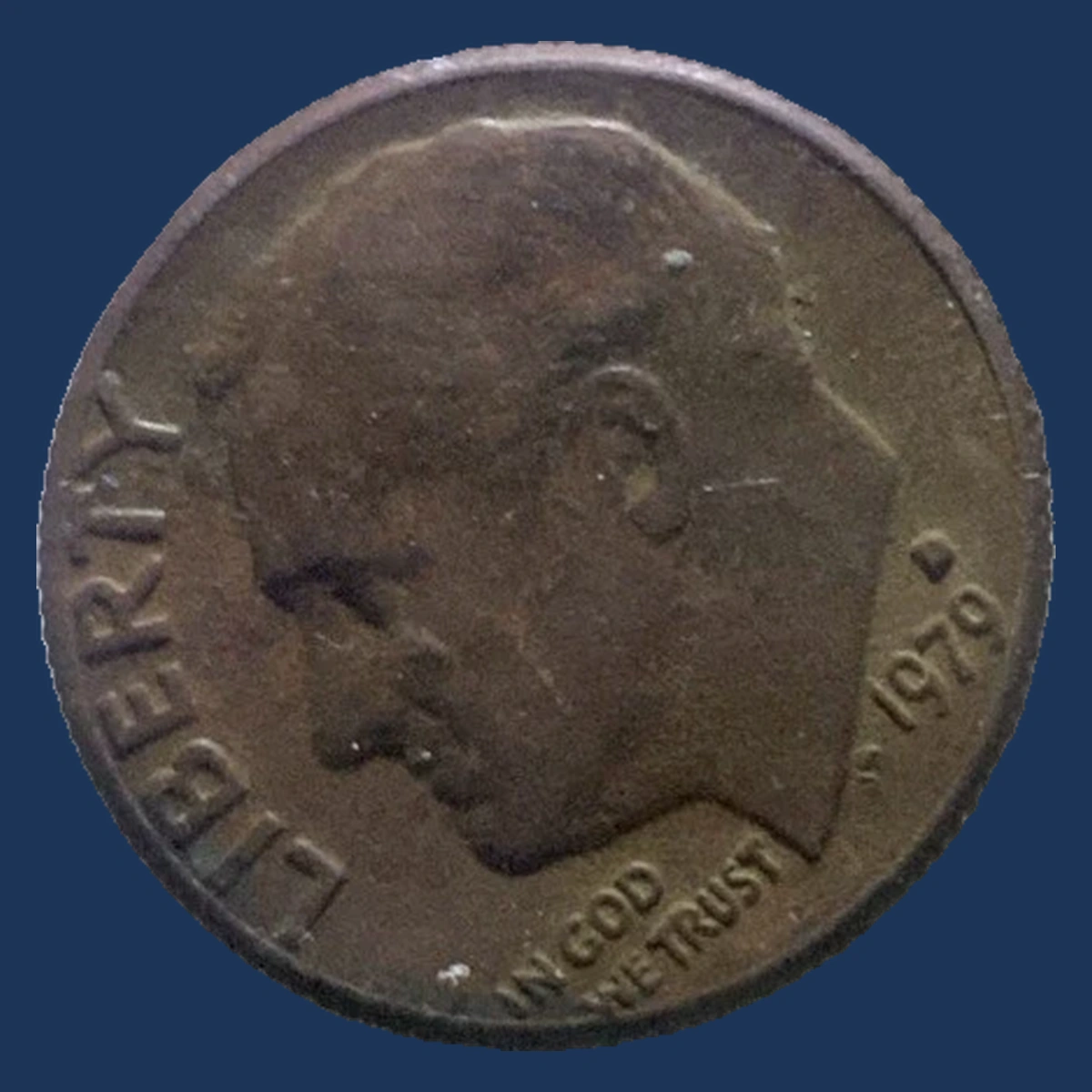
One face can look copper-colored because the normal silver-colored outer layer was absent when the coin was struck. The opposite face can keep its usual appearance.
A 1979-D example missing the front layer weighs 1.9 grams and was graded NGC MS65. A separate no-mint-mark coin missing the back layer weighs 1.88 grams and received ANACS MS63 Red and Brown.
Both grades describe unworn coins, while Red and Brown describes surface color. The two measured weights belong to their respective examples and should not be treated as one exact weight required for every missing-layer dime.
Estimated Value
The Denver front-layer example brought $79 in December 2012. Its surviving design and documented low weight make it a useful same-year comparison.
An estimated $50–$350 covers genuine single-layer losses with different levels of wear and surface quality. A clear copper face beside an intact silver-colored face is visually appealing.
Clean examples can command more than spotted or damaged pieces. A brown coating alone does not justify this range, even when its color resembles exposed copper.
How to Identify
Place photographs of both faces side by side. The Denver example exposes copper on the front; the no-mint-mark example exposes it on the back.
Their recorded weights provide useful checks: 1.9 grams and 1.88 grams respectively. A scale reading on a loose suspect should be assessed against the normal 2.268 grams.
Under a 10× magnifier, examine how the design sits on the exposed copper. Later scraping may leave tool marks instead of an intact struck surface.
Use calipers to compare width with 17.91 mm, and inspect the surviving layer where it meets the grooved edge. Look for chemical pitting or other signs of stripping.
Brown color without the lighter weight needs another explanation. Do not price staining or a coating as a missing layer.
8. 1979 Roosevelt Dime Off-Center Strikes
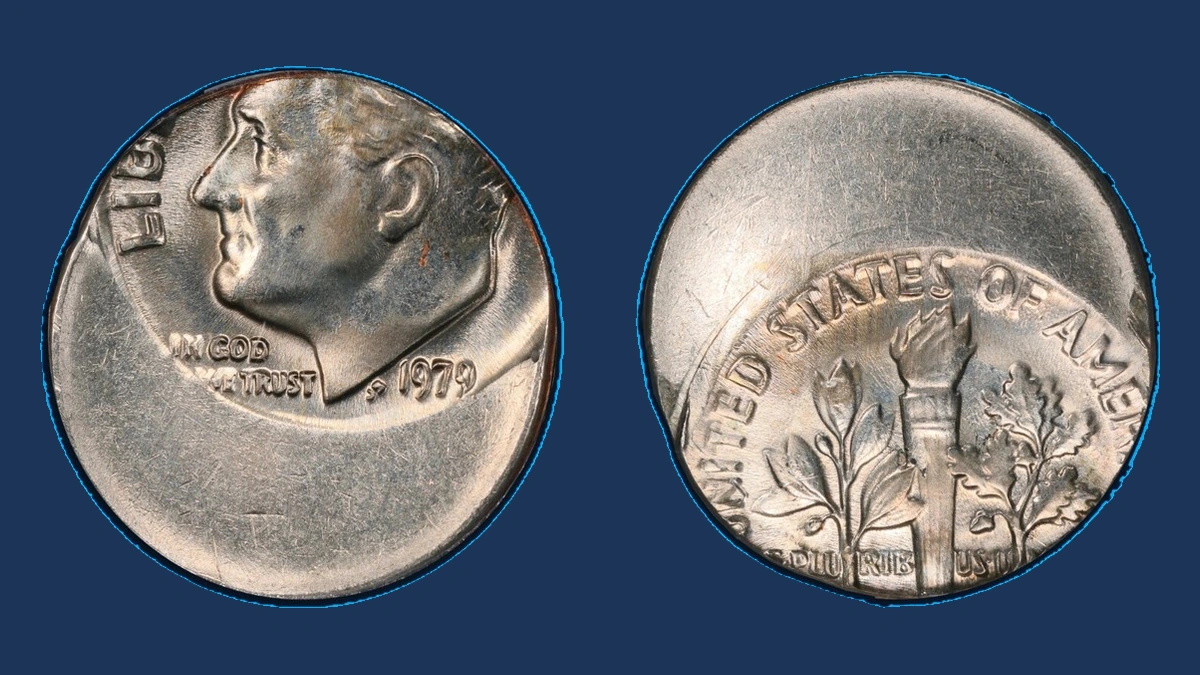
An untouched crescent next to a partial design shows where the stamping tools missed the blank. The coin entered the press away from its proper centered position.
One 1979-D example is 70% off center toward 9 o’clock. Its date remains complete, although the strike stretched and distorted the numbers.
No-mint-mark examples include a 70% displacement toward 1 o’clock and a separate 10% displacement toward 10 o’clock. The missing mint letter is normal on these 1979 circulation coins; it is not the later missing-P error associated with another year.
Estimated Value
The Denver 70% example sold for $92 in May 2005. A different no-mint-mark 70% example brought $312 in August 2021.
An estimated $30–$400 covers modest through dramatic 1979 off-center strikes. Those two sales show why the percentage does not determine a single fixed price.
A readable date, clean unstruck metal, and attractive remaining design all matter. Heavy scratches or a missing date can lower demand even when much of the blank escaped the tools.
How to Identify
A loose off-center dime should usually retain roughly 2.268 grams, despite its changed outline. Use a scale, then record its shape with calipers beside the normal 17.91 mm circular size.
Find the date under a 10× magnifier. On the Denver example, all four digits survived but were stretched by the strike; inspect them for any later cuts that could imitate a date.
Compare both faces and the edge grooves with the untouched crescent. The displaced striking areas should fit the same blank without requiring a section cut away afterward.
The remaining letter identifies which example to compare. Denver’s 70% piece points toward 9 o’clock, whereas the no-mint-mark 70% piece points toward 1 o’clock.
9. 1979 Roosevelt Dime Clipped Blanks and Combined Striking Errors
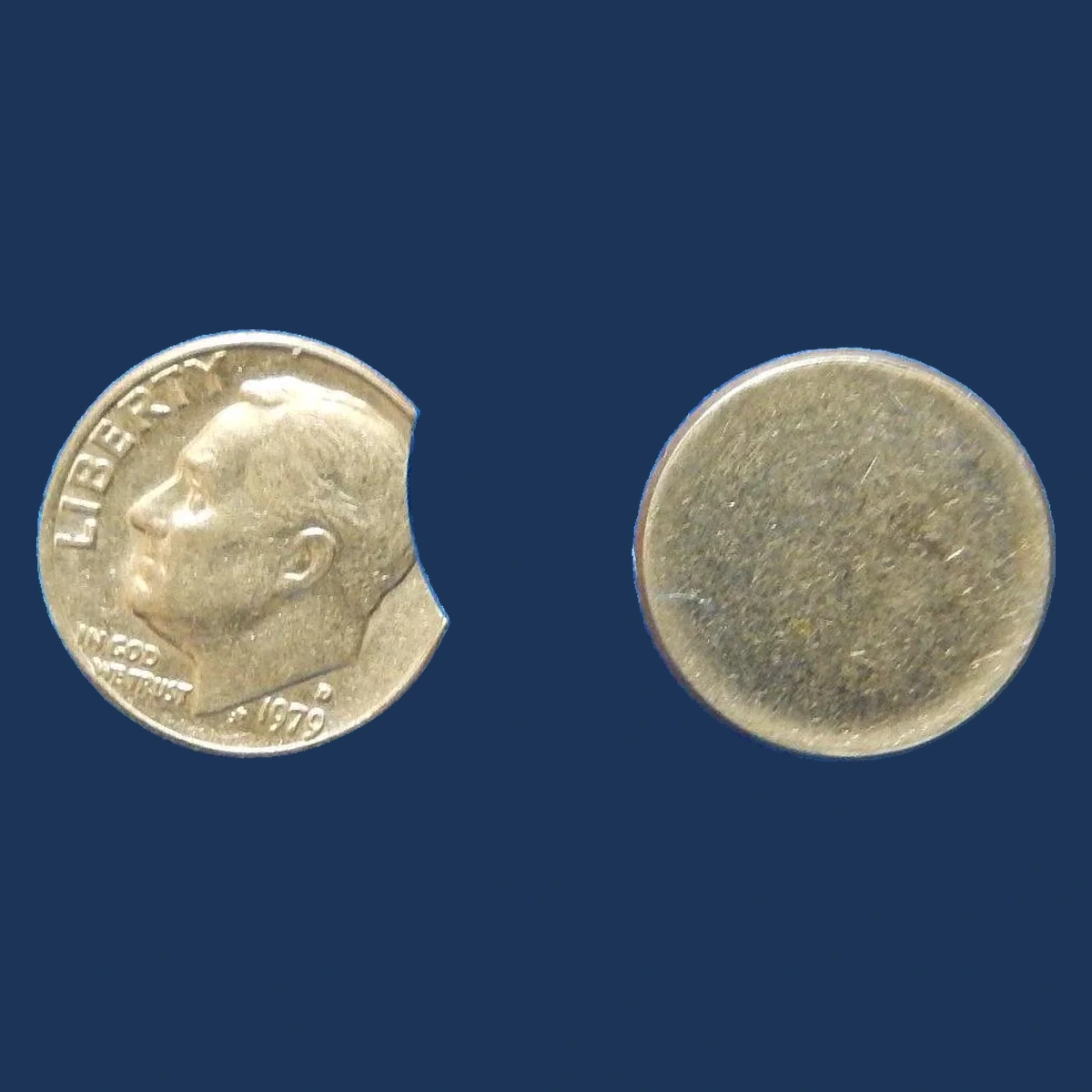
Missing pieces can range from a tiny rim gap to a large curved bite. They were absent from the blank before it received its design.
Denver examples include a 30% clip, a separately listed 50% curve, and a small rim clip. Another has a 5% curve at 2 o’clock plus a tiny gap at 7:30.
Some also suffered striking errors. One Denver dime is broadstruck with several clips, while a no-mint-mark example combines two curved clips with a 25% off-center strike; later corrosion on the broadstruck coin is separate damage.
Estimated Value
Minor clips are estimated at $15–$100, with larger or striking-error combinations around $100–$500. The Denver broadstrike with several clips sold for $312 in August 2021.
That coin had corrosion and damage, which limit its condition. A cleaner combined example can be more desirable, but the exact missing shapes still matter.
Each price covers the complete coin. Two gaps, or a clip beside an off-center strike, do not create separate amounts that should simply be added together.
How to Identify
A tiny rim clip needs careful handling and a clear close-up. Use a 10× magnifier to inspect both ends without picking at the metal.
Look for metal shaped toward the missing section during striking. Saw marks, fresh burrs, or grinding would suggest later removal.
For loose coins, check weight against the full dime’s 2.268 grams and measure intact spans with calipers. The normal width is 17.91 mm, but broadstruck or off-center combinations can have different outlines.
Examine each additional gap and the surviving edge grooves separately. One genuine clip does not authenticate every damaged area on the same coin.
On the 25% off-center example, distinguish the untouched crescent from the two curved gaps. Blank-looking metal remains present in the crescent; clipped portions are physically missing.
10. 1979 Roosevelt Dime Wrong Blank
A wrong-blank error would put the Roosevelt design on metal intended for another coin. Its weight, color, thickness, or size could then differ from an ordinary dime.
This category is listed for 1979, although the American example’s precise blank type needs identification. A smaller blank may lose outer lettering, while a thinner one may leave weaker detail.
The actual metal must fit the proposed blank as well. A missing outer layer or later grinding can make an ordinary dime lighter without turning it into a wrong-blank error.
Estimated Value
For an authenticated American example on a clearly identified different blank, allow an estimated $300–$2,000. The blank type would make a substantial difference within that range.
A recognizable foreign-coin blank can attract more interest than a small unexplained weight difference. The Roosevelt design and 1979 date also need to remain readable.
The estimate depends on identifying the actual blank and original struck surface. An unexplained low weight alone does not establish the metal or its value.
How to Identify
Read the 1979 date and inspect the Roosevelt and torch designs before taking measurements. Note whether the outer letters fit on the metal or run beyond its edge.
For a loose American piece, use a scale and calipers to record weight, diameter, and thickness. Compare with the normal clad dime’s 2.268 grams and 17.91 mm diameter.
Inspect the edge under a 10× magnifier for the copper core, outer layers, and grooves. A missing layer or later grinding can change weight without changing the original blank type.
A grading specialist should test any proposed alternative metal. The case becomes meaningful when the design and physical measurements fit a specific wrong blank, rather than only showing that the coin looks odd.
11. 1979 Roosevelt Dime Triple Strike with a Flip-Over
This Denver dime went through three strikes. The first put a design on both sides and left the 1979 date and D available for identification.
The second strike landed 70% off center, with only one face receiving a direct design. Before the third blow, the coin flipped over.
That final strike was 60% off center and again left one face blocked. Front and back designs now overlap, and part of the second date survives; the different percentages describe successive blows on the same coin, not two separate errors for sale.
Estimated Value
The PCGS MS64 example sold for $1,495 in September 2008. MS64 means it is unworn but has some visible marks.
An estimated $1,000–$2,500 suits a similarly clear, genuine combination. Three readable stages are more compelling than a confused overlap that hides the date.
The flip and blocked-face strikes form one sequence, so the price covers the whole coin. Later scratches or damage would reduce appeal even if every strike remained identifiable.
How to Identify
Three strikes need to be read as a sequence, not as three unrelated doubled letters. Photograph both faces before tracing the overlapping designs with a 10× magnifier.
For a loose coin, a scale compares the remaining metal with 2.268 grams. Calipers and edge photographs record the distorted outline against the normal 17.91 mm circle, without trying to straighten it.
Begin with the readable first 1979 and D, then locate the surviving part of the second date. That second strike is 70% off center, while the final flipped strike is 60%.
Finally, follow the blank-looking blocked areas into their respective strike borders. Each later blow directly stamped only one face, so the opposite-face overlap and those blocked areas must fit the same sequence.
Conclusion
For 1979 dimes, a small raised crack may be a $5 find, while a clear triple-strike combination reaches an estimated $2,500. Some of the most useful clues are tiny, including repeated letter tips on the rim.
Keep minting effects separate from scratches, stains, and normal missing mint letters. When a coin combines clips with another striking problem, judge the complete piece rather than adding several prices.