1963 Dime Error List with Pictures

The back of a 1963 dime can hold the valuable clue. An ordinary Philadelphia doubled-die reverse graded MS66 sold for $384 in February 2019.
Other 1963 dime errors have missing edge sections, cracks through the metal, or unusually thin blanks. Estimated values for the types below range from $15–$800.
Both ordinary dimes and specially prepared Proof collector coins contain ninety-percent silver. Read on to match the visible feature and finish before choosing a price comparison.
1. 1963 Roosevelt Dime Repunched D Mintmark
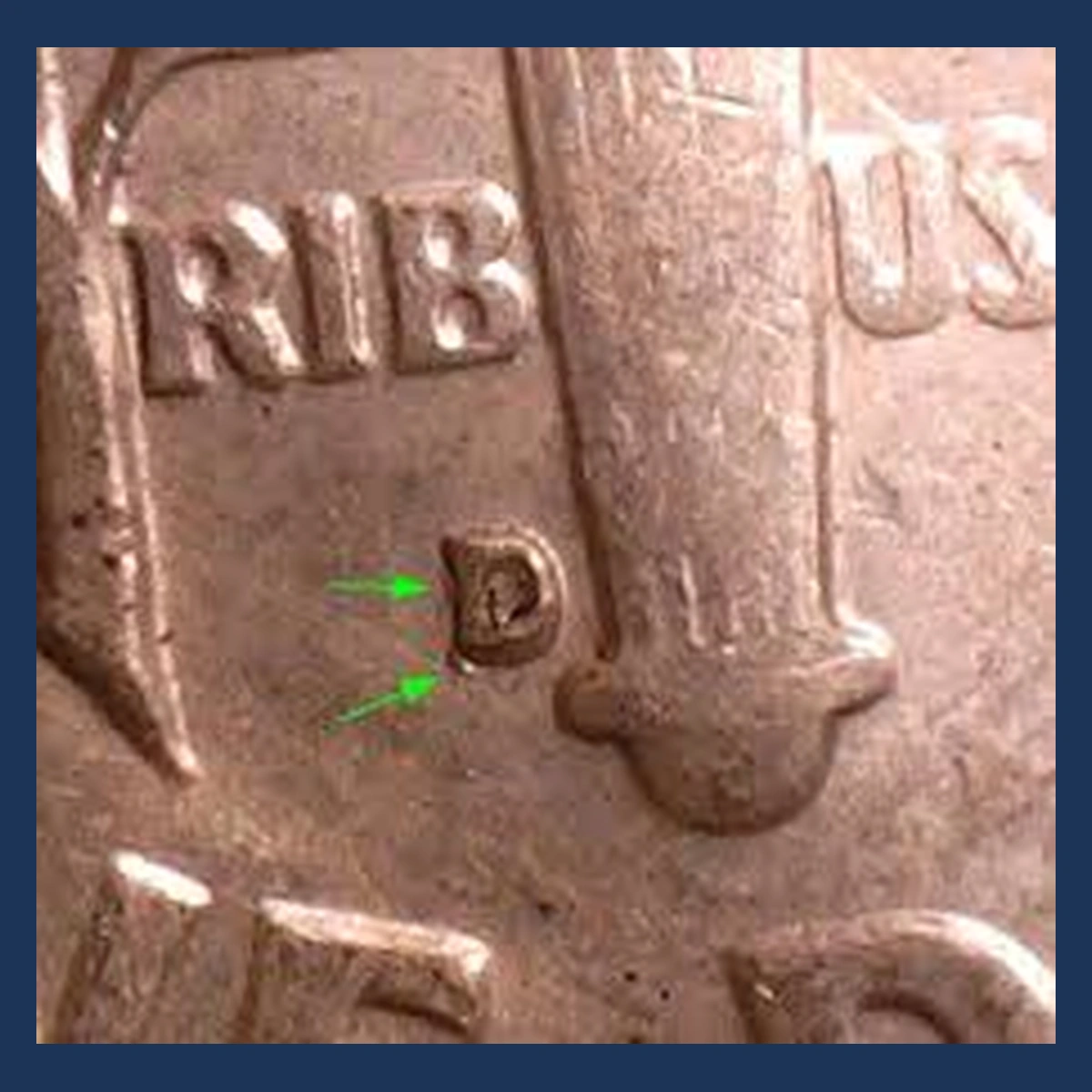
The small D on the back was punched into the stamping tool separately from the main design. If the punch moved between blows, pieces of the earlier D could remain visible.
Collectors call this a repunched mintmark. The 1963 Denver report describes a second D outline without establishing one direction for its position.
The extra shape should fit another copy of the letter, rather than simply make the mintmark look thick. A raised chip, a scratch, or flattened detail beside the D can create a similar first impression without involving a repeated letter punch.
Estimated Value
Estimate $15–$200 for a confirmed minor 1963-D repunched mintmark. A clearly recognizable earlier curve or upright is more useful than vague thickness around a worn letter.
The whole coin’s surfaces affect the comparison too. Marks can hide the small detail that identifies the variety.
Compare coins with the same original letter pattern and similar wear before using the range. A seller’s D/D wording alone does not show that the extra shapes match a genuine repunched letter.
How to Identify
Compare the shape of the whole D before examining a tiny extra mark. The mint letter is on the back, to the left of the torch’s base.
With a magnifier, follow the main curved side and upright, then trace any raised pieces outside them. The extra shapes should fit parts of another D instead of a random lump or a scratch.
Place an identified same-year Denver photograph beside the coin with both letters upright. Check the actual surviving strokes rather than rotating the reference to force a match.
Change the light to rule out glare and flat shelves beside the letter. An ordinary Philadelphia dime has no D, which is normal for that mint.
2. 1963 Roosevelt Dime Weak Strike
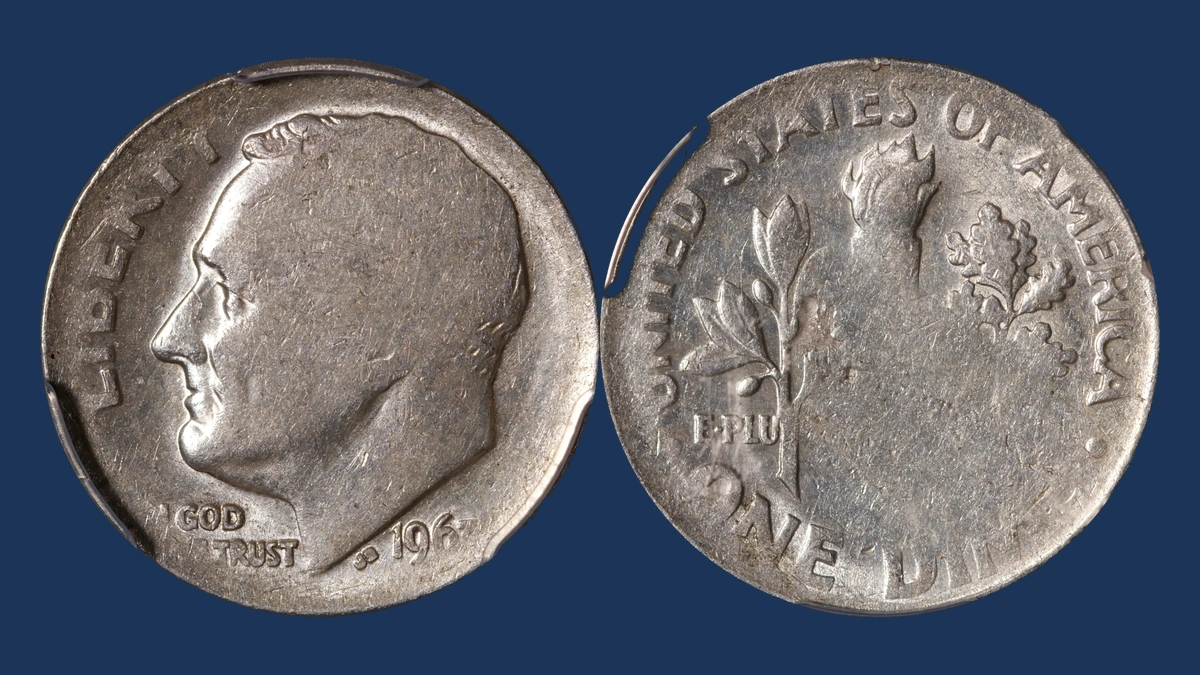
A dime can leave the press with a shallow design if the strike does not fill the stamping tools fully. Later circulation wear can make that original weakness harder to recognize.
A collector’s record identifies a 1963 Philadelphia weak strike graded PCGS AU58. AU58 indicates slight wear, so both the weak formation and later rubbing need to be considered.
The record does not establish a deliberate press experiment or adjustment test. Calling the coin a weak strike describes its visible feature without adding a manufacturing purpose that its shallow design alone cannot prove.
Estimated Value
An identified weak strike has an estimated whole-coin value of $20–$250. Widespread shallow formation can attract more interest than slight softness confined to an ordinary high point.
The AU58 example provides a condition reference, not a stated auction result. Light wear should be judged separately from the original weakness.
A preserved surface and clear date make the effect easier to explain. Chemical damage, rubbing, or later flattening does not qualify simply because the design has become faint.
How to Identify
Compare protected letter spaces with the highest parts of Roosevelt’s head. Wear tends to affect the exposed high points first, while a weak strike can leave protected details shallow too.
Examine the torch side to see how broadly the weakness extends. Do not decide from a single blurred portrait photograph.
Move the light across the background and inspect the texture. Rough chemical damage or lines from rubbing can explain a loss of finished detail.
Keep any slight circulation wear separate in your description of the AU58 example. Even if the original strike was light, the coin’s surface cannot establish by itself that Mint workers intentionally made a test piece.
3. 1963 Roosevelt Dime Curved, Straight, and Ragged Clips
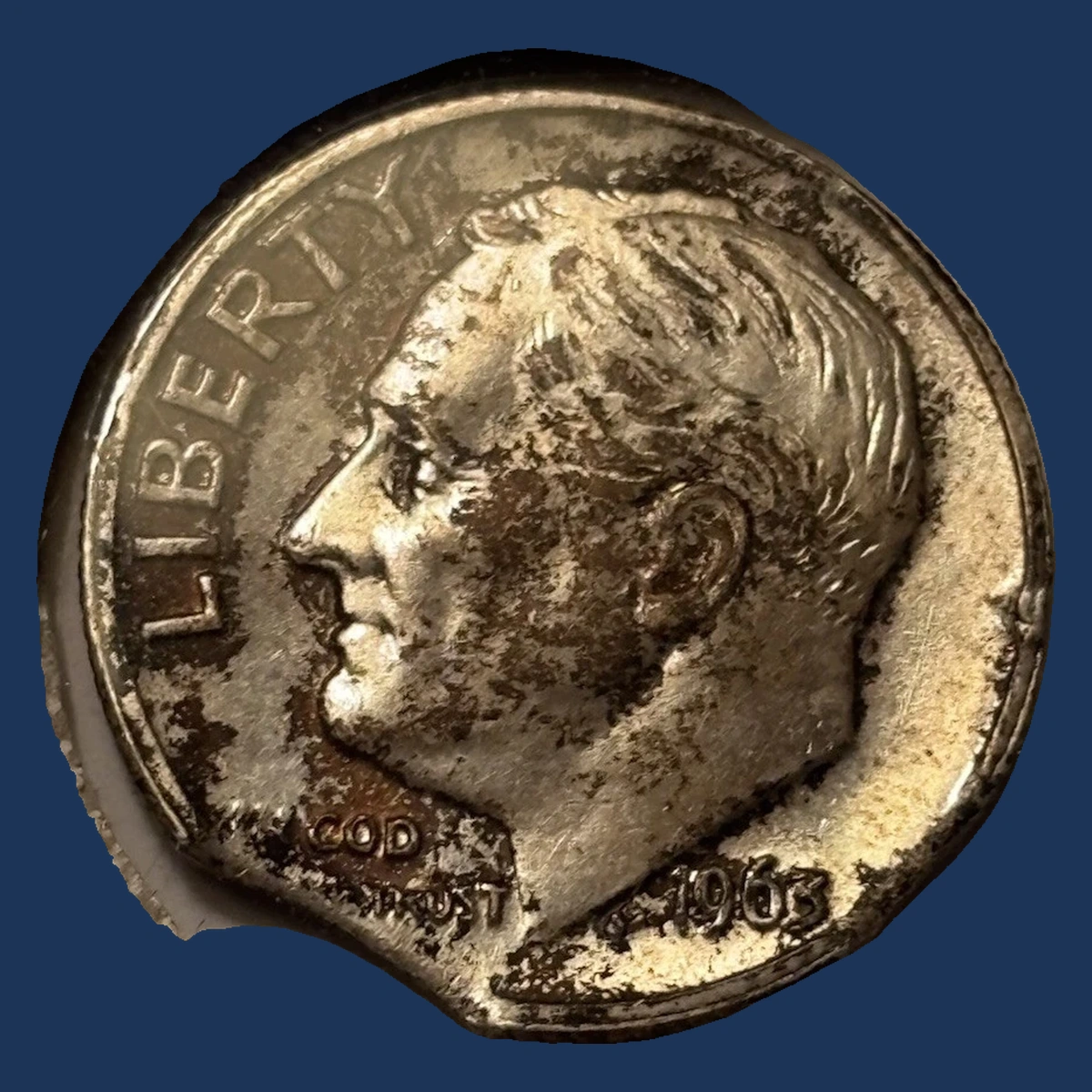
A blank is the metal disk prepared for striking. If part is already missing when it is cut from the strip, the coin’s design will meet an original gap.
Philadelphia examples include an NGC MS61 double curved clip and a 1.9-gram straight clip described as thirty percent missing. Two ragged-edge specimens weigh 2.28 grams and 2.13 grams.
A Denver curved clip is also reported, without a specified gap position. These examples belong to the same broad clipping category, but their weights and shapes remain separate; a curved notch should not replace a ragged boundary in the comparison.
Estimated Value
The 2.13-gram NGC MS65 ragged clip is recorded at $109 in July 2021. Estimate $20–$300 for identifiable clips across the reported shapes and conditions.
MS65 describes an unworn coin with relatively few marks. Large clear gaps can be appealing when the date and original boundaries survive.
The straight clip’s Full Bands designation concerns torch detail, not an additional error. Neither that label nor the largest missing section replaces a proper condition and authenticity comparison.
How to Identify
Choose the matching outline first: two curved gaps, one straight boundary, or an irregular ragged edge. Inspect all of the missing section rather than judging one end in isolation.
Follow the struck rim into each boundary and look for filing through completed letters. The gap should fit metal already absent when the coin was struck.
If present, a weak opposite rim can support a clip, but it is not required for every shape.
Keep measured weights attached to the correct specimens. The 1.9-gram straight clip is different from both ragged examples, and the Denver report supplies no matching weight.
A smaller mass confirms metal loss but cannot distinguish original clipping from later cutting.
4. 1963 Roosevelt Dime Reported Broadstrike
A broadstrike allows the blank to spread beyond its normal width. The collar, the ring that controls the edge during striking, did not contain the metal as intended.
The design remains complete even though the outline can become wider and uneven. That feature separates it from an off-center strike, where part of the image misses the blank.
The expanded border can vary around the coin, so a ruler reading is only part of the check. An uneven rim or a coin flattened after striking can resemble a broadstrike at first glance.
Estimated Value
For an authenticated simple 1963 broadstrike, estimate $30–$350. A visibly expanded outline with a complete date and original surface supports a stronger comparison than slight rim unevenness.
Original edge details and undamaged high points help show how the metal spread. Scratches and wear also affect how clearly the error can be seen.
Compare the outline with a genuine broadstrike of the same denomination. A dime widened by later pressure does not qualify because its diameter is larger than normal.
How to Identify
If the dime is loose, measure its width in several directions with calipers and compare it with the usual 17.9 millimeters. An uneven outline is possible, and extra width alone does not prove a broadstrike.
Follow the outer words and design on both faces to check whether the full image fits on the metal. Missing design at one edge beside a plain crescent suggests an off-center strike instead.
View the edge from the side, then check Roosevelt and the torch for crushed high points or hammer marks. Original detail within the wider border supports spread during striking, while damaged finished detail can reveal later flattening.
5. 1963 Roosevelt Dime Reported Reverse Strike Through Material
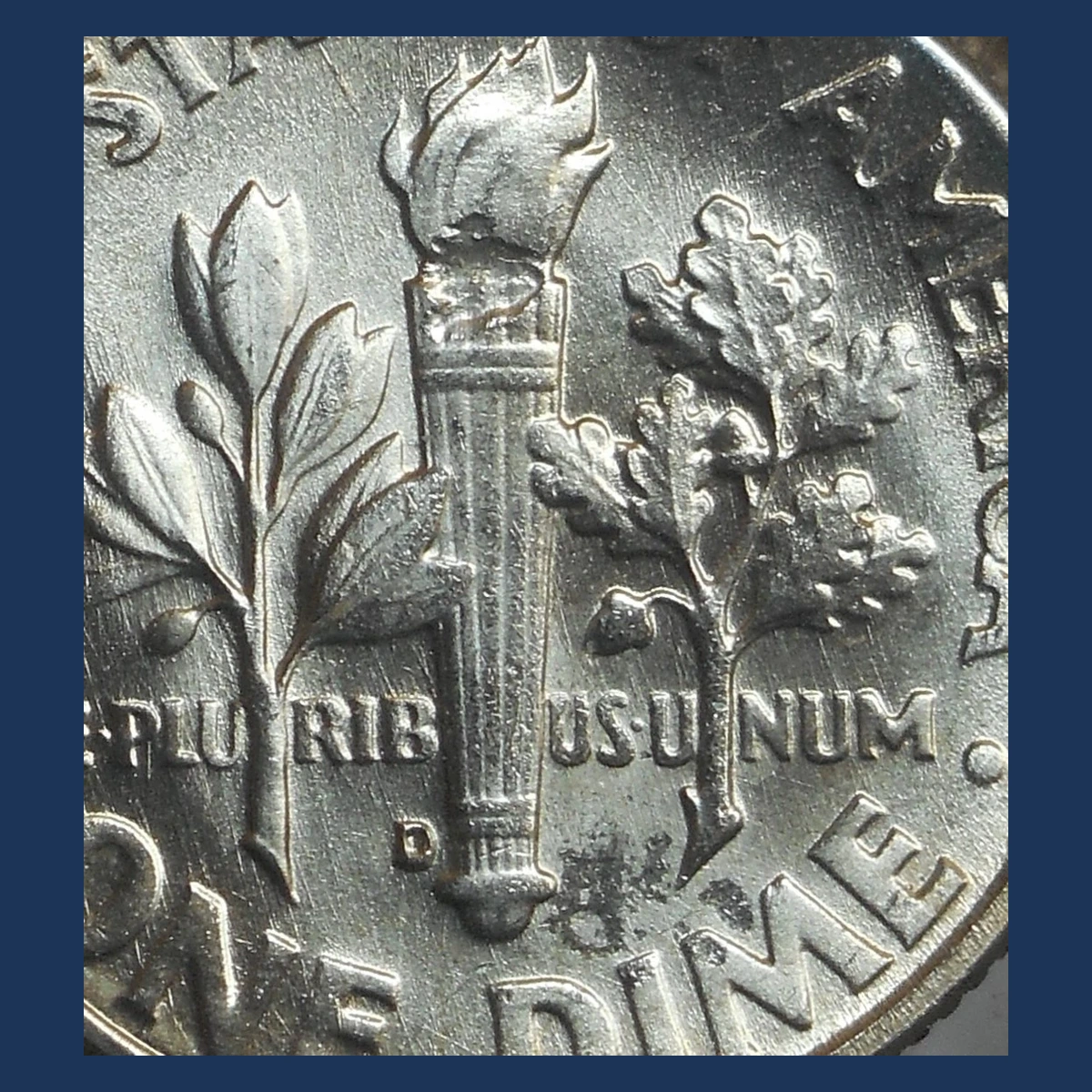
Material between the blank and the stamping tool can interrupt the back design. It may leave a depression or prevent lettering and torch details from forming normally.
This is called a struck-through error. The 1963 report concerns the back, but it does not establish the exact object, mint, or finish of the example.
A frosted design against a reflective background is called Cameo contrast on collector coins. That normal appearance is not evidence of trapped material, so an actual interrupted strike needs to be identified separately from the way the coin reflects light.
Estimated Value
Estimate $20–$400 for an authenticated reverse struck-through dime with a recognizable original impression. A small blocked patch belongs near the modest end; a clearer, larger interruption may attract more interest.
For a different-year and different-denomination comparison, a 1954-S quarter struck through string sold for $186 in July 2021. Its shaped impression does not establish what blocked a 1963 dime.
Normal Cameo contrast adds no struck-through identity. Value the actual defect only after separating it from reflections and surface damage.
How to Identify
Find a letter or part of the torch that changes where it meets the affected patch. Follow that boundary to see whether something prevented the design from forming there.
Tilt the back under a light and examine the surface itself. A frosted design against a mirrorlike background is normal Cameo contrast, not an obstruction imprint.
Look for cuts or rubbing through finished letters, and for pits that could come from corrosion. Those changes can happen after a coin leaves the Mint.
The shape may identify the object, but a shapeless weak patch cannot establish string or cloth. Check the actual mint and finish before comparing the candidate with another struck-through dime.
6. 1963 Roosevelt Dime Crack in the Coin Blank
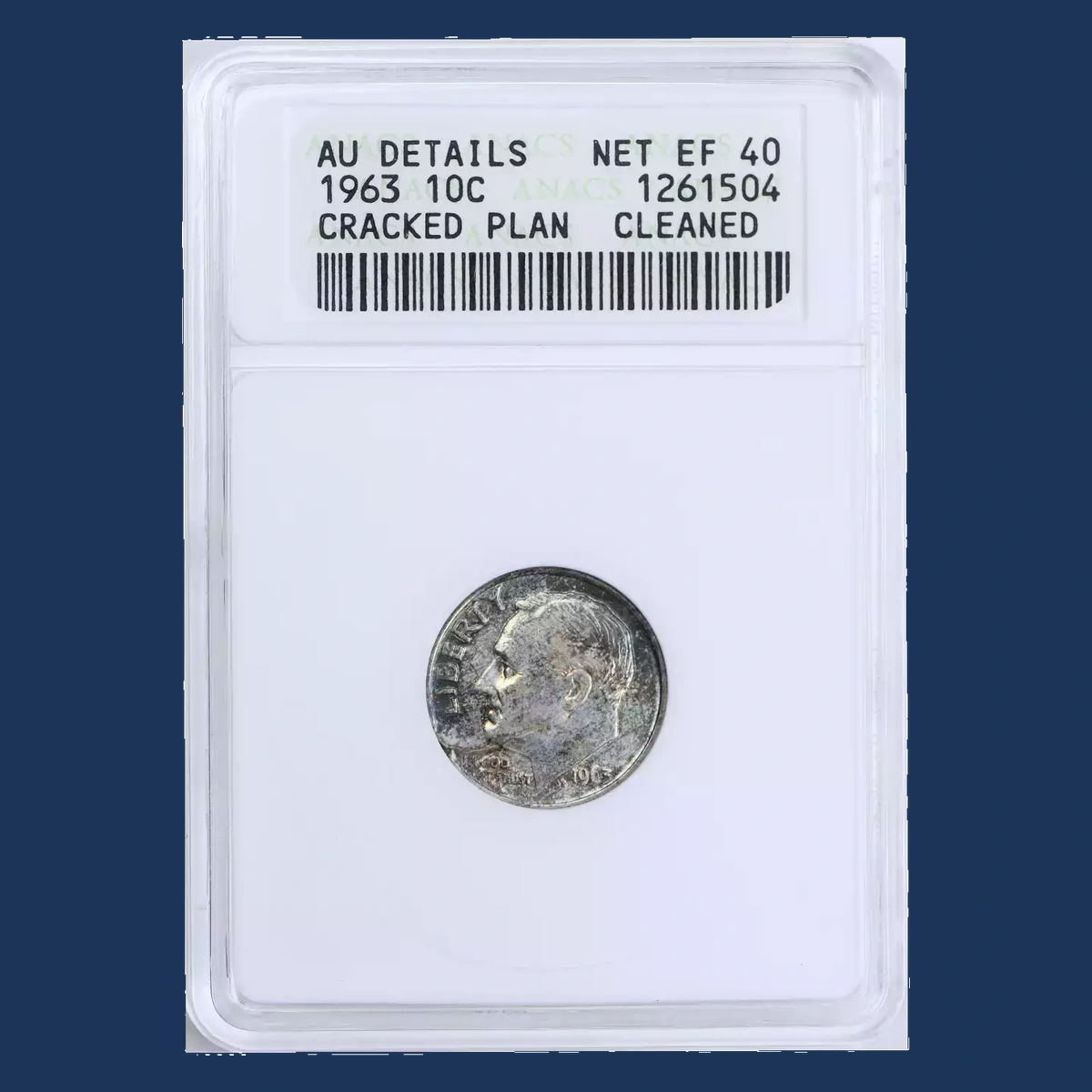
An opening in the actual metal enters the edge near nine-thirty on one recorded 1963 dime. This is a blank crack rather than a raised line on an otherwise solid surface.
NGC graded the Philadelphia example MS65 and recorded its weight as 2.4 grams. A normal silver dime has a nominal weight of 2.50 grams.
An edge view is needed to judge the opening’s depth. A shallow crack, a split through the whole coin, and a loose surface flake are different features, even when their outlines look similar from above.
Estimated Value
A genuine cracked-blank example has an estimated range of $40–$500. A clear original opening with readable surrounding design helps show the error.
For context, a different coin—a tapered and cracked 1946 quarter—sold for $45 in July 2021. That result concerns a larger silver denomination and is not a price for this 1963 dime.
The crack’s visibility, the remaining surface, and any later damage affect the comparison. A break forced into a finished coin needs a different diagnosis.
How to Identify
Examine the edge to see where the opening enters the coin. The recorded example places it near nine-thirty, so compare photographs in the same orientation before using that position.
Follow the opening inward without pushing anything into it. A raised line from a cracked stamping tool sits on the surface instead of opening the coin’s metal.
Check the surrounding struck detail for sharp cuts, crushed edges, or signs of an impact. These can suggest a break made after the coin was finished.
Do not bend the dime.
Its recorded weight is 2.4 grams, but that reading cannot tell you how deep the crack runs. A clear side view is needed to judge its depth.
7. 1963 Roosevelt Dime Denver Strike on a Split Blank
A weak layer inside a silver blank can separate and leave a much thinner piece of metal. The resulting coin may preserve a rough separation surface along with its dime design.
A 1963-D example is cataloged as struck on a split blank, graded NGC MS62, and weighing 1.4 grams. That is well below the normal silver dime’s 2.50 grams.
The thinness is one clue, but the surface where the metal separated matters too. Examine both faces before assigning the rough area to one side or deciding exactly how the split developed.
Estimated Value
The 1.4-gram NGC MS62 Denver dime sold for $99 on July 15, 2021. MS62 describes an unworn coin with noticeable marks.
Estimate $50–$600 for comparable authenticated split-blank examples. A readable date, Denver letter, and undisturbed separation surface make the unusual metal structure easier to explain.
The actual condition matters more than lightness alone. A dime thinned by acid or grinding may weigh less too, but those alterations do not create the same collectible blank defect.
How to Identify
Use a scale on a loose candidate to establish how much metal remains. The documented Denver coin weighs 1.4 grams, compared with 2.50 grams for a normal silver dime.
Inspect the edge thickness without squeezing or bending the coin. Then examine both faces to locate rough separation texture and see how it meets the remaining struck design.
Look for grinding lines or chemical pits that could explain artificial thinning. A low weight alone cannot separate an original split blank from a damaged finished dime.
Read the 1963 date and D beside the torch base to check the coin’s identity. Have the surfaces examined together before assigning the separation to a particular face or a more detailed sequence.
8. 1963 Roosevelt Dime Reported Off-Center Strike
An off-center dime combines missing design with metal that received no design at all. The blank was partly outside the tools when they came together.
This mechanism is reported for 1963 without one established mint or percentage defining the category. The date and the actual surviving mintmark area must identify each candidate.
A wider border around an otherwise complete image is not enough. A broadstrike can look uneven too, while a misaligned tool can shift only one face; an off-center blank should explain the incomplete designs on both sides of the same piece.
Estimated Value
Estimate $40–$700 for an authenticated 1963 off-center dime. A clear year and original surfaces can matter as much as the amount of displacement.
As a later clad-dime comparison, a 1967 example fifty percent off center sold for $93 in January 2022. That different-metal coin provides context, not a specific price or displacement for a 1963 silver dime.
Large errors without readable dates are harder to place in a year collection. Marks across the remaining design can also reduce appeal.
How to Identify
Begin with the date, rather than the size of the bare crescent. Read the surviving digits without supplying missing numbers from the general shape of the coin.
Compare where the design leaves the metal on both faces. The plain section should sit opposite the missing image and remain part of the original blank.
Include any surviving D in your photographs. If the mintmark area was never struck, its absence does not establish Philadelphia origin.
Inspect the bare silver for erased letters, grinding, or a seam. An off-center strike leaves original unstruck metal; a later alteration can imitate the outline while disturbing the surfaces that should remain intact.
9. 1963 Roosevelt Dime Defective Metal and Holed Blanks
An irregular blank can receive a dime design despite a flaw in its surface or a hole through its metal. The original defect then interrupts the finished design.
One Philadelphia example graded NGC MS63 weighs 2.2 grams. A separate holed-blank dime graded MS65 weighs 2.3 grams; neither measurement belongs to the general Denver defective-blank report.
The hole’s exact position and outline need the individual specimen’s photographs. These features must be separated from holes drilled later, corrosion, and gouges in a finished coin, rather than identified from low weight or roughness alone.
Estimated Value
For identified irregular surface defects, estimate $30–$300. A genuine originally holed blank can support an estimated $75–$750, giving the group an overall range of $30–$750.
The size of the flaw and its relationship to the original design affect collector interest. An attractive readable coin can explain the defect better than one covered in later damage.
These are estimates for confirmed original blank problems. A drilled hole or a corroded patch does not receive the same range.
How to Identify
For a surface defect, trace how nearby letters or portrait details meet the irregular area. They should explain metal that was already defective when the design was applied.
For the holed example, photograph both openings and the inside boundary. Drill tracks, a regular cutting lip, or pushed metal can reveal a hole added later.
Keep the two Philadelphia weights with their correct specimens: 2.2 grams for the surface-defect coin and 2.3 grams for the holed blank.
On a Denver candidate, examine its own irregular patch and record its weight if the coin is loose. The two Philadelphia measurements describe separate specimens and cannot identify the defect on a Denver dime.
10. 1963 Roosevelt Dime Doubled Designs on Ordinary and Proof Coins
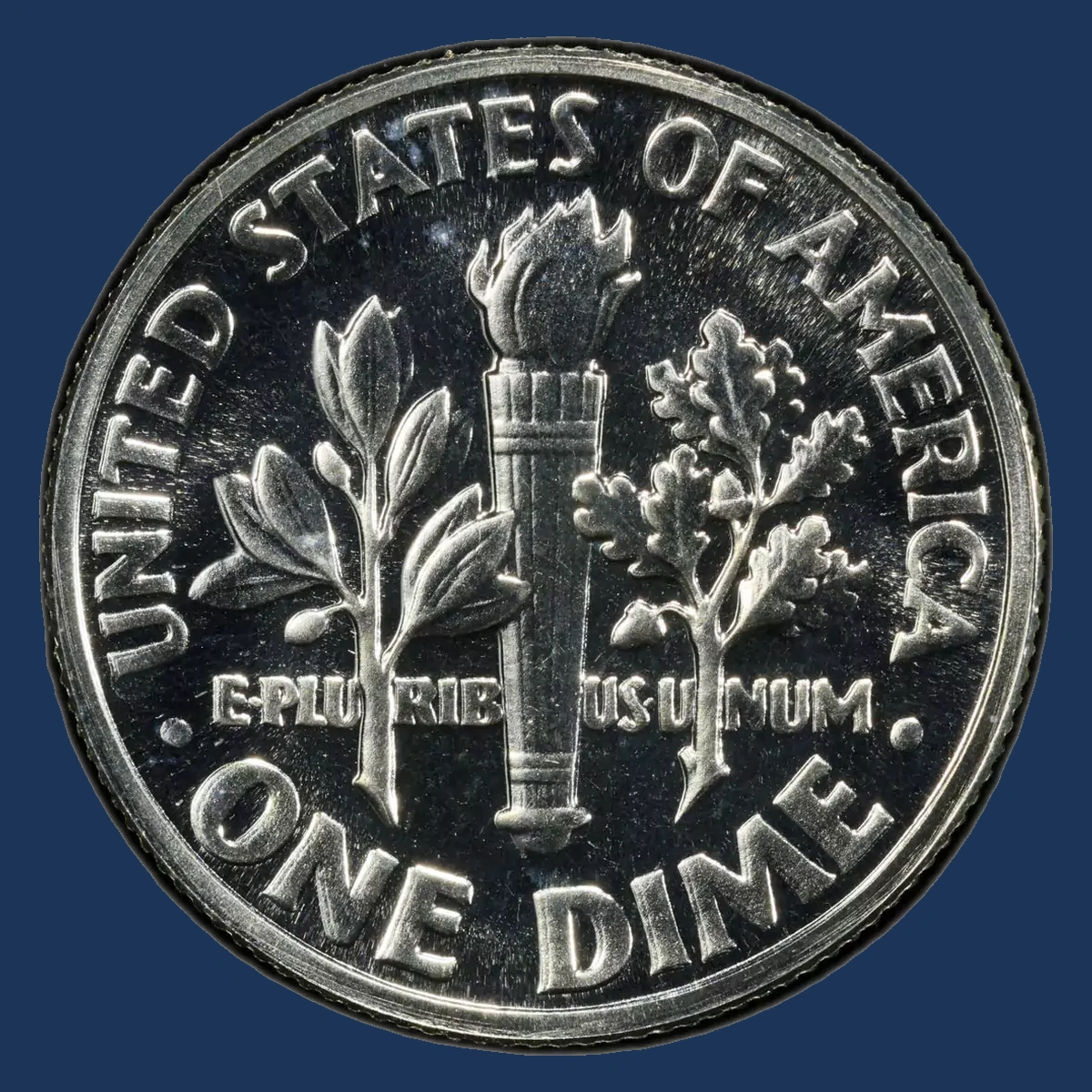
Extra outlines can be built into the stamping tool before it makes a coin. A doubled die passes those repeated shapes to the design during striking.
The 1963 Proof back variety affects ONE DIME, the motto, and torch details. Its older FS-017 number and newer FS-801 number name the same variety, not two separate errors.
Ordinary Philadelphia dimes have a different back variety, FS-805, and a front-doubling report involving the motto and LIBERTY. Proofs are specially prepared collector coins; their reflective finish does not make them interchangeable with ordinary circulation strikes.
Estimated Value
An ordinary FS-805 reverse graded PCGS MS66 sold for $384 in February 2019. Estimate $30–$500 for identified ordinary front or back doubled dies in differing conditions.
For the separate Proof FS-801 reverse, use an estimated $100–$800. The group range is $30–$800.
Preservation and a convincing pattern match matter. A Cameo label describes contrast between frosted design and reflective background; it does not establish doubling or another separate error premium.
How to Identify
Select a reference for the correct finish: ordinary circulation coins and Proofs have different doubled-design patterns. For the Proof back, compare ONE DIME, the motto, and torch outlines with an identified FS-801 example.
The older FS-017 name refers to that same Proof variety, while FS-805 identifies a different ordinary back pattern. For FS-805, compare its own photographs of the country lettering and nearby details rather than borrowing the Proof’s shapes.
The ordinary front report directs attention to IN GOD WE TRUST and LIBERTY instead. Tilt each area under light to distinguish fixed raised extra outlines from moving glare or a low flat shelf beside a letter.
Conclusion
The estimated $15–$800 range covers small mint-letter varieties, doubled designs, and visible blank defects. The correct mint, finish, and physical feature give each price comparison its meaning.
Start with the clearest clue: a repeated letter, an original edge gap, or an opening in the metal. Keep each specimen’s weight with its own photograph, and leave the surfaces untouched while making the comparison.