1921 Dime Error List with Pictures

A 15% off-center dime cataloged as “(1921)” sold for $1,500 in June 2018. The parentheses preserve the auction’s year identification without claiming every date digit is visible.
This guide to 1921 dime errors covers estimated whole-coin values of $60–$6,000. Raised lines, transferred designs, peeling metal, and repeated mint letters each need a different check.
Start with the visible shape, then compare the mint and condition before using a price from another coin.
1. 1921 Mercury Dime Die Clash (Estimated Up to $2,000)
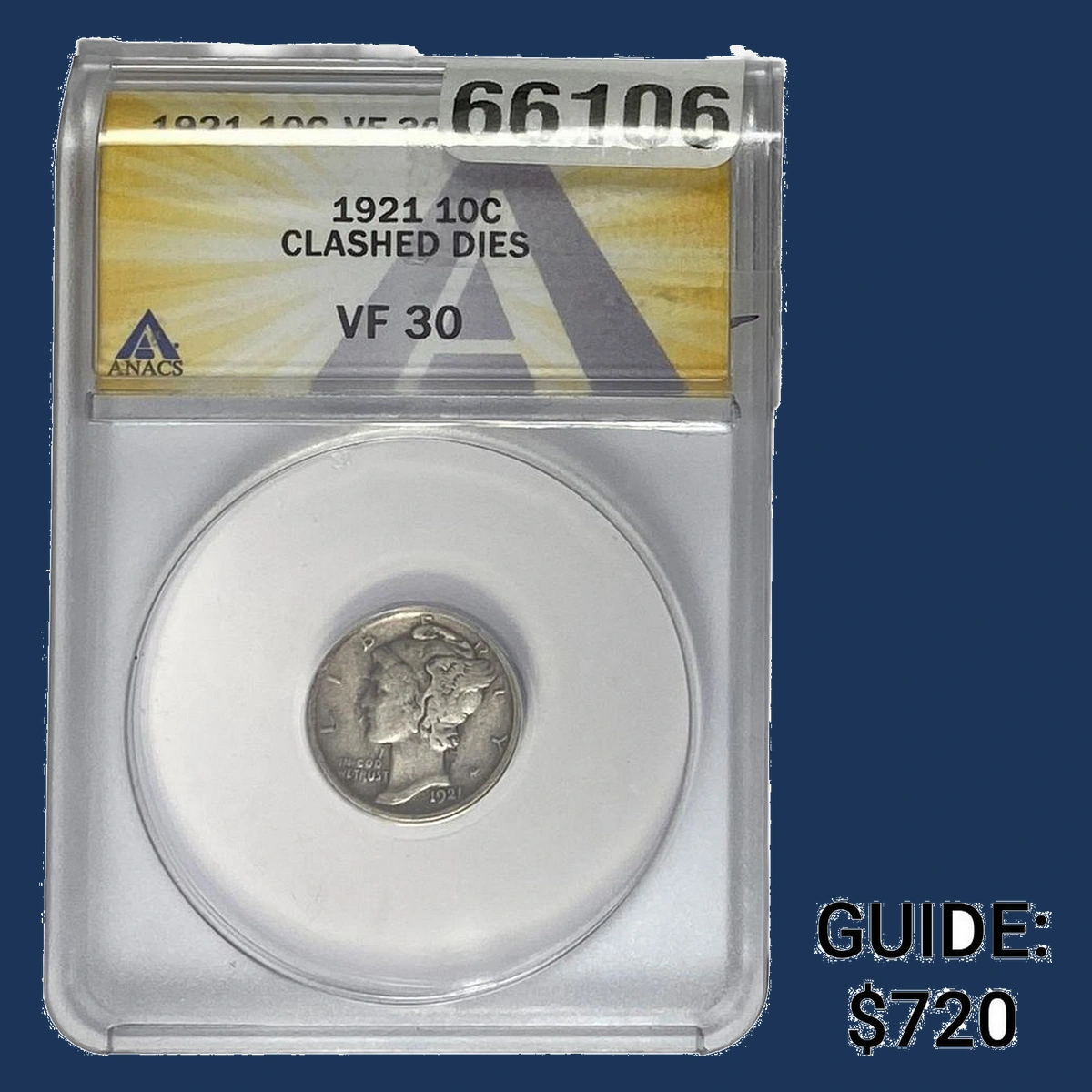
An unexpected curve near Liberty’s neck may resemble part of the design on the back. It can come from a die clash, when the steel stamping tools hit each other without a blank between them.
Each tool can pick up traces of the opposite design. Later coins then receive those extra shapes.
Collectors identified clash marks on a Philadelphia 1921 example. Other discussions considered neck-area marks on both Philadelphia and Denver coins.
The position alone does not make a line a crack. Compare its shape with the opposite design before deciding how it formed.
Estimated Value
The estimated whole-coin range is $60–$2,000 for worn through lightly worn examples. This scarce year’s ordinary coin value accounts for much of the amount.
A normal 1921-D graded PCGS AU50 sold for $1,020 in March 2025. AU50 means light wear.
That sale was not a clash example. A clearly visible transferred shape can interest specialists, but a faint line does not automatically double the price of an otherwise similar coin.
How to Identify
Use a photograph of the back as a guide to the extra front-side marks. Use a confirmed clash photograph to position the picture, then compare the bundle or branch shapes with the curves near Liberty.
A 10× magnifier helps separate a recognizable design fragment from a random line. Move the lamp to reveal faint contours without mistaking a scratch for another picture.
Check both faces together rather than relying on the neck location alone. An unrelated raised crack can pass through the same general area.
When safely accessible, use calipers and a scale against 17.90 mm and 2.50 g. Inspect the edge grooves for alteration.
The useful match is a trace of the opposite design in the correct position, not simply a line beside the portrait.
2. 1921 Mercury Dime Die Cracks (Estimated Up to $2,200)
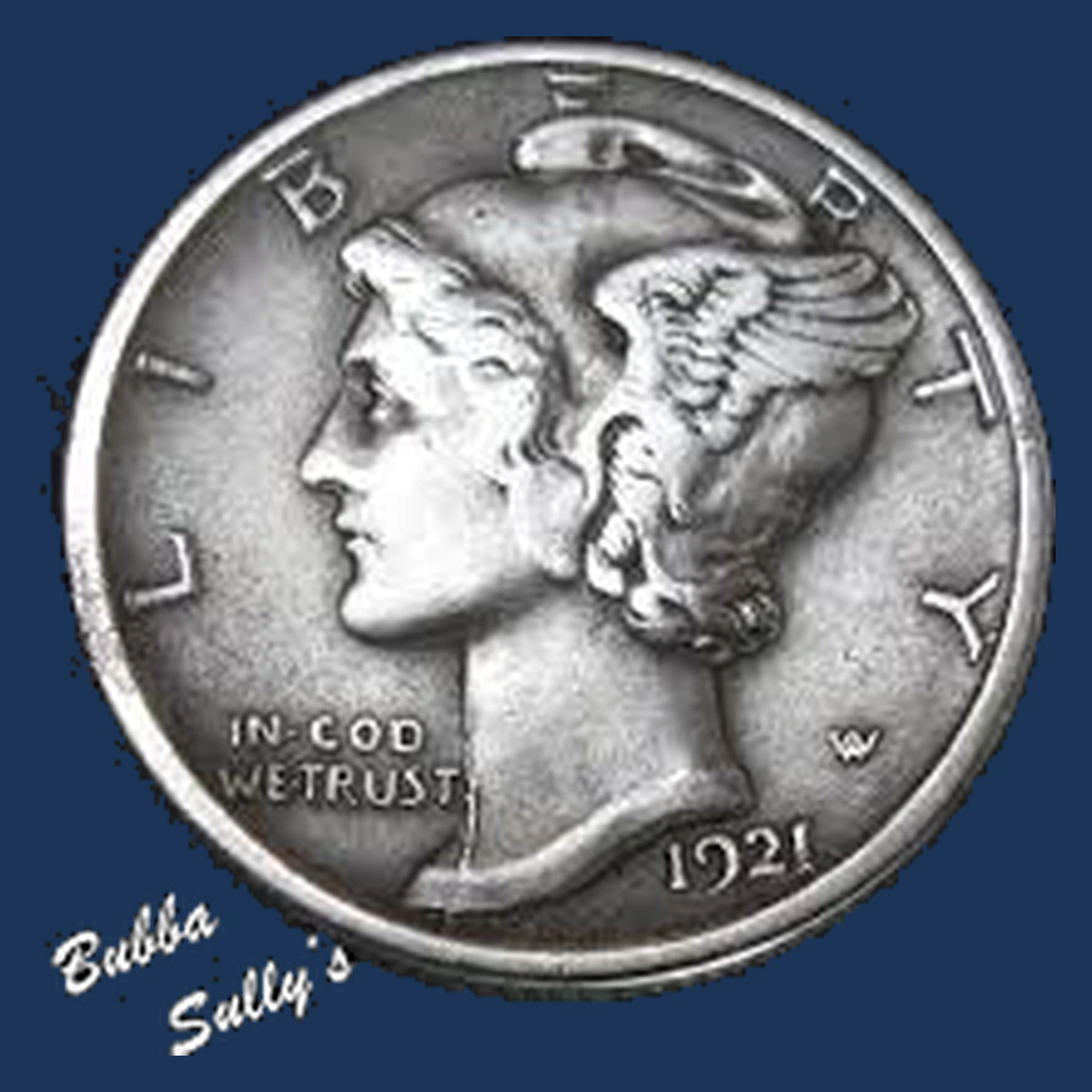
A crack forms an irregular raised ridge that need not resemble the opposite design. Metal entered a fracture in the stamping tool and copied it onto the coin.
The line can cross lettering, portrait detail, or the open surface. That differs from a transferred picture fragment left by a clash.
Denver is specifically included in 1921 crack reports, with Philadelphia also mentioned. Neither report makes every neck-area line a confirmed crack.
Those neck marks have also been discussed as possible clashes. Each coin needs a continuous raised route of its own, rather than a label based only on location.
Estimated Value
The estimated whole-coin range is $70–$2,200, from heavily worn coins through lightly worn examples with visible cracks. Small lines generally add only modest interest.
The ordinary Denver AU50 sold for $1,020 in March 2025 provides a condition comparison. It prices the complete scarce-date coin, not an error.
A bold raised break can attract more attention when the surrounding surface is original. Cleaning, heavy wear, or damage still affect the value even when a crack remains visible.
How to Identify
Begin with a scale and calipers if the coin is safely accessible. Compare with the original 2.50 g and 17.90 mm, allowing for wear.
Inspect the edge grooves for filing or a seam. Then follow the suspected line with a 10× magnifier.
Tilt the light to check that the ridge rises above the surface. A scratch cuts inward, even if metal pushed along its sides creates a bright edge.
If the shape resembles the back’s branch or bundle, test it as a possible clash too. The whole route matters more than one bright spot.
The useful distinction is an irregular raised fracture versus a recognizable fragment borrowed from the opposite design; either can occur near the neck.
3. 1921-D Mercury Dime Lamination and Split Planchet (Estimated Up to $2,500)
The Denver VG8 has peeling metal on the back. VG8 is a worn grade, and the local peeling is called lamination.
A separate report describes an AU50 Details coin with a broader split through the blank. That coin had also been cleaned.
A thin flap can stay attached to an otherwise normal coin. A larger split can separate a sheet of metal from much of the body.
Both concern weakness inside the alloy, but they are not the same specimen. Mercury dimes contain silver mixed with copper throughout, rather than a modern copper center with separate outer layers.
Estimated Value
The estimated range is $80–$2,500 across worn laminations and more extensive splits. The NGC VG8 back-lamination coin sold for $74 in February 2013.
That older result belongs to a modest flaw on a worn coin. It is not the price of the separately reported AU50 Details split.
Details flags a condition problem; the latter coin was cleaned. Cleaning can reduce the scarce date’s value even when its metal separation remains collectible.
How to Identify
Inspect the peeling area with a 10× magnifier without lifting any flap. Look for a natural boundary within the metal, rather than a smooth scoop cut out later.
For the larger split, compare both faces and the edge thickness. A broad separation surface is different from one small missing patch.
The surviving design and texture can help show when separation occurred. Do not assume it happened before or after striking from the name alone.
Use a scale when safely accessible to compare with 2.50 g. Calipers can check the outline against 17.90 mm and reveal unusual thinness.
Follow the remaining edge grooves into the defect. A continuous layered separation linking the surface to the interior is the strongest visible feature.
4. 1921-D Mercury Dime Repunched Mintmark (Estimated Up to $3,500)
Part of an earlier D shows above and to the left of the final D. Wexler describes this as D over D to the northwest.
The mint letter entered the stamping tool more than once. Pieces of the earlier position survived and appeared on later coins.
The feature is on the small letter on the back, not in Liberty’s portrait or the date. Its own shape is the main comparison.
No significant extra tool marks are listed with this variety. An unrelated scratch or crack elsewhere cannot replace a weak match to the second D.
Estimated Value
The estimated whole-coin range is $100–$3,500, from worn coins with clear remnants through lower unworn grades. The scarce Denver date accounts for much of that value.
The ordinary PCGS AU50 sale at $1,020 in 2025 offers a condition comparison. It is not a price for the repeated mint letter.
A clear matching extra D can add collector interest. Wear may hide it, while cleaning can lower value even when the extra stroke remains easy to see.
How to Identify
Locate the D beside the lower part of the bundle on the back. Compare its full outline with Wexler’s enlarged pictures using a 10× magnifier.
Look above and to the left for the earlier impression. A flat shelf around an edge can come from movement during striking instead.
Inspect the letter’s base for disturbed metal or a seam from an added mint letter. Unrelated scratches elsewhere do not strengthen the identification.
Check an accessible coin with calipers and a scale against 17.90 mm and 2.50 g, then inspect the edge grooves. Return to the D: the extra rounded stroke in the matching upper-left position is the feature that must agree.
5. 1921 Mercury Dime Off-Center Strike (Estimated Up to $6,000)
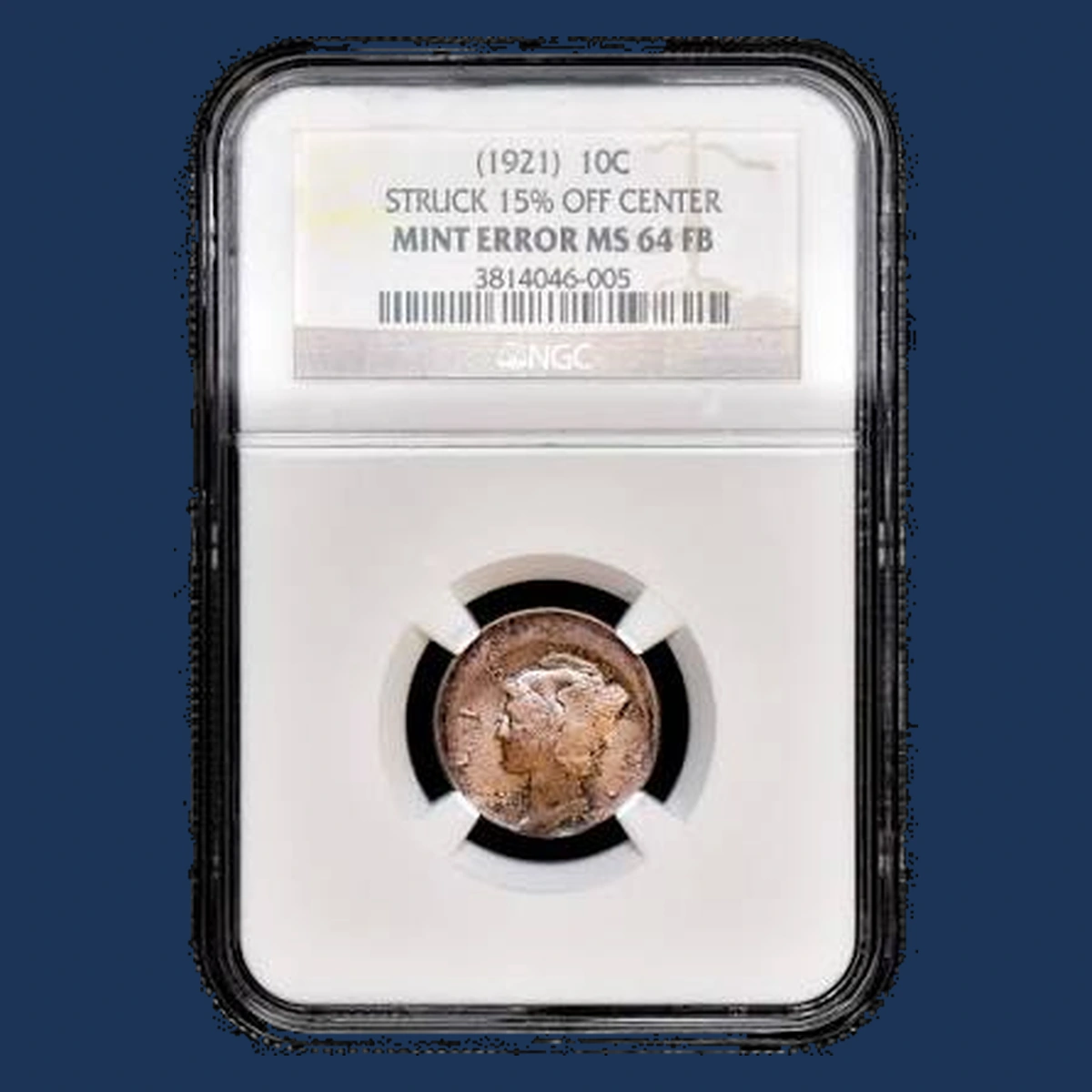
The auction called this coin “(1921),” keeping the year in parentheses. It was struck 15% off center and graded NGC MS64 Full Bands.
MS64 means unworn with some marks. Full Bands describes separated horizontal bands on the bundle shown on the back.
The misplaced blank left some metal outside the striking area, producing a blank crescent beside the shifted design. The parentheses do not mean that all four date digits remain visible.
The year report identifies Philadelphia and separately mentions Denver off-center coins. The auction coin’s percentage and grade do not automatically apply to those other examples.
Estimated Value
The estimated whole-coin range is $300–$6,000, from worn modest offsets to attractive unworn examples assigned to this scarce year. Heritage recorded $1,500 in June 2018 for the 15% NGC MS64 Full Bands coin cataloged as “(1921).”
That is one historical result, not a universal price for fully dated 1921 errors. The surviving date detail, mint identification, surface condition, and amount of displacement all matter.
Keep the auction’s parenthesized year attached to the comparison.
How to Identify
Record exactly which date digits survive before naming the year. A visible 19 or 192 cannot establish the missing final digit by itself.
A partially missing date needs a sound comparison with an identified example. Keep that limitation visible in photographs and descriptions.
Compare the struck and blank areas on both sides with a 10× magnifier. Check their boundary for grinding or other later alteration.
Use calipers and a scale when safely accessible against 17.90 mm and 2.50 g, allowing for wear or a changed outline. Inspect where edge grooves give way to unstruck metal.
A matching displacement on both faces supports an off-center strike. The surviving date evidence, considered separately, determines whether the 1921 identification also fits.
Conclusion
Estimated whole-coin values for these 1921 features range from $60 to $6,000. A transferred curve, an irregular raised crack, and a peeling layer each reveal a different process.
For Denver’s repeated mint letter, match the extra D above and to the left. For an off-center dime, check exactly how much of the date survives.
The scarce year and the coin’s condition remain important parts of the price, even when a clear error is present.