1912 Dime Error List with Pictures

An off-center 1912-S dime sold for $373.75 in September 2005, despite a label that incorrectly named Philadelphia. The small S on the back revealed its true mint.
That coin offers a useful lesson for anyone checking 1912 dime errors: look at both sides. Estimated values across the seven types below run from $20–$2,000.
Read on to see where extra details, missing metal, and misplaced designs can appear.
1. 1912 Barber Dime Repunched Mintmark (Estimated Up to $300)
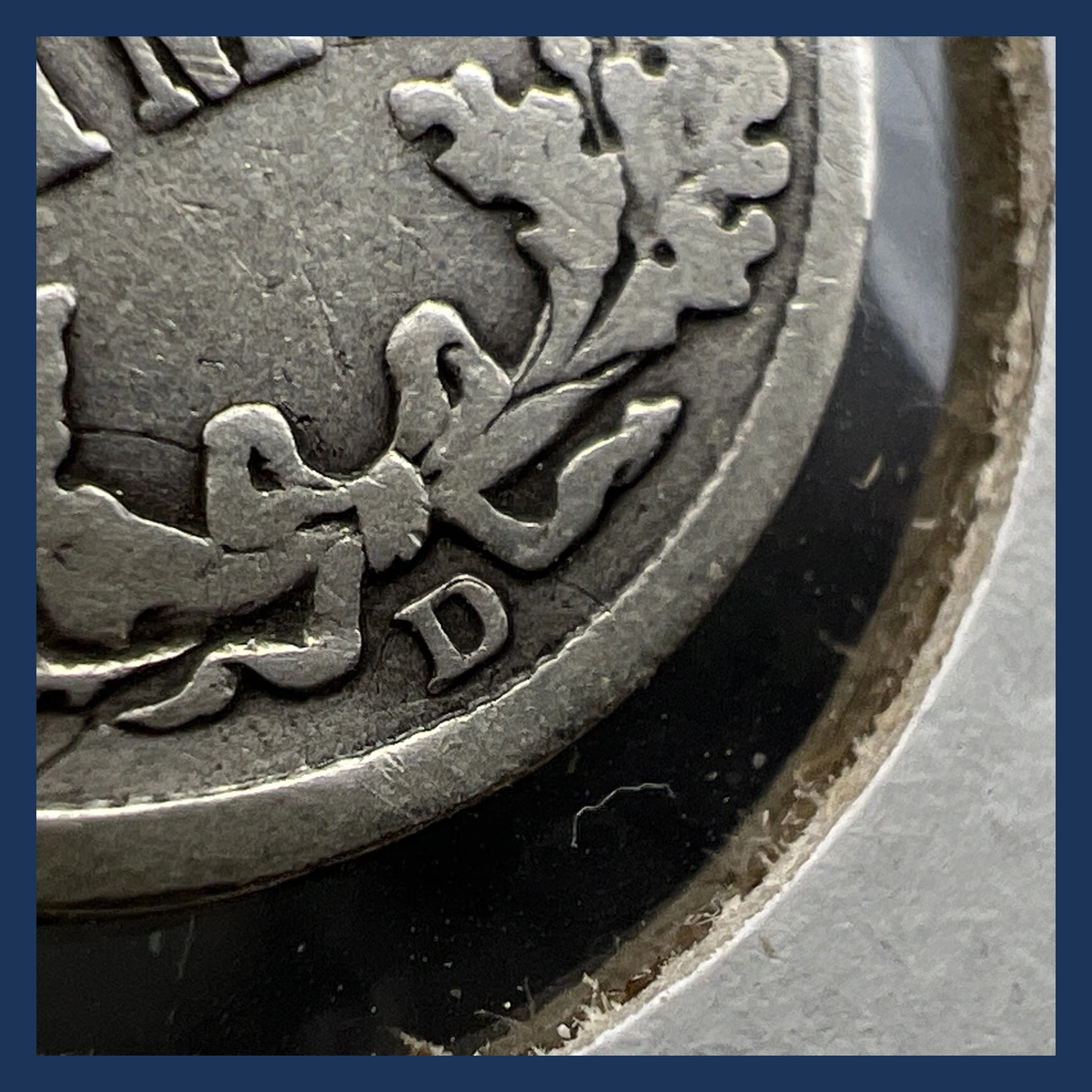
The mint letter is tiny. On some 1912 dimes, a second piece of D or S appears beside it.
Workers punched these letters into a die, the steel tool that stamps coins. If the punch moved between blows, part of its first impression could remain.
Denver examples are reported with extra strokes above or above-right of D. The San Francisco report describes only a slight extra S.
Check each mint separately. A mark beside D does not tell you where to look on S, and a dent can also make a letter look uneven.
Estimated Value
A published 1912 price guide gives an estimated $20–$300 range. It covers recognizable examples with wear through modest unworn pieces.
A clear extra stroke is easier to collect than a tiny trace nearly erased by wear. The condition of the whole coin also affects its price.
This is a guide estimate, not a recorded auction sale. An exceptionally well-preserved dime may be worth more because of its condition alone.
How to Identify
Find the bow at the bottom of the wreath on the back. The mint letter sits below it.
With a 10× magnifier, inspect the top and upper-right of D on a Denver example. A San Francisco S needs its own matching photograph.
Look for a raised piece of another letter. A dent, smear, or flat shelf along the edge is not enough to establish a second punch impression.
Normal dimes contain 90% silver, weigh 2.50 grams, and measure 17.90 mm. Use a scale and calipers when safely accessible, and examine the grooves around the edge.
Compare the extra stroke with the shape of the main D or S; it should fit part of that same letter.
2. 1912 Barber Dime Lamination and Partial Split Planchet (Estimated Up to $500)
Part of the back can peel away while the rest of a dime stays intact. Weakness inside the silver alloy allows a layer to separate.
One auction example lost about 30% of its back after the design had been struck. It was heavily worn, graded Good 4.
The catalog calls it 1912-X. Here, X means the mint could not be identified; it does not mean Philadelphia.
Smaller surface flakes belong to the same broad kind of metal weakness. They need not look as deep or cover as much space as this partial split.
Estimated Value
The heavily worn 1912-X partial split sold for $139 at Heritage on March 31, 2025. Its missing layer still attracted interest despite the wear.
Estimated values of $25–$500 cover small surface flakes through larger, better-preserved separations. The amount of surviving design and the condition of the remaining metal affect the price.
The $139 result applies to that particular coin. It does not create a fixed price for each percentage of missing surface.
How to Identify
Weighing the coin can reveal lost metal, but it cannot explain how that metal disappeared. The ordinary figures are 2.50 grams and 17.90 mm; check with a scale and calipers when safely accessible.
Next, study the edge of the missing layer with a 10× magnifier. Look for a natural split rather than scrape marks, saw cuts, or a ground-out hollow.
The surviving design may border rougher metal exposed after the layer broke away. Check the edge grooves for a split continuing toward the side.
A shallow flake need not cover 30% of the back. Follow the layer’s boundary: a connected split inside the metal is more useful than a patch of different color.
3. 1912 Barber Dime Die Break (Reported Cud) (Estimated Up to $500)
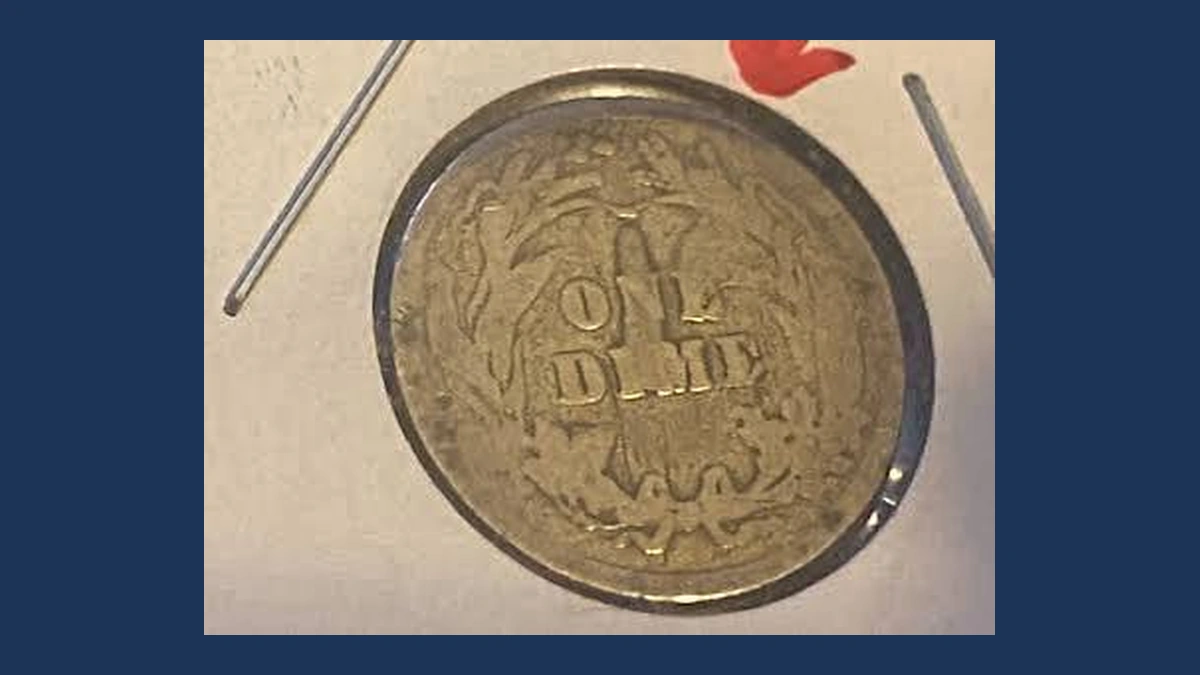
A seller describes this Philadelphia dime as having a large cud. That term means a raised lump connected to the rim, caused by a broken edge of the stamping tool.
The seller also places the feature near the middle of the coin. If intact surface surrounds it, it would be an enclosed break instead.
Both kinds can form when coin metal fills a hole in a damaged tool. The actual shape needs inspection, however, because an attached lump or later damage can also leave a raised patch.
Estimated Value
The seller asks $149.99 for the ungraded Philadelphia coin. That is an asking price, not a completed sale or proof that the lump is a cud.
Use an estimated $50–$500 for genuine 1912 die breaks. A large break touching the rim can draw stronger interest when the surfaces are sound.
A small enclosed chip is a different comparison. Added metal and later damage do not receive the same error value.
How to Identify
Trace the raised patch toward the rim. Does it reach the edge, or can you see normal surface all the way around it?
Use a 10× magnifier and light from several angles. The lump should be part of the coin’s metal, without a seam suggesting something was attached.
The opposite face may look weak behind a large break, but that detail alone does not prove the claim. Inspect nearby edge grooves for damage as well.
A normal silver dime weighs 2.50 grams and measures 17.90 mm. A scale and calipers can check a safely accessible coin.
To test the seller’s word “cud,” look for a continuous raised connection between the patch and the rim.
4. 1912 Barber Dime Clipped Planchet (Estimated Up to $600)
Most of the picture can survive on a dime with a small missing segment. A 1912-D offered in December 2024 was described as having a four-percent clip.
It received an MS61 grade, meaning unworn but with noticeable marks. The missing section began when the blank was cut from metal strip, before the coin was struck.
The strike therefore shaped the remaining metal around an existing gap. Cutting a finished dime creates a different edge.
A Philadelphia seller also reported a clipped example. That separate coin does not inherit the Denver piece’s clip size or grade.
Estimated Value
Estimated values are $75–$600, from modest worn clips to attractive unworn examples. GreatCollections offered the four-percent Denver clip in December 2024, but the visible listing does not show a sale result.
A different comparison is a 1942 Mercury dime clip that brought $192 in March 2025. It was graded MS66, meaning exceptionally well-preserved and unworn.
That sale illustrates another genuine clip. Its year, design, and condition differ from the 1912-D.
How to Identify
Four percent describes the reported amount missing, not the gap’s position around the clock. Examine the actual notch rather than expecting it at a particular point.
Start with the intact metal when using calipers: the normal diameter is 17.90 mm. A scale may show a loss from the ordinary 2.50 grams.
Under a 10× magnifier, look for design that fades toward the gap. The rim opposite the clip may also be weak because of how the blank formed.
A later cut can leave sharp burrs, tool marks, and damaged edge grooves. Inspect both sides of the gap.
Fading struck detail beside the missing segment helps show that the gap existed before the coin received its picture.
5. 1912 Barber Dime Broadstrike (Estimated Up to $1,200)
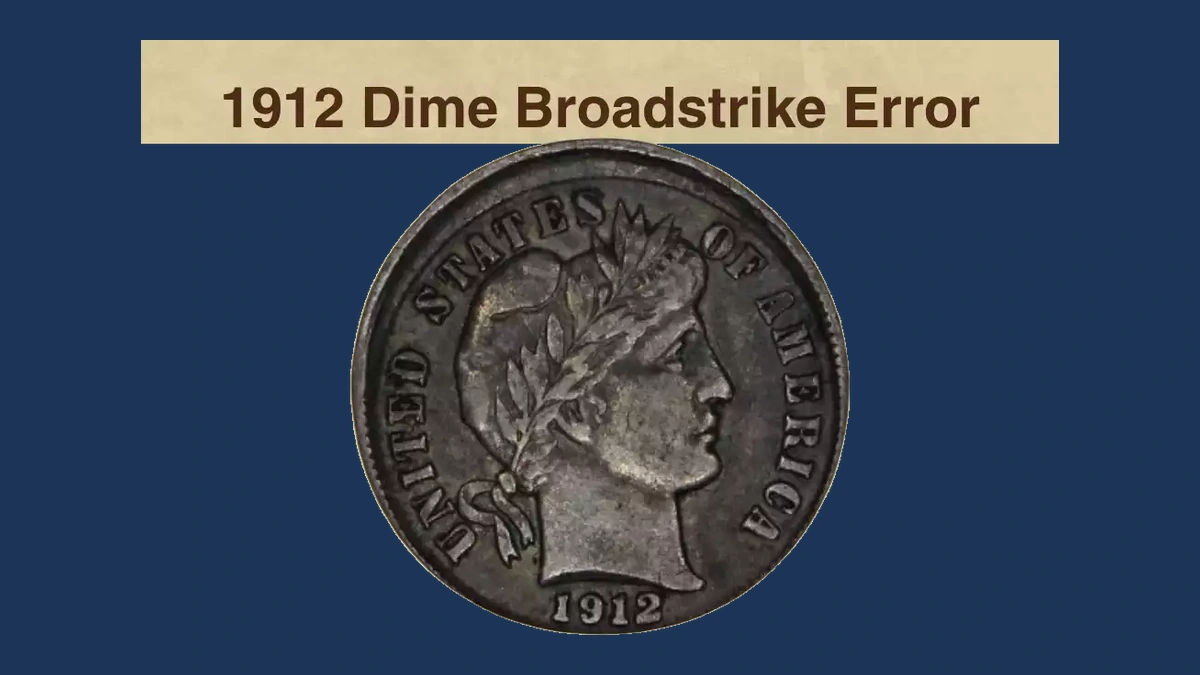
A coin can spread wider than normal when its retaining ring fails to hold it in place. Collectors call the result a broadstrike.
The ring normally controls the coin’s diameter and helps form its edge grooves. Without that restraint, the metal can spread outward under pressure.
A Denver example appeared in Jim’s Coins catalog with an AU55 grade, meaning slight wear. Its expanded shape is the important feature.
A broadstrike may look uneven, yet keep its complete designs. If part of the picture falls beyond the blank, an off-center strike is the better comparison.
Estimated Value
Jim’s Coins listed a $199 minimum bid for the 1912-D AU55 example. That historical offer is not a completed sale.
A different-year 1900-S Barber broadstrike sold for $342 in March 2026, graded VF30 with wear and substantial detail remaining. Estimated 1912 values are $200–$1,200.
More obvious spreading and better condition can support the upper end. A slightly uneven border alone does not justify a broadstrike price.
How to Identify
Set a normal dime beside the example without rubbing their surfaces together. Its expanded outline should become easier to see.
For a safely accessible coin, use calipers to compare the diameter with 17.90 mm. A scale should read near 2.50 grams if no metal was lost.
Now check every part of the picture on both faces. The outer border may be uneven, but a broadstrike keeps the complete designs.
Inspect the edge with a 10× magnifier. Missing or incomplete grooves can support a strike outside the retaining ring; hammer damage can also flatten a rim.
The useful combination is a wider shape, complete pictures, and naturally spread metal rather than a battered edge.
6. 1912 Barber Dime Off-Center Strike (Estimated Up to $1,600)
The small S on the back corrected a mistaken label on one auction coin. Its holder named Philadelphia, but the dime itself showed San Francisco.
This example was struck five percent off center toward twelve o’clock. Bare metal remained below the date because the blank was out of position under the stamping tools.
A separate San Francisco example was reported at twenty percent off center. A Denver coin also appears in a seller’s report.
They share the same basic mistake, but not the same size of shift. Their grades and prices must stay with their own examples.
Estimated Value
The five-percent 1912-S sold for $373.75 in September 2005. Its AU50 grade indicates slight wear.
For comparison, a 1911 dime with the same grade and a ten-percent shift brought $396 in September 2024. Estimated 1912 values run from $200–$1,600.
Stronger shifts, a readable date, and better surfaces can increase interest. The separate twenty-percent coin does not share the five-percent example’s recorded price or grade.
How to Identify
Check the date, then turn the coin over to find the mint letter beneath the wreath bow. On the auction example, S corrects the holder’s Philadelphia label.
Look at both complete faces under a 10× magnifier. A small shift may remove only the border’s tiny tooth-like marks; a larger shift can cut off letters.
The normal silver dime weighs 2.50 grams and measures 17.90 mm. Record scale and caliper readings when safely accessible, allowing for a distorted shape, and inspect the edge grooves.
A cropped photograph can hide the bare area. Compare the incomplete pictures on both faces: both should fit the same shift beside metal that never received a design.
7. 1912 Barber Dime Doubled Die Obverse (Estimated Up to $2,000)
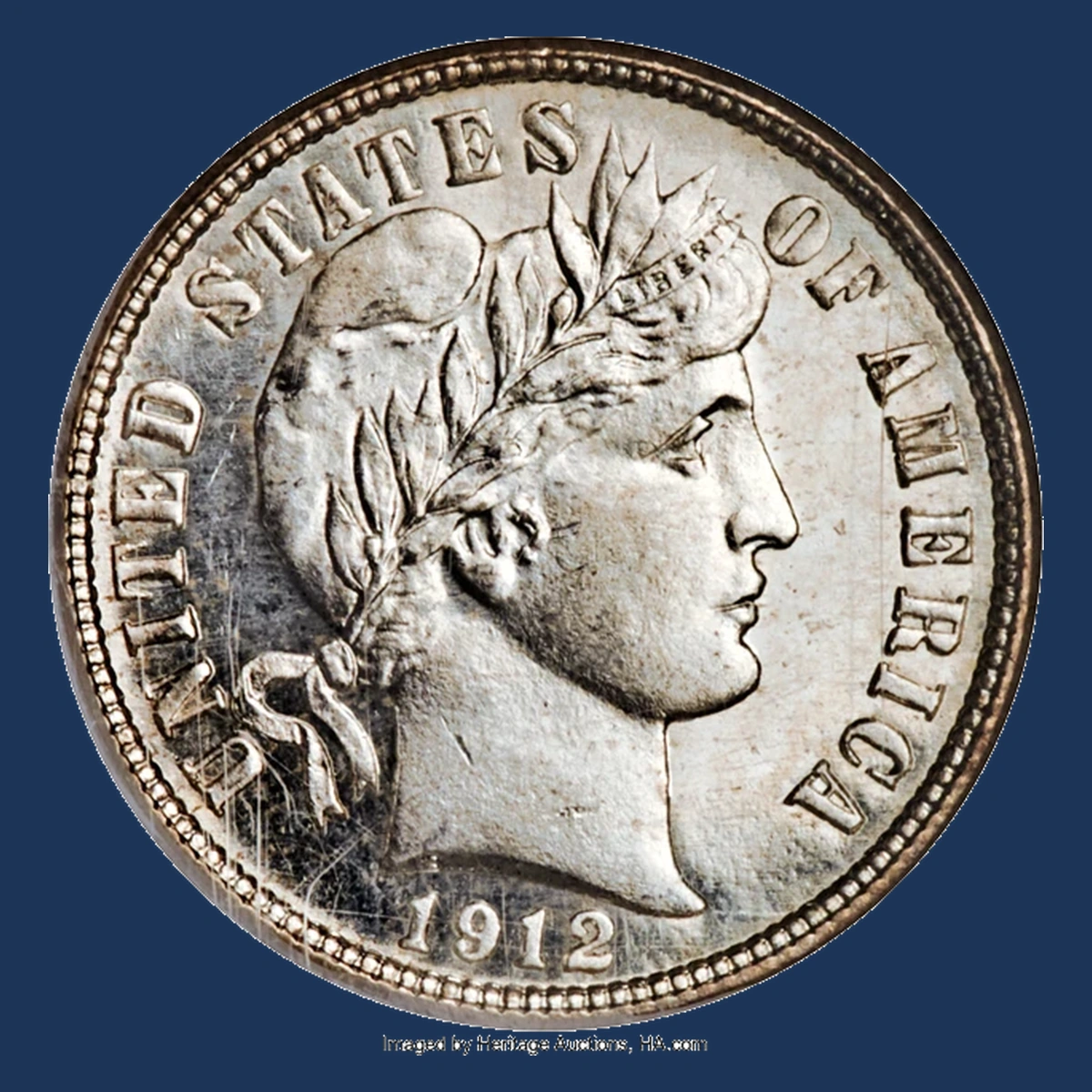
Extra lettering on the front deserves a closer look. The recognized 1912-S variety called FS-101 is described with doubling in UNITED.
Its stamping tool carried a doubled design before striking the coins. Each coin made with that tool could receive the same extra outlines.
A doubled-looking cheek does not prove the variety. Movement during striking can also leave a second-looking edge, often as a low, flat shelf.
Examine the lettering and portrait separately. A match to the known letter shapes is more useful than calling every double profile the same valuable error.
Estimated Value
The published variety guide estimates $150–$2,000 for recognizable worn examples through stronger unworn coins. This is an estimated range, not a list of confirmed auction results.
PCGS recognizes FS-101, but its consulted reference page lists no auction record. A clear match to the variety and good preservation support the price.
Ordinary flat doubling from movement during striking does not automatically belong in this value range.
How to Identify
Begin with a sharp photograph of a verified 1912-S FS-101. Turn it to the same angle as your coin, then enlarge UNITED with a 10× magnifier.
Compare the raised letter outlines. A low shelf that seems to shave width from a letter suggests movement during striking instead.
Check the cheek separately. A second edge there is supporting information, not a replacement for matching the letters.
Find S beneath the bow on the back and inspect the edge grooves. Normal specifications are 90% silver, 2.50 grams, and 17.90 mm; use a scale and calipers when safely accessible.
Concentrate on UNITED: the extra letter shapes should match the verified variety, not merely look doubled.
Conclusion
A small mint letter can change which 1912 dime you have, while a missing layer can hide the mint entirely. Check the complete coin before relying on its label or a close-up.
Estimated values span $20–$2,000 across these types. Use the visible shape to choose a comparison: extra lettering, a natural split, or missing design beside bare metal each tells a different story.