1889 Dime Error List with Pictures

An 1889 dime struck fifteen percent off center sold for $1,092.50 at Heritage in 2005. Other errors from this year are much smaller, hiding inside a leaf, a date numeral, or the shield.
This 1889 dime error list explains eight types, with estimated prices from $20 to $2,500. Use the checks below to compare the visible marks on your coin.
1. 1889 Liberty Seated Dime Planchet Lamination (Estimated Up to $300)
A thin piece of silver may lift from the coin like a loose skin. It can stay attached, peel back, or fall away and leave a shallow hollow.
This is called lamination: a split inside the metal used to make the coin. Poor bonding or trapped material can let the surface separate during striking or later handling.
Coins-Value lists lamination among errors reported for 1889 dimes. That report gives no exact mint or location, so inspect the split itself instead of expecting one fixed spot.
Estimated Value
For a genuine lamination on a circulated 1889 dime, estimate $20–$300. Small surface splits belong near the lower end; a clear, attached flap may interest more error collectors.
This is an estimated price for the whole coin, not a recorded sale of the guide’s example. Heavy metal loss can make the coin less attractive, even when the defect looks large.
A readable date and an otherwise sound surface help support the higher prices.
How to Identify
Leave the flap alone. Lifting or cleaning underneath it could remove the evidence and damage the coin.
Shine light across the surface and inspect the split with a loupe. Look for a thin layer pulling away, rather than a deep gouge with metal pushed along its sides.
A normal dime is 90% silver and originally weighed 2.50 grams. Use a scale and calipers to compare that weight and its normal 17.9-mm diameter, then inspect the grooved edge.
A missing flake can lower the weight, but wear can also do that. A side view showing metal separating in a thin sheet is the most direct lamination check.
2. 1889 Liberty Seated Dime Die Cracks (Estimated Up to $400)
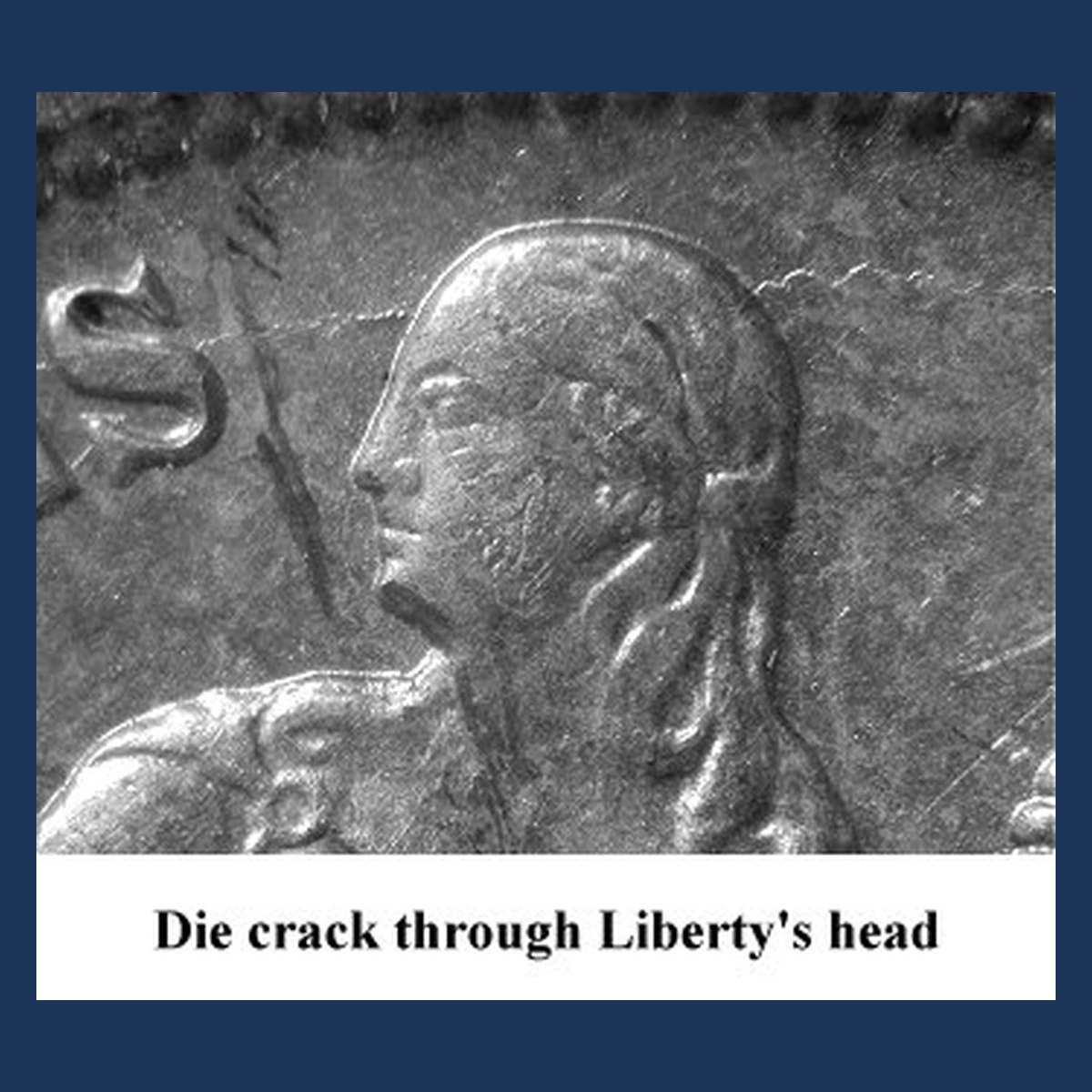
A die crack appears as a raised line on the coin. A die is the steel tool that stamps the design; silver entering a crack in that tool forms the line.
The 1889 listings include one line from the CA in AMERICA toward the rim. Another crosses Liberty’s head, while reverse examples run through the lower right wreath or near nine o’clock.
These routes come from different dies and need not appear together. Each line should follow its own pictured path, rather than join a collection of unrelated marks on one coin.
Estimated Value
Visible cracks on circulated through About Uncirculated coins have an estimated whole-coin range of $20–$400. About Uncirculated, or AU, means the coin shows only light wear.
A strong line that can be followed across the design is more useful than a tiny, faint mark. The coin’s grade and surface quality also affect the price.
This range is an estimate for the reported cracks, rather than a sale price for one named specimen.
How to Identify
Keep the crack routes separate. A line in the wreath cannot prove that your coin has the different crack through Liberty’s head.
Weigh the coin and measure it with calipers: its original standards were 2.50 grams and 17.9 mm. The metal is 90% silver, and the edge has narrow grooves called reeding.
Use a loupe and move a lamp from one side of the line to the other. The changing shadow helps show whether the mark is raised or cut into the surface.
Follow the raised line through the pictured landmarks; that full path identifies the crack faster than one dark close-up.
3. 1889 Liberty Seated Dime Clashed Dies (Estimated Up to $500)
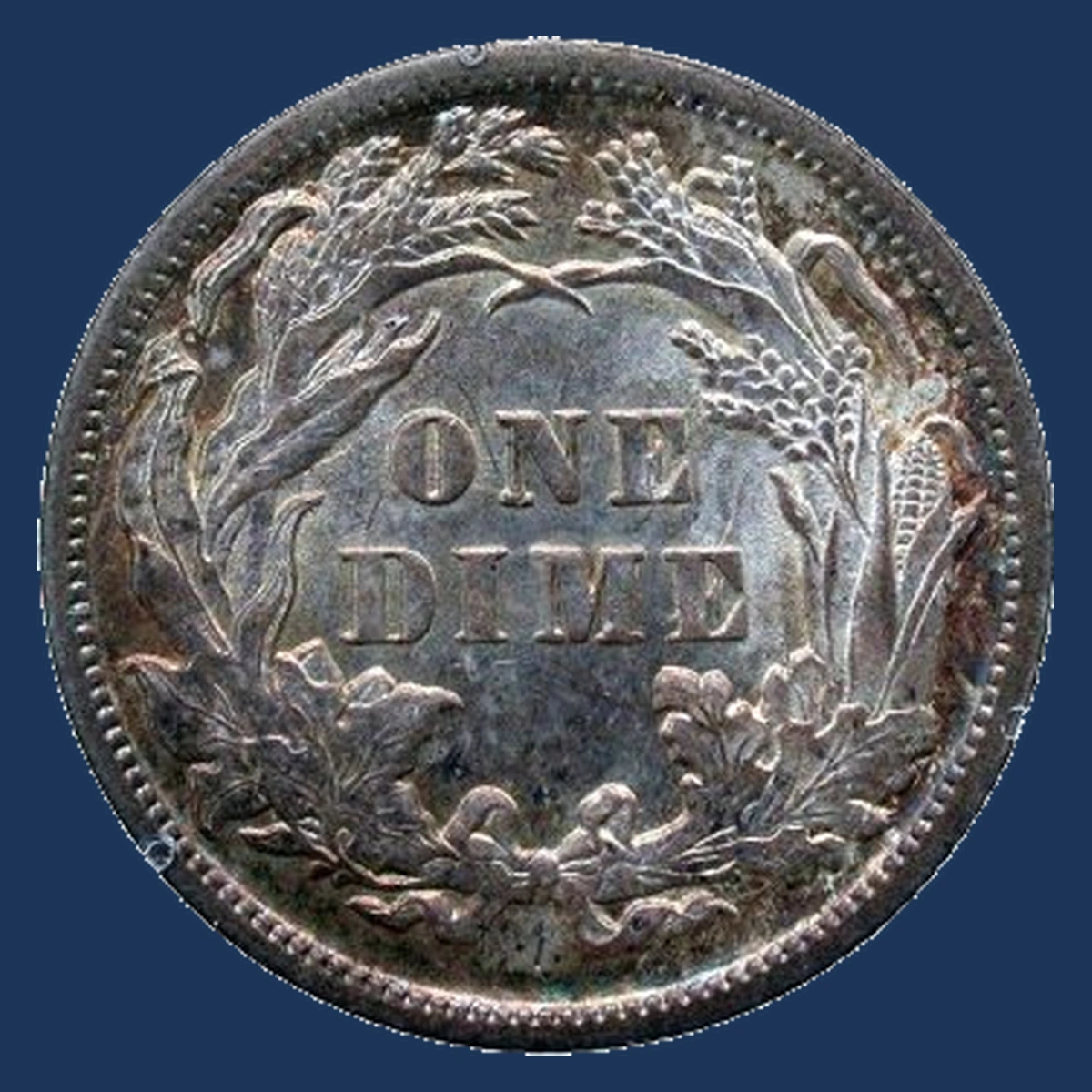
Faint outlines from the other side of the coin can appear around the normal design. These are clash marks, made after the two dies hit each other without a blank between them.
That contact can leave part of one die’s design on the other die. Later coins pick up these extra traces when they are struck.
Several 1889 Philadelphia dies show clash marks, including some with doubled reverse details. The two features have different causes, so look for an opposite-side outline instead of treating every doubled-looking mark as a clash.
Estimated Value
An estimated $25–$500 covers circulated through lower Mint State 1889 dimes with clear clash marks. Mint State means the coin has no wear from circulation, though it may still have contact marks.
A recognizable outline is more appealing than a few unexplained lines. Some dies also have reverse doubling, which adds another feature to the same coin.
The range prices the complete coin; do not add a separate clash price to its doubled-die value.
How to Identify
Photograph both sides at the same size so you can compare their shapes. Under a loupe, check whether an unusual reverse line could come from part of Liberty on the obverse.
The die pair matters. Compare its two dies’ pictures instead of rotating unrelated images until two lines happen to meet.
A random scratch will not reproduce an opposite-side feature, even if part of its line looks similar.
Check weight and diameter with a scale and calipers against 2.50 grams and 17.9 mm. The normal coin is 90% silver with a grooved edge; the key clash test is a clear outline matching the opposite design.
4. 1889 Liberty Seated Dime Reverse Rim Cud (Estimated Up to $900)
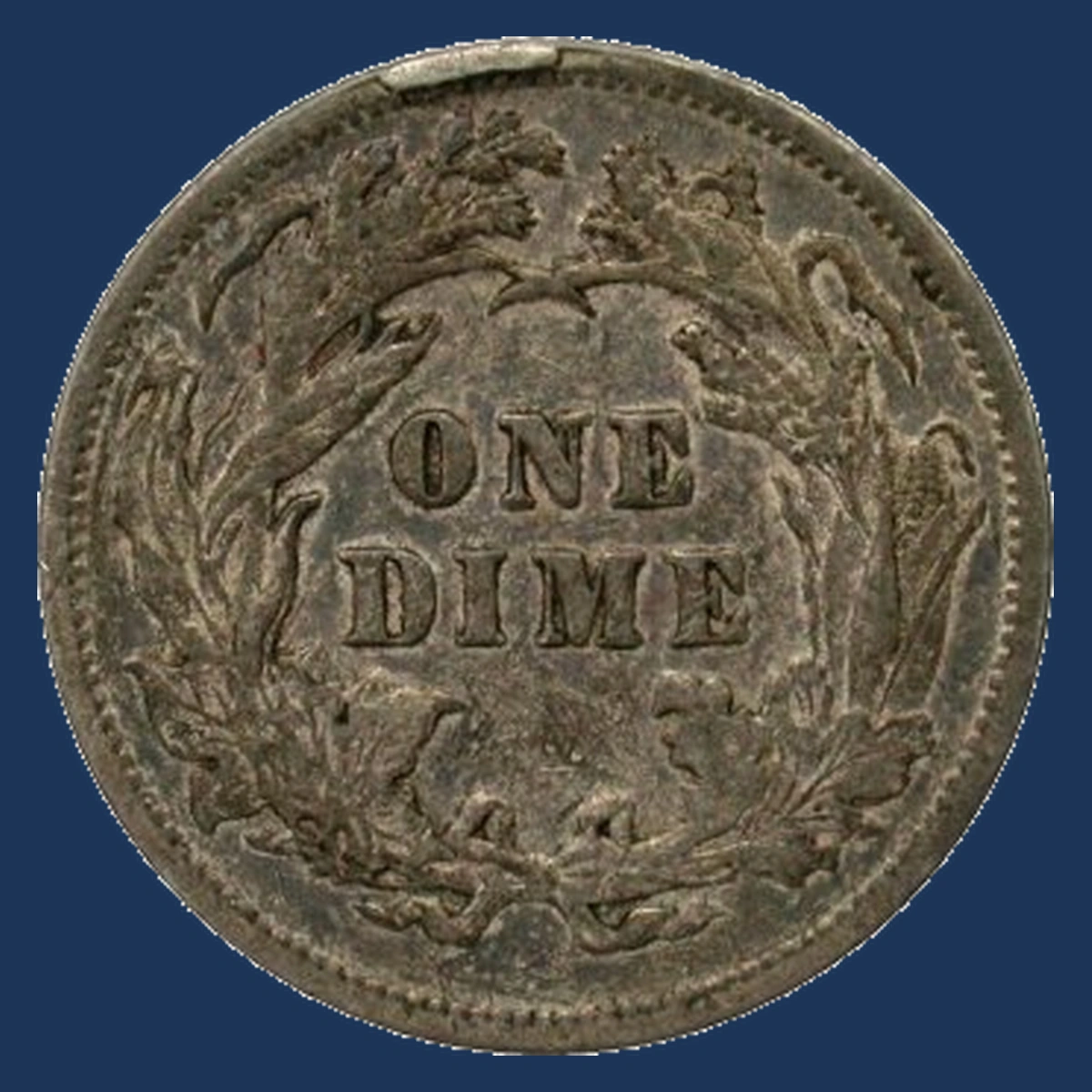
Look near eleven-thirty on the upright reverse for a raised area joined to the rim. The late die state called F-111a has this feature, known as a rim cud.
A cud forms when a piece breaks from the edge of a die. Silver fills the open space during striking and leaves a raised patch where normal detail should appear.
The earlier F-111 die pair is listed without this break. Comparing the two states helps separate the reported cud from a thick rim or an edge damaged after the coin left the mint.
Estimated Value
For circulated through AU coins with a clear F-111a rim cud, estimate $75–$900. AU coins have light wear and can preserve the break’s outline well.
Check the nearby rim too. A clean boundary helps buyers see the break, while an edge hit makes that judgment harder.
These figures estimate the value of the complete coin; they are not a recorded sale for a particular F-111a example.
How to Identify
Place the reverse upright, then inspect the rim near eleven-thirty with a loupe. The raised patch should join the rim at the same point shown in the late-state picture.
Check nearby edge grooves for crushing from a later blow. A rim hit can push metal upward without any die having broken.
The original coin weighed 2.50 grams and measured 17.9 mm across. Compare those figures with a scale and calipers; its metal is 90% silver and its edge normally has reeding.
An angled photograph helps show the patch’s shape. Match its rim connection and outline at eleven-thirty for the simplest check of this specific cud.
5. 1889 Liberty Seated Dime Repunched Date (Estimated Up to $1,000)
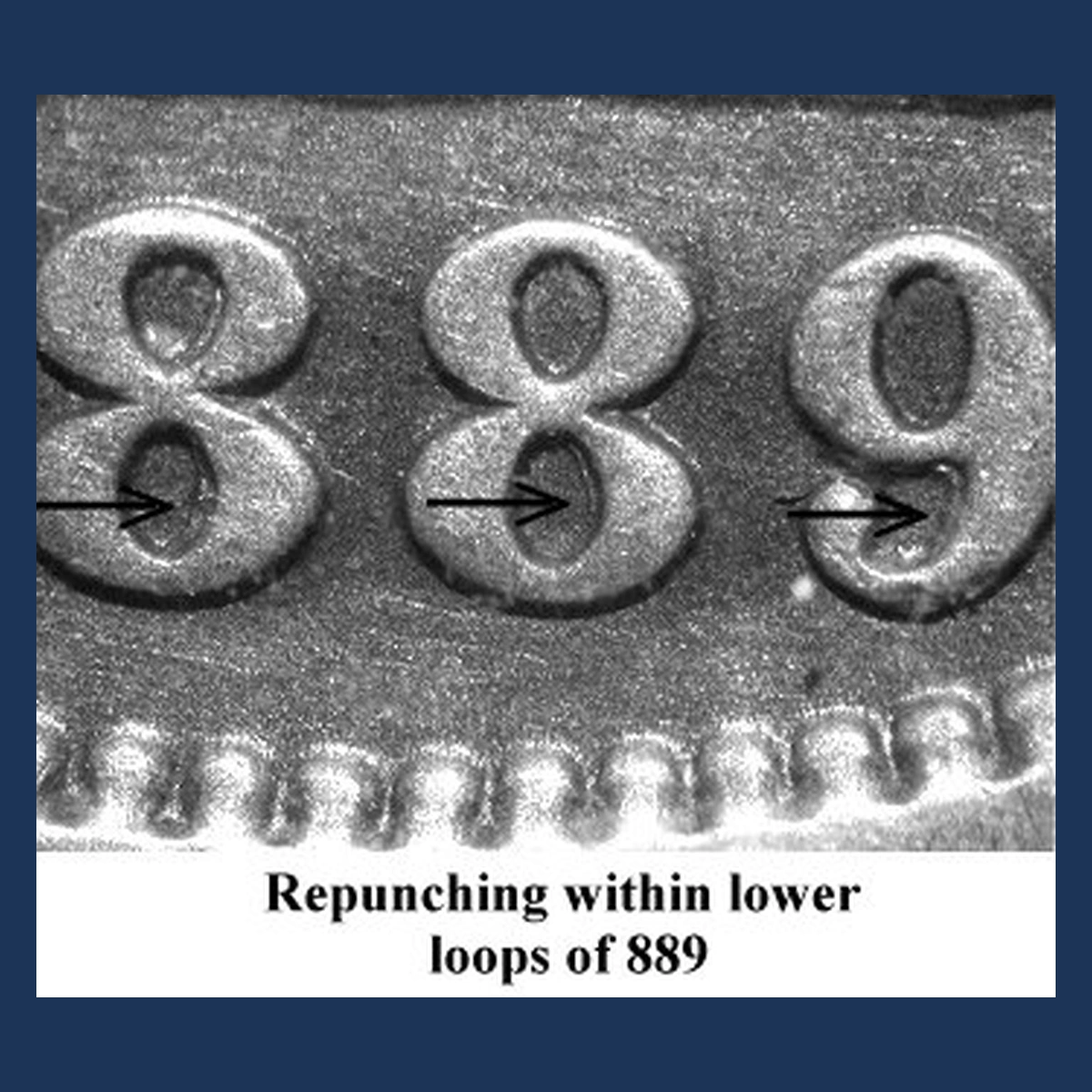
An extra edge beside a date numeral can be the trace of an earlier punch placement. This is a repunched date: the date was stamped into the die more than once in slightly different positions.
Philadelphia F-103 shows remnants around all four digits, including the 1’s left foot, the 8 loops, and the 9’s tail. Other Philadelphia dies show fewer extra contours.
The reported San Francisco example has a small trace above the flag of 1. Open and Closed 9 are normal date shapes, so neither one alone proves repunching.
Estimated Value
Estimated prices of $30–$1,000 cover commoner repunched dates from circulated grades through lower Mint State. Mint, grade, and the visibility of the extra numeral edges all matter.
For context, PCGS records an MS63 Philadelphia F-104 at $223 in 2017. That coin type also has reverse doubling, so its price includes more than the date feature.
The result is not a direct price for the much scarcer F-103 or a fixed premium for repunching.
How to Identify
Check the mint first. Look below the reverse wreath.
An S means San Francisco; Philadelphia coins have no mintmark. The same extra line cannot be used to identify both mints’ reported varieties.
A normal coin is 90% silver, with an original weight of 2.50 grams and a diameter of 17.9 mm. Check these with a scale and calipers, then inspect the reeded edge.
Photograph all four date digits and examine their smaller contours with a loupe. F-103 should show several matching remnants, while the S-mint example calls for the trace above 1’s flag; those mint-specific shapes provide the direct repunching check.
6. 1889 Liberty Seated Dime Misplaced Digits (Estimated Up to $1,500)
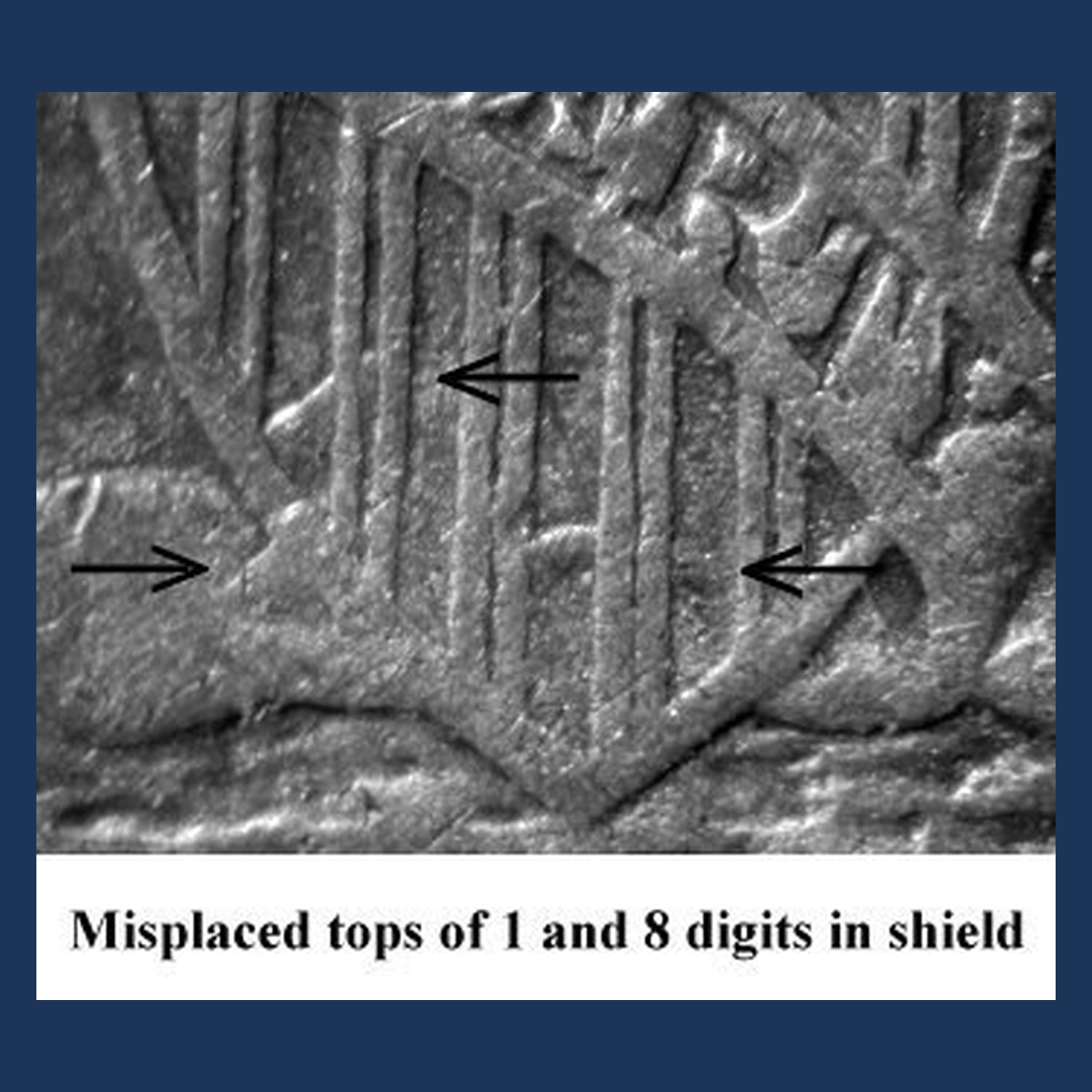
Some 1889 dimes have parts of extra date digits inside Liberty’s shield. On F-126, a 1 remnant crosses shield lines two and three, while an 8 remnant crosses lines seven and eight.
These are misplaced digits: a date punch touched the die where the date was not meant to go. Other dies show remnants in Liberty’s base or beside the scroll.
The F-103 scroll remnant is listed as part of an 8 or 9, without a firm choice. Match the visible shape and location rather than completing an imagined numeral.
Estimated Value
PCGS records a VF20 F-112 sale at $40 in October 2018. VF20 is a circulated grade with clear detail but noticeable wear.
For the reported misplaced dates from circulated grades through lower Mint State, estimate $40–$1,500. Some die pairs are much harder to find than others.
The $40 result shows that a named variety can still be affordable. It should not set the price of every other misplaced-digit die.
How to Identify
Use a sharp photograph to count the shield lines before calling a small curve an extra numeral. A loupe helps show exactly where the F-126 remnants cross those lines.
For a base or scroll example, move to that die’s pictured location. A mark in the right general area is not enough if its shape differs from the reference.
The Philadelphia coin should have no mintmark and a reeded edge. A scale and calipers compare its original 2.50-gram weight and 17.9-mm diameter; the alloy is 90% silver.
The fastest useful match is the extra shape crossing the same nearby design lines, not simply a curve that resembles a number.
7. 1889 Liberty Seated Dime Off-Center Strike (Estimated Up to $1,800)
A blank crescent beside an incomplete design is the clearest sign of this error. The blank sat in the wrong position, so the dies struck only part of it.
Heritage described an 1889 dime struck fifteen percent off center toward ten-thirty. It was graded XF45 by PCGS, with much of UNITED STATES missing from the struck design.
The blank area has later scratches. Heritage described faint cursive graffiti there, separate from the striking error that left the reverse crescent unstruck.
Estimated Value
The fifteen-percent XF45 example sold for $1,092.50 at Heritage on July 30, 2005. XF45 means light-to-moderate wear with much of the design still clear.
Estimate $500–$1,800 for comparable genuine circulated examples with a readable date. The old sale is a useful reference, not a promise of today’s result.
A clean blank crescent can improve the coin’s appeal. Graffiti, other damage, or lost date digits can make the comparison less favorable.
How to Identify
Look at the entire coin before focusing on the blank area. Both sides should show designs displaced across the same planchet, the metal blank used to make the coin.
Check that some design is missing because it fell beyond the blank’s edge. A wide border around a complete design suggests a different striking error.
The normal silver content is 90%, and the blank originally weighed 2.50 grams. Use a scale and calipers to record its weight and outline against the usual 17.9-mm, reeded-edge coin.
A loupe helps separate later scratches from untouched metal. The incomplete designs beside a surviving blank crescent give the quickest off-center diagnosis.
8. 1889 Liberty Seated Dime Doubled Die Reverse (Estimated Up to $2,500)
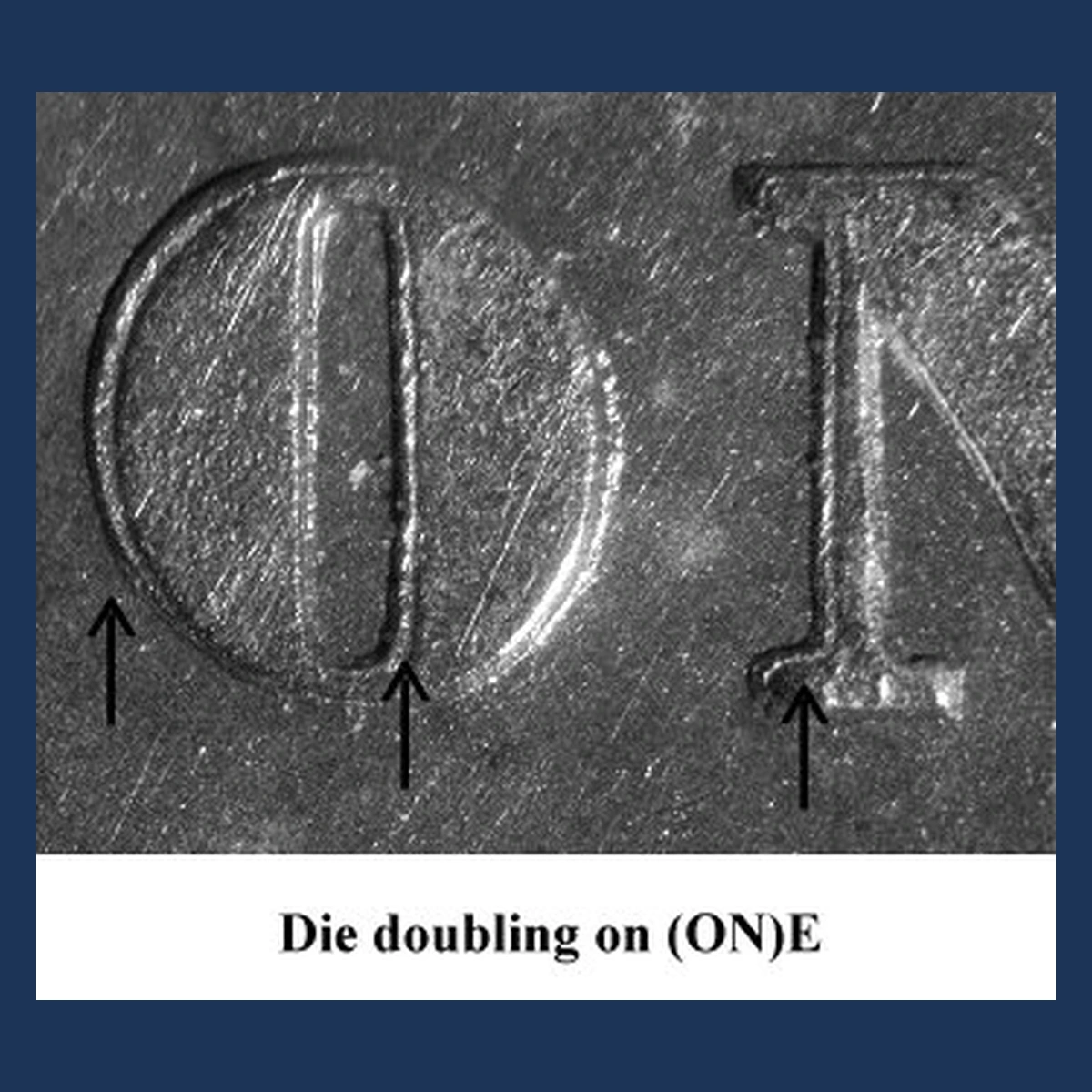
Start with the leaf veins. On the Philadelphia F-104 reverse, the lower left maple leaves can show two distinct, raised edges instead of one.
This is a doubled die: the steel die received overlapping design images before it struck any coins. Coins made from it repeat the same doubled details.
Fortin’s variety guide lists several different 1889 doubled reverses. Their leaf patterns differ, and one reverse was used with more than one obverse die, so the full pairing still matters.
Estimated Value
Heritage sold a PCGS MS63 DDR-001 for $336 on March 4, 2024. MS63 is an unworn grade, usually with visible contact marks.
Estimate $50–$2,500 for clear doubled reverses from circulated grades through about MS65. Attractive gems cost more than worn examples with faint doubling.
Check the actual leaf pattern before using a sale for comparison. The auction’s DDR number does not automatically match every Fortin die number.
How to Identify
Enlarge the lower left wreath and inspect the maple-leaf veins with a loupe. Look for repeated raised detail that follows the original shape, rather than a flat shelf beside a damaged leaf.
Try to match several nearby features, then compare the date position on the other side. This checks which obverse and reverse dies made the coin.
Record the normal coin measurements with a scale and calipers: 2.50 grams originally and 17.9 mm across. Its metal is 90% silver and its edge is reeded; matching several doubled leaf details provides the most direct test, even if other marks appear elsewhere.
Conclusion
Estimated 1889 error values here run from $20 to $2,500, from modest circulated pieces to better-preserved varieties. Location matters: a leaf line, shield fragment, and raised rim patch need different checks.
Keep pictures of both sides. Once the feature is matched, compare coins with similar wear and surfaces before choosing a price; the error’s name alone cannot explain the whole value.