1843 Dime Error List with Pictures

An 1843 dime with all four date digits punched twice sold for $3,600 in April 2021. That Philadelphia variety is easiest to check at the date.
The other 1843 Liberty Seated dime error covered here belongs to New Orleans and shows raised lines around the back lettering. Estimated whole-coin values span $75–$4,500.
Read on to find the correct mint first, then inspect the feature that belongs to it.
1843-O Liberty Seated Dime Reverse Die Cracks (Estimated Up to $3,500)
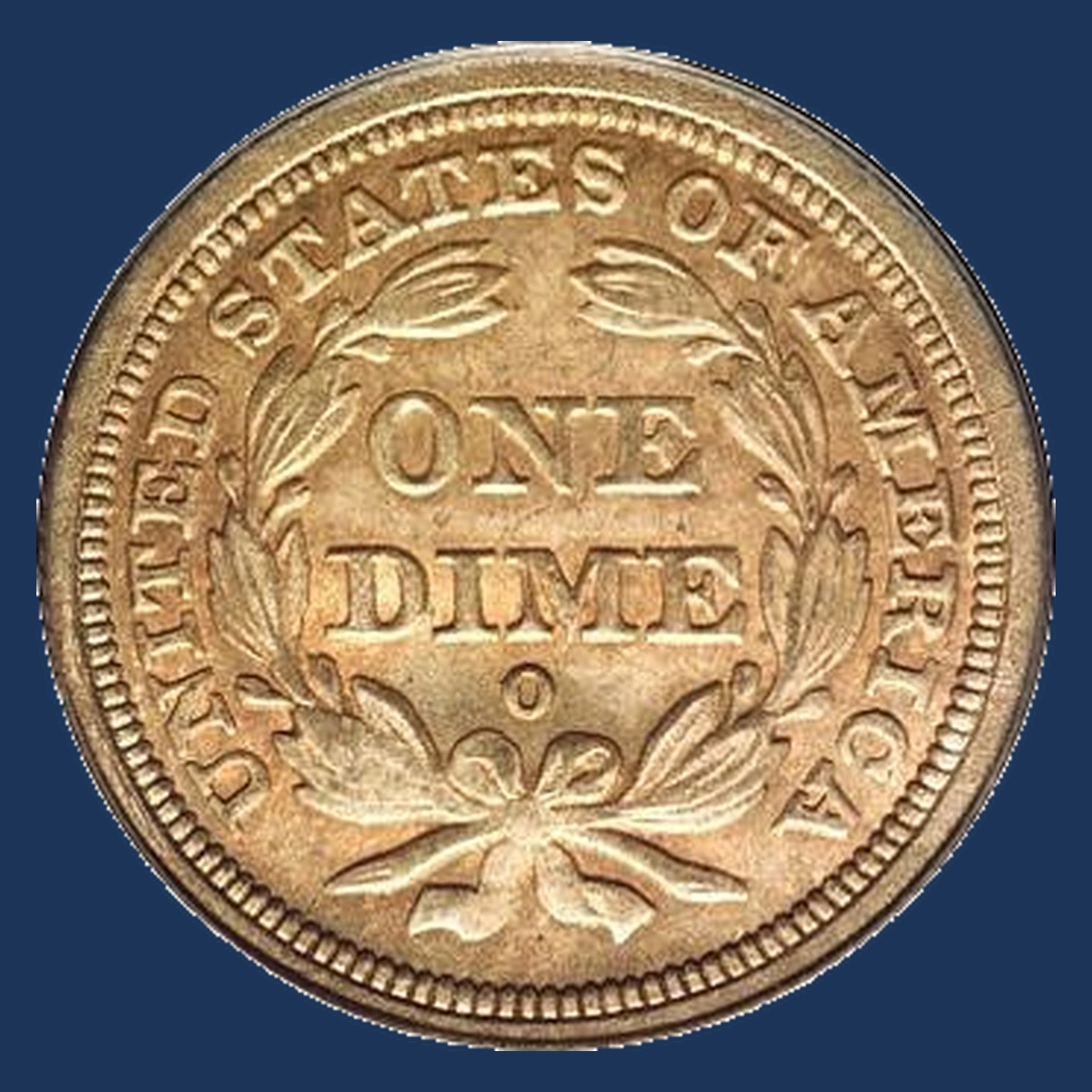
Thin raised lines lead outward from letters toward the back-side rim. On this New Orleans variety, check the T in STATES and the M and final A in AMERICA.
The lines formed when the die, the steel stamping tool, cracked. Silver entered those openings during the strike and left raised ridges on the coin.
These are not three separate scratches. Their positions reflect cracks in the same tool.
The O below the wreath identifies New Orleans, separating this coin from the Philadelphia repunched-date variety discussed next.
Estimated Value
Worn 1843-O examples with these cracks have an estimated whole-coin range of $300–$3,500. Much of that value comes from the scarce New Orleans date and the coin’s condition.
A September 2018 collectors’ auction report lists an F-101 in VF30 at $1,020 and a VF35 at $1,440. Both grades describe circulated coins with clear detail.
Those comparisons do not establish that both coins had exactly the same cracks. They are not prices for the cracks alone.
How to Identify
Find the O below the back-side wreath before looking for cracks. Then read the complete 1843 date so a similar coin from another year does not become a false match.
Use a magnifier at the T in STATES and the M and final A in AMERICA. Follow the lines toward the edge while tilting the light.
They should stand above the surface, unlike scratches cut into it. Compare their routes with a confirmed example rather than mistaking part of the wreath for a crack.
Check about 2.67 grams with a scale and 17.9 mm with calipers, allowing for wear. Inspect the edge grooves for damage.
For a quick match, trace the raised lines outward from those three letters on a coin with an O.
1843 Liberty Seated Dime Repunched Date (Estimated Up to $4,500)
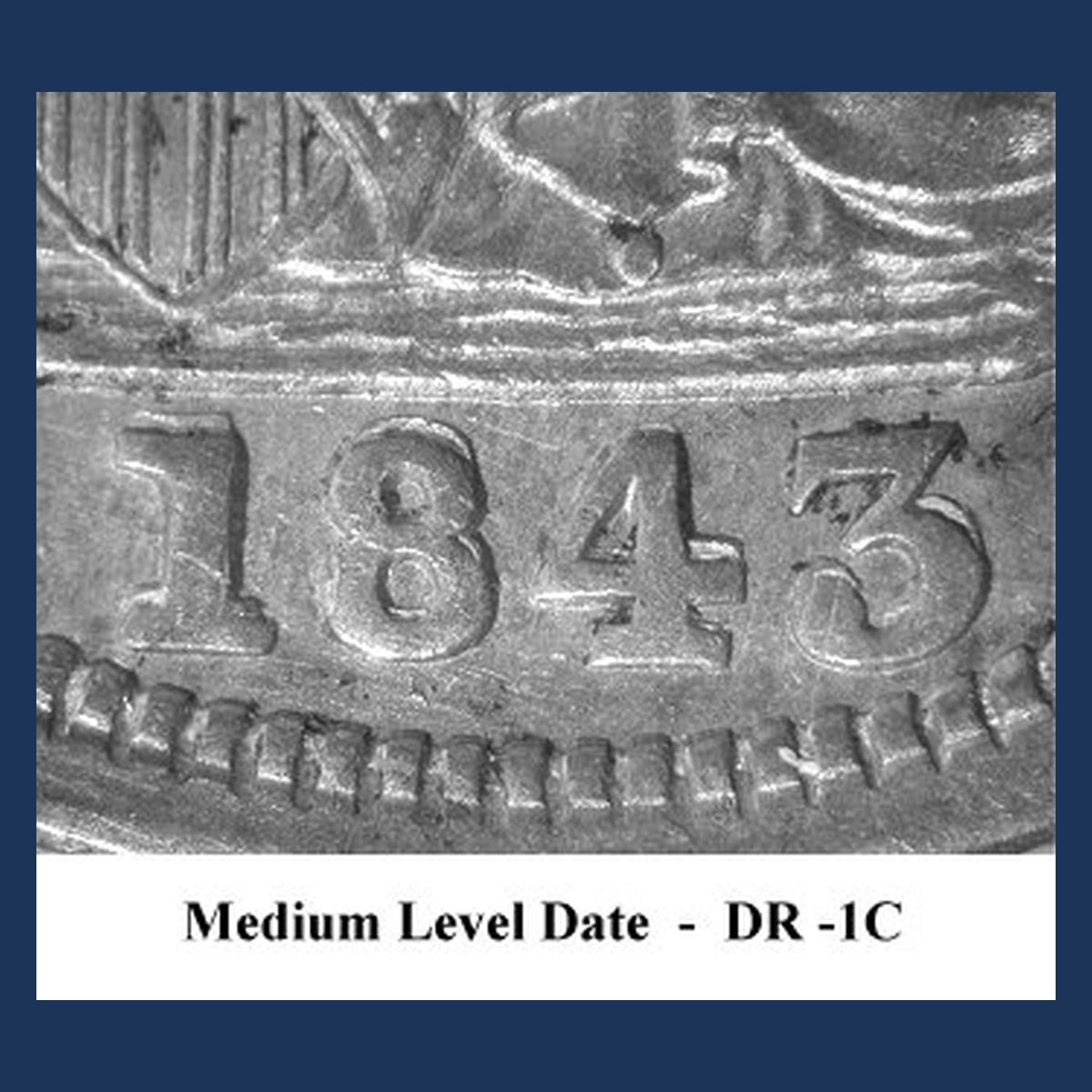
All four digits in 1843 show remains of another outline. The date was punched into the stamping tool again in a corrected position, leaving parts of the first entry behind.
The earlier date had sat too high, and the correction moved the finished date downward. The marks therefore belong to the tool, rather than four separately damaged numbers.
Collectors write the variety as 1843/1843 because the same year was repeated. It is not one year changed into another.
FS-301 and F-102 are two reference numbers for this same Philadelphia variety.
Estimated Value
The PCGS sale record lists an MS65 at $3,600 in April 2021. A lightly worn XF45 example brought $204 in August 2022.
Estimate $75–$450 for circulated coins and $600–$4,500 for unworn examples through the MS65 level. Better surfaces and clear repeated digits help the price.
These are whole-coin values. The four doubled numbers identify one variety, so they do not earn four separate error premiums on top of the dime’s condition value.
How to Identify
Examine the date as one group under a 10× magnifier. Look for extra rounded outlines beside all four digits, not just a damaged edge on the 8.
Compare their vertical positions with a clear F-102 photograph. Flat shelves caused by movement during striking can look doubled but differ from the remains of the earlier date punch.
Check below the back-side wreath: this Philadelphia dime has no mintmark. Inspect the grooves around the edge for filing or other damage.
A scale and calipers should give about 2.67 grams and 17.9 mm, allowing for wear. To identify the variety quickly, match the repeated outlines on all four numbers to the same confirmed example.
Conclusion
These 1843 dime varieties have estimated whole-coin values from $75 to $4,500. The New Orleans coin calls for a look at raised cracks around the back lettering, while the Philadelphia coin repeats all four date digits.
Find the mint first, then compare the correct feature. Condition and original surfaces still control much of the price, so a visible crack or repeated number should not replace a careful look at the whole dime.