1950 Half Dollar Error List with Pictures

A 1950 Franklin Proof with extra design outlines sold for $9,600 in 2018. Proofs are specially made collector coins, and this one was graded PR67+.
This 1950 half dollar error list covers estimated values from $40 to $9,600. Some features appear at Franklin’s mouth or cheek; others sit in the lettering or mintmark.
Look closely before choosing a price comparison. The sections below explain which marks came from the Mint and which reported claims still need a matching example.
1. 1950 Half Dollar Cheek Die Crack or Break (Estimated Up to $200)
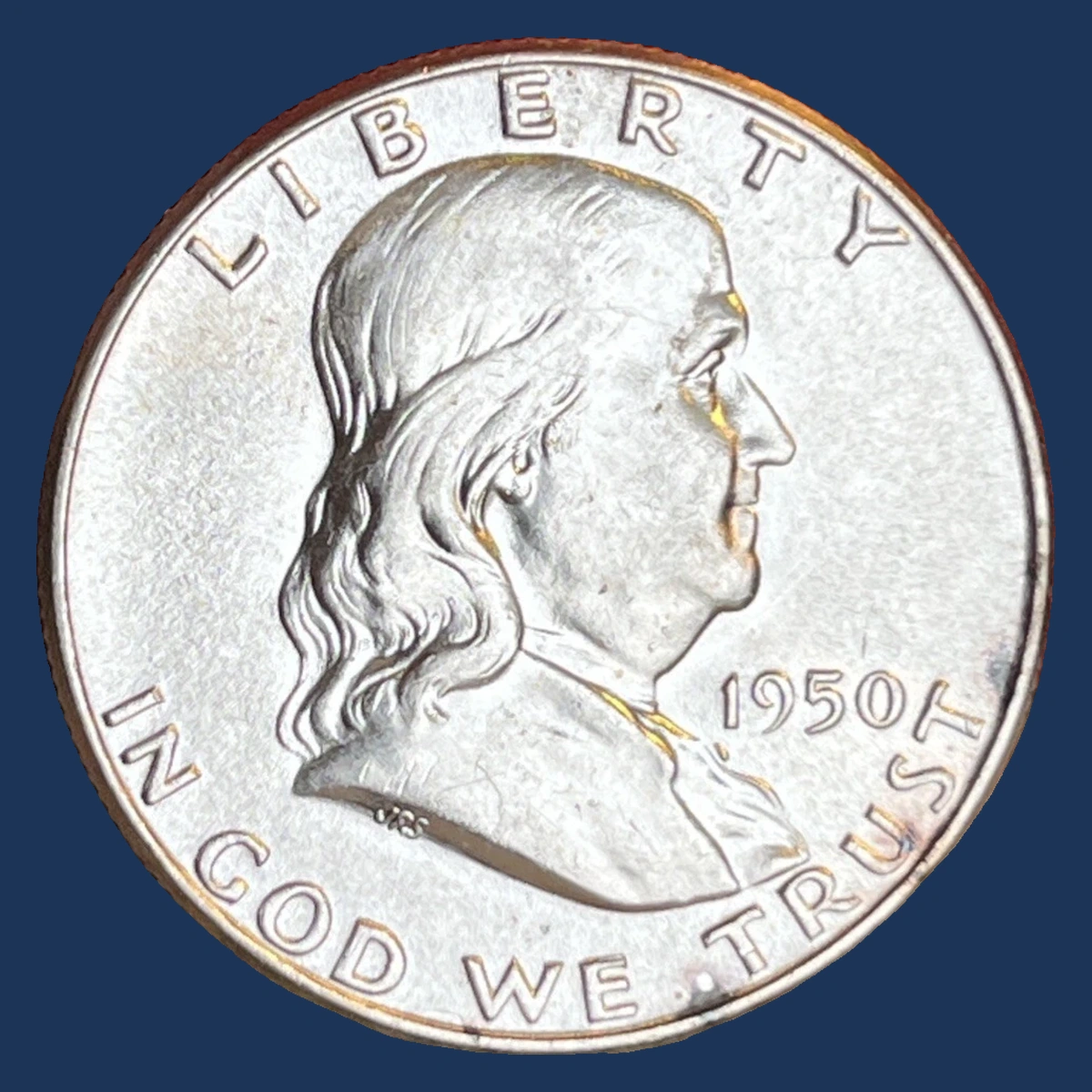
A raised line along Franklin’s cheek was described as a die break in a 2026 Coinhunters listing. The coin was an ungraded Philadelphia half dated 1950.
A die is the steel tool that stamps the design. A crack in that tool can leave a thin ridge on the coin.
If a small piece breaks away, the mark can become a thicker lump. The listing does not identify a numbered variety or establish a break that reaches the rim.
Franklin’s cheek also picks up many ordinary contact marks. A bright line on this exposed area is not automatically a Mint-made error.
Estimated Value
Estimate $40–$200 for a circulated or ordinary uncirculated example with a genuine cheek ridge. Uncirculated means no circulation wear, though small marks may remain.
The seller’s GEM and FBL wording is not a certified grade or a completed sale price. FBL refers to clearly defined bell lines.
Much of the lower-end value comes from the silver half itself. A clear raised feature and attractive surfaces can add more appeal than an almost invisible line.
How to Identify
Tilt the portrait under one lamp and inspect the cheek with a 10× magnifier. A crack should stand above the surface rather than cut down into it.
Follow the line across the cheek. A contact mark may have a groove with pushed-up metal beside it, which can look raised from one angle.
A small lump away from the rim is not a rim cud. The latter needs a real connection to the coin’s border.
Check the ridged edge and use calipers for about 30.6 millimeters across. A scale can compare the weight with 12.50 grams before wear.
A continuous raised cheek line without a cut channel is the most useful first clue.
2. 1950 Half Dollar Lamination (Estimated Up to $300)
A ragged flap can form when a weak layer inside a silver half separates. Collectors call this lamination.
The layer may remain partly attached or fall away and expose rough metal beneath it. The problem lies in the coin’s alloy, rather than a crack in the stamping tool.
A year discussion reports the mechanism without identifying an authenticated 1950 example. A candidate therefore needs visible evidence of a separating layer.
These halves contain silver alloy throughout. Their peeling differs from a missing copper-nickel outer layer on a modern coin with a copper center.
Estimated Value
A genuine modest lamination has an estimated range of $50–$300. The comparison covers circulated coins through ordinary examples without circulation wear.
A different-year example, a 1957 NGC MS63 front lamination, sold for $74.49 including the buyer’s fee at Pristine in January 2021. It supports the lower portion of the range.
That is not a 1950 sale. A clear attached flap may attract interest, while large losses or cleaning can hurt the coin’s appeal.
How to Identify
Look from the side if a flap remains attached. A 10× magnifier can show the border between intact design and the separating layer.
Do not lift it. Compare the exposed metal with the nearby surface instead.
Parallel scrape lines, a deep cut, or scattered corrosion pits can point to another cause. A natural layer should follow a weak boundary within the coin’s metal.
Calipers should show a normal width near 30.6 millimeters. A scale may read below 12.50 grams if metal is missing, so inspect the ridged edge for filing that could explain the loss.
The quickest place to check is the thin layer’s natural connection to the original silver.
3. 1950 Half Dollar Struck Through (Estimated Up to $400)
A weak patch or shallow hollow can appear where something blocked the stamping tool from touching the blank. The design never formed normally in that area.
This is called a strike-through. An illustrated year-specific account reports one on a 1950 Franklin half.
The account does not establish the object’s material, exact location, or mint. Those details need to come from the actual coin, not from another similar-looking error.
Grease, wire, and other objects can leave different shapes. The common feature is an interruption during striking, rather than metal cut away afterward or a stain that only changes the color.
Estimated Value
Estimate $75–$400 for a visible strike-through on an ordinary circulation strike. Greysheet records a 1951-S NGC MS64 front strike-through at $134 in April 2026.
That sale concerns another year and mint. The estimate allows for differences in the affected area’s size and appearance.
A Proof, an object still attached to the coin, or a clearly recognizable shape may need another comparison. They should not automatically receive the range for an ordinary example.
How to Identify
Examine where the normal design meets the weak patch through a 10× magnifier. Look for details that failed to form, rather than a later cut crossing finished letters.
Move the light to tell a hollow from a stain. Color alone cannot prove that something blocked the strike.
Do not name wire, cloth, or grease without a matching shape or material still present. Record the date and mintmark separately from the affected area.
Use a scale and calipers against 12.50 grams and about 30.6 millimeters, and inspect the edge ridges for filing. The strongest starting clue is interrupted design beside an undamaged surrounding surface.
4. 1950 Half Dollar Doubled Die Reverse (Estimated Up to $500)
Extra outlines on the back may indicate a doubled die, meaning the stamping tool itself had repeated design details. Later coins can repeat the added shapes.
A collector’s registry describes a Philadelphia 1950 MS67 Full Bell Lines half as a doubled reverse. The owner’s wording does not establish a grading-service identification of the doubling.
Full Bell Lines means the fine lines near the bell’s base are well defined. That is a separate feature.
This report concerns an ordinary circulation strike. It must not be confused with the recognized quadrupled front design on 1950 Proofs, which are specially made collector coins.
Estimated Value
Estimate $50–$500 for established minor reverse doubling on a circulated or ordinary uncirculated coin. This range does not price the exceptional MS67 Full Bell Lines coin mentioned by its owner.
A high-grade Franklin can be valuable for its condition and sharp bell lines alone. The reported grade does not reveal a separate price for doubling.
Compare similar grades first. Then consider whether the extra outlines are clear, correctly identified, and important to a buyer.
How to Identify
Letter corners on the back offer a clearer starting point than the bell’s general thickness. Use a 10× magnifier to look for rounded extra outlines and separated corners.
A flat ledge beside a reduced letter often comes from movement during striking. Reflected light can also create a false bright edge.
Compare the added shapes with photographs of the same identified variety. The owner’s registry title alone does not show which letters should be doubled.
Check for no mintmark above the bell and inspect the ridged edge. A scale and calipers should broadly match 12.50 grams and 30.6 millimeters.
Repeated raised outlines with the same separation at letter corners make the strongest first case.
5. 1950-D Half Dollar Reported Overmintmark and Obverse Doubling (Estimated Up to $600)
A collector describes two features on one 1950-D half: an S beneath the D and doubling on the front. The coin is listed as PCGS MS64 Full Bell Lines.
That grade does not itself confirm either claim. The collector’s description is separate from the wording on the grading label.
An S under a D would mean two different mintmark letters were punched into the stamping tool. Front-side doubling would need its own repeated design details.
There was no regular 1950-S issue. That fact does not prove an S hides beneath this D or replace a close look at the letter.
Estimated Value
Once both claims are established, estimate $100–$600 for a comparable coin near MS63–MS64 condition. This is a whole-coin estimate based on modest Franklin mintmark varieties.
It is not a reported sale of a recognized 1950-D/S variety. The collector’s entry gives no separate transaction for either claimed feature.
Treat the mintmark and front doubling as features of one coin. Adding two imagined premiums would overstate what the existing description supports.
How to Identify
Enlarge the D above the bell while keeping its whole outline visible. Through a 10× magnifier, decide whether the extra curve fits an S, repeats a D, or is simply a small lump.
Then examine the front independently. Rounded repeated outlines and separated design corners are different from flat shelves caused during striking.
A mintmark anomaly does not prove doubling on the opposite side. Check the exact wording on any grading label rather than relying on a collector’s custom title.
For a loose coin, inspect the ridged edge and check 12.50 grams and about 30.6 millimeters with a scale and calipers. Begin with an identifiable second letter beneath the D, then check the front on its own.
6. 1950 Half Dollar Bugs Bunny Die Clash (Estimated Up to $1,000)
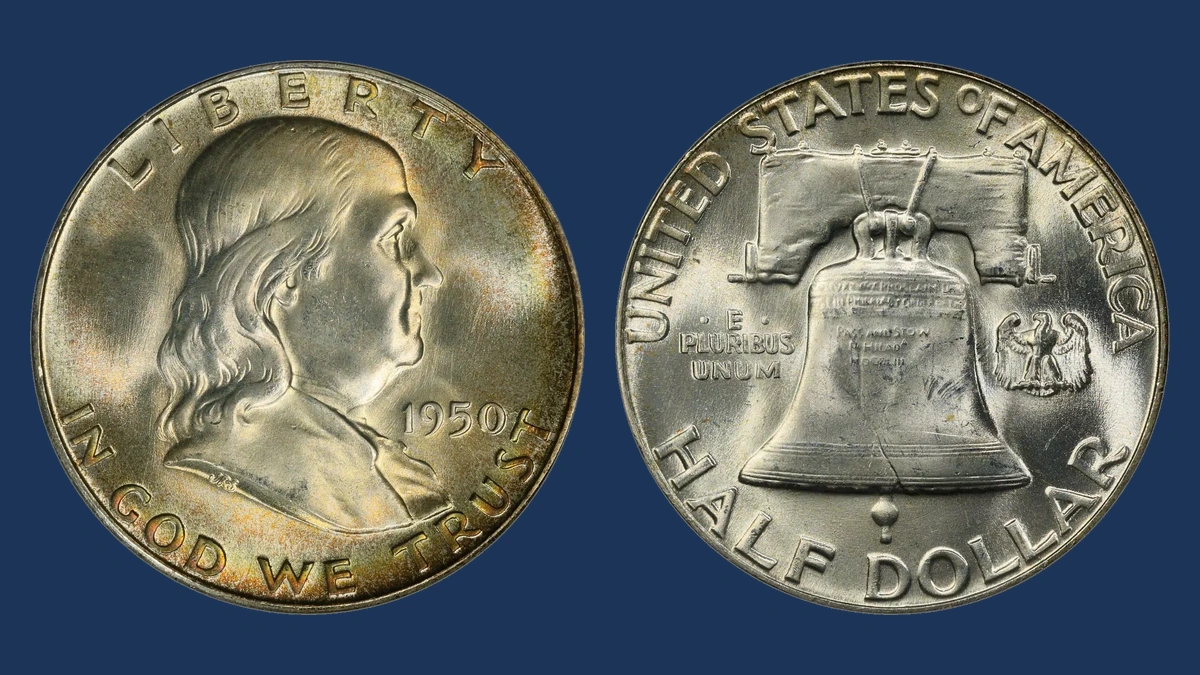
A tooth-like projection at Franklin’s lips gives this variety its Bugs Bunny nickname. The mark comes from part of the eagle design on the opposite stamping tool.
The tools struck each other without a blank between them. This left a mark on the front tool, which then passed it to later coins.
Collectors call that a die clash. The 1950 Philadelphia mouth-clash variety is documented, even though later dates are better known.
The coin does not need to have been struck twice. A clear raised mouth projection is the important feature, rather than a second portrait or a random nick.
Estimated Value
An MS64 Full Bell Lines example sold for $390.40 at Stack’s Bowers in April 2026. The PCGS auction record supports an estimated $100–$1,000 for identified examples across circulated and attractive uncirculated grades.
The higher end assumes better surfaces and a clear mouth projection. Full Bell Lines describes the bell’s sharp details, not another error.
An exceptional numerical grade may need a higher comparison. The ordinary range should not be stretched just because the nickname is familiar.
How to Identify
Focus on the lips and look for the raised tooth-like shape. A 10× magnifier helps show how it joins Franklin’s face.
Compare it with a clearly identified 1950 mouth clash. A 1955 example may illustrate the general cause, but is not a substitute for the same-year pattern.
A shiny scratch or damaged lip can look like a tooth in one photograph. Change the light and look for a cut or pushed-up edge instead.
Philadelphia coins have no mintmark above the bell. Check the ridged edge, 12.50-gram original weight, and 30.6-millimeter diameter with a scale and calipers.
The raised mouth shape matching the known 1950 clash is the fastest visual check.
7. 1950-D Half Dollar Repunched Mintmark (Estimated Up to $3,100)
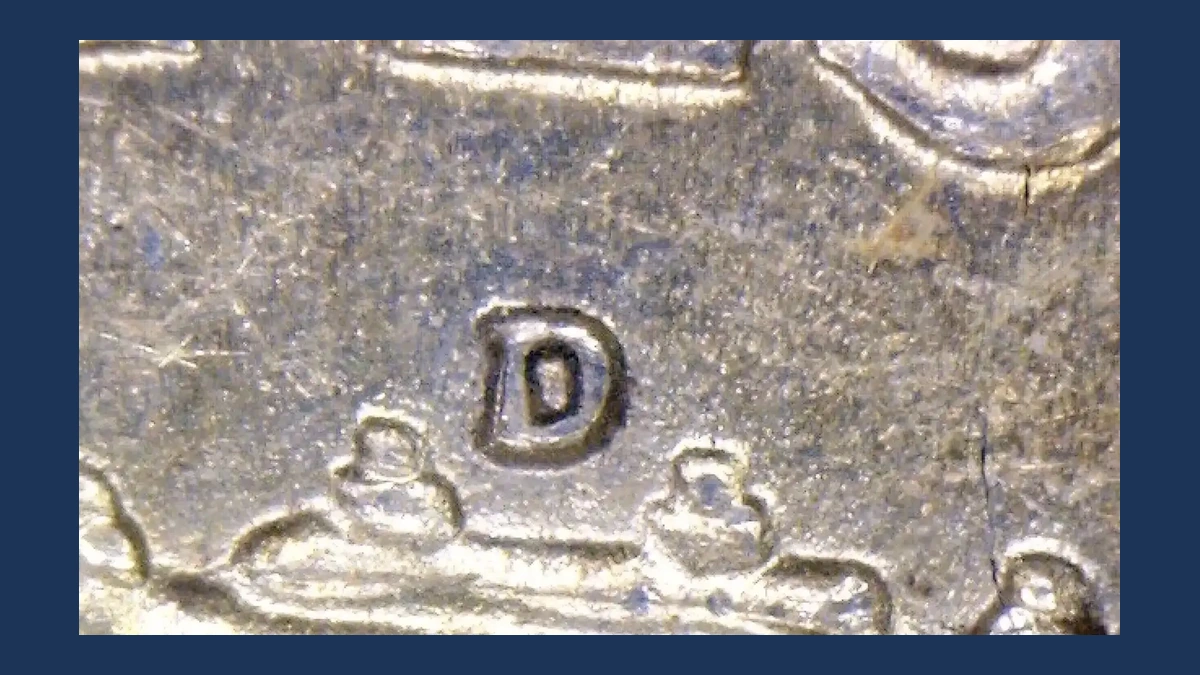
A second piece of a D can appear beside the main mintmark above the Liberty Bell. It survives from an earlier placement of the letter punch.
The final D did not fully erase that first impression in the stamping tool. Later coins received both shapes.
PCGS recognizes the 1950-D FS-501 repunched mintmark, including examples with Full Bell Lines. That catalog number identifies the mintmark variety.
The strength of the bell lines does not create or prove the extra D. An unexplained curve also should not be called an S merely because it differs from the strongest part of the letter.
Estimated Value
PCGS records an MS66 Full Bell Lines FS-501 at $3,055 on July 11, 2019, through eBay. That high-grade transaction does not price every doubled-looking D.
Estimate $100–$800 for identified examples in more ordinary circulated and uncirculated condition. Exceptional preservation with strong bell lines can fit $1,000–$3,100.
Choose the comparison that matches the actual coin. Surface quality, grade, and how much of the earlier D remains visible all help explain the difference.
How to Identify
Take a focused photograph of the D above the bell. Its small size makes a clear close-up more useful than a distant full-back image alone.
Under a 10× magnifier, follow the main D and the extra curve separately. Compare their spacing with a certified FS-501 photograph.
A reflection, flat ledge, or loose-looking lump does not show an earlier letter punch. Wear can hide the most useful part of the extra D.
Keep full photographs to record overall condition, and inspect the ridged edge. A scale and calipers should be compared with 12.50 grams and 30.6 millimeters.
The second D-shaped remnant in the correct position is the main identifying feature.
8. 1950 Half Dollar Off-Center Strike Candidate (Estimated Up to $7,500)
A plain crescent beside an incomplete design can form when a blank is struck off center. Part of the metal sits outside the stamping tools.
Both faces should show the shift. A single misaligned tool can make only one side look off center instead.
The 1950 category remains a candidate without an identified dated specimen in the cited material. The year must be established on any proposed example.
A famous off-center Franklin Proof is dated only to the 1950–1963 series in its description. That date range does not make it a 1950 coin or supply this entry with a sale.
Estimated Value
For an authenticated ordinary-strike example with a secure 1950 date, estimate $2,500–$7,500. The February 2026 Mint Error News guide gives that Franklin series range based on grade and offset.
It is a guide estimate, not a sale of an identified 1950 coin. The date remains part of the comparison.
A large bare area with a readable year helps collectors identify what they are buying. A dramatic shift that loses the date needs a different assessment.
How to Identify
Read the remaining date first and establish that it is 1950. Then compare both faces for matching bare areas and incomplete designs.
A broadstrike can spread outward while keeping its complete design. A misaligned tool can shift only one face, so neither alone proves an off-center blank.
With a 10× magnifier, inspect the border between struck and bare metal for grinding or other later damage. The surfaces should fit the same original strike.
Record the changed outline with calipers against a normal 30.6-millimeter half. A scale should stay near 12.50 grams if no metal is missing, while the edge may lack some ridges.
Matching design loss beside a plain crescent on both sides is the decisive first check.
9. 1950 Half Dollar Proof Quadrupled Die Obverse (Up to $9,600)
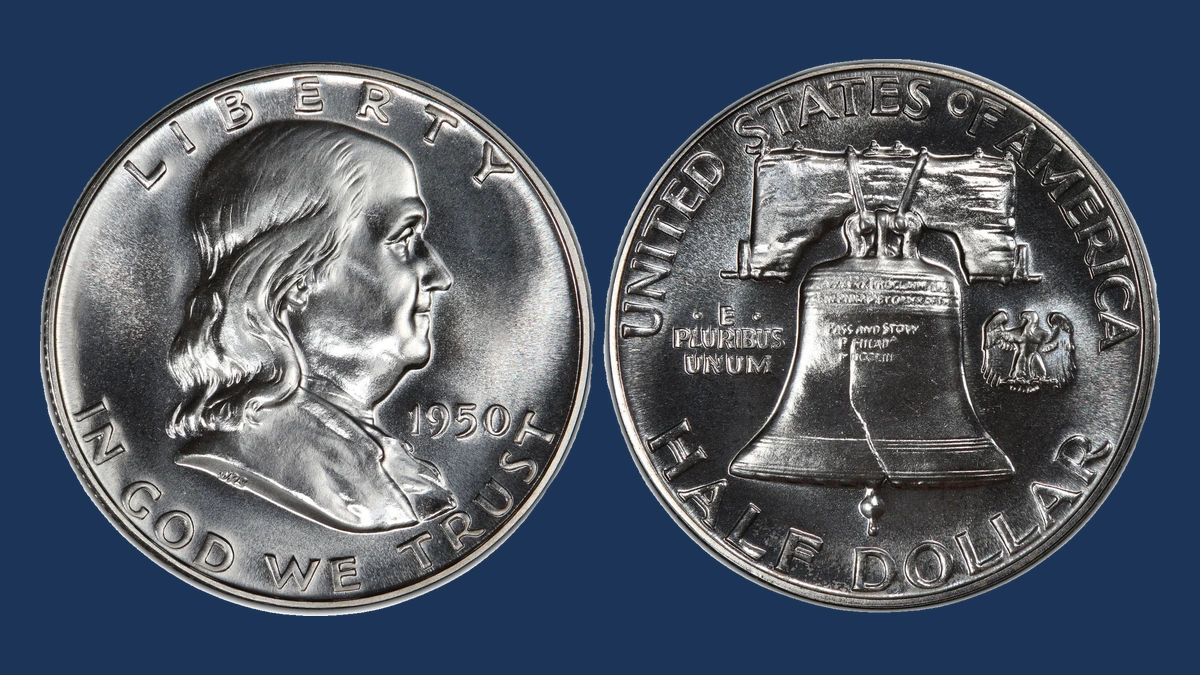
Extra outlines appear in the date and front lettering on the recognized 1950 FS-101 quadrupled die. They were already present in the stamping tool before the coin was made.
This variety belongs to Proofs. Their shiny backgrounds can make the extra edges difficult to read in photographs.
Proofs normally receive repeated blows to bring up the design. Those blows should line up, so they are not the same thing as a tool carrying displaced design outlines.
PCGS lists FS-101 in the Proof series. A circulation strike with a thick-looking letter does not become this variety without the correct repeated pattern.
Estimated Value
The PCGS PR67+ sold for $9,600 at Heritage on April 29, 2018. Attractive, correctly identified Proofs below that exceptional level have an estimated range of $600–$3,500.
For preservation closer to the cited coin, estimate $3,500–$9,600. Marks and contrast still need individual comparison.
The high sale price includes the rare variety and the whole Proof’s excellent condition. It is not a fixed extra charge to add to any ordinary 1950 Proof.
How to Identify
Work across IN GOD WE TRUST, LIBERTY, and the date in small sections with a 10× magnifier. Match the extra outlines with a clear certified FS-101 photograph.
Change the lighting. A bright halo may vanish, while real raised outlines remain part of the coin from more than one angle.
Normal repeated Proof blows and flat ledges from striking movement do not prove a quadrupled tool. Look for the specific arrangement across the affected design.
Keep a certified Proof in its holder. On a loose example, check the ridged edge and use a scale and calipers against 12.50 grams and 30.6 millimeters.
The fastest confirmation is the same persistent extra outlines at the lettering and date as the recognized Proof variety.
Conclusion
The estimated range for these 1950 errors and varieties runs from $40 to $9,600. Small cheek marks sit at one end; exceptionally preserved quadrupled-die Proofs sit at the other.
Check the actual raised shape, not just a nickname or registry title. The mouth, D mintmark, and Proof lettering each need their own comparison.
Keep the mint, finish, and condition attached to every price, and leave original surfaces untouched.