2013 Penny Error List with Pictures

Roosevelt can hide beneath Lincoln on one remarkable 2013-D error. A finished dime entered a penny press, leaving traces of both coin designs on the same metal.
A comparable 2001 cent over a dime sold for $1,320 in September 2025. Smaller 2013 penny errors include raised bars, clipped edges, and blocked letters, with estimated values across the list from $2–$3,500.
Learn what changed on each type, then compare its shape and surface before deciding what it may be worth.
1. 2013 Lincoln Penny Unusual Color and Annealing Claims (Estimated Up to $150)
A dark or oddly colored penny can attract attention without having a mint error. The normal copper surface changes color as it ages.
A Philadelphia 2013 report has linked unusual color to annealing, a heating step in metal preparation. The surface color alone does not demonstrate that cause.
These pennies have zinc centers covered by thin copper, rather than the solid copper-alloy construction of older cents. Their surface must be assessed with that difference in mind.
Later heating, chemicals, and coating problems can produce similar appearances. A photograph of color cannot identify the exact production step.
Estimated Value
After a specific mint-made surface defect is established, use a conditional estimate of $5–$150. The range compares modest manufacturing-related color or coating problems on modern cents.
It is not a recorded sale of a confirmed 2013 annealing error. An ordinary brown penny or one treated with chemicals does not automatically qualify.
The amount depends on the identified cause and the remaining original surface. Strong color can be visually interesting without proving the error needed for this price range.
How to Identify
View the coin beside a normal penny under neutral white light. Avoid colored lamps and edited photographs that exaggerate the difference.
A 10× magnifier can reveal corrosion, added coatings, or disturbed metal. Inspect both faces and the smooth edge without rubbing or testing the surface with chemicals.
Check an accessible coin with a scale and calipers against 2.50 grams and 19.05 mm. Those readings do not establish when its color changed.
A qualified examiner can assess the surface and, when needed, test its metal without damaging it. Natural browning should remain part of the normal comparison.
The first useful finding is a specific production defect supported by the surface, rather than color by itself.
2. 2013 Lincoln Penny Doubled Front and Back Designs (Estimated Up to $200)
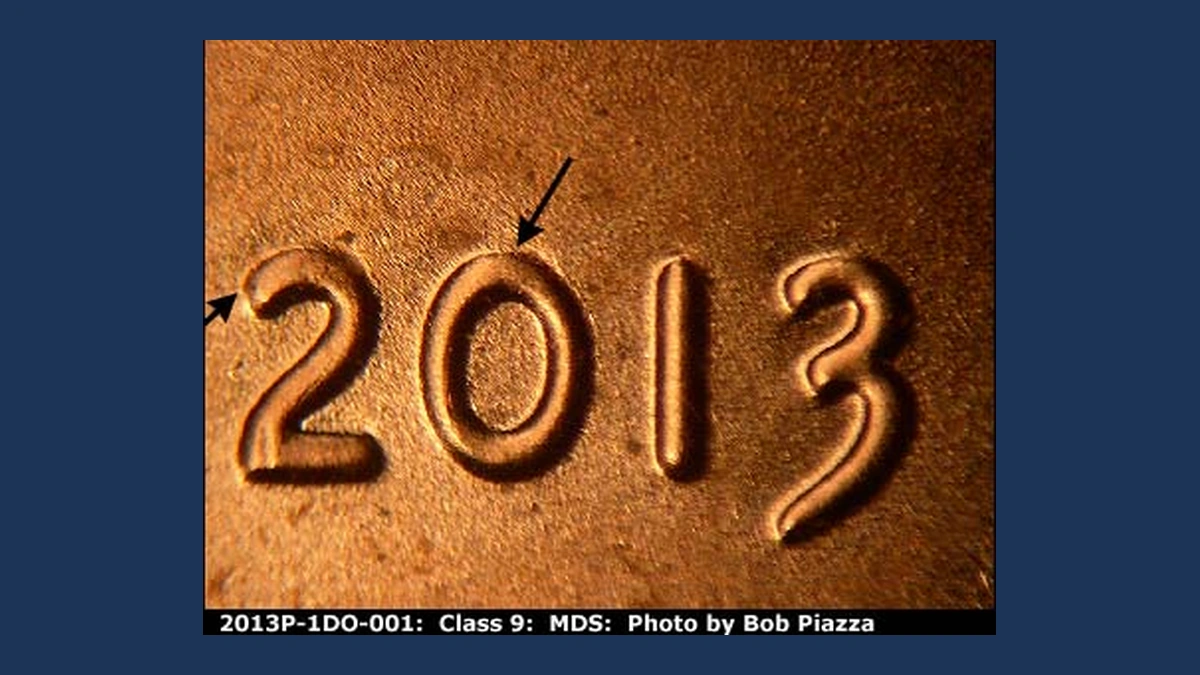
Part of a letter can have an extra edge that remains visible as the light moves. A doubled die has that repeated feature in the steel tool used to stamp the coin.
The tool can pass the same pattern to many pennies. It is different from striking one coin twice.
The Philadelphia report points to notches around lower-left parts of ONE CENT and thickened back-side lettering or designer initials. Denver reports concern separate front and back patterns.
These details belong to separate examples. Flat shelves caused during striking and split copper coating can also create apparent extra edges.
Estimated Value
Allow an estimated $5–$40 for minor identified varieties and roughly $40–$200 for stronger, attractive patterns. These comparisons concern modest modern Shield-cent doubling.
The Philadelphia wording and the Denver reports do not share one verified auction result here. Each needs its own matching pattern and condition assessment.
A clean, easily photographed extra contour has more appeal than uncertain thickness. When one penny has features on both faces, value the whole coin rather than adding two maximum variety prices.
How to Identify
Identify the mint before comparing small details: ordinary Philadelphia coins have no mint letter, while Denver coins have D. Both use the shield back for this year.
At 10× magnification, inspect ONE CENT for the reported Philadelphia pattern. Choose a separate confirmed comparison for a Denver front or back feature.
Change the light direction and follow the actual shape. A reflection moves with the light, while split plating may expose gray zinc beside the copper.
A scale and calipers can check an accessible penny against 2.50 grams and 19.05 mm. Its edge is normally smooth.
A matching extra contour at the same letter corner is more useful than generally thick lettering on unrelated examples.
3. 2013 Lincoln Penny Clipped Planchet (Estimated Up to $250)
A curved bite in the outline may come from the blank punch overlapping an earlier hole. A straight gap can form where the punch reaches the edge of the metal strip.
Either leaves an incomplete blank before the design is struck. The prepared blank is also called a planchet.
Both curved and straight clips appear in the 2013 reports. Their exact locations must remain tied to each specimen rather than a shared clock position.
A later cut can copy the missing shape. The rim and the design beside the gap help show whether the metal was already absent during striking.
Estimated Value
For genuine 2013 clips, estimate $15–$250, depending on gap size, condition, and surviving date. Clearly original edges matter more than the amount of metal missing alone.
A five-percent straight clip on a 2021 Shield cent sold for $114 in September 2025. It was unworn, graded MS64 Red, with some marks and copper-red color.
That later coin offers a comparison for one clip shape. It does not establish the mint or exact outline of a reported 2013 example.
How to Identify
Photograph the entire gap and both points where it meets the rim. A close-up of its center alone can hide signs of later cutting.
Use a 10× magnifier to inspect nearby design and the missing boundary. Saw marks or sharp cut-through lettering suggest the gap was made after striking.
Weigh an accessible penny with a scale against 2.50 grams. Measure intact spans with calipers against 19.05 mm; the missing section should not define the original diameter.
Check the opposite rim for weakness, a useful supporting clue that is not equally visible on every clip. The surviving edge is smooth.
Look for original design formed beside a natural gap, with weight loss consistent with the missing metal.
4. 2013 Lincoln Penny Grease-Blocked Design (Estimated Up to $300)
A few words or shield lines can fade while nearby parts remain sharp. Grease or other material can block the small recesses in a stamping tool.
The blank then fails to receive those details normally. Collectors describe this as a struck-through error.
The 2013 reports mention the shield’s fine lines and IN GOD WE TRUST. They do not establish one coin carrying every weak area or one mint for the group.
Wire and cloth are possible materials in the broader error category, but they are not separate documented 2013 examples here. Wear and corrosion can also remove small details.
Estimated Value
A small blocked area can fit an estimated $5–$50. Broader, clearly original interruptions on attractive pennies can support approximately $50–$300.
For reference, a 2021-D grease error graded MS64 Red sold for $84 in September 2025. That same-design, later-date sale gives context without pricing a specific 2013 specimen.
The estimate assumes that material interrupted the strike. A worn motto or shield roughened by corrosion needs a different explanation and does not qualify simply because detail is missing.
How to Identify
Compare the weak wording with nearby high points on the portrait or shield. General wear often affects the exposed high areas as well.
A 10× magnifier can show whether the weak part retains an original surface. Scraping cuts through finished detail, while corrosion commonly roughens the metal.
Follow the transition into clear design and photograph the other face too. Do not name a particular material just from one blurred letter.
The normal penny weighs 2.50 grams and measures 19.05 mm with a smooth edge. A scale and calipers provide basic checks where the coin is accessible.
Uneven blocked detail beside preserved original design is the starting clue, followed by excluding wear and later surface removal.
5. 2013 Lincoln Penny Copper-Plating Separation (Estimated Up to $350)
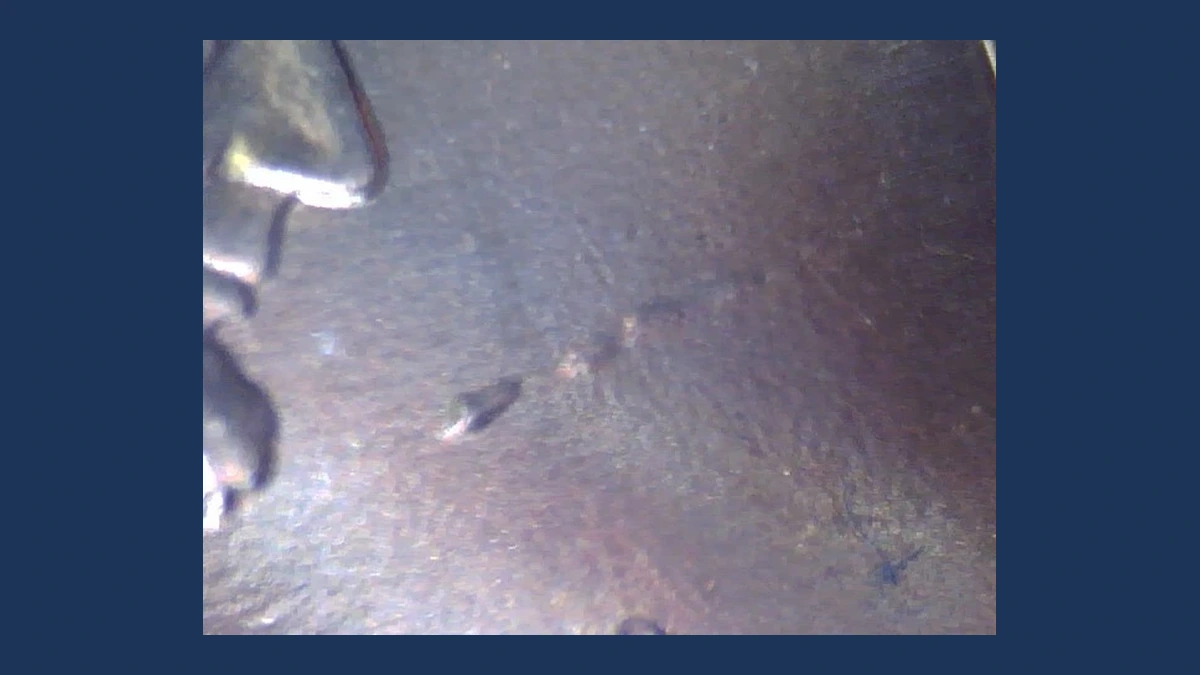
The copper skin can form a bubble or lift away in a thin flap. Gray zinc may appear where the coating separates.
A 2013 report calls this lamination, but the modern penny’s construction matters. This is a copper layer over zinc, rather than a split within an older solid copper-alloy blank.
Poor bonding can allow the coating to lift. Corrosion, later heating, or chemical treatment can cause similar changes after minting.
The attachment and surrounding surface are therefore important. Pulling off a loose piece can remove the evidence needed to decide how the separation began.
Estimated Value
Original plating defects can be estimated at $5–$50 for small bubbles and about $50–$350 for larger, clearly identified separations. These figures compare modern copper-plated cents.
The range is not a documented transaction for the reported 2013 example. A large gray patch alone cannot set a price.
A flap left undisturbed is easier to examine than one partly removed by a finder. Corrosion and deliberate stripping should not be priced as original mint-made separation of the coating.
How to Identify
Use a low light to see how the copper rises from the rest of the surface. A 10× magnifier helps locate the attached edge of a flap.
Do not press a bubble or bend loose metal back into place. Photograph its boundary and the design immediately beside it.
Inspect the smooth edge and both faces for roughness, corrosion, or scraping. Damage outside the most obvious patch may explain the missing copper.
For an accessible coin, compare a scale reading with 2.50 grams and calipers with 19.05 mm. Tiny coating losses can leave measurements close to normal.
The useful clue is a lifted copper skin with an intact attachment, followed by establishing whether its cause belongs to production.
6. 2013 Lincoln Penny Broadstrike (Estimated Up to $350)
The whole design can remain visible on a penny that is wider than normal. A broadstrike occurs when the blank spreads without its usual boundary.
A metal ring called the collar normally holds the edge during striking. Without that restraint, pressure can push the metal farther outward.
The reported 2013 example is a Philadelphia coin, normally without a mintmark. Its full outer lettering is part of the distinction from an off-center strike.
A broadstrike does not require every trace of a rim to disappear. The enlarged shape and original complete designs should be considered together.
Estimated Value
Estimate $20–$350 for confirmed broadstrikes, ranging from modest expansion to stronger examples with attractive original detail. The range compares modern Lincoln cent errors.
It is not a recorded sale of the reported Philadelphia 2013 penny. A wider border can make the error easier to see, but condition still influences what a buyer will pay.
A penny flattened later can also become larger. Crushed lettering and damaged high points prevent that altered coin from being valued as the same error.
How to Identify
Check the outer words on the front and back before judging size. A complete broadstrike retains the intended designs rather than losing part of them beyond the edge.
Use calipers in several directions on an accessible coin. Compare with the ordinary 19.05-mm diameter and check its weight against 2.50 grams using a scale.
A 10× magnifier helps reveal flattened letters or tool marks from later squeezing. Naturally formed design inside the expanded border is the feature to seek.
Inspect the smooth edge without requiring a completely rimless appearance. Different strikes can leave different border shapes.
The combination of complete design, original outward spread, and retained metal distinguishes a broadstrike from a damaged oversized penny.
7. 2013 Lincoln Penny BIE Chips, Cracks, and Cuds (Estimated Up to $400)
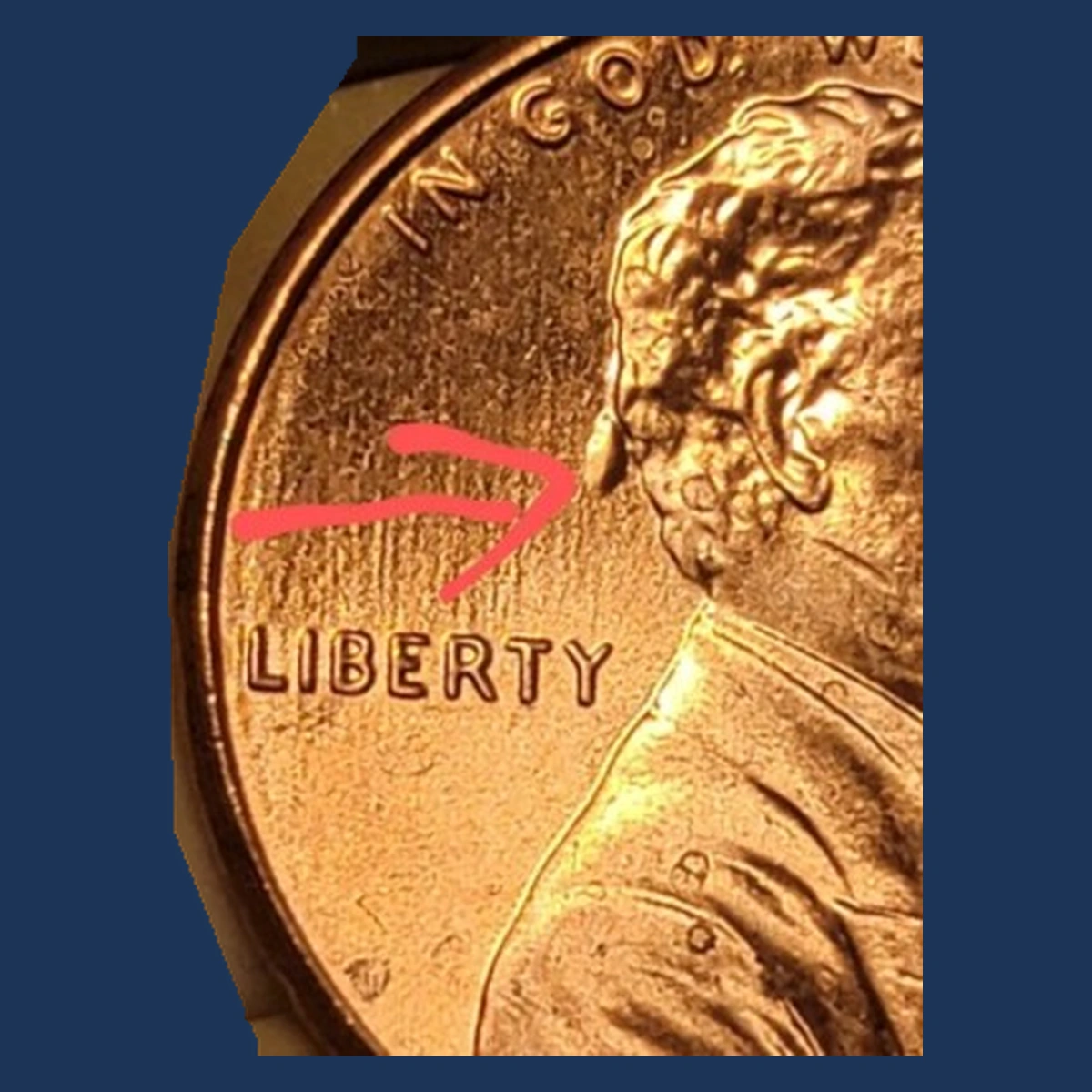
A small extra bar between B and E in LIBERTY makes the word look as though it contains another I. This is the BIE nickname.
A tiny piece missing from the stamping tool lets metal form that bar. A narrow crack leaves a line, while another missing piece can make an internal lump.
Denver 2013 reports include raised cracks, front-side chips, and a rim-connected cud. The cud is a larger patch formed where the tool broke at its edge.
Its opposite face may also be weak. The reverse does not have to look completely normal for a genuine cud.
Estimated Value
An estimated $2–$50 covers small BIE bars, chips, and fine cracks. More prominent rim-connected cuds can fit roughly $50–$400.
A 2021-D retained-cud cent sold for $186 in September 2025. That later example involved a broken tool section remaining partly in place, so it is a related comparison rather than the same 2013 defect.
Do not multiply tiny chips into several full error prices. Size, visibility, and condition belong to the value of the complete coin.
How to Identify
With side lighting and a 10× magnifier, establish whether the feature rises above the surface. A cut into the metal suggests a scratch rather than a copied tool crack.
Check the B-to-E gap for a BIE bar. For a larger patch, follow its boundary to determine whether it actually joins the rim.
A bubble in copper plating can also rise, so inspect the skin without pressing it. Examine the opposite face for related weak detail.
Use a scale and calipers against 2.50 grams and 19.05 mm if the penny is accessible. Inspect the normally smooth edge for dents.
A solid raised feature with the correct letter position or rim connection is the direct identification clue.
8. 2013 Lincoln Penny Off-Center Strike (Estimated Up to $500)
A design pushed beyond one edge leaves another part of the blank untouched. The blank entered the press out of position.
Both faces should reflect that same displacement. The plain metal remains present, unlike the missing piece of a clip.
The Philadelphia 2013 report describes about 35% off center, while Denver examples are listed separately. That percentage does not assign one direction to every coin.
The final outline may be distorted as metal moves during the strike. A genuine example does not have to retain the exact diameter of an ordinary penny, though its date should remain identifiable.
Estimated Value
Use an estimated $15–$100 range for modest original offsets. Stronger, date-visible strikes on attractive coins can reach roughly $100–$500.
A 2006 cent with a four-percent offset sold for $39 in March 2025. Its smaller shift and older Memorial back make it a comparison, not a price for the reported 2013 Philadelphia example.
A bigger plain crescent is not the only factor. Keeping the complete year and an undamaged surface can be equally important to collectors.
How to Identify
Locate 2013 and any surviving mintmark before measuring the displacement. The unstruck area may prevent some normal details from appearing.
Compare both faces at the same scale. Their incomplete designs should fit the same plain crescent, rather than a shift confined to one face.
Use a 10× magnifier along the boundary to look for grinding or removed detail. Original plain metal differs from a finished design that someone has scraped away.
A scale should be compared with 2.50 grams. Record the altered outline with calipers against a normal 19.05-mm cent, and inspect its smooth edge.
Matching design loss on both faces beside untouched blank metal is the feature that supports an off-center strike.
9. 2013-D Lincoln Penny Wrong-Blank Error (Estimated Up to $2,000)
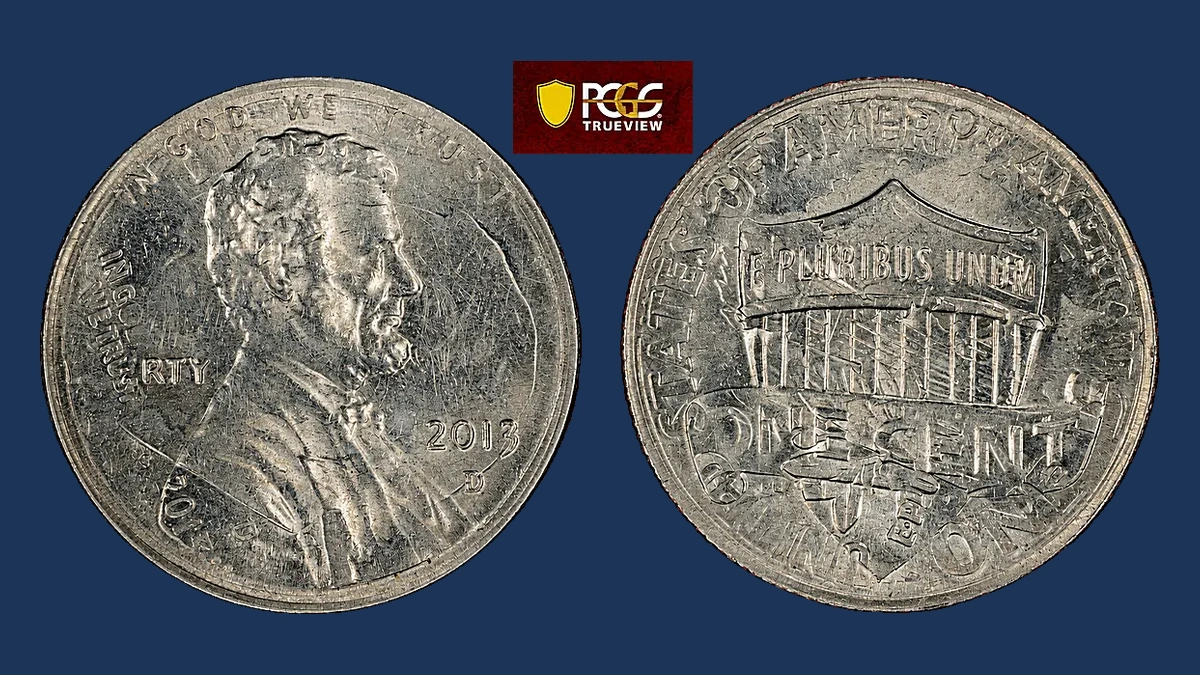
The metal carrying Lincoln’s design may belong to a different coin. A prepared blank is called a planchet, so this is also known as a wrong-planchet error.
The 2013-D report does not establish the original denomination of the blank. A dime or nickel blank should not be assigned simply because it sounds plausible.
A smaller blank may leave outer cent details off the metal. Different composition can change weight or color.
Those clues still need testing. Removing the copper from an ordinary penny exposes gray zinc, and trimming or corrosion can change its dimensions without a mint mistake.
Estimated Value
For an authenticated wrong-blank cent, estimate $300–$2,000, with the identified blank and condition guiding the comparison. This range is conditional on establishing the actual metal.
A 2007-D cent on an unused dime blank sold for $600 in March 2023, graded PCGS MS66. It was unworn with few marks and had the earlier Memorial back.
That sale provides a known-blank comparison. It does not establish that the reported 2013-D coin began as a dime blank or carries the same value.
How to Identify
Write down weight and diameter before guessing which blank was used. A normal 2013 cent is 2.50 grams and 19.05 mm, measured with a scale and calipers where accessible.
Inspect the smooth edge and surface with a 10× magnifier. Copper removal, pitting, and filing can explain unusual measurements on an altered penny.
A blank intended for another denomination does not start with its finished edge grooves. It also should not carry that denomination’s earlier design before its first strike.
If recognizable dime details survive, use the double-denomination comparison instead. Professional metal examination can test the proposed blank without scraping it.
Confirm the cent design on an identified different blank, supported by consistent metal and measurements.
10. 2013-D Lincoln Penny Struck Over a 2013-D Dime (Estimated Up to $3,500)
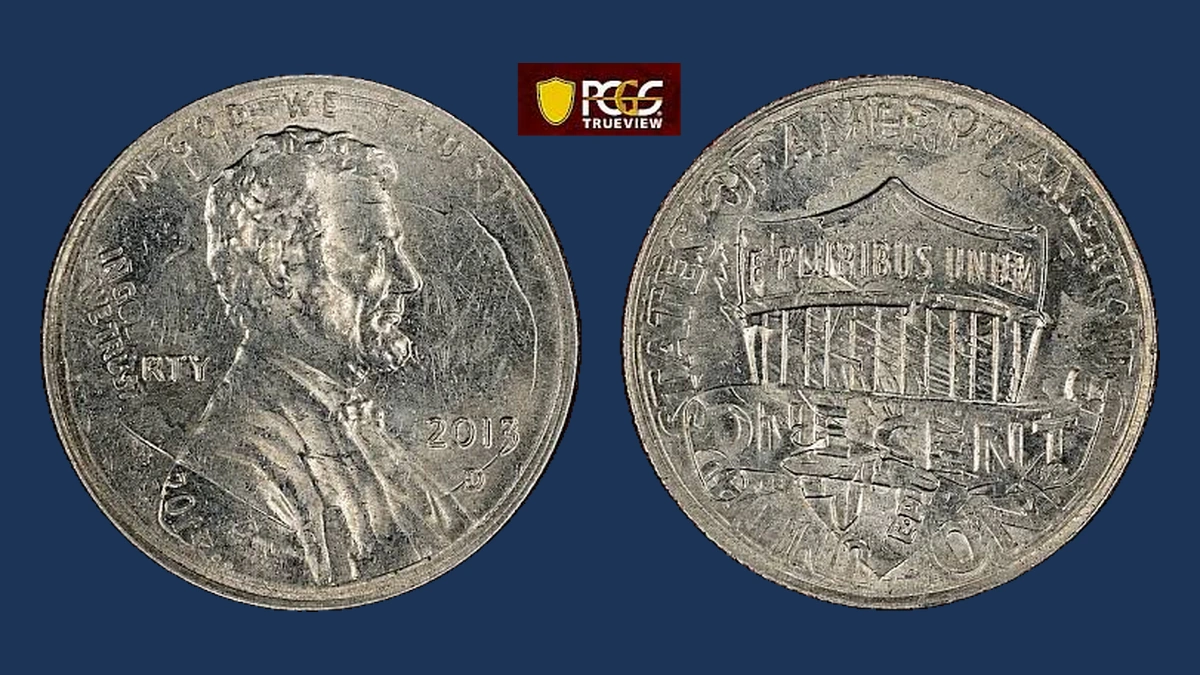
A finished 2013-D dime received a second design in a cent press. Parts of Roosevelt survived underneath Lincoln, along with the dime’s full date.
Mike Byers reported the piece as certified PCGS AU58, meaning only slight wear. On the back, remnants of the torch and dime lettering remain visible beneath the cent design.
This is a double denomination: two different face-value designs on the same coin. The earlier dime image separates it from a cent on an unused dime blank.
Its discovery report described a scarce example. That does not guarantee that no others can ever appear.
Estimated Value
An estimated $1,000–$3,500 provides a working range for this authenticated Shield-cent combination. Clear surviving designs, its unusual date pairing, and condition all influence the comparison.
A 2001 cent struck over a 2001-P dime brought $1,320 in September 2025. That MS66 coin has the Memorial back and is a different-year example.
The estimate is not a reported sale of the 2013-D discovery. Its two visible designs must support the identity before the price comparison applies.
How to Identify
Find an actual dime feature beneath the cent design, rather than relying on gray color. Compare Roosevelt, the dime’s date, and the torch with the reported 2013-D example.
Use a 10× magnifier to follow the two designs through their overlap. Check both faces for a consistent sequence of strikes rather than later pressed-in shapes.
The starting dime normally weighs 2.268 grams and measures 17.91 mm. A scale and calipers can document an accessible piece, allowing for expansion under the cent tools.
Inspect its edge for surviving or distorted dime grooves. Keep certified coins sealed.
Recognizable original dime detail beneath the cent design is the defining clue, supported by the dime’s metal and weight.
Conclusion
The earlier dime design is what makes the 2013-D double-denomination example so distinctive. For smaller finds, a raised bar, a natural gap, or a lifted copper edge provides its own starting clue.
Estimated ranges of $2–$3,500 cover very different errors, so choose the mechanism before choosing a price. Keep front and back photographs together, protect fragile surfaces, and leave metal identification to a qualified examiner when the blank itself is unusual.