1976 Half Dollar Error List with Pictures

A Bicentennial half-dollar design on cent metal was reported sold for $5,280 in 2023. That coin was a double-struck Proof, a specially made collector coin.
These 1976 half dollar errors have estimated values from $25 to $18,000. Some involve ordinary layered metal; others occur on 40% silver coins or completely different blanks.
Read on to see how Independence Hall, the coin’s edge, and a few simple measurements help identify each type.
1. 1976 Half Dollar Broadstrike (Estimated Up to $500)
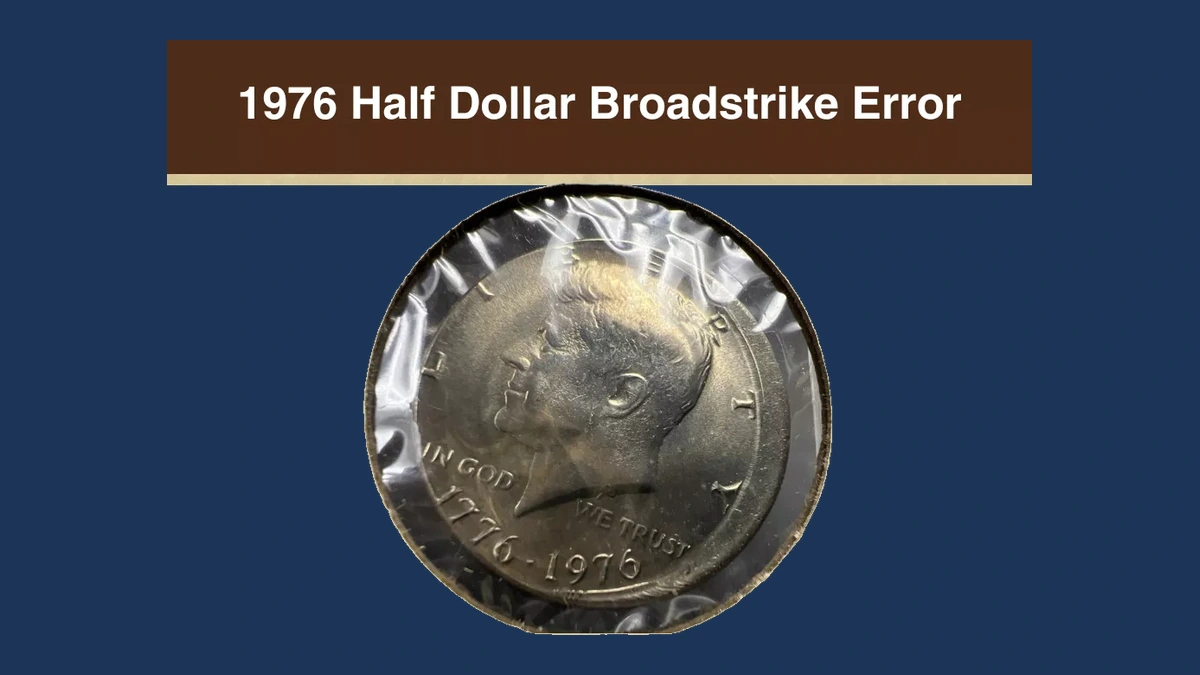
A wide outline and smooth edge distinguish a Philadelphia half graded PCGS MS65, meaning unworn with good surfaces. The coin spread beyond its normal width during striking.
A metal ring normally surrounds the blank, controls its width, and forms the edge grooves. This time, the ring did not hold the blank in place.
The dies, or steel stamping tools, could still leave complete designs. Collectors call this a broadstrike.
It differs from an off-center strike, where part of the design misses the blank. A normal half with its edge filed smooth also lacks the broadstrike’s original spreading.
Estimated Value
Collectible Bicentennial broadstrikes have an estimated range of $100–$500. Strong spreading and clean surfaces usually help a coin stand out.
A 1995 Kennedy broadstrike graded PCGS MS64 sold for $312 in July 2021. That different-year result provides a comparison for the same failure of the surrounding ring.
The known 1976 MS65 shows the broad outline and missing edge grooves. Its grade alone does not set the price, and a filed edge earns no error premium.
How to Identify
Compare the coin’s width with a normal half using calipers in several directions, taking 30.61 mm as the starting diameter. A scale should remain near 11.34 grams, because spreading moves metal outward rather than removing it.
Then use a magnifier to follow the smooth edge into the expanded border, looking for original surfaces without file marks. Later pressure can also enlarge a coin, but it may crush the lettering or roll the rim over.
Check all the outer letters on both faces before deciding that the missing grooves came from a failed surrounding ring. Complete, uncrushed designs inside an expanded outline provide the best first match for this broadstrike.
2. 1976-D Half Dollar Defective Planchet (Estimated Up to $600)
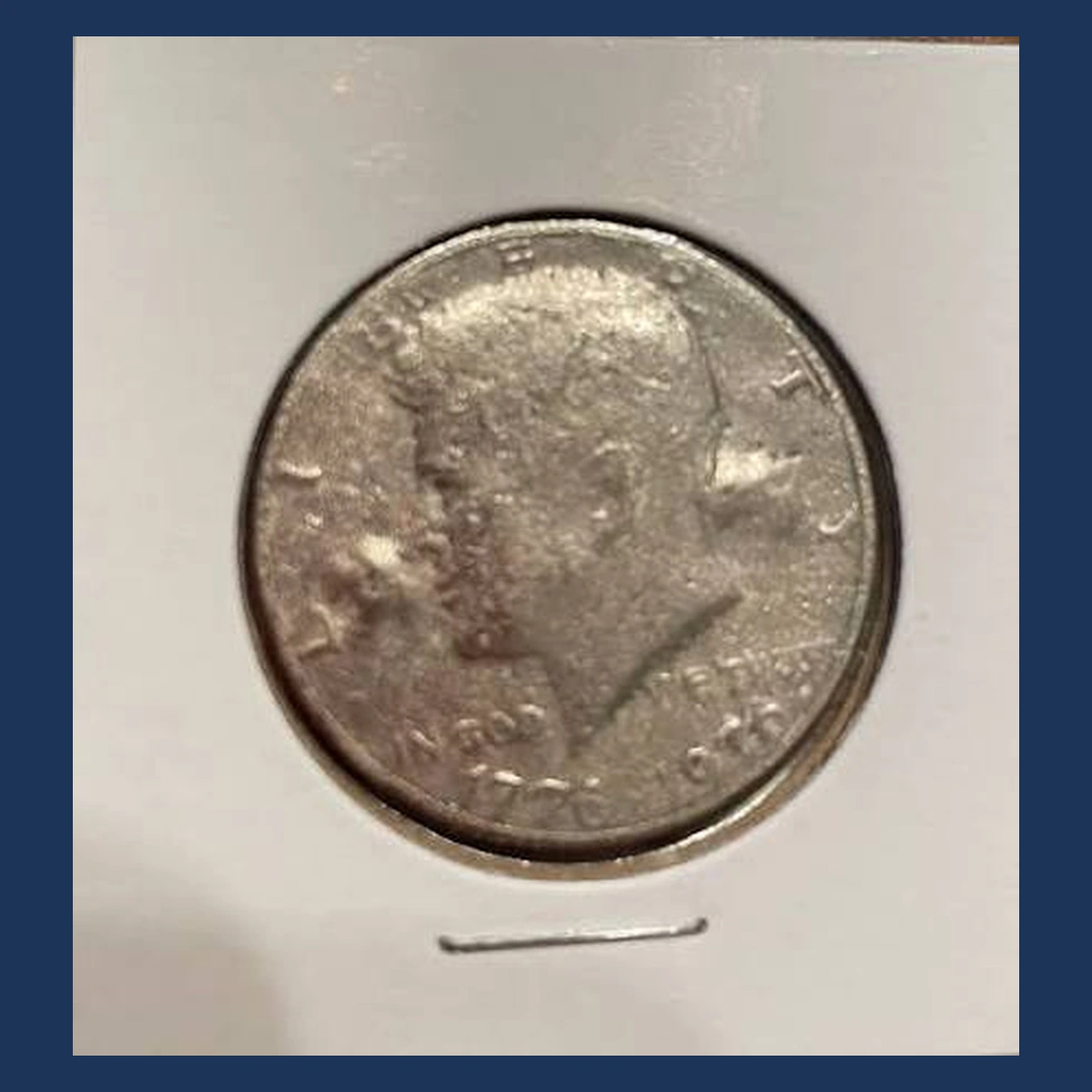
One 1976-D half weighs just 8.1 grams, far below the normal 11.34 grams. NGC graded it MS64 and identified a defective planchet, meaning a defective metal blank.
That label does not say exactly how the blank became defective. It should not automatically be called a missing-layer or thin-metal error.
The blank may have had an unusual surface or outline before striking. The finished design can show how the stamping tools pressed metal around those original defects.
Metal removed later can also lower the weight. The low reading is a clue, not the whole explanation.
Estimated Value
An estimated $150–$600 suits a genuine defective-blank half with a clear defect and similar condition. The 8.1-gram shortage is substantial.
For a nearby market comparison, a 1969-D missing-layer coin graded MS63 sold for $154 in March 2023. It has a different identified cause, so the price does not prove what happened to the 1976 blank.
The wider estimate allows for the Bicentennial coin’s striking appearance. It values the actual defect without adding invented extra errors.
How to Identify
Recheck the 8.1-gram reading on a digital scale if the coin is accessible. Calipers can record its width and thickness beside a normal 30.61 mm half.
Then inspect where the design meets the defective area. A magnifier may show letters or other details flowing into a shortage that existed before striking.
Fresh cuts through finished lettering suggest later metal removal. Check the edge for filing and compare any surviving grooves with the graded MS64 photographs.
The grading description remains broad unless the coin reveals a specific cause. Look first for an original struck design adapting to the defective metal, rather than a completed design cut away afterward.
3. 1976 Half Dollar Partial Collar and Misaligned-Die Combinations (Estimated Up to $700)
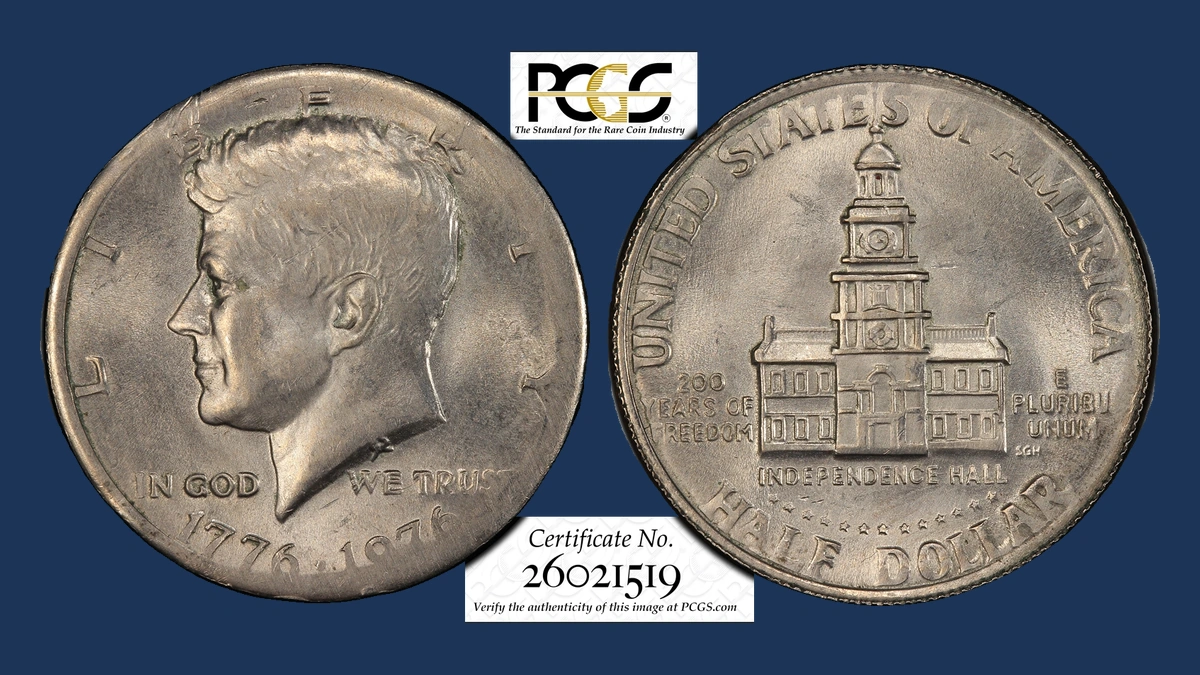
An edge can develop a step when only part of the blank stays inside the surrounding ring during striking. The exposed band spreads farther than the restrained band.
A Philadelphia example was struck on a Type 1 blank. Here that means a blank without a prepared raised rim, not a different back design.
A Denver NGC MS65 also has its front stamping tool shifted sideways. Its edge step and uneven front border are separate features.
A San Francisco clad Proof graded ANACS PR68 Cameo has a tilted step. The step changes height as it travels around the edge.
Estimated Value
The estimated range is $75–$700, from modest edge steps to striking Proof examples. Cameo describes contrast between a frosted design and a shiny background.
Other Kennedy collar-error comparisons run around $165–$312. Those figures include dealer offers and a 1995 broadstrike sale, rather than sales of these 1976 partial-collar coins.
An obvious step and attractive surfaces can support a higher price. The Denver coin’s shifted front and edge step are valued together as one coin.
How to Identify
Turn the coin slowly on its edge under a magnifier. Find where a grooved band meets metal that spread outside the ring.
A straight step stays at a similar height. On the tilted Proof, that height changes around the edge.
These three examples all use ordinary clad metal: bonded outer layers over a copper center. A scale should show about 11.34 grams and calipers about 30.61 mm before any spreading.
A machined groove will not show the same original metal flow. For Denver’s added misalignment, compare both faces separately, then return to the edge: the clearest collar clue is its original step between restrained and expanded metal.
4. 1976 Half Dollar Struck Through Cloth, Threads, or Debris (Estimated Up to $800)
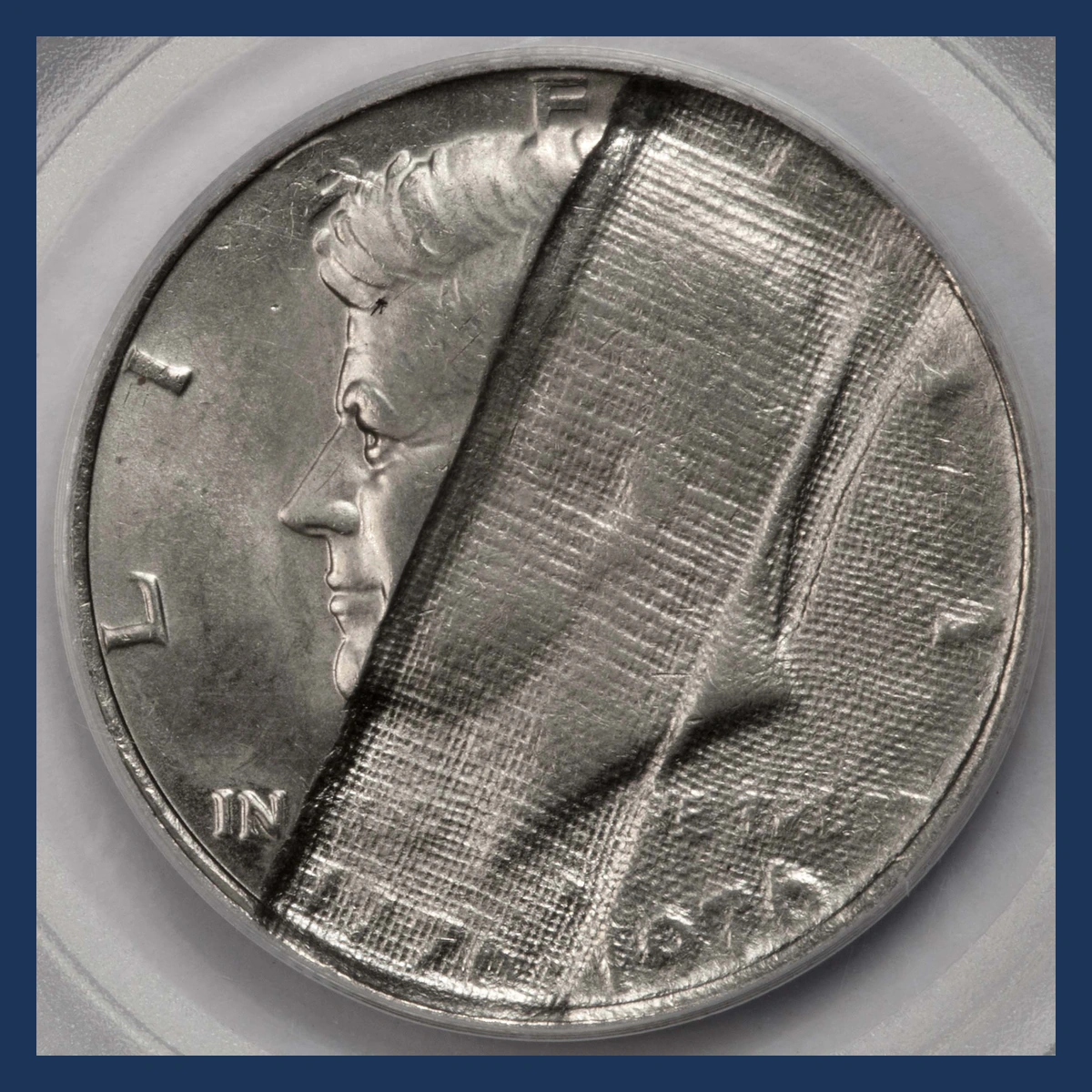
A cloth pattern covers roughly 60% of the front on a Denver half graded PCGS MS65. Fabric blocked the stamping tool and left its own texture instead of the full design.
A separate Philadelphia NGC MS63 also has a front strikethrough, but the trapped material is unnamed. Its mark should not automatically be called cloth.
A silver San Francisco Proof graded ANACS PF66 shows reported thread impressions. These are separate coins with different marks.
Woven texture can point to fabric, while narrow paths may show threads. A smooth depression alone does not identify either material.
Estimated Value
Estimate $75–$800 across these strikethroughs. A large, readable woven pattern or an attractive Proof can bring more than a small plain depression.
A 1969-D MS65 affected on both faces sold for $144 in January 2023. That different-year example provides a comparison for a more modest strikethrough.
The Denver cloth impression covers a larger area. The Philadelphia coin needs pricing based on its visible mark, without an extra fabric premium for material that was never identified.
How to Identify
On the Denver example, use a magnifier to look for repeating woven texture. Check how the original design fades beneath it, rather than assuming that any flattened portrait shows cloth.
The San Francisco thread coin needs its own comparison. Fine sunken thread paths differ from raised cracks or scratches made by cleaning.
A scale should be compared with 11.50 grams for the 40% silver Proof. The Philadelphia and Denver clad coins normally weigh 11.34 grams; all start near 30.61 mm across.
Check width with calipers and inspect the edge for later pressure damage. For the cloth example, the strongest first clue is a regular woven pattern impressed into the interrupted design.
5. 1976 Half Dollar Missing Cladding and Layer Separation (Estimated Up to $900)
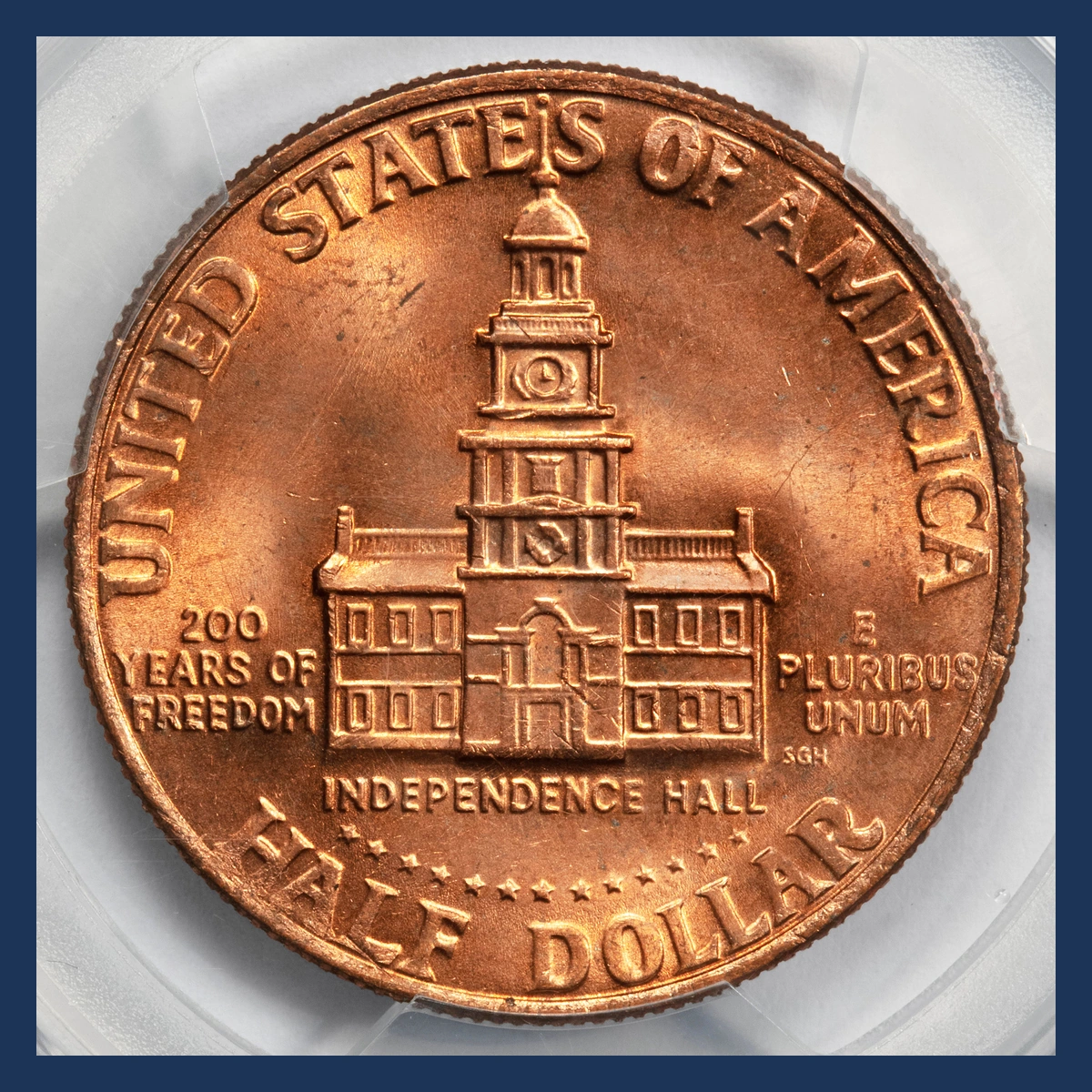
An outer layer can peel, split, or disappear when bonded metal separates. On Denver clad halves, the exposed center is copper; San Francisco’s 40% silver coins also contain silver in the inner metal.
Two separate Denver examples have missing front and back layers. They are graded NGC MS63 and PCGS MS64 respectively.
Among the silver coins, an NGC PR64 Cameo Proof has peeling metal on the back. Another silver coin graded PCGS MS66 has a back layer split from 9 to 3 o’clock.
The attached split and complete layer loss show different amounts of separation.
Estimated Value
The silver PR64 Cameo Proof with back-layer peeling sold for $493.50 in April 2015. An estimated $100–$900 covers collectible missing layers and attached separations.
Metal type, finish, size of the affected area, and condition all matter. A later Kennedy missing-layer sale around $154 in 2023 helps support the lower part of the range.
The silver Proof’s price does not apply automatically to a copper-colored Denver half. Color must agree with a real layer failure.
How to Identify
Leave an attached flap alone. Prying it up can break the remaining bond and change the coin permanently.
Instead, follow the layer boundary with a magnifier until it reaches the edge. A natural opening between layers differs from scratches that cut through a finished surface.
Check the correct metal standard: Denver clad is normally 11.34 grams, while the silver San Francisco coins are 11.50 grams. Calipers compare either version with a 30.61 mm diameter.
Keep the split from 9 to 3 o’clock with its own MS66 example. A visible boundary continuing between the metal layers is the first useful check, rather than color alone.
6. 1976 Half Dollar Rim Cuds and Related Die Breaks (Estimated Up to $1,000)
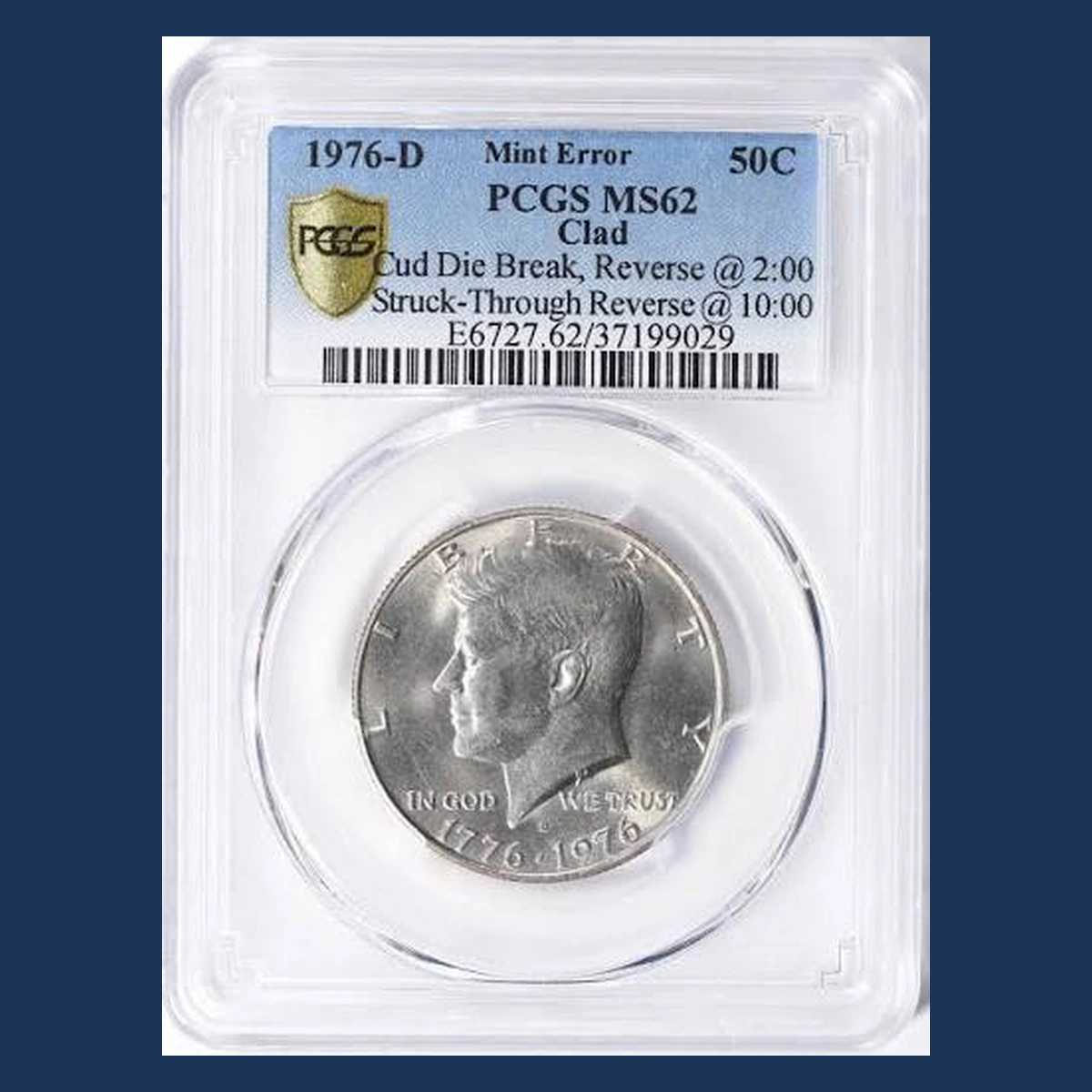
A smooth raised patch can swallow lettering where a stamping tool broke near its edge. Coin metal filled the missing part of the tool, creating a rim-connected lump called a cud.
Bicentennial examples occur on both the portrait side and the Independence Hall side. Their size and position vary.
One large front cud hides the mintmark area. The missing letter cannot be used to identify its mint.
A Denver PCGS MS62 has a back cud plus a separate strikethrough near 10 o’clock. The cud rises above the surface, while the blocked-strike mark sinks into it.
Estimated Value
A Denver MS62 with a back cud and a strikethrough near 10 o’clock sold for $264 in March 2021. That price covers the combined features on one coin.
Use an estimated $40–$1,000 range for small visible cuds through large, dramatic breaks. Older dealer offers of $35 and $200 describe different sizes and are asking prices.
The raised area’s strength and the remaining readable design matter. A faint small break should not inherit a large-cud price.
How to Identify
Use side lighting and a magnifier to follow the raised patch into the rim, checking that the two join naturally. A blob of added material or a folded edge can create a similar silhouette without the same original surface.
A normal clad half weighs 11.34 grams and measures 30.61 mm; a scale and calipers help check the coin itself. On the Denver MS62, inspect the depressed mark near 10 o’clock separately from the raised break.
If the break covers the mintmark, leave the mint unidentified rather than guessing from an invisible letter. The main first clue is a smooth raised area connected directly to the original rim.
7. 1976 Half Dollar Curved, Double, and Triple Clips (Estimated Up to $1,200)
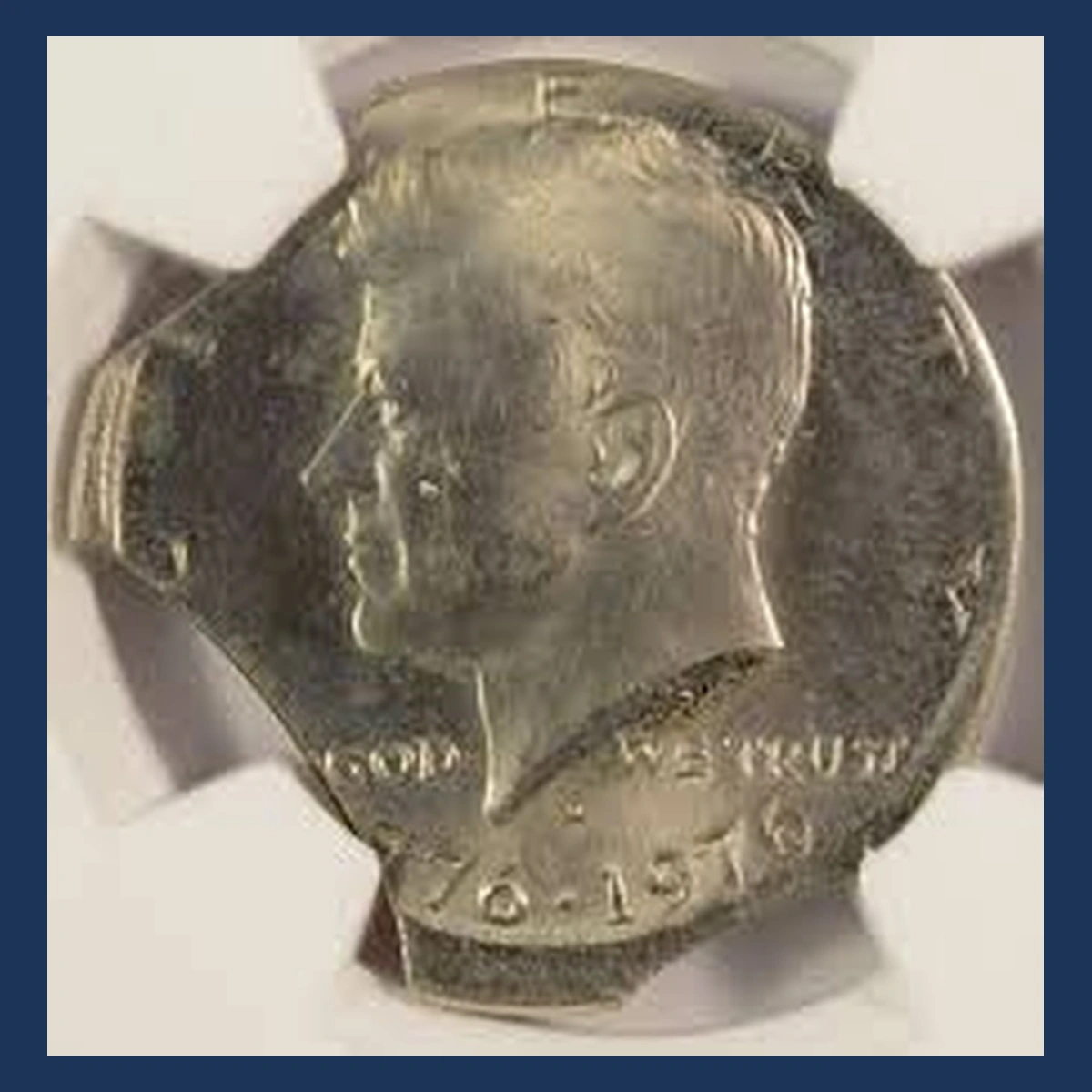
Some Bicentennial halves have more than one curved bite missing from their edges. A Denver NGC MS67 with two clips weighs only 5.5 grams, less than half the normal blank weight.
Other examples include a small 5% Philadelphia clip and separate Denver shortages of 15%, 20%, or 35%. There are also triple clips.
One PCGS MS64 combines a 20% curved clip with a strike 20% off center. These percentages describe different things.
The clip is empty space where metal is missing. The off-center strike leaves a crescent of metal present but without a design.
Estimated Value
Ordinary single clips are estimated at $30–$300. Large multiple clips and the off-center combination extend roughly to $250–$1,200.
A 1971-D coin with a 10% clip was offered by a dealer for $90. That different-year asking price gives a modest comparison, not a sale for a 1976 example.
The very light double clip and the combined error look quite different from a small bite. Their estimates depend on the actual gaps and remaining design.
How to Identify
For the combined error, ask whether each blank-looking area contains metal. The clip has no metal; the off-center crescent still has an untouched surface.
Never add those two 20% figures and call the result a 40% clip. They measure different features.
Use a magnifier to inspect each curved gap and its rim ends. Saw marks, fresh filing, or sharp cuts through lettering suggest later damage.
A scale compares remaining weight with 11.34 grams, and calipers compare surviving widths with 30.61 mm. On a multiple clip, inspect every gap; original rim changes around each missing arc are more useful than simply counting the bites.
8. 1976-D Half Dollar Die-Adjustment Weak Strike (Estimated Up to $1,500)
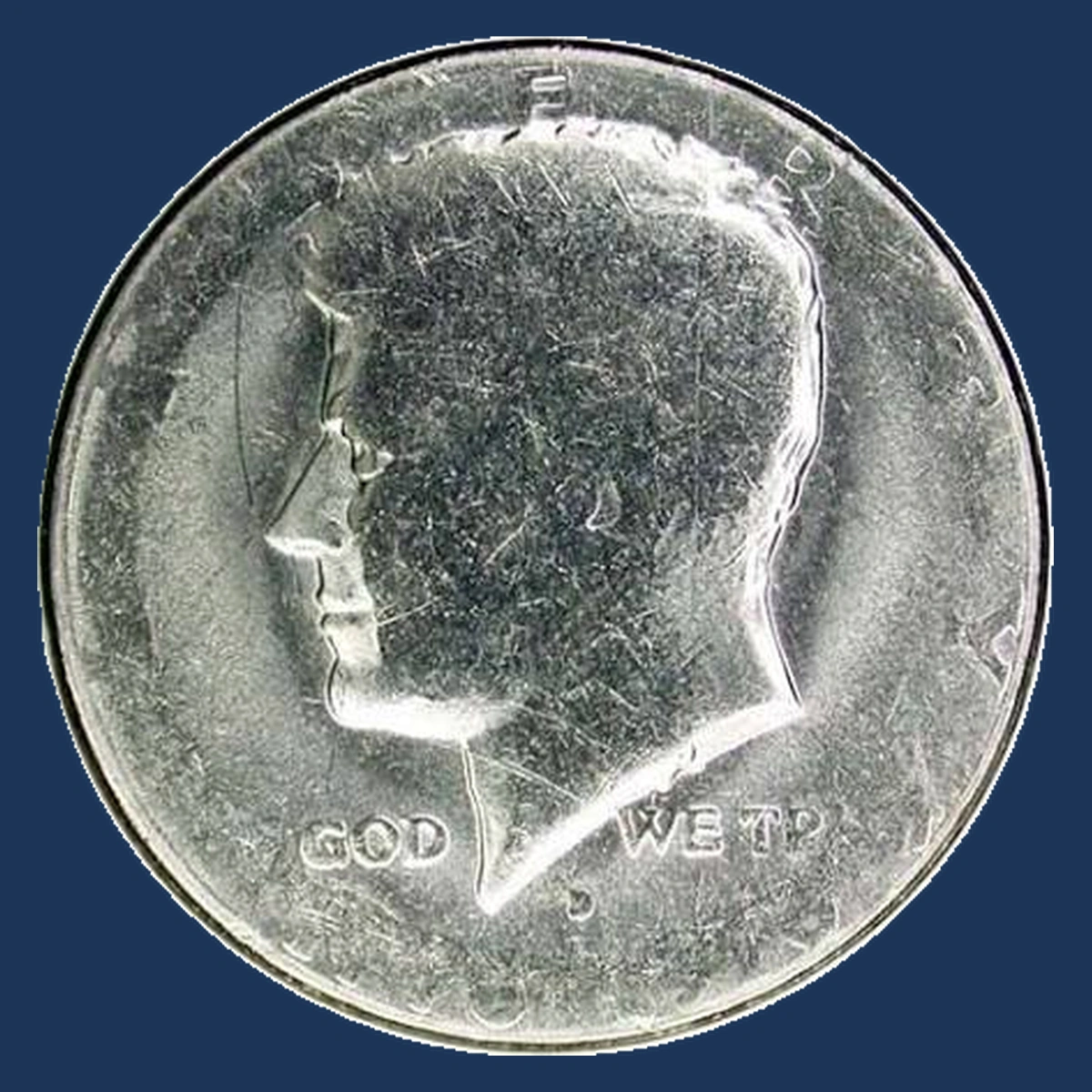
Kennedy and Independence Hall appear only faintly on a reported Denver half graded NGC MS60. It is described as a die-adjustment strike, meaning the tools did not press the design in with enough force.
The design is shallow rather than shifted sideways. This differs from a misaligned die that moves one face’s design off center.
Both faces need inspection. A single weak letter could instead come from something blocking that small part of the tool.
Wear can also flatten a coin, but it changes the surface differently. The reported error depends on original surfaces beneath an overall weak strike.
Estimated Value
A genuine adjustment strike with a readable identity is estimated at $200–$1,500. This is a comparison range, not a recorded sale for the reported MS60.
A 1969-D MS65 strikethrough sold for $144 in 2023. That different cause offers only a lower comparison for a coin with interrupted details.
The upper estimate needs a well-supported weak-pressure error. A worn half or a few missing letters should not receive the same premium merely because its design looks faint.
How to Identify
Study the smooth areas between the faint designs with a magnifier. Original surface shine can help distinguish a weak impression from a coin worn flat in circulation.
Check both faces. Wear usually affects the highest points first, while insufficient pressure can leave broad areas shallow from the start.
A scale should show near 11.34 grams and calipers near 30.61 mm for the ordinary clad blank. Examine the edge too, ruling out later squeezing or thinning.
Compare the remaining portrait and building with the graded example. The first useful pattern is shallow detail across both faces with original surfaces, rather than one isolated missing letter.
9. 1976 Half Dollar Doubled Die Obverses (Estimated Up to $1,500)
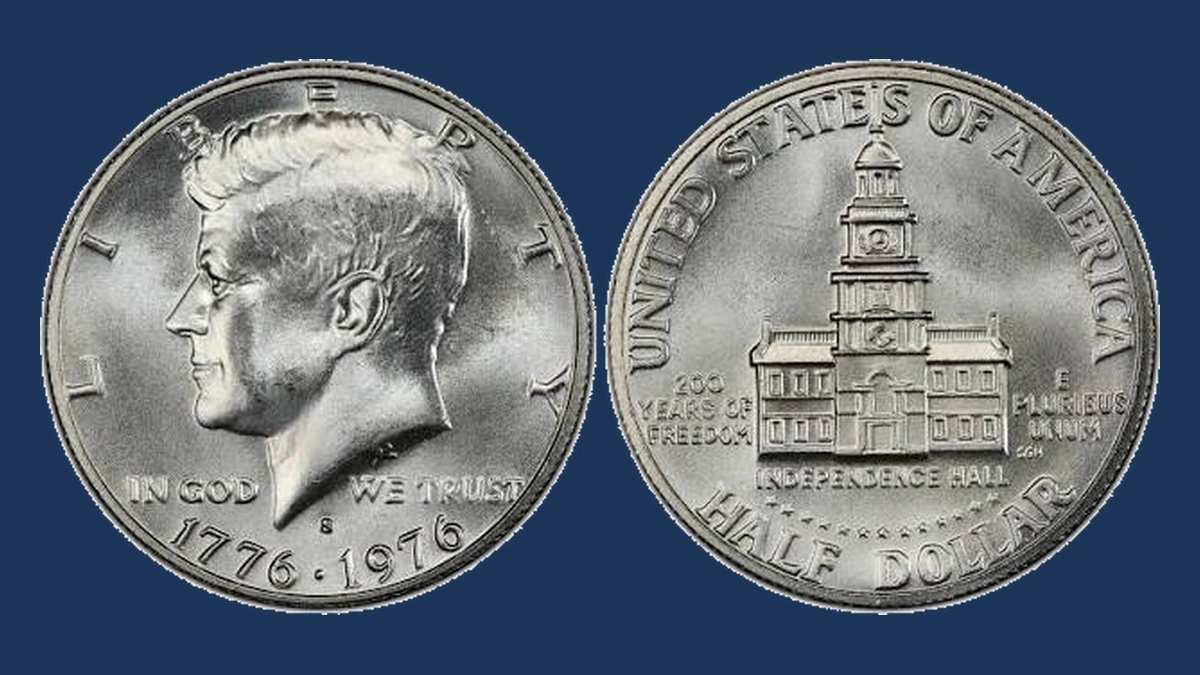
WE TRUST, TY, and the dual date show extra outlines on the silver San Francisco FS-101. A line above Y and a small lump near T provide additional clues.
This well-known example is a regular strike, not a Proof. An S mintmark alone does not identify the finish.
Other San Francisco varieties occur on clad or silver Proofs and have their own doubled details. Philadelphia and Denver reports also describe inward doubling around the date.
Some Proofs show crossed lines near the nose. Those small marks help only when the coin also has the correct main doubling pattern.
Estimated Value
The GreatCollections silver FS-101 archive records $39–$405 sales in grades MS65–MS67. Those coins have no circulation wear, but their marks and overall appearance can differ.
Estimate $25–$200 for minor identified front varieties, or $100–$1,500 for stronger patterns and better-preserved examples. The wider upper estimate is not a recorded price for every Proof variety.
Match the metal, finish, and exact extra outlines before applying the silver regular-strike comparisons.
How to Identify
Sort out the metal and finish before choosing a photo to compare. The normal weights are 11.34 grams for clad and 11.50 grams for 40% silver, both about 30.61 mm across.
A scale and calipers help with loose coins. Keep graded coins in their holders.
For silver regular-strike FS-101, use a magnifier on WE TRUST, TY, and the date. Check the extra outlines before relying on the smaller line above Y or lump near T.
Other varieties need their own photographs, not borrowed marks.
For FS-101, the direct first check is matching raised separation in WE TRUST and TY, rather than a flat shelf beside a letter.
10. 1976-S Half Dollar Doubled Die Reverses (Estimated Up to $2,000)
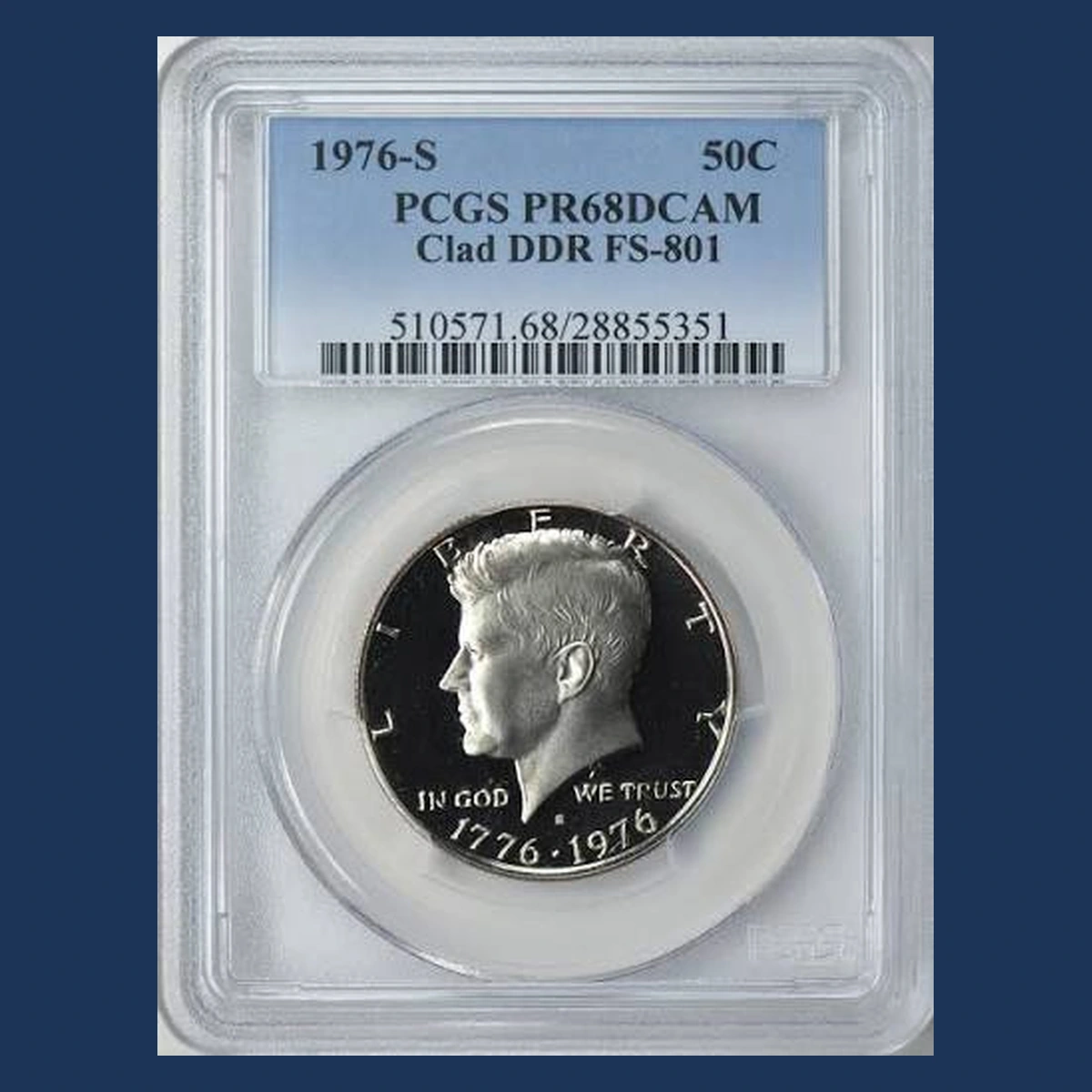
Small letters around Independence Hall can show doubled edges on Bicentennial Proofs. The clad FS-801 has separation in E PLURIBUS UNUM and the designer’s initials, SGH.
Extra details also appear near the star and other lettering. Some letters in 200 YEARS OF FREEDOM look thick, but the clearly split shapes make better clues.
Other Proof back varieties show their own inward-spreading patterns. One is specifically described as a 40% silver coin.
Two further reports do not state the metal. They should not be called clad merely because the better-known FS-801 uses that construction.
Estimated Value
Recorded clad FS-801 PR66 sales include about $881 in September 2016 and $1,528 in November 2015. The estimated range for that recognized variety is $400–$2,000.
Smaller back-doubling reports have a separate estimated range of $25–$300. Their faintness or different pattern matters more than simply sharing the year.
The FS-801 sales concern clad Proofs. A silver Proof needs its own match and cannot automatically take the same price.
How to Identify
Find SGH and E PLURIBUS UNUM, then inspect the letter tips with a magnifier. For FS-801, clear split outlines should agree with the known photographs.
Move the lamp slowly across the reflective background. Real extra metal stays in place as glare moves, while a reflection may disappear.
The star and INDEPENDENCE lettering provide further checks. General thickness in a slogan is less useful than a recognizable second letter edge.
A scale compares clad with 11.34 grams and silver with 11.50 grams; calipers check the common 30.61 mm width. Once the correct issue is established, start with the split details in SGH and E PLURIBUS UNUM.
11. 1976 Half Dollar Struck on a Metal Fragment (Estimated Up to $2,500)
Only part of the Bicentennial design fits on a small, irregular piece graded PCGS MS65. The grading description calls it a struck fragment, not a complete blank intended for another coin.
Its uneven outline is the important difference. A normal wrong-denomination blank begins round, even when it is too small for the half-dollar design.
The surviving records give two conflicting weights: 2.3 grams and 23 grains. Those amounts are not equal.
The actual label or a fresh measurement must settle the weight. Neither figure should be chosen just because it makes the fragment sound more unusual.
Estimated Value
A certified fragment with recognizable Bicentennial details is estimated at $800–$2,500. Its original irregular edge and clear design help support the value.
A 1976 half on a quarter blank sold for $1,020 in 2021. That same-design comparison involves a different starting shape, so it is not a sale for the fragment.
The range remains an estimate for the PCGS MS65 type. It does not depend on choosing one of the conflicting weight descriptions.
How to Identify
Compare the outline with photographs of the PCGS MS65 fragment. With a magnifier, trace the surviving design toward each irregular edge.
A piece cut from a finished half may show sheared lettering or fresh tool marks. An original fragment instead received its design after that boundary already existed.
Weigh the actual piece rather than choosing between the conflicting written weights. Use calipers to record its uneven dimensions.
For comparison, a complete clad half begins at 11.34 grams and 30.61 mm. Those are not expected measurements for the fragment.
The clearest first clue is an original struck design meeting a naturally irregular boundary without later cutting marks.
12. 1976 Half Dollar Off-Center and Uniface Off-Center Strikes (Estimated Up to $3,000)
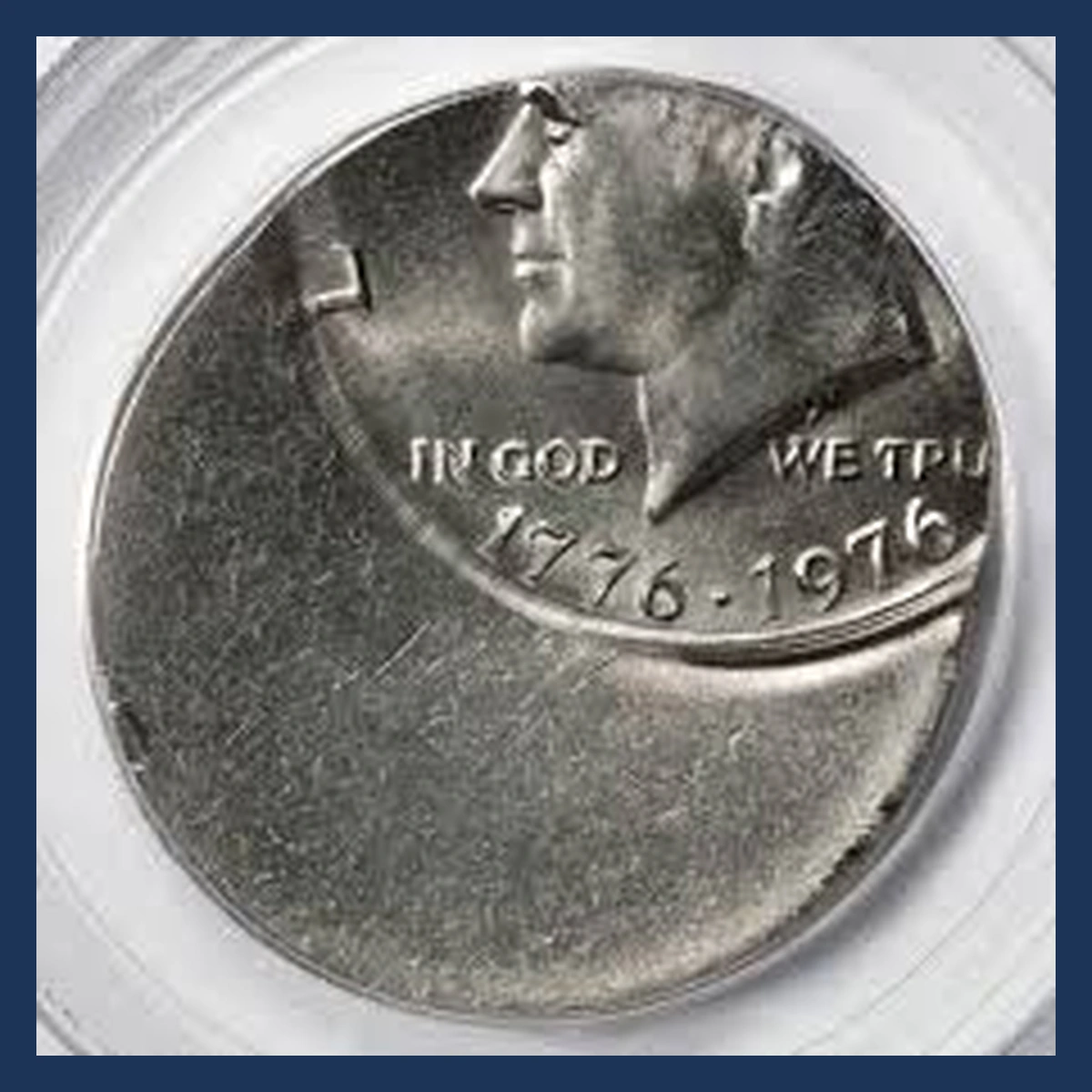
A large crescent of untouched metal sits beside the designs on separate Philadelphia and Denver halves struck 50% off center. Both examples received an MS66 grade, meaning no circulation wear and relatively few marks.
A different Denver coin graded PCGS AU58 has an added complication. Another blank blocked its back during striking, leaving that side without the normal design.
Collectors call this uniface. Its front still shows the shifted strike.
Independence Hall can reveal the Bicentennial type when part of the date is missing. The building cannot identify a mint whose letter is no longer visible.
Estimated Value
Ordinary off-center examples have an estimated range of $150–$1,500. Dramatic combinations with a uniface back may reach roughly $500–$3,000.
A dealer offered a 1976 MS65 struck 10% off center for $350. That asking price describes a smaller shift than the two 50% examples.
Do not multiply the offer by the displacement percentage. Remaining design, condition, and a clear explanation for the blocked back matter more than the percentage alone.
How to Identify
Most off-center coins show corresponding shifted designs on both faces, so compare the front and back before judging the blank area. The AU58 example is different because another blank blocked the back, and its own photographs show what to expect.
Use a magnifier to inspect the crescent for original blank texture, rather than scratches from grinding away a finished design. A scale compares the remaining body with 11.34 grams, while calipers record its shape against the usual 30.61 mm width.
Check the surviving edge grooves and use only readable mint details when assigning the issue. Begin with untouched blank metal beside a shifted strike, then determine whether the back was struck normally or blocked.
13. 1976 Half Dollar Dual Planchet Indent (Estimated Up to $4,500)
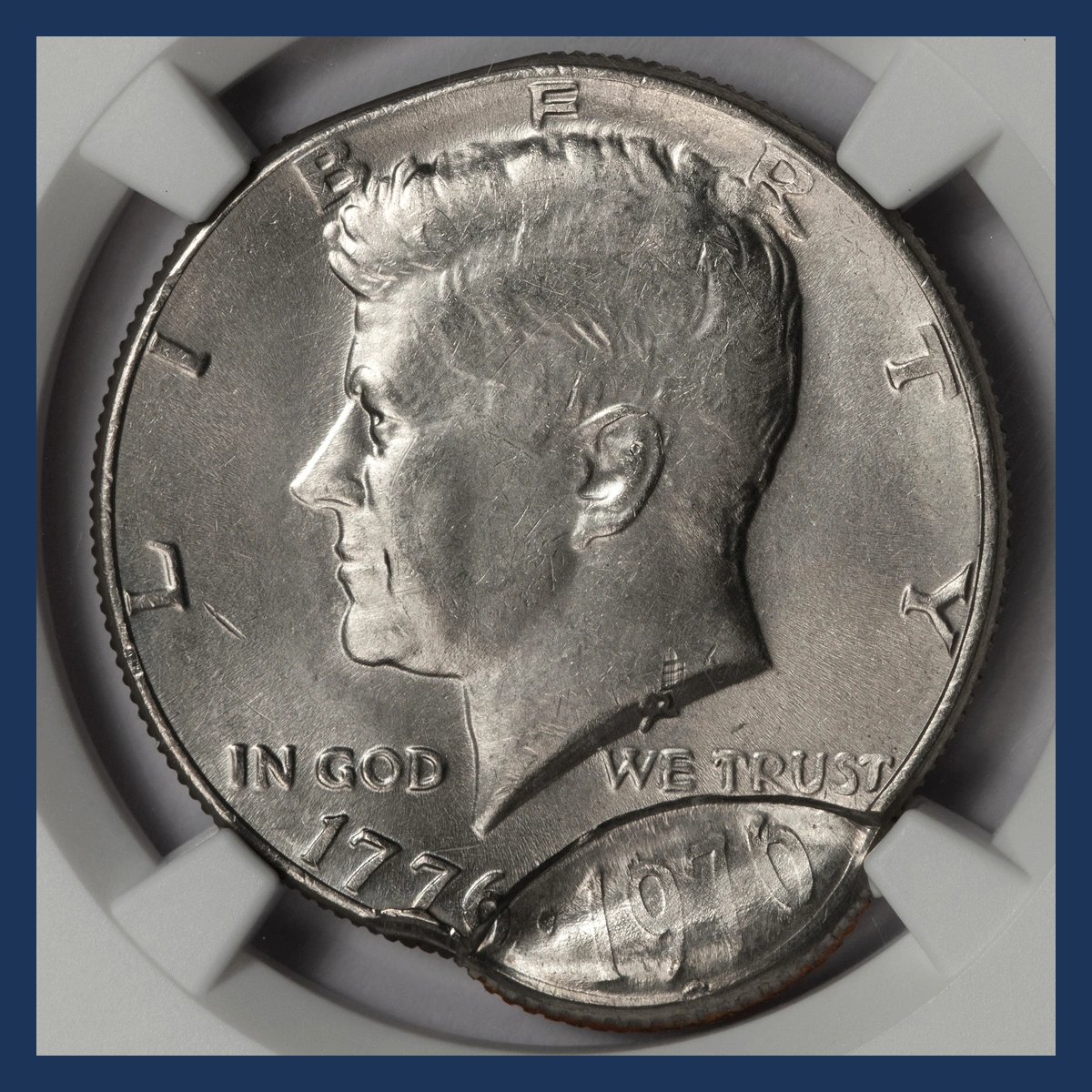
The front of one Bicentennial half was blocked by two interfering blanks. Its PCGS MS65 description calls the result a dual indent.
An indent is the depression made when another metal blank presses into the coin during striking. The entire front was affected on this example.
Because the interfering objects were blanks, their impressions need not show backward lettering or a portrait. Those copied designs would instead suggest contact with a coin that had already been struck.
The back becomes especially useful for identification. A plain-looking front alone cannot distinguish this error from later pressure damage.
Estimated Value
The broad dual indent and preserved coin support an estimated $1,000–$4,500 range. This is not a recorded sale for the Bicentennial MS65.
A different 1969-D half indented by a dime blank was reported sold for $3,840 in 2020. It provides a related comparison, with different coverage and blank sizes.
The two interfering blanks do not automatically double the value. Buyers need clear impression boundaries and enough surviving design to identify the coin.
How to Identify
Turn to the back first and identify Independence Hall. With the front fully obstructed, the building is a better starting point than searching for a complete portrait.
A scale and calipers can compare the coin with the usual clad standards: 11.34 grams and 30.61 mm. Then use a magnifier to follow the two depression boundaries across the front.
Compare those boundaries with the graded MS65 photographs. Backward copied lettering would point to contact with a struck coin rather than a plain blank.
Check the edge and back for crushing from later pressure. The useful first match is two original indent boundaries beside a properly struck Bicentennial back.
14. 1976 Half Dollar Double and Triple Strikes (Estimated Up to $5,500)
A second blow landed 40% off center on separate Philadelphia and Denver halves. On the Philadelphia coin it covered the date, but Independence Hall still shows the Bicentennial design.
A silver San Francisco PCGS MS65 received three strikes. Its second and third impressions each landed 20% off center.
A separate clad Proof graded PR66 Ultra Cameo has a second impression shifted slightly toward 6 o’clock. Ultra Cameo describes strong contrast between frosted designs and a shiny background.
An older report also describes a dished double strike with blocked front contacts. These errors differ from ordinary aligned Proof blows.
Estimated Value
The Philadelphia NGC MS66 double strike brought $2,232.50 in January 2017 auction coverage. An estimated $500–$5,500 spans readable double strikes, the silver triple strike, and more dramatic combinations.
The upper allowance reflects complexity and condition. It is not a recorded price for each listed example.
The older dished coin appeared in a $350 dealer offering. That historical asking price should stay separate from the completed auction result and from the other striking patterns.
How to Identify
On the silver triple strike, trace three sets of design details with a magnifier. A later blow may flatten part of an earlier portrait or cut across its lettering.
Do not count every doubled letter as another strike. Each blow should leave a recognizable part of a whole design.
The Proof needs its own comparison near 6 o’clock. Ordinary repeated Proof blows should line up rather than create that shifted lower outline.
Check loose coins with a scale: silver starts near 11.50 grams and clad near 11.34 grams. Calipers compare spreading with 30.61 mm.
Look first for distinct crossing impressions and places where the later design visibly flattens the earlier one.
15. 1976 Half Dollar Struck on Quarter or Nickel Planchets (Estimated Up to $6,000)
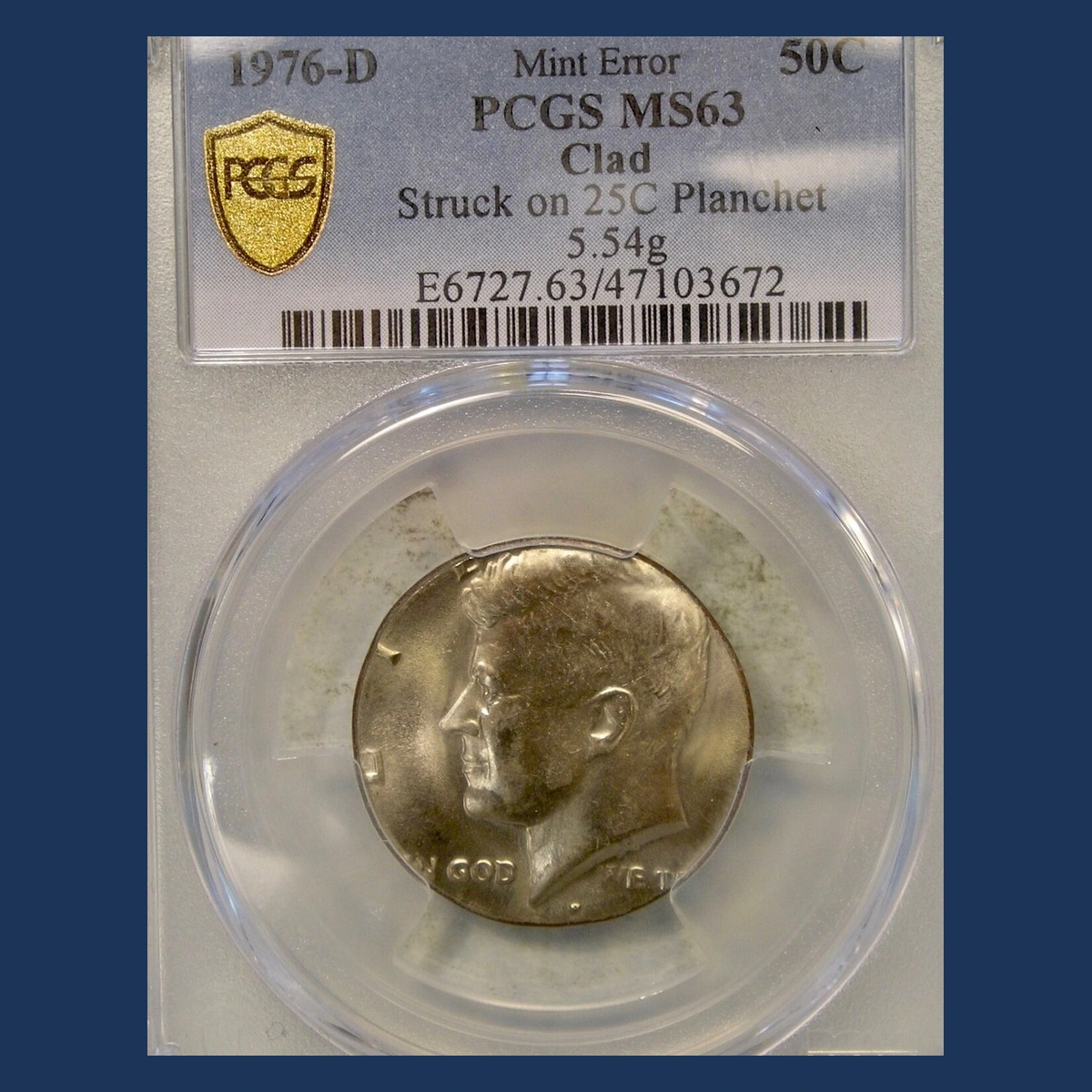
The large half-dollar design can run beyond the edge of a blank meant for a quarter or nickel. One NGC MS63 quarter-blank example weighs 5.6 grams.
A quarter blank has outer metal layers over a copper center. A nickel blank is solid copper-nickel metal, so its edge has a different construction.
Reports include a Philadelphia nickel-blank coin and separate San Francisco MS64 and PR63 examples. The last is a Proof; the MS64 is not.
Independence Hall survives on the San Francisco MS64, while the top of Kennedy extends beyond the blank. No earlier nickel design is required.
Estimated Value
The quarter-blank MS63 sold for $1,020 in July 2021. The San Francisco nickel-blank MS64 brought $3,360 in September 2019, while the separate PR63 brought $4,465 in January 2017.
Estimated values are $800–$3,500 for quarter blanks and $2,000–$6,000 for these nickel-blank comparisons. The Proof result belongs to its own coin.
An S mintmark does not make the ordinary MS64 a Proof. Match the starting metal and finish before choosing a price.
How to Identify
Use a scale before relying on color. A quarter blank starts near 5.67 grams, a nickel near 5.00 grams, and the normal half at 11.34 grams clad or 11.50 grams silver.
A magnifier can show a quarter blank’s layered edge or a nickel blank’s solid metal. The struck outline may spread, so record its actual width with calipers against the half dollar’s normal 30.61 mm.
Check for original design running off the small blank, rather than fresh cuts around a reduced half dollar. The easiest first distinction combines low weight with the correct layered or solid edge beneath genuinely struck half-dollar details.
16. 1976 Half Dollar Full, Partial, and Off-Center Brockages (Estimated Up to $6,500)
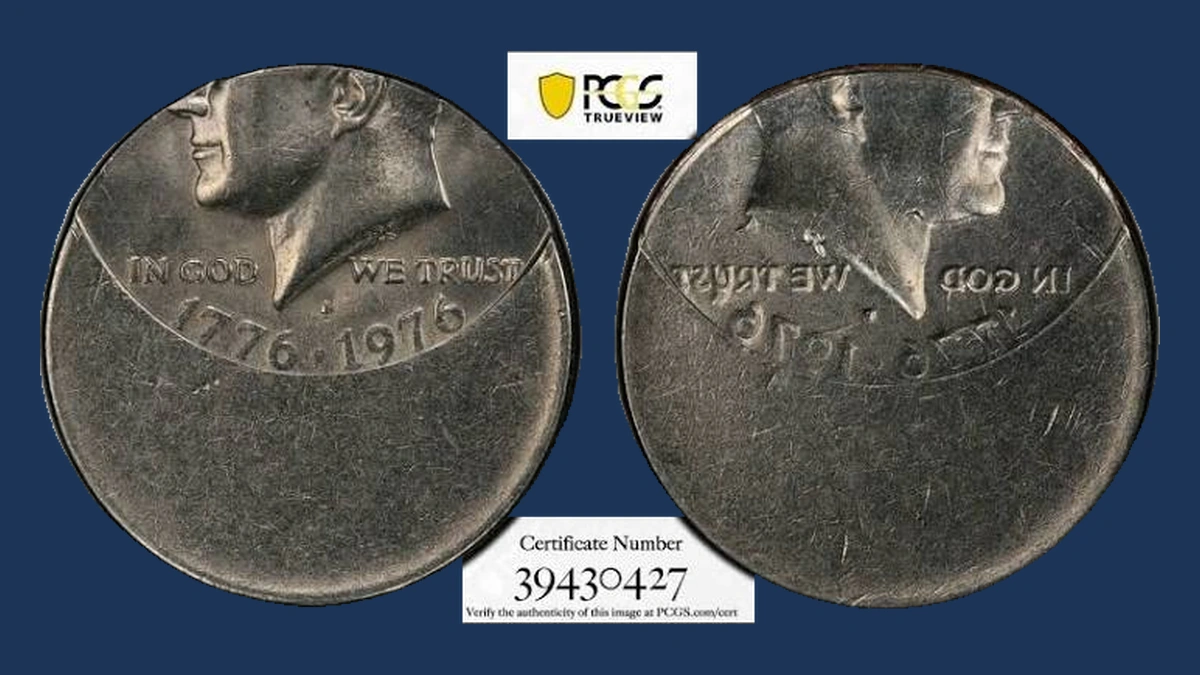
Kennedy appears backward and sunken into the back of a Denver PCGS MS64. Independence Hall is missing there because an already struck coin, rather than the normal tool, pressed its design into the blank.
This is a full brockage. The front still has the normal raised portrait.
The same coin also has a short rod-shaped impression near the date. That small mark is separate from the backward portrait.
Other examples combine partial brockage with off-center or repeated strikes. One older report describes a partly backward back design on a coin struck 10% off center.
Estimated Value
The full-brockage MS64 sold for $4,465 in January 2017. Another brockage, graded NGC MS64 and struck 45% off center, brought $2,300 in December 2011.
The estimated range is $500–$6,500, covering small partial copies through clear full backward designs and attractive combinations. Size and readability help explain the spread.
The rod-shaped impression belongs to the full-brockage coin. It adds to its description, but should not be priced again as a separate coin.
How to Identify
Try reading the abnormal lettering. It should run backward, and a magnifier should show it sinking below the surface rather than standing above it.
On the full-brockage MS64, compare that copied back with the normal raised portrait on the front. The small rod mark near the date needs its own close-up.
A scale can check the clad weight near 11.34 grams; calipers compare the altered outline with 30.61 mm. Inspect the edge and both faces for signs of later squeezing between finished coins.
Off-center examples also need their own blank areas checked. The clearest first brockage clue is recognizable, backward lettering pressed down into the metal.
17. 1976 Half Dollar Die Caps, Capped-Die Strikes, and Mated Pairs (Estimated Up to $7,500)
A half dollar can grow steep walls after it sticks to a stamping tool and receives more blows. The Denver PCGS MS65 deep cap began with a backward design impression and stretched as striking continued.
The cap is the stuck coin itself. A different NGC MS65 shows the distorted design left on a later coin struck beneath a cap.
A separate paired set contains coins graded PCGS MS65 and MS62. Their matching surfaces show that they interacted during striking.
That pair is not automatically the same event as the independently listed deep cap. Each has its own physical evidence.
Estimated Value
The MS65 deep cap sold for $5,170 in January 2017. The separate matched pair brought $3,760 that month for both coins together.
Estimate $150–$800 for coins struck beneath a cap, and $2,500–$7,500 for dramatic caps or convincing matched pairs. The pair’s total is not a price for each member.
Deep walls, readable stretched designs, and good surfaces improve appeal. Two similar-looking damaged coins do not establish a pair.
How to Identify
For a claimed pair, compare the two interacting surfaces side by side. The raised and sunken shapes should fit each other, rather than merely look similar.
Weigh each coin separately against the normal clad 11.34 grams. Calipers can record spreading beyond the usual 30.61 mm width.
On a deep cap, use a magnifier to follow the original design as it stretches up the walls. Look for seams, cut edges, or bends that suggest later assembly or damage.
A receiving coin may stay fairly flat because it was beneath the stuck cap. For pairing, begin with complementary design shapes; for the cap, begin with an original design stretching continuously into the walls.
18. 1976 Half Dollar Struck on Cent Planchets (Estimated Up to $8,000)
A tiny copper-colored blank can carry parts of Kennedy and Independence Hall. One San Francisco NGC PR64 Brown received a single half-dollar strike on a 3.1-gram cent blank.
A different Proof, graded PR65 Red and Brown, received two displaced strikes on cent metal of the same recorded weight. Parts of two portraits overlap the building details.
Those color terms describe remaining red color and brown toning. They do not name extra errors.
Regular-strike reports include a Denver PCGS MS63 Red and Brown with nearly the full date. A missing mintmark area cannot by itself identify Philadelphia.
Estimated Value
The double-struck PR65 Red and Brown was reported sold for $5,280 in 2023. Estimate $2,500–$8,000 for identifiable Bicentennial half dollars on cent blanks.
For a different-year comparison, a 1969-S single-struck Proof on cent metal brought $4,680 in 2022. It does not have the same overlapping strikes.
The brown single-strike Proof, double-struck Proof, and Denver ordinary strike each need their own comparison. Copper color alone does not make their values interchangeable.
How to Identify
The recorded Proofs weigh 3.1 grams, so a scale offers an immediate check. That is far below the intended half-dollar weights of 11.34 grams clad or 11.50 grams silver.
Use calipers to record the smaller outline against 30.61 mm. Examine the edge with a magnifier to rule out a normal layered half that was cut down and plated.
On the double strike, look for Independence Hall remnants near 1:30 and 3 o’clock.
Separate them from the later portrait and S mintmark, then find earlier ear and neck details.
The first useful match combines cent-like weight with genuine half-dollar details overlapping on the small original blank.
19. 1976-S Half Dollar Reported Foreign-Planchet Proof (Estimated Up to $10,000)
Uneven rims and incomplete edge grooves appear on a reported 1976-S foreign-blank Proof. The dealer handling the PCGS PR67 Deep Cameo gave its weight as about 9.75 grams.
The dealer suggested a Philippine one-piso blank as a possible explanation. That suggestion does not firmly identify the foreign denomination.
On the front, unusual metal spreading appears around 1 to 3 o’clock. On the back, the rim is weak from about 3 to 6.
These visible features can be checked without guessing the metal mixture. The coin’s actual material needs testing before a specific foreign blank is named.
Estimated Value
An estimated $3,000–$10,000 uses major Kennedy Proof wrong-blank errors as comparisons. A 1976-S nickel-blank PR63 sold for $4,465 in 2017, while a magnetic-blank 1968-S PR62 brought $9,000 in 2025.
Those coins use different blanks and grades. They help frame an estimate but are not sales of the reported foreign-blank coin.
Its dealer reported a June 2025 sale without giving the amount. No price is assigned to that private transaction here.
How to Identify
Compare the rim with a normal clad Proof, concentrating on the front from 1 to 3 o’clock and back from 3 to 6. A magnifier should show original weak formation rather than filing around a finished rim.
Check the reported 9.75 grams on a scale, and use calipers to measure width and thickness beside an ordinary 30.61 mm half. Its intended clad blank weighs 11.34 grams, but the shortage alone cannot identify a foreign country or denomination.
Metal testing is needed before accepting the dealer’s one-piso suggestion; the coin’s grading photographs also provide an essential comparison. Begin with the specific weak-rim areas and low weight, rather than choosing a foreign blank by appearance.
20. 1976 Half Dollar Reported Strike on a Brass Gear (Estimated Up to $15,000)
A historical report describes the Bicentennial half-dollar design on a brass gear. Teeth surround the object instead of the normal round coin edge.
The account traces it to a 1984 Weinberg dealer list. It does not provide a modern grading description, measured weight, or identified mint.
Surviving Independence Hall details connect the reported strike with the Bicentennial design. The toothed shape shows that the starting object was unlike a normal blank.
The report does not explain how the gear reached the press. Its unusual shape should not be turned into an invented story about how it was made.
Estimated Value
For a genuine Mint strike on this unusual object, estimate $4,000–$15,000. This is a specialist comparison range, not a recorded gear sale.
A 1970-S half struck on an aluminum token appeared in a $5,760 lot in 2021. The lot also included a normal token, so that total was not for the error alone.
The gear’s original teeth and recognizable design would be central to value. A later-made imitation would not fit the estimate.
How to Identify
Inspect the teeth before judging the portrait or building. A magnifier should help distinguish an existing gear struck by the tools from teeth cut into a finished coin.
Look for original design spreading across the toothed object’s surface. Fresh cuts through completed details suggest later work.
Record weight with a scale and dimensions with calipers. Normal half-dollar standards—30.61 mm and 11.34 grams clad or 11.50 grams silver—are only comparisons, not expected gear measurements.
Match the surviving Independence Hall details with the historical example and inspect the entire edge. The first useful clue is an original strike meeting pre-existing gear teeth, rather than brass color by itself.
21. 1976-D Half Dollar Overstruck on a 1975-D Dime (Estimated Up to $18,000)
Two different coin designs share one small piece of metal on a reported NGC MS66. A 1975-D Roosevelt dime was struck again by Denver’s Bicentennial half-dollar tools.
The earlier dime had already received its design. This makes the error different from a half dollar struck on a fresh, undecorated dime blank.
The earlier dime’s portrait, lettering, and date help identify the smaller coin beneath the later strike. Both sets of details matter.
The 1975 date belongs to the dime underneath. Independence Hall identifies the later Bicentennial strike; it does not create a normal half dollar dated 1975.
Estimated Value
The published ownership record lists a $12,500 Weinberg asking price. It does not report a completed sale at that amount.
Estimate $8,000–$18,000 for a similarly clear Bicentennial strike over an identifiable dime. A different 1973-D half struck over a 1973-D quarter sold for $6,600 in 2022.
That comparison uses a different host coin. Readable details from both designs are especially important when judging this rare combined error.
How to Identify
Find Roosevelt dime details first. With a magnifier, look for the earlier 1975-D design beneath the later half-dollar impression, rather than relying on a few number-like marks.
The dime began near 2.268 grams, far below a clad half dollar’s 11.34 grams. A scale can check the actual weight after the second strike.
Calipers record how the small host spread compared with the half-dollar design’s normal 30.61 mm width. Examine the layered edge and overlapping details for later cutting or assembly.
Compare with the NGC photographs for the recorded coin. The quickest meaningful check is recognizable dime design underneath genuine Bicentennial half-dollar details.
Conclusion
Estimated Bicentennial half-dollar error values span $25 to $18,000, from small doubled details to rare strikes on other coins. Independence Hall can identify the design even when the date is partly missing.
Start with the visible feature, then check the metal and weight. Keep asking prices separate from auction results, and compare each unusual coin with the example that matches its actual edge, design, and finish.