1979 Half Dollar Error List with Pictures

A 1979 half dollar struck 12% off center sold for $1,680 in July 2021. PCGS graded it MS65, meaning unworn with relatively few marks.
This 1979 Kennedy half dollar error list covers peeling metal, misplaced designs, and coins struck on the wrong blanks. Estimated prices stretch from $5 to $10,000, with the upper end covering a matching two-coin set.
Read on to see what each mistake looks like and which details affect its value.
1. 1979 Kennedy Half Dollar Lamination (Estimated Up to $150)
A thin flap of metal can make a half dollar look as though its skin is peeling. This is called lamination, and it begins with a weakness inside the metal.
Peeling metal has been reported on 1979 half dollars. The report does not identify one particular mint or side of the coin.
A small flap is different from losing a whole outer layer. It also differs from a dent made when loose metal got between the coin and the steel stamping tool, called a die.
Estimated Value
The estimated range is $5–$150. Small flakes sit near the bottom, while larger, attractive examples can bring more.
A 1979 price guide suggests $5–$15 for minor peeling and $20–$40 or more for larger losses. These are guide estimates, rather than recorded auction sales.
An attached flap can make the error easier to understand. Corrosion, polishing, or metal lifted by hand can greatly reduce collector interest.
How to Identify
Leave any attached flap alone. Lifting it can destroy the very detail that helps explain how the error formed.
Use a 10× magnifier to inspect the boundary between loose metal and solid surface. Nearby letters or parts of the portrait may continue across the damaged area.
A scale should be compared with the normal 11.34 g weight. An attached flap may change nothing, while missing metal can lower the reading.
Check the outline with calipers against 30.61 mm, and inspect the edge grooves for prying or corrosion. Take one photograph from above and another from a low angle.
A thin sheet separating along the metal is the useful clue; a deep gouge with pushed-up edges suggests later damage.
2. 1979 Kennedy Half Dollar Improper Annealing (Estimated Up to $300)
This 1979-D half dollar has a copper-red appearance, although its outer layers remain present. NGC graded the recorded example MS65, an unworn grade with relatively few marks.
The error is called improper annealing. Annealing is the heating process that softens a coin blank before it receives its design.
Problems during that treatment can change the surface color. The coin can still keep its normal shape and weight.
Color alone is not enough to identify this error. Heat after minting, chemicals, and natural color changes can also produce red or brown surfaces.
Estimated Value
The recorded NGC MS65 coin sold for $89 in September 2012, according to PCGS’s auction archive. The estimated range is $50–$300.
For comparison, a 1974-D example graded NGC MS66 brought $139 in June 2023. That sale concerns another year.
Attractive surfaces and a reliable error identification matter more than red color by itself. Heavy stains or signs of later heating can make a similar-looking coin far less desirable.
How to Identify
Start by checking whether metal is actually missing. A normal 1979 half dollar weighs 11.34 g and measures 30.61 mm across.
Use a scale and calipers when the coin is safely accessible. Look at the edge grooves and the metal layers visible along the side.
Both outer layers should remain present on an annealing error. A broad area of exposed copper combined with substantial weight loss points toward a different problem.
Then inspect the surface under neutral light, using a 10× magnifier. Do not scrape it or try a chemical test.
Compare the color and original surface texture with the graded example. A red surface with intact metal is the starting clue, but an expert must separate mint heating from later heat damage.
3. 1979 Kennedy Half Dollar Rotated Dies (Estimated Up to $350)
Hold Kennedy upright, then turn the coin over from top to bottom. The back should also appear upright on a normal half dollar.
A reported 1979-D example has its back rotated 178 degrees clockwise. That is almost a complete upside-down reversal.
This happens when one stamping tool turns away from its intended position in the press. The coin can otherwise look quite ordinary.
The specialist listing marks this example as awaiting CONECA verification. It remains a reported rotation, rather than a confirmed variety carrying that organization’s approval.
Estimated Value
An estimated $50–$350 covers a clear, genuine rotation of this size. The amount depends on condition and how convincingly the angle is shown.
A 2000-P coin with a 75-degree clockwise rotation sold for $79 in March 2025. PCGS graded that comparison MS61.
Two 1988-P examples with roughly half-turn alignment brought $288 together in July 2021. That is a two-coin lot price, not a price for one 1979-D.
How to Identify
Mark the top position on a transparent holder before turning it. This prevents your hand from accidentally changing the apparent angle.
Keep Kennedy upright and flip the holder from top to bottom, without spinning it sideways. A rotation near 178 degrees should leave the back almost upside down.
A photograph of each side separately can be misleading if someone straightened both images. A short video of the actual turn shows the relationship much better.
Check the edge for a seam that could reveal two joined coin halves. If safely accessible, use a scale and calipers against 11.34 g and 30.61 mm, and inspect the edge grooves.
The key check is whether the near-upside-down back repeats every time you make the same controlled turn.
4. 1979 Kennedy Half Dollar Clipped Planchet (Estimated Up to $400)
A crescent-shaped gap at the edge can begin before a coin has any design. The machine that cuts blanks may overlap a hole left by an earlier cut.
The resulting blank receives a normal strike but keeps the missing section. Collectors call this a curved clip.
One 1979-D example was graded ANACS AU58, meaning only slight wear, and weighed 11.0 g. A separate seller report describes a Philadelphia clip without establishing its exact shape.
Philadelphia half dollars from 1979 normally have no mint letter. A missing P is therefore not another error.
Estimated Value
The estimated range is $25–$400, depending on clip size, condition, and appearance. Larger clear clips generally attract more attention.
The 1979-D AU58 auction listing appeared in December 2024, but the available record does not provide its sale amount. It is not a priced comparison.
A 1993-D curved clip graded ANACS MS64 sold for $34.74 including fees in August 2025. That is a different-year sale.
How to Identify
Compare the curved gap with the rest of the rim under a 10× magnifier. Saw marks, sharp cut faces, or metal pushed outward suggest later damage.
A genuine clip may have weakness in the rim directly opposite the missing section. That weakness helps, but its absence does not settle the question.
Weigh the coin when safely accessible. The recorded 1979-D weighs 11.0 g, compared with the normal 11.34 g.
Use calipers across an undamaged part of the outline against 30.61 mm. Examine where the edge grooves meet the clipped section.
A smoothly formed missing crescent, supported by the surrounding rim, is more useful than weight alone. The gap should look formed with the coin rather than cut out afterward.
5. 1979 Kennedy Half Dollar Doubled Dies and Reported Clash Combination (Estimated Up to $450)
Extra outlines beside letters or parts of Kennedy’s portrait can suggest a doubled die. This means the stamping tool carried a repeated image before it struck the coin.
Reports for 1979 include doubling on the front and on the back. They do not establish one confirmed catalog variety shared by all examples.
Another report mentions both doubling and clash marks on one coin. A clash occurs when the two stamping tools hit each other without a blank between them.
Those marks can transfer parts of the opposite side’s design. They are not simply another doubled outline.
Estimated Value
The estimated range is $20–$450 for genuine, clearly visible doubling. Strong separation and an unworn surface can support the higher end.
A 1974-D doubled-die half dollar graded ANACS MS64 sold for $49 in May 2026. That is a comparison from another year.
The 1979 reports do not supply a matching auction result for a confirmed catalog variety. A faint shelf caused during striking should not receive the same premium as a repeated image in the tool.
How to Identify
Inspect the date, lettering, and portrait with a 10× magnifier, then turn to the eagle and lettering on the back. These are places to examine, not confirmed locations for every 1979 report.
A true repeated image can show rounded extra outlines or split corners. A flat shelf that removes part of a letter can come from movement during striking.
For possible clash marks, compare the unusual shape with the design on the opposite side. A trace of that other design has a different cause from doubled lettering.
Normal weight is 11.34 g and diameter is 30.61 mm; use a scale and calipers when safely accessible. Check the edge grooves for damage.
Look for clear repeated shapes, then compare those exact shapes with a reliably identified example.
6. 1979 Kennedy Half Dollar Die Cracks and Cuds (Estimated Up to $500)
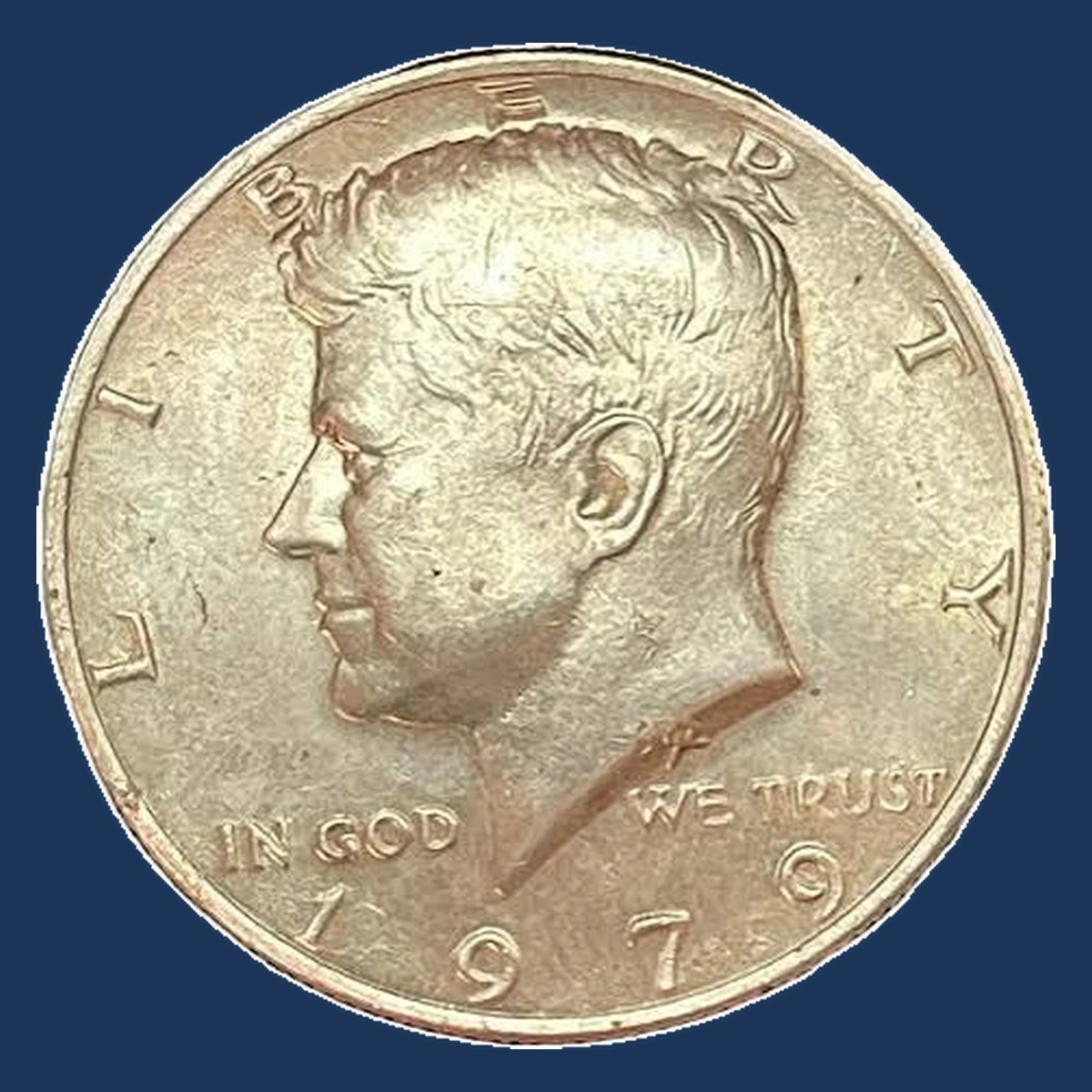
A thin raised line can cross the design when a stamping tool develops a crack. Metal enters that opening as the coin is struck.
If a larger piece of the tool breaks away at the rim, the coin can gain a raised lump. Collectors call that rim-connected lump a cud.
Both kinds of marks are reported for 1979 half dollars. The reports do not establish one exact crack route or one particular cud shape.
A crack is part of the coin’s metal. Dirt on the surface or a scratch cut into it has a different cause.
Estimated Value
The estimated range is $5–$500. Small raised lines sit near the bottom, while a large clear rim break can bring much more.
General guide figures of $15–$100 or more describe many visible examples. They are not recorded sales of the reported 1979 coins.
As a different-year comparison, a 1976-D half dollar with a back-side die break sold for $256 in June 2026. NGC graded that coin MS65.
How to Identify
Use light from the side to see whether the mark rises above the surface. A scratch usually cuts inward, although displaced metal beside it can be confusing.
Follow the line through nearby letters or pictures with a 10× magnifier. A genuine crack follows a continuous path in the struck metal.
For a possible cud, check whether the raised patch joins the rim and replaces part of the normal design. A loose blob stuck on top is different.
Weigh and measure the coin when safely accessible, using 11.34 g and 30.61 mm as normal guides. Inspect the edge grooves for seams, crushing, or added material.
The strongest visible clue is a raised line or rim-connected patch that belongs to the coin’s own metal.
7. 1979 Kennedy Half Dollar Broadstrike (Estimated Up to $650)
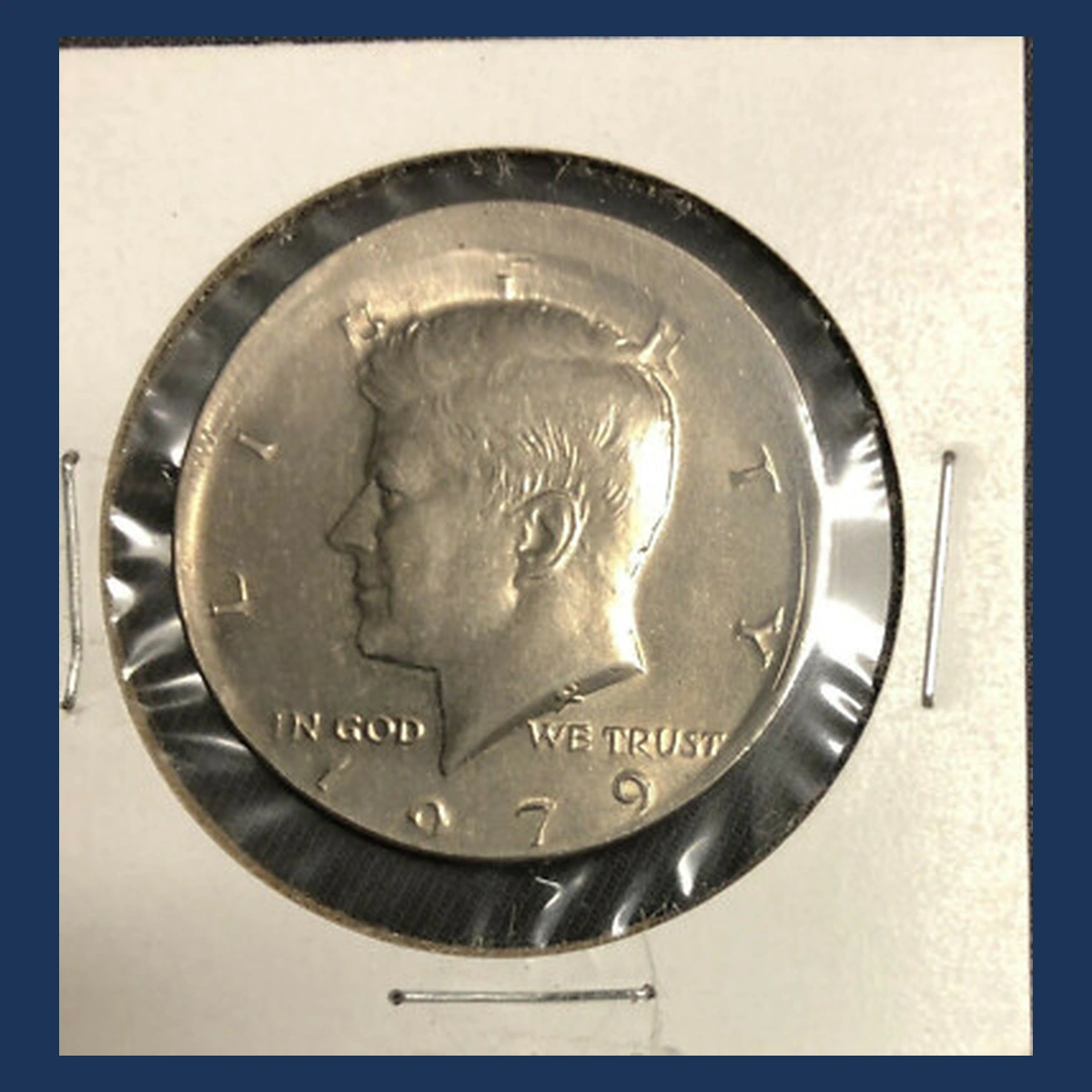
A broadstrike can look unusually wide, with extra metal beyond the design. It forms when the collar, the ring that controls a coin’s width, fails to hold the blank properly.
The design can sit unevenly inside that wider outline. If the complete design remains, an uneven strike is not automatically an off-center error.
A Philadelphia example graded PCGS MS63 appeared in a June 2014 auction. Its description identifies an uncentered broadstrike.
Other general reports include Philadelphia and Denver coins. They do not establish that the same error occurred on a specially made San Francisco collector coin.
Estimated Value
The estimated range is $50–$650. A broad, attractive outline and little wear can raise the price.
The June 2014 Philadelphia listing identifies the error, but the available record does not provide its sale amount. No amount is assigned to that coin here.
For comparison, a 1990-P broadstrike graded ANACS MS61 brought $192 in March 2025. Its different year and condition should be kept in mind when comparing a 1979 example.
How to Identify
Check the whole design before measuring the coin. A complete design surrounded by extra spread metal supports a broadstrike; missing design can point toward an off-center strike.
Use calipers in more than one direction, since the outline may be uneven. A normal half dollar measures 30.61 mm across.
The normal weight remains 11.34 g, so a scale helps show whether metal has been removed or added. Measure only when safely accessible.
Inspect the edge grooves and rim with a 10× magnifier. A failure of the retaining ring can leave an abnormal edge, while later flattening often crushes the existing rim and design together.
A wider outline matters most when the original design stays complete and the spread metal shows no signs of hammering.
8. 1979 Kennedy Half Dollar Missing Obverse Clad Layer (Estimated Up to $800)
A half dollar missing an outer layer can have one copper-colored side and one normal silver-colored side. The missing layer also removes real weight.
A collector report describes a 1979 example alongside other denominations with similar errors. A separate year reference mentions an ANACS MS62 coin missing its front layer.
Neither account establishes a mint or measured weight for that particular 1979 coin. Those details should not be borrowed from another example.
This is a broad loss of metal. It differs from a small peeling flap or a surface that merely changed color during heating.
Estimated Value
The estimated range is $200–$800. The condition of the exposed copper and the clarity of the missing layer affect the price.
A secondary account places the ANACS MS62 example around $300. That amount is a reported value, not a verified auction result.
A 1974-D coin missing a layer sold for $432 in March 2023, graded NGC MS64. Its recorded weight was 9.34 g, which belongs to that comparison coin only.
How to Identify
A scale is especially useful here. Compare the reading with the normal 11.34 g, because losing a full outer layer should remove substantial metal.
Do not treat every light coin as the same error. Corrosion, grinding, and other mint mistakes can also lower weight.
Examine the exposed side and the edge under a 10× magnifier. Look for the remaining layered structure and check whether the opposite side still has its normal outer metal.
Calipers should be compared with the normal 30.61 mm diameter, and the edge grooves should be checked for later cutting. Avoid scraping the copper surface.
A broad copper face together with missing metal at the edge is the useful combination. Copper color without that physical loss can have another explanation.
9. 1979 Kennedy Half Dollar Struck-Through Material (Estimated Up to $1,500)
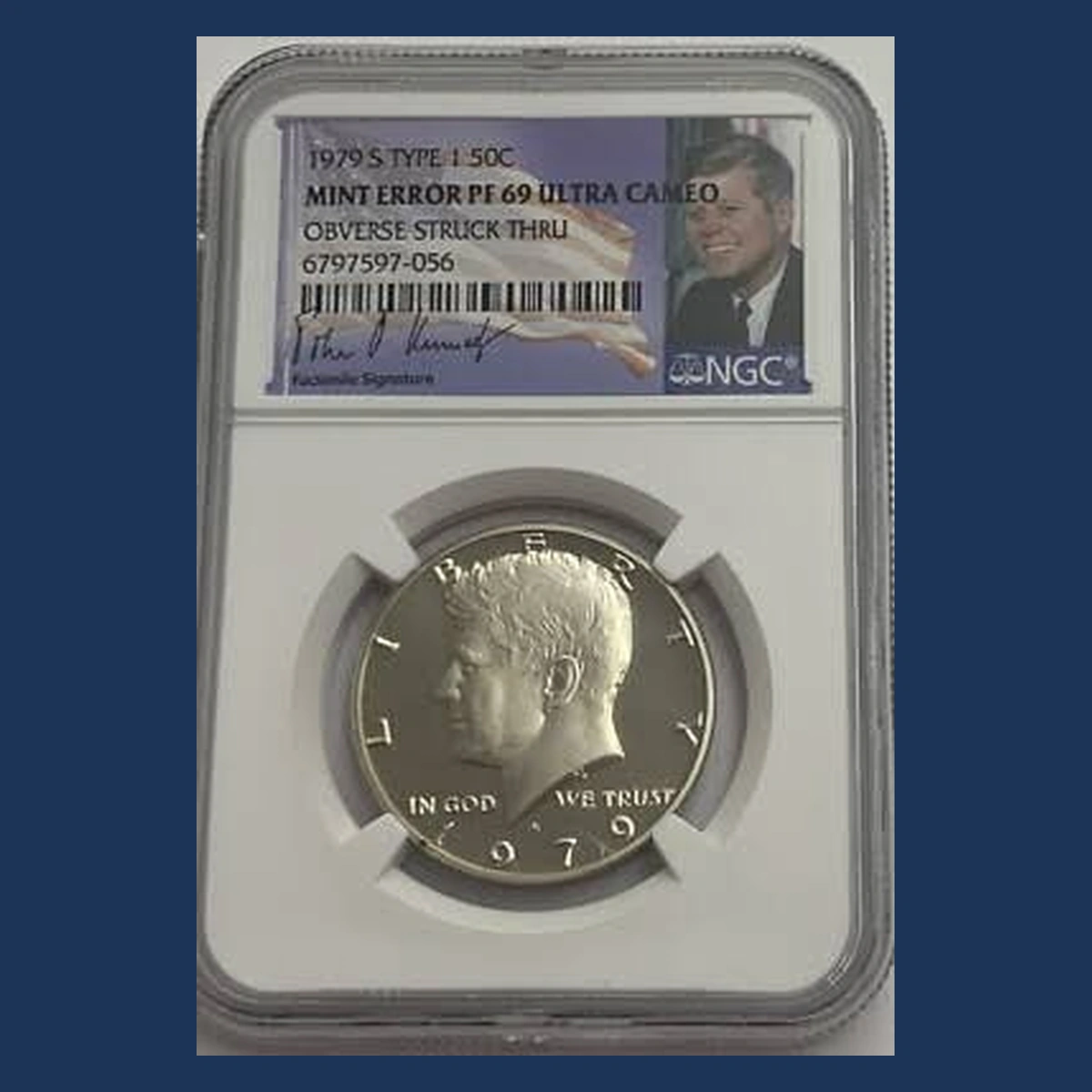
A loose object can block part of the design while a coin is struck. The resulting hollow or weak area is called a struck-through error.
One Philadelphia PCGS MS64 example had roughly three quarters of its front blocked by a piece of layered coin metal. A separate NGC MS64 coin shows a smaller affected area.
Other reports describe grease weakening the back and an unidentified object impressed on a 1979-S Proof. Proofs are specially made collector coins.
That Proof is the Type 1 mint-letter style, graded PF69 Ultra Cameo. The latter term describes frosted pictures against mirror-like areas.
Estimated Value
Estimated prices run $5–$1,500 across these different effects. Light grease-filled areas fall around $5–$75, while loose-metal impressions can reach $250–$1,000.
The separate NGC MS64 example struck through partial clad metal sold for $504 in October 2021. That price does not belong to the larger PCGS example.
The reported Proof falls in an estimated $150–$1,500 range. Its collector finish and the size of the affected area both matter.
How to Identify
Begin with the edges of the weak or hollow area. Grease often leaves fading detail, while a firm object can leave a clearer boundary or shape.
Do not assume that an impressed outline means the object remains attached. Check the surface carefully with a 10× magnifier without picking at it.
A piece of loose coin metal pressed into another coin is also different from that coin losing its own outer layer. Compare both faces and the edge grooves.
All regular and Proof 1979 half dollars normally weigh 11.34 g and measure 30.61 mm. A scale and calipers can check accessible coins; an attached object may change weight.
Look for design interrupted by an impressed shape, rather than a later scrape that cuts across finished details.
10. 1979 Kennedy Half Dollar Off-Center Strike (Estimated Up to $2,500)
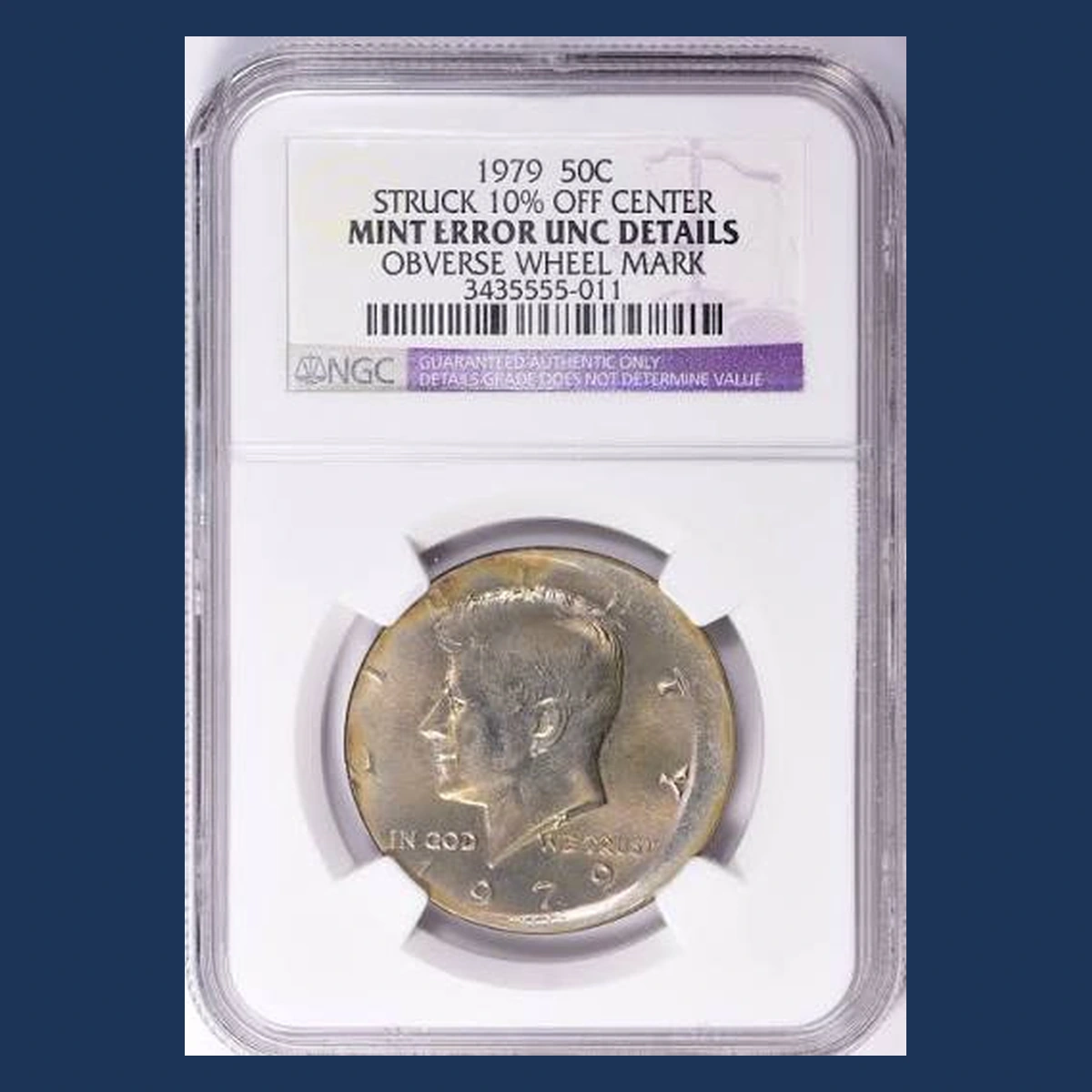
An off-center half dollar has part of its design missing and an area of blank metal beside it. The blank was out of position when the stamping tools came down.
A Philadelphia PCGS MS62 example is 10% off center toward four o’clock. A separate PCGS MS65 coin is 12% off center.
A much more dramatic NGC MS67 example is 80% off center toward twelve o’clock, yet still shows its date. Its mint is not established.
A visible date helps collectors identify a severely misplaced strike. A larger shift alone does not guarantee the highest price.
Estimated Value
The estimated range is $75–$2,500. The PCGS MS65 coin struck 12% off center sold for $1,680 in July 2021.
For comparison, a 1990-P example struck 10% off center brought $198 in September 2025. NGC graded that coin MS66.
These results show why percentage alone cannot set the price. Condition, overall appearance, and the particular buyers at an auction can make similarly shifted coins sell for very different amounts.
How to Identify
Find the boundary between the struck design and blank metal. Then check which parts of the picture or lettering are missing from the opposite side.
A broadstrike can also have an uneven outline, but it keeps the complete design. That distinction is more useful than simply measuring how far Kennedy appears from the center.
Check the date before trying to name a heavily shifted coin. Do not assign the 80% example to Philadelphia just because a mint letter is absent.
When safely accessible, compare weight with 11.34 g and use calipers against the normal 30.61 mm outline. Inspect the edge grooves and blank area for cutting or flattening.
Missing design opposite a genuine blank crescent is the clearest visible sign of an off-center strike.
11. 1979 Kennedy Half Dollar Susan B. Anthony Dollar Planchet (Estimated Up to $3,000)
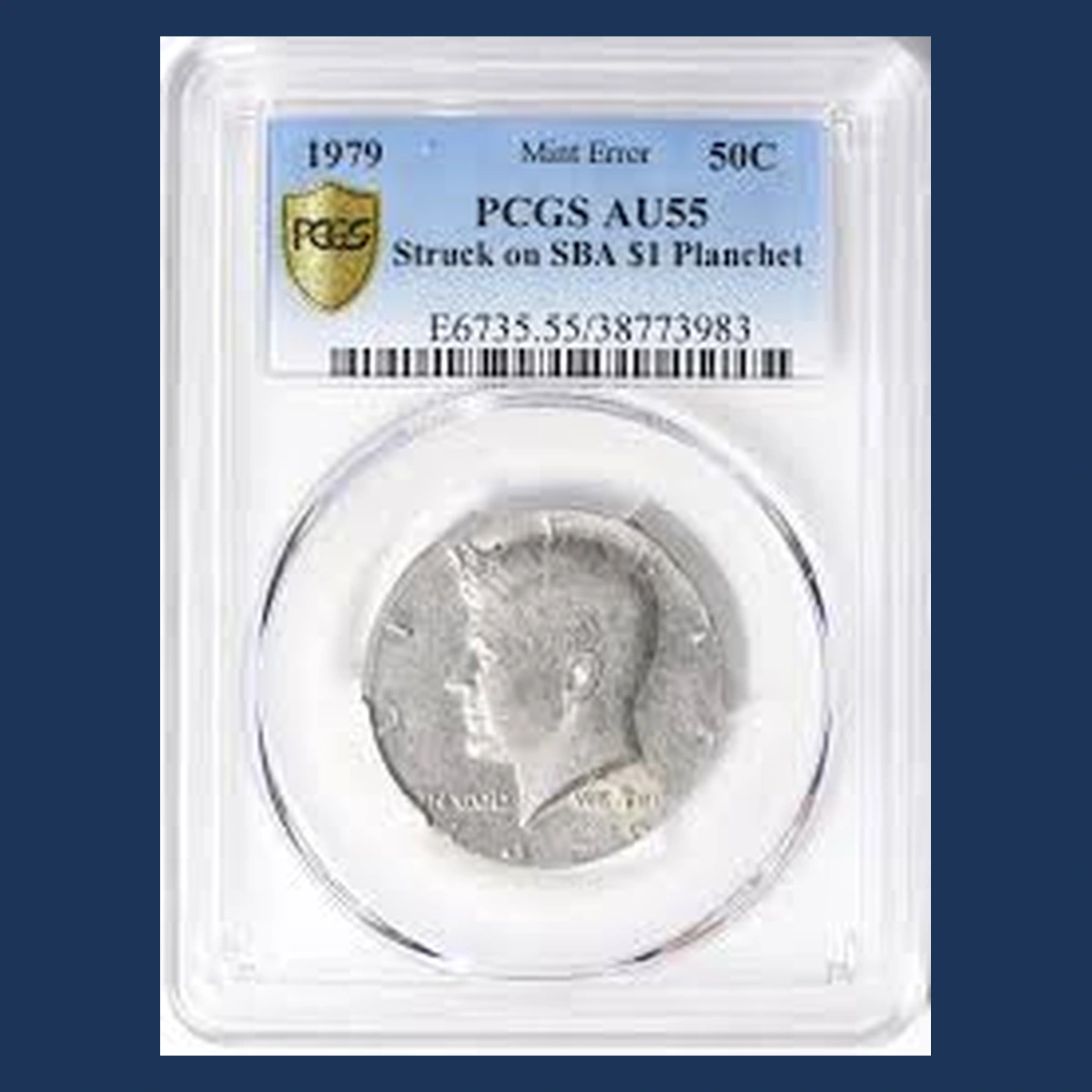
A Susan B. Anthony dollar blank is smaller and lighter than a half dollar blank. If it enters the wrong press, it can receive Kennedy’s design without enough room for the full picture.
One Philadelphia example was graded NGC AU58 and weighed 8.1 g. AU58 means the coin has only slight wear.
A Denver example is reported separately in an exhibit account. Its identity should not be combined with the Philadelphia coin’s weight or grade.
These coins were struck on blank metal intended for dollars. That does not mean an Anthony portrait was already present underneath Kennedy.
Estimated Value
The estimated range is $500–$3,000. A 1979 example graded PCGS AU55 sold for $630 in September 2025.
A 1980-P half dollar on the same kind of dollar blank brought $1,920 in December 2024. NGC graded that comparison MS66, a much higher condition grade.
The two results involve different years and different condition levels. A clear identification of the wrong blank, along with the surviving design, matters when placing another coin within the range.
How to Identify
Compare the weight first. A normal half dollar weighs 11.34 g, while a Susan B. Anthony dollar blank has a standard weight of 8.1 g.
The dollar blank starts at about 26.5 mm across, compared with 30.61 mm for a half dollar. Striking can spread it, so use calipers without treating the starting diameter as an exact final measurement.
Inspect the edge grooves and layered metal with a 10× magnifier. Look for original struck surfaces rather than a half dollar ground down around the rim.
Philadelphia half dollars in 1979 normally lack a P, so its absence is not proof of the blank’s origin. The useful combination is dollar-blank weight and a half dollar design crowded onto too little metal.
12. 1979 Kennedy Half Dollar First-Strike Brockage (Estimated Up to $4,000)
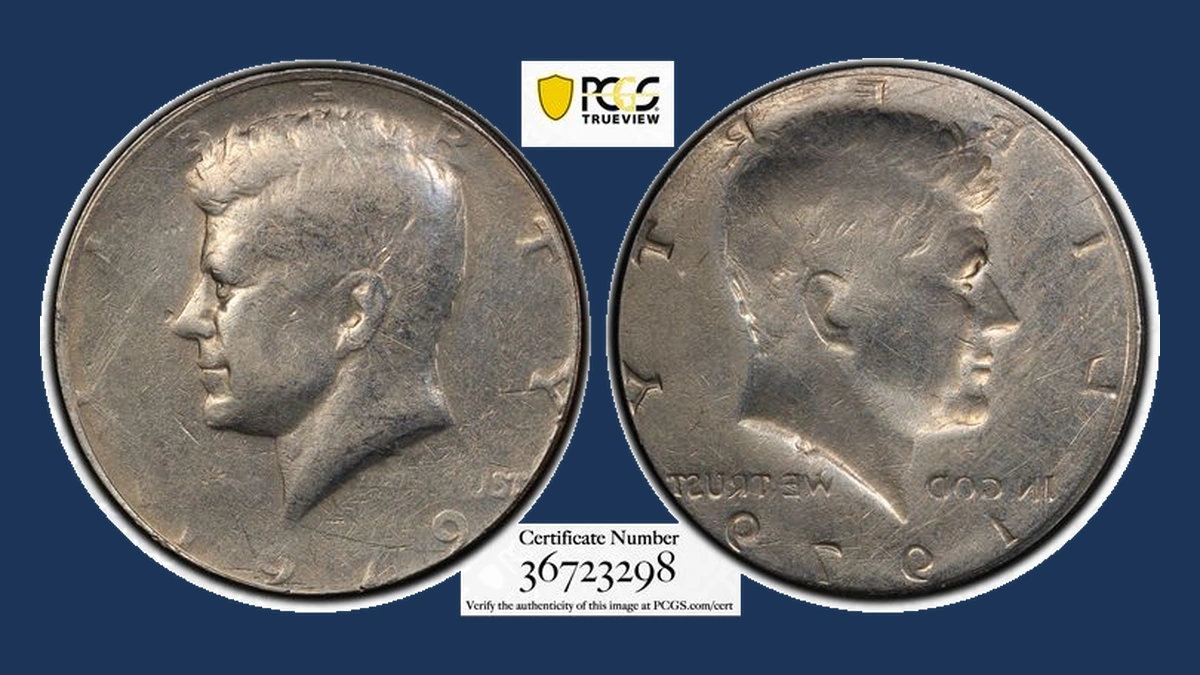
One side of a brockage can show Kennedy normally while the other carries a backward, sunken copy. It happens when a previously struck coin presses its design into the next blank.
A 1979 example was graded PCGS XF45, indicating noticeable wear with much detail remaining. Its description calls it a first-strike brockage.
That means the transferred image comes from the early contact, before repeated blows could blur or stretch it. It is not a second normal design facing outward.
A coin made by joining two halves can look unusual too, but it has a different construction.
Estimated Value
The estimated range is $500–$4,000. A broad, readable backward portrait can command more than a tiny partial impression.
The PCGS XF45 example appeared at auction in April 2019, but the available record gives no sale amount. It is therefore not a priced sale here.
A 1989-P coin with only 4% partial brockage and a partial collar error brought $119 in March 2025. That smaller combined error is a comparison, not an equivalent full brockage.
How to Identify
Check whether the unusual portrait is actually backward. Then tilt the coin under light to see whether that image sinks into the surface instead of rising above it.
The normal side and the transferred side should show different kinds of relief. Two ordinary raised portraits do not demonstrate a brockage.
Use a 10× magnifier around the edge to look for a seam, filing, or glue from joined coin halves. Also inspect the edge grooves for later work.
A scale and calipers provide useful checks against 11.34 g and 30.61 mm when the coin is accessible. Normal measurements alone cannot rule out clever alterations.
The distinctive feature is a sunken mirror image that fits the design transferred from another coin during striking.
13. 1979 Kennedy Half Dollar Multiple Strikes and Mated Pair (Estimated Up to $10,000)
Two matching 1979 coins show how coins can strike against each other inside a press. Both PCGS MS64 labels say double struck, although a published explanation proposes three blows for one and two for the other.
The pair carries linked backward impressions, with one final strike 50% off center toward two-thirty. Their shared history makes them a set.
Separate examples include a Philadelphia PCGS MS63 coin with a second strike 65% off center. An ANACS net MS60 coin has an 80% second strike with a blank front area.
A reported Denver MS64 coin has its second strike toward two o’clock.
Estimated Value
The estimated range is $300–$10,000. Individual multiple strikes fall around $300–$3,000, while the matching pair is estimated at $4,000–$10,000.
A published book value of $7,500 for the pair is a historical valuation, not an auction sale. It covers both coins together.
A 1989-P example with a second strike 65% off center sold for $2,400 in July 2022. That single coin provides a different-year comparison rather than a sale of the 1979 pair.
How to Identify
Look for two separate placements of the design, such as overlapping portraits or letters. A small doubled outline alone is not evidence of two full strikes.
The ANACS net grade means its condition rating was adjusted. It does not change the reported number of strikes.
For the matching pair, compare the impressions that link one coin to the other. Keep their photographs and history together, but do not stack or press the coins against each other.
Inspect each edge and its grooves for marks from later squeezing. When accessible, weigh each coin separately against 11.34 g and check its outline with calipers against 30.61 mm.
A displaced strike can change the outline, so measurements support the visible evidence rather than replace it. The most useful feature is a second design position, or a matching transferred impression shared by the two coins.
Conclusion
The smallest 1979 surface errors start around $5, while the matching multiple-strike pair reaches an estimated $10,000. A plain missing P is normal for Philadelphia coins this year.
Begin with something you can see: peeling metal, a blank crescent, or a backward portrait. Then use weight and the edge to narrow the possibilities.
Compare prices only after separating single coins, matching pairs, and examples from other years.